The Adventures of Zippy the Sparrow

In a vibrant forest where the trees stretched toward the heavens and the rivers sang songs of ancient times, there lived a little sparrow named Zippy. Zippy was no ordinary bird—she was filled with a boundless curiosity and an insatiable love for adventure.

While most of the other birds were content to stay within the safety of the forest, Zippy dreamed of exploring the world beyond. She would often sit on the highest branch of the tallest tree, gazing at the horizon, wondering what lay beyond the mountains, rivers, and valleys she had never seen.

One day, Zippy decided it was time to follow her dreams. With a flutter of excitement, she spread her wings and set off on her first grand adventure. The forest quickly became a patchwork of green beneath her as she soared higher and higher, her heart racing with anticipation.

Zippy's first stop was a sparkling lake that shimmered like a jewel in the sunlight. As she swooped down to take a drink, she met a wise old turtle basking on a rock.

"Hello, little bird," the turtle said with a warm smile. "What brings you to this part of the world?"

"I'm on an adventure!" Zippy chirped, her eyes gleaming with excitement. "I want to see everything there is to see!"

The turtle chuckled softly. "The world is vast and full of wonders, young one. But remember, the greatest adventures are often found in the smallest places."

Zippy thanked the turtle and continued on her journey, flying over hills and valleys, across rivers and meadows. She met all sorts of creatures—a family of playful otters, a wise old owl, and a friendly fox who shared stories of faraway lands.

One day, as Zippy was flying over a dense forest, she noticed a strange and mysterious fog. The trees below seemed to whisper secrets, and the air was thick with mystery. Undeterred, Zippy dove into the fog, eager to uncover its secrets.

Inside the fog, Zippy found herself in an enchanted grove, where the trees were adorned with sparkling lights, and the air was filled with the sweet scent of flowers. At the center of the grove was a beautiful, glowing crystal that pulsed with a gentle light.

As Zippy approached the crystal, she felt a warm, comforting presence. "Welcome, brave sparrow," a voice whispered. "You have shown great courage and a true love for adventure. This crystal holds the heart of the forest, and it is said that those who find it are granted a special gift."

Zippy felt a surge of joy as the crystal's light enveloped her. In that moment, she realized that her love for adventure had led her to something truly magical—a deeper connection with the world around her.

With a heart full of wonder, Zippy flew back to her forest home, where her fellow birds greeted her with awe and admiration. She shared her stories with them, telling of the sparkling lake, the wise turtle, and the enchanted grove.

From that day on, Zippy was known as the bravest bird in the forest, and her adventures became legendary. But no matter how far she traveled or how many wonders she discovered, she always remembered the turtle's words—that the greatest adventures are often found in the smallest places.

And so, Zippy continued to explore the world with an open heart, always ready for the next adventure, no matter how big or small.

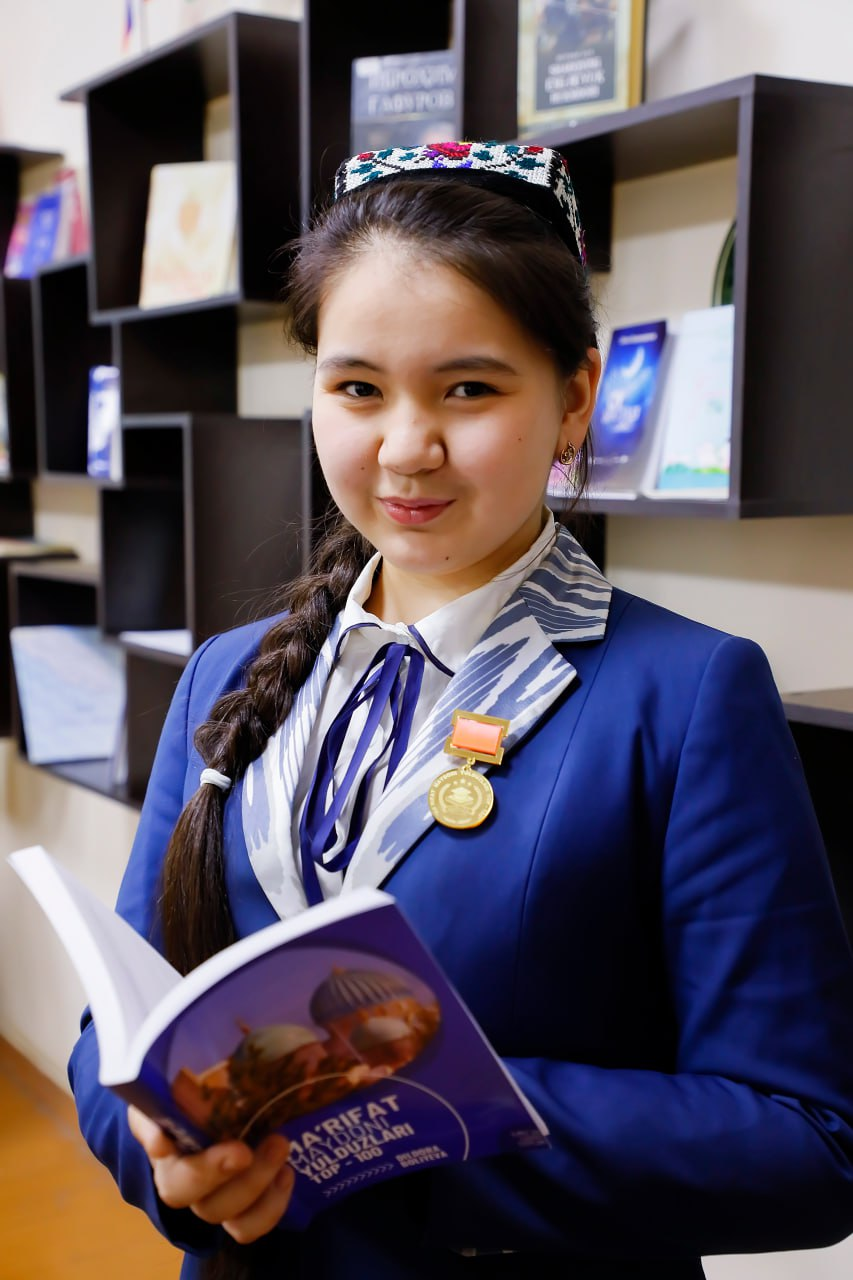
Tursunboyeva Nigora Abdumannob qizi was born on February 23, 2009, in Uzbekistan. She is currently a 10th-grade student at the Is'hoqxon Ibrat Creative School. She is fluent in English, Russian, German, and Uzbek. Due to her interest in literature, she writes poems, stories, and articles. Her creative works have been published in numerous renowned international journals, such as The Mount Kenya Times, The Diaspora Times, Classico Opine, The Seoul Times, Raven Cage, Synchronized Chaos, Kavya Kishor, Orfeu.al, Elisa mascia and many other magazines and newspapers. This year, she won literary competitions and was awarded two medals. She is interested not only in creativity but also in volunteering, and she is currently continuing her volunteer activities. And she is an active member of the World Writers and Artists  Working Group Juntos Por Las Letras.
Five One-Line Haiku


sky grows darker sunset or storm clouds?


—

nephew’s 13th birthday whitecaps on the lake


—


red rocks pink at sunrise I wake up to check my phone


—


Memorial Day three unsharpened yellow pencils by the dumpster


—


a crow calls before six you’re early this morning


—


J. D. Nelson is the author of eleven print chapbooks and e-books of poetry, including *purgatorio* (wlovolw, 2024). His first full-length collection is *in ghostly onehead* (Post-Asemic Press, 2022). Visit his website, MadVerse.com, for more information and links to his published work. Nelson lives in Boulder, Colorado, USA.
try to stay out of it all, very easily we look away
change the channel, fix a snack, reassure our-
selves. There’s nothing wrong with us. We are
the Costco generation, the Walmart generation
the all you can eat generation. We shop our fill
through aisles and aisles stacked to the ceiling
giant sized, jumbo sized, larger portions of all
we need or might need. We fear running out, so
we fill our cupboards and freezer and look for
the best deal, look for the best deal. We are ex-
ceptionalism in action, being exceptional and
living in it, acting it out. While the rest of them
seem to get it all wrong, stay homeless and stay
hungry, have wars playing out within their borders.
We, on the other hand, make war elsewhere and
send the weapons to fight in them. We complain
about the homeless and spend fortunes on diets
so we can look the part and live for almost for-
ever. We fill out the surveys, write online reviews,
spend countless hours on social media trying to
keep up enough to respond. This is the Costco
generation, warehouses full of all the things that
define us, make us over – leave us like this.
Terrorizing
We’re learning about terrorism from
the best of ’em, the worst of ‘em
Isis, Hezbollah, and Hamas, the better
known groups, and those smaller ones
and individuals who often claim
responsibility for some attack, explosion
or the assassination of some political figure
anything to get to be part of the news on
our various news networks, claim it and
get the fame, the recognition they need in
the terrorist game. We watch it go on
24 hours a day, yesterday, last night, this morning.
It’s like an out of control weed, a pandemic,
a bit of climate change that is drying us out
leaving us the shell of our former selves.
Now we have become students of death, in its
various forms, destruction for its own sake.
We’ve become helpless talking heads that
are watching the world come apart, and we
are terrorizing ourselves with it.
Modern Medicine
Check-In and Check-Out for
Interventional Pain Medicine
shares a waiting room with
the Check-In and Check-Out
for Endocrinology and Bone
Density Scan, so there’s sort
of a crowd checking-in or out
most of the day. This is a quiet
crowd, mostly older folks who
probably know what’s coming.
The diabetics cluster around one
end of the room, while the rest
spread out, some alone and some
have a driver along, the pain meds
they get numb up a knee or hip
or other joint making their drive
home a bit of a problem. This is
contemporary medicine with an
assortment of cheerful nurses and
aids and over-serious receptionists
near a sign reminding us not to harm
health care works – it’s a crime to
hit or spit on them or even threaten
them – this is modern medicine and
modern patients are ready to take each
other on – this is the waiting room.
J.K. Durick is a retired teacher, taught for years at Trinity College of Vermont and after that for many years at the Community College of Vermont. He and a friend started following the pandemic by writing a poem for every day – we now have run out of pandemic and have written 1618 and plan to continue till we run out.
The Impact of a Legendary Teacher on a Girl’s Life
One cold winter night, a girl with a heart as pure as snow was born. Her parents called her Ice heart. Ice heart started school earlier than her peers. She was a bit shy and timid, which made it difficult for her to connect with classmates. After 6 years of school, she prepared for the entrance exam to a higher-level school. She studied for a month and took the exam. Two months later, she was overjoyed to be accepted. She immediately began attending classes but only stayed for two years. These types of schools were shut down and replaced with specialized schools under a new system. She continued her education at this new specialized school. This year marked a turning point in her life. Ice heart fell into deep despair, losing all motivation.
One day, a legendary teacher, who would play a crucial role in her life, entered her world. This teacher rescued Ice Heart from her despair and changed her life for the better. Thankfully, she had the opportunity to learn from this legendary teacher. Now, Ice heart holds the keys to success and good fortune.
That Ice Heart was me.
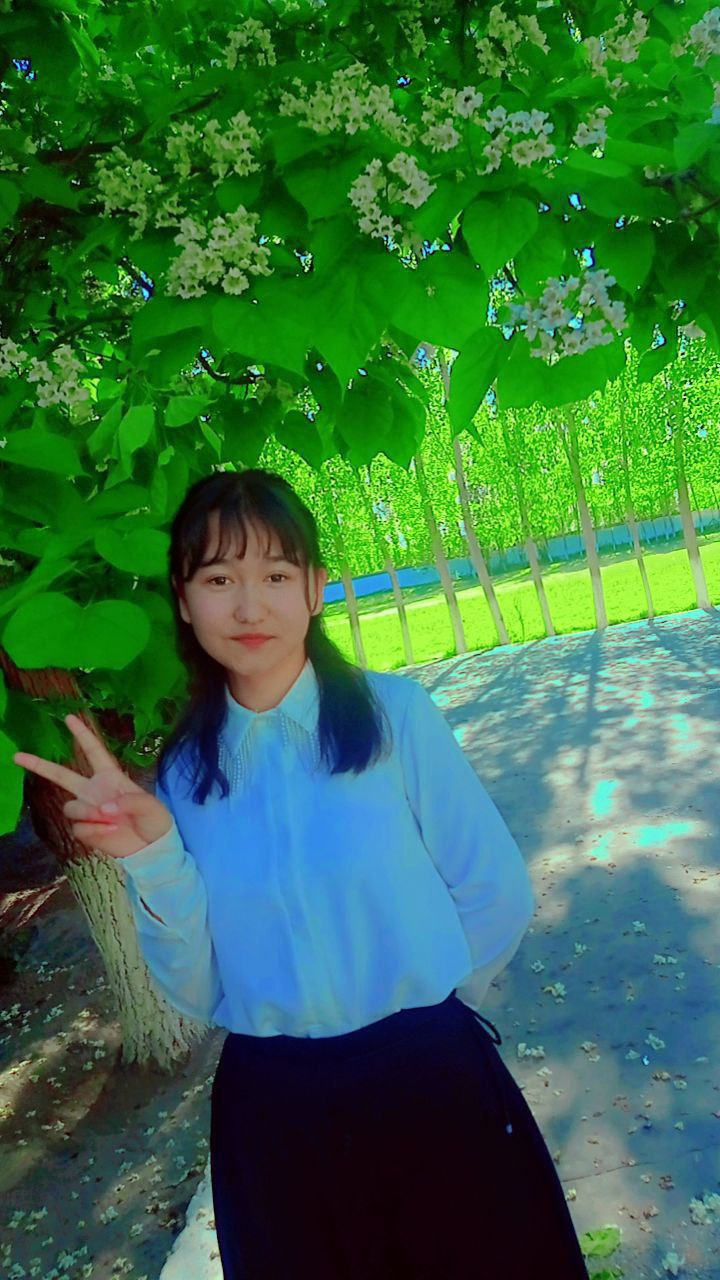
Abduraximova Muyassarxon Anvarjon qizi was born on January 6, 2008, in Toshloq district, Ferghana region. Currently, she is a 10th-grade student at a specialized school in Toshloq district, Ferghana region.
SummerSnips
hot land
cities and small towns
summer fried walls
clothes on and shoes off
soaking in the bathtub
heat stroke
birds in the fountain
sipping cool water
splashing wings
moon tunes
lovers humming songs
owls joining in
doves cooing
in the dark of early dawn
windows opening
ShadowMoods
combing her long hair
in the dark bedroom
sighing alone
light on
in front of the mirror
touch of shadows
old wooden porch
sitting in his rocking chair
sway of memories
Heavenward
children play
even as the world shakes
the unknowing
Stephen Jarrell Williams can be found on (X) Twitter @papapoet
THERE ARE MANY STARS IN THE SKY BUT THE MOON IS THE ONLY ONE
Introduction
Uzbekistan has stepped on the threshold of progress. We have gotten rid of the unpleasant word of slavery for many years, we have gradually achieved and are achieving our rights, traditions, holidays, religion, laws, and countless wealth.
In fact, at the beginning of the 20th century, the leaders of science, i.e., the Jadids, dreamed of today’s independent country and, accordingly, used a number of unsuccessful measures several times. Fortunately, they did not stop sacrificing their lives for the freedom of the people.
During the colonial period, our great nation was under both material and spiritual shocks, i.e., it was in such darkness that the nation did not even want to believe that there was a light.
The former Soviet Union occupied many countries along with our country. But at an unexpected moment, that is, in the 80s of the 20th century, the state of the USSR began to weaken due to the inexperience of the government leaders. This is an opportunity for a number of former Soviet Union countries to gain independence.
The post of President was introduced in Uzbekistan as the first among the colonial states of the USSR. On June 20, 1990, the Declaration on the sovereignty of Uzbekistan was adopted, and on August 31, 1991, the 1st President of the Republic of Uzbekistan declared Independence Day. they say:
“From today, I propose to declare September 1 as a national holiday in our republic, the day of progress,” they cheered up all the people.
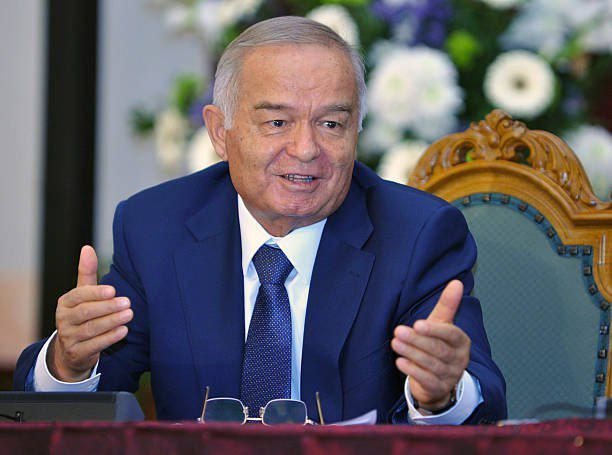
On December 29, 1991, Islam Abduganievich Karimov was elected the first president of the Republic of Uzbekistan.
In fact, they turned their chests to the responsible work of managing it as a country and put heavy burdens on their shoulders. prosperity took the father of the country away from these pains.
Of course, it should be said that the word “difficulty” is not a foreign word for a nation that is being built. Because, in people’s minds, an evil country called the USSR, in its time, the food, clothes, and prices in the markets are as if a person who says he is poor can wait for a guest for at least 3 days in his house. left a good impression. But they tried to uproot us from our values, our thousand-year-old indelible history. Although the Uzbek people, a great nation, were decorated with the image of slavery for many years, they could not even move the foundation of our golden values. The honorable blood of our ancestors flows in our blood, regardless of the fact that the nation has become very old and has forgotten its identity.
Dear President had the following words in this regard:
“The blood of the Uzbek nation is hot, if someone from abroad seems to speak wrongly to us, it is difficult to bring us back to our mold. Europeans living in a cold nation do not understand this. who emphasized that.
In the first years of independence, difficult days began in the life of our people. Many people have money to feed, but there is very little product, there are factories, but there are few personnel who know it, there is a lack of knowledge and skills to process the grain. There was a big turn and unprecedented changes in the life of our people. But due to many years of difficulties, we got back on our feet and became stronger. We took our country from the hands of fascism, we realized our identity, that all the blessings in the heavenly land belong only to us and not to give double help to anyone. we understood that it is necessary. In order to develop industry, economy, defense, construction, agro-technological and many other modern fields in our country, training of qualified personnel has been launched.
Our honorable President also emphasizes that “we have put the people and their interests at the center of all changes and updates in order to achieve such results in the reforms we are implementing.” If we look at the above words, achieving independence, realizing our identity, learning our history is all for ourselves, for the nation, for the youth, for our future.
Today, the main priority of us young people is that we have a responsible duty and mission to move forward on this great path, to study the heritage of our ancestors and become a generation worthy of it, to be the leaders of the time in all fields. The words of the father of Islam, “we are not less than anyone and will not be less” always ring in my ears. No one will ever forget the selfless services rendered by this person to the Uzbek nation, the white hair in his hair, the packaging in his hands, the sleepless nights he spent thinking about the peace of our country, his eyes that have lost hope and light, and his priceless life that he exchanged for the happiness of others. needed.
Islam Abduganievich Karimov ruled the Republic of Uzbekistan for 25 years. He died of stroke on September 2, 2016.
About the author
Rustamjonova Nodira Tahirjan kizi was born on December 4, 2005 in Toraqorgan district, Namangan region. Currently she is 2nd year student of Biology department, Namangan State Pedagogical Institute. She is so intelligent and determined student. In 2024, she participated in the conference “Actual problems of biology: integration of science, education and production” with an article on the topic “History of medicinal plants. Their importance in human and animal life”.