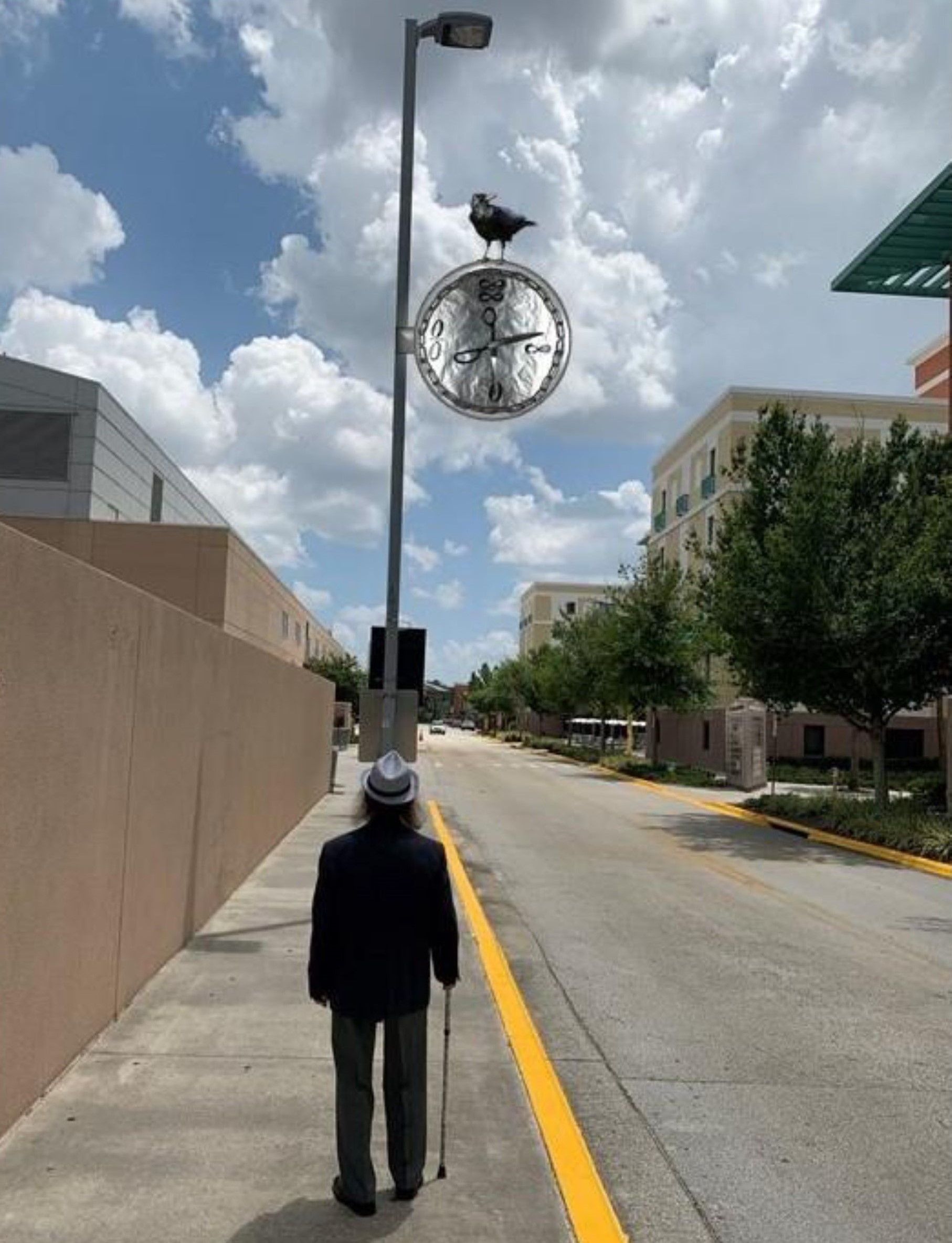
Your father’s sermon, your teacher’s praising words?
Where are those reflections?
Those waves of sound?
Are they wandering somewhere forsaken?
Whizzing like maniacs, following skewed paths?
Or did they fade away into nothingness?
Are they beyond the point of no return?
Annihilated in a singularity?
Can I zoom into spacetime’s reciprocity?
Follow those mysterious curved trajectories?
Delve into a wild spatiotemporal trip?
Reach the galaxy’s outer bounds?
Grasp the shadows of past ruminations?
See faces, hear words long over and done?
Reverse time’s stalwart forward tendency?
Can I tell my parents thank you, forgive me?
Can I ask my teacher questions never asked?
What is the universe?
Is the soul real?
Is there life after death after all?
Zillo
I miss my summer days in beautiful Bradillo,
my grandma’s village on the slopes of mount Gravillow,
its wide wheatfields sparkling with gold and yellow,
its watermill and the spring at the chirping rivulet below.
Summers were hot, apples and pears were ripe and mellow.
I enjoyed leisure days with my friends Blaise and Marcello.
We swam in the creek, despite it being brisk and shallow,
gathered wild blackberries uphill from my grandma’s bungalow.
There was a small woman with a big hump, named Zillo;
she carried water daily with a copper jug, as big as a cello.
Kids would tease her regularly, yelling “Hey Zillo, Zillo,
why don’t you marry me? I’m a real good fellow.”
Once I saw Zillo sitting all alone in the shade of a willow,
like weighed down by her hump. I approached and said “Hello, Zillo.”
She turned, then frowned her eyebrows resembling the wings of a swallow.
Zillo said nothing, yet I was certain she was ready to bellow.
It was many years later when I revisited Bradillo.
I asked my grandma – all grey-haired now – about Blaise and Marcello.
They both had left the village, she said, then I inquired about Zillo.
“Zillo died last year,” she gave me the bitter pill that was hard to swallow.
I didn’t cry, but deep inside I felt a big hollow.
What my grandma said next, I was unable to follow.
Memories of Zillo were full of remorse and sorrow.
Had she left forgiveness for me, I would gratefully borrow.
Oh you poor hunchback woman, my dear Zillo,
you come to my mind every time I think of Bradillo,
why did you refuse to utter the simple word “Hello”
when I tried to talk to you under that old, weeping willow?
Yellow leaves
Yellow leaves blown by late October wind,
drab sky obscured by frosty, tedious rain
drearily drumming on the windowpane…
they bring back memories I thought were bygone.
Let the wind blow and the rain fall,
the past is gone once and for all.
The shady alleyway, the old oak tree and the bench below,
you and I, and the evening, the moon’s timid glow,
Will you come tomorrow? you pleaded gently seeking reliance.
The wind responded with a soft whistle, then there was silence.
Let the wind blow and the rain fall,
the past is gone once and for all.
Now I am dreaming that it was today
and that tomorrow was one midnight away.
Alas, it was yesteryear before yesteryear before yesteryear.
Time does not cure; memories will never be wiped away by years.
Let the wind blow and the rain fall,
the past is gone once and for all.
What I lost one evening is revisiting me on a rainy day.
I should have known, real things come seldom, they come only once.
The void cannot be filled by belated regret.
I wish someone had told me: You can lose easily but will not forget.
Let the wind blow and the rain fall,
the past is gone once and for all.
Dreadful mornings
It’s morning again.
I feel the dim light scattered in the room with my eyes still closed.
My brain is waking up to face the terror,
to encounter the reality,
to deal with the twirl of terrifying thoughts…
I wish it was night, a never-ending night.
I would then submerge in a deep slumber,
hide in the bushes, or behind the rocks,
squeeze in my sleeping bag and fasten it tight,
run from the unbearable weight of actuality,
from the creepy spiderlike creature advancing toward me to procure my life,
turn off my conscience,
return to the realm of my whimsical dreams,
the times when life was so cozy, so calm,
when biggest worries were a lost keychain, a rejected poem, a departed train.
The biggest miseries of yesterday’s life would seem like an invigorating breeze.
Now I’m in a boat that seems to be a flake lost in a rough sea.
I’m unwillingly drifting in empty space encircled with an ominous halo.
My train is nearing a final station…
Still there is a chance, even though a slim, an improbable chance.
Maybe God will be merciful to me.
God?
Someone who never appreciated God suddenly is referring to God’s authority,
asking for almighty God’s benevolence, hoping to be spared by a miracle…
I know some people survive the disease while others do not.
Yes, it’s a slim chance, it’s all in God’s hands.
But if God saved all, then God’s existence would be meaningless,
and if God saved me, then he would instead take someone else’s life,
so my survival would be corrupted, I’d be culpable for someone’s misery.
What should I wish then?
I feel gone astray in a deep forest, a lifeless wilderness.
Fear of death is worse than real death!
I get up, get dressed,
put on my best look and walk down the street.
I smile to people, some smile back to me—
nobody knows what’s hidden inside.
Now my soul is like a swirling typhoon,
next moment it transforms into a desert,
a hollow phantom with bleeding insides.
Still, I am trying to remain focused, to make sense of it.
There should be some kind of justification.
How did I come to this tribulation,
this nonsensical desolate ordeal?
Oh, I think I know, I see the meaning of my destiny.
Yes, it’s payback time—
I pay for the sins I have committed.
I have never been a perfect human,
played a decent man while being a cad,
have betrayed my friends, been insensitive,
have sought gain at the expense of other’s pain…
Oh, how comforting are these memories!
So, I keep digging, digging deep and far,
opening the dark pages of my life.
The spiderlike creature is now my friend.
We dig together and we find bad things, disgusting misdeeds,
shameful acts that you’d never imagine.
The worst of my deeds are the most consoling,
like a sip of water under scorching sun.
They bring ease, relief, gratification.
I feel so relaxed.
What I am facing is so meaningful, so agreeable.
Life’s repudiation seems just and fair after all my sins.
The white horse
(A talented person with a terrible addiction)
You were born to ride a horse,
a white one, a beautiful one,
one that will take you to the top of the hill,
jump over the creek in a magnificent leap,
then gallop fiercely,
ascend and conquer the mountain’s snowy peak,
but the slopes were too steep, the bushes were thorny,
the shrub scratched to blood all your horse’s legs,
the sheer slopes made him wacked and weary,
so your horse opted a different path
into a black forest so dark and dreary,
descending into a watershed valley,
galloping madly, so wild, unruly,
all covered with repugnant black sludge,
unheeding your calls to stop or turn back,
leading you, instead, into a ghastly swamp,
making you whimper and hopelessly bellow:
“I lost my white horse, I lost my white horse,
I lost my white horse…”
Days
Days come and go like flickering flashes of a firefly, nature changes colors like a chameleon. Daybreak, noon, nightfall—one more day is gone, today becomes past, tomorrow—present.
Days are the black and white keys of a clavichord that play the concerto of our life— elating tunes like a rhapsody or chords that echo with your broken heart.
Days are paintbrush strokes on a vast canvas made of the fabric of our destiny. Some brushstrokes are bright, the others—murky; the resulting masterwork is what we call life.
Days are paved like the cells of a chess board. Some days we walk straight like a magnificent queen, but then—find ourselves traipsing like a pawn or crisscrossing wonky paths like a forlorn knight.
Days… There are days we laugh, and days when we cry,
We want to believe that most brilliant days are waiting ahead,
but before they come, we live on borrowed time
and submit ourselves to the wheel of fate.
I had a nickel
I was a schoolboy when I first met her.
We walked down the street and stumbled upon a group of gypsies.
One held my love’s hand and started telling what’s waiting ahead.
The other offered a lovely necklace that I couldn’t buy—
I had a nickel but needed a dime.
I saw a flower in someone’s backyard lawn.
The flower enthralled me by its magic charm.
I came to pick it, but the owner said it was in his yard.
I said I’d buy it, but the price was high—
I had a nickel but needed a dime.
I left my parent’s home, traveled many miles seeking good wages
but most of the days barely earned enough for a piece of bread.
I received a note that my mother was sick.
I set out fast, but couldn’t afford the journey’s fare—
I had a nickel but needed a dime.
I was like a leaf blown by vicious winds, a motherless child,
Not only were my pockets empty, but also my heart.
I had grit and courage but not a pinch of luck.
My good intentions never came to life for one damn reason—
I had a nickel but needed a dime.
When I grew older and finally managed to save a whole dime,
I came to a path leading to two doors.
The left one was the door to Eden with an entrance fee of mere ten cents.
The one on the right had a sign saying Inferno, five cents.
I knocked on the right door, extended the dime and said Keep the change.
Dreams
My good time is night time
when I am asleep.
I am by myself,
securely shielded by my coverlet
from the grim darkness of the other side,
away from the day’s preposterous whims,
alone with my dreams.
At night I am whole;
none of my troubles bothers me at all.
I can feel no pain,
the images I see are so rich, so pure,
I hear music of fantastic allure,
my feelings are deep,
the ambiences are a milieu of spectacular scenes.
But my dreams are so real,
yet so perplexing and inexplicable,
sometimes so dreadful and formidable,
often mystical,
supernatural and psycho-analytical,
at times enchanting and inspirational,
at times so unreal, metaphysical.
Yet nighttime remains my favorite time,
when I am alone with my reveries
intertwined with numinous enigmas and awes
that keep me secure from the reality’s frightening claws.
I cannot resist the enticing appeal of the siren songs
calling me to a sublime world made up by my brain,
away from the life’s insipid terrain.
In visible darkness
In visible darkness of a misty morning
a willow bends to a quiescent pond
to drink, or whisper fond words of friendship
in the obscurity of invisible light.
Silence is hung thick upon the dormant pond,
numinous and dark are the shades of the forest,
all motion has ceased, time is nonexistent,
the nature, it’s no more than a nebulous myth.
A subtle quiver disturbs the languor,
a star timidly flickers in the sky,
a ripple idly freewheels to the shore,
the forest heaves a surreptitious sigh.
A pale silhouette of a unicorn
appears in the far side of the pond,
the breeze opens up the willow’s foliage,
the pond freezes in exasperation.
The unicorn glides slowly ‘round the pond,
from behind the clouds emerges the moon,
the willow sparkles with enchanted gleam,
the pond remains still, soundless and cold.
The unicorn gently nears the willow,
touches the branches, caresses the twigs.
Embraced by myriads tender floral arms
the unicorn takes shelter in the tree.
The crescent slithers back behind the cloud,
all shadows vanish in the nightly haze,
the willow leisurely waves her supple sprays,
the pond stays somber, desolate and dazed.
The unicorn retreats, wanders to the woods
uncaring for the willow’s longing gaze,
the forest stands unwavering, calm,
hiding ages of mysteries inside.
The nature submerges in tranquility,
the sky is murky, the dawn is far,
the ether murmurs a soft lullaby,
the quiet pond reflects a lonely star.
In my life
excuse me,
in my existence
I have reveries, recollections, contemplations,
I have doubts, questions, lengthy conversations
with me, my memories, and my sub-conscience.
I try to untangle knots,
to make sense of my mystical thoughts,
to comprehend my baffling misadventures,
to discern light in the nebulous brume,
to find justification for life’s repudiation.
In my mind, I travel the landscape of the creation,
ridges, canyons, and dreadful depressions.
At times, it seems to me I see uncanny reflections,
familiar patters coming from the past,
peculiar shades blown from the future.
The knots become more tortuously disheveled,
yet bleak traces of light blink at a distance,
hence, I’ll go on trying to make sense of my life,
Two Broken Hearts

Staying away from you is torturing me
Be a little flirty, is there any need for coyness
While I have opened the door of my heart to you
Let two broken hearts come together
If you want to extinguish my burning heart
This cry of mine is for you, this is a loud call
Break your horse with spur towards me
Let two broken hearts come together
You never show it, you have no words about love
You have turned to ashes, as if you have no embers to ignite
Either you are too hesitant or you have no eyes for love
Let two broken hearts come together
Don't destroy this ruined heart of mine anymore
Come hide in my heart and don't come out anymore
Come on, hold my hands, don't look helpless anymore
Let two broken hearts come together


NIGHTS DON'T PASS

Nights don't pass, they don't pass
Is it possible to get you out of my mind
Fall into a sleepless night
I hope you'll understand me then
You're not on one side, longing on the other
My poor mind is wasted without you
If you're left like me in a lonely inn
I hope you'll understand me then
When your eyes suddenly fill with tears
Don't think that troubles will end in the morning
When you're left in trouble like me
I hope you'll understand me then
If the thing you call life disappears one day
If love, respect, everything ends one day
If separation comes one day
I hope you'll understand me then
Is it certain to reap what you sow
What do you expect from unkempt soil
If an old picture makes you cry
I hope you'll understand me then


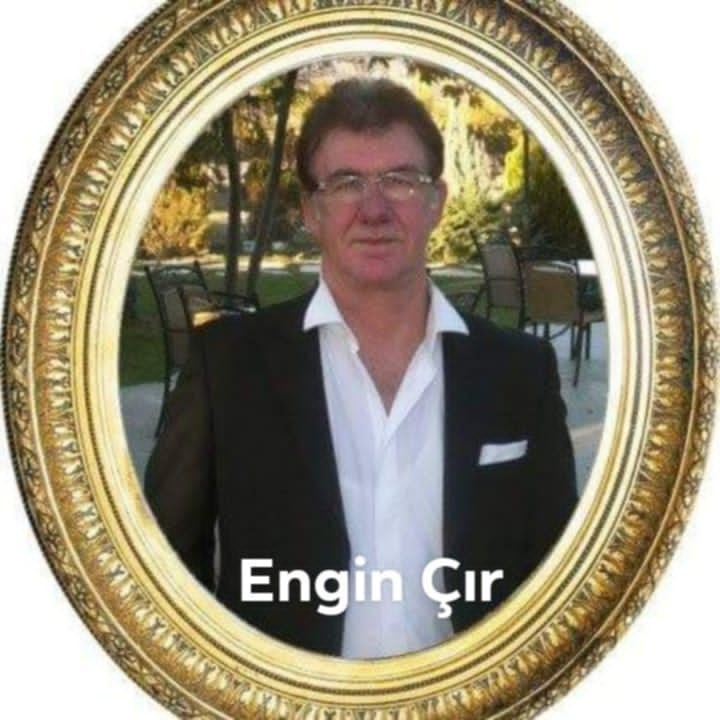
Engin Çir was born on October 29, 1954 in Samsun. He played the alto saz in the school band for two years during his middle school years. In 1970-1971, he continued as a vocal artist in the Samsun Folk Music Association, conducted by Umit Bekir Ağa, for two years. He learned to play the saz on his own. In 1972, he joined the Samsun Music Society Choir, conducted by Taner Cağlayan, and continued his work uninterruptedly until 1979. He entered the Samsun Municipal Conservatory, which was established in 1979. During his four-year education, he took solfeggio and theory lessons from Ali Ozdolap, Ali Özgümüş, Cavit Ersoy, Dr. Turgut Tokaç, Fethi Unal, Nihat Alaca, Şadan Ünsal. Between 1982 and 1989, he studied at the Samsun He worked as assistant conductor and oud player in the Turkish Classical Music Choir at Ondokuz Mayıs University. He passed the Turkish Classical Music pre-listening exam held by TRT Ankara Radio in the 1979-1980 period with an exception contract. He graduated from Samsun Municipal Conservatory in 1984. Later, he worked both as a vocal artist in the executive board and as a lecturer until 1989.
(Easy Co., Mercury Rules Virgo and Gemini, and the Birds in the Trees)
We had fourteen days free and went to the forests each morning to walk. There was a car there that said, – EASY CO. and that was the car I happened to park behind one day, the last day actually. I took it as a Jungian synchronic sign as I used to buy Sgt. Rock comics often as a kid and his war group of soldiers were called Easy Company. I used to read each issue and also the letters of compliments and questions to the makers of the comic that they published at the back each issue. How I loved the adventure stories and the art, and one got to know each character of the comic through the years.
Inside the paths, the woodlands wild and whimsy driven and wondrous, I was walking with Tara, a Virgo. I am Gemini and we are the only two signs ruled by the same planet, Mercury, the fastest planet, the messenger, the one that denotes communication. The birds in the trees called out, and sometimes a squirrel ran away or a chipmunk. Verdant place. Kind atmosphere. A little too hot and humid those days for my liking. But the autumn would one day come. Still, we followed the idea of three S’s,…short, shaded, and slow,- when it was mighty hot. Sometimes a breeze came along. Sometimes not. Mostly empty area. But once in a while a solitary jogger, or an old couple, something. There, a heron that fishes for food by the still pond, and little groups of wild roses, where when their petals are absent the middle looks like a berry red.
I talked to Tara, about the things people talk about,- current events local and the greater world, plus spirituality, things like karma and dreams and journeys. Silence is okay also. Just the sight of the leaves. Or raspberries. Stones. The plain earth itself. The paths are often gravel but at times sand. Orchids are there, and ferns green and wild. I know where some snakes live, and I know all the trails through experience, time, steps. So does she. Little marshes and bogs,- the logs and an owl watching in the day if you are lucky. It’s not an ambitious worldly achievement, but there are worse things people do than nature walk. I loved the fourteen days. Talk walk see be. Believe contemplate meditate heal. Like love belong and dream. Ideas for writings, plus landscape photography, blossom often and well, yes blossom like the summer wildflowers.
Paul Tristram is a Welsh writer who has poems and short stories published in many publications around the world, he yearns to tattoo porcelain bridesmaids instead of digging empty graves for innocence at midnight, this too may pass, yet. His novel Crazy Like Emotion was recently released upon the public by Close To The Bone Publishing.
The Clouds

Clouds float gently in the sky so high,
Soft whispers of dreams as they drift by.
They gather in clusters, then break apart,
A canvas of wonder, a work of art.

White and fluffy, like cotton they seem,
Or dark and heavy, with a storm's gleam.
They dance with the wind, in a graceful flight,
Changing shapes in the morning light.

Some bring rain, a refreshing kiss,
Others shade the earth in a moment of bliss.
They tell tales of lands far and wide,
Of mountains, oceans, and the world's great tide.


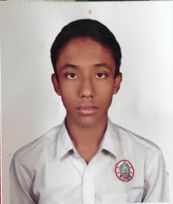
Don Bormon is a student of grade nine in Harimohan Government High School, Chapainawabganj, Bangladesh.