
Birds die faster than dots in poetry
The necks of letters are much longer than the necks of birds

Birds, like poetry, do not know how to beg
Birds die, but so do poems


***
The air left the composition of the sadness of the stomach
Wooden night covered the dead
Iron worms sewed up limbs with immobilization

What street is this? Why is it so dark in here?
And this is not a street, this is life and death


***
I want vegetables to die and not one child to suffer anymore at a diet dinner.


***
The meat screams at the pennant with red silence
Worms crawl out of coffins to the surface
Minced meat crawls out of the meat grinder
Corpses crawl into eyes and ears
The world around is destroyed in the pupils of the shot man
What can world poetry talk about besides war?


***
The cat tears up the mouse just for fun
A grenade tears a child apart because it has to be done

The sky moves and the clouds float forward
Mom cooks breakfast like no one is dead


***
Worms crawl underground
After the rain worms crawl to the surface

We read the letters of the rain on our faces
We crawl in a pool of blood without limbs

Winter is beginning
It's nuclear winter


***
Snow will forgive the grass everything
We'll all fall asleep in the snow and grass
We will be buried in snow and grass
But we won't have children anymore
Who will bury us?

Nuclear stations are growing like mushrooms
The forest turns white as a mouse

The ashes fall asleep
Ashes in the snow


***
Light for the blind


***
no one
died
in the cemetery
again


***
the trees are silent like the dead
before they are cut down


***
sound conservation
a bird reads a blizzard with a glance


***
cemetery without grave
almost like a church without parishioners
love without lovers
mountain without a bottom
god without religion
Category Archives: CHAOS
Poetry from Noah Berlatsky
Introduction To The Collected Works


Berlat

sky’s early

lyrics

gave way

to the later

intense focus on

the early

lyrics

which some

bodhy

should have

fuck

-ing proof

read
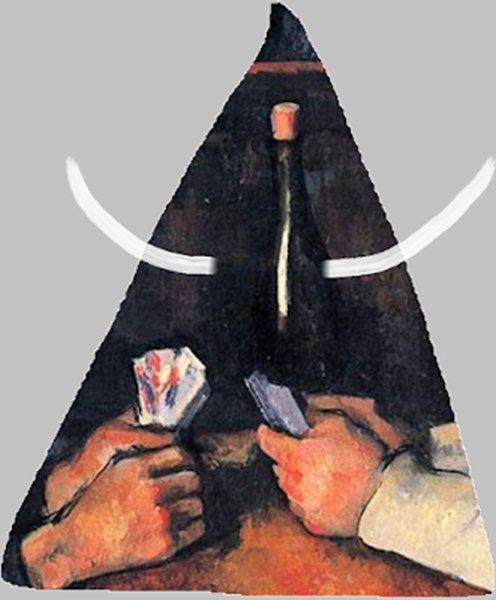
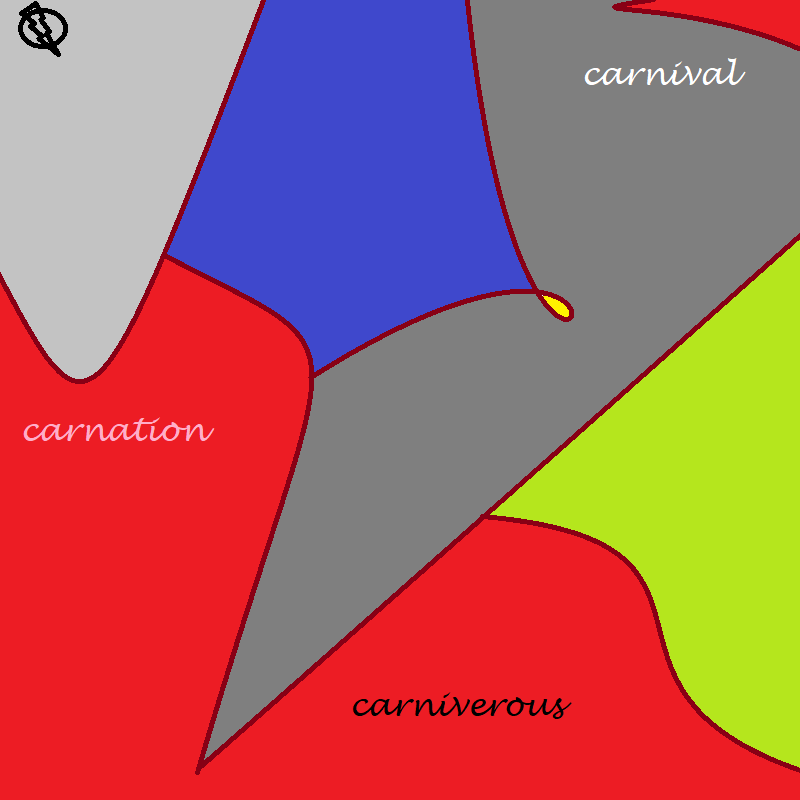
Artwork from Mark Young
Essay from Gozalkhan Samandarova
War, your name may disappear in the world!
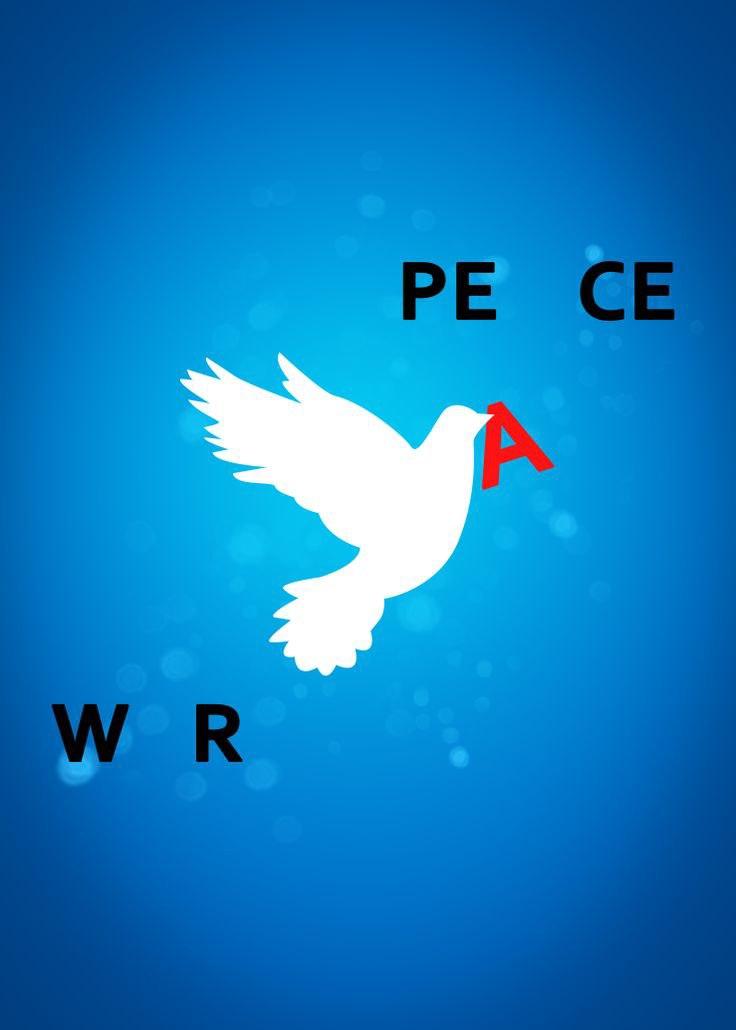
War… My language is speechless. There is also an endless restraint in the movement of the pen on the paper. War… There are no words for definition and classification, for explanation. Why!!! A word so hard to understand?
No… A word that wants to be understood even if it is understood, a word that is wished not to be, this word should not be used in any time and space. A word that made millions of people’s hearts bleed, took joy from their faces, and made them never smile again. It is a word created from the cries of innocent babies, the cries of angry mothers to God, and the “lovelessness” of lovers.
A word made from the silence of those whose bitten bread remained on the wall, who came out on their feet – who came in a cart, whose arms were hugged in their lap – who came wounded, who came from a chain of letters written “I’m going to next spring” and who live their whole lives waiting for spring. this. As Vladimir Mayakovsky noted, “War is tears and blood for people, it is widows and homeless, it is a repaired hut, killed youth and humiliated old age.”
This is what war is!!! Why is the language speechless?!
Of course, war spares no one. It is and has been a series of dark days that do not live, like rain that falls on the heads of the young and the old, the rich and the poor alike.
Praise the endurance of the people who lived in this war there is no way. The children were also brought up so mature that they did not have time to be children, Romain Rolland’s “To lose youth in war is to snatch the spring from the seasons.” like, there was no “spring” for children during the war. Everyone who lived during the war was the owner of “strength”. Because, during the years when the sky was under “dark clouds” and all the men were mobilized to the front, the country lacked manpower and the field work was lagging. But this thing did not bend the Uzbek people. Our women rolled up their sleeves and drove tractors, went to the fields, and raised their families.
Sometimes I think, why does a person rebel, what benefit did we get, to this day, he does not refrain from rebellion, war – from doing this again. What has war given us that makes us prone to rebellion?
Killing millions of people, orphaning babies, teasing, fondling, and animalistic acts of human children, right? Have you ever thought about those who try to bring to life things that you can’t even think about?
We understand one thing should be noted that it will not be good if there is a war now. Let’s fear war now. Let’s understand that if we don’t preserve our peace, we will fail and disappear. Because now we live in a time when children are born knowing who they will be, what they will do, and how they will do it. Now we live in a time where millions are ready for one stone. We see that technique, technology now serves not for “man”, but for “inhumanity”.
Public beach in weapons are a clear example of this. Weapons of mass destruction have a powerful positive effect on the war system, reinforcing its proliferation and ongoing wars have the potential to destroy our planet. Nuclear, chemical and biological weapons are distinguished by their ability to kill and disable people, destroying entire cities and even entire regions with supernatural destruction.
So-called “nuclear” wars kill millions, cause nuclear winter, and cause world-wide food shortages and starvation for millions. The entire nuclear strategy system is based on a false foundation, as computer models suggest that a very small number of detonated warfighters could shut down the entire earth’s agriculture, meaning that the human species would be given a death sentence.
Chemical and biological weapons. Biological weapons include harmful natural toxins such as Ebola, typhus, smallpox, and others. Their use could cause an uncontrolled global epidemic. Therefore, it is important to adhere to existing agreements that form part of the alternative security system. The Convention on the Prohibition of the Development, Production and Stockpiling of Bacteriological (Biological) and Toxin Weapons and on their Destruction was opened for signature in 1972 and entered into force in 1975 with the support of the United Nations. entered 170 prohibits signatories from owning or developing or stockpiling these weapons. [2]
Let’s remember that the terrible consequences of America’s bombing of the Japanese cities of Hiroshima and Nagasaki, even after 75 years since the end of the war, continue to have negative consequences. This is an example of the greatest tragedy of war. [3]
If there is a war now, neither hundreds of Zebo Ganiyevas nor Sabir Rahimovs who are picked in a row can save us. This is the bitter truth…
Dear ones, “It will not be good if there is a war now.” As the great philosopher Aristotle said, “If we do not end war, war will end us.” The day has come when he will remember his words. What I mean by this is that every day we are given in peace is actually a blessing. We did not sacrifice anything for this peace and nothing will be sacrificed anymore. If only we could understand that, dear ones!!!
References
\\http://m.khabar.uz/uz/jamiayat/urush-onalarin.
\\https://worldbeyondwar.org/uz/phase-weapons-mass-destruction/.
\\https://daryo.uz/2020/08/10/hirosima-va-nagasaki-75-yillik-dahshat-kolami-suratlarda.
About the author

Gozalkhan Samandarova was born on November 11, 2003 in Khanka district of Khorezm region. Currently, she is a student of the Faculty of Pedagogy of the Namangan State Institute of Pedagogy.
Creative works of Gozalkhan Samandarova were published in “Smile” magazine, “Distant Stars” anthology, “Un monde d’erudits et de creators brilliants” almanac of France.
🔰 Winner of the “Best Creative Student of the Year” nomination at the institute stage of the “Student of the Year – 2023” contest;
🔰 Winner of the essay contest “We will stop corruption together” held at the Namangan State Pedagogical Institute;
🔰Member of “Mushoira club” of Namangan region.
WhatsApp number +998998094546
Khorezm, Uzbekistan
Essay from Naeem Aziz

The Life of a Praying Mantis: Nature's Stealthy Predator

The praying mantis, an intriguing insect named for its prayer-like posture, has a life cycle that showcases the marvels of nature. Here's an in-depth look into its journey from egg to adult.

Egg Stage:
A praying mantis's life begins inside an ootheca, a frothy mass created by the female to safeguard her eggs. The ootheca hardens, providing a secure environment for the developing embryos. Depending on environmental conditions, the eggs hatch within weeks to months.

Nymph Stage:
Upon hatching, mantis nymphs resemble miniature adults but lack wings and reproductive organs. From the start, they are voracious predators, hunting small insects. They go through several molts, shedding their exoskeletons as they grow larger.

Adult Stage:
The final molt marks the transition to adulthood, during which the mantis gains wings and reproductive capability. Adult mantises are solitary and skilled hunters, using their excellent camouflage and swift reflexes to catch prey with their raptorial forelegs.

Reproduction:
The mating process is notable for the potential cannibalistic behavior of the female, who may consume the male after or during copulation, providing her with additional nutrients for egg production.

Ecological Role:
Praying mantises are vital in ecosystems, controlling insect populations and serving as prey for larger animals. They are valued in gardens for their role in natural pest control.

Conservation:
Though not endangered, mantises face threats from habitat loss and pesticide use. Conservation efforts focus on preserving natural habitats and reducing chemical use.

Conclusion:
The life of a praying mantis is a testament to adaptability and survival. From egg to adult, each stage reveals the mantis's role in maintaining ecological balance. Their presence in nature reminds us of the intricate beauty and complexity of the natural world.


Md. Naeem Aziz is a Bangladeshi Author, Writer, Poet, Engineer and Photographer. He is best known for his writings and photography. He was born on 10th December 1998. He is from Dhaka, Bangladesh.
Poetry from Sayani Mukherjee
Halt
A symphony of noon dew song
A cavernous inspiration
A tulled skirt, a picfair in display
Swirling motion in amorphous zeal
Born and broken in a Cavendish heart
I lost my numbers in a while
Play follios on rent
I pictured a sumptuous scorn
Mere wordplay of vivid illusions
Time’s lost unbidden voice
She strummed through
A magical labyrinth of airy valve
Before it came a burning halt
As it happens in a symphony song.
Excerpt from Avery Brown’s Blood Sagas novel Blood and Loyalty
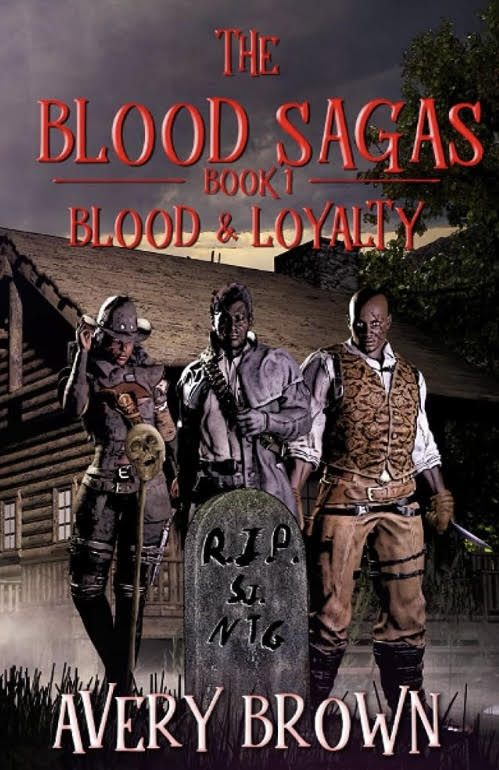
Alkada and his men rode hard and adamantly, circumventing Captain Hammer about two days back in the Barren Canyons. It took every ounce of discipline Alkada possessed not to confront Hammer and settle up on owed blood. However, catching up with NoLove and the Mob took precedence at the moment. Shyne loyalty must be upheld, he thought to himself when he made the decision. Besides, they were hot on their quarry’s trail by not even a half day's ride behind.

Alkada reached out to Skully. Vexed by what he saw, he signaled for everybody to stop. "They're already in Freedom Compound," Alkada announced. "Are you sure? The trail is still fresh," countered StreetLife, pointing down at the newly made hoof marks on the ground. "Yeah, I'm positive, and there's a lotta activity goin’ on. People are movin’ all about there. But I'm not sure how this is gonna play out if we gotta rock the bells."

"So, let's post up here and wait them out," StreetLife suggested. "No, that's no good. Whatever has brought them here has brought many others from all around. I guess that meeting the soldier told us about is pretty big. So, I'm sure our arrival won't be a total surprise.

Besides, waiting here may go from laying on three enemies to being greeted by a battalion, and having Republic soldiers at our backside don't sit proper with me. Not to mention, I don't believe Baron Black will take too kindly to us jus’ kickin’ grass so close to his compound. He and my father go way back, and that alone will warrant me payin’ him the respect of a visit. And it's a good bet we're bein’ watched right now." "Rahhhhh," Skully screamed overhead, confirming Alkada's statement.

Alkada reached out to the bird with connection and awareness and saw that several sentries from Freedom Compound were watching them. A moment later, Alkada snapped out of the connection he harbored with the bird. "Yeah, we're bein’ watched. But, right now, it’s just curiosity as to why we are clustered here talkin’ without proceedin’ to the compound. So many others have passed through here recently. We're just one of many, but it won't be much longer before mild curiosity turns to violent interest."

About Avery Brown

Avery Brown is a native of Brooklyn, New York currently residing in Atlanta, Georgia.  As a first time author, Brown was inspired to write this story due to the passing of a dear friend at the hands of police. The Blood Sagas came about in hopes of keeping the memory of his friend alive for generations to come. He understands the beauty and passion necessary to create a space in which characters can explore complex issues in a fantasy world. He is now currently working on his second book in 4-part the Blood Sagas series. Passionate about his craft, Brown is also hard at work on his next project, Manimal, a fantasy thriller, that illuminates the magic of the Indian Nations.

More about the Blood Sagas on Avery Brown's website.