
The Hallucination

It tracks the edge of the wilderness
inside the skull of the mind,
tongueless yet obstreperous,
shouting like King Ubu lost in Poland.
It is shocking how unshockable it is.
The raptors of consciousness
gather in its many caves,
the blue shells of their eyes
do not blink.
Argus is its only ancient commentary,
though Medusa is to come.
Count its eggs, those tiny mausolea.
The mice in the garden gave it all their stories.
The mountain flowers are frozen like so many monkeys
in its zoo of gazes. The coyotes themselves
are whining to get in, you can hear them every night.
The ravens shake their beaks and coolly smirk
at the madwomen staring at their hands that are holding nothing.
Category Archives: CHAOS
Z.I. Mahmud explores Romeo and Juliet
For young people living in the world of adults, “love” is a means of defiance and resistance. Explore with respect to the literary text and any cinematic adaptation of Romeo and Juliet prescribed in your course.


The frantic pace of the movie reveals the outburst vehemence and impulsive hot-headed nature of the dwelling aboriginal of Verona as latterly foreshadowed by the rage, grief and passion of the feuding rivalries between the adversaries-Capulets and Montagues----true to the authenticity of Shakespearean spirit. 1960s film version was focused on tragic love; the 1990s is about violent love.

Shakespearean dramatis persona were the milieu of the starcrossed lovers and their inner moral dilemmas of those minds whose temperaments resonate reckless and hasty nature as the dysfunctional world of the Montagues and Capulets whose blood and honour were inseperable. Modern day mise-en-scene of the adaptation is a brilliant spectacle that marvels the accomplishing achievements through bestowal of laurel wreathed bouquets and accolades. For instance, Mercutio’s raving in the Capulet’s ball makes unimpeachable exemplary phenomenon with the bottling of acid beforehand. Romeo’s decision to end his life with poisonous drugs parallels the lifestyle of violence and addiction. The mafia clans fanaticism of religious sentiments as projected by their Catholic vein running through the plot juxtaposes coldblooded aggression as ironically spotlighted by the stereotypical families.

The close shot camera focusing the Shakespearean hero and heroine cloistered by the walls of Verona and confinement by window frame of patriarchal abode respectively. Upon revealing close up shot Zeffirelli’s camera angle moves to showcase Romeo attired in a deep, lilac; a Montague bereft of Capulet vulgarity and ostentation; nonetheless, pill box hat, eyeliner, flawless complexion and the flower exemplifies effeminacy. “A glooming peace this morning with it brings. The sun for sorrow will not show for his head”-----unshaved, unkempt Romeo beside swollen lips and fluffy faced Juliet in the tomb scene is the visual artifice in commitment to the ironical perspectives of the drama. Zeffirelli’s textual interpretation literally elucidates Shakespeare’s highly stylized and emotionally expressive naturalism that bestows weight to the narrative moments like Juliet’s departure epitomizing overexcitedness and emotional disorientation by the state of the physical dizziness. Here, as throughout, Zeffirelli creates a situation where visibility becomes feeling and feeling becomes awareness.

Religion of love imagery foreshadowed by the sonnet dialogue is absolutely superbly visualized filmic adaptation to cherish beneath the connotations of pilgrimage and saintliness: institutionalized and ritualized love-making courtship. The starcrossed lovers romantic love-making sonnet in the background depicted by the imageries of saints, pilgrims and statues brings the abstractest essence of martyrdom, canonization and immortality---the fabulous trappings embodying their history---their personalities and their naivetes, and their uncertainty of each other and the awareness of the social context in which they find themselves in the ignorance of perils. Choruses last six lines musical effect is absolutely inappropriate and unnecessary addition to the cinematic conventions of diegesis hovering between snapshots and painting, documentary and fiction; reconciling the present tense with the past tense of the film, ethical space with that of the cinema and history with story as profoundly replicated in Mercutio’s remark to Romeo is appropriately credible to Zeffirelli’s diegetic: “Now art thou what thou art, by art as well as by nature.”

Further Reading

Sarah L. Lorenz’s “Romeo and Juliet”: The Movie, The English Journal, March 1998, Volume 7, No 3, Teaching the Classics: Old Wine, New Bottles, March 1998, pp. 50-51, National Council of Teachers of English

Michael Pursell’s Artifice and Authenticity in Zeffirelli’s: “Romeo and Juliet”, Literature and Film Quarterly, 1986, Volume 14, No 4, pp. 173-178, Salisbury University
Poetry from Mahbub Alam

Eid-Ul Azha (2)

The heart is on the goats, cows, camels, or any other animals-
That permits on the day for us
Feeling a touch of love
Sacrifice our best like the friends
So nice of getting active by doing so many things
By embracing, meeting and distributing
The meat to the relatives and neighbors
And enjoying the taste and beauty of sacrifice
Spread the light of brotherhood among us
On the other side the greatest assemble of the Muslims at Ka’ba in Mecca
Pray to Allah for the salvation of the soul
And may He be merciful to the humankind
We are passing our days so acute regarding natural imbalance
And facing the challenge of unknown diseases
Oh Allah! Please, pardon us
Make the world suitable for us to live in peace
We are going to sacrifice our best
Please remove us from our all misdeeds and sins
And receive our sacrifices we do on the day.

Chapainawabganj,  Bangladesh,
13 June, 2024.

Md. Mahbubul Alam is from Bangladesh. His writer name is Mahbub John in Bangladesh. He is a Senior Teacher (English) of Harimohan Government High School, Chapainawabganj, Bangladesh. Chapainawabganj is a district town of Bangladesh. He is an MA in English Literature from Rajshahi College under National University. He has published three books of poems in Bangla. He writes mainly poems but other branches of literature such as prose, article, essay etc. also have been published in national and local newspapers, magazines, little magazines. He has achieved three times Best Teacher Certificate and Crest in National Education Week in the District Wise Competition in Chapainawabganj District. He has gained many literary awards from home and abroad. His English writings have been published in Synchronized Chaos for seven years.
Essay from Ibrahimov Saidakbar
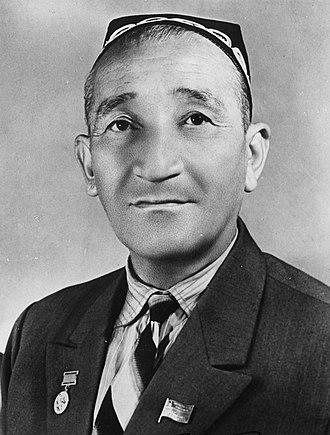
THE PERSONALITY OF GAFUR GULAM IS AN INDELIBLE IMAGE OF UZBEK
Ibrahimov Saidakbar
Tashkent State University of Law
Faculty of Criminal Justice
3rd-grade student
Today, we are informed about the work and life of the national poet of Uzbekistan, a great representative of our literature, academician Gafur Ghulam through school textbooks, various books, or mass media. However, it will be useful if we briefly dwell on the work of this artist and learn the necessary conclusions from it.
People’s poet of the Republic of Uzbekistan Gafur Ghulam was born on May 10, 1309, in the Korgontegi neighborhood of Azim Tashkent in a family of hard workers. His father Ghulam Mirza Arif knew the Russian language, read poetry, and wrote poetry himself. Gafur Ghulam was nine years old and his father died when he was fifteen. In these periods of his youth, our writer studied first in the old school, and then in Russian-Tuzem schools. After completing teacher preparation courses, he teaches in schools. Gafur Ghulam even works as a teacher in an orphanage and for some time as a director of such schools. At that time, the writer established relations with the publishers of various newspapers. He works in the newspapers “Kambagal Dehgan”, “Kyzil Uzbekiston”, and “Sharq Haqikatii”. The first literary activity of the poet began in 1923. He expresses his life
in the poem “Felix’s Children” written this year. The poet’s first poetry collection was published in 1931 under the name “Dynamo”, and in 1932 the second collection was published under the name “Living Songs”.
As everyone knows, world and Uzbek literature has many great representatives of prose and poetry. That is, most creators have their creative achievements in the same direction of literature, and some creators feel free in poetry, and others in prose or drama, and enhance their creativity. When we hear the names of Abdulla Qahhor and Abdulla Qadiri, we think of masters of the epic (prose) genre, when we think of the names of Abdulla Oripov, Usman Nasir, Hamid Olimjon, Muhammad Yusuf, we think of artists who have come to the public’s attention with their poems. Because someone was an
unwitting fan of one of their works, and someone was a fan of their poems. However, if we dwell on the name of Gafur Ghulam, we can think that the ideas mentioned above are somewhat inconsistent with his works. Because the creator skillfully waved his pen in both prose and poetry genres and left great examples of creativity in both directions, and each of them is worthy of admiration. In particular, anyone who is interested in Gafur Ghulam’s work is familiar with the artist’s work “Shum Bola” or “You are not an Orphan”. The author’s short stories and stories “Netay”, “Yodgor”, “Resurrected Corpse”, and “Shum bola” written in the 30s of the 20th century made a great contribution to the development of our national literature.
In many works of Gafur Ghulom, the true heroism of the people, humanity, and Uzbek nationalism are shown. Gafur Ghulam dedicated many of his works to the personality of children. The work “Shum Bola” is one of the successful works of the writer. In the play, the hero talks about his tragic life. The boy ran away from his house to his aunt’s house because of his mother’s punishment while taking the products out of the house. However, the boy is not lucky here either: he accidentally kills his uncle’s quail and leaves this house. Thus, he begins to be darbadar and trouble. The writer focuses on describing the worries and inner experiences of this child. Depicting external events, things and everything surrounding the little hero in the play serves to express human feelings deeply.
The events and scenes of the Second World War left an indelible mark on Gafur Ghulam’s heart. If he went back to his childhood in the years of the First World War and could not fully feel all the horrors and complications of the war, the artist considered the new war and those who provoked it to be his personal, bitter enemy. In these years, the poet’s literal works such as “You are not an Orphan”, “Gold Medal”, “Observation”, “Time”, “Missing”, “There Will be a Holiday on our street”, “I am a Jew” classical poems were born. In many of the writer’s poems, there is the image of an oriental sage – a father:
“You are not an orphan” (1942), “Grief” (1942), “One is a student, one is a master” (1950), “You are young people” (1947), “Spring Songs” (1948) and others.
The poet received the State Prize in 1946 for the collection “I Come from the East”, a collection of poems written during the war years. Gafur Ghulam was awarded the title of academician together with his creative friend Oybek for his great contribution to the development of Uzbek science and culture (1943).
Gafur Ghulam also used his pen effectively in the years after the war and created high artistic works; published several excellent articles on journalism and literary studies. His work appeared as a unique chronicle of the people’s life in this period. If Gafur Ghulam rose to the level of a philosopher-poet with his poetic works during this period, he also showed that he was a skilled writer who knew the people’s life and spirit well with his stories such as “Shum Bola” and “My Thief Boy”. Gafur Ghulam’s selected works, collections, and works in ten volumes have been published several times. His articles written as a scholar of classic and modern literature, his journalistic speeches on various aspects of life, feuilletons, and funny stories are warmly welcomed by the people, the poet is highly praised everywhere. would be honored. Gafur Ghulam was awarded the title of “People’s Poet of Uzbekistan” in 1963.
At the end of our speech, we should quote a verse from the author’s pen: Be as hardworking as the world, sooner or later,
With this, the poet emphasizes that movement means aliveness, that both the universe and the earth are always in motion, and he encourages our fans to move and live. In conclusion, we can say that during his life, the writer left an indelible mark in history with his life, his will, and his legacy equal to gold. Today, finding such works, even writing them, is a difficult task.
References:
1. Uzbek writers. Sabir Mirvaliyev – “Fan” publishing house – 1993
2. Naim Karimov, publishing house named after Gafur Ghulam, Tashkent-2003.
3. The spiritual and educational significance of Gafur Ghulam’s work. Scientific
conference. Tashkent-2003.
4. www.ziyo.net
5. www.ziyouz.com library
Poetry from Shafkat Aziz Hajam
POEM: HER LOVE
I .  I lost my beauty for the harsh time of my youth,
Yearned to rare it for my name after demise,
She didn’t aid me to preserve my beauty.
She longed to preserve hers that would be mine too –
For this she did like me but alas! my harsh time…..
I had to bear it alone,
Her love was for my summer when fall reigned me.

2. THE LOST DREAM
The lost dream, I dreamt again,
Couldn’t fulfil it, oh! it caused pain.
Its beauty was not altered a bit,
Not even my desire for it.
I dreamt it again but untimely.
 I could only cry helplessly.
My cry and sigh it could hear,
Though it yearned, it wasn’t fair
For it to be the dream of mine again
As like me, him it would cause pain


Shafkat Aziz Hajam is a Indian in Kashmir. He is a poet, reviewer and co-author. He is the author of a children's poetry book titled as The Cuckoo’s Voice and one adult poetry book titled The Unknown Wounded Heart.
His poems have appeared in international magazines, anthologies and journals like Inner Child Press International USA, AZAHAR anthology Spain, SAARC anthology, Litlight literary magazine Pakistan, PLOTS CREATIVES online literary magazine in the USA, Prodigy and other digital literary magazines in the USA etc.
Excerpt from Michaila Oberhoffer
Chapter One

I can’t remember the last time I wasn’t happy… I don’t say this to sound conceited, it’s just the way my people are since my earliest memory.

Every day like clockwork I’d wake up and find myself with a smile on my face, going through the motions of my life as if on a permanent loop blissfully unaware of how empty my rooted happiness was or how futile my purpose was at this point.

Until one day, on my way to work I found myself waiting for my train at the local Muni station, like I always do, when suddenly a young woman bumped into me out of nowhere. As she pushed past a paper fell to the ground from her backpack and I instinctively went to hand it back to her until I realized she had continued her path running in the opposite direction.

Why was she running? I thought. No one runs anywhere any more, there is no need, and what was she wearing?

 I continued to stare in her direction intrigued by her movement until I realized I now was becoming the distraction in everyone’s path to work and began to go on my way thinking how strange this instance was. Still holding that single paper in my hand unaware yet of its significance in my life.

It wasn’t until I was sitting on the train, in my regular seat, that I realized I was gripping on to that very paper. Like a shock to my senses, I felt that curiosity spark inside me. I don’t remember ever being this curious before…

I uncrumpled the paper to find a single sentence written plainly in the middle of the otherwise blank piece.

Why are you so happy?

Why are you so happy? I laughed to myself as I read such a simple question thinking how odd of a thing to just carry around, until it hit as I sat there frozen in fear with the predominant smile on my face quickly fading as I found I had no answer. Why am I, so happy?
All I could muster for an answer is just that everyone just was happy. Since the dark days when my parents had passed over thirty years ago, I felt as if I might have been in this very moment the only person in my society who had questioned this. Well, except for that girl... Who was she? Was she happy?

During the dark days our people found so many stresses in their daily life, so much pain, so much unnecessary sadness blanketed our society or so I remember from the propaganda slogans plastered all over our city when I was a kid...

So funny I had not recalled that memory until now…
It sounds stupid I’m sure but before this piece of paper. This crumpled up piece of paper that could have easily been ignored and discarded at the perfectly accessible waste bin next to every train entrance, I never found myself questioning my life… questioning this society. It just wasn’t something that was done.

Or at least from my experience it wasn’t something that was discussed. Everyone was just happy the way they were. It never seemed odd to me really because it was our standard of normal. Until this stupid piece of paper ruined my life.

Made me an outsider, made me question everything that I was perfectly happy with moments ago. I felt a strange surge through my body like a warmth running through me that wasn’t welcome and a narrowing of my sight as I stared blankly at the ground until I realized what I was doing with my hands clenched and my face down towards the floor. It wasn’t until I lifted my head that I noticed my strange nature had also surprised the people around me with the many faces of spectators looking at me in confusion then looking at a poster on the train above my head that I never really noticed before.

It read:
Happiness is a standard. If you are unhappy, we are here to help. With a number following the message.

Why had I never noticed this before?
My whole life I never felt this way or had been looked at so questioningly as If I am sick.

You can’t be sick.
Why did this frighten me so much? I thought to myself... If I was sick, I could get help…That’s what they taught us.

Like a battle in my head, I fought the idea of whether I should tell someone, but fear overpowered me. I sat there and found myself faking a smile in response to their stares and like clockwork they smiled back and went back to what they had been doing previously. I felt sick, fake. Hidden. Behind this now pretend façade.

I spent the rest of my trip to work with a smile on my face and a busy mind trying to understand, trying to force out this confusion hoping it would pass, still holding the piece of paper that so taunted my reality.

As I looked around, I kept finding myself wondering if they were all happy too. Why are they so happy?

Why is this a bad thing? My subconscious tried to ask me… but it was so strange now after I had been asked why I was happy. I now found that since I did not have an answer to this question that my mind tried to find the most logical step forward. That maybe if I looked at others, or asked them, I might find an answer. The right answer… the needed answer.

No, that’s too much of a risk.
And then I thought… What if they aren’t happy?
 I mean they had to be right? They were all smiling.

I’m not happy and I’m smiling.
I’m not happy…  Like a shock wave to my reality, it hit me. I never meant to think such a horrid thought… not happy… This cannot be true. That would mean I am sick.

You are not sick.
But I must be…
You can’t be sick.

It felt as if I was handed a key and then a door for that key appeared that I never knew was there and as I went to open the door the key disappeared from my hand, yet the door remained. Locked, taunting me, begging me to open it.

What was on the other side? Why am I on this side of it? Which side was free?

I tried my best to be reasonable, to get myself to stop questioning the purpose of my happiness because it only brought me sorrow not having an answer, but once the question is asked it becomes impossible to forget, especially such an intriguing one…and once you begin to look for something you notice it everywhere. Moments in your everyday life that make you question. That force you to remember the mystery hidden inside… Why am I happy?

Jeez I do not remember this commute being so long… and so boring.
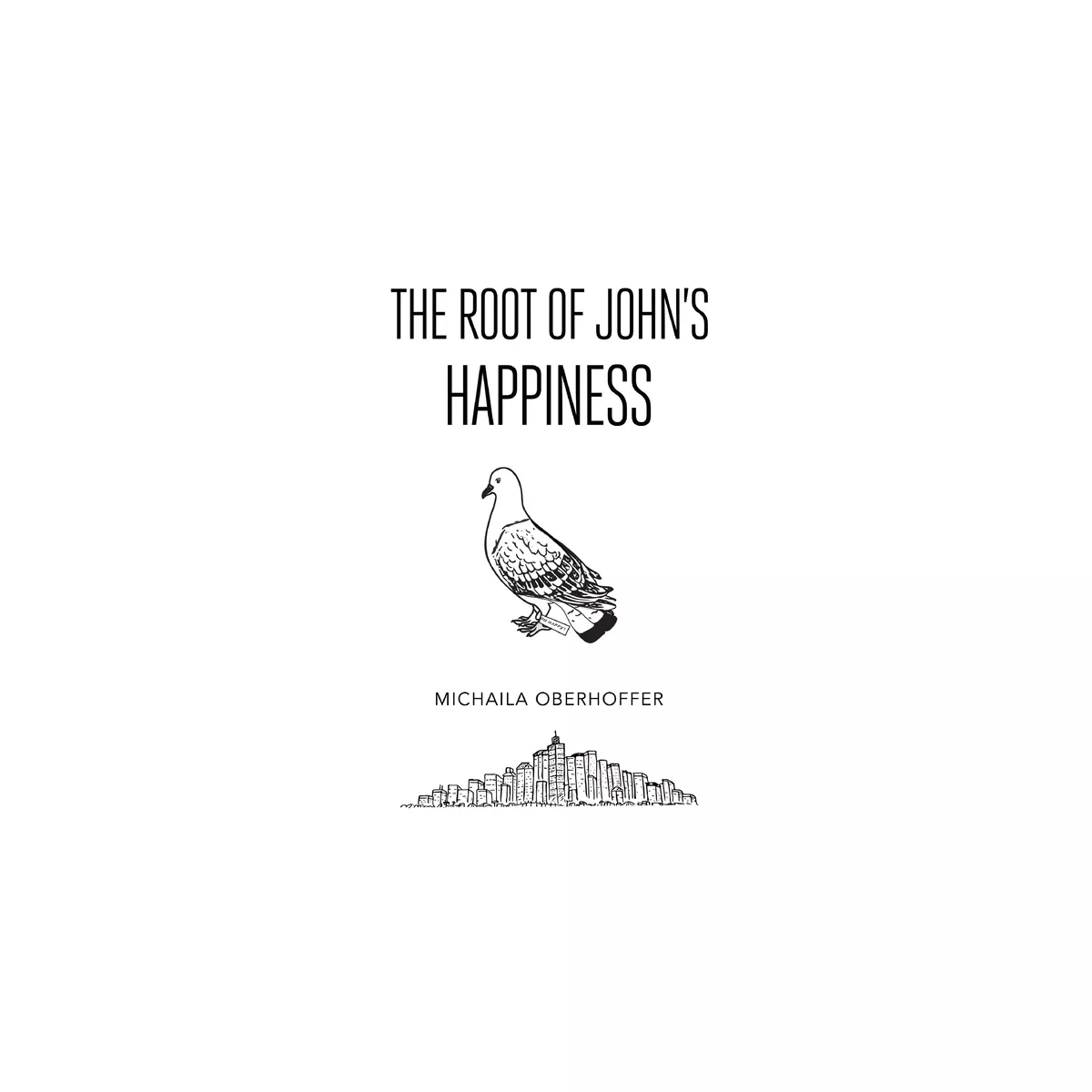
Michaila Oberhoffer was born and raised in the foggy San Francisco Bay area, a place she is still happy to call home. Satisfied with a great meal, a refreshing drink and a bit of nature, Michaila wishes to live life simply doing what she loves. A lover of all things philosophy and science, she believes that being human isn't about being intelligent enough to know but wise enough to question. She can easily be found sitting at a patio table at a coffee shop or at a local brewery, trying very hard to allow the thoughts in her head to become coherent enough to publish, settling for the comforts of humor and speculation. THE ROOT OF JOHN'S HAPPINESS is her debut novel.

Poetry from J.J. Campbell

ten more years


remember when your parents

told you they were staying

together for the sake of the

children


it was all a lie


they hated you and only

stayed together for another

decade because the taxes

were easier to do


ten more years of do

what your father says


ten more years of

anger and despair


ten more years of talking

yourself down from the

roof every other night


you still are haunted

by those ten years


eventually, time will

run out on all of us


not everyone gets

the bliss of a sunset
--------------------------------------------------------------------------
another sign of getting older


here comes a

sexy woman

in glasses


my knees

just got

weak


is it love


or fucking

arthritis
----------------------------------------------------------------------------
someone will find the happy out there


i was told i never write happy poems


some impossible challenges should

just be let go


but no


i have to do this


so, there's this little boy

watching the rain


his father tells him

those are tears from

god


and the little boy asks

why is god crying


and the father tells the

little boy it is because

of all the times he lets

down his mother


and the little boy, just

old enough to know his

father is probably full

of shit


says maybe it is because

of all the times you have

let her down and she knows

she could have done much

better


after taking his beating, the

little boy learned a lasting

knowledge about the truth...


it hurts
--------------------------------------------------------------
with all i have to give


hot water racing

down your back


i can feel your breath

in my soul


it feels like i have

waited forever to

taste you


to grace your lips with

all i have to give


be it this night or all

the nights we have left


you possess the only

arms i ever felt safe

within


i could promise you

the moon but i'd rather

go hand in hand shooting

the stars


walk across a bridge and

jump together


to see how much love

can let us fly


i want to show the muse

all that she has inspired

me to do


one day, hopefully


we'll meet in some

random city like it

was meant to be
----------------------------------------------------------
chasing dark secrets


the muse is in paradise

trying to enjoy life a

little bit more


i'm off chasing dark

secrets


wondering if it is only

my tail or a tale worth

telling


our love grows stronger

and i long for the day

where there is a lonely

beach and two old souls

enjoying a drink


i know the chances

are slim


but i refuse to believe

the impossible can't

happen


of course, the deeper

the longing the larger

the price to pay in

sorrow and madness


J.J. Campbell (1976 - ?) is old enough to know where the bodies are buried. He's been widely published over the years, most recently at The Rye Whiskey Review, Disturb the Universe Magazine, Horror Sleaze Trash, The Beatnik Cowboy and The Asylum Floor. He will have a joint book coming out this summer with C. Renee Kiser. You can find him most days on his mildly entertaining blog, evil delights. (https://evildelights.blogspot.com)