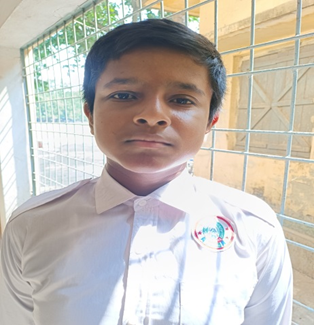
One day a boy named Sofiq went to his School. In tiffin time he quarreled with his friends. So, he was distressed. After breaking the school he lonely went to the rail station. Then, he started working beside the train line. Suddenly he noticed that the train line was broken in a place. And that time he the whistled of a train. He could not know what he did. Then, he hit upon a plan. He had worn a red color tea shirt. He put out his tea shirt and then tired it with a stick and trebled it. The driver of the train noticed that and stopped the train. Finally he saved the lives of many people with his witness.
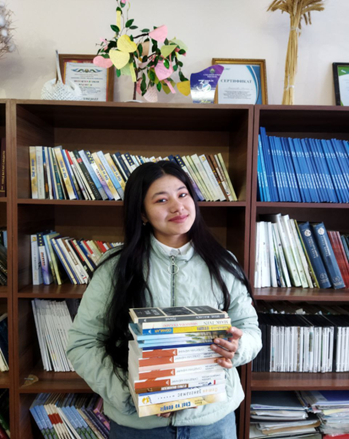
Md. Amir Hamza is a student of grade seven in Harimohan Government High School, Chapainawabganj, Bangladesh.
Our contributor Michael Lukas has suggested some literary books by both Jewish and Palestinian authors people can read to better understand the region and the conflict.
Also, here are some non-partisan humanitarian ways in which literary folk can consider bringing our unique skills and interests to assist.
Librarians With Palestine has the Matloub (Wanted) project where people from anywhere in the world can choose books off of a website and donate to have them shipped to libraries in the region.
We Are Not Numbers matches up writing mentors who live outside Gaza with Gazan youth who want to tell their stories. They are also looking for venues to repost and reshare the stories.
The Gaza Book Project is an initiative to replace the books in a bookstore that was recently destroyed in the war. They invite people from around the world to donate used books from their personal collections with a letter included about why the book is meaningful to them, with the goal of sparking international connections over literature.
Freelancers in Gaza, founded by a woman from the region, seeks to provide Gazan youths with career mentorship and connections. They’re looking for more mentors from around the world to virtually mentor Gazans who share their career paths.
Next, an announcement from one of our contributors.
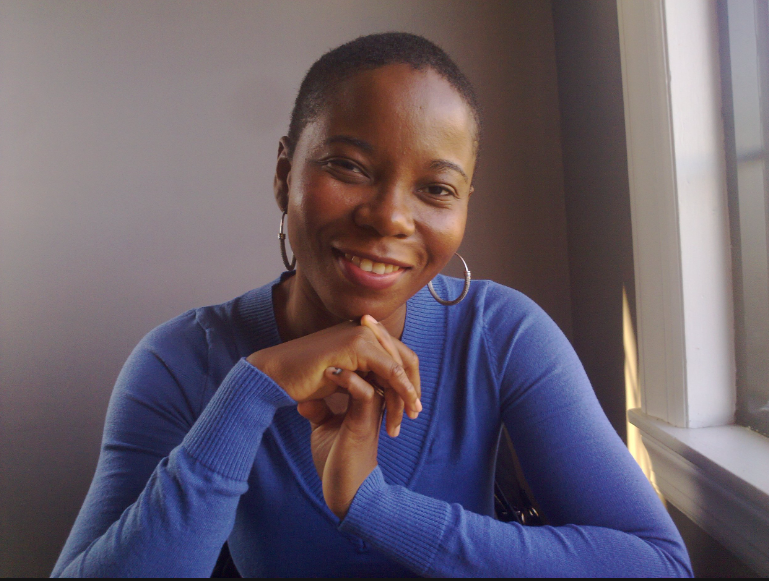
(Image is of a smiling Black woman with big hoop earrings, short hair, a light blue sweater, and her hands folded in front of her).
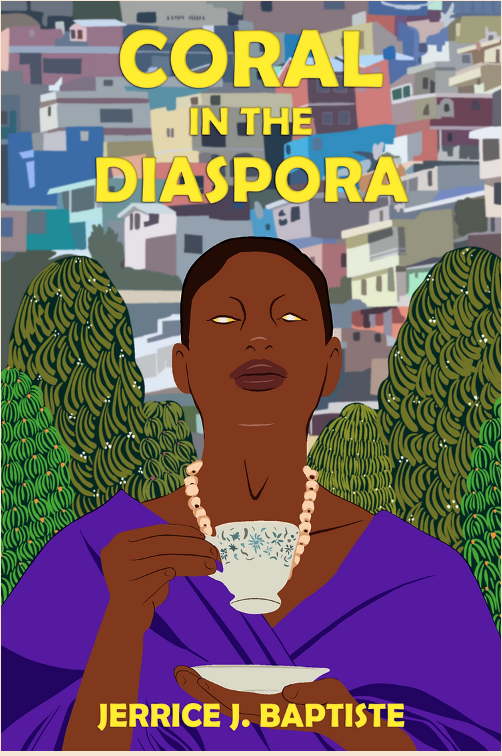
Coral in the Diaspora by contributor Jerrice J. Baptiste is officially available for pre-order and is the third chapbook in Abode’s 2024-2025 lineup!
Book Description:Coral in The Diaspora by Jerrice J. Baptiste is a collection that captures the lives of the Haitian people as they embrace the goodness in their community. It celebrates the wisdom of the elders as leaders who are cherished for their commitment to help the island thrive. Each member of the island’s community is welcomed and valued for their special gifts and the joy they each create by being unique souls. Coral in The Diaspora creates a visceral experience for its readers through its colorful imagery and beautiful language by giving voice to the island of Haiti.
About the Author: Jerrice J. Baptiste is a poet born in Haiti. She has educated different ages through her seven multicultural children’s books with the whimsical talented artist April Matula, and also by her full-length poetry book titled Wintry Mix. As an author she has presented her books in hundreds of public & private schools since 2013. She is also the founder of Authentic Poetry workshops in The Hudson Valley, NY for the past 20 years. She has been a recurring teaching artist/poet at The Omega Institute in Rhinebeck, NY. More about her here.
Our first June issue, Remember Who You Are, covers a variety of ways in which people embrace, create, learn about, and discover their self-concepts. From scholars writing about the history and culture of Haiti and Uzbekistan to a tribute to an immigrant grandmother who left to re-create herself, to people rejecting oppression and violence and finding themselves in nature, wilderness, love, family or chosen family, to those reaffirming their values in a confusing world, to those going on adventures, reflecting on the human condition, celebrating their birthdays and their radio careers in Ghana, or simply playing with words, colors, or syntax to create individualized art, this month’s creators are seeking to understand and reclaim themselves.
Jacques Fleury reminds us of the revolutionary history, vibrant spirit and economic diversity of Haiti and how the country is more complex than Western headlines reveal.
Kurbanova Saodat Ismatkulovna speaks to another rich and complex and lesser-known culture, pointing out that Uzbeks rank highly among measures of the world’s happiest people. She suggests that it has to do with the country’s peaceful culture and natural beauty as much as with material prosperity.
Mixriniso Jurayeva celebrates the history and the unique poetry embedded within the Uzbek language. Uljaboeva Hilolaposhsho highlights the Uzbek language’s crucial relationship to the Uzbek culture. Jorayeva Marjona Baxtiyor delves into Uzbek sociolinguistics and suggests that how Uzbeks use language reflects the beauty and wisdom of their culture. Norsafarova Nilufar discusses the grammatical structure and syntax of the Uzbek language.
Rosiyeva Gulbahor speaks to the joy of education and reading. Shokhida Jurayeva encourages parents and caregivers to bring children books to read for pleasure.
Atajanova Ogultuvak’s essay outlines the importance of early childhood education and Uzbekistan’s efforts to make that accessible to all young children. Gulsevar Xojamova also highlights the importance of education to Uzbekistan and its government. Abdukhadirova Mahliyo explores the psychology of early childhood education and development.
Malika Oydinova advocates for all students to become proficient in a foreign language, for personal as well as professional development. Shokhzod Dilmurod highlights the role of information technology in physics research.
Azimova Munisa describes her personal and academic life goals with determination to reach them. Pascal Lockwood-Villa asserts how he’ll shape his own self-concept, independent of the pressures of commercialism or troubled romances. Cheryl Snell’s poetry highlights the tension between fear and doubt through its dramatic allegory of the protagonist’s ascending from bed on wings of hope, and also questions our dependence on media.
Andrew MacDonald explores how news and media images seep into our collective and personal subconscious. Patrick Sweeney does something similar, interspersing cinematic and worldly imagery into his one-liners.
Mark Young shares what he thinks about or listens to when he should be writing, which is also a tour de force of cultural imagery that has shaped him as an artist and person. Leslie Lisbona’s short story outlines how a dramatic painting of a woman, which she purchased and felt compelled to stare into during Covid-19 shelter-in-place, moored her and gave her confidence during a time of personal change. Ghanaian DJ Ike Boat pens a poem celebrating his own birthday and his creative career and values.
Grant Guy’s visual imagery pays tribute to the No! movement in art, in which artists rejected the consumerism that they saw was becoming part of the art connoisseur world.
Michael Robinson contributes a gentle and spiritual poem in memory of a kind and very close friend who passed away, while Wazed Abdullah pens a simple and heartfelt tribute to his deceased mother.
Kristy Raines highlights the fragility of true love and the need to hold onto it and nurture it. Prasannakumar Dalai writes of warm spiritual and romantic devotion. Graciela Noemi Villaverde evokes a tender moment of longing for a lover not yet present while Faleeha Hassan poetically begs a long-lost love to toss off the coat of absence and re-emerge. Maja Milojkovic speaks to lovers who are so intimately connected that they see echoes of each other’s spirit within their own reflections.
Sayani Mukherjee describes human and natural life bursting forth in a London spring as Zarnigor Ubaidullayeva extols spring’s beauty and fresh new life energy. Muntasir Mamun Kiron reveres the legacy of deep-rooted trees growing alongside generations of humans. Lola Hotamova compares the journey of life to drifting down a brook while Mashhura Ergasheva finds companionship with the rain and Don Bormon rejoices in the fun, renewing, and cleansing energy of a rainstorm.
Dr. Maheshwar Das also pens verses about seeking out the divine, along with tender care for a lover and the beauty of small moments watching the birds. John Edward Culp draws on a farming metaphor to highlight how love prepares and mends the soil of the heart.
David Sapp’s story relates how kindness and love are not characteristics unique to hippies or those who openly claim those traits. Shahlo Abduhamidova revels in the peace and comfort of a family meal. Christina Chin and Uchechukwu Onyedikam’s poetic collaboration focuses in on small scenes in our families and neighborhoods and on the perennial human life cycle. Bill Tope’s short story describes the experiences of people who fall through the cracks of society and celebrates chosen family among people who care for each other, as Nosirova Gavhar renders up a tale of children’s kindness to a neighbor.
Jesse Emmanuella’s short piece shows that life comes with both the bitter and the sweet. Lidia Popa reflects on the passage of history from a vista point on a peaceful and historic beach as Mahbub Alam draws on nature to consider the complex nature of life: its peace and drama, love and suffering.
J.J. Campbell evokes the broken dreams caused by various relational disappointments as Choriyeva Shaxrinoz portrays the aftermath of a broken relationship. Philip Butera draws on fruit metaphors to illustrate the bitterness of lost love.
Mykyta Ryzhykh’s poetry focuses in on life growing in the shadows of large societal trauma and oppression. Dr. Jernail S. Anand laments societies’ pursuit of ambition and worldly success at the expense of beauty, compassion, and other humane values. Amir Hamza reflects on our complex relationship with smartphones: wanting them but knowing it isn’t good to become obsessed. Elmaya Jabbarova urges society to bring our compassion up to the same advanced level as our technologies.
Lilian Dipasupil Kunimasa reminds us to seek peace and remember the human cost of war, and praises tigers for their shrewdness, not their violence. Taylor Dibbert illustrates how the “ugly American” stereotype of obnoxious travelers is not totally without basis.
Jonathan Butcher crafts vignettes of experiences that should have been beautiful but were less than expected in reality. His poetry touches on environmental pollution and greed. J.K. Durick’s poems deal with the ways we get stuck in life, physically or mentally, which includes watching too much news.
Z.I. Mahmud probes the moral tension within Batman films, the question of whether vigilante action is appropriate to deal with criminal violence, through an exploration of other characters in the films who mirror Batman.
Mesfakus Salahin reminds us that no human being can escape death. Duane Vorhees speaks to the inevitable passage of time, how the present will become the past, and all will become history unearthed and revealed.
Isabel Gomez de Diego’s photography explores how we relate to the vast expanses of life beyond ourselves: natural landscapes or historical ruins. Federico Wardal outlines and praises the many international figures who came together to support the near-miraculous veterinary effort to save injured horse Al-Khamilah.
Christina Chin and Paul Callus’ collaborative haiku highlights moments of pursuit and action, small and larger dramas. Kylian Cubila Gomez presents photos of scenes that are at once ordinary and unique and fancifully endearing.
Gabriel Flores Bernard turns inward to the human psyche, illustrating how our moods can serve as background colors for the writing or art we create. Joshua Martin explores the impact of commas and words and syntax in a free-ranging set of poems. Noah Berlatsky probes the overlap between art and practicality, questioning whether elegantly presented or passionately shared collaborative knowledge can become poetry. J.D. Nelson’s one-line fragments reflect an experience of the world that doesn’t make linear sense, but somehow feels right.
We expect that this issue will feel somewhat similar to many readers as they navigate the thoughts and ideas of so many different creators from such a variety of backgrounds. We only hope that this monthly mixture will generate a sense of wisdom and completeness on some level for readers.
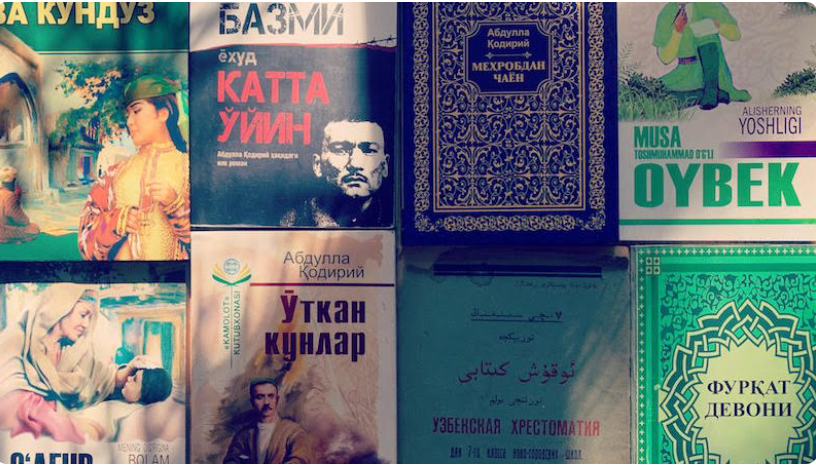
The revival and development of national cultural heritage is the valuable treasure of Uzbekistan.
UDC: И 37.02
Mirsalixova Robiya
Mirsalikhova Robiya
Student of Uzbekistan State World Languages University
E-mail: mirsalikhovar@gmail.com
Annotation
The article is intended to examine the significance of the national self-awareness in the revival and prosperity of Uzbek culture.At the present stage of human development, marked by accelerating globalization processes, the problem of spirituality and spiritual values is more relevant than ever. Undeniably, the national self-awareness serves as a foundation to the strong revival and cultural prosperity. As socio-historical experience testifies, underestimation of spiritual heritage leads society to spiritual poverty and degradation, a crisis of culture itself. The past twentieth century has clearly demonstrated what happens to a person when he loses value guidelines and life meanings, when religion and morality as traditional carriers of spirituality gradually cease to fulfill their functions, and technogenic civilization gives rise to spiritual limitations.
Keywords: spirituality and spiritual values, national independence, social life, national self-awareness, national pride, literature and their popularization.
Spirituality is a complex and multifaceted concept. During the reign, of Islam Karimov published a number of books, most of which were published in the 90s. One of the valuable one is considered to be a book so-called “High Spirituality is an invincible force”. The book “High Spirituality is an invincible force” comprehensively analyzes the content of spirituality as a complex and multifaceted concept at the theoretical and practical levels[1]. It is unique to humans and covers a wide range of human activities. Spirituality represents the essence of man as a socio-cultural being.[2] It is not limited to the framework of religion, science or art, but covers all aspects of human life and permeates all forms of social life, ennobles and brings a higher meaning to everything. It is the total organic unity of such truly human traits as truthfulness, spiritual purity, conscience, honor, patriotism, love of beauty, hatred of evil, will, perseverance. Together with human qualities, spirituality also covers spiritual culture, both in a broader aspect – science, philosophy, morality, law, literature and art, education, media, customs, traditions, and in a narrow sense – religion and spiritual practice itself – worship, cult, religious rituals, religious art.[3]
After gaining national independence and state sovereignty, profound internal changes began in the political and economic life of the republic. Transformation processes covered almost all aspects of life in the republic. A special role in the process of formation of civil society belongs to the revival of spirituality. Thus, immediately after the declaration of independence in Uzbekistan, the strengthening and development of the sphere of spirituality of the people was recognized as a priority direction for building a legal democratic civil society in the republic, along with the economy. In the process of transition to a market economy, the national-historical features of the way of life, customs and traditions of the people were taken into account.
Thus, from the first days of independence, the revival of spiritual values by the country’s leadership became the most important task, raised to the level of state policy, and began to be considered as an organic, natural process of growth of national self-awareness, a return to the spiritual origins of the people, their roots. Thanks to independence, the opportunity arose to study and revive the spiritual heritage of our great ancestors. Events dedicated to their anniversaries were held jointly with UNESCO. [4]For example, in September 1991, the republic widely celebrated the 550th anniversary of the founder of the Uzbek literary language, Alisher Navoi. In honor of this event, the Institute of Language and Literature of the Academy of Sciences of the Republic of Uzbekistan was named after Alisher Navoi, the State Prize named after Alisher Navoi was established, and such works as “Lison ut-tair”, “Sabayi Sayyor”, “Farhad and Shirin” were published. , “Leili and Majnun”, “Khairat-ul Abror”, films and stage productions were created[5].
Folk art is not only one of the spheres of traditional culture, but also one of the most important components of spiritual heritage. Its revival contributes to the improvement of society, its self-organization and self-regulation in the process of transferring cultural values, experience, knowledge from one generation to another, affects the moral and psychological climate in society, providing its development with an optimistic orientation, stipulating the steady progress of social relations that contribute to the harmonious development of free personality in the conditions of independence of the Republic of Uzbekistan. With independence, folk art became one of the main factors in the revival, development and strengthening of the spiritual foundations of a renewing society.
It should be especially noted that, starting from 2017, issues of culture and cultural values have become the highest priority in state policy. Currently, in our country, on the basis of the Action Strategy for five priority areas of development of the Republic of Uzbekistan in 2017–2021. Large-scale transformations are being carried out in all areas and industries. At the same time, special attention is paid to further strengthening noble values and traditions in our lives. In accordance with the adopted Strategy, practical steps are being taken to develop culture, art, literature and the media. At the initiative of President Shavkat Mirziyoyev, work aimed at in-depth research into the unique cultural heritage of our people, establishing interfaith and intercivilizational dialogue, widespread propaganda of educating young people in the spirit of humanistic ideas and national pride has been strengthened and expanded on a large scale. Thus, one of the first resolutions signed by Shavkat Mirziyoyev as President was the resolution on the widespread celebration of the 80th anniversary of the birth of the outstanding poet and writer Erkin Vakhidov, who made a great contribution to the development of Uzbek literature and culture.[6]
A special resolution of the President of the Republic of Uzbekistan dated September 13, 2017 “On the program of comprehensive measures to develop the system of publishing and distributing book products and improving the culture of reading” was also adopted. [7]They are aimed at solving such important problems as high-quality publishing of books, timely delivery of book products at reasonable prices to places, including educational institutions, translation of the best examples of national and world literature, developing in the younger generation from early childhood a love of books and skills reading e-books, increasing the reading culture in our society. Attention is paid to posting on the Internet the best works of classics of Uzbek and world literature and their popularization, as well as ensuring accessibility for a wide range of readers.
The cultural policy of the state, based on the humanization of artistic life, the establishment in various spheres of art of freedom of creativity, free choice of themes and artistic means of expression, as well as the multi-vector nature of cultural relations and the entry of Uzbekistan into the world cultural space had a positive impact on the processes of revival and development of artistic culture republics.
References.
Mirsalikhova Robiya Timurovna. (2024). Islam Karimov as a daring initiator and confident catalyst of conducive alterations in Uzbekistan. Zien Journal of Social Sciences and Humanities, 28, 1–5. Retrieved from https://zienjournals.com/index.php/zjssh/article/view/4899
Эркаев А. Духовность – энергия независимости. Ташкент: Маънавият, 2001.
Ҳакимов А. Искусство Узбекистана: история и современность. Ташкент: San’at. 2010
Каримов И.А. Высокая духовность – непобедимая сила. Т., «Узбекистан», 2008
[1] Mirsalikhova Robiya Timurovna. (2024). Islam Karimov as a daring initiator and confident catalyst of conducive alterations in Uzbekistan. Zien Journal of Social Sciences and Humanities, 28, 1–5. Retrieved from https://zienjournals.com/index.php/zjssh/article/view/4899
[2] Эркаев А. Духовность – энергия независимости. Ташкент: Маънавият, 2001.
[3] Каримов И.А. Высокая духовность – непобедимая сила. Т., «Узбекистан», 2008
OLD SONGS SUNG AGAIN


This beach that we run on, this beach that we sun on,

was a cold mountain once, indomitable quartz.

An insatiable wind chewed the granite into flinders.

The weathered remains gathered themselves as grains

along this treasured shore, this diamond corridor.

But the bored, restless waves too soon will take their leave,

Our beach’s secret cache will be revealed: the smashed

shells, patches of lather, condoms, crap, cadavers….


Life is like a ledger book.

Plusses and losses shape our plans.


The past is a castle; the present, a pasture:

Both are famous for blades (for cattle, or for knaves).

Instants leave instantly, last an eternity,

and new historians find and restore eons.

…. Mississippi …. Egypt …. Pasts clatter in their crypts,

yesterday’s tomorrows detached from their augurs.


Busses and crosses map our lands.

Life deserves a second look.


EVIDENCE FOR THE MUTATIONAL CODEPENDENCE OF TIME


Yesterday

today

was

tomorrow

& my future


:ours


JEN


Not too short, not too thin,

she hid her out within.

She never showed her smile,

never revealed her pain.


SHAPE OF GOD DEBATED


Once, the future shape of god

was subjected to debate

between Simons, one a sage

and the other dubbed a rock.

One said

that a hermitage

was proper for apostles,

and the other

that brothels

were the fittest

for a sage.


Along with the skies,

the Hawk’s wings

lift

human prayers and praise.

But all the tears

are embraced

by the coils of the

Snake.


LEAP FROG


In slo/

        /mo

                                               / frog.

           tree, and, shade, leap /

Seasons pass, and Velcro lovers to Teflon stray.

Tomorrow

will we kids too play

   kids

   play              leap

                                   frog


                                           leap?
Christopher Bernard invites people to sign on to this letter in the comments.
An Open Letter to President Biden

Dear Mr. President:

Surely you would agree that defending a "rules-based order" when, and only when, it decides in your favor is not acceptable; in fact, it violates the very principle of such an order.

Why, indeed, are we attempting, through legal actions almost too numerous to count, to hold Donald Trump accountable for his attempt to overturn the 2020 election? When a ruling, whether from a judge in court or the voters in an election, goes against you, it is neither morally nor legally acceptable to attack the system that led to that ruling in a fit of pique.

Yet that is precisely what your administration seems intent on doing. The scurrilous response by Secretary of State Blinken to “work with Congress to penalize” the ICC if it merely considers issuing warrants for the arrest of members of Israel's leadership - and your own petulant response (which, ironically, sounds curiously similar to the response by Trump when legal institutions act against him) - are, both of them, indefensible. The hypocrisy of American foreign policy, one of the few dependable truths of world history over the last two and a half centuries, has rarely been quite so blatant.

Israel has been murdering and denying the basic human rights of Palestinians in violation of international law and the U.N. for, not months or years, but generations. Israel has fooled much of the world, and decades of American presidents, into thinking it is the innocent victim when it has been the perpetrator of some of the most heinous offenses of modern times, not least the mass murder of civilians in Gaza since October of last year, and including policies of mass destruction, ethnic cleansing, collective punishment, and the killing of civilians going back at least to the Six-Day War of 1967, itself a crime under international law as it was provoked by Israel, who claimed it was a pre-emptive strike against an impending invasion by its Arab neighbors: a falsehood long disproven by the historical record.

You weep for those killed, horrendously, on October 7. But you have said nothing about the thousands and the tens of thousands who have been massacred by Israeli forces, whose homes have been wiped out, whose land has been stolen, whose families have been slaughtered, whose lives have been destroyed as deliberate Israeli policy since 1948 and before.

We in the United States are guilty of complicity in war crimes, collective punishment, ethnic cleansing, and genocide. And that includes, above all, American political leaders.

You can influence long overdue changes in both the policy and actions of the Israeli government toward the Palestinians if you so choose. You can begin by sending Israel no more offensive arms. The Israel Defense Force has clearly, consistently, and defiantly broken American law in its use of our weaponry – weaponry paid for by American taxpayers. As president, you have the power, indeed the moral and legal obligation to do this.

If you do not reverse your policy of indiscriminate support for Israel, and that means if you do not stop supplying Israel with arms during the current genocidal war against the Palestinians of Gaza – and furthermore, if you do not hold Israel to account for its generations-long apartheid against the people of Palestine – I, and many like me, will find it difficult, if not impossible, to support you for president, despite the truly frightening alternative.

Often I have had to choose between two evils when voting for an American president, but never to the extent that I am being asked to in this election – and I am haunted by memories of 1968, when the electorate faced a similar moral dilemma during a presidential race, with tragic consequences. Choosing between an insurrectionist and an enabler of crimes against humanity I find profoundly repugnant, on moral grounds. I may find it impossible to make such a choice, or I will vote for a candidate who may have no chance of winning but whose positions do not make me feel I will have blood on my hands if I choose him or her.

I sense there are many like me among the electorate, both Democrats and independents, even among Republicans. If Trump wins in November, his victory, which could well be a catastrophe, may be because you made it morally impossible for conscientious voters to choose the only viable political alternative.

Respectfully,

Christopher Bernard
Ascension

A doubt rose up from under our bed
Because I was not optimistic enough.
Come through I said as I opened the
Door, but Doubt thought I was faking it.
Enough of disappearing into places with
Feathers. It was a narrow time and I was
Going anyway. Bodies in motion ─ according to
High school physics─ tend to stay in motion.
I remember the test. I think my brothers took it too.
Just listen─ I can still hear them laughing,
Knocking the knowledge into my head.
Last night, their voices sang to me again
Music all off-key and brittle, each eighth
Note a flap of wings vibrating
On a branch heavy with nests, and
Perched where the flock lined up their
Queue of pitches (the Q followed by silences).
Resisting all dream interpretations,
Suspicious of them at the best of
Times, I turn my attention back to you,
Understanding you’ve already lost interest,
Valentine, in my nervous ups and downs.
While I swallow the bottle marked
Xanax to keep my smile in place for you,
You pull at my wings until I’m ready to soar,
Zigzagging into a future without you.


 Brick

And by brick I mean what happened to my phone when I dropped it.

And by what happened I mean tears I shed, apologies I made to the inanimate object I had made even more dead.

And by inanimate object I mean the transformation the apps made into fooling me that my whole life was in that phone.

And by transformation I mean the way I’d merged with the heads-down crowd, only raising eyes to aim at disasters needing proof.

And by disasters needing proof I mean the way water enters brick and wrecks it, dissolving everything back to clay.


Cheryl Snell’s books include several poetry collections and the novels of her Bombay Trilogy, but her most recent writing has appeared in 100 Word Story, Ink Sweat & Tears, Pure Slush, and other journals. A classical pianist, she lives in Maryland with her husband, a mathematical engineer.