
AT WAR WITH WEATHER

The seed went into the ground all right
Or so he claimed when it was sown
But then he turned his eyes to the skies
And darkly frowned a wrinkled frown
From his whiskered neck
To his tan-lined crown

Thunder rumbled – Rain, he grumbled
But the sky had nothing in it
The bastard won’t rain a drop
He rasped as if he himself was dry
He spied the clouds with squinted eyes
Dark slits of steel-grey flint

After a week he gave up hope
He mumbled profane sentiments
He shook his fist at the barren clouds
And called on God to damn them
To Hell where he said we’d all go
If it didn’t rain soon

I didn’t see him for a while
Another week slipped by dry
When he reappeared one day
He looked a lesser man
He slouched and cursed and spat
But stopped and sat to chat

He said the end was nearly here
His crop was all but buggered
His shoulders slumped and a tiny tear
Rolled down his grizzled cheek
He said that he was finished
And seemed a man diminished

Then a wind got up and clouds blew in
We could smell it in the air
There you are I said and heartily
Slapped a hand on his back
I thought that he would smile at that
But he only winced and said
If the sonofabitch only knows when to quit


Gregg Norman lives and writes in a lakeside cottage in Manitoba, Canada. He reads poetry every day to retain his frail grip on sanity.
His work has been accepted by numerous poetry journals and literary magazines, including Lothlorien Poetry Journal, Dark Winter Literary Magazine, Borderless Journal, Synchronized Chaos, Book of Matches Literary Journal, Medusa’s Kitchen, Horror Sleaze Trash, Impspired Literary Magazine , The Littoral Magazine, MasticadoresUSA, The Piker Press, Academy of the Heart and Mind, Raconteur Magazine, and Suburban Witchcraft Magazine.
Category Archives: CHAOS
Essay from Mamatazimov Kabiljon

MECHANICAL SAFETY

Mamatazimov Kabiljon
Namangan Engineering and Construction Institute, 4th year.


Abstract: Mechanical safety encompasses the measures, protocols, and regulations that ensure safe operation and handling of mechanical systems and machinery. This article delves into the fundamental principles of mechanical safety, highlighting key aspects such as risk assessment, safety protocols, and the importance of maintenance. It also discusses the role of regulatory standards in promoting workplace safety and preventing accidents. The goal is to provide a comprehensive understanding of mechanical safety to foster a safer working environment.

Keywords: Mechanical safety, risk assessment, safety protocols, machinery maintenance, regulatory standards, workplace safety

Introduction
Mechanical safety is a critical aspect of engineering and industrial operations. With the widespread use of machinery in various sectors, ensuring the safety of workers and equipment is paramount. Mechanical safety involves identifying potential hazards, implementing safety measures, and adhering to regulatory standards to minimize risks. This article examines the key elements of mechanical safety, focusing on the importance of risk assessment, safety protocols, and regular maintenance.

Risk Assessment
Risk assessment is the cornerstone of mechanical safety. It involves identifying potential hazards associated with machinery and evaluating the likelihood and severity of accidents. A thorough risk assessment process includes:

Hazard Identification: Recognizing potential sources of harm, such as moving parts, high temperatures, or electrical components.

Risk Evaluation: Assessing the probability and impact of identified hazards.

Control Measures: Implementing strategies to mitigate identified risks, such as engineering controls, administrative controls, and personal protective equipment (PPE).
Effective risk assessment requires continuous monitoring and updating to address new hazards that may arise from changes in operations or machinery.

Safety Protocols
Safety protocols are established procedures designed to protect workers from mechanical hazards. Key components of safety protocols include:

Training and Education: Ensuring that all personnel are adequately trained in operating machinery and understanding safety procedures.

Standard Operating Procedures (SOPs): Documenting step-by-step instructions for safely operating machinery.

Emergency Procedures: Preparing for potential accidents by establishing clear emergency response plans, including first aid and evacuation procedures.

Signage and Warnings: Using clear and visible signs to warn of potential hazards and guide safe practices.

Implementing comprehensive safety protocols reduces the likelihood of accidents and enhances the overall safety culture within an organization.

Maintenance and Inspection
Regular maintenance and inspection of machinery are crucial for preventing mechanical failures that can lead to accidents. Key aspects include:

Preventive Maintenance: Conducting routine checks and servicing to keep machinery in optimal condition.
Predictive Maintenance: Using advanced technologies such as sensors and diagnostic tools to predict and address potential failures before they occur.
Inspection Schedules: Establishing regular inspection routines to identify and rectify wear and tear or other issues.
Proper maintenance ensures the longevity and reliability of machinery, thereby enhancing safety.

Regulatory Standards
Adherence to regulatory standards is essential for ensuring mechanical safety. Organizations must comply with national and international standards, such as:

Occupational Safety and Health Administration (OSHA): Provides guidelines and regulations for workplace safety in the United States.
International Organization for Standardization (ISO): Develops global standards for machinery safety, such as ISO 13849 for safety-related parts of control systems.
European Machinery Directive: Sets requirements for machinery safety within the European Union.
Compliance with these standards not only ensures legal adherence but also promotes best practices in mechanical safety.

CONCLUSION
Mechanical safety is a multifaceted discipline that requires a proactive approach to identifying and mitigating risks associated with machinery. By implementing thorough risk assessments, robust safety protocols, regular maintenance, and adhering to regulatory standards, organizations can create a safer working environment. Continuous education and adherence to best practices are key to sustaining mechanical safety and preventing accidents.


1.Occupational Safety and Health Administration (OSHA). (2021). Standards and Regulations. Retrieved from OSHA Website
2.International Organization for Standardization (ISO). (2021). ISO 13849-1: Safety of machinery - Safety-related parts of control systems - Part 1: General principles for design. Retrieved from ISO Website
3.European Union. (2021). Directive 2006/42/EC on Machinery. Retrieved from EU Law Website
4.HSE (Health and Safety Executive). (2021). Mechanical Safety: Guidance and Best Practices. Retrieved from HSE Website
5.Smith, J., & Johnson, R. (2020). Principles of Mechanical Safety. New York: Engineering Press.


Mamatazimov Kobiljon is the son of  Kadirjon. He was born on July 6, 2001 in Uychi district of Namangan region. Graduated from Namangan Engineering-Construction Institute, Faculty of "Energy and Labor Protection", Department of "Labor Protection and Technical Safety".
Poetry from Hatamova Charos
Dedication
The longing for Oman burns my soul,
I’m loveless, I’m unhappy – the word happiness without you,
Even the moon is falling from the sky,
Besarhad asked me how I was.
Bearmon – to a bearman world
fed
Chamomile of my heart
from the window.
With countless words spoken,
My last word asks after
at the moment.
He cries to the sky
swans-
The written words of your grandfather are superior.
And but, I spoke, I drank,
i burned
I grew up in the greatest living room.
The Maghreb is a stranger, a homeless stranger,
He asks, searching my heart
space
I will walk around the branch
the streets
I’m sorry
rebellious
that’s it.
They lied
the nights are quiet,
I wandered the lost city.
I thought you were sorry
i,
Wings of Blasphemy
a simple bee.
Hatamova Charos was born in 2009 in Fergana region. Currently, he is studying at the creative school named after Erkin Vahidov organized by PIIMA. His creative works have been published in several international magazines. The artist’s future goal is to become a poetess, to receive the Zulfiya state award and to become a scholar of literature.
Essay from Dilnoza Xusanova
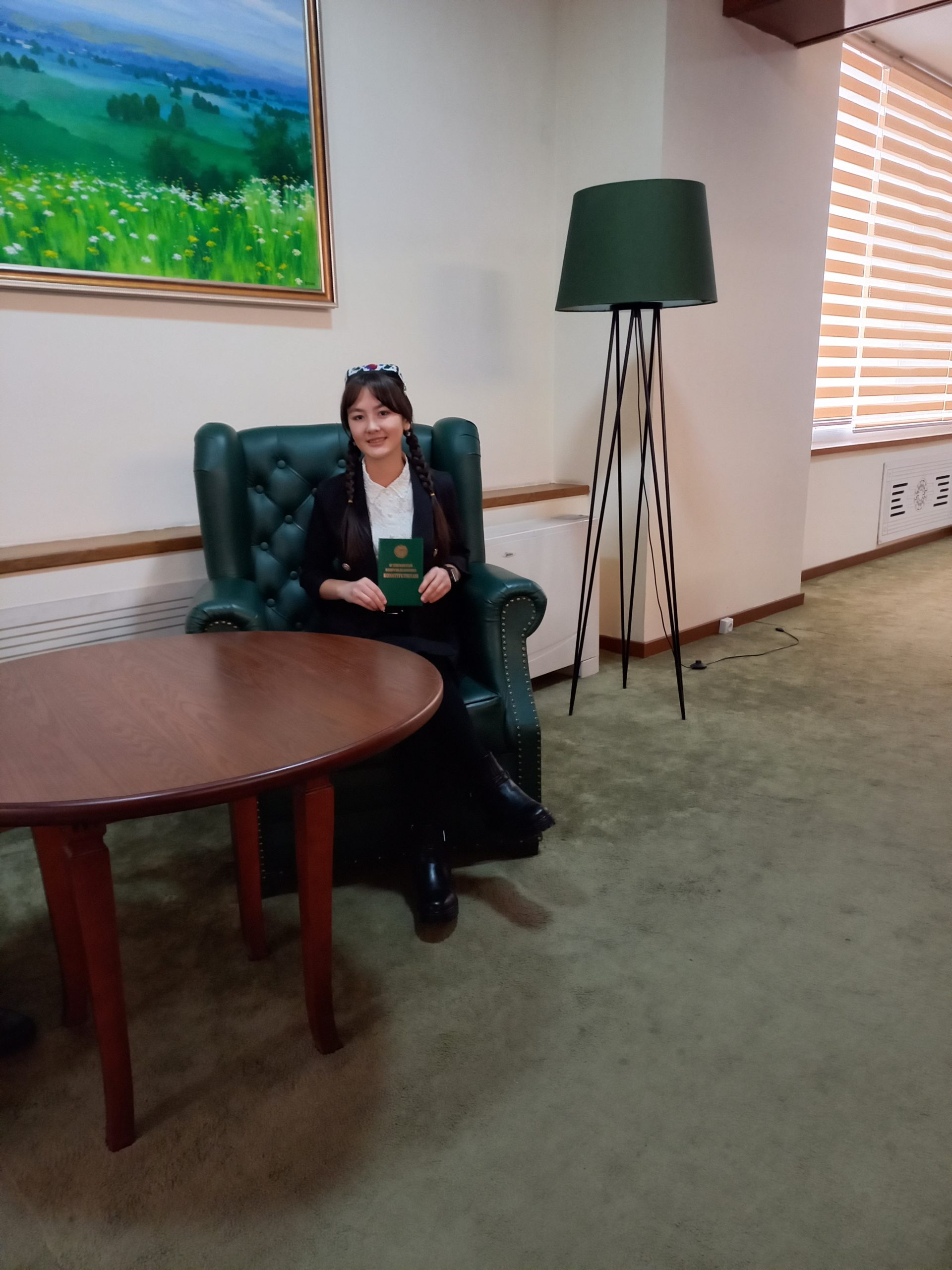
Description of the image of the stepmother in the novel “Stepmother” by Ahmed Lutfiy Kazanchi
Ahmad Lutfi Kazanchi was born in 1936 in Churum district of Turkey. He is a very famous writer. His works include “Stories of the Age of Happiness”, “Abu Bakr Siddiq r.a.”, “Hazrat Umar ibn Hattab r.a”, “Stepmother”, “Mother-in-law”. Writer relies on historical sources while showing the beauty of Islam, how well-mannered and conscientious Muslims. From the artistic point of view. When the writer writes about the bandalas on the right path, he narrates the stories that can be an example for us.
Speaking about the work “Stepmother”, it should be noted that it is not about Fatima. Badia is about what the mothers of the whole community are like. Like many works of Ahmed Lutfiy Kazanchi, the work “Stepmother” made a special impression on the readers, and the exemplary behavior of people whose only religious goal is God’s pleasure is beautifully illuminated. “Stepmother” by Ahmed Lutfiy Kazanchi can melt everyone’s heart, it can be said that it is a piece of his soul.
This work gives readers a lot of knowledge. He calls them to be believers, to do good. This book is scientifically interesting, but also full of virtues. The sequence of events is also very well written. The experiences of the heroes of the work absorb the reader to such an extent that one becomes a partner in their joys, pains, and trials. As soon as we read the title of the work, we imagine a mother who oppresses and humiliates her stepchildren. But Fatima is not one of those mothers. She studied both religion and the world from a young age. She lives only with love for God and his prophet. In his heart was not to win the love of servants, but to fall in the eyes of God.
So, can we call Fatima, who brought up Odilbek’s children more than her own children, who washed and combed her hair white and white, “stepmother”? Mother, who had the intention of becoming a true Muslim in her heart, accepted the hardships and various trials as a blessing. Because,
In verse 127 of Surah An-Nisa, God blesses you with “…treating weak children and orphans fairly. Whatever good you do, God is All-Knowing.”
There are many qualities that we should learn from Fatima. Surrender to God, patience and love… She became the educator not only of his children, but of the entire society. It is said that if you educate a boy, you educate a person, and if you educate a girl, you educate the whole society. Therefore, it is necessary for us girls to learn every second, to be like Fatimas. This work “Stepmother” is a work that can prove that a person can achieve bright and shining days by being patient and doing good deeds. In short, this book is proof that every good deed does not go unrequited. Every work of Ahmad Lutfiy Kazanchi has a place in the hearts of people. Each of his books are wonderful books that call to faith. In the end, we realize that Allah will reward us according to all our deeds and that we can receive two worldly rewards for our good deeds. Can I do the same as you read the feats of Fatima? you ask. We ask Allah to give us all knowledge and courage like Fatima.
Poetry from Audrija Paul

DEFEATED

At the break of dawn, when the night melts
And light finds its way,
The slumbering soul thinks of you.
At the middle of the night, when the world tries to be silent,
This insane soul thinks of how to feed the hunger of your absence.
When the pink evening lights diffuses, and it gets darker,
The fire inside this unruly being burns down every single memory,
The tears freeze in a silent snowy dusk.
Still the buried dreams returns again and again,
In this mind.
Still the soul thinks that there is a return from the final destination of life.
And one day,
This story ends,
With the burial of this unruly soul.
Essay from Narzulloyeva Munisa Bakhromovna
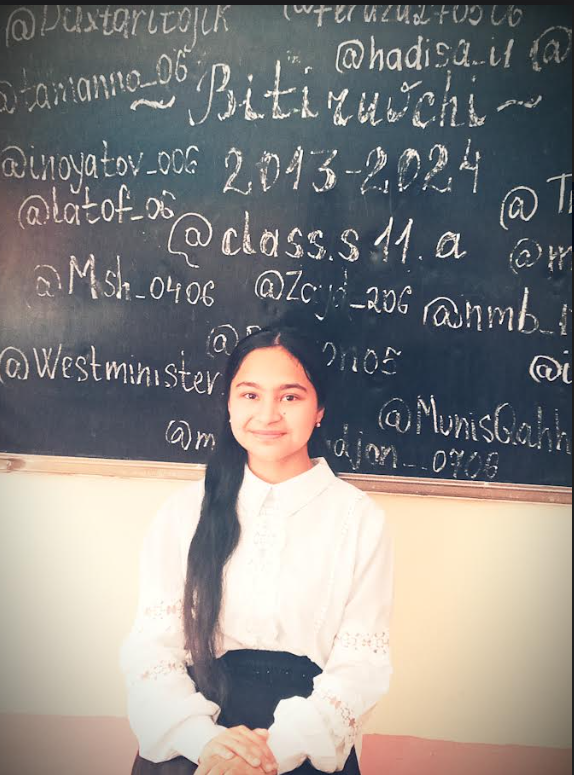
YOUNG PEOPLE AND THE INTERNET

   The internet was first created to store research information for scientists to access them at any time or from any place. The internet has made an immense contribution to globalization.

    Nowadays it is much easier than ever to access the internet. Wherever you are you can listen to  your favorite music, reading the books and things like that. There is no doubt that many young people spend their hours online during their day. It has some cons but also numerous drawbacks.

    One advantage of the internet is that young people can do a lot of useful websites for students. This often helps teenagers to widen their grades. Another positive aspect of the internet is that people can practice the foreign languages by chatting with their friends from other countries. This is a good way of keeping in touch with their friends and family around the world. Even when someone lives hundreds of kilometers from you, you can call each other. In my opinion the internet is an amazing tool. The benefits outweighs the downsides. However we should be careful not to use the internet excessively!


   NARZULLOYEVA MUNISA BAKHROMOVNA was born on August 13th,2006 in Surxandarya region Sariasia district of the Republic of Uzbekistan. She graduated school. She accomplished to a lot of achievements. For instance: her articles published on the Germany's "Raven Cage", Kenya's "Mt.Kenya Times" international magazines. Also she is also the member of "All India council of Technical skill development" and the member of "Global Education Ambassador".
Poetry from John Grey
PUMPING GAS

All Rick has to do to keep his job
is pump…and keep pumping.
Fear of life without a paycheck
turns to praise in his boss’s eyes.

It’s work that’s all brawn, no brain,
except for the torture of making the correct change
and it comes with a fancy uniform,
and a hat that he’s too embarrassed to wear.

In other states, drivers do this for themselves.
But not here. Not in Jersey.
He can’t imagine himself living in Massachusetts.
He would fade away. He would die.

He even does more than is called for,
rubs a wet cloth across the windshield
like he once saw in a black and white movie.
Occasionally, someone’s generous with a tip.

He realizes there’s no future in what he’s doing.
The boss isn’t going to die and leave the place to him.
There’s only the present and, though it moves him forward,
it never gets ahead of itself.

But someone has to do what he does.
And he’s stuck inside the one that’s doing it.
“Fill ‘er up,” says the guy who just pulled into pump A.
Rick is the guy within hearing range.


THINGS TO DO IN PROVIDENCE

Marvel at your transformation
when you haven’t really changed.

Grow weary of the same routine
and then stick to it.

Ignore the jackhammering in your skull.
It’s permanent.

Play chess in the park while your worst enemy
is getting laid off at a costume jewelry factory.

Dress differently
so people will mistake you for a college student.

When you have a hell of a lot of explaining to do,
say nothing.

Take aim at all your preconceived ideas.
With a bow if possible. Make the arrow  stick.

Forget that search for happiness.
Hype up sadness instead.

Join in conversations.
Even when you’re alone.

Stand by your beliefs. Then move slowly, quietly,
away so those beliefs don’t notice you’re gone.


THE FACE AS IT PRESENTS ITSELF

It’s an odd face.
Some people like it.
In one or two,
it invokes pity.

It’s drawn to a mirror.
Which are the standout features?
What is in decline?

Old around the mouth
yet the eyes are young.
Cheeks unblemished
but one earlobe bears a scar.

What does it say
about the mind and heart?
That’s where the trick comes in.
It can pose open-minded and wide-hearted.
Or it can slump into the opposite of these.

It retreats from the mirror
and rejoins society.
Most smile because
it’s back among them.
It turns from the ones
who shake their heads.


ON THE DAY HIS MOTHER DIED HER HAIR PURPLE

He left the house thinking,
“This time I’m leaving for good.”

He had no belongings with him.
He was just headed for the store.

But, to him, she looked ridiculous.
He could no longer invite friends back to the house.

No way would he be seen with her in public.
“Free at last!” he screamed in his head.

It was a warm clear day
and the entire world was open to him.

On his walk, he saw other mothers.
Their hairstyles were age-appropriate.

None of them were an embarrassment to their children.
Some may have even had husbands.

At least, they looked as if they did have one
then they could keep him.

He returned home with the few items
he picked up for her at the store.

He tried not to look at her when he handed them over.
But his eyes could not avoid her hair.

It looked like a serving of grape cotton candy.
He kept the change. It was his price for staying.


IN WAR AND PEACE

Soutine perished on the run
from the Nazis,
Freundlich died in the camp,
imagine being...
no I can't even imagine it.

I cuss the weather
when it's too hot to write poetry.
But trying to create something
in the middle of crazy, outrageous, bloody war?
I'd be in a foxhole
tapping out my next breath.

For every tortured surrealist
or Dadaist in a charnel house,
there’s me:

the same old crippled relationships,
damnable family life.

There are no guerrillas in the trees
outside my window.
No bombs drop on my rooftop.

I am safe from the enemy.
I’m most as risk
from the people I know.


John Grey is an Australian poet, US resident, recently published in New World Writing, North Dakota Quarterly and Lost Pilots. Latest books, ”Between Two Fires”, “Covert” and  “Memory Outside The Head” are available through Amazon. Work upcoming in California Quarterly, Birmingham Arts Journal, La Presa and Shot Glass Journal.