Essay from Jaylan Salah

Josef – Born in Grace

Interviewing Indian producer Ashok Mahapatra
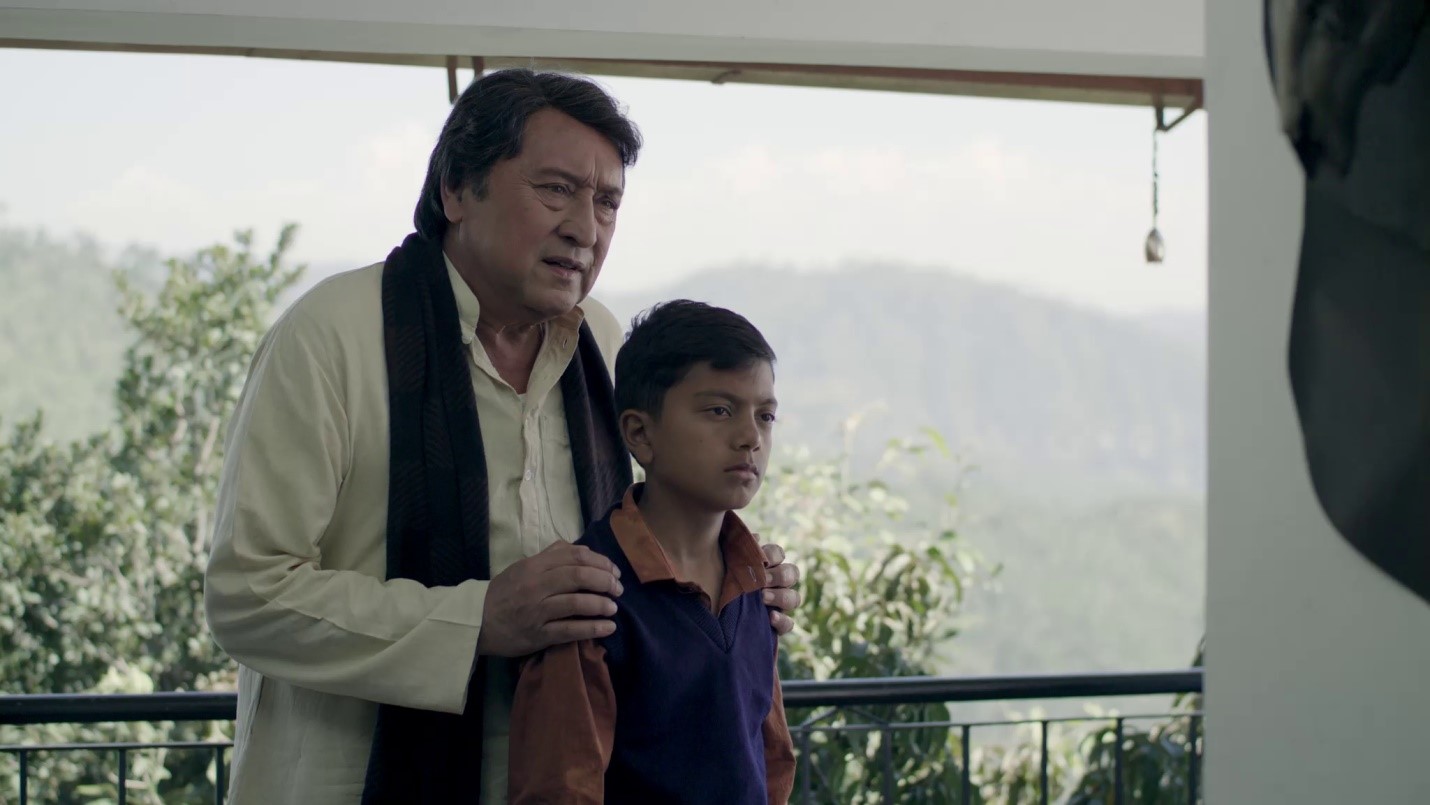
Still from Josef – Born in Grace featuring Josef and Father O’Hara (Victor Bannerjee)

I was lucky enough to get an invitation from Mr. Ashok Mahapatra to watch his film Josef – Born in Grace, an independent Hindi film that won the Silver Remi for Best Christian Film at WorldFest Houston; Best Set Design, Madrid International Film Festival; Best Cinematographer, Best Screenplay, and Best Second Actor, Ontario International Film Festival and Best Actor (Victor Banerjee), India International Film Festival Boston in 2020. Also, the film was featured in the long list for the 2020 Academy Awards.  

I was struck by the breathtaking cinematography and a beautiful story about grief, redemption, and acceptance. The hero, Josef, an alcoholic, is deemed a sinner and hopeless by his community. His soliloquy with his dead mother and God is elaborate and beaded with intense meanings. What I enjoyed most about the movie was how it does not sensationalize grief or show ways to overcome it. It tells the story of someone who is not able to let go of past tragedies that transcend generations. The landscape of the Himalayan Hills and the breathtaking scenery create a powerful story that is both larger than life and iridescent.

“As regards the picking of the location, I knew that my father has written the story when he was posted in the Himalayan Hills. Hence, we scouted around the Himalayas and zeroed in on the area around Ranikhet as it was virgin territory and had not been used earlier. It was a challenge to cart all the equipment there as the communication facilities were not the best. Furthermore, accommodation for the cast and crew was also a challenge.  Nonetheless, the cast was so enamored with a script that they put up with all the difficulties to complete the film on schedule. In fact, due to their cooperation, we managed to complete the shoot with two days to spare.”
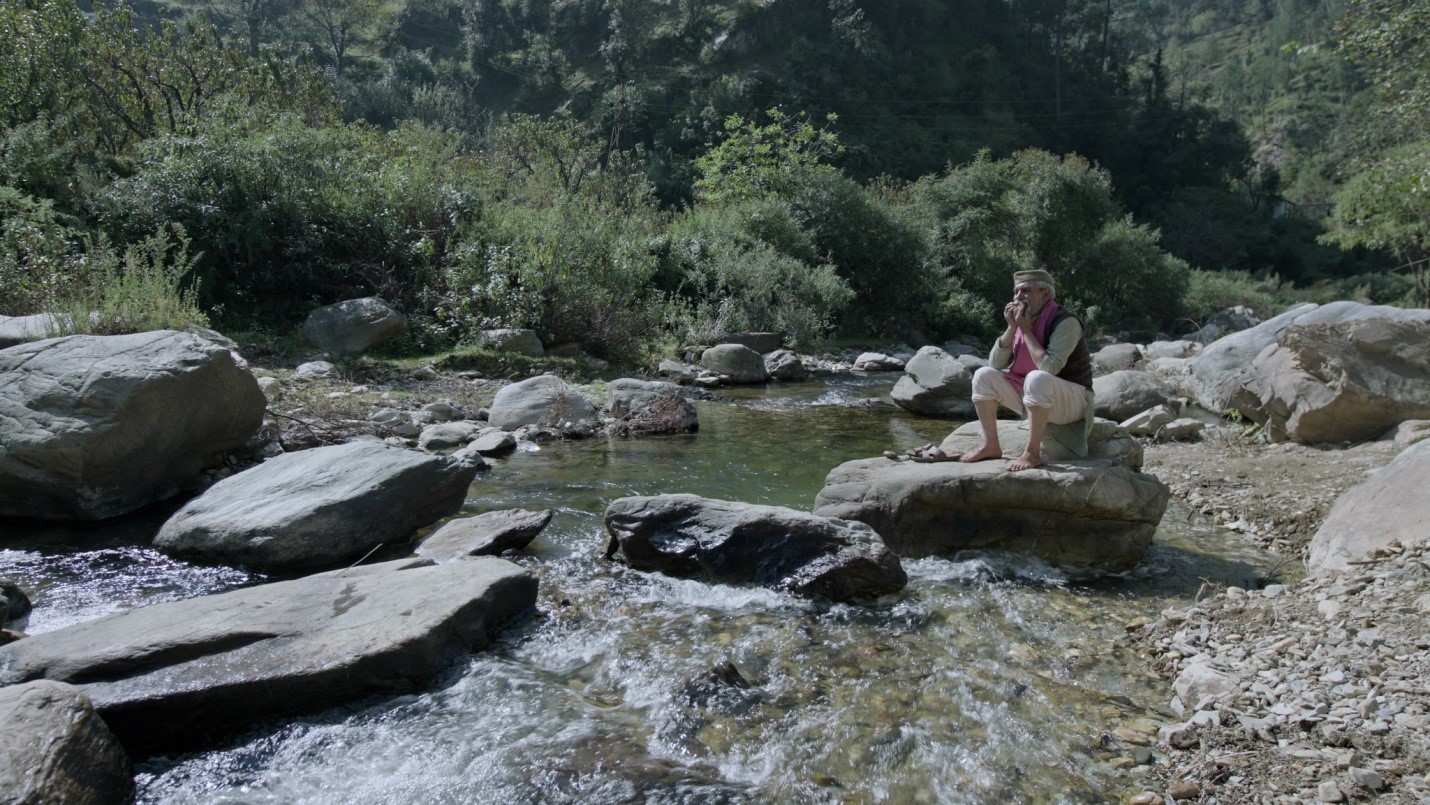
Still from Josef – Born in Grace featuring Maularam (Sudarshan Juyal)

I had the pleasure of speaking to Ashok about the intensity of the film which he considers a “passion project” that he made based on a short story titled Joseph written by his father Umakanta Mahapatra who also wrote 12 books after retiring from his government job. Mr. Umakanta wrote this story based on his experiences. Somehow the way Ashok describes his family reminds me of Egypt and how most middle-class and lower-class people postpone their dreams until after retirement. They all have stable jobs which they postpone their dreams and true selves to pursue.

“I am a retired UN Civil Servant. I started my career as a cadet, sailing out of Kolkata, in the merchant navy, and rose to Captain. After that, I came ashore and worked with the Government of India before being recruited to the International Maritime Organization. I was there for twenty years before retiring as the Director (Maritime Safety Division). Following my retirement, I decided it was time to fulfill a long-held dream and make Josef – Born in Grace, a film based on a short story written by my father, Umakanta Mahapatra. He wrote his stories based on his experiences in life. This film is a tribute to him. He was more of a friend than a father. I sincerely hope that I am 10% a father to my sons that he was to me.”

Although it is not a coming-of-age story in the true sense of the genre, Josef – Born in Grace sees the spiritual journey of self-discovery for three characters; Josef the orphan, his caretaker Maularam, and Father O’Hara the missionary who raises him,

“As regards the selection of the cast, it is a very long story. They all came along more or less on their own. It was like my father was pleased with me and guiding us all the way. Making of the film has reinforced my faith in human relationships.”

From his enthusiasm about the film, I first thought that Ashok was the director and producer of the film, but turns out this also had another interesting story,

“I am not the Director of the film. I am the Producer (though I was actively involved in all aspects in the making of the film including the cameo role as the Bishop). Susant Misra is the Director of the film. He is my first cousin and a bit of a recluse. He had given up making feature films for almost fifteen years. I had to sit on his head to make this film so that his talent is not wasted. Susant studied film direction at India’s premier film institute (Film and Television Institute of India (FTII)). His first film after graduation was accepted at Cannes Festival.”

I searched for more information about Susant since it was difficult for Ashok to talk in detail about him. Somehow, I sensed the pain in talking about his cousin who gave up his passion for 15 years. Again, the similarity between Indian and Egyptian lives became prominent, how some people give up their dreams to pursue a normal, much calmer life. When I found Susant’s notes on the website, I couldn’t agree more on some parts in which he described his movie:
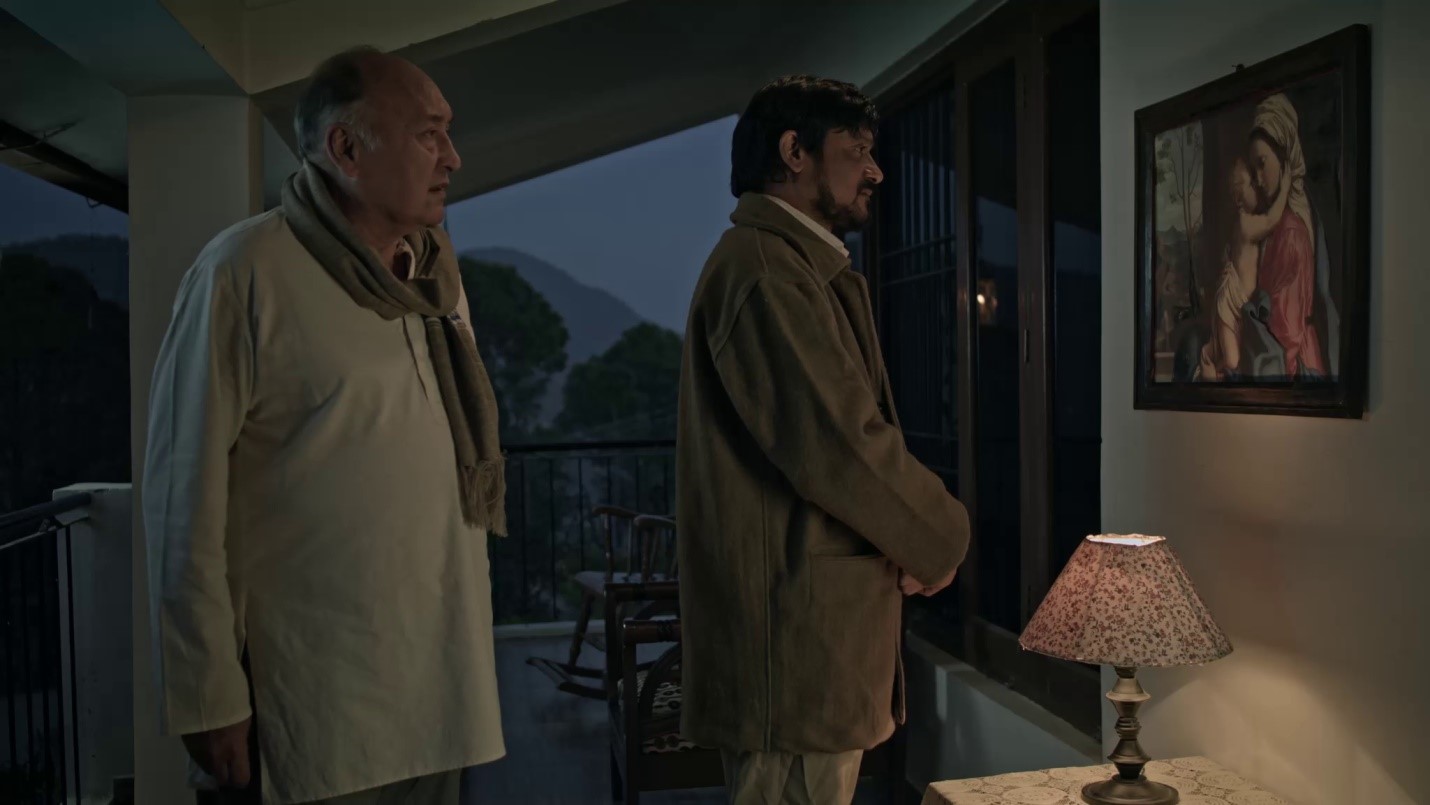
Still from Josef – Born in Grace

“Although the film is set between 1960 – 1980, the period facts, people, artifacts, props, costumes, etc; had to be seen as something living and breathing. The effort was to create a sense of timelessness. The stillness and the calm the locations in the mid-ranges of the Himalayas had, gave a feeling of this timelessness and universality.”

Susant graduated from the Film and Television Institute. His directorial career spans over thirty years of notable films such as Nischal Baadal, Indradhanura Chhai, Biswaprakash, and Dharini. His films received acclaim at various film festivals such as Oberhausen, Cannes (Un Certain Regard section), Sochi, Moscow, Rotterdam, Montreal, Cairo, Shanghai, Singapore, Paris, IFFI, MAMI, and MIFF.

It would never have occurred to me that the film was set in an earlier era. The story is a tale as old as time, and yet has a freshness to it that made it believable either way. Whether Josef – Born in Grace took place in the 1900s or the post-millennial world, it didn’t show. The creators couldn’t care less about the time in which the events took place. All they wanted was to create a picturesque life

Ashok’s views were no different from his cousin which explains his passion for as well –

“I am a very simple man who likes to explore the conflict between instinct and reason as well as the value of human relationships. Life has given me so much that I felt that I should give something back for it. Hence, I thought I would start with a tribute to my father by putting pictures into his story. We are presently writing another screenplay based on another of his stories once again based on human relationships. It relates to a woman’s conflict between her need for a career and her passion for art.”
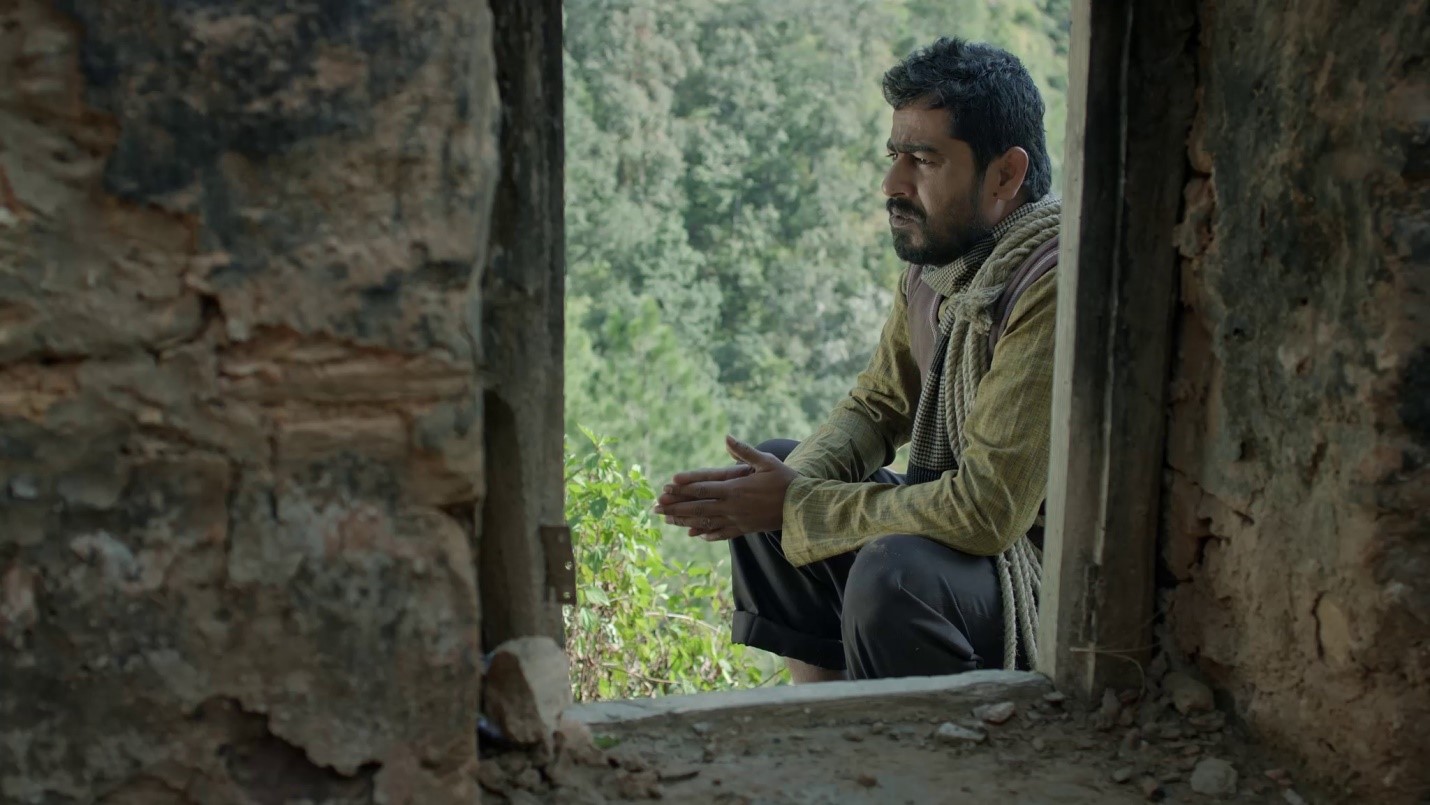
Still from Josef – Born in Grace

Speaking of women, I had to ask him about the lack of central female characters in this movie (the characters of Dona and Rajula are simply tending to the male protagonists). One of the characters that piqued my interest was Josef’s mother figure. From the moment we see him, Josef is an orphan, but his obsession with his absent mother is insurmountable. Although we don’t see her onscreen, her presence is deep-rooted within the narrative through Josef’s various monologues-

“While the film does not have a central [female] character, one has to understand the symbolism of Rajula’s role. If you recall that when questioned by Father O’Hara as to whether the child is his, Josef replies “it is God’s Child”. This subtly links her to Mother Mary. This is further amplified by Father reciting Ave Maria. Thus her role is central to Josef finding a purpose in life.”

Religious symbolism is prominently featured in the film, and Ashok reinforces that through his insistence that, “It [the movie] symbolizes that always from the ruins there is a fresh beginning. This is the circle of life.”
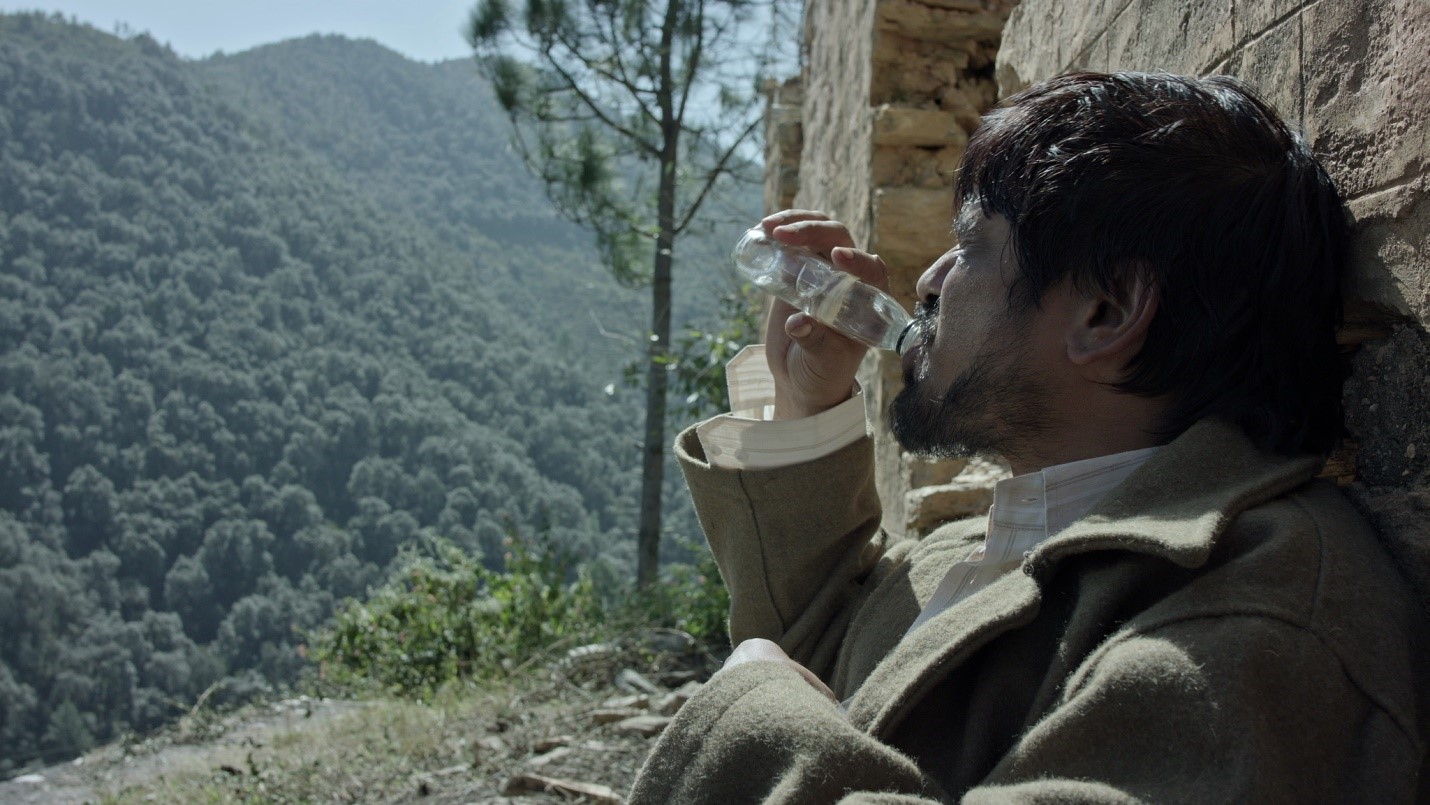
Still from Josef – Born in Grace featuring Josef (Subrat Dutta)

This comes at a critical time in the history of our universe. With the world shifting towards a new normal, a post-pandemic reality has shifted all that we took for granted, with its immersion in nature and deep focus on emotions and compassion, Josef – Born in Grace sounds more relevant than ever for our modern times,

“This film was shot and completed before the pandemic. However, the pandemic has made the world look back and reflect as to whether the present pace of life is sustainable. The movie is paced in a way that reflects the times and the innocence of the period. There is a haunting beauty that is captured in detail and delight – as one sees Father O’Hara go about tending to his patients. At home, his caretaker, Maularam, helps the priest look after Josef, a baby who was abandoned, a baby that O’Hara finds and brings home.”

Josef – Born in Grace is by no means a lazy film, it is not made for fans of Hollywood or Bollywood, but dreamers who immerse themselves in the film experience through the lens of someone else. Think of Jim Jarmusch meeting Ritesh Batra and you get yourself a film about faith, humanity, forgiveness, and acceptance. I recommend Josef – Born in Grace to those still willing to dream in a heartless, uncertain world.

Jaylan Salah, film critic, poet, novelist and essayist

Poetry from John Sweet

[no loyalties, no rules of war]

have these maps of yr sleeping mind but the

sunlight in this town still spills through my fingers

one room for magritte and then one for

ernst and the one

for your father in his bed of flames

                                  dali

at the edge of the picture

frightened old man with faith only in himself

and once he’s dead he no longer matters

last of the warm days and already cold in the

shadows of these subtly collapsing buildings

already shadows spreading over everything i say

jessica’s father

born to live in a shack at the

edge of the desert with the barrel of a

gun in his mouth

the song he sings and the one he doesn’t and

the failure of words in general

the need for both threats and apologies

                                                but listen

                                            bottom line

not enough time in this life to break every law

made to protect the wealthy from the rest of

us, but it doesn’t mean we shouldn’t try

fear is the weapon to turn back against

those in power

all blood tastes the same to

dogs dying of thirst

just keep licking it up as fast it pours

from the mouth of every false savior

the holy age

these overgrown lawns in the

last bitter days of summer

this cold white sun in its pale blue sky

dogs tied to trees in

front of abandoned houses

prayers on the

lips of luminous ghosts

drove north past the trailer park where i

saw you for the first time 25 years ago

then 80 miles further to the water’s edge

sacred ground in some small way and

when i’m tired of the

truth i still have my memories

when i forget your name

i can still imagine your body

can still believe in the

promise of redemption

[flower, choose the sunshine]

or your lover wearing the

mask of your enemy and

what if you can’t tell them apart?

what if all possibilities fade before

the trigger is even pulled?

the choice between fuck and love,

or the distance

the idea of hope,

which waxes and wanes

i meet her in the wrong room,

in the wrong age,

and we have known each other forever

an impossibility, yes,

and a reality

a glass overflowing

and the best stories, i think,

can never be truly expressed

cannot be spoken out loud

or written down

i will tell you i love you and

then the moment will pass and

what we’re left with is doubt

what matters isn’t the future but

the path we choose to get there

the lies we tell to

help show us the way

a reflection of fire

the bad news is a fistful of

tiny fingers grabbing for your heart and

your heart is only a faulty machine

it believes in ghosts and in

the neverending now

writes letters to god in

silver ink, but listen

the junkies here all spend their

days digging for brighter truths

the carrion eaters want your vote

or at least the

chance to fuck your children

at least the privilege of dropping your

babies from 14th story windows

can’t keep crying about the dead when

all we’re fed from birth is

the unavoidable necessity of war

small miracles

step out into the sunlight

without prayer, without hope

with the idea of salvation,

which won’t be enough

10 degrees and dropping and

all of these children left for

dead by the sides of too many

                     windswept roads

tell them sorry or tell them

it’s your own goddamn fault

or maybe just drive on by

without a word

there isn’t enough room here

for all of us to survive

there isn’t enough humanity

i sit in a dark room and

think about suicide, which

isn’t the same thing as

considering it

i would like to tell amusing

stories about my father,

but i have none

it isn’t immediately clear

whose fault this is

a lifetime filled with clocks running backwards

or my own lies

which i cherish

a lifetime taking

small breaths of poison

laughter both

heartfelt and hollow and that

we will die separated by years,

by thousands of miles, and each of us

alone and forgotten by the other

that there are open windows

in maria’s house through

which the ghosts travel freely

doors locked against

obvious violence

walls painted white,

rugs thick with dust and

how many months do you spend there

waiting for a message from

your father?

how much silence does it take

to fill an empty room?

don’t answer that

John Sweet sends greetings from the rural wastelands of upstate NY. He is a firm believer in writing as catharsis, and in the continuous search for an unattainable and constantly evolving absolute truth. His latest poetry collections include A FLAG ON FIRE IS A SONG OF HOPE (2019 Scars Publications) and A DEAD MAN, EITHER WAY (2020 Kung Fu Treachery Press).

Art from Jack Galmitz

Flores para las Muertes
when the lights went out
I was holding her thumb
it was a masquerade party
and she was dressed as a clown
her hand was a rubber glove
and the thumb was gigantic 
I pressed to feel her dainty thumb beneath it
and wondered if it was warm 
in answer she put her pointer finger in my mouth
and moved it about like a hunter
then there were two and they grabbed
my tongue you know between them
she pulled and she went up and down with them
when she got three in I thought this might be wrong
I was a good boy and believed in God and this
seemed a commandment breaker though I couldn't
think of which chapter and verse
anyway she went for four and thrust
her hand in my mouth in and out and in and
I was moved and she was also
I heard her panting
she was a gymnast and jumped on the horse
and pulled me up with her and there
in the dark she was on all fours like a mare
in a corral in the sunset waiting for a steed
she thrust her dripping hand without the glove
down my pants and squished me like I was a mouse
and smeared my head until I was an acceptably big 
and she pulled down her pants and it was dark
and I couldn't see so she guided me in
and I rode her on the horse like a gymnast 
and she said I had to meet her mother
she'd arrange it her father had died years gone by
when the elevator he rode snapped its cable
and he tumbled down and his heart gave out
before he landed but she said her mother 
had to approve of me if we were to go together
and marry and have babies
and she would she was Jewish and I was, too,
so I had that much going 
bring a babka cake and sweet wine
you'll make an impression
which I did and never regretted it

Poetry from Paul Cordeiro

Don't Wait Up


I'm off to Hawaii,
Hold my hat!


He Needs More Outside World


He never did poisons
Like absinthe,
But a corner view
Gets Dickensian
By a prison-brick
Fireplace his keepers
Don't let him use.
He orbits the town green
Three times a day,
Dislikes the crow stares,
Would like a go-free-pass
To the library stacks.
His single visitor
Most days, who brings
The fire to his belly,
Isn't the Mistress Lovelace,
But an anonymous mailman.


Vanity


The best practice after sixty
Is to pass by mirrors with a shrug;
As mirrors punish viewers
Who expect someone younger.


The Jesuit Priest


He lived a double life
As a clergyman
And gay-nudist-activist.
He was disloyal
By carefree lifestyle, detested
Misogynist scripture
And the afterlife angel hierarchy.
He paid for an Irish wake,
Then had drunken friends
Bury his ashes at sea.


2020, a Quatrain, After e.e. cummings


Nature is kind 
When graves
Mount the stairs
And heroes die.


Essay from Zara Miller

Destined Love Is a Flawed Premise

by Zara Miller

Author and essayist Zara Miller

“I chose the name Hollywood simply because It sounds nice and because I’m superstitious and holly brings good luck.”

If I could laugh through tears, I would, but alas I´m not that cynical. The afore-mentioned quote is attributed to Daeida Wilcox, a wife of Harvey H. Wilcox, a man who purchased 120 acres of land from the original 480-acre ranch, sometime in 1887 – a land on which the green, indestructible vines of show business sprung from.

I know what you´re thinking, and no, this is not that kind of article.

 (Not that there isn´t enough source material to pull from.)

I want to focus on one particular aspect of storytelling that Hollywood has deep-rooted into our subconscious – that love is supposed to be a rollercoaster drama, and that you are genetically (?) and fatefully (?) pre-dispositioned to fall in love with one specific person.

The illusion of “the one”.

And no movie has done more damage to perpetuate that than the 2004 movie adaptation of Nicholas Spark´s novel – The Notebook. 

Yes, there have been plenty of toxic movies before the Notebook portraying romantic love affairs like a pre-ode to the horror that was awaiting us in a form of the Twilight series but as a nineties´ baby, this one laid down the foundations for a distorted trend in writing for me noticeably.

Instead of portraying fatalistic love woven drama as a form or one way to tell a romance story, it became so prevalent I see it in every other book/movie.

So yes, there I was in 2005, watching Ryan Gosling and Rachel McAdams jumping through proverbial hoops, making up and breaking up in the rain a million times shown as the most romantic thing in history, while my grandparents were just chilling over there on the couch, happily married with almost no drama for 40 years.

Being a sucker for romance, and having written a book with a heavy romantic subplot, building a healthy image of love without depriving the readers of the drama, has been challenging to say the least, but incredibly rewarding in the end.

Let´s dive in.

Cause and Effect

The debate on the differences between infatuation and love has existed since the beginning of a recorded word but that isn´t quite the quarrel here. The variety of storytelling that explores physical attraction evolving into an emotional connection or vice versa, or even never surpassing the superficiality of the former, is all valid and artful.

There absolutely are abusive, toxic, superficial, will they won´t they, we break up we make up scenarios, and giving them air time is completely fine.

What isn´t remotely artful or fine, not to mention believable, is the idea that two people fall in love just because.

And there is a quick test to reveal whether the love story you´re looking for has any merit: Ask yourself whether you´d want to be friends with either or both of the protagonists who are supposedly in love.

But Why Is It so Toxic?

You´re probably asking yourself what´s wrong with losing yourself in a fantasy – isn´t that the whole point of fiction?

It is, but there are more impactful results of fiction to be considered. Through stories we teach, we learn, we deal with personal dramas, we inherit, we get inspired, we share. And the more we pretend that the illogical storytelling is completely fine, the more books like Twilight, Fifty Shades of Grey, After, and It Ends With Us will emerge.

We project onto stories, we let them enter our system, and if a projection is toxic, it makes us not want to try. Try to be better.

And trying to be a better person every day, even if just by a little, is the whole point of living.

But if we read about super bland heroes, like a white canvas and the protagonist falls in love with them just because it´s meant to be, and we not only let it slide but copycat the narrative and continue the pattern, we´ll end up stuck in a fantasy world full of self-obsessed maniacs who don´t need to try because someone will come along and love them.

They don´t need to love and respect themselves, or to be upstanding, to lead by the example, it´s fine, isn´t it? Being a passive existence of nothingness?

It´s fine possibly losing all friends because – to drive home my original point – who would want to be friends with a living-breathing personification of an empty bucket of vague colors that is the likes of Bella Swan?

Does I am Cecilia Do Better Than That?

Since you clicked on this article, you might be aware that I am in the final stages of the publishing process with the New Degree Press for my Young Adult Novel I am Cecilia.

Zara Miller’s upcoming novel I Am Cecilia

(If not, you are welcome to join the fandom! I´ve been preparing my readers for the good stuff in the book like exploring the gypsy culture, studying the dysfunctional families, falling in love at a young age for months now…Sounds delish?)

When you´ve been writing since a young age, and reading has been a central core of your identity as it was in my case, you pick up so many stylistic choices from your favorite authors, you sometimes forget to ask yourself – Are all of them healthy and worthy of an homage?

I am Cecilia might be a piece of fiction but it´s not fantasy, so I couldn´t justify my protagonists falling in love because *magic*, or *destiny*, or *whatever*.

Not that the fantasy genre isn´t accountable when it comes to making a romance make sense.

(Remember when Jon Snow and Daenerys fell in love just because and it felt like drinking spoilt milk anytime they kissed or said I love you to each other? Now compare that to the emotional impact of Jon falling in love with Ygritte.)

But the scope of writing a realistic relationship blossoming between two teenagers who are not that interested in falling in love, to begin with, is challenging to say the least.

The titular character Cecilia, our heroine, has one goal and one goal only – to get the hell out of a small town in Slovakia and go to college where her superb intelligence wouldn´t be perceived as strange.

Her love interest, Dany, is a professional hockey player, groomed to enter the NHL as soon as he comes of age.

How do you reconcile a relationship like that? Would just because of work?

Well, no. Although they are both perceived as being attractive by their peers, I thought finding an angle to justify the process of falling in love was the best approach.

Both the missing link and the key to it was the single-mindedness of their thinking. Focused solely on one goal – as teenagers often are – they find a little something to their liking in each other.

So, to answer the question of whether I am Cecilia does better than the stories coming before it, I´ll leave it to your better judgment as a reader and a perceiver.

I am Cecilia will be available on Amazon, Kobo, Ingramspark, and Barnes&Noble in the upcoming weeks. You can follow me on Instagram @zaramiller_author, or on LinkedIn under Zara Mille for more news and swoon-worthy fiction content. Looking forward to meeting you all.

Poetry from Giovanni Mangiante

chronicles

some people fall apart alone in their rooms

with a bottle of rum and a photograph

while others looking for coins in their pockets

as people begin to pile up behind them

and the bus driver’s face

twists slowly into a smeared painting

of boredom and rage.

some people fall apart looking out the window

and scraping the bottom of a can of tuna.

sorrow isn’t blue.

sorrow is the orange late afternoon sun

and the warm breeze of dusk

in 1978, in 1982, in 1999, in 2008,

in a yesterday that left us all behind

a long time ago.

mental patient

in the hotel of my mind,

every hallway is covered in missed-opportunity doors,

and in every turn there’s a shadow of unsolicited pain

creeping from its splintered walls.

I am a vagabond in my own home

unsuccessfully trying to smash open doors to the past,

running up and down broken stairs

while some cosmic creature watches from the outside,

and places a new shadow in the next hall.

11/15/2020

somber tones

for my drought-stricken heart,

40 days away from

Christmas,

I think I smelled my childhood

for a second there,

but it went away with Lima’s

lung-breaking twilight smog.

I need to go out for cigarettes,

I need to go out for wine.

I need to go out for the sake of going out.

something is telling me

tonight I might need to reach

inside the back of my head,

speak again

to the angels from the past,

and see

if we can finally

come to an agreement.

sooner or later,

one of us will have to be

let go.

ripped apart by silence

these quiet nights are nails

being pushed down through my temple

by the hands of loneliness:

friday is again just friday,

tuesday is again just tuesday,

christmas is coming soon,

new year is coming soon,

she is not.

in these quiet nights:

I need the factories to roar, every dog to bark,

every cat to hiss.

I need window-breaking winds,

every human to scream, plates & glasses

smashing against the floor.

I need an epicenter in my bedroom.

in these quiet nights:

I need to silence the sound of trickling water—

the sound of the shower being shut off

as she steps out of it

in someone else’s bathroom.

demon

the first sting would set the whole room on fire

and make everything come alive at once;     

                        and if

the chairs

the doors

            the shoes

            the clothes

the lightbulb

the curtains

            the windows

            the walls

had a mouth,

they would all have screamed at once

as I tore myself to pieces, dead-eyed and silent,

searching under my skin for the sleeping newborn

in his mother’s arms, sometime in 1996.

Giovanni Mangiante is a poet from Lima, Peru. He has work published in Newington Blue Press, Rusty Truck, The Daily Drunk, Anti-Heroin Chic, Heroin Love Songs, Rat’s Ass Review, Three Rooms Press, and more. He has upcoming poems in The Piker Press. In writing, he found a way to cope with BPD.