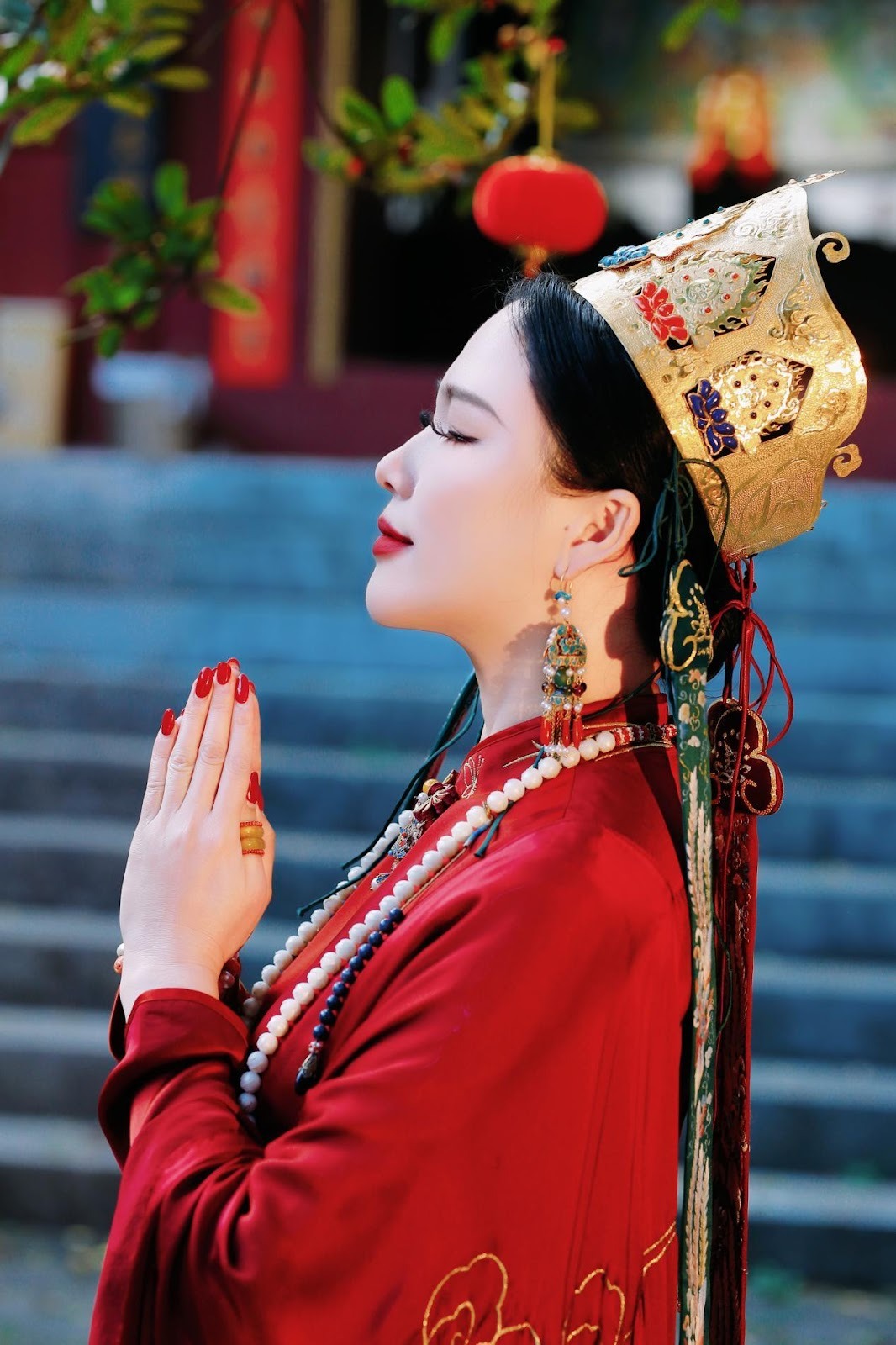
A new world is emerging where borders disappear physical money is virtual family love is strengthened with videos or WhatsApp.
We must value health and education.
Let’s practice empathy and solidarity.
Let’s respect children and the elderly, treasure troves of stories.
Let’s be alert to subliminal messages and protect ourselves from the powerful.
A new humanity is awakening.
Let’s be young—no matter our age— capable of taking action against injustice.
Let’s contribute the power of love and thus build a better world.
She was born in Río Gallegos, province of Santa Cruz, Argentina. In 2004 they settled in Villa Carlos Paz, where he currently resides. Retired teacher. ///Activities *2014/15: Coordinate The Magic of the Word. Villa Carlos Paz Municipal Cultural Hall. 2016/17: she continues to participate in the Writers’ Meeting, Book Fair, and support The Magic of the Word. /2018: Radio program “Más Allá de las Palabras” and “ Desde las Entrañas”. /Contribution to the arts and Literature. SECH (Society of Writers of Chile Recognition. Contribution to International culture. San Bernardo. Chile. /2019: Presents her book: Balances of Life, at the Buenos Aires International Fair./Universal Ambassador of Culture. Tarija. Bolivia./ Recognition and Illustrious Visitor of San Lorenzo. / 2020: Recognition of the Municipality by the Organization of the First Hispanic American Meeting of Writers and Poets. / She has participated in videos from the provinces of: Chaco and Jujuy. Culture of Villa Carlos Paz.
She has won awards and mentions for her poems within the province of Santa Cruz, Argentina and Italy./Her publications: 1997: ” Desde el Sur” Poemario /1998: “Queoquen en Moquehue” and the Buenos Aires Book Fair in the year 1998. / 2004: Tiempo de Palomas, is the result of a historical compilation of the Schools of Puerto San Julián- Santa Cruz 2011: “Con el Alma Desnuda” (Letters to the grandchildren, prose and poetry) It is her first published book in V: Carlos Paz. Presented in support of the Centennial of the Carlos N. Paz School and in Villa General Belgrano.
2014.- “Between the Waters of the Centuries” presented in various settings in Argentina. /2018.- LIFE BALANCES. Presented at the Buenos Aires Fair. Chili. Bolivia/ 2020.- “River of Silences”. / 2020: she headed the I Virtual Meeting of The Magic of the Word.
My American geisha, burlesque cirque artisan. Tranquil repose, tapestry, platter of flesh. Living canvas… Raven hair Beachy twisted, alabaster pseudo-funereal mask. Amethyst plain, pregnant with fuchsia teardrop. Oracular seer… Five piece Dynamite Roll necklace, Fantasy Roll pendant. Four piece Firecracker Roll, a contour line denoting the breastial valley. Voluptuous siren… Two piece Hot Night Roll, a tiara atop each roseate nipple throne. Six piece Kamikaze Roll, a covering for mons pubis. Erotic missive… Corpus supine, enveloped by vermilion roses and argent orchids. Victorious renaissance samurai’s, celebratory reward. Radiant altar…
THE PROSPECTS OF ARTIFICIAL INTELLIGENCE TECHNOLOGIES ON THE DEVELOPMENT OF THE BANKING SYSTEM
Eshmurodova Sevinch Bahrom qizi
Qarshi State Technical University
2nd-year student, Banking Department
+998994190825
eshmurodovasevinch266@gmail.com
Abstract: The article discusses the use of artificial intelligence technologies in the banking sector. The focus is on simplifying customer service processes, reducing credit risks, detecting fraud, and strengthening cybersecurity.
Keywords: artificial intelligence, bank, digital services, security, lending.
Аннотация: В статье рассматриваются вопросы использования технологий искусственного интеллекта в банковской системе. Основное внимание уделено упрощению обслуживания клиентов, снижению кредитных рисков, выявлению мошенничества и повышению уровня кибербезопасности. Ключевые слова: искусственный интеллект, банк, цифровые услуги, безопасность, кредитование.
Introduction:
Today, major changes are occurring in the global financial market. Banks are no longer limited to simple transactions, accepting deposits, or issuing loans. Their main objective has increasingly become providing customers with convenient, fast, and secure services. One of the most significant technologies supporting this transformation is artificial intelligence (AI).Initially, artificial intelligence seemed like something found only in science-fiction movies. However, in today’s real world, AI technologies are actively involved in services ranging from bank cards to online applications. Therefore, discussing the future prospects of this technology is highly important.
Main Part:
One of the first and simplest applications of artificial intelligence in banks is chatbots. Today, most banks have their own mobile applications, and when a customer asks a question through the app, the initial response is given by an automated system. Although this seems simple, it plays a crucial role. While a human operator needs time to answer and queues may occur, artificial intelligence can serve thousands of customers simultaneously.The second direction is risk assessment. Previously, bank employees examined customer documents, requested employment references, and often required guarantors.
Today, AI systems can analyze a customer’s financial behavior, spending patterns, and even mobile payment history to calculate the probability of loan repayment. This process is convenient for both the bank and the customer.Another important aspect is fraud detection. Thousands of transactions are carried out every day, and it is impossible to manually inspect all of them.
Artificial intelligence can detect unusual or suspicious activity among transactions. For example, if a customer usually uses their card only in Tashkent but suddenly attempts to withdraw a large amount of money abroad, the system stops the transaction automatically. This helps protect the customer’s funds.
Of course, these technologies also have challenges. First, developing and implementing such systems requires significant financial investment. Second, banking data is highly confidential, making its protection extremely important. Third, the shortage of qualified specialists is also a major issue.
Despite these challenges, the advantages of artificial intelligence outweigh its drawbacks. Competition in the banking sector is increasing every day. Customers now pay attention not only to interest rates but also to service speed, convenience, and security. Banks that use AI technologies can enhance their reputation and attract more customers.
AI also opens new opportunities for banks in Uzbekistan. For instance, using artificial intelligence in loan portfolio management reduces risks. Financial inclusion — expanding access to banking services for the general population — can also be improved through AI. Additionally, AI can play an important role in future green financing projects.
One of the most critical issues is cybersecurity. As financial crimes around the world are increasing, AI systems help not only detect fraud but also protect large volumes of data. Therefore, banks in Uzbekistan must strengthen their efforts in this area.
Conclusion:
In conclusion, artificial intelligence is becoming an essential part of the future banking system. It simplifies customer service, reduces risks, detects fraud, and most importantly, increases the efficiency of banking operations. In the context of Uzbekistan, the gradual introduction of AI technologies, training qualified specialists, strengthening cybersecurity, and improving financial literacy are of great importance. If consistent work is carried out in these directions, banks in Uzbekistan can become competitive not only in the region but also in the global financial market.
REFERENCES
1. O‘zbekiston Respublikasi Markaziy banki. Raqamli moliya hisobotlari, 2024.
2. World Bank. AI in Financial Services. Washington, 2023.3. Brynjolfsson, E., & McAfee, A. Machine, Platform, Crowd. Norton, 2017.4. Harvard Business Review. Artificial Intelligence for the Real World. 2018.
I am Eshmurodova Sevinch Bahrom qizi, born in 2006 in the Kamashidistrict of the Kashkadarya region. Between 2022 and 2024, I studiedat the Academic Lyceum of Karshi State University in the “exactsciences” department and successfully graduated. In 2024, I wasadmitted to Karshi State Technical University and am currently a2th-year student at the Faculty of Economics and Management, BankingDepartment. In my free time, I play sports. I am a 3-time champion ofUzbekistan. I have also taken the honorable 1st place in Tashkentseveral times. In addition, I have won the Rector’s Cup several times.Currently, I am running an online business at home. I make tiaras forgirls. I take an online course in Turkish. My goal is to open atraining center in the area where I live, in agreement with thegovernor. I would like to pay special attention to Turkish, Russian,mathematics, and robotics at the center.
This month, we consider the peace, love, and joy honored during the world’s many December holiday celebrations. This issue also encourages us to take stock of where we are as human beings, physically, intellectually, and morally, and to take whatever steps are possible to rise to the next level.
Sometimes that’s going outside and getting some exercise. Brian Barbeito walks by a lake and considers the joy of simple living and natural beauty.
Aura Echeverri Uribe evokes the monumental destruction of an avalanche. Jack Galmitz speaks to how we manage and control wildness, in our neighborhoods and our bodies, and how it can reassert itself. Carrie Farrar speaks to the joy and wonder of visiting France to see the Mer de Glace glacier. Mahbub Alam speaks to a solid connection between humanity and nature, like a tree standing firm in the changing winds.
Tasneem Hossain draws on the owl as an extended metaphor for wisdom and protection. Roodly Laurore reflects on the tender and colorful beauty and diversity of nature in a piece which he intends to bring comfort in a violent and turbulent world. Maja Milojkovic encourages us to imagine a new world of gentleness and peace towards our earth and each other.
Elizabetta Bonaparte’s poetry takes a short, but strong and cogent, stand against war. Valentina Yordanova, in poetry translated by Yoana Konstantinova, laments the mindless destruction war brings to ordinary lives. Eva Petropoulou Lianou calls for genuine humanity in a world at war.
Samar Aldeek tenderly celebrates peace in her bilingual poetry. Dr. Perwaiz Shaharyar draws on the style of courtly romance to honor the legacy of Mexican poet, peace activist, and literary cultural worker Dr. Jeannette Tiburcio. Fernando Jose Martinez Alderete joins in the tribute to Dr. Tiburcio and also speaks of the need for peace and mutual respect.
Paul Durand warns us of dangerous currents, both in the ocean and in American politics. Bill Tope’s poem criticizes human rights abuses committed in the name of immigration enforcement. Duane Herrmann speaks to the spiritual unity of all the world’s people under Ba’hai teachings and how that serves as an antidote to racism and anti-immigrant sentiment.
Travel gives us firsthand experience with different cultures and helps us understand each other. Türkan Ergör illustrates the dislocation of travel through clever and poetic alteration of word and line breaks. Lakshmi Kant Mukul captures the exhilaration and elevated beauty of plane flight. Abdumuminova Risolabonu Nizamovna discusses how travel helps people learn practical skills, including pragmatic communication in multiple languages.
Learning foreign languages, and mastering one’s native language, helps us understand each other, whether we travel in person or through imagination and books. Shakhnoza Pulatova Makhmudjanovna offers strategies for mastering the Arabic language. Muhammadjonova O’giloy Bunyodbekov qizi offers up suggestions for learning Turkish that would be helpful for any foreign language. Abduhalilova Sevdora Xayrulla qizi highlights grammar rules surrounding modal verbs in the Uzbek language. Allaberdiyeva Farangiz outlines ways for students learning English as a foreign language to gain writing proficiency.
Xudoyberdiyeva Jasmina analyzes the linguistic phenomenon of “chatspeak” and ‘text-speak” on the Uzbek language in a piece that’s more intrigued than negative. Dinora Sodiqova discusses the importance of professional communication for aspiring young Uzbek leaders.
People can also travel through time by reading older works and studying history. Petros Kyriakou Veloudas reflects on the joy and the weight of being part of a creative heritage, even when one does not know the names of each and every ancestor. Poet Eva Petropoulou Lianou interviews poet Muhammad Shamsul Huq Babu about his literary legacy and dream of building a large book museum.
Dunia Pulungeanu highlights the lifetime intellectual and literary accomplishments of Dr. Edwin Antonio Gaona Salinas. Choriyeva Go’zal Gayratjon qizi explores the resurgence of academic and cultural interest in foundational works of Uzbek literature. Xudoyberdiyeva Mohiniso reflects on the historical significance of the Mud Battle, an early military defeat for Central Asian medieval historical figure Amir Temur.
Farzona Hoshimova celebrates the pride and beauty of the Uzbek culture. Matnazarova Munisa encourages young and old Uzbeks to remember and preserve their traditional culture. Bobonova Zulfiya sings of the pride, freedom, and beauty of her native Uzbekistan. David Woodward evokes a quest for truth through reading Krishnamurti, ultimately reconnecting himself with his family. Rahmonkulova Gulsevar Samidovna considers the cultural values implicit within Uzbek folk legends.
Muhammadjonova Ogiloy Bunyodbekovna reviews Abdulloh Abdulmutiy Huda Said Bahul’s book Qu’logim senda, qizim, which provides Islamic faith-based guidance for young girls, narrated by a loving father. Ruzimbayeva Quvonchoy also urges Uzbeks to hold onto their traditional values, including love, bravery, and respect for women.
Maja Milojkovic translates Eva Petropoulou Lianou’s tribute to hard-working women around the world from English into Serbian. Mashhura Ochilova highlights the historical respect for women in Uzbek culture and what modern Uzbek women have achieved. Jaloldinova Gulzirahon Otabek Kizi highlights women’s increasing participation in Uzbekistan’s public life.
Orifjonova Nozima Azizbek considers the prospects for preserving the Uzbek language in a time of economic and cultural globalization. Rahmonqulova Gulsevar Samid qizi analyzes the crucial father-son relationship at the heart of the Uzbek folk epic tale “Alpomish” and its centrality to Uzbek family-oriented culture. Rahimberdiyev Ozodbek outlines key elements of Uzbekistan’s heroic tales.
Dr. Jernail Singh describes how Dr. K.B. Razdan diagnoses some emotional and psychological ills of modern life in his book Gather Ye Rosebuds.Sean Meggeson’s visual poetry speaks to what we gain and lose as modern society progresses. J.K. Durick waxes poetic about times when it seemed that matters were more easily understood and categorized.
Abdulhafiz Iduoze’s epic poem, layered with traditional and modern references from Benin’s culture, serves as a ritual chant and prophetic warning about colonialism and corrupt power structures. It situates recent dynamics within epic time, reminding readers that current matters are not destined to last forever.
Shikdar Mohammed Kibriah affirms the reality of his personal experience amidst the complex claims of philosophical schools. Aisha Al-Maharabi speaks with the voice of one who asserts his claim to existence, writ large on the natural and human worlds. Strider Marcus Jones speaks to reclaiming and holding onto our interior life, emotions, and connection to nature in a world of mass media and technological disruption and deception.
Many other creators explore our internal lives, what we can learn from ourselves and each other and how we can grow as human beings. Allison Grayhurst speaks to her creative and personal journey: learning to function and create through loss, to integrate pain and struggle into her process. Alan Catlin’s fanciful “anxiety dreams” play with our modern insecurities about navigating daily life. Also experiencing anxiety, Mirta Liliana Ramirez’ poetic speaker takes a bit more time before she’s ready to venture out in the world.
Alimardonova Gulsevar Sirojiddinovna explores the balance between personal dreams and duty to society in Somerset Maugham and Abdulla Qodiriy’s writing.
Rus Khomutoff’s latest poetry collection Kaos Karma, reviewed by Cristina Deptula, flows through various words and ideas, pulling us along on the wings of a slow dream. Stykes Wildee’s latest poem seems at once dreamlike and ordinary and conversational, casual thoughts within the subconscious. Mesfakus Salahin’s poetry is ghostlike, contemplative, detached as he contemplates love and death. John Doyle’s poetry harks from a variety of inspirations: everything from insects to gas stations to trains and the countryside. Arjun Razdan’s quick fictional sketch compares young women he sees to elegant fine wine.
Abdulsamad Idris also explores tragedy and loss through a frank and visceral voice. Graciela Noemi Villaverde finds herself lashed by the storms of loneliness and sorrow. Hanaan Abdelkader Ashour approaches loss with tenderness, offering a kind and reverent note of remembrance for departed loved ones. Marianne Jo Alves Zullas speaks openly of her mourning for her departed mother, everywhere and nowhere at once. Mykyta Ryzhykh’s poem captures the emotional emptiness of a relationship where one person loves intensely, and the other remains distant, consumed by their own habits. Marjona Eshmatova outlines various types of family system dysfunction and how to address them psychologically. Taylor Dibbert points to the ways even well-meaning people can misunderstand each other. Dilobar Maxmarejabova warns us how a person’s heart can become colder and more jaded over time.
Mohamed Rahal speaks of striving for authenticity in one’s faith and in love. Narzulloyeva Munisa Bakhromovna encourages people not to compare themselves negatively with others’ projected lives on social media. Raximberdiyeva Moxinabonu outlines the pressing mental health concern of smartphone addiction and the need to balance our phones with the real world. Moldiyeva Bahodirovna speaks to the way digital technologies have permeated our lives and how to have the Metaverse complement, rather than replace, our world. Choriyeva Xurmo urges balance in the use of digital media in preschool education. Orozboyeva Shodiyeva highlights educational social media applications and encourages her peers to use those rather than focusing just on entertainment.
Priyanka Neogi playfully celebrates innocent, childlike love. Milana Momcilovic evokes an eternal, spiritual love. Dr. Brajesh Kumar Gupta captures an elegant romantic kiss under moonlight. Vorhees describes erotic and tender love with gentle whimsy and echoes of history. Kemal Berk contributes a graceful love poem about the merging of egos and personalities within a relationship.
Ana Elisa Medina describes a love that encourages her to become a better person. Mohan Maharana celebrates the value of small acts of kindness. Abdusaidova Jasmina shares the importance of kindness through a children’s tale involving a mouse. Balachandra Nair highlights the value of virtue by presenting positive character traits as valuable jewels on display.
Sayani Mukherjee pleads for deep, enduring joy that can withstand the world’s problems.
One way many people find joy is through engaging in various forms of creativity and knowledge gathering. Farida Tijjani draws on a wide variety of technical and natural inspirations to explore gender, creativity, and society.
Various contributors speak of advances in different fields. Uzoqova Gulzoda encourages innovative approaches to elementary school education. Nazulloyeva Feruzabonu highlights the value of science and innovation in inspiring society as well as providing material advancements.
Abdujabborova Rayhona points out ways medical and psychological professionals can reduce unhealthy stresses for pregnant people. Durdona Sharifovna Roziboyeva highlights the success of a recent orthodontic treatment for upper airway issues.
Dinora Sodiqova outlines basic principles of modern consumer advertising. Mamarajabova Shahnoza discusses how digital technologies are transforming the field of accounting. Dianne Reeves Angel celebrates the physical and mental artistry of comedian and actor Buster Keaton.
Several pieces remind us that as we advance in our knowledge and our technical skills, we must bring our humanity along with us. Kandy Fontaine raises questions about ethics and oversight concerning how people are treated in American hospitals. Avazbekova Rayyonaxon reminds medical professionals to display professional behavior as well as knowledge.
Finally, Dr. Jernail S. Anand reminds us to occasionally step back from the clatter of daily human interaction to connect with the universe on a deeper level. We wish all of you inspiration and a chance to think, feel, and connect with the world beyond yourselves this holiday season.
Eva Petropoulou Lianou is an official candidate for the Nobel Peace Prize, nominated by four organisations in 2024. She’s an international poet and the President of the Global Federation of Leadership and High Intelligence. She’s the founder of Poetry Unites People.
This article explores the conditions and principles of the heroic system in folk oral creativity, as well as the tools and weapons that help establish this system. The study examines the manifestations of heroic motifs and the use of combat weapons in the epics “Alpomish” and “The Birth of Gorogly.”
Keywords: Heroic system, folk epics, patron saints, inert society, celestial bow, auspicious birth sign, heroic suffering, figure of Khidr.
It is well known that in heroic epics there exist figures of alp heroes—brave warriors who devote their lives to defending their homeland. The main distinguishing feature of heroic epics, which separates them from other types of folk narratives, is the presence of the heroic system that embodies constant ideals and immutable values in the collective consciousness of the people. The heroic system represents the artistic expression of the unity of concepts characteristic of heroic epic creativity. It is unique to this genre and rarely appears in other narrative types such as legends or fairy tales.
Below we will examine the main conditions and criteria of the heroic system.
1. Divine Patronage Before Birth
First and foremost, the future hero is believed to be under the spiritual protection of divine beings or erans even before birth (in ancient epic tradition, the alp was considered a direct descendant of the gods). For instance, in “The Birth of Gorogly”, celestial beings such as angels, spirits (chiltons), and Khidr, the leader of the erans, play a guiding role in Gorogly’s birth, upbringing, and heroic deeds.
Similarly, in “Alpomish,” the hero’s divine favor and spiritual guardianship before birth is described as follows:
“After forty days, a voice was heard from the garden:
‘Boybo‘ri, God has blessed you with twins—a son and a daughter.
Boysari, you have been granted a daughter.
When you hold a feast for their birth, I shall come as a wandering dervish and name the children myself.’”
This scene reveals that every alp possesses a spiritual patron—a guardian or mentor figure symbolizing divine guidance.
2. Prophecies and Omens at Birth
The second criterion involves the hero’s birth under an auspicious star or celestial sign. Often, priests or soothsayers from rival lands foresee the hero’s arrival and attempt to destroy him. While this motif is not vividly depicted in “Alpomish” or “Gorogly”, it is indirectly referenced in Alpomish:
“When the enemies heard this, they said:
‘This boy is extraordinary, blessed with divine favor.
None can match his strength—even at seven years old he performs mighty deeds.’”
This acknowledgment reveals the enemies’ sense of envy and helplessness in the face of divine destiny.
3. The “Pain of Heroism” (Alplik Dardi)
As the hero matures and surpasses his enemies, he experiences the pain of heroism—a spiritual trial that represents both individual and collective renewal. In Alpomish, this is reflected in the “zakot” (tribute) motif, symbolizing the hero’s moral and spiritual testing. The hero becomes both the redeemer and the sufferer for his people. His mistakes and triumphs mirror those of the entire nation. Thus, the pain of heroism becomes a metaphor for the ethnos’s rebirth and awakening.
4. Connection Between the Hero and the Erans
Another crucial feature of the heroic system is the relationship between the alp and the erans. The erans spiritually strengthen the hero’s body and soul through divine light and sacred drink, granting him supernatural powers. They teach him the mysteries of heroism and reveal his earthly destiny.
In Alpomish, this connection is manifested when Alpomish receives his bow from the erans, when he spiritually unites with Barchin, and in the guidance of his elder companion, Qultoy. Qultoy declares:
“The mark of Alpomish is this:
On his right shoulder lies the imprint of Shahimardon Pir’s five fingers,
And on his left, my own hand’s mark remains.”
Thus, the heroic system forms the very “spine” of the epic—embodying the idea that true heroes are those whom even death cannot defeat.
5. Sacred Weapons and Companions
In epics, heroes are never alone—their loyal horses and supernatural weapons are constant companions. These instruments not only assist the hero in battles but symbolize divine power and destiny. As folklorist Shomirza Turdimov notes in “Uzbek Mythology and Folklore”, the heroic system can be reconstructed through twenty-one features observed in “Alpomish” and “Gorogly.” Among these, two central attributes are highlighted:
The heroic horse that accompanies the alp through trials and transformations.
The sacred weapon received from divine beings or through ordeals, symbolizing the hero’s spiritual strength.
In “Alpomish,” this takes the form of a “fourteen-batman celestial bow made of birch,” while in “Gorogly” it appears as the “fifteen-batman sword bestowed by Ghaus al-Ghiyath.” These weapons transcend the material realm, embodying the hero’s divine mission and identity.
Conclusion
The heroic system is an inseparable component of every epic. The actions of heroes—protecting peace, restoring justice, and defending their homeland—deserve eternal reverence. Through their depiction as symbols of unyielding will, strength, and courage, the alps inspire younger generations to cherish and take pride in the heroic legacy of their ancestors.
References:
Alpomish: Uzbek Folk Heroic Epic. Narrated by F. Yo‘ldosh o‘g‘li, recorded by M. Zarifov. – Tashkent: Sharq, 2010, pp. 93–94.
The Birth of Gorogly: Uzbek Folk Heroic Epic. Narrated by Muhammadqul Jomrot o‘g‘li Polkan. – Tashkent: G‘afur G‘ulom Literature Publishing House, 1967.
Turdimov, Sh. Uzbek Mythology and Folklore. – Tashkent: Fan, 2023.
Jo‘rayev, M., & Eshonqulov, J. Introduction to Folklore Studies. – Tashkent: Barkamol Fayz Media, 2017.
Mirzayeva, T., Turdimov, Sh., Tillayev, A., Jo‘rayev, M., & Eshonqulov, J. Uzbek Folklore. – Tashkent: Malik Print Co., 2021.
Turdimov, Sh. Uzbek Mythology and Folklore. – Tashkent: Fan, 2023.
Madayev, O. Uzbek Oral Folk Creativity. – Tashkent: Mumtoz So‘z, 2010.
Rahimberdiyev Ozodbek was born in the Bostan district of the Republic of Uzbekistan. He is a student at Andijan State University, Faculty of Philology, majoring in Philology and Language Teaching: Uzbek Language. He is a member of international organizations. His creative works have been published. He is a student and an online teacher. He holds international certificates. He writes poetry and articles. Many of his students have received national and international certificates.
Like a cold darkness, love stretches me upon its rack.
Your shadow drinks my breath.
My bones remember your touch.
Within me, centuries collapse without you.
Like spilled gold, my sorrow flows.
Your eyes — two abysses above my soil.
My heart bears the shackles of your silence.
My skin is a book of your wounds.
I have written you in my own blood.
I have carried you through my own ashes.
Into your voice, I placed my final peace.
And when I sink, your shadow will remain in me.
And when I fall silent, I will still long for you.
Milana Momčilović was born on April 4, 1999 in Vrbas. He currently lives in Srbobran, a place near Novi Sad in the Republic of Serbia. She published the collection of poetry TALISMAN.
She doesn’t like to talk about herself, so in the end she can describe herself through the verses of Sergei Yesenin: “What am I?” Who am I? I’m just a dreamer, whose sight fades in the fog and mist, I lived along the way, who can dream, like many other people on that earth.”