House by the Sea

On the shore of the blue sea,
Stands a house, white as snow,
Under the wind it rustles, bringing cold through the window,
While gray ravens circle the sky, as if reading fate.
Seagulls soar over the waves,
Causing unrest with their cries,
While the scent of salt beckons the soul to journey,
Into the endless blue, where the sky touches the water.
In that house by the sea,
You hear only silence, except for the whispering of the wind,
And the sounds of waves caressing the shore,
As love envelops the heart with its warmth.
Gray ravens, seagulls, sea, and wind,
Become part of the landscape, part of the story of life,
In which every emotion is reflected,
Like waves that caress the shore, over and over again.

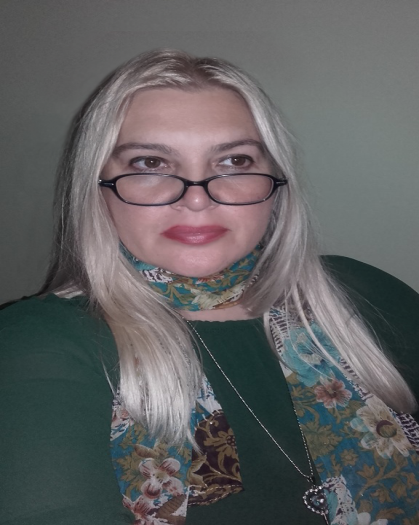
Maja Milojković was born in 1975 in Zaječar, Serbia.
She is a person to whom from an early age, Leonardo da Vinci's statement "Painting is poetry that can be seen, and poetry is painting that can be heard" is circulating through the blood.
That's why she started to use feathers and a brush and began to reveal the world and herself to them.
As a poet, she is represented in numerous domestic and foreign literary newspapers, anthologies and electronic media, and some of her poems can be found on YouTube.
Many of her poems have been translated into English, Hungarian, Bengali and Bulgarian due to the need of foreign readers.
She is the recipient of many international awards.
"Trees of Desire" is her second collection of poems in preparation, which is preceded by the book of poems "Moon Circle".
She is a member of the International Society of Writers and Artists "Mountain Views" in Montenegro,and shealso is a member of the Poetry club "Area Felix" in Serbia.
We are hosting our Metamorphosis gathering again! This is a chance for people to share music, art, and writing and to dialogue across different generations (hence the name, the concept of ideas morphing and changing over the years). This event is also a benefit for the grassroots Afghan women-led group RAWA, which is organized by women in Afghanistan who are currently supporting educational and income generation and literacy projects in their home county as well as assisting earthquake survivors. (We don’t charge or process the cash, you are free to donate online on your own and then attend!)
This will be Saturday April 6th, 2-4 pm in the fellowship hall of Davis Lutheran Church at 317 East 8th Street in Davis, California. It’s a nonreligious event open to all, the church has graciously allowed us to use the meeting room. You may sign up here on Eventbrite.
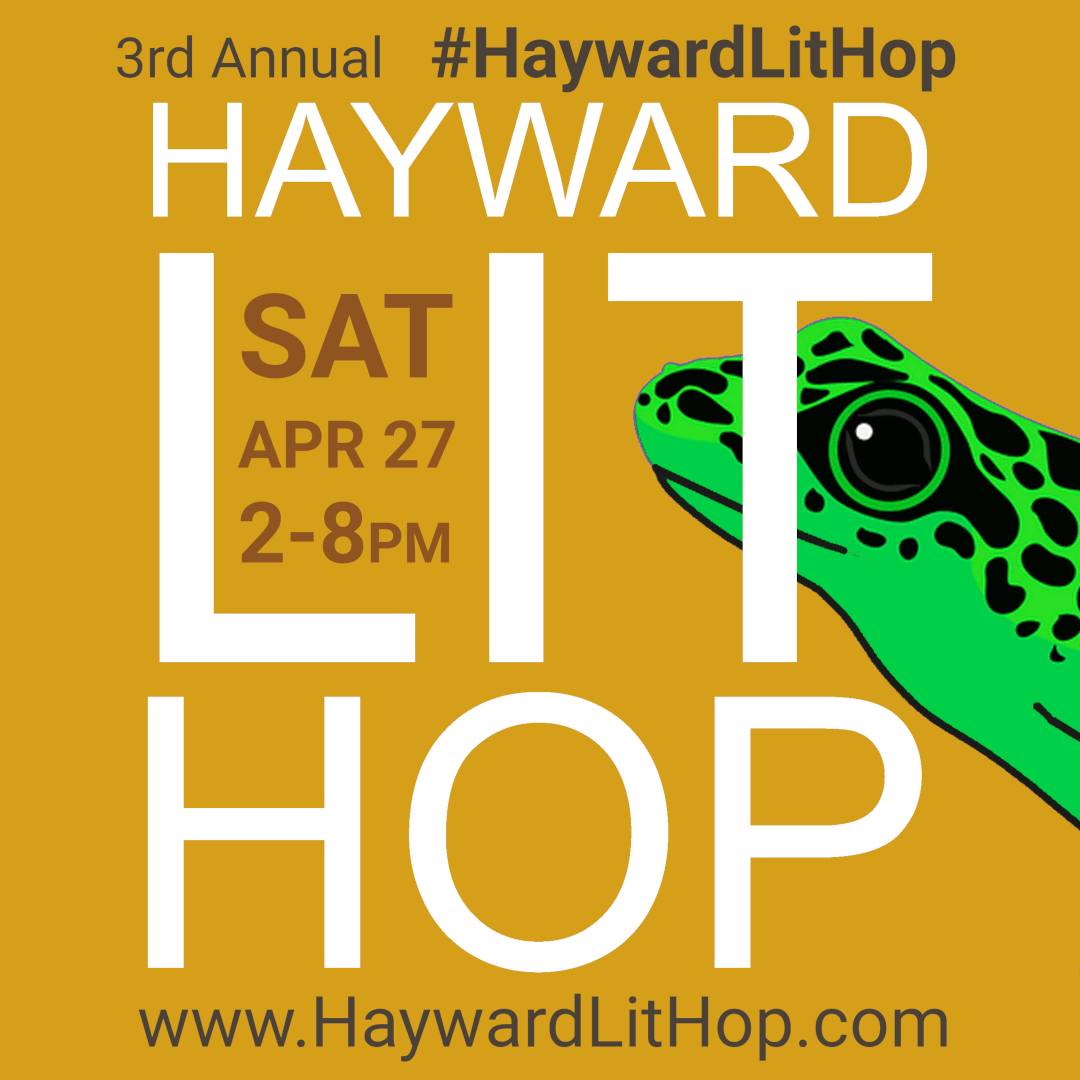
Also, we encourage everyone in the California area to attend the third annual Hayward Lit Hop on Saturday, April 27th.This is a public festival with different readings from different groups throughout downtown Hayward coinciding with Hayward’s choosing a new adult poet laureate, culminating in an afterparty at Hayward’s Odd Fellows Lounge. Several Synchronized Chaos contributors will read from their work at the 2024 Lit Hop.
This month, for April’s first issue, we’re reflecting on the change of seasons. We’re moving from winter to spring, or summer to fall in the Southern hemisphere. Much of the other work here deals with changes in moods, situations, stages of life, or with cultures and societies in times of change.
J.D. Nelson’s haiku evokes intriguing and disorienting seasonal transitions, while Jacques Fleury offers up an impressionistic reflection on a sunrise and the liminal state of consciousness between sleeping and waking. Hurliman Almuratova contributes a poetic piece about spring’s eventual return as Sayani Mukherjee glories in radiant poppies, Don Bormon listens to the symphony of natural sounds around him and Maja Milojkovic revels in the scents, colors, and renewal of spring. Annie Johnson exudes about diaphanous dawn, moonlight, and newborn creation in her poetry.
Mesfakus Salahin sees love all over the natural world around him. Kristy Raines speaks of a steady love where people know the depth of their connection even without using words. John Edward Culp writes of the tender growth of a relationship where there is trust. Davronbekova Sevinch speaks to the need to preserve integrity and trust. Graciela Noemi Villaverde writes of a gentle and silent love among the larks and lilacs. Inobat Karimova describes how her girls’ agricultural science club at school reflects the respect of her society for women, nurturing, the land, and life. Tammy Higgins’ photography concerns intersections of human culture and nature where nature remains present and vibrant.
Amirova Niginabonu’s work speaks to the cycles of nature and the ways of the mind as Michael Robinson reflects on loss and resurrection during the church season of Lent.
Dildora Toshtemirova writes of celebrating her birthday after the loss of her parents. Sevinch Raxmanova illustrates coming of age amidst the loss of her parents and grandparents. Nosirova Gavhar’s piece focuses in on a single date to represent her grief at the loss of her mother.
Music pulls Taylor Dibbert back to thoughts of a marriage that ended, as Bill Tope describes an unconditional love that begins awkwardly but becomes very real until the title character’s death. Uzbekoyim’s poem reflects the pain of deeply caring for someone who does not return the care. Daniel De Culla comments on the vulnerability of women and children and the precarity of family life.
Surayyo Usmonova’s poetic story intermingles love, loss, and sorrow as J.J. Campbell speaks to longing and forbidden desires and Prasana Kumar conveys the pain of silence and words left unsaid. Sabina Rasulova writes of dreams dashed with reality and the absence of loved ones. John Sweet wonders what life is worth in a harsh and alienating world.
Mykyta Ryzhykh evokes the “silent emptiness” of alienation and modern warfare and Bill Tope dramatizes the toll of war and military and political oppression on civilian families and children. Azemina Krehic mourns the losses of so many mothers and the violence against women in Bosnia. Christopher Bernard highlights the folly of cycles of conflict and revenge in the Middle East. Mahbub Alam also expresses his hope that Gaza will find the peace he sees in nature. Linda Gunther reviews Ruta Sepetys’ WWII refugee survival story Salt to the Sea, exploring character development and internal and external conflict. In Nahyean Taronno’s detective story, while justice triumphs at the end, deception and violence seem a continual threat. Laylo Bakhtiyorova dramatizes the intensity of emotional pain, but reminds us that it will pass.
Muheez Ohamilekan gently encourages caution before being swept up in uncontrollable experiences as Maurizio Brancaleoni compares the uncertain journey of life to a train trip with an unstated destination.
Mark Young’s postwoman poems allude to life’s surprise gifts: one never knows what might arrive in the mail. Alan Catlin’s found poems repurpose other famous modern works in a fresh and surprising way, like Polaroids from the lives of artists.
Eddie Heaton crafts impressionistic takes on relationships and words and literature through long voyages of the mind. Goran Tomic alludes to a different kind of voyage through his collages of vintage images of flowers and clothes and buildings, illustrating city life in the time of the flaneurs.
Sevinch Tolquinova celebrates the value of reading and learning from books. James Whitehead illuminates the honest empathy of Richard Vargas’ poetry collection leaving a tip at the Blue Moon Motel.
Brian Barbeito crafts a long series of character sketches and vignettes, while Noah Berlatsky’s humorous piece speculates on what sort of poet he wants to become. Ifora Olimjonova compares introverts to extroverts and suggests that many people are somewhat in the middle.
Jeffrey Spahr-Summers speaks to a society in transition with his poems on the latent cultural and racial tension in South Africa. Z.I. Mahmud writes of the power and limits of words and memory in Toni Morrison’s Beloved, and how the novel’s characters reclaim their flesh and history.
Thaalith Gimba offers up a dramatic poem of self-assertion, as John Grey crafts muscular poems on human needs and physical existence. Qurbonova Gulsanam extols the power of dedication and self-efficacy in working towards a goal as Donoxon Ibodullayeva reflects on the potential for developing Uzbek youth leadership through school and after-school organizations. Lilian Dipasupil Kunimasa’s childlike poems trace and celebrate our creative journeys through life. Dildora Toshtemirova urges readers to join her in living their dreams as Stephen Jarrell Williams speculates on whether he can bring his into reality.
Duane Vorhees’ poems of the gods and the ancients situate personal and cultural history within geological and natural timescales.
Bahramova Ifora Sunnatillayevna outlines the research of historical astronomer Mirzo Ulug’bek as Amirjonov Og’abek describes the ancient Islamic architecture of Samarkand. Wazed Abdullah commemorates the independence and pride of Bangladesh. Akhrorova Sarvinoz illuminates the historical and cultural value of cities in Uzbekistan, Rasulberdi Ashiraliyev highlights the Uzbek heritage of jurisprudence and the rule of law, Mirzo Ulugbek outlines types and structures of Uzbek businesses, and Xushroy Abdunazarova speaks to the history and beauty of the Uzbek language.
Gulsevar Xojamova encourages educators of Uzbek youth to draw on the nation’s cultural heritage in their lessons. Irodaxon Ziyoyeva discusses how to combine modern and traditional educational methods in the classroom, Shoshura Husaynova explores how to teach English with idiom and cultural context, Muhammadamin Xojamov addresses methods of mathematics instruction, Tolipova Zebuniso Ulug’bekovna draws on modern psychology and learning style theory in her recommendations for children’s education in Uzbekistan, Gulbahor Ergasheva discusses online learning technology, and Gulsevar Xojamova speaks to the role of information technology in modern Uzbek schools.
Uzbek writer Ruxzara Adiliqizi’s poetry carries a delicate mixture of love and patriotism. Boqijonova Madinabonu relates a story of the hard work and dedication of a mother, while Abdullayeva Feruza urges respect for parents and acknowledgement of their care. Farzona Koshimova writes of the importance of manners and respect for elders while Dilnurabonu Vayisova dreams of traveling the world with her mom.
We hope that this issue will deepen your heart and awaken your curiosity as you travel with us. Bon voyage!
A dream

Sometimes,
mother with you
Believe me, we will travel the world together.
To the beach you want
We will arrive together on the ships.

Sometimes,
mother with you
We fly to the skies.
To the blue space you want,
We fly together in a plane.

Sometimes,
mother with you
Let's go around Makkatullah.
Praying in Baitullah
Then we read the Qur'an and pray.

Sometimes,
mother with you
I want to visit the whole world.
I don't have dreams, you say, mother -
"Let's visit Kabatullah together."
Dreams definitely come true

You know that we always dream, but these dreams may or may not come true. Whether our dreams come true or not is in our hands. We should always try because a person who can dream can certainly act.

The strongest people are those who take steps towards their dreams, do not listen to what people say, and have their own opinions. People whose dreams do not come true are the weakest and most unlucky people, because they do not take steps towards their dreams, they just live and dream.

Dreams come true sometimes quickly, sometimes more slowly, some of our dreams even take years to come true. There is a reason why our dreams come true late. The most important thing is that we should not stop.

Why do so many people fail in the pursuit of their dreams or stop halfway to their dreams? The reason for this is their lack of will, they realize their dreams in part and they say that I did it and it will happen to me. But people who think like that have made a big mistake.
You know that the first step taken to make dreams come true can be difficult, but the end will be very beautiful. The main thing is to believe in yourself. Promise yourself that "I will definitely make my dreams come true." Overcome all difficulties on the way to your dreams, never take a step back. You can certainly make your dreams come true.

Do not forget that your dreams will come true, the main thing is not to make the above mistakes. I repeat once again, dreams will definitely come true!
Toshtemirova Dildora Hakim qizi , was born on are still achieving success. Although he started his career at the age of 14, his achievements in 1 year are enviable. Due to her interests and the support of her parents, today she is a member of the All India Council for Technical Skill Development. Due to his interest in science, he has achieved great success with the support of his teachers and is becoming an example to his peers. "Volunteer of the Year" 2022, won the "Star of the Year" nomination by the school, 1st place winner of the city stage of Athletics. In addition, Dildora's creative works were published in international magazines, her articles and poems were indexed on Google.
Despite her young age, Dildora is a young demanding, talented, talented girl who has shown herself with her knowledge. "Golden Wing" volunteer, "Sunlight Nuri" volunteer, moderator, participant of Go Viral Tashkent, press secretary of Volunteer Academy, holder of international certificates.
  XƏTRINNT OF MY LOVE

  Let me bend my love into your love,
  Let it not be based on the pleasure of my love,
  Let me give up on love, let me not hear,
  Don't let it be based on the pleasure of my love!

  Take away the ovary of my heart,
  Your capacity is abundant, remember me,
  Let it snow, rain, shine in the sun,
  Don't let it be based on the pleasure of my love!

  You are my hearth of hope, my trust,
  O poet to my life, I know the feeling,
  Everyday the wind blows into my soul,
  Don't let it be based on the pleasure of my love!

  Let me close your eyes, let me look at you,
  From the demand, you become bored, you become embroidered,
  My dear, let me be your blessing for life,
  Don't let it be based on the pleasure of my love!

  ISTURUM, MY OWN COUNTRY, WHERE I WAS BORN

  Yad, I have no eyes on Özzgən's soil,
  I want my own homeland where I was born.
  O I who turn back and forth in the land,
  I want my own homeland where I was born.

  I don't want grapes, hazelnuts, pomegranate vineyards,
  The heart desires the sky plateau, the mountain of shish,
  The land to which I speak, my shadow falls,
  I want my own homeland where I was born.

  Flowers would grow on my lawn,
  There the nightingale sang more loudly,
  My thighs would kiss my lips,
  I want my own homeland where I was born.

  Əsən mehi shallow pull telimə,
  Its origins are sometimes different,
  Waterfalls rose into my slice,
  I want my own homeland where I was born.

  At the end of the article, we would flee to the pasture,
  We had learned to bala-yaga, to ski,
  The tulip gave color to the cheeks,
  I want my own homeland where I was born.

  I was a mother, my mother was there too,
  My will was sensitive to my eyes,
  My prince would wash my feet,
  I want my own homeland where I was born.

  I was valuable in my hand, and in myself,
  That's why I said "homeland",
  Wherever I look, the sign is in my eye,
  I want my own homeland where I was born.

  Quickly turn away, let the son go to longing,
  My heart is in need of attention, compassion,
  I'm sorry, what's your name, fame,
  I want my own homeland where I was born.

  CARRYING THIS SPIRIT
               WE ARE NOT COLLAPSING A NATION

  Envər Pasha of our Turan army,
  Look at the power of his love,
  His love is across the seas, over the mountains,
  This spirituality is only Turkish!

  He gave great importance to the nation and the country,
  Joined in jihad, escaped from the flames,
  “Transformation as a victorious commander,
  Or let me be a martyr!” - choose your slogan!

  Time colliding in the room,
  The letter he wrote to Nacibé Sultan,
  Even though the sultan's heart was saddened at that moment,
  It has become a source of pride for a lifetime!

   “I love you, my praises
  Raise me with my job!”- he wrote,
  “Write the names of the villages in history,
  Martyrdom is a mark!” - wrote...

  “To protect our country from the enemy,
  Mustafa Kamala, possible help,
  The day that should be from him,
  “One dimension, my sons!”

  The one that comes to life before your eyes,
  He kissed her gentle fingers and left...
  The one that makes hearts happy when you remember it,
  He entrusted tomorrow to God...

  A mill carrying this spirit has collapsed,
  And your truth guides, the path they follow!
  It precipitates the oil, but it does not absorb much of it,
  As long as there is one mill and two states!

  He joined the Turan party,
  Now what kind of Pasha has arrived?
  The great men of Great Turkestan,
  Come on, Victory, our heads are high!


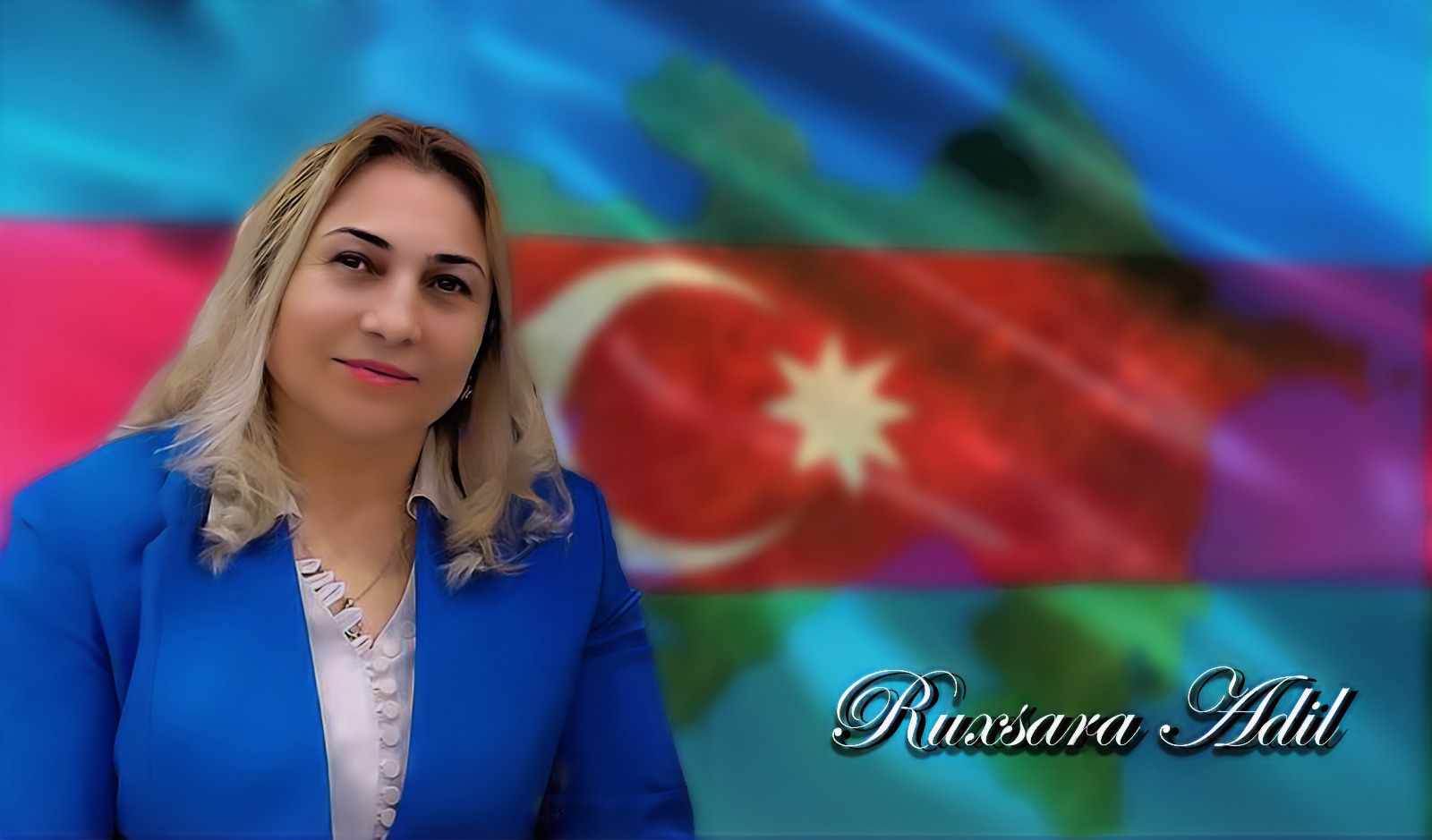
Rüxsarə Adilqızı (Həsənova) – Çəmbərək (Krasnoselo) rayon of Qərbi Azərbaijan, born in Qaraqaya, the secondary school in the Çaykənd city of the same region, in 1987, the current Baku State University.

She graduated from a faculty of science and started his labor activities.  She received her doctorate of biological sciences in 1996, and her degree as an academic in 2005, and currently works as an assistant professor at BDU's Faculty of Ecology and Natural Sciences.  100 provinces of BDU (1919-2019) were deemed worthy of the Jubilee Medal of the Republic of Azerbaijan, in the name of the "Giant of the XXI Century".

Member of the Azerbaijanis Writing Union, she is the author of the poetry books "Roads lead me to the land" (2012), "My beloved homeland award" (2021), "44 days that write history" (2021), "Mirror of my heart" (2023), in her poetry anthologies, She was featured in literary and literary magazines and was awarded with the "Qızıl Qələm" Media Award Laureate Diploma and the "Union of Turkish Peoples" medal of the "Çukurova International VII Turkish World Poetry and Music" festival.

She has a family, two sons and two daughters.
Date

I opened my palm and wandered around the ruins asking for bread, when I heard the call to prayer. I ran to our hut and saw my mother lying lifeless next to the four-cornered cloth, and my heart broke. As it was time to break the fast, I brought some water in a bowl and I gave it to my mother to drink. I couldn’t look at my mother’s face. She barely smiled and closed her eyes saying: «break fast.» In the
morning, when I looked at her near dawn, her breath was not coming out of her throat, there was no blood on her face. My eyes were filled with tears, and when I opened the lifeless, fisted palm that fell on the empty table, there was a single date.
If I took it, the date would smell like my mother…

Nosirova Gavhar was born on August 16, 2000 in the city of Shahrisabz, Kashkadarya region of Uzbekistan. Today, she is a third-year student of the Faculty of Philology of the Samarkand State University of Uzbekistan. Being a lover of literature, she is engaged in writing stories and poems. Her creative works have been published in Uzbek and English. In addition, she is a member of «All India Council for Development of Technical Skills», «Juntos por las letras» of Argentina, «2DSA Global Community». Winner of the «Korabl znaniy» and «Talenty Rossii» contests, holder of the international C1 level in the Russian language, Global Education ambassador of Wisdom University and global coordinator of the Iqra Foundation in Uzbekistan. «Magic pen holders» talented young group of Uzbekistan, «Kayva Kishor», «Friendship of people», «Raven Cage», «The Daily Global Nation», Argentina's «Multi Art-6», Kenya&;s «Serenity: A compilation of art and literature by women» contains creative works in the magazine and anthology of poets and writers.