"How Long Till..."

How long do we hide
ourselves?

Do we ever come out
in the open?

Or are we just shades
in our own prison light?

I long for some truth in self,
don't you?

But with all my years learning
to be more than I am,
is there any way out?

Do I become
a boneless bore?

Can I stretch a few
rubber bands before they pop?

Gads,
this is ridiculous.

I think I'll quit for now.
See you tomorrow
when I run for president.


"The Dream Keeper"

Today I step out
to run the real race.

I hate weasels
with egos

Why can't people live
without telling lies?

I loved the first girl I ever kissed.
I know I was too young
to think of the future.

But are dreams really only dreams?


"It's Me Again"

One last song
under the full moon...

She was all I ever wanted.
More than I deserved.

But isn't that how it is?
At least in the beginning?
LOVE IN SILENCE

The invented alphabet of our flights,
I will paint your image in sepia
Our kisses will imagine, the written word
Hearts that will beat in unison
You will be in the vortex of time...
You will be welcome love in silence
Let me pass, there's a gap in hope
Your voice and my voice will make a furrow in the night,
with the whisper of the wind
The larks will sing among the lilacs,
in a hidden language
I will be reborn in the immense breath of your laughter,
And in the love that burns, I will walk life.


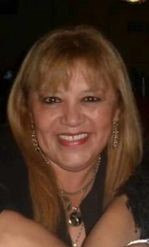
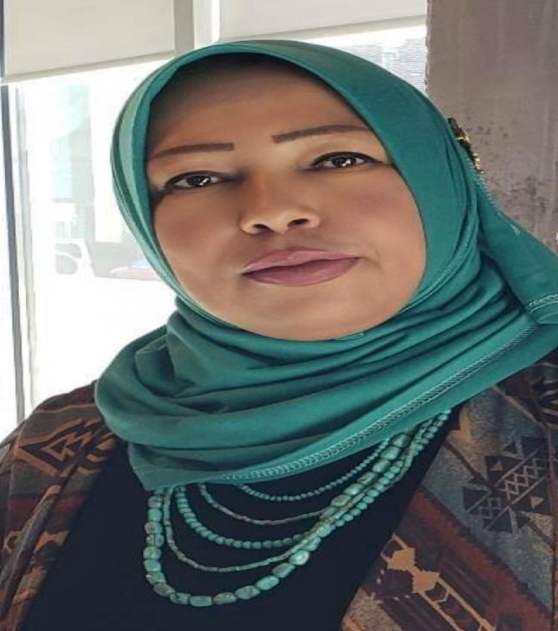
GRACIELA NOEMI VILLAVERDE is a writer and poet from Concepción del Uruguay (Entre Rios) Argentina. Based in Buenos Aires, she graduated in letters and is the author of seven books of poetry, awarded several times worldwide. She works as the World Manager of Educational and Social Projects of the Hispanic World Union of Writers. She's also the UHE World Honorary President of the same institution Activa de la Sade, Argentine Society of Writers and a Commissioner of Honor in the executive cabinet IN THE EDUCATIONAL AND SOCIAL RELATIONS DIVISION, of the UNACCC SOUTH AMERICA ARGENTINA CHAPTER.
We are hosting our Metamorphosis gathering again! This is a chance for people to share music, art, and writing and to dialogue across different generations (hence the name, the concept of ideas morphing and changing over the years). This event is also a benefit for the grassroots Afghan women-led group RAWA, which is organized by women in Afghanistan who are currently supporting educational and income generation and literacy projects in their home county as well as assisting earthquake survivors. (We don’t charge or process the cash, you are free to donate online on your own and then attend!)
This will be Saturday April 6th, 2-4 pm in the fellowship hall of Davis Lutheran Church at 317 East 8th Street in Davis, California. It’s a nonreligious event open to all, the church has graciously allowed us to use the meeting room. You may sign up here on Eventbrite.
Also, we encourage everyone in the California area to attend the third annual Hayward Lit Hop on Saturday, April 27th.This is a public festival with different readings from different groups throughout downtown Hayward coinciding with Hayward’s choosing a new adult poet laureate, culminating in an afterparty at Hayward’s Odd Fellows Lounge. Several Synchronized Chaos contributors will read from their work at the 2024 Lit Hop.
Now for our second March issue: One Wild and Precious Life. Poet Mary Oliver said, “Tell me what it is that you plan to do, with your one wild and precious life!” In that spirit, this month’s contributors wonder and dream and fear and love and plan, all in the face of human mortality.
Susie Gharib comments on the tragedy and transience of life on Earth, while Duane Vorhees ponders the weight and influence of human ambition and history on an individual’s life.
Jacques Fleury celebrates Black history and encourages respectful and nuanced portrayals of Black people in media.
Gulyaho Karimova’s essay outlines the life and legacy of Jaloliddin Manguberdi, patriotic Turkish hero from centuries in the past. Z.I. Mahmudlooks to the past and the influence of a single person in his essay on Walt Whitman’s elegy to Abraham Lincoln. Muntasir Mamun Kiron rhapsodizes in his poetry about Bangabandhu, the military and political leader considered the father of modern Bangladesh.
Xushroy Abdunazarova’s poem concerns the beauty of the Uzbek language while Adhamova Laylo discusses the structure of the Korean alphabet. Sarvinoz Mamadaliyeva urges support for the education of women and girls. Zulaykho Kosimjonova outlines strategies to improve students’ reading comprehension while Malika Oydinova compares the advantages of distance versus in person learning. Bill Tope reminds us of the value of free access to information in his protest story about book bans and censorship while Faleeha Hassan highlights the power of writing and creativity in her narrative prose poem on the cataclysmic effects of writers’ block on her imagined worlds.
Xabibullayeva Madina writes of the elegance of her Uzbek heritage, spring, and femininity. Graciela Noemi Villaverde illuminates the wonder, beauty, and strength of women. Annie Johnson celebrates romantic love and the divine feminine archetype as grounded in nature and culture.
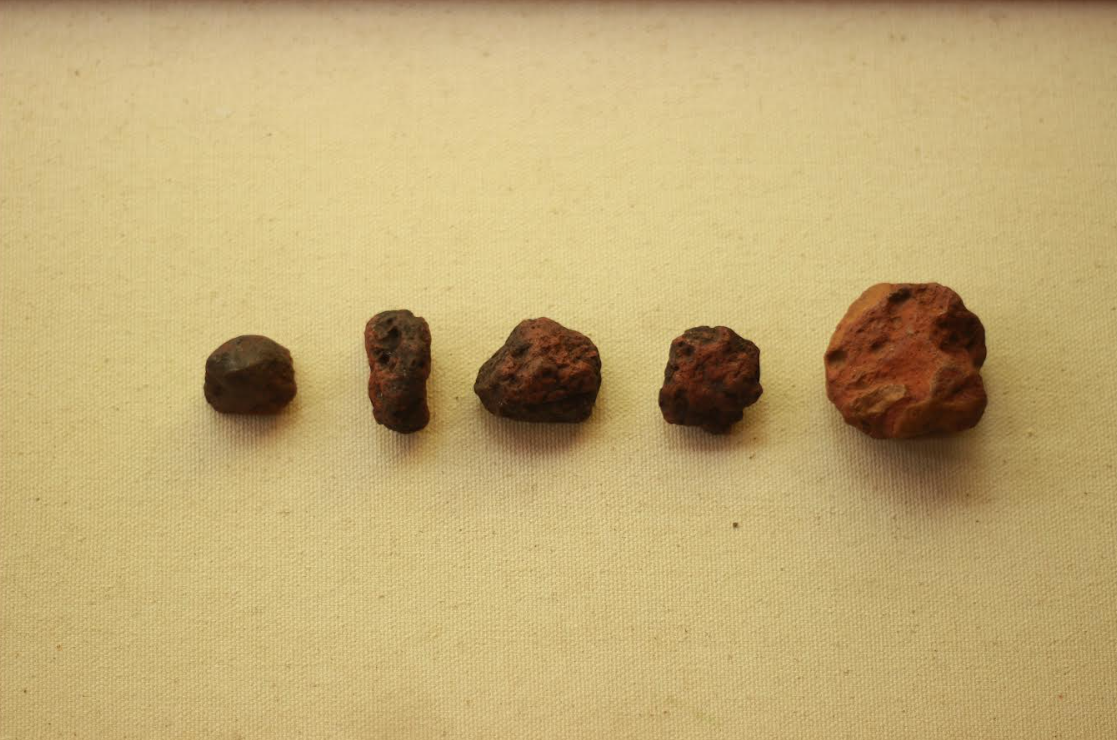
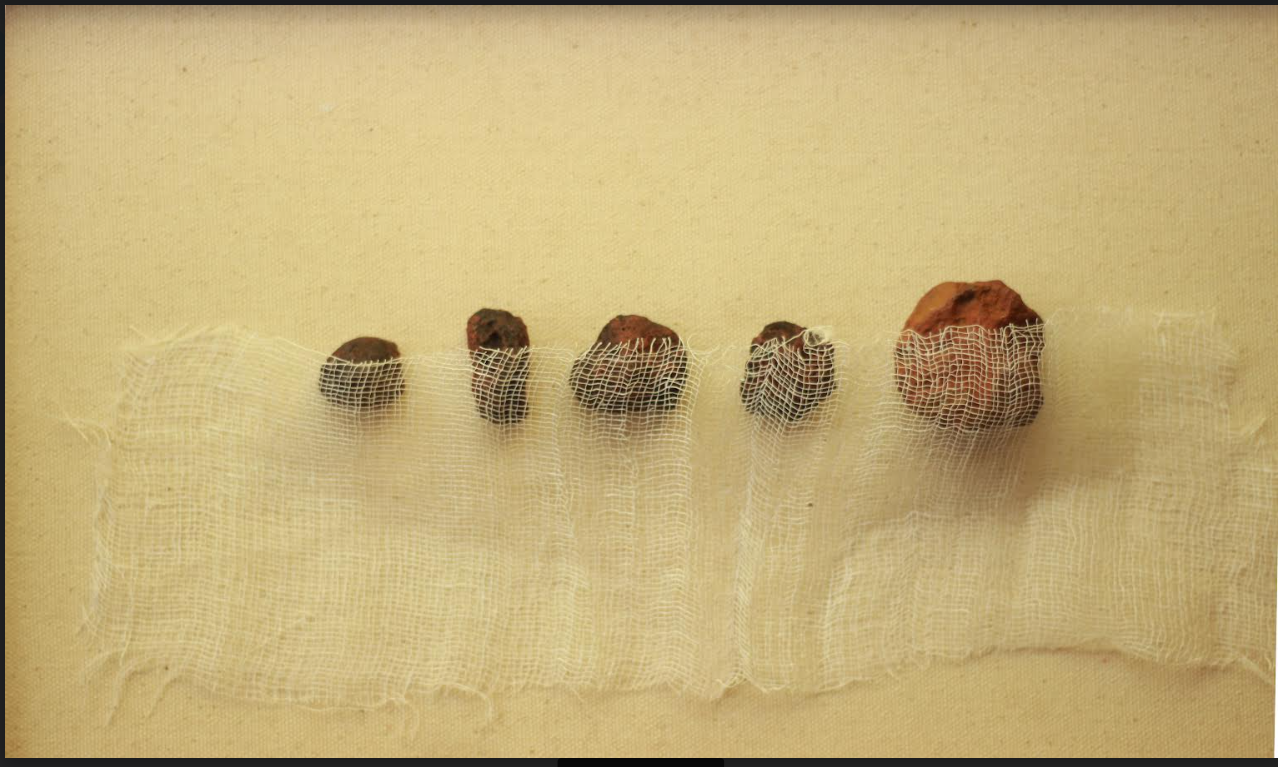
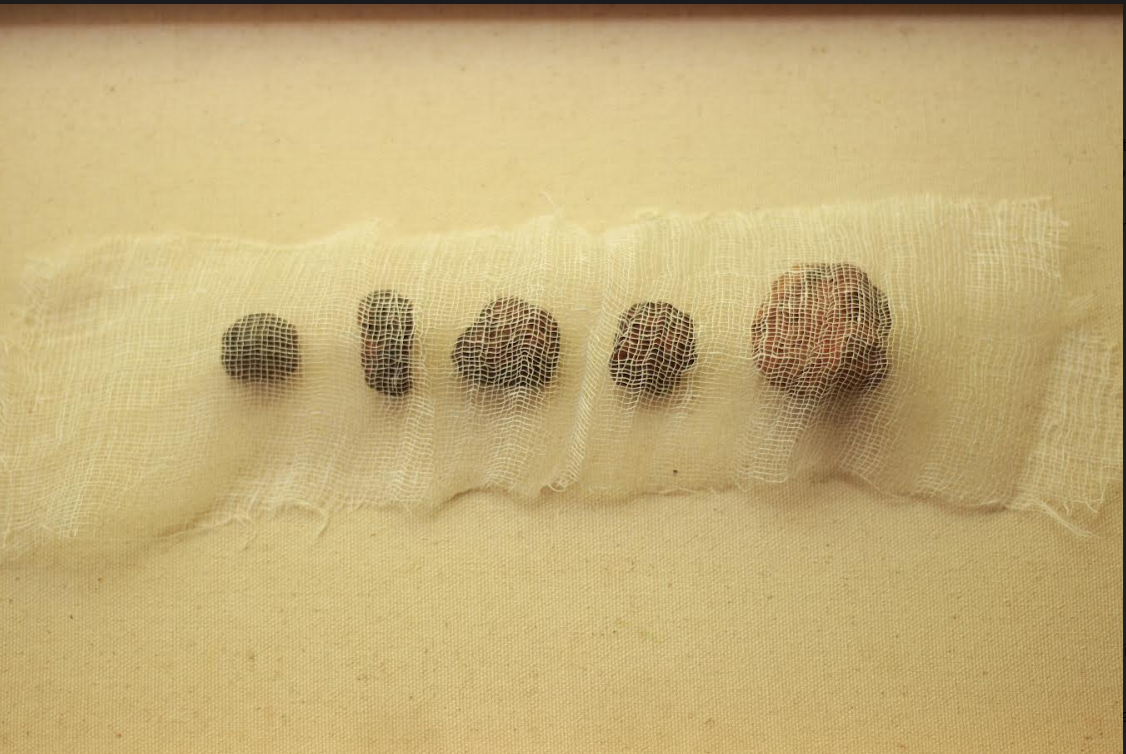
Brian Barbeito speaks to the timelessness and mystical quality of natural landscapes and our place in them. Sayani Mukherjee describes how thoughts align in her brain like a choir or a forest of trees. Umid Qodir’s poem urges people to have the courage of a flower in the rain, while Maja Milojkovic compares committed love to a flower continually receiving needed water from nature. Christopher Bernard compares a graceful female dancer to a fountain of water. M.P. Pratheesh’s concrete photographic poems illustrate red rocks lined up and covered to varying degrees. Kristy Raines writes of the return of spring, spirituality, compassion, and lost love with a sensitive spirit. Mahbub Alam writes of swimming at dawn with a beloved, immersing himself in water and his tender feelings. His daughter Monira Mahbubcrafts gentle scenes of village life and connection among people. Maurizio Brancaleoni contributes clever haikus on winter cold and human nature.
Mykyta Ryzhykh also speaks to human nature, with lonely modern, or post-modern pilgrims wandering alone, wondering who they are and what they are looking for in life. Our prophet of lonely wanderings, J.J. Campbell, returns with pieces on the joy and precarity of romantic and family relationships, conveying the lostness he felt with his family of origin.
Nathan Anderson addresses questions of human nature in an even less linear manner, playing with punctuation and spacing of letters on the page. Mark Young renders images from his neighborhood into mixed media art images, providing a unique way of seeing things where reality melds with imagination. Clive Gresswell, in his new book Shadow Reel, reviewed by Cristina Deptula, explores our unconscious, how ideas and words continue to resonate in our brains past the point of linear thinking.
A. Iwasa provides a comical essay about his encounters with dopplegangers. J.D. Nelson’s haiku presents encounters with the unexpected: minor mishaps, strange combinations, reunions. Grant Guy’s concrete poems about surrealist artist Alfred Garry evoke the whimsical nature of his work and the tragedy of his short life.
Mesfakus Salahin ponders how he will prepare to meet the implacable force of death, while Jerry Langdon sings the blues for a soul doomed to damnation.
Ivan de Monbrison describes physical and mental pain as a force mangling the brain and body, permeating our structural integrity and the wholeness of our relationships with each other.
Taylor Dibbert reflects on the end of a relationship while Bill Tope relates the tale of a lonely woman who feels rejected in love and commits suicide. Farangiz Murodova’s breakup poem provides an elegant rendering of loneliness.
Zebo Ibragimova writes of the global scourge of drug addiction and the many lives affected. Pat Doyne speaks to questions of personhood and government authority in her poem satirizing a recent American court decision concerning in vitro fertilization. Emina Delilovic-Kevric evokes images of civilians oppressed by German military forces in a piece about the mental toll of society’s inhumanity.
Meanwhile, in a more abstract vein, Clive Gresswell crafts surreal images of invasion, decay and destruction.
Noah Berlatsky sends up a poem about the daily matters of life, such as breakfast, which continue even when our lives are in chaos. Wazed Abdullah compares the journey of life to a piece of music, to be experienced in all its different stages and moods.
Sherbekjon Salomov writes of the future potential of youth in Uzbekistan. Isabel Gomez de Diego revels in the beauty of a children’s playground in her photography.
In her literary essay on Tolstoy, Ravshanbekova Asalkhon discusses the author’s deep empathy for the poor and downtrodden. In Mashhura Umaraliyeva’s story, simple human kindness helps a girl lonely at summer camp. Sarvara Sindarkulova speaks to the importance of respect for parents. Muhammed Sinan describes his quest for goodness and compassion and Anila Bukhari’s poems reflect a deep faith and tender compassion for the human condition.
Ahmad Al-Khatat writes of learning from fellow immigrants how to move from fear to dreaming and hope, while Ellie Ness addresses the precarity and joy of travel.
Eva Petropoulou speaks of seeking love and human connection, more family love and general compassion than romance. Lilian Dipasupil Kunimasa writes of respect and empowerment for women and also crafts a tale of an eccentric character finding welcome in a small town.
We hope that you might also find a welcoming home for your own creativity within this issue, with its many poignant, tender, amusing, strident, thoughtful, eccentric, and inspiring pieces.
THE CHARACTER OF JALOLIDDIN MANGUBERDI IN HISTORICAL SOURCES
Karimova G.Q Urganch State University
Abstract: The image and personality of Sultan Jalaluddin Manguberdi is described in the article. Key words: Khorezmshahs, Mankburnis, Juvainis of Atama, Shihobiddin An-Nasawi, Mongols, Kudrat Mashiripov, Maksud Sheikhzade.
A brave fighter who sacrificed his life for the freedom of the country, a true patriot, a national hero, a great man who left an indelible mark in the history of world nations, a skilled commander, the last ruler of the Khorezmshah dynasty, Sultan Jalaluddin Manguberdi (1198-1231) is the eldest son of Muhammad Khorezmshah. He lives 33 years and spends 11 years of his life in battle. Full name: Jalaluddin ibn Alauddin Muhammad. Jalaluddin was named Mankburni because he had a hole (mank) on his nose. Later, this name changed in pronunciation and became known as “Manguberdi”.
Many scholars wrote works about Sultan Jalaluddin Manguberdi. Aluuddin Otamalik Juvaini says about Sultan Jalaluddin in his work “Tarihi Jahon Kuso”:
“Among the sons of Sultan Muhammad, Sultan Jalaluddin was the oldest, the crown of the kingdom, courageous, learned, and the light of the lamp of theology. Despite the fact that other brothers were given worldly blessings, Sultan Jalaluddin never left his father’s side and helped him in state affairs. When his father did right and wrong things, he told them to his face.
Jalaluddin Manguberdi’s munshi, contemporary and close friend, Shihobbiddin An-Nasawi, wrote down a lot of information about the Sultan in his work “Siirat al-Sultan Jalal-ad-Din”. He states that he fought for the freedom of the country and the people, fought against the Mongols for 11 years, fought against the Mongols 14 times and won 13 battles.
Kudrat Masharipov mentions that Jalaluddin Khorezmshah was the bearer of the freedom struggle, he was successful in the continuous struggles, he showed himself as a famous general and a great statesman, and in a short time he restored the state of the Khorezmshah empire in the south-west of Iran, Khorasan, Azerbaijan, and Iraq.
In fact, even to this day, our grandfather is Mangubarhayat. Maqsud Sheikhzade expresses the image of Sultan Khorezmshah in the drama “Jalaluddin Manguberdi” with the following words: … He who has a place in mortality – lives forever, I’m Manguberdi, I know.
From the sky, from the water, or from the ground, Maybe from the desert, from the foot of the mountain, I’ll show up here one day The devil of the country is in an un-buryable desert-cave. Death does not blind to noble intentions, Whoever chases the enemy from his country, it is me…
In conclusion, the memory of our ancestors who sacrificed their lives for the freedom and peace of the country will always be alive. Their bravery, bravery and bravery in the way of the fate of the homeland is an example. It is difficult to express the great courage of our great grandfather in one word. Sultan Jalaluddin fought valiantly against the enemy while protecting his country. He heroically imprinted his image and his boundless love for the motherland in the history.
Reference list:
Juvaini of Otama. The history of the world. Translation by Nazarbek Rakhim. T: MUMTOZ SOZ, 2015. – 275 p.
Q. Masharipov. Jalaluddin Manguberdi’s role in world political and military history. Tashkent: Yoshlar media print, 2021. – 256 p. Internet networks:
(Five igneous reddish brown stones lined up in a horizontal line. Last one is bigger)
(Same five stones, covered at the bottom with translucent gauze)
(Stones all covered with the gauze)
M.P. Pratheesh has published several collections of poetry and personal essays in Malayalam. His texts and images were part of ‘let me come to your wounds; heal myself’, a cross -disciplinary art event curated by C F John(2020-2022). His poems and/or object/visual poems have been appeared at various places including Singing in the dark (Penguin,2020), Greening the earth (Penguin,2023), Modern Poetry in Translation, Almost island, Portside Review, RlC journal, Indianapolis Review, Indian Literature and elsewhere. His recent publications are Transfiguring Places(Paperview books, Portugal,2021) and The Burial, (Osmosis press, UK, 2023). He is the recipient of Kedarnath Singh Memorial poetry prize, 2023.
Those Lost Words of Love

In your eyes I can still see the shadow of passion
that once stormed between us
like the force of a rushing river never ceasing
Our talks were exciting and our interests
were so similar, as if we were one person
Then the day came when words became silent
and tears told the world our painful tale
At times I hope that you will find the beautiful
lines of the never ending love story once again
Even now, I remember the words you once spoke,
and I swear at times you want to speak them again
Those lost words that you still refuse to say to me
sit on tip of your tongue, yet you will not utter them
But I refuse to accept that those words of love for me are not still there
Just speak them to me once more ❤


"God! Do You Cry Too"?

Today while trying to make sense of it all
When I look around and see so much evil
When what was created so perfectly
has become so wrong, I wonder...
Does God cry?

When I read He made me in his likeness
and He tells me clearly through his word
that there is no other love greater than His
I think of how sensitive he has made my heart
and I can't help but ask... "God, do you cry too?"

And when I see a child who has been abused
And you have called them our greatest treasures
Do you take vengeance on such evil?
"God!  How do you cope, when you see their tears?
Tell me!   Do you cry too?"

I think He must.  Because the One who taught me
how to love; Who taught me about faith; Who commanded me to love one another must have a heart as sensitive as mine..
and I think, "God, I believe you cry and grieve just like me."

"Because no other could care as deeply as You do."

"You count every tear I cry.. But Lord, who counts yours?"


Longing for Spring

The clouds cried again today as a cold wind blew across a sunless sky of gray.
I watch an orange fall off my tree and I wait until the rain becomes a sprinkle to collect it.
I walked outside feeling the mist hit my face
to pick up the fruit that lay on the wet earth while admiring it's vibrant orange color.
As I peel the fruit which uncovers its perfume, I close my eyes and savor it's sweet nectar.
I enjoy seeing the green grass in the garden covered with rain, which brightens it's color.
Spring is waiting to burst out as Narcissus flowers now show off their yellow faces.
I long to see the the blue sky of Spring again;
Waking up to the scent of jasmine that will soon bloom, and the  gentle morning song of the sparrow that lightens my mood.
Once more will I be able to hear the owls call to me while sitting on my porch in the dark, as the coyotes howl an eerie song in unison.
I welcome again the warm breeze that lightly touches my skin as it blows gently through the sheer curtains covering my bedroom window.
And I will fall asleep to the calming sound of the crickets and the croaking frogs as the stars twinkle behind a bright full moon on a beautiful Spring night.


Kristy Raines was born  in Oakland, California, in the USA.
She is a poet, writer, author and advocate.
She has five books getting ready to publish soon, one with a prominent poet from India which will launch hopefully soon called, "I Cross my Heart from East to West", two fantasy books of her own called, "Rings, Thins and Butterfly Wings" and "Princess and The Lion", and an anthology of poems in English,"The Passion Within Me" and her Autobiography called "My Very Anomalous Life"
Kristy has received many literary awards for her unique style of writing.
Writer’s Block

When I try to write
I sense that millions of readers are
Crowding the paper’s edge,
Kneeling, genuflecting, and lifting their hands
To pray for my poem’s safe arrival.
The moment it looms on my imagination’s horizon,
Gazing at the concept in a diaphanous gown of metaphor,
Young people smack their lips—craving double entendres.
Meanwhile, with piercing glances, the elderly scrutinize
Its juxtapositions and puns.
Then the concept smiles shyly, dazed at seeing them.
On the paper’s lines both young and old meet for a discussion,
But my words resist
And erect walls of critical theories.
Then the paths of personal confession contract,
Contract,
Contract.
My imagination calmly shuts down,
And the conception retreats inside my head.
At that hour, it afflicts my world with
Bouts of destruction.
Workers refuse their paychecks.
Farmer let their fields go fallow.
Women stop chatting.

Pregnant mothers refuse to deliver their babies.
Children collect their holiday presents but
Toss them on the interstate.
Our rulers detest their positions.
Kings sell their crowns at yard sales.
Geography teachers rend their world map
And throw it in the waste basket.
Grammar teachers hide vowel marks in the drop ceiling
And break caesura by striking the blackboard.
Flour sacks split themselves open, and the flour mixes with dirt.
Birds smash their wings and stop flying.
Mice swarm into the mouths of hungry cats.
Currency sells itself at public auctions.
The streets carry off their asphalt under their arms
And flee to the nearest desert.
Time forgets to strike the hour.
The sea becomes furious at the wave
And leaves the fish stuck headfirst in the mud.
The shivering moon hides its body in the night’s cloak.
Rainstorms congeal in the womb of the clouds.
The July sun hides in holes in the ozone layer,
Allowing ice to form on its beard and scalp.
Skyscrapers beat their heads against the walls,
Terrified by the calamity.
Cities dwindle in size till they enter the needle’s eye.

Mountains tumble against each other.
My room squeezes in upon me, and
The ceiling conspires against me with
The walls,
The chair,
The table,
The fan,
The floor,
Glass in the frame,
The windows,
Its curtains,
My clothes, and
My breaths.
The world’s clarity is roiled.
Atomic units change.
I vanish into seclusion,
Trailing behind me tattered moans and
Allowing my pen to slay itself on the white paper.
.......................................................
by Faleeha Hassan
Translated by William M. Hutchins

She is a poet, teacher, editor, writer, and playwright born in Najaf, Iraq, in 1967, who now lives in the United States. Faleeha was the first woman to write poetry for children in Iraq.

She received her master's degree in Arabic literature, and has now published 26 books, her poems have been translated into English, Turkmen, Bosnian, Indian, French, Italian, German, Kurdish, Spain, Korean, Greek, Serbia, Albanian, Pakistani, Romanian, Malayalam, Chinese, ODIA, Nepali and Macedonian language. She is the Pulitzer Prize Nomination 2018, PushCart Prize Nomination 2019.
Member of International Writers and Artists Association.
Winner of the Women of Excellence Inspiration award from SJ magazine 2020, Winner of the Grand Jury Award (the Sahitto International Award for Literature 2021) One of the Women of Excellence selection committees 2023 Winner of women the arts award 2023 Member of Whos’ Who in America 2023 SAHITTO AWARD, JUDGING PANEL 2023 Cultural Ambassador - Iraq, USA

Email : d.fh88@yahoo.com