albeggia appena –
diventare rugiada
senza saperlo

it barely dawns –
to become dew
without knowing it

*

luce da oriente –
nel pallido cammino
un papavero

light from the east –
along the pale path
a poppy

*

campi innevati –
un nodo di silenzio
chiude i pensieri

snowy fields –
a knot of silence
blocks my thoughts

*

novembre in petto –
tocco un nuovo silenzio
di seta grigia

November in my chest –
touching a new silence
of grey silk

*

acqua che scorre –
è più dolce la luce
di fine autunno

flowing water –
the late autumn light
is gentler

*

notte d’asfalto –
nel silenzio le voci
ruggine e vento

asphalt night –
voices in the silence
rust and wind

*

erbe selvatiche
fra le crepe dei muri –
senza una madre

wild plants
growing in the wall cracks –
motherless

*

veli caduti –
tramonti negli occhi
sul muro grigio

fallen veils –
sunsets in the eyes
on a gray wall

*

finestre accese
sulle vite degli altri –
la notte intorno

windows lit
on others' lives –
night all around

*

senza più cielo –
confondono il cuore
i prati d’asfalto

no more sky –
the heart confused by
asphalt meadows

*

occhi d’autunno –
lunghe strade di pioggia
senza una voce

autumn’s eyes –
long rain roads
without a voice

*

solo una rosa –
il profumo del cielo
in un bicchiere

just a rose –
scent of heaven
in a glass

*

cielo di pece –
tutta la luce dietro
aspetta il mattino

pitch sky –
all the light behind
waits for the morning

*
piccola luce –
raccoglie nella sera
falene perse

small light –
it collects lost moths
in the evening

*

foglie gialle –
sulla panchina cadono
piccoli addii

yellow leaves –
on the bench fall
little goodbyes

*

fra l’erba secca
i corvi a due a due –
ricordi perduti

among the dry grass
crows two by two –
lost memories


Laura Marino Trotta è nata a Roma, si è poi trasferita a Firenze per frequentare la Facoltà di Agraria e, successivamente, l’Accademia di Belle Arti e la Scuola Libera del  Nudo.

Varie le attività lavorative che si sono succedute negli anni, mentre costante è rimasta nel tempo la sua ricerca attraverso molteplici possibilità espressive e l’impegno nel Terzo Settore.

Laura Marino Trotta was born in Rome, she then moved to Florence to attend the Faculty of Agriculture and, subsequently, the Academy of Fine Arts and the Free School of Nude.

Various work activities have followed one another over the years, while her search across multiple expressive possibilities and her commitment in the Third Sector have remained constant over time.
we thought we weren’t

all that i was
was a compilation of what
i wasn’t:
how we bounced a
deflating rubber ball to and
fro across white faded
lines on the schoolyard blacktop talking and
talking about trivial
things that led us to cover each
other’s cool gray surfaces so when
finally the romantic
disruption we had
waited for came we
realized there was this empty
sphere of dry air below
the other’s surface and
plasmatic energy, unstable, below our
own, a dammed-up deluge like a

sip of carbonated
drink; rising
anticipation for the syrupy
taste then the spiky
needling in the soft
skin of your cheeks as you
attempt to swallow and
swallow as the drink goes
flat in your mouth and still you
carry the lingering taste and the
memory of craving junk
food; now you
wonder what was the
appeal and the firmest
memory you retain is that of the
deflating rubber ball, worn, durable, and
unremarkable.
sleeping rough
on his lips salty taste...
dewdrops

dusk chorus--
peeking through neighbor's fence
setting sun

hospital visit
on her meal menu
"Happy Birthday"

sleep walking...
in the microwave
her mobile phone
my health matters too


down in the hard black earth

before the shadow-gifted body-

shaming shrieks with future rank

refused among the fresh night

blossoms on a cork-popped psyche

stashed by means you guessed

were taken back on board you eat

what’s yours and listen for today

is just the ticket for a hunt through

city streets you seem to recollect

a flock of bats you made some

conversation with the sith you

welcomed sharp incursions

of the mob her mouth’s the

thing you seemed to say was

viscous there was flowing under

glass was then bizarre in vain

so let his head fall back on

bones and set aside more

surface bursts the searching

worse the land was hot she

nursed him to his smooth

and privileged form then

edged his syncopated back

a corpulent in ball and

chains they wrapped him

up in veneration and in

pink to table and to then

compare with all the fuck-

ups on our screens a teenage

fantasy for sale a part of that

a piece of his the warmth and

then the getting-good it’s

morning if it’s bright enough

the house anxieties that led

to fill the plague graves early

on are like a growing list of

foods their scatterings were

surely doomed and sometimes

tampered with in sheds


 we spoke lovingly of roe


deliverance through a glancing-off of riddles

in one untidy corner of the mind delusions

widely disapproved of as yet others are

reluctant to placate themselves at all and

almost perish with their pleadings and denial

and you might even get tugged off when once

the tired poetry arrives with stomach botch

the wilder sort and if there is a god or not

you stumble through your stratagems

hallucinating forest fires and now she’s

troubled by her arms again and only so much

scribbling through the pain can halt this placid

streak if that’s allowed to gift you motivation

but it’s not like that at all it’s milk two sugars

then the mescaline arrives and long-term

prisoners are forced to stream some aspects

of that vicious night with pushing motions of

their blood-stained hands while pools of septic

effluence gush out from washed-up dreams

so short on fatherly affection yet again but

this time on the railway banks or rolling down

the river tyne with bark from ripped-up holy

trees while glancing round at comic-book type

treatments line by line or understanding great

cathedrals in the season of the wight the un-

remembered and the meaningless shape up

the artist in you rides the london eye


 partly political


keep them squaddies on their metal by the by

no longer visible like beasts persuaded through

your efforts down against the rusted factory

gates while dipping bending showing all the

glowing stacks of burnt remains of shamed

officials on bell-bottom nights without the

magic mountain camp with boots that shine

like bathroom taps or crawled neck residue

that thrashed was where it started then was

torn the thing that’s feared the most was

taken from a point on stolen braille maps by

the river’s scent a three-lane highway out of

nowhere on a mountain bike or steaming

thick and creamy cabbage by the light above

a patch on posh boy’s vast inherited estates

that’s got to be extruded from a space that’s

partly labelled by the past and having spent

the morning playing human chess in tunnels

or a maze it crawls a london boy by chance

unorthodox supplies a big old grub to catch the

only interspecies still at large perhaps the

bloodied swimming pool has given up its secret

to those corresponding principles at last and

with an excess of its like to read a telepathic

slow-descending self-erasing spine and side-lined

masks a crudely nauseating  metronomic tick

within its zone beyond the pale with wish-

fulfillment at its core while washing out the

tupperware in fits who knows where

morning is before the shrivels week by

week still hating thatcher as they weed their

beds those nervous tits have been out there in

charge of landscape-format glass-based art

events an installation of suspended things that

much was visible along the curved beak’s

nesting lost in limbo and was long-suspected

by his friends of putting tories in the ground

without permission be widespread he states

the high mind's ornament deserves the block

and matter of the hours it is suggested that

the bold take notes on unscratched holograms

with common praise in some hard past was

smoking rocks and shooting up on city streets

with skipping ropes and spinning plates

while those of us who did refuse still wonder

when and why our hormone levels peaked
Eddie Heaton studied innovative and experimental poetry under the tutelage of post-modern poet and educator Keith Jebb, achieving a first-class honours degree. He also won the 2021 Carcanet Award for Creative Writing. His work has been published in Blackbox Manifold, Otoliths, Lothlorien, Focus and Fold Editions
All are welcome to attend this multi-venue literary event on Saturday April 22nd, starting at 2pm in Heritage Plaza across from the library. As it’s also Earth Day, we will begin with a group of poet laureates from the East Bay giving environmentally themed readings and then move to a selection of different downtown venues before re-congregating for the afterparty at the Sun Gallery. Several Synchronized Chaos contributors will read from their work.
This month, Synchronized Chaos’ contributing writers and artists map the inner journeys many of us embark on as creators or simply as human beings.
Christopher Bernard reviews William Kentridge’s Sibyl at UC Berkeley’s Zellerbach Hall, a production evoking humanity’s continual search for answers we may never find. Jaylan Salah interviews Jim Frohna about Apple TV’s show Shrinking, which confronts mental illness in a unique way by showing a character’s search for truth and his life’s purpose. Maja Milojkovic renders internal journeys between people and within oneself through esoteric and painterly metaphors. Graciela Noemi Villaverde expresses the inner passion and turmoil of someone in the depths of romantic attraction through her dreamscape poetry.
Robiul Awal Esa celebrates his country of Bangladesh by reflecting on its founder’s creative work of statecraft. Wazed Abdullah also honors his Bangladeshi homeland by singing of its natural and human history.
Luis Cuauhtemoc Berriozabal reflects on where our minds wander when we stare out our windows. Jerome Berglund observes everyday objects – scoreboards, prickly pear cacti, chia planters – in ways that are unique and uncanny. Noah Berlatsky finds enlightenment in a single moment: a computer chatting from an algorithm with no biological past, a tiny house with no room for hoarded objects from the past, a sailing ship, and a spiritual meditation on the present moment.
Barbara Gaiardoni superimposes words onto closeups of plants to encourage people to think and contemplate our place within nature.
Philip Butera writes of his creative process, search for inspiration, and the loneliness of art-making. Scott Thomas Outlar’s poems also explore psychological questing, artistic creation, and his soul’s evolution. Jerry Durick writes of individual identity from three different perspectives. Ivan Jenson alludes with humor to how intimately intertwined technology has become to the processes of finding and creating ourselves.
Stephen Jarrell Williams sends up a post-apocalyptic fantasy sequence about holding onto one’s truth and identity in hopes of recreating a better world. Roodly Laurore speaks to finding hope in the midst of desolation and violence in Haiti.
David Woodward evokes through surrealist poetry the history of broken treaties and legal stratagems used to remove Indigenous people from their lands. Clive Gresswell peers into the underbelly of modern British society, unearthing poverty and decay. Faroq Faisal laments human greed and environmental destruction. Michael Ceraolo satirizes power relations of all sorts, political and professional.
Chimezie Ihekuna’s song lyrics relate how he remains open to the possible need to question everything he’s been taught. Henry Bladon’s humor probes the meaning of life and death and explores the limits of nihilism.
Nilufar Ruxillayeva reflects on how the path to happiness can be different for each person.
Mehreen Ahmed reminds us that our bodies and psyches need recharging as much as our devices. Mahbub Alam finds renewal through peaceful retreats to nature, imagining himself loved and encouraged within his sacred space. Don Bormon wishes he could bring happiness to the world like the sun as it returns at the end of winter.
Some people’s work looks into how we grow as we pass through different stages of life and common experiences.
Richard Simac’s story of male self-discovery and bonding during puberty echoes with references to the garden of Eden and the maturation of humanity.
Shelby Stephenson reviews Stephen E. Smith’s poetry collection Beguiled by the Frailties of those Who Precede Us, a book of poems addressing family relationships and the pain caused by prejudice and racism. Z.I. Mahmud examines Alexander Pope’s famous poem that satirizes his society’s expectations for high-class women.
Duane Vorhees speaks of physical and cultural evolution, how we are all inevitably shaped by our pasts. J.J. Campbell shares how he relives memories for comfort and excitement amid the slow passage of present-day time. Norman J. Olson, in a letter to a friend of his on the occasion of the passing of poet Steven Richmond, reflects on what it means to have had a lifetime of literary success.
John Grochalski illustrates the world-weariness of a returning traveler and points out how many people share that feeling looking at today’s American society.
Linda Gunther captures place and time while recollecting a high school romance, tied to her past while tiptoeing into adulthood.
Abigail George’s essay probes the journey of heartbreak, compounded by the sense that her past partner viewed their whole relationship as a mistake. We see how grief elongates time and heightens perceptions as the narrator processes strong emotions and seeks to reclaim herself, drawing on literature and history as touchstones.
Chris Butler explores another type of heartbreak in a different way, through a horror tale of a mother and daughter’s doomed search for connection. Az Emina Krehic writes of the slow fade of memories of a departed person, another source of grief.
Other contributors illumine care, connection and compassion for others as a pathway towards spiritual growth, how relating to others changes us.
Taylor Dibbert’s speaker devotes himself to care for a sick dog, while Mesfakus Salahin illuminates the gentle renewing power of love, and John Culp finds peace in the natural rhythm of a long-term relationship.
Cheryl Snell crafts moments of tenderness between fragile, mortal humans, as Ann Christine Tabaka celebrates love shining through a dark wilderness of broken souls and bodies.
Finally, some art and writing turns outside the human psyche to explore the world.
Russell Streur chronicles haiku poetry’s 1950’s cultural moment in the United States while questioning whether anyone could truly create authentic haiku in languages other than the traditional Japanese.
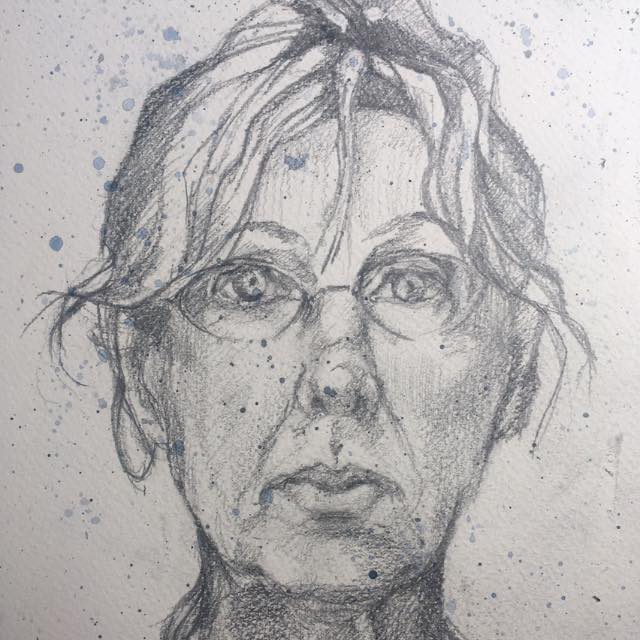
Mark Young’s poems consist of sentences that make sense individually and fit together structurally, if not content-wise. Michael Barbeito’s photographs are lush, complex renderings of scenes with several layers of detail. Maurizio Brancaleoni’s drawings focus on line, shape, shading and color.
Channie Greenberg’s natural and artistic representations of birds illustrate how beauty can be found in both nature and in human-crafted artwork. In the same way, Daniel De Culla juxtaposes images of dogs and statues, clowns and Santa Claus, the real and the crafted.
This issue encompasses a variety of human thoughts, quests, and journeys, and we hope it inspires you to ask and seek answers to your own questions.
Halo Equated


I promised all my sevens
to the pattern

now I’m caught in its prism
blink twice for fusion

spin in the grasp of spent coding

untangling live wires
in the storm

You told me every dog
still has its teeth
from the hunt

now I’m warm in the forest
fur wrapped with worn blankets

coil through the night of rebellion

enticing compressed visions
from crystal


What Roars Below


brewing

not quite a boil … yet

churning underneath
a sure explosion
biding its time

constructing a blueprint
to rise without aggression

violet flames
liquid consciousness

a compulsion toward creation
unbridled human expansion

the artistic urge

self-actualization/individuation
finding cohesion with the collective

sacred space of duality
breather of light discovered in shadow

cynicism turned on its head
affirmation

the great yes to it all
flow/flux

gestation turnkey
an opening of eyes


Aborted Escapism


I wasn’t in a rush to be born

&

I took my sweet ass time
to garner any wisdom after

but God knows I ran
straight toward the grave
for so damn long

and each time
you refused me
and sent me back
with deeper patience
and buried scars

but if I disappointed you
I will make it up to them

because if there’s one thing
I’ve ever been sold on
it’s promises
Scott Thomas Outlar is originally from Atlanta, Georgia. He now lives and writes in Frederick, Maryland. His work has been nominated multiple times for both the Pushcart Prize and Best of the Net. He guest-edited the Hope Anthology of Poetry from CultureCult Press as well as the 2019-2023 Western Voices editions of Setu Mag. He is the author of seven books, including Songs of a Dissident (2015), Abstract Visions of Light (2018), Of Sand and Sugar (2019), and Evermore (2021 – written with co-author Mihaela Melnic). Selections of his poetry have been translated and published in 14 languages. He has been a weekly contributor at Dissident Voice for the past eight and a half years. More about Outlar’s work can be found at 17Numa.com.
AppleTV+ Shrinking is the kind of show people stream to throw the burdens of the day behind. It’s funny, quirky, well-written, and showcases some of the best talents on TV. Imagine a series starring Harrison Ford, Jason Segel, and a fresh-faced Jessica Williams. The result is a breath of fresh air on the streaming service platform and a story to hook up TV series buffs and those looking for a night watch, before-going-to-bed quickie.
Shrinking tackles mental health from an interesting angle. It questions the limitations of grieving and coping with tragedies without losing a sense of wonder or resorting to rhetoric vapidity. It uses its galvanizing cast to the utmost benefit. Ford is a veteran superstar whose charisma is imprinted in the hearts and minds of millions growing up whether to worship his mega star Indiana Jones/Star Wars fame or his gritty roles in The Fugitive, Air Force One, and Blade Runner. Heshines in a role that plays comedy through a low-key, grounded performance.
I had the pleasure of speaking with Jim Frohna, series cinematographer of the award-winning Amazon series Transparent and Season 2 of HBO’s lauded series Big Little Lies fame. His work centers around TV series that are not afraid to show how humans struggle to figure themselves out and figure out the world around them. He wants to feel multiple things as a participant and collaborator in creating the art, so he lets his gut guide him toward the show where he feels he can retain that artistic input.
The conversation flowed smoothly, with minor interruptions from Frohna’s pets. Frohna explained that the core of Shrinking was the Laird family whom he and James Ponsoldt -pilot director and one of the producers- loved and cared for. This gave the series its authentic shift from slapstick comedy to intense emotional drama at times. The pace didn’t feel forced or constricting due to the masterful storytelling and Frohna’s swift camerawork, from close-ups to lighting work which framed the characters masterfully, setting the mood for lighter or darker scenes.
“We cared about this family. They meant a lot to us. The show itself goes from slapstick comedy to some dry humor, then into real grief and real pain. So we talked about how we could visually bring this world to life in a way that can be a container for all the range of what happens in the show. What struck me instinctually was to have it very grounded and feel like a real place and to light it very naturalistically and to let the space be real where both the silly stuff and the serious, heartfelt stuff exist in that.”
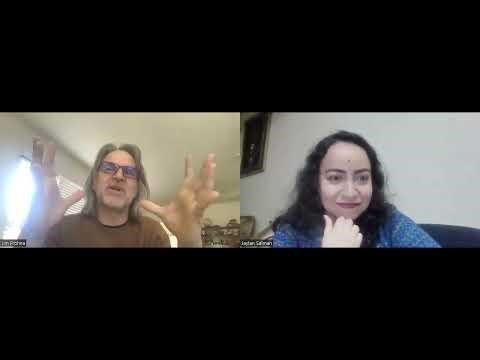
Jaylan Salah with Jim Frohna
Jim merges with the details, he becomes the story that he is capturing with his camera. His style is grounded in subtlety and realism with some swagger, directing audiences to what matters in the scene. Shrinking is the kind of show that demands attention with every frame. It’s a tight-knit group of people, families, coworkers, friends, and a main character who doesn’t have a clue as much as his patients do. The concept of a drama that creates an endearing ode to struggling with mental health without lightly handling the heavy subject matter is a lure into an intimate world that feels -but doesn’t feel- very familiar.
Frohna is as open as he is tactical, focused on telling the story and answering the questions with as many possibilities. Having a conversation with him was both fun and informative,
“Cinematography is not an exact science, it’s almost like the camera bears witness to the emotions in the room and what the characters are going through. So, kind of separate from how we frame it or the lens choice that we make, it’s more of a spiritual or emotional place for the [camera] operator to be in the room. We talk a lot -as the person behind the camera- about being open and receiving whatever is happening and the feeling in the room. It doesn’t come from the head but from the heart.”
Talking to Frohna reminded me of my earliest memories of watching movies, and how it was hard and mystique understanding what a camera operator might feel while approaching an actor’s face with an extreme close-up, or how lighting plays into introducing a character within a specific tone,
“As far as Jimmy Laird -main protagonist played by Jason Segel- goes, we talked that he’s in this very dark place. We meet him doing drugs and staying up all night. Two things came to my mind; first, he spends a lot of time in the shadow, and second that when he’s in the light it’s a harsh light. In the pilot, in the morning after he’s been up all night, he says goodbye to the women, then he goes into the kitchen and he’s confronted with reality with his daughter and the fact that it’s a school day and a workday. We purposely lit into the kitchen with this hard light so that Jimmy and sitting and has to shield himself from the harsh light. Those to me are the subtle or creative ways that you can say a lot about where the character is at and how he’s feeling.”
From extreme close-ups to uncomfortable scenes where two characters beat each other up, I asked Frohna which was harder to shoot an intense fight sequence or a love scene,
“Different scenes have different challenges. I’m much more used to giving all my years on [TV shows] like Transparent where there were a lot of intimate scenes both emotional and physical. So I don’t find those challenging. I think the biggest challenge on [Shrinking] was that most of our spaces are sets so how to keep those feeling real? There are a lot of scenes in the employee break room, so we’re not trying to do the same thing each time. It was more of a mundane challenge. The three characters are back in the break room, two are sitting and one is standing, so what can we do with the camera and lighting-wise? We had to keep it fresh subtly as the season progressed.”
It didn’t take long before my favorite topic – casting Harrison Ford as Paul, a senior therapist with Parkinson’s disease- showed up.
“Like many people I grew up going to the movies and seeing this amazing, funny, dashing, charming, and charismatic heroic figure on the huge screen. The first ten days that Harrison was around everybody was like That’s Indiana Jones or Han Solo and sort of unable to get over it. We still did our jobs but were all starstruck. And then what was amazing was that he’s just a human being. Not only that but he’s a very kind guy, and he loves being on a set. He loves the crew, talking to the grips, or hanging out with the makeup people. Because he spent the last fifty-something years on a movie set and he doesn’t have to work anymore because he doesn’t need the money he just loves being with this group of oddballs and weirdos on the film set. He’s just a down-to-earth guy so the strangest part is how ordinary it became.”
Catch the first season of Shrinking on AppleTV+ and prepare for a watching experience surpassing anything on the current streaming platform.