Essay from Norman J. Olson

thoughts on Bukowski – letter to a friend

I have read through some of your blog posts and I must say, have enjoyed the read…  you said that you were involved in the “meat poets” …. ok…  the only one of them that I know anything about is Bukowski and he was independent as much as a part of any school…  I guess…  anyway, I discovered Bukowski when I first read “Post Office” which I ran across in a book store, shortly after it was published…  I loved the slice of life feel of the writing, the wry humor and the view from the bottom of the working class which is not overly represented in American Literature…  I read his other novels as they came out and as I ran across them and picked up a few volumes of his poems as well… I don’t know that the poems amounted to much as “poetry” but they had the same lively style as the prose and were vigorously accessible and full of wit and humor… like the prose…

I was working at a factory printing telephone books at the time that I first ran into Bukowski’s writing…  I was going to grad school as an English major, driving the hour plus to River Falls, Wisconsin for classes in the daytime and working full time nights printing telephone phone books… I got a lot of breaks during the job and would write my college papers as my rolls on the press wound down… and later, after I dropped out of grad school in the mid 1970s, I would spend the free time reading, writing and drawing with ballpoint pen on telephone book cover stock…  I had been an undergrad art major at the u of Minnesota and had mostly learned from that experience that the world of contemporary art had no place in it for me or the artwork that I was doing and wanted to do… so, I went to grad school at River Falls as an English major… I was writing and submitting poetry regularly, at least one or two submissions a month, and was getting rejections on all of them…  this pattern continued from 1970 to 1984 when I finally had a poem accepted for publication…

my job involved putting rolls of paper on a printing press the size of a house and I would write prose and poetry in my head while working and then write it down as my rolls ran down… I had no interest in contemporary poetry beyond Dylan Thomas and maybe a bit of Ginsberg…  I had learned about poetry from my mother who’s taste went toward Alfred Noyes and Rudyard Kipling (from her father)…  I had discovered the British romantic and Victorian poets and so was trying to be Blake, or Tennyson…  updated with contemporary images…  needless to say, the editors were not impressed…  I did not save the ms when they came back to me…  I figured that if the poems were not good enough to be accepted by an editor, they were not worth saving…  so, by the time I started publishing, my poetry was one that would often incorporate half remembered or fully remembered images from a poem that had been submitted and tossed, into a new poem…  thus, if anybody ever cared enough to read through my published work, there would be a to me interesting, repetition of words and images…

after the acceptance in 1984, I decided that I had proven to the world and to myself that I could write a poem that was good enough to be accepted by a prestigious literary journal (the “GW Review”)…  and I decided to quit writing poetry…  of course, within a few years, I was back to writing poetry again  and submitting…. so I had my second poem accepted in 1994…  after that, pretty much everything I submitted was accepted…  so, I continued until the twenty teens when I really just stopped writing a lot of poetry…  my poetry had changed and was no longer formal rhymed poetry, and I am not sure any of it has any literary merit, and even if it does, I am not sure that having literary merit has any value to the modern world at large…  is writing a good poem as useful to the world as turning over a shovel full of dirt, or doing any other mundane task???  well, I don’t know…  probably not…

so, anyway, I always have been a voracious and fast reader and when I would finish reading a book I liked, back in my printing press days, I would often send a fan letter to the author just to let them know that I had enjoyed the book enough to take the time to let them know…  so, it came to pass that I wrote a letter to Bukowski, a fan letter, about one of his books that I had enjoyed… I remember that I wrote the letter while sitting on an ink can in my little nook, under a steel stairway, behind the “reel stands” of the old Wood Hoe, web fed telephone directory letterpress…  the air would have been thick with paper dust, chemical smells and vaporized oil and oil based ink… the gigantic press would have been roaring like a freight train… I would mail a letter like that at the post office, on my way home from work at 7 a.m…

much to my amazement, a week or so later, I got a reply from Bukowski…  a personal letter from the, by this time, famous author…  I was excited about this and wrote him two more letters, both of which he responded to…  I then thought that I had imposed upon the famous author enough and so did not write to him again…

I still enjoy reading Bukowski…  I love biographies of artist for one thing, and his novels and to some degree, his poems too, read like autobiography, even though I know they are fiction…  but the stories of being a great artist, mingling with the down and out sons and daughters of the working class gutters and bars have always been fun to read…  I also enjoy Fante’, Celine and Hamsen et al and to some degree Hemingway, all of whom seem to be Bukowski’s progenitors…  Is Bukowski a great artist??  I guess that is for history to decide…  will people in our problematic future even read novels anymore???  I think they have already mostly given up on reading poetry…  Hmmmm….

so, the only response I can really make to a statement like the above, is, of necessity subjective…  I enjoyed and enjoy reading Bukowski…  that is enough to me…  so many in the poetry small press world seem to want to emulate Bukowski’s hard drinking life style…  but little poetry of interest seems to come from this crowd… although, the myth of the intoxicated genius is one that was foisted on me by my own parents… who, in spite of the horrors that alcohol had wrought in our family, firmly believed that I could not be a real artist because I did not drink or use drugs… well, that is a myth that mostly pisses me off…  I would not have liked being around Bukowski, I think, had I met him, as I have no patience for and little sympathy with people who are intoxicated… addicted and fucked up… I have no interest in telling other people how to live their lives, but when their bad decisions impinge on me, I reserve the right to walk away…  as a child, I could not walk away, but I have not been a child for many decades now…  so, I enjoy reading Bukowski but have no desire to live or write like he did…   

Essay from Jaylan Salah

The Music Dark Knight Rises

Conversations with Egyptian Music Producer Loay (D.A.R.KK_)

Loay or, as he calls himself, D.A.R.KK

It was summer. I always discovered music through the long summery nights, when I’m wearing as little as possible, ice cream keeps my fingers sticky, and new tunes flow into my stream of consciousness, interrupting my train of thought.

It was summer when I first heard this mashup, this remix. I was aware of the Egyptian rap scene bursting with liveliness, angry music, and young men exploding with expletives, brokenness, and an unexpected fragility talking about everything from drugs to betrayals, sex, getting wasted, and of course, being unbeatable gangsters with stacks of cash and everything at their disposal.

Many names stood out. It started with fellow Alexandrian Marwan Pablo, then -again- fellow Alexandrian Wegz, and the names kept rolling, like mollies on a tongue. There was the mysterious Lege-Cy, Marwan Moussa who was the typical Eminem-like rapper, the more chill drug-hazed Abo El Anwar, and the gritty Moscow with street cred and a bite. Too many Alexandrian rappers, is that a coincidence?

“I am from Madinet Nasr in Cairo, there are a lot of Alexandrian rappers because rap songs revolve in so many ways about the sense of belonging and brotherhood, and that’s something crucial in the lives of people from Alexandria. But it’s important in young men’s lives in general, this invisible bond of belonging and backing each other up, which is in multiple rap and trap tracks.

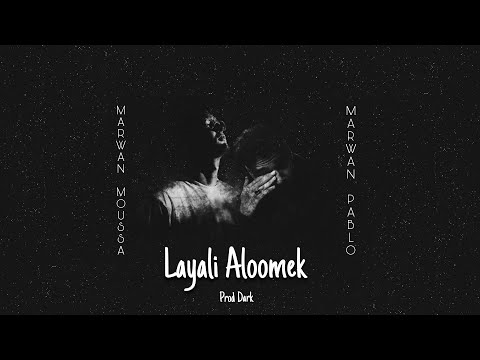
Then there were talented, young music producers, working their magic with song mixes, remixes, and mashes. That was when I heard “Layali Aloomek” or -literally- “Nights I Blame You” for the first time, a remix that rocked Egyptian summers in 2022. As I dug deeper, I discovered the young prodigy behind it; Loay or, as he calls himself, D.A.R.KK.

Layali Aloomek – Remixed by D.A.R.KK, mixing “Layali” by Marwan Pablo and “Aloomek” by Marwan Moussa

D.A.R.KK is a 19-year-old Egyptian man who loves what’s new in everything, technology, the music scene, travel, etc. He loves to stray from the norm and discover new places, seeks new experiences at the core of his existence, and takes risks. He created his alter ego D.A.R.KK as a reflection of his real self but within the world of music where he found his true passion ever since he was a kid.

There was something about “Nights I Blame You”, the incorrect structure of his wording in which he just stuck both titles of the original songs: “Layali – Nights” by Marwan Pablo and “Aloomek – I Blame You” by Marwan Moussa. Both songs couldn’t be more different as both rappers had a distinctive style. Instead of calling the song “I blame you night and day” or “For Nights I’ve Been Blaming you” to make the remix more coherent, D.A.R.KK simply called “Nights I Blame You” so that listeners wonder; who is he blaming exactly. The nights, the girl, or maybe someone else?

“It all started when I was a kid, I would use anything at my disposal to create a rhythm. This lasted until 2015 when I became interested in knowing how this magical thing “music” works. I wanted to teach myself so I researched on YouTube until I discovered Fl Studio and started making experimental beats in 2018. The turning point came in 2020 when I started uploading my music on YouTube and found unexpected positive feedback. I wanted a change so I made uploading my tracks something that I do regularly.”

Aloomek by Marwan Moussa

It was like Pandora’s box, but what came out wasn’t all the evil and pain in the world, but a mix of feelings, pains, and different forms of expressing infatuation and arousal. These young boys talked about being in love like nobody else, whether it was Db Gad, who wanted to take his girl to Alexandria through the ghettos and show her the inner-city, to Lege-Cy professing his love to his girl as her fiery flames burned his insides. He melts, and betadine cannot disinfect his wounds, infected by her love.

These two songs were different. Moussa’s “Aloomek” was a double-edged blame game between two toxic people, a relationship on equal grounds where two lovers played Russian roulette. But “Layali” was typical Marwan Pablo, an Alexandrian rapper whose poetry always expresses fragile masculinity, Gen Z sense of dissociative identity, and a burden of a man whose surroundings force him to be tough but his artistic self softens him against his will. Moussa talked about a lover who was the drug to his senses and making out on the roof with a bottle of Havana Club and Goose vodka. Pablo talked about offering his love to the fair maiden, his lady, and someone with whom he can be a knight, taking care of her and protecting her from the world. With his remix, the song seemed like an extended inner monologue by a man burdened by darkness and passionate for the woman who haunted his nights.

Layali by Marwan Pablo

They are two distinct worlds that couldn’t be more alienating to each other. But his boldness and musical talent led D.A.R.KK to create a song that somehow seemed genuine and truthful.

“Since I was little, I listened to a myriad of genres, but as the music progressed in the 2010s, I found myself leaning toward genres such as trap, R&B, and hip hop, I was constantly inspired by various artists whether Egyptian or from other parts of the world. I am the kind of person who gets stuck listening to one track on a loop, so the idea wasn’t new to me. I could make a remix for a track I originally loved and try to reach the same vibe through an enhanced technique. My aim was always that the cover track would surpass the original and find its way into the original fans’ playlist.

With [Layali Aloomek] I was already hooked up on the Marwan Moussa Aloomek track and it was on repeat constantly in my playlist so I wanted to create a remix that included Pablo’s track with it using a Lo-fi beat. And I released it and found that audiences loved my track.”

People didn’t just love D.A.R.KK’s track, they devoured it. The track has reached 200k views on YouTube and D.A.R.KK has 30k monthly listeners on Spotify. The young man has since made multiple other remixes but somehow, Layali Aloomek overshadows everything else he has done.

“This was unexpected and it only proved that if you made something unique that you are truly passionate about you would reach your dreams.”

I had to ask the young man about the creative process and how long it takes to make one track,

“I have a musical ear, and for every track, I have to understand the tempo and the key before I start working on it. As soon as I find two tracks with the same key and tempo, I separate the vocals, then put them in a project, finally I build up the melody on the vocals, then drums, and so forth, until I have my track ready.”

Pablo has been the most used artist in D.A.R.KK’s music world, with his tracks being the ones most used in remixes and such, I had to ask him what he found unique about the 27-year-old Alexandrian rapper,

“When I use a certain artist’s songs for remixes a couple of times, his tracks put me through a Sufi trance of sorts. I’m just like a lot of other guys, I listen to Pablo and I try to measure every track on its own, some tracks cannot be remade, remixed, or covered. Some tracks can be standalone in the remix. Pablo’s tracks can have chemistry with many other artists.”

Intrigued by his description of music as Sufi tracks, I asked D.A.R.KK about other artists to whom he reacts similarly,

“Most young men my age listen to rappers because we are from the same age group. We have gone through similar experiences and hardships. They write exactly how they feel, and correlate with things happening in our lives. They are unlike other musicians from years before. That’s why I don’t listen to older music because even if I like something old, I prefer to remix it and create something new out of it.

Haunting has been a word that came to mind ever since watching Baz Luhrmann’s Elvis in 2022. Austin Butler’s voice and eyes haunted me as he stared down at the audience or played tunes on his piano in a dark room. “Layali Aloomek” haunted me with its ethereal qualities and reverberating sounds. I asked D.A.R.KK if he believed some songs were haunting and others were not,

“I believe in that. Whenever I listen to a track, I tie it to the time and place I am in at this stage in my life. It becomes connected with this particular moment. So that if I listen to it later, it immediately transforms me to this stage in my life.”

D.A.R.KK dreams of collaborating with one of his favorite artists. He wants to create a different wave as a music producer, synergistically meshing his talent as a music producer with the artists to create a sound unheard of before. His interest in songs surpassed a musical fascination and hit deep into the themes and elements that shape the current musical scene in general, truth was something that he highly valued,

“Guys my age love rap and trap because the artist writes their songs, it’s unlike other mainstream [Arabic] songs with all due respect where you don’t feel the truth of the singer. I am not convinced when an artist writes about pain or injustice when he’s living a completely different life of luxury. I can’t listen to something that I don’t believe in. Not to mention that other Arab singers only showcase the bright side of their lives, and they also sing it, unlike rappers who are so open and bring you into the heart of their experiences, good or bad, so that means with other singers, I’ll only listen to you if I’m in a good mood, but they can’t sell me their music otherwise.

The real world is not as beautiful as Amr Diab or Tamer Hosny -two veteran Egyptian pop singers- paint it out to be. Rappers do that for us. They sing our feelings, express our anger and frustration, our pain. We’ve all been through the same but they just know how to express it poetically.”

Poetry takes so many shapes and forms, if Bob Dylan is one of the contemporary poets, then I don’t see how Tupac and Eminem cannot be considered the same. And if this applies to the West, then why not consider Pablo, Wegz, Moussa, and other contemporary poets but their street language and gritty expressions of modern-day life can be their gospels.

Poetry from Emina Đelilović-Kevrić

Emina Delilovic-Kevric


My son in his thirties

I dreamed that I gave birth to a son in his thirties

A tall blond man

He went through all the plays in the nearby theater with me

He believed, like me, that poetry can save us a little more

He was telling me how happy he is

I held his hand and said I believe

How he cares about totally irrelevant stuff,

like most of the human race.

Hearts of girls he will take each day

The jacket he saw in passing, books to buy,

but he doesn’t have enough money yet.

I listened to him attentively

As men with a deep voice are listened to

While reciting poetry by the fire

I woke up

The announcer was announcing on the radio

Several new world disasters

I touched my stomach

And he reciprocated.

Revolutionist

He was a revolutionary man

He waved from the top of the frenzied village

I invented a woman who flies

I see her every night

I make her womb out of wet clay

And a couple of kisses.

I breathe into her the joyful rain

Then, when it flies away, I shout with all my might

That I love her

Nothing ever came out of it

Except my rust.

What are you missing today?

Power cube

Legs that will carry you

Although the bones remain inside

You will leave all other phenomena

Trapped on the shelves

What are you missing today, when you don’t have time to think

About the soul, happiness, aspirations, not even about suffering

Like recycled material, you smell of use value

A factory woman with an apron over her swollen, congenital stomach

Adds colorful blocks to the leather boots of the A series

Bare-handed and barefoot rows across the sea.

Essay from A. Iwasa

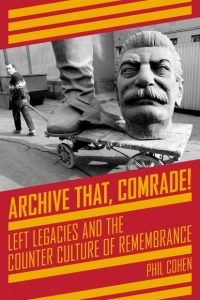
by Phil Cohen, PM Press.

Reviewed by A. Iwasa

Archivist and memoirist, Phil Cohen, who had been active in the London underground scene from 1965-’78 examines what it even means to be an archivist, and the importance of intention when recording the past so its lessons are accessible to future generations.  Cohen was not professionally trained as an archivist or a historian, which makes these lessons so much more valuable:  they were learned doing the work.

Cohen diligently end noted sources so you can follow up on the various threads of debate on issues regarding the larger questions of subjects from traditional archiving’s defenders and opponents.

Cohen was trained as an anthropologist, which he acknowledges had its downsides, but at least fieldwork was present tense and gave him insight into what people remember, a form of archiving in and of itself.

Coming out in 2018, all of these debates have the extra layers of digital culture and the alt-right, and the acknowledgement that archiving takes resources and to avoid making it activism.

Cohen also goes back to previous generations of radicals like Antonio Gramsci and Guild Socialists, and looks to the past lessons they could act on like moots, debate assemblies from mediaeval times really bringing to life the intergenerational dialectic.

A little humor also sneaks in early when Cohen quotes a primary school student who thinks Noah’s Ark was an archive.  But he doesn’t leave it nestled between dictionary definitions and Adorno and Foucault quotes, Cohen goes on to draw the parallels between an ark and an archive before starting to delve in depth to the pros and cons of archiving.  By cons I mean he doesn’t shy away from some of the worst examples such as a British colonial archive in Hanslope Park which had been kept secret because of the brutal acts it recorded.

Again and again theoretical questions about neutrality and archiving to resist change are interwoven with the practical applications with concrete examples like the Benjamin’s Arcades Project, archiving 19th century Paris, or the opening of the East German secret police, Stasi, archives.

I’m not sure if it’s meant to be funny, but writing about the risk of an archive “becoming a prop in the psychodrama of the collector’s secret passion” was a little too easy for me to relate to.  A similar barb about some 1960s memoirs as “a never-coming-of-age story” as Cohen steers the discussion towards counter culture along with many others had me cackling like a mad man, at myself as much as anything else, through much of the text.  To be clear, this isn’t pure fawning about the past.  Cohen is willing to question if it’s relevant now, even as just a cautionary tale.

Questions about navigating the tension between radical Leftism and the counter culture are explored, with Cohen essentially having had feet in both worlds as a squatter.  He even excerpts from a novel about a squat called 144 Piccadilly!  Cohen also archived mainstream and tabloid coverage of the squats, and made a point of displaying it at a space called May Day Rooms rather than a more conventional venue as to keep it in the broader context of 1960s radicalism.

Cohen questions if the Left even has a future, as he tries to situate the questions left over from the 1960s to this day, before writing about oral traditions and burying or burning possessions instead of archiving or distributing them, and different ways of dealing with the emotions connected to death.

Cohen is on rapid fire going from concept to concept, but it’s methodical.  Ways of interpreting history are examined next.  Is it an inheritance?  A progression?  In turn, the industries that emerge around all these things from nostalgia to bereavement are also mentioned, systematically looking at things from the conventional, Left or Right, and various factions within.

In fact, here I want to change gears a bit as a reviewer, since this is the sort of text, dense in a good way with at least one noteworthy things consistently in every paragraph.  As an ex-participant in the Infoshop Movement, still experimenting with collective living, I think this book should be recommended reading for everyone involved in a radical library or bookstore, and every radical librarian, museum and bookstore worker trying to figure out how to make their volunteer spaces or workplaces relevant to social change.

It’s not that I think Cohen answers all the big questions of building and maintaining a worthwhile archive, I do think he’s asking the questions in a more comprehensive way than I’ve seen elsewhere.  This can easily serve as the basis for an ongoing conversation with plenty of suggestions of other things to read and watch to advance this dialogue.

Plus aside from the meticulous end noting, frequently with multiple sources cited, there’s a hefty further reading list for those who really want to get into it.

Also, this text is fairly short, but I still ended up taking three different sets of notes.  One for this review, another to read list, then a set of notes for my own wingnut obsessions I don’t feel like writing about here.  I find that remarkable! 

Perhaps most importantly, to be clear, Cohen was a participant in the New Left era still writing in 2018 so I don’t think I can emphasize enough the value in such a long view of both struggling for social change, and how to archive that history in a meaningful way.  As Cohen writes in the text, “Manifestos have only tried to change the world; the task for the Living Archivist is to interpret them, to provide the resources which will help us decide if they are genuinely performative or merely acts of wish fulfilment.”

For those who didn’t catch the reference, Cohen was essentially doing a Marxist headstand, which I think was spot on.  For every Old and New Left barb or twist that I caught, I’m sure there was another that I missed because I’m not English and was born in 1980.

But that’s part of the genius of this book.  I think that and other such lines are a perfect use of Marxian dialectics as a tool to understand how archives can be build, radical and relevant, rather than simply looking at the Old and New Lefts with religious reverence alone.

I think this is the clincher:  if the Old and New Lefts were all that, we’d be living in some sort of Socialist Utopia right now, rather than the fast track for Dystopian Nightmares that would make Orwell and company spin in their graves.  But if we look soberly and systematically at the Old and New Left’s triumphs and defeats, alongside other sources maybe was can get it right rather than just looking cool as we go flying over a cliff.

Cohen’s book strikes me as nothing short of one account of a Love affair with practical knowledge.  Anarchival, to use his word!

For more info, please check:  https://philcohenworks.com/

Essay from Susan Hodara

Itches

There are harmless ones, tingles that dislodge your hand so you can run your nails into your hair and along your scalp, up and down, once, twice, and that’s all it takes.

There are elusive ones, beckoning from somewhere on your back that you can’t reach and you can’t find, so you contort your elbow and slide your thumbnail across the vicinity, over and over, leaving angry red lines that you won’t notice until later, when a hot shower ignites them and you crane your neck to see what you’ve done.

There are flirtatious ones, a tickle here and then there, along your ribcage, on the side of your knee, behind your ear. Fickle ones that vanish moments after they emerged, not committed enough to stay.

There are latent ones, absent until you caress the area, tease out the ghost. Then you can scratch or press or rub, as you would with any other itch, all the while knowing that the need wasn’t truly there.

There are urgent ones. Sirens that lure your fingertips, masochists that want the pain your nails offer. You slip them over the bumpy surface. You dig their edges into the core of the call, and you know you shouldn’t, but you can’t stop, and you lose yourself in the scraping, the grating, the ecstasy of what feels like relief but is really the plea for more.

Susan Hodara is a journalist, memoirist and educator. Her articles have appeared in The New York Times, Communication Arts, and more. Her short memoirs are published in assorted anthologies and literary journals, including River Teeth, Feed and Airplane Reading. She is one of four co-authors of the collaborative memoir “Still Here Thinking of You: A Second Chance With Our Mothers” (Big Table Publishing, 2013). She has taught memoir writing at the Hudson Valley Writers Center for many years. More at www.susanhodara.com.

Art from Mario Loprete

Fuckovid
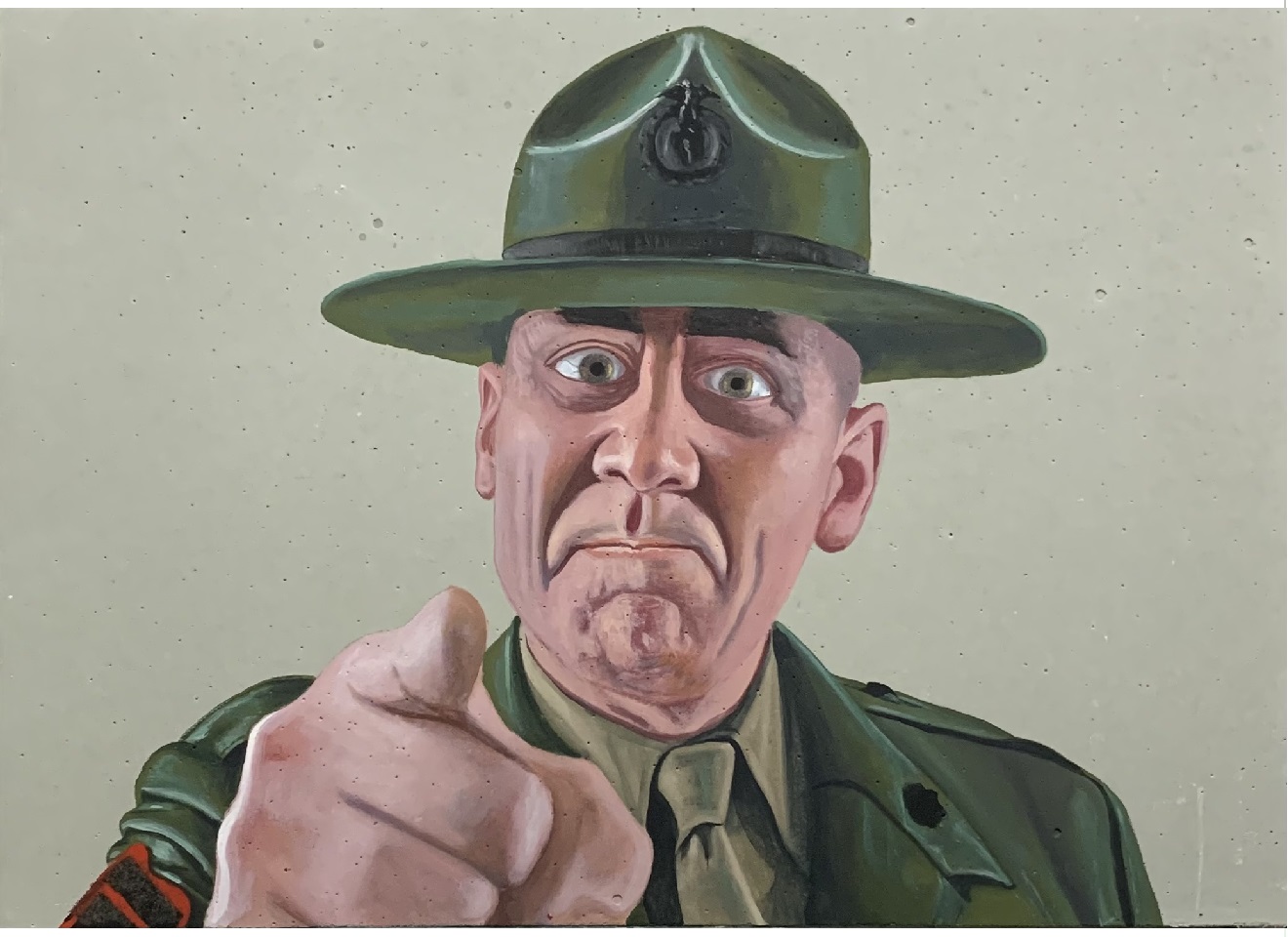
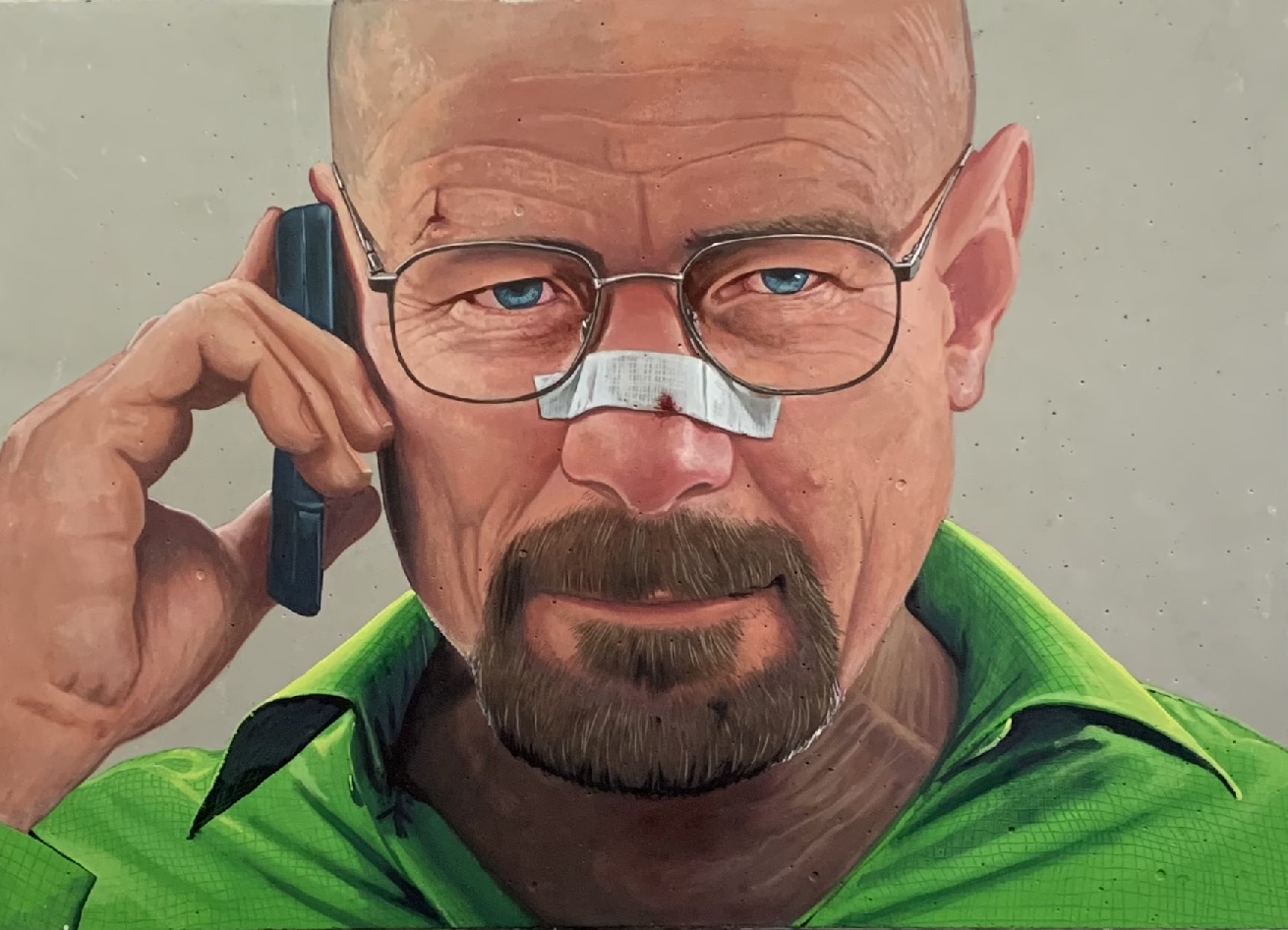
Walter

I live in a world that I shape at my liking. I do this through virtual, pictorial, and sculptural movements, transferring my experiences and photographing reality through my mind’s filters. I have refined this process through years of research and experimentation.

Painting for me is my first love. An important, pure love. Creating a painting, starting from the spasmodic research of a concept with which I want to transmit my message this is the foundation of painting for me. The sculpture is my lover, my artistic betrayal to the painting that voluptuous and sensual lover that inspires different emotions which strike prohibited chords.

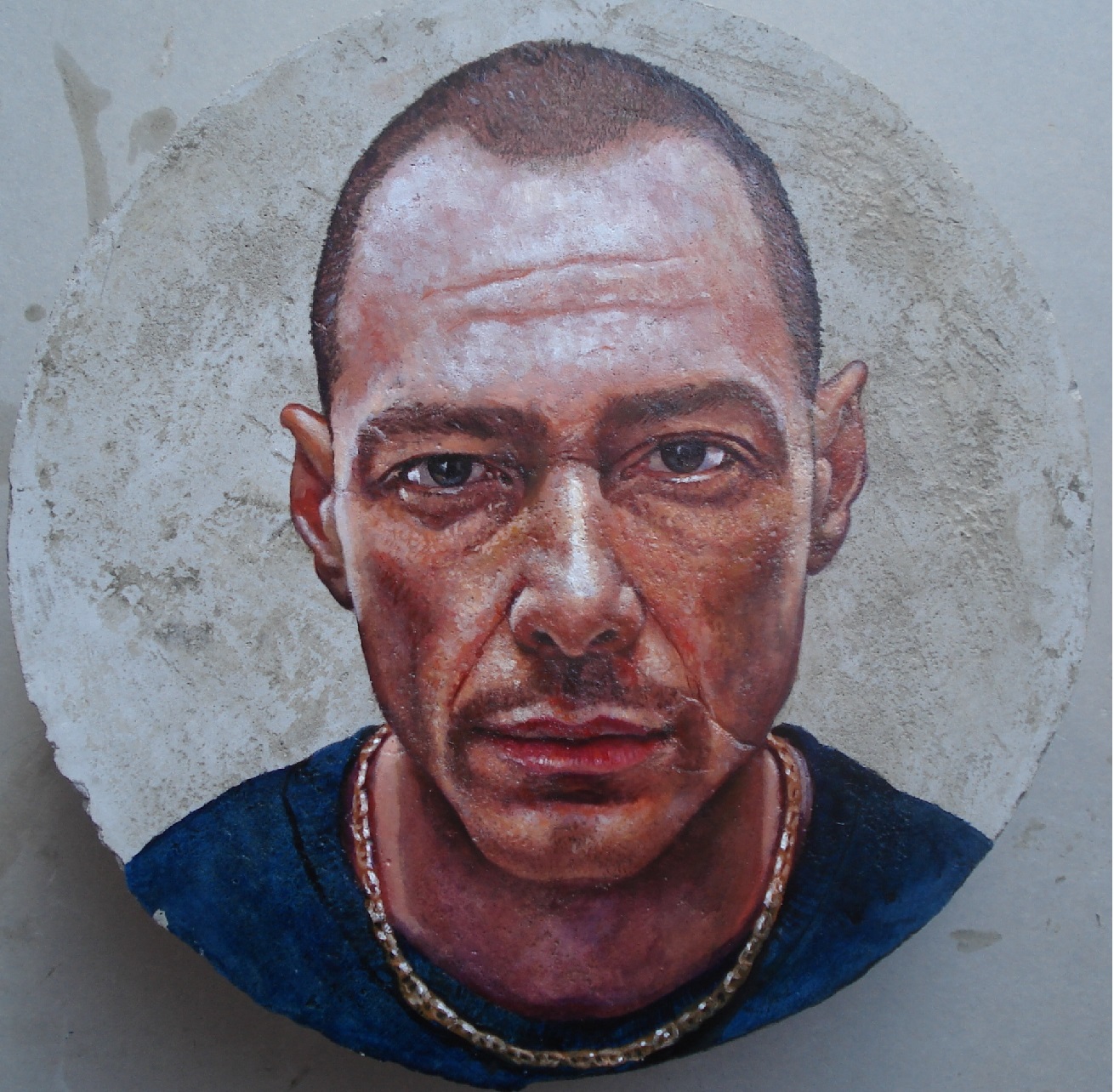
This new series of concrete sculptures has been giving me more personal and professional satisfaction recently. How was it born? It was the result of an important investigation of my own work. I was looking for that special something I felt was missing. Looking back at my work over the past ten years, I understood that there was a certain semantic and semiotic logic “spoken” by my images, but the right support to valorize their message was not there.

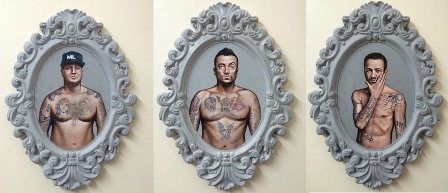
Fabri Fibra oil
Walter (oil on concrete)
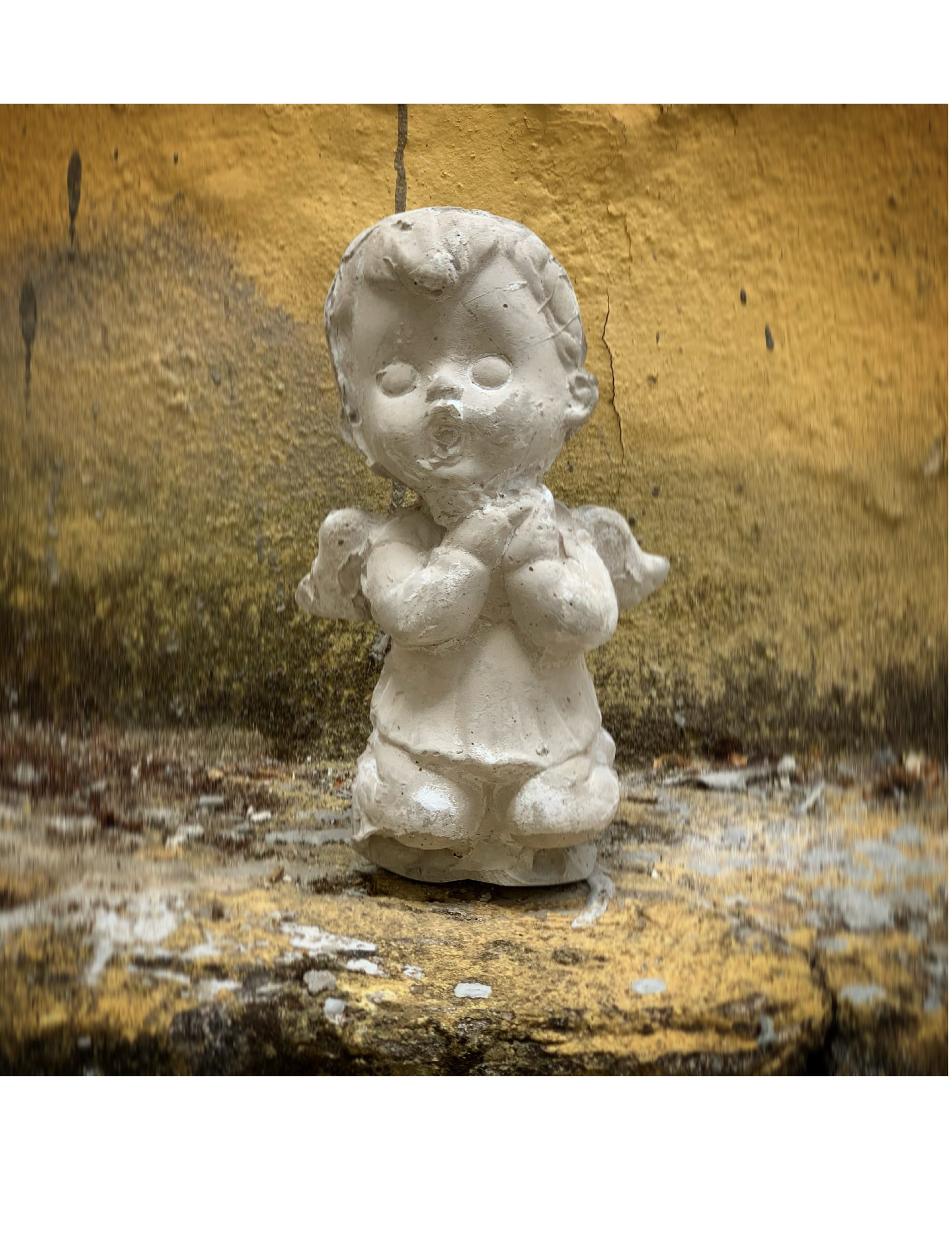
Angel (concrete)
Mario Loprete

The reinforced cement, the concrete, was created two thousand years ago by the Romans. It tells a millennia-old story, one full of amphitheaters, bridges and roads that have conquered the ancient and modern world. Now, concrete is a synonym of modernity. Everywhere you go, you find a concrete wall: there’s the modern man in there. From Sydney to Vancouver, Oslo to Pretoria, this reinforced cement is present, and it is this presence which supports writers and enables them to express themselves.

The artistic question was an obvious one for me: if man brought art on the streets in order to make it accessible to everyone, why not bring the urban to galleries and museums? With respect to my painting process, when a painting has completely dried off, I brush it with a particular substance that not only manages to unite every color and shade, but also gives my artwork the shininess and lucidity of a poster (like the ones we’ve all had hanging on our walls).

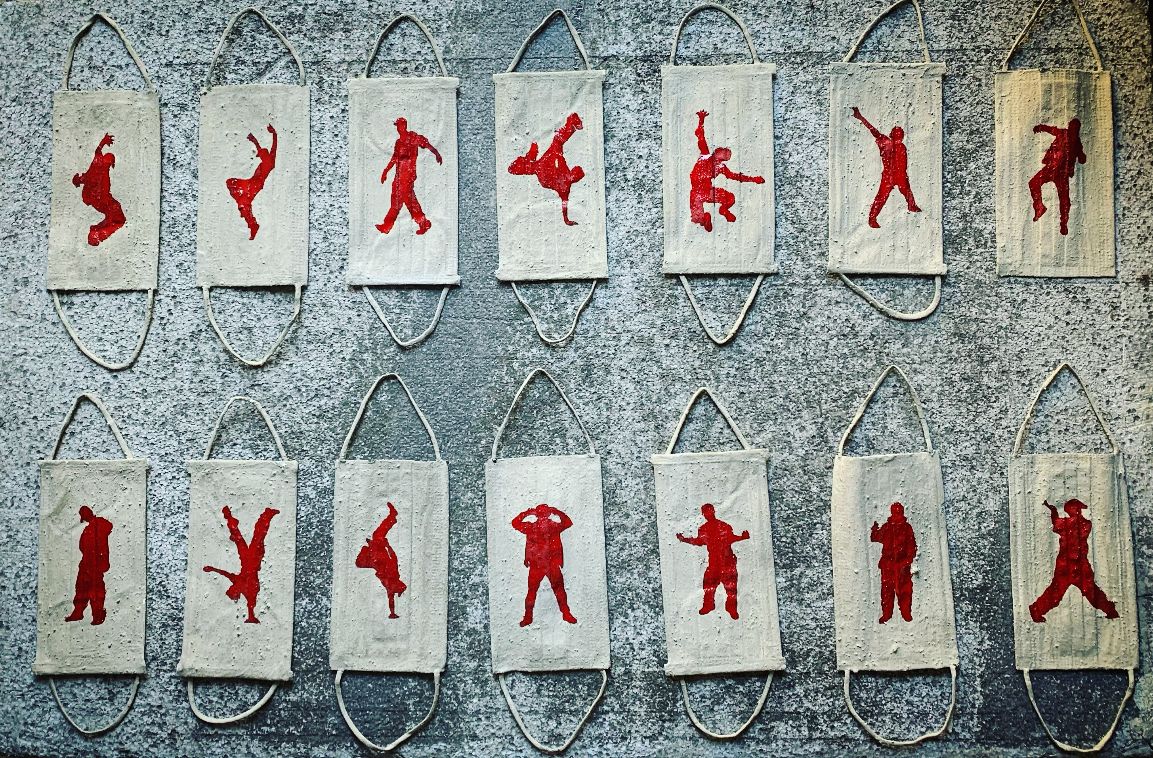
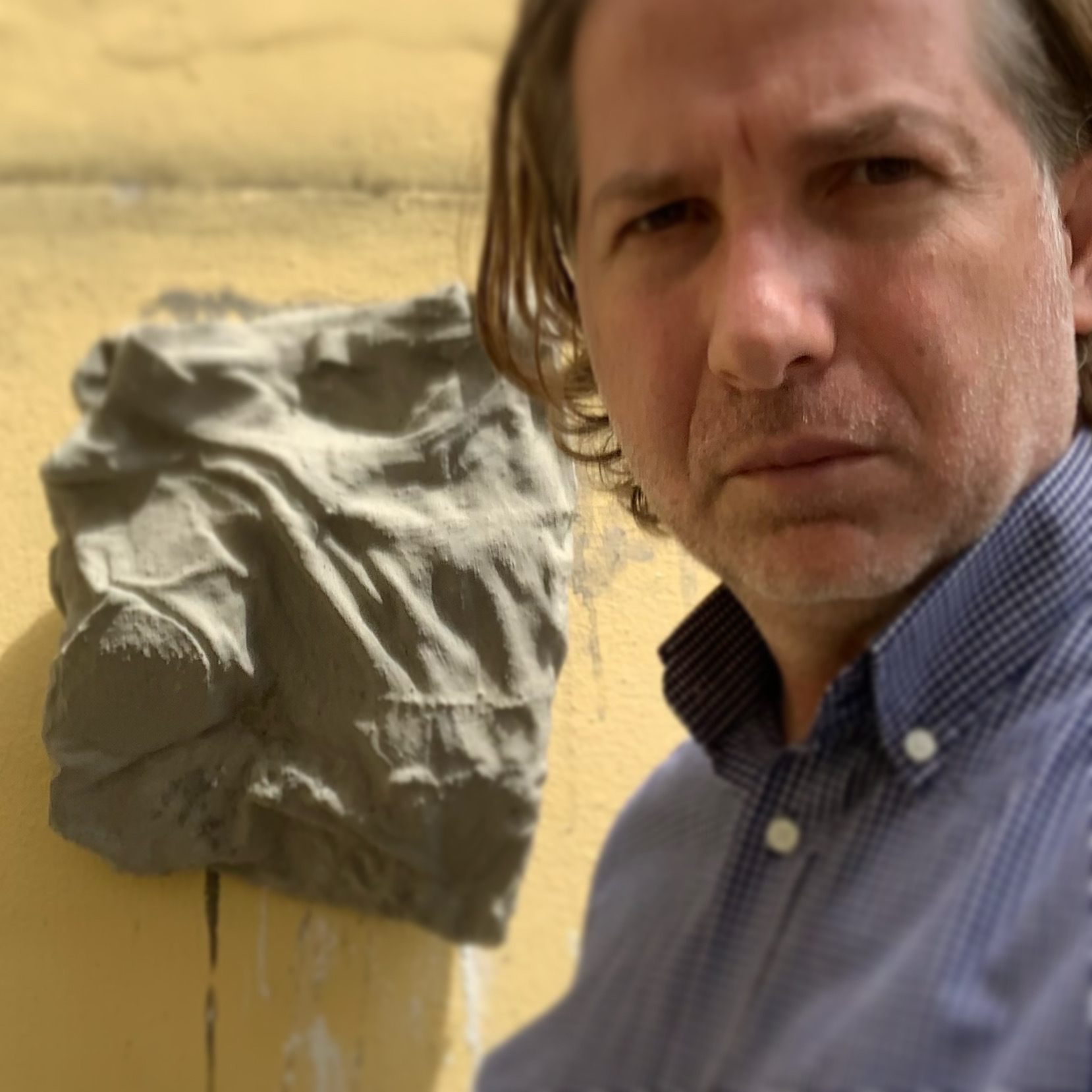
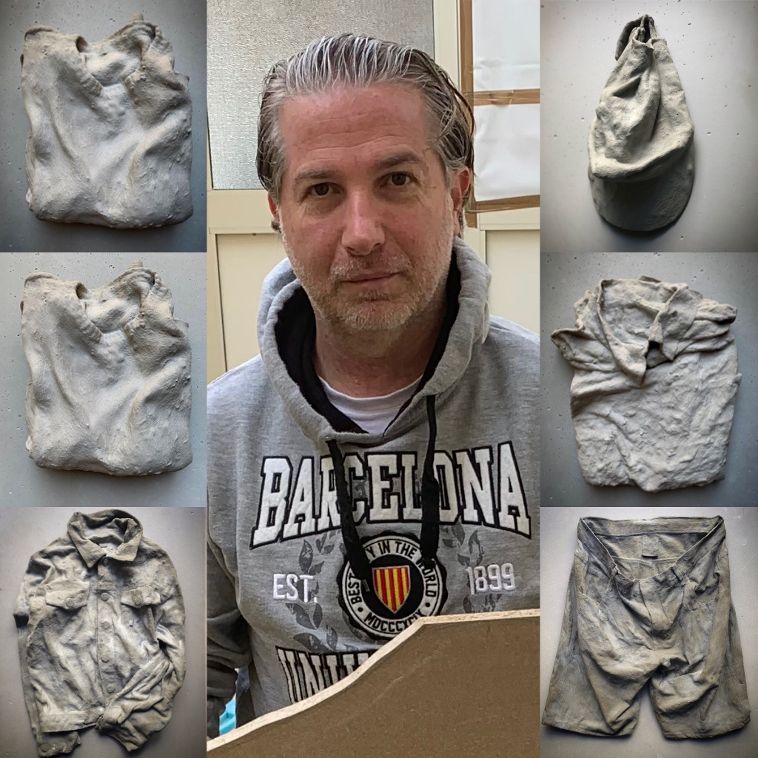
For my concrete sculptures, I use my personal clothing. Through my artistic process in which I use plaster, resin and cement, I transform these articles of clothing into artworks to hang. The intended effect is that my DNA and my memory remain inside the ​concrete, so that the person who looks at these sculptures is transformed into a type of postmodern archeologist, studying my work as urban artefacts.

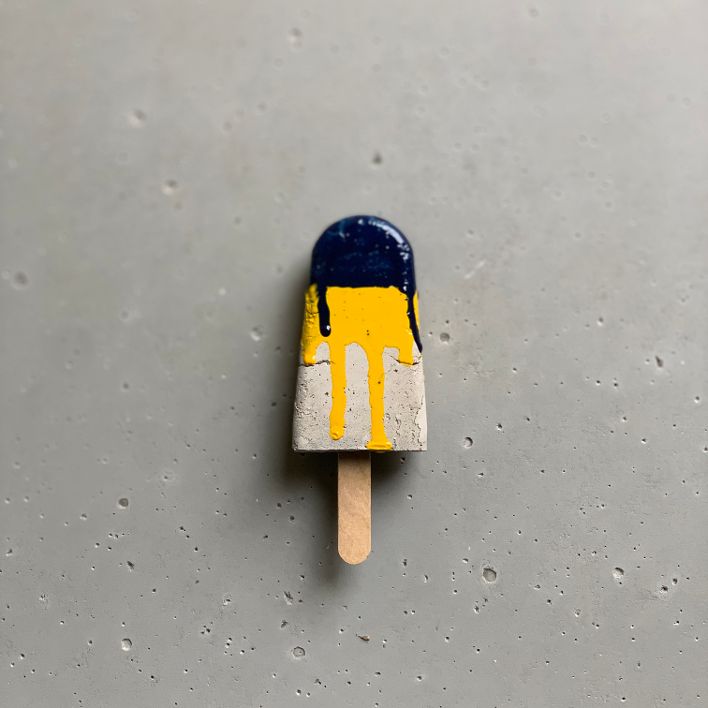
Ukrainian Ice Cream
Club Dogo

I like to think that those who look at my sculptures created in 2020 will be able to perceive the anguish, the vulnerability, the fear that each of us has felt in front of a planetary problem that was Covid-19 … under a layer of cement there are my clothes with which I lived this nefarious period.

Clothes that survived Covid 19, very similar to what survived after the 2,000-year-old catastrophic eruption of Pompeii, capable of recounting man’s inability to face the tragedy of broken lives and destroyed economies.

Links to Mario Loprete on social media

Facebook

Instagram

LinkedIn

Poetry from Mesfakus Salahin

Mesfakus Salahin

Death is the Best Art


Death is not the end of all
Rather it fails to break life's wall
It is the media of transfer
That flies us so far
It is the beginning of mystery 
That reflects personal history
Life will kill death forever 
Death will not be visitor any where 
We will be the permanent guest
The King of death and life will listen request
The world will be without boundary 
Endless life will be first mandatory 

Death is the best art
Which always dances in my heart
It is truth and beauty
Work hard and perform duty 

we are living in  truth and death
It is our power's beneath.