It is misting this morning. So, I open the door to my mouth, unattired, bring out my tongue, to kiss waters, undiluted.
And this is a great healing:
Our village market has so many routes. I mean there are ways to live in places where air is not measured with a needle’s eye.
And this is a path to life: bonding––
bond to what gives you hope, to what gives you a clan, to what or who calls your name each time a gusty wind makes itself known
and news about broken things hover around.
So I ask: when harmattan visits, will you take me as your tropical plant and spray on me fine droplets? Will you?
Calling for Waters
Because I know darkness is a pebble in search of a home within me, I call for a drink of water be it ice falling from heavens, morning misting on leaves, a drop of tears from rocks or the salty sea enclosing borders to flush them beyond death chamber before they know the sweetness of success. Because every day knows the hug of night, I mean to say light is a man and darkness is a beautiful maiden standing along the lane to our home, waiting to mould us into victims of fate; (but fate is not a living thing) I call waters from the depth of holy well for cleansing. So I would sight only white angels chanting my name into unending life. Because I discover my demons are sour salts, I poke the rock holding me captive. What proceeds out of it I call fluid, you can call it waters from within me. So my demons would know the feel of body melting into pain, into grief. Because I love the sound of the drum echoing: life is a lollipop in the hands of a toddler, I call upon waters to heal me, in every way possible.
Become Waters
There is fire burning beneath my skin. It is ruthless than the kind of fire your clergy makes you see on worship days. Do not imagine this. Some caked bread are better not shared––I’ve swallowed this one. This is not me displaying my pains on a 5D screen. The smokes erupting from my body is the reason the neighbourhood’s nose breathed questions. And yes, this is the answer you seek. Forgive me. I am stingy with the spirit. Let my body alone be filled with it until I am reduced to fine particles on the palms of earth, until I become the regalia of ash worn by wind. Be alive, yes live in a peaceful piece but become waters––water is life. Become waters. Be alive. Be life itself. Friend, I shall burn. A cut of this fire said so in a foreign tongue–– it took me a while to crack this hard nut. Forgive me I did not tell you soon enough that I am the brown pigment on your roof. In a flash, be waters––hug me into life eternal. You live. I would leave and live in you.
SJ Fowler is a writer, poet and performer who lives in London. His work aims to encapsulate an expansive understanding of what poetry and literature can be – exploring the textual, visual, asemic, concrete, sonic, collaborative, performative, improvised, curatorial – through 40 publications, 200 performances in over 40 countries, 4 large scale event programs, numerous commissions, collaborations and more. His work has been commissioned by Tate Modern, BBC Radio 3, Somerset House, Tate Britain, London Sinfonietta, Southbank Centre, National Centre for Writing, National Poetry Library, Science Museum and Liverpool Biennial amongst others. http://www.stevenjfowler.com
No Xmas Tree

Just an empty bottle
of very good whiskey,
2 women, and a drink
during the course
of a week that ended
with us not speaking
to each other since.

I put a rose like those
I steal from the neighbors
garden in said bottle
as I reminder
there is much beauty
In this world.

Even with the women gone.

The knife one of them
threw at me for looking
at her friend’s legs remains
on the floor where it landed
after hitting the wall and
missing me by a foot.

A reminder that
any New Year’s Eve
even for a man with little
to lose can be more
curious than planned.

I/he does not mind
the things they stole
or borrowed with ill
intent.

Who alone with
all that once was
still reaches for
what lingered sweet
long enough to be
savored.

His wedding ring
lost in a desk
alongside knowledge
she pawned hers.
He places a comically
large Seashell to ear
just to hear the sea
scream for the past
like him
on most days.


She's OK Almost

She says but
her glazed eyes lost
pinpoints of
confusion
tell me different
and her
skin sallow
with track marks
I can't tell if
old or new
just that
they tell a story
I already know
the ending to.

We talk of poetry
we performed
once, together
apart
to smatterings of
applause long
ago. Of those we
thought we knew
under lights
spilling their souls
with captivating
corrupted
vehemence.

But she hasn't
read in years.
Tells me I look
like I'm doing well.
She's offended
when i ask if
she needs
money...
yet takes what I give
waving as she walks
away into the
darkness on
an unusually
otherwise bright
sunny day.


Ex On the Street

Not being invisible
or able to hide
when she spots
me first with
X-ray eyes.

The air, getting thinner
when she hugs me,
as if we’re still together,
as if that fatal night
hadn’t happened.

Then she says
that I look good,
that I’ve lost weight,
but I don’t and haven’t,
staring at her smiling face.

Love demands forgiveness
but losing your lover
& your best friend
in one cruel night
I never counted on.

I say goodbye 5 times.
It’s like she doesn’t hear
my last image of her,
him in her mouth,
in our bedroom, clear.

One of us was in love
and the other escaped
as I do now with alacrity
all shaken and wounded
by a past now present.
Rp Verlaine, a retired English teacher living in NYC, has an MFA in creative writing from City College. He has several collections of poetry including Femme Fatales Movie Starlets & Rockers (2018) and Lies From The Autobiography 1-3 (2018-2020). Rp’s work has been featured in Punk Noir, Ygdrasil, and Runcible Spoon.
from "The Second Book of Job"


I.


Everyone gets to be Job for a year.

Or more.  Gets to feel that trembling and fear

of losing it all, watching it get lost.

Everyone learns that lesson.  Knows that cost.


You’re not alone when the divorce lawyer

warns about the marital home.  Or you’re

not alone, when you learn another boss

governs the universe – and not you.  Loss


is inevitable.  But it’s what’s next

that no one remembers.  We get the shit.

We forget the growth.  So never forget

that in the end you might just get a sexed


up mate who loves you more than anyone

who ever did.   With all those others done.


 *

 from "The Second Book of Job"

II.


Job Junior lost the marital home when

He and his Ex- were in arbitration

and this clause became paragraph 3 (B),

in the Clerk-filed dissolution decree,

cause 49 dash 33, CV,

and a “you” and an “I” replaced a “we.”


He transferred thirty-eight thousand dollars,

and he intuited things could be worse,


much worse.  Put one thousand books –  poetry,

Literature, drama, philosophy –


Into storage.  He took the last unit,

next to the dumpster, the only model

not re-modeled.  Sat down with a bottle

on the porch.  Impoverished and moonlit.


*

from "The Second Book of Job"


III.


Job’s losses left him as blind as Homer

or Milton and now he is the owner

of very little.  Someday his awareness

will match that of the poets.  He has less


to carry homeward, and has no homeward

to speak of.  It’s impossible to look

back without becoming frozen.  His Book

is closed.  To lose faith, okay, but the Word?


It was lost as well.  So at the machine,

for a spell, staring at the keys, the screen,

and his hands, it all came out gibberish:

“NIGHT OLD MAN HATE MONEY WHITE LUSTY DISH. . .”


For now, it was just blindness, no insight.

That spirit of Homer would have to wait.


 *

 from "The Second Book of Job"

IV.


This particular Job, losing ‘The Word,’

just let it all rip and let it all out.

Typed away.  Just squeezed out every turd

that fell out of his mental ass.  About


midnight he filled three pages’ worth:

HOTEL BILLS . . .  SAME ROOM . . . WEDDING NIGHT . . . HORSE TRACK . . .

ROUTE TO THE HEART . . . MILLIONAIRE . . . HE GETS IT . . .

FREE LOVE . . . MONEY FOR THE PONIES . . . YOU SAY


MORE ANAL . . .  TALK ABOUT THE SECOND BIRTH . . .

I WAS NOT THERE FOR THE FIRST . . . TAKEN BACK

IN TIME . . . DIRTY UNDERWEAR . . . ODD DEBTS . . . SHIT . . .

WHAT’S HAPPPENING . . . DO I DOUBT . . . DO I PRAY . . .


HELL . . . PURGATORY . . .  PURGATORY . . . HELL . . .


But she was gone.  He knew things would end well.


 *

 from "The Second Book of Job"

VI.


Another Job lost seven days with each

of 2 sons out of every two weeks.

“Fifty-fifty fair” made it hard to bitch

but he did anyway, however weak


it left him feeling.  And the Ex- would switch

this day for that day so many days

that he recognized a slow, distinct leak

in his clock, his calendar, in his haze.


Sanity was a thing now out of reach.

There was no point in trying to talk her

into paying back time.  This was not her

M.O.  And he couldn’t pay the lawyer.


He recalled the man in the coat, the wind,

the Sun . . . that fable would win in the end.


*

from "The Second Book of Job"

VII.


Another Job lost his credit rating.

His wife decided to have an affair

with Neiman-Marcus, or women’s clothing,

generally speaking.  A millionaire


was the last affair.  It was spending power.

That was the deal. In an icky hour

in a hotel room beneath his pay grade

he allowed her equal status: she paid.


Savings accounts and college funds went down.

He learned her weakness was the winning horse.

Wads of fives and tens turned up in drawers.

(It takes a lot of paint to paint the town)


This Job inherited: a millionaire.

Grew bored with the track.  But loved the clothing.
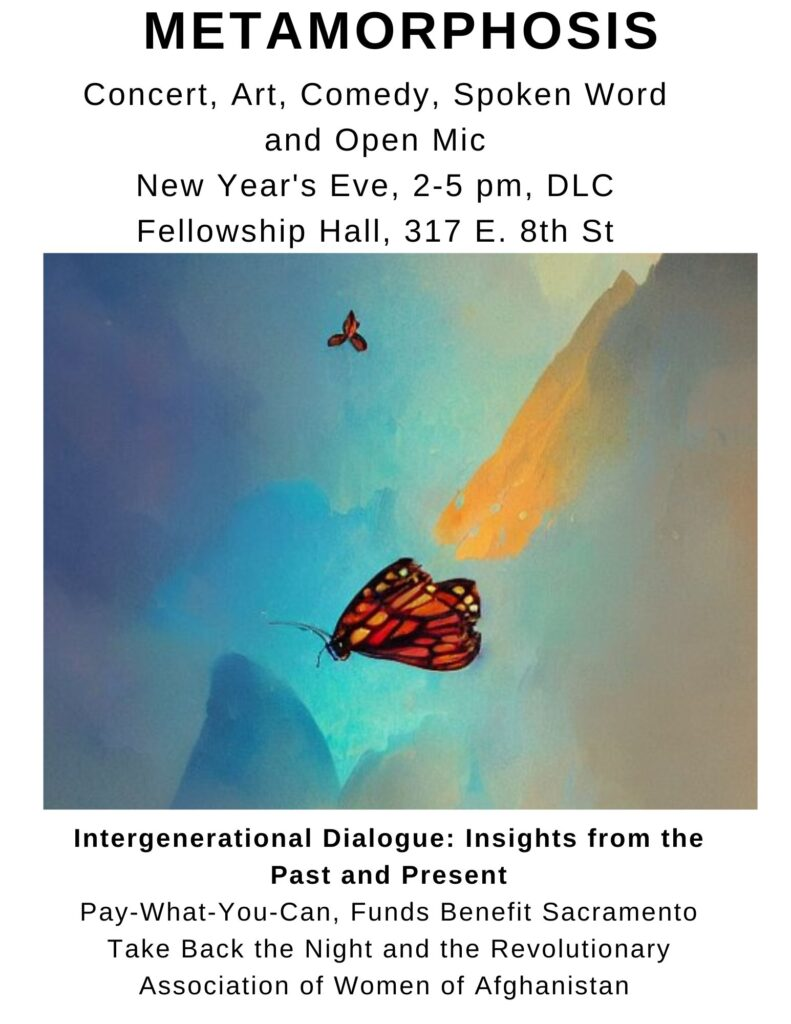
The theme “Metamorphosis” refers to having people there from different generations to speak and read and learn from each other, challenging us to honor the wisdom of our parents and ancestors while incorporating the best of the world’s new ideas in a thoughtful “metamorphosis.” We’ve got comedian Nicole Eichenberg, musicians Avery Burke and Joseph Menke, and others on board as well as speakers from different generations.
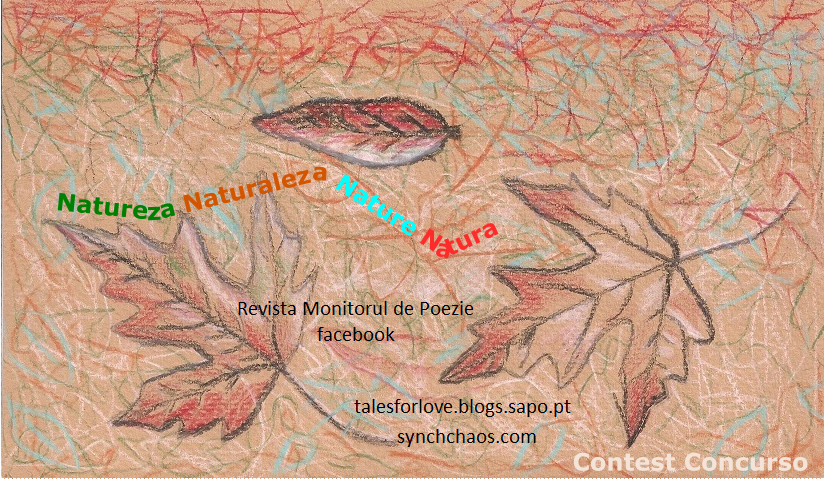
Second, our friend and collaborator Rui Carvalho has announced our Nature Writing Contest for 2022.
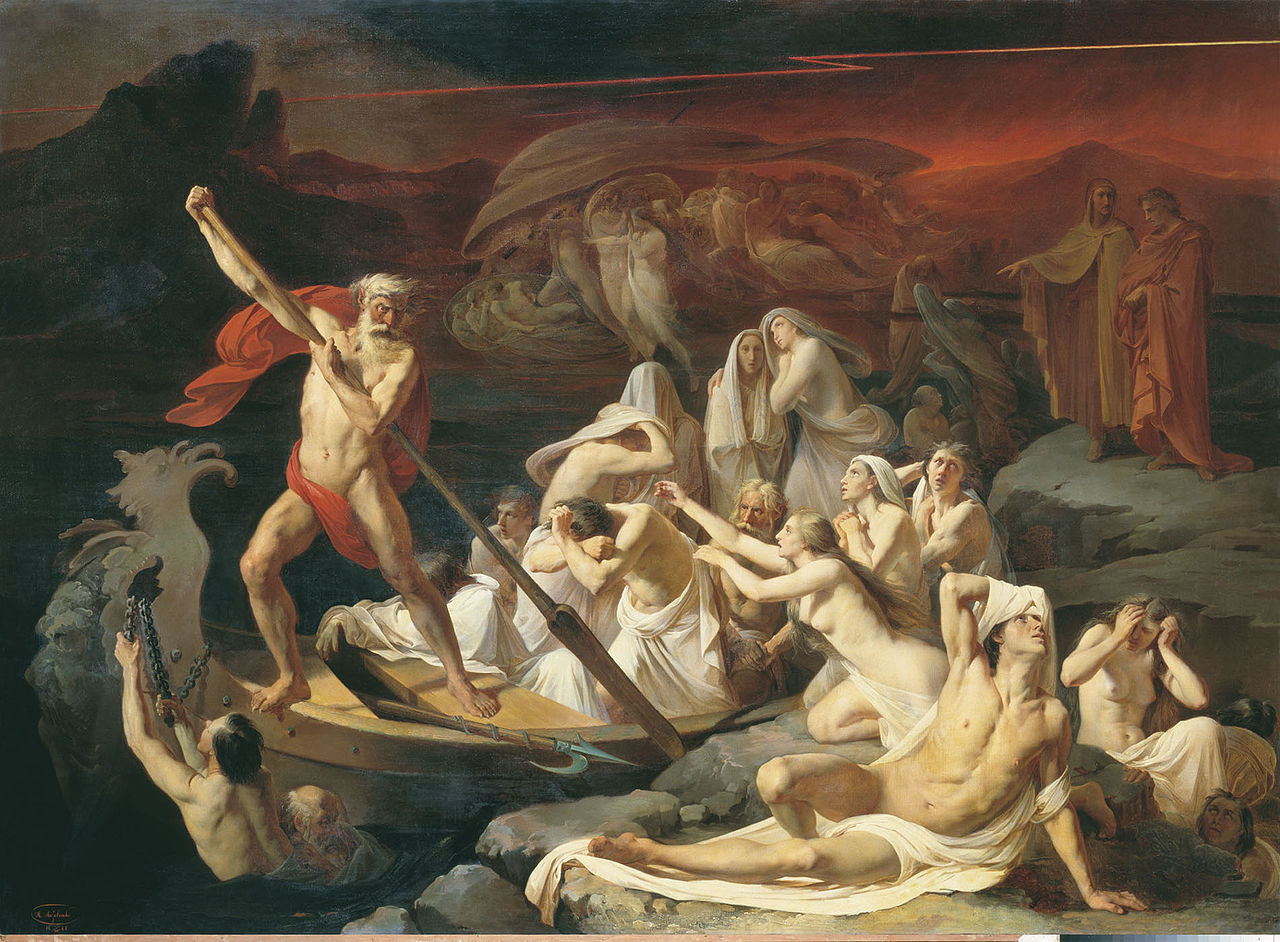
This month explores various forms of life and death, and how and when we pass through the veil or cross the famed Styx of Greek mythology. Our theme is quite appropriate for the solstice a week after this issue’s release, a time of natural passage from one season to another.
Natasha Leung explores the impermanence of seasons and sensations through a meditation on a burn from a candle. Chimezie Ihekuna’s poem celebrates the festivities of Christmas along with the opportunity for renewal presented by the new year.
Sophia Fastaia shows the sun and moon finding each other’s light in a joyful, childlike encounter.
Mary Croy voyages through the vastness of nebulae in space and also fields and meadows here on Earth. Channie Greenberg presents images of trees, a mashup of vista shots of the whole tree and closeups of a few branches or trunks.
Robert Stephens highlights the power of memory to contain a lush panoply of disparate scenes and to bring life to the dead. Norman J. Olson reflects on appreciating centuries of human history by traveling with his wife.
Lachlan McDougall sends us atmospheric moments of subtle natural or supernatural tension. Fernando Sorrentino crafts a compelling caricature of a man immobilized and slowly decimated by fear.
Ashley Mann’s pieces lament the artificiality of the culture that she sees as replacing whole natural foods and authentic human connection. J.J. Campbell reflects on the ways we anesthetize ourselves in an uncertain world: substances, eroticism, fantasy, perhaps even cynicism itself.
Marley Manalo-Landicho mentally dissects himself, wondering who he really is under the constructions of his ego and his physical body. John Culp’s poem describes the dissolution of ego to make way for loving connection with another person.
Vernon Frazer’s poetry pans out to the edge of human consciousness with a dizzying array of linked words. J.D. Nelson arranges words and syllables to evoke and distill meaning and thought in pieces specifically designed for our publication. Sayani Mukherjee draws on mythology, fantasy literature and nature to conjure a wild dream. Alan Catlin’s characters and settings teeter in and out of sanity, drawing on Ouija boards, psychedelics, fevers and outer space.
Jim Meirose’s surrealist piece draws on a children’s trope, with an anthropomorphized rat and mouse loose in the library, but then goes in a more adult and ludicrous direction. Daniel De Culla contributes his signature earthy humor to the issue, with a story of a gentleman’s bodily functions.
Beth Gulley renders ordinary life in short haiku-like poems, exploring weather, public swimming, and home repairs through wit and careful observation. Damon Hubbs sends up scenes of imaginative speculation and drama within domesticity, characters who stand out in pink earmuffs or flowing robes amid their daily environs.
Peter F. Crowley harnesses only slightly exaggerated humor to describe the end of dysfunctional relationships.
Z.I. Mahmud laments the tragedies of both Creon and Antigone in Sophocles’ famous play, highlighting the quixotic quests of each character for law and order or romantic or familial love.
Exploring family tragedy in a different way, Jaylan Salah probes the power of the calm, understated themes of loss and mortality in Satish and Santosh Babusenan’s new film The Husband, The Wife and Their Dead Sons.
Mykyta Ryzhykh’s poem illustrates how war steals a society’s innocence as well as its people’s lives. Ahmad Al-Khatat’s dark piece also mourns wartime losses, so extensive the sun itself could lose its fire.
Alison Owings’ piece highlights the small and large hopes and dreams people have for a better world. Jeff Rasley looks to the work and lives of gifted but tortured writers and artists to explore how ordinary people might resonate and ultimately find their way to wholeness. Charley De Inspirator shares his journey towards spiritual healing and salvation through religious faith.
We hope that this issue represents a way forward for you, through curiosity, wonder, healing, dreams, connection, or transformation.
One cold, sad and sunny morning, I was walking my grandson along the Paseo de la Isla, in Burgos, when, suddenly, I had a horrible urge to urinate, remembering that my family doctor, in his day, already told me that: “every individual who has undergone prostate surgery, the cold makes him urinate a hundred times.”
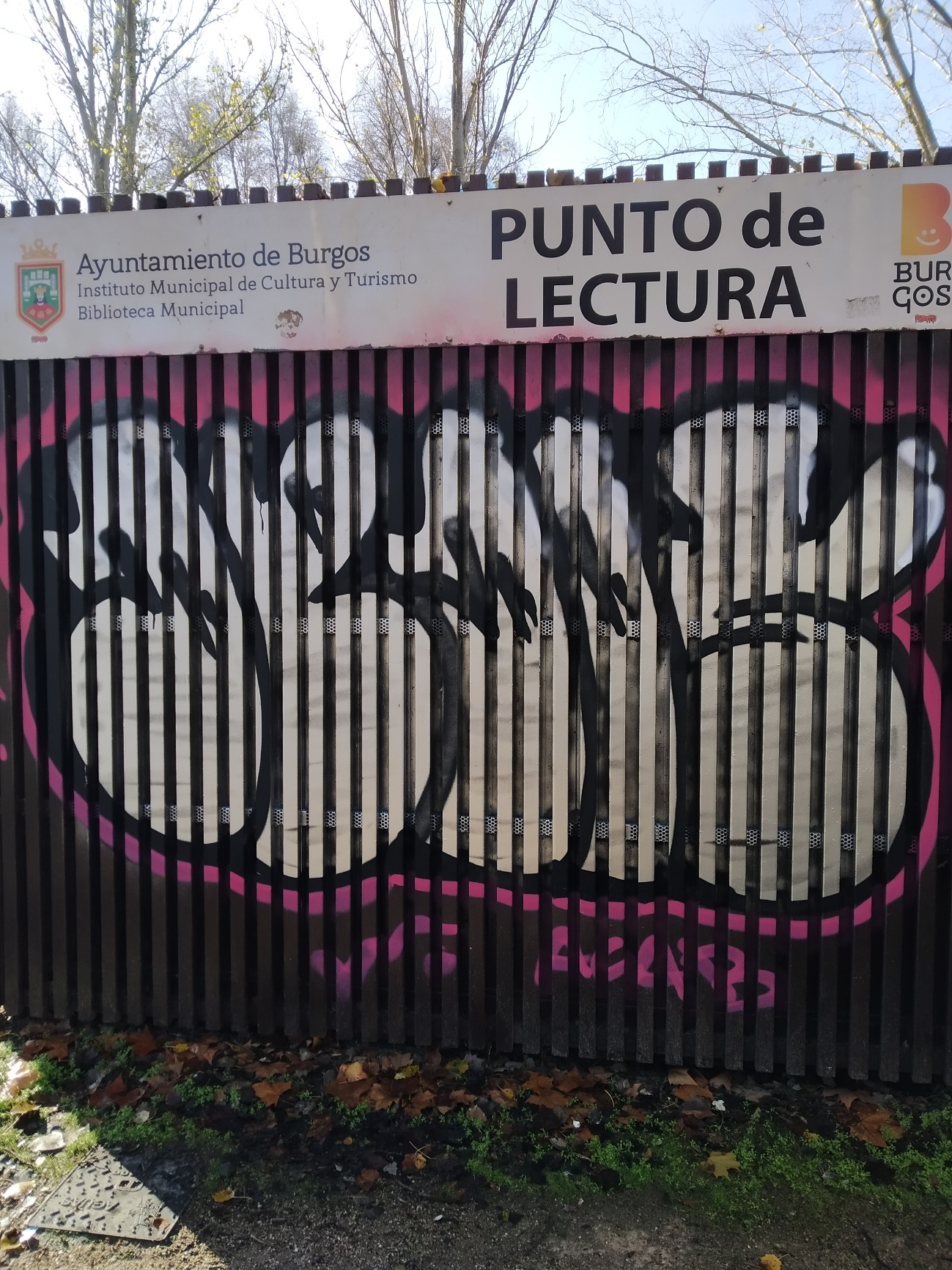
The itch to urinate caught me next to the “Punto de Lectura” (Reading Point) booth; leaving my grandson in his car right next to the side of the booth, urinating where no one could see me.
While I was urinating, while I was ecstatic in the piss as if I were contemplating a masterpiece by Velázquez, Goya or “El Greco”; suddenly, an old and ugly lady appeared to me like a “Menina” by Velázquez, who told me:
– Hello, friend: have you lost the horn, because I only see a skin? I thought we could have rented the booth for both of us!
It’s been a few days since I’ve seen you coming to this place to urinate, but I never thought you’d have a penis smaller than my husband’s when, at the funeral house, they embalmed him to take him to bury.
-Ma’am, I replied, from the scare that you have given me, I have saved “the skin” as you say, before finishing, and with the zipper of my fly I have caught it.
Don’t even dream that here, in this booth, we’re going to ride. Zambomba!
“Whoa!” she replied. What annoyance I have taken to see myself represented, seeing you, in the “Burial of the Count of Orgaz”from “El Greco”.
Her copulative conjunction is minuscule, master!
– But, ma’am, I answered, I don’t ask that they give me a rabbit, but money. You are similar to the grandmother of Little Red Hood, when she told the wolf that she was, when she said no; and this one, instead of fucking her, ate her.
Unintentionally, a fart escaped me, telling to the lady:
-There goes, Menina, the service and the tip. Bye¡
I took the car with my grandson, marching towards the Castilian and Leonese Language Institute, listening to the lady yelling at me:
– What a blow you have given me when you peered, scoundrel!
Instantly I saw a crowd approaching; a brave man came out from among them and shouted:
– Bravo! Olé! The task that you have done to the lady is reckless. You could have given her a spanking!
Living in dreams

The dead do not die
When you expect them to. They live on,
Ghosts trapped
 In the minds of those, who loved them, feared them.

The living don’t live
When you expect them to. They exist
In the trudge of reality,
Living in their dreams.
Dying in their lives.

Ghosts live in the dreams of others
Family friends and lovers.
And the living live in their own dreams
With lovers friends and family,
With strangers exotic places a hopeful future,
With the past of their mundane world.

The dead don't die,
The living don't live
Because of dreams.


Unusual places I have been

Each with their own moment
 salted into the web of my memory
A tenuous painted contrail
A trail traveled many places
The smell of a place evoking

It is the one stool ramen stall
next to a small westernized Chinese hotel In Wuhan
It is fool's gold sparkling on a dreary day
 in the cold rocky shallows of Donner Lake in California
It is the dry smell of a late summer day
at the hot train station in Havre  Montana
Each a unique serendipitous memory, each a thread
One of many woven
to be clutched in the hands of Lachesis
Measured and imbued by a fate
An unintended interesting life.