
10


birth

after birth


— Christina Chin


veiled in the curse

eve the queen of Eden

a dark symbolic thirst


— Uchechukwu Onyedikam


9


her tornadic aura...

impossible to resist

tumbling into nothing


— Uchechukwu Onyedikam


three boys

and two dogs


— Christina Chin


8


beneath devil's moon

a paradise for outcasts

to hear birds whisper


— Uchechukwu Onyedikam


in a quiet room

midnight séance


— Christina Chin


7


tunnel vision

hope will arise to dawn —

sapphire blue sky


— Uchechukwu Onyedikam


following

an implosion


— Christina Chin


6


cultural dance

spin to the rhythm

of the djembe


— Uchechukwu Onyedikam


the traditional

ritual begins


— Christina Chin


5


appeasing

the incensed goddess


— Christina Chin


she bends towards the divine

the arc of Ọ̀ṣun

rite of passage


— Uchechukwu Onyedikam


4


perceiving

landslides and floods


— Christina Chin


the pigeons have flown away

soaring in the rising sun

nature's freeway


— Uchechukwu Onyedikam


3


a winner

on the rostrum…


— Christina Chin


light of her eyes

swirling around his macho body

with thrust in her heart


— Uchechukwu Onyedikam


2


a record shortest day

as earth spins faster


— Christina Chin


laying trust on the universe

i bid farewell

to the passing trials


— Uchechukwu Onyedikam


1


where's she but a dream?

the beauty as well

a fabled city


— Uchechukwu Onyedikam


emerges and falls

in the river tigris


— Christina Chin
Category Archives: CHAOS
Cristina Deptula reviews Sanjeev Sethi’s new poetry collection Wrappings in Bespoke

Wrappings in Bespoke, by Sanjeev Sethi, stirs up a heady brew of thoughts and elegant language.

The very first piece, "Snatch of Schooldays" relates memories of riding the bus to school as a young child. Our protagonist "snakes his way ... contiguous to the leadfoot" to find entertaining classmates as he boards. Written in elevated grown-up language, this piece sets a tone for the collection. The bus is a repurposed military vehicle not originally made to transport children, yet the protagonist finds his way aboard.

In a similar way, other protagonists in this book find their way into and through spaces that seem not made for them, where they must figure out how to fit. The most notable of these is older age, a stage of life that challenges the poetic speakers on different levels. Several pieces, including "Junior" and "Practitioner" explore the self-perception of aging people and the tension between the joy of accumulated intellectual insight and concern over weakening physical bodies and waning energy.

Thought, reading, writing, and academic study also loom large in Wrappings in Bespoke. Pieces such as "Movement" and "Selfdom" reflect this, and other pieces ("Avoirdupois" and "Navigation") speak of people connecting to each other (or not) in personal relationships through the language of study and research. Some pieces bring an almost mystical tone to the celebration of the intellect, such as "Leave-Taking," which references horology while discussing the fine social art of the good-bye.

While rarefied in tone, Wrappings is not without humor. "In Twos" mentions corporate employees joking with each other about hearing their bosses "let it rip." Some of the older age pieces present the physicality of aging in direct and amusing ways.

While some pieces will require careful re-readings, Sanjeev Sethi's newest collection is not unreadable and will be enjoyable for many people.
Sanjeev Sethi’s Wrappings in Bespoke is available here from Hedgehog Press.
Synch Chaos Mid-August 2022: Submerged Stories, Buried Dreams
Welcome, readers, to August’s first issue of Synchronized Chaos! This month the submissions seem to hold hidden depths, tell stories not always apparent on the surface.
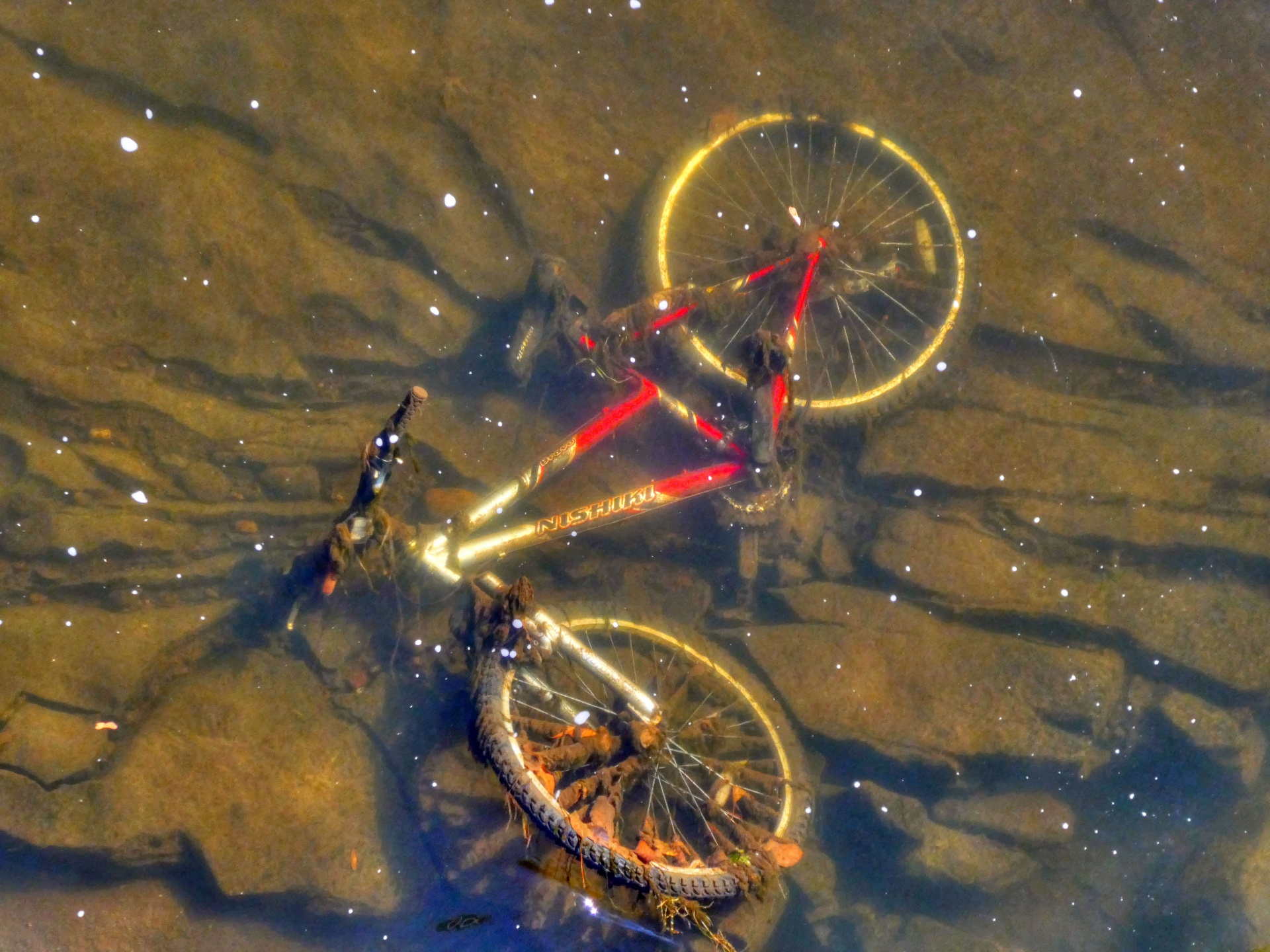
Channie Greenberg sent us a surrealist, painterly photo of a pond, inadvertently in keeping with the theme.
Jim Meirose’s work resembles the submerged elements of a story, as if a child were listening to a tale a bit beyond their understanding. In biology professor Livio Farallo’s piece, complex impulses of thought move as if across synapses, encouraging readers to think.
Alan Catlin sends up loosely connected images of dreams and insects, while Anthony Ward conveys nostalgia through sounds and smells and Chimezie Ihekuna exults in the Christmas season.
Sayani Mukherjee writes of late summer, weather and fauna while Shammah Jeddypaul evokes primeval memory of bones and prehistory.

Mesfakus Salahin ruminates on imperfectly remembering dreams, while J.J. Campbell and Ian Copestick mourn the dull ache of loneliness and the physical weakness that comes with aging.
Richard Le Due talks of losing yourself to age or memory, or forgetting you’re not lost. Chris Butler reflects on the limits of our knowledge and how ignorance manifests through book burning and environmental inaction.
Gaurav Ojha critiques searching for knowledge that is too theoretical and doesn’t apply in practice.
Kahlil Crawford contributes poems of observation: watching and being watched, finding the cultural “bones” of a city.

In his review of Lisa Loving’s Street Journalist, A. Iwasa explores the role of reporters and the question of whether we can or should ever be truly objective.
Luis Cuauhtemoc Berriozabal writes of our emotional subjectivity, how our unease overtakes us, even in the midst of nature’s beauty. Mahbub grieves with a critically patriotic sorrow political assassinations of leaders of his home country of Bangladesh, while expressing the wonderment and refreshment he finds in nature’s creatures.
Susie Gharib writes of seeking refuge from the world’s dangers through flights of metaphor and myth. Ahmad Al-Khatat highlights the unwelcome persistence of traumatic memory for a refugee.
Mark Parsons’ pieces deal with disembodiment: being alienated from one’s own body and from one’s art, having to do random work to sell out/or in order to earn a living.
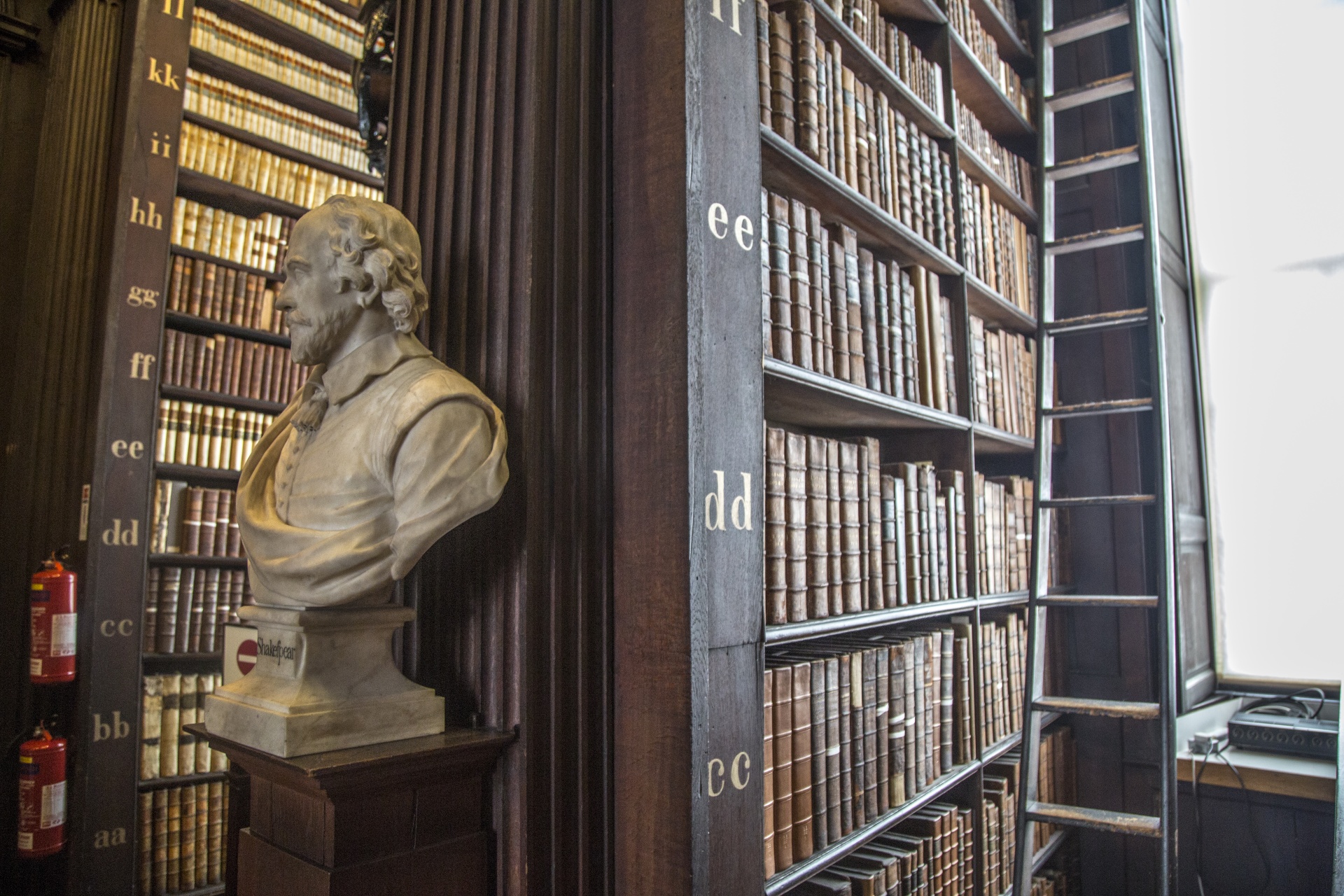
In the same spirit, Skaja Evens writes of the struggle of art-making: not only overcoming artists’ or writers’ block to make the art, but the challenge of staying true to one’s craft when one does earn some recognition.
J.P. Lowe’s protagonist realizes after his mother’s passing that she had personal artistic passions which she sacrificed for the sake of motherhood. His piece explores and honors buried identities and what we feel we have to give up for each other.
Jake Cosmos Aller presents various people who vanish or fade from consciousness one way or another, because they pass away or because others choose to erase them.
Mike Zone shares “discarded” movie concepts, ideas he had for movies that sound barely plausible but may never be filmed.
Jelvin Gipson relates the experience of hearing different voices within the spirit and choosing what to follow, having knowledge just out of reach. Timothy Jonathan talks about the ups and downs of life, figuring out who he is and accepting his own complex humanity.
Gabriel T. Saah and Samandarova Barno encourage people to choose creativity and love over simple greed for material objects and money, especially at the expense of others.

Taylor Dibbert expresses resolve at moving forward after a breakup, reclaiming oneself after a failed partnership.
Z. I. Mahmud explores in his literary essay how conscience nags at those who use their will to dominate others in illicit ways. Michael Robinson relates the transcendent experience he has through faith, where in church he can surrender and come close to God and step out of the limits of time.
Nazokat Urinboeva’s parable encourages compassion, diligence, respect, and mindfulness, while Rus Khomutoff speaks of the emergence of something new, the birth and flowering of a new world.
Poetry from Luis Cuauhtemoc Berriozabal
Dark Blank Space

Night swallows the brown mountains
and replaces it with dark blank space.
The birds must have been fed poison
because there is not one in the horizon.
The devil went and stole their voices too.
A mini-hell has taken hold between
one a.m. and two a.am. This is when
all hell breaks loose. Read the papers.
Nothing good happens at these hours.
This dark blank space finds itself
lodged inside my brain over and over
again. I sleepwalk at these hours and
find myself in the kitchen drinking
until I pass out on the cold floor.


*


Out of the Sky

If white doves fall out of the sky,
who will save me without wings?
I tremble at the mere thought.
Who will save me without wings?

The stars fall out of the sky.
They are drowned out at sea.
No one could put out the fire
while all the birds fall in as well.

Who will save my eyes as they stand
witness? Who will pour me drinks?
I have one arm tied behind my back.

I stick out my tongue at the voice
that contemplates my suicide.
The stars and birds burn at sea.
I love the colors but hate the carnage.

I suppose the sea will birth new stars
and birds. I will believe it when I see it.
The streets are too dim and quiet
without them as I walk towards the sea.


*


A Shoe for a Nose

The clouds gather in the sky.
I see one that looks like a face
with a shoe for a nose.
Another one looks like a bat
missing a wing, the left one.

Blue skies and white clouds provide
nourishment for these eyes
that would rather see
them than another newspaper
article about the end of a life.

A lovely sunny day and
clear skies with a handful of clouds
is all I can stand
today. Perhaps I will eat tacos
and the day will be perfect.
Short fiction from Mike Zone
Dead Film Pitches

Mike Zone “Black History XXX- kinda like Green Room American History with a dash of blacksploitation… rappers in white-face open firing on audience in neo-nazi club.

MZ “Ice Cream Soldier- Legless Alaskan vet returns to the Middle East to serve ice cream and inspire freedom.

MZ “Werewolf biker gang, self-loathing monster can’t kill self, draws attention through bloody siege of a smalltown.”

MZ “Zombie STD…hooker and lowlife meet. Wakes up without his heart. Guess she was undead.”

MZ “Last ditch effort, got this plot about hyper-localization and narcissism… Live Local”

Boardroom Mutants “Get the hell out.”
A. Iwasa reviews Lisa Loving’s guidebook Street Journalist
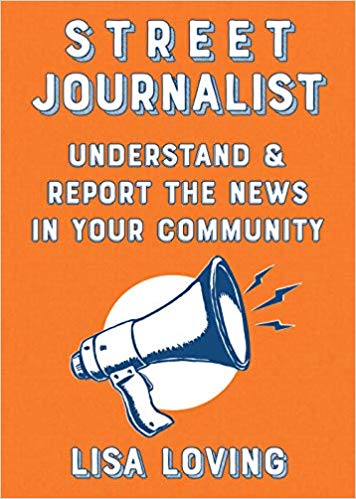
Book Review:  Street Journalist
Understand & Report the News in Your Community
By Lisa Loving, 191 pages, $14.95.
Microcosm Publishing, reviewed by A. Iwasa

In a brief Introduction, Loving clearly states her "goal in this book is to offer everyday people the tools to go into your communities and then educate the world about what's going on in your zone."

I first became familiar with Loving's work when an old comrade of mine was putting together a proposal for a panel on factchecking in the time of fake news for the Association of Writers & Writing Programs 2023 Conference.  I eagerly looked up her work so I wasn't surprised when she critiqued some of the problems with contemporary media environment in both the Intro and even briefer first chapter.

But rather than simply complain about the potentially destructive nature of bad journalism, Loving uses the first chapter mostly to suggest some ground rules like, "If you're not fact-checking, it's not journalism." and "Never make shit up."  In fact, out of ten ground rules, Loving mentions both of those twice to drive home the point!

In chapter two, Loving starts to get into the nuts and bolts of "Is This a Story?"  If you're like me, you grew up with a cartoonish image of a trench coated journalist, with a press pass sticking in their fancy hat asking, "Who, what, where, when, why?"  So I like how Loving zooms in with specific outlines for the dynamics of a story:  1. People, 2. Doing something, 3. For a reason, before fleshing out these and then some with legal explanations and self care tips.

Do you remember when Jello Biafra used to say, "Don't hate the media, become the media."?  Loving is carrying on that tradition, and offering you the torch with this book.

Story style like "enterprise reporting," "solutions journalism" and consumer reporting are all described to help envision larger arcs for your writing.  Loving really hits a stride here, outlining story structure, research, ethics, and self care.  Loving also introduces exercises and suggested readings into this chapter!

With chapter three, Loving discuses media literacy in a way that will hopefully date it to 2019 when this was published and not too much more into the future by having to call it "Fake News, Brain Farts, and Crap Detectors".  She jokes about Stephen Colbert's concept of "truthiness," but it was a pretty scary moment in 2017 when life started to imitate art and "alternative facts" actually became part of the media landscape.

It's an interesting chapter, with Loving taking into consideration things like the human mind's "trapdoors that lead us to make stupid decisions" and how social media can bring out the worst in us.

Though I do have to disagree with Loving's characterization of propaganda as "completely or partially made up".  According to my handy Random House Dictionary, propaganda is "information or ideas methodically spread to promote or injure a cause, group, nation, etc."  Or, "the deliberate spreading of such information or ideas."

It's not pretty, and perhaps it's not the right thing to do, but in the past I have considered partisan propaganda to essentially be solutions journalism.  As long as we're being honest, of course.  I never had patience for chronic bull shitters who proclaimed to be adherents to Left-wing politics, any more than the Rightists.

Loving would perhaps label this "Biased news, which is often factual information, but packaged with a slant".  This sort of critiques is exactly why I picked up her book, to be challenged.  Also, I'm at least dimly aware my old propaganda writing has probably contributed at least a little to the toxic media environment.  I don't exactly regret this because I remain confident I was on the right side of the barricades, but I also think the way forward may lie elsewhere.

Plus I was appalled to read "The English Oxford Dictionary has started including the term 'post-truth,' which means a situation in which facts matter less than an appeal to emotion."

Microcosm seems to have a knack for printing books I wish I could have read 20 years ago to guide me through a lot of lessons I've learned the hard way over the last couple of decades.  Though I felt a bit like when an English professor I had back in community college scolded me by saying, "This is a composition class, not a propaganda class." while reading this, I also couldn't help but think of Archer saying, "Potato, pa-treason."  I also remember being strongly encouraged to focus on my writing by other professors then since publishers were probably going to have their own, strict in house guidelines.  I think Loving addresses aspects of journalism that could and should transcend publishers' style guides and get to the heart of what is journalism, and if a publisher can't mesh with it, do you really want to work with them?!

Fittingly enough, the next chapter begins with the five Ws of journalism previously mentioned, along with "How" drawn into an ice cream cone.  Writing about style guides, Microcosm's is pretty much quintessential cupcake punk!  Take it or leave it, but I'll tell you when their office was in Liberty Hall in North Portland at one point one of their authors was systematically preparing and serving all of the recipes in a vegan desert cook book of theirs, and rest assured I was a regular visitor to their office then.

But this chapter also focuses on things such as keeping your information organized.  It's about gathering info, including developing relationships with your sources.

The following chapter is on Interviewing Tips.  I think I'm going to have to re-read it after listening to some of Loving's material from KBOO, the community radio station she's involved with in Portland.

The chapter didn't really mesh well with my experiences conducting interviews, nor understanding from studying journalism which I've only somewhat haphazardly practiced.  But it didn't exactly contradict them either.  It gave me a lot to think about and I look forward to revisiting it soon because I think it has a lot to offer someone looking to gain or improve their interviewing skills.

In the next chapter, What Is Investigative Reporting?, Loving really hits a stride with clear reasons why and ways to stay objective as possible.  Through out the book she has interspersed her own stories to use as examples, along with other journalists'.  Maybe this is just where our work has been most closely in line, but lessons offered seemed particularly noteworthy to me.

In fact, if one wanted to be diplomatic about my past, admittedly partisan propaganda, you might call it "experiential" investigative reporting as in this chapter.  Loving writes, "Probably the most basic, bread and butter investigative story that you could do right now is setting yourself in some remarkable experience and then writing a feature story about what happened."

I agree 110%.  To be blunt, a large part of why I took up journalism was for better and for worse, you'll never run out of things to write about.  I couldn't make up many of the people I've met, and experiences I've had, and trust me!  I wish plenty of them were just figments of my imagination.  It's also part of why I can't understand why so much bull shitting takes place in the media, both mainstream and underground.  It's not only unethical, it's completely unnecessary.

Under the subheading, "Helping Someone Who Needs an Advocate," Loving writes, "It is my personal experience that the most important and impactful stories come from your readers who call you looking for an advocate in the face of some bureaucratic or legal trap.  The documents they bring with them in stuffed manila envelopes and big boxes and rolling suitcases are often the kind of paperwork FOIA [Freedom of Information Act] doesn't cover.  This is why you should have a front door to your operations somehow-a way for people to come in and ask for help."

Another total home run.  When I hitchhiked, hopped freight and walked my happy ass from the White Castle Timber Sale Blockade back to the San Francisco Bay Area in the fall of 2013 to start doing shit work for the Berkeley wingnut newspaper, Slingshot, the fact that it had an office in an Infoshop was large part of my thought process.  A public facing store front being what many media projects I had participated in had lacked.

More recently, when I made a media request for a review copy of this book (all this and more can be yours!), it was also in part because I was excited about a website some people I knew from the Infoshop Movement or a Punk House were involved in, and thinking having at least quasi-public infrastructure like Punk Houses is all critical to process.  I wanted to try laying out some ground work that I think would not only make or break my potential participation, but also be better for everybody whether I go on to be involved or just retire and get a job at a sauerkraut factory in a different bioregion.

"Health Department Records" and "Looking up Campaign Contributions" are subheadings for sections filled with good ideas about projects for mining the public record.  These are the kinds of assignments you might get in a News Reporting class, and are good skills to have for activism anyways.

"Wherever you go in the world of journalism, the documents tell the story." is a point I believe Loving makes repeatedly in the text.  Loving closes the chapter by emphasizing keeping your materials organized, from the get go.

Ch. 7 is "Pulling It All Together And Telling The Story".  She paraphrases writing coaches from a webinar advocating a martini glass like story structure:

"a wide open top bringing in the story topic,
"narrowing down to an important sharp point on what's important about it,
"and ending with the strong base that explores the future of that topic."

I really enjoyed this because I had a similar model taught to me in community college, but it was just the inverse pyramid part of the martini glass, with no base.  I like associative devices for remembering things, and I appreciate logical additions.

I actually laughed out loud when Loving wrote, "don't forget about snacks."  I think a crucial aspect about writing (and reading for that matter) that goes widely unacknowledged for some reason is the importance of the discipline of literally sitting down for the duration, and doing the work.  "If you take the time to ensure you can sit at a working station for hours at a time with comfort food by your side, I guarantee you will get more done."  This is a nice way to put it, perhaps it's the velvet underwear of iron pants?  I'm not sure, but we frequently joked (not joked) about how we worked for food when I did shit work for the Slingshot Collective, so I get it.

Apparently Loving takes tea over coffee (BOOOOO!), and doesn't shy away from sugar bombing (a tried and true tactic of many cults from what I understand from the research, not the prasadam, hack, hack, cough, cough) but hopefully you get the picture.  Please don't get all Hunter S. Thompson on this note, I've got coffee right here though (both in the first draft and typing phases) that's fueling me right now.  Chased by filtered water to keep me hydrated (again, both in draft and typing.  Relentless by Pentagram played on the youtube as I typed this portion, T. Rex as I proof read).

All joking/not joking aside, Loving continues to drive home the bigger concepts, like "What's Most Important?" while giving you specifics on how to go about "Organizing What You've Got".  "Sorting through the many parts of your media project and organizing them for easiest use is a lot like putting away your laundry."  True, provided you put away your laundry!

Similarly, "Start your path to news writing by reading." is the kind of golden advice I'm shocked isn't more prolific.  From what I understand, when Nelson Algren was a professor at the Iowa State Writers' Workshop he would just show up with a pile of books and tell his students to read.  Hopefully, obviously this isn't all one does, but the subheading, "Get Started with a Grounding in News" encapsulates the spirit well.

While I was reading this book, I was also reading My Seditious Heart by Arundhati Roy and Accessary to War by Neil deGrasse Tyson for exactly this reason.  They are two of my favorite living writers and Roy has long been an inspiration to me.  I also re-read Neil Gaiman's "Make Good Art" speech while working on this review, and enjoyed being reminded about his experiences with journalism, and how he said, "I learned to write by writing."

Did you know "There are low cost, online platforms like Canva, Vizualize, and even Google Charts where you can upload an Excel spreadsheet and have it automatically rolled into a graphic."?  I didn't!  There's a great deal of this sort of nuts and bolts advice interspersed with the other info.

Writing about privacy, Loving coaches again, "Don't be the reporter who vomits information into the digisphere with a sense of revenge.  That's not journalism."  This time adding strong words of encouragement not to troll any kind of public figure either.  "That is also not journalism."

Ch. 8 is about Fact-Checking, and a large part of why I was interested in Loving's work.  An old comrade of mine who interned for In These Times basically only fact-checked for the internship, in a small office with a few other interns who were also just fact-checking.  I was shocked by the dedication and level of rigorousness, but that was before I became a Slingshot shit worker for three and a half years.  Now I think that sort of attention to detail is mandatory.  Loving writes, "this is a step you are not allowed to skip."

Later, Loving adds, "In fact, if you are working with a team of people, a laundry list of items to double-check would be an excellent communications tool you can share with your entire team."  I think this sort of advice is a slam dunk, and exactly the kind of thing I'd like to bring to the table if I'm going to start to do political journalism again.

As I continued to read this chapter, I remembered some advice I got for doing rumor control at street demonstrations, "Believe none of what you hear, and half of what you see."  Of course fact checking isn't that formulaic and rigid, I think it's just something to keep in mind as you're developing your system.

I also started to think about now what Loving calls a "street journalist," I might call a sea level journalist, a nod to the long form, alternative press writers who emerged after, but somewhere in between underground and mainstream journalists.

This isn't a negative criticism, in fact it's the opposite.  I think the hyper partisan, what I would consider street-level journalists, such as myself in the 30s, should probably taking ideas from this book and promptly putting them into practice.

As a case in point, in the EXERCISES at the end of the chapter, Loving writes, "For one week, keep track of all the corrections in the New York Times.  Are there any patterns?" and further along, under "STORY IDEA":  "Speaking of fact-checking, one kind of story that never goes out of date is checking the corrections sections of major media to look for really big whoppers, which generally become what are called 'follow-up' stories."

I think this is great advice, and I plan on following up on it.  It's just not what I would call "street" by any stretch of the imagination.  If someone upped the ante (and the anti!), would anyone read a Minimanual of the Urban Guerrilla Journalist?

I was a little apprehensive of Ch. 9:  CREATING YOUR VOICE AS A JOURNALIST.  I'm a strong believer in writing that might be called, "Just typing," but really I think you spit it out, clean it up, then submit the second or third draft for potential publication as is or for further editing.

For one thing, Loving also does radio and in turn is literally addressing voice.  But more broadly she also addresses personal style of communication in ways that I think are on point.

Ch. 10 is about PLATFORMS.  It sort of lost me for reasons I won't bore you with.  It's good info I'm sure for people who didn't spend their mid-20s to mid-30s in the blogosphere, somewhat blindly trying to seamlessly transition from print to digital, then trying to do both before deciding to go down with the ship of print come hell or high water.

 Ch. 11 is the conclusion and is a Grand Slam (in the ball park OR at Denny's, you decide what ever is better in your opinion), systematically laying the major points of the book out as Loving describes one of the most important stories she ever covered.  If you are a journalist, or are thinking about becoming one, I can't recommend this book to you enough.
Street Journalist by Lisa Loving is available here from Microcosm Publishing.
Poetry from Michael Robinson
MY LIFE in HEAVEN


The creation begins among the stars in heaven.

Heaven’s eternity from the first star’s birth.

Heaven is my father’s house of grace for me.

Heaven with a soft fragrance of sweetness.


My soul witnesses the birth of the first star.

As the candlelight flickers, there is solace.

Angels’ wings reflect light thru the stained glass.

God’s house brings recollections of heaven to me.