Fay Pappas reviews Michael Robinson’s poetry collection From Chains to Freedom

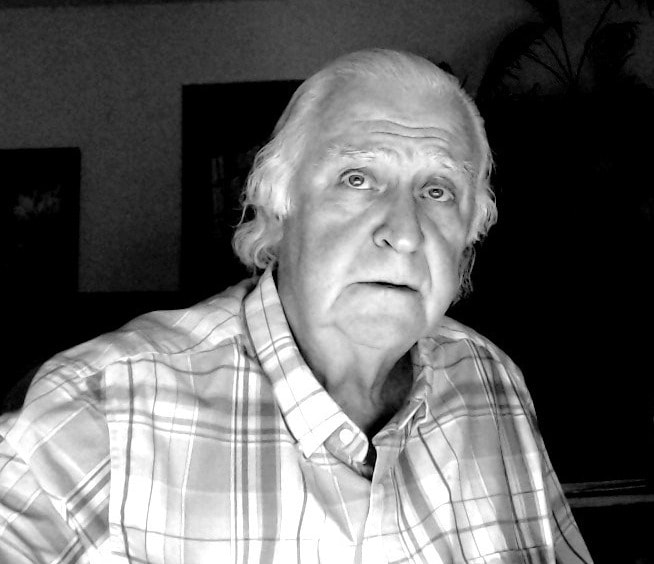
Author Michael Robinson

“From Chains to Freedom: A Journey of Freedom for the Black Male” is a quintessential example of Michael’s singular ability to distill his most private emotions onto paper in a way that instantly draws the reader into his shoes. In a recent interview with NPR, film director Barry Jenkins noted the potential for movies to become “empathy machines”; mechanisms by which total strangers are effortlessly pulled into the lives of others with very difference experiences than their own. To Michael J. Robinson, poetry is his “empathy machine”.

Take for instance, “Being Black”. There, he dives the reader straight into a world of sorrow, paranoia and pain (all based in reality and the poet’s own personal experiences) before yanking the reader back out of a bleak depth like a fish reeled from the ocean when “he remembers his mother’s kiss.”  The line “He sees himself as others don’t” stands out as a note of defiance in this weary world.

“From Chains to Freedom” is not a comfortable read. “Comfort” is not the point. Removing the readers from their comfort zone is. Yet for all Michael J. Robinson’s description of a struggle shared by far too many and perpetuated far too long, the poet concludes on a remarkably hopeful note. Indeed, my favorite line out of the entire work comes from the second to last piece, titled “Some Place Special”: “There is a place where the sun speaks to the moon”. It’s this beauty amongst the pain, sorrow and death that would be dizzying or worse, exploitative, in less adept hands. But Michael J. Robinson doesn’t just know how to use his words, but he understands why he uses them.

I believe that makes all the difference because Michael’s ultimate message to his readers is that despite the pains of today, hope exists all around us should we heed it.  Afterall, he reminds us, “there is a place where the sun speaks to the moon, while the mountains listen to the winds’ singing. Life is found in the trees as the sun whispers[…]. 

Fay Pappas is a practicing attorney and the former editor of Brushing, the literary magazine of Rollins College (Winter Park, FL). From Chains to Freedom can be ordered directly from author Michael Robinson by emailing him at mjrobinson@rollins.edu

Poetry from Mark Young


 Triaging "triage"
  
 I find the way words drift & shift in meaning delightful.
  
 Yesterday I checked on the spelling of "triage" in my, admittedly 30 years old, Concise Oxford Dictionary, & found the definition given there was "the refuse of coffee beans."
  
 Since this was nothing like what I was expecting (& started to wonder if I had, in fact, the right word) I moved on to the ten years younger Shorter Oxford & found two definitions; "The action of sorting according to quality" which is much closer to current usage although apparently an older meaning since the second definition was "coffee beans of the third or lowest quality."
  
 & putting them together I came up with a new job, a "triage specialist," who wanders the waiting areas of ER words, oops, wards, inspecting empty coffee cups to see if they can divine in the leftovers what the patient's ailment might be…


 mean time
  
 The red eyes of rabbits
 Denise Levertov: The Springtime
  
 The rabbit's eyes aren't blue.
 Or are they?
  
 The red-eye flight gets you in 
 early in the morning.
  
 That means that unless you're
 some sort of piston
  
 pumping ramrod-straight
 along a longitude
  
 you'll need to wind your watch forward
 to make up for the time you've lost.
  
 Who knows what might have happened 
 in those over-looked hours?
 
  
 geographies: the Mackenzie River valley
  
 Peat forests are especially
 carbon-dense, but their
 curated selection depends
 upon those attributes which
 abound in the current season.
 
 Data is king. Social plat-
 forms abound. Yet there is
 no one size fits all solution
 when it comes to new in-
 formation technologies.


 For Veterans’ Day,
  
 Donald J. Trump had
 a sweatshop in Myanmar
 run him up a Buddha
 the size of the ones that 
 used to be at Bamiyan.
  
 Had a hand at the end 
 of an elevator arm in 
 which he was carried 
 up from the stage to a
 height approximately
  
 equal to 2000 bodies
 stacked one on top of
 another. From where 
 he delivered a speech
 that was amplified / 
  
 televised / digitalized / 
 YouTubized so that the
 whole world could
 know what the sound of 
 one hand crapping was. 

Poetry from Andrew Cyril MacDonald

 Foreclosed
  
 Withdrawal shoulders folds along mouths
  
 staged tales fault us.  They coffer
 day’s issue, the chance randomness 
  
 arranged when we leave cautioned
 a house our growth each door leads to.
  
 All for themselves now, it’s dread
 their kingdom announces
  
 in counted nights yearning
 for song under the old roof’s uses
  
 while as out of an encapsuled globe
 Xerxes himself would approve of,
  
 we sit new rooms alone and suggested.
  
 -
  
 The enlisting sepulchre

 Out of windows 
 gloomed light insurrects 
  
 incompatible suddenness 
 rotted with years
  
 soundless worlds
 pretend to.
  
 It peals and strips
 ripe notions to death
  
 where drunk and various 
 pronouncements
  
 soft eyes took care with 
 as ears proclaim
  
 the glass between them— 
 our palms their hands
  
 a mausoleum traces.

Andrew Cyril Macdonald considers the role of intersubjectivity in the poetic encounter with place. He celebrates the confrontations between self and locale and the challenge that occurs in the fomenting of identity and independence. You can find his work in such places as A Long Story Short, Blaze VOX, Cavity Magazine, Down in the Dirt, Mineral Lit Mag, ODD Magazine, Thorn, Green Ink Poetry, and Unique Poetry Journal among othersWhen not writing he is busy caring for seven rescued cats and teaching a next generation of poets.

Poetry from John Edward Culp

   That tall order
       fell on its face
Drew its Last Breath
           And turned over to 
                   Look at the Stars. 


In Wonder 
        I Wonder
                Bliss is sometimes
        where I fall,
                 resting with
            All the Sky
                    a part of my
                       heart.


My Sizeless glance 
      Wakens the fall
       into a natural lift.
     Behind  the  window
   this was outside my reach.


So   Safe   to   have 
           no future 
   Looking back on what I 
                    had. 


fallen  without a Past to 
          drive my rivets
       to  steel ,   another
                       Day ahead
                   winding Down my
                Belief in Self, 


Until  time  loses its Last 
          Rhyme  spent  to 
  impress myself more than others.


Until homeless grows a new
        home in a forested walk.


The moon peeks around a
Big tree as the ground is
      Softer than I had been used to
in the concrete world. 


     I'm  stopped  by  a  feeling
 of  exhilaration 
         accelerations compensating 
      with tangential swings to keep 
   us apart  in  a
 Dance, that joins our souls, 
to feel good about this. 


       Good  has  my Back   or 
was that you    for neither Lack.
       Sung becomes singing


     The  Invisible  evaporates
 to make a   delicious flavor
                pleased


     I'm  fallen    to Rise    Like 
               Breathing 


                     ♡
by John Edward Culp

Poetry from Charlie Robert

Don’t Eat the Blowfish

Tastes like chicken but like everything else it’s not.

The liver is Nagasaki.

The lungs Hiroshima or Jesse James and

Dear Old Death comes to us all but

the quiver is fantastic.

Like lips full of bees.

Like a bucket of glue and no one but you.

Hey Toshi! It’s Number One on the Hit Parade!

Who cares that The Deal is about to go down the Crapper.

Or that we may have to eat the pets.

Elsewhere in the Kingdom it is dark but this is the Shit.

This is the Rush.

Like finding Jimmy Hoffa in the attic.

Like kicking Mother Theresa in the teeth.

Like fifty-fifty at best with tubes in the chest and second cousins eyeing the Will.

Saxophone Heaven

Sidemen crouch in stairwells.

Waiting to make their move.

Microphones hiss.

Like snakes on the take.

Parker crushes his smoke and

Raises the Horn.

This is a Gig Baby and the liquor is Top Shelf.

Remember that time when he played the Grafton?

It was plastic but his reeds were Ricos shaved pussy thin and he blew us all away.

Those were the years of the Arm and the Needle.

When the lights were low and it was all Chalameau and any

God would drop their drawers for a taste of that

Junk Dope Smack Shit.

They are Gentle and Kind and sleep between sets like infants.

Knuckle Work

It’s the End of the Roadshow and

Grace she’s a No Show so it’s

Heidi versus Hitler.

Hello Kitty now a Kittler.

Kill your engines.

There are scorpions between the sheets.

Red liver and organ meats.

Dead Aunts who can see you.

The Furnace below the belt.

You are the first to leave.

You are the last to leave.

Feel the planet move.

Somewhere someone is doing everything.

Show them how to take a punch.

Nighty Night

She lies there.

Choking her pillow.

Breathing.

Scuba Tube.

If I should die before I wake.

She lies there.

The windows are black.

No one sees out.

But something sees in.

Her Beasts.

Her Kin.

Don’t eat me please eat me.

A shatter of glass.

Blood in the throat.

She lies there.

Eyes like the dolls

she hides in the attic.

What Lies Ahead

Most of the birds are swifts.

Once it grows light they slip into trees.

Rattling their leaves like

cheap party favors.

Colton Notch is true north.

Distant and blue.

Waiting to be made.

The light in between honey on glass and

there are men in the fields.

Cows eating grass.

Grateful.

Violent.

Deep in the center of the land.

They have their own Wounded Knees.

Their own Thermopolis.

These humans know nothing of the Wooden Ramp.

The Hammer between the eyes.

They bend to the ground.

Scraping the earth with their metal.

Seeing the sun in their heads.

The swifts bursting out of their beds.

Buzzing the beasts like Spitfires.

Drawn to the circumference of those who know.

What lies ahead.

Thesis, in installments, from Z.I. Mahmud

 Abstract

Two autobiographical Dickensian fiction, notably, David Copperfield and Great Expectations are the subject matter of this thesis: written to entertain book reviewers. As part of the book review competition, the integrity of the thesis explores literary criticism or critical appreciation that vindicate these narratives as best sellers or classics.

Chapter 1 discusses Charles Dickens’ David Copperfield from the realistic criticism and  psychological view: psychoanalysis and psychoanalytical theory. Glimpses of life and death, goodness and evilness or redemption and damnation, wealth and poverty or capitalistic society and proletariat society, justice and injustice prevailing in Victorian England. Furthermore, readers or reviewers will be intrigued by the social critique in Chapter 2, which discusses Charles Dickens’ Great Expectations unveiling a repertoire of literary and figurative language.

Literary fiction lovers will be introduced to the themes of allegorically satirized legislative intervention or laissez faire policies concerned with reformation or amendments. Macabre of mass grave crisis, extravagance and ostentation of burial funerary before the passing of parliamentary bill has been Dickens’ radical or satirical self anathema.

This book review emphasizes Miss Havisham, Pumblechook, Satis House guests but perpetually examines the icon of angelic sweetness and purity-idealized Estella, the heroine. Estella’s ironically Dickens’ seraphic sister-in-law, Mary Hogwart whose unforgettable memories: death, grief and mourning recollection-“I cannot bear the thought of being excluded from her dust…It seem like losing her a second time.”

Sarcastically, Great Expectations’ Estella memorializes David Copperfield’s Agnes if  holistic or thoroughly evaluated. Gratitude and indebtedness to the journal of Anna Foley in this paraphrase of quotable quote. Emily’ was in fact, Agnes’ resurrected commemorative “so perfect a creature never breathed…”she had not a fault.”

Dickens fictionalized characters in autobiographical genre and evolves the discussion of a symbiotic relationship linkage in fantasy. The erudite pageantry is in fact, a testamentary to the humour: Miss Havisham’s will of inheritance legacy: Twenty pounds to Georgiana. Twenty five pounds to Sarah to buy pills for her wind and five pounds to the Raymonds or Camellias to buy rush light to keep spirits high in the night.

Tension between life and death or acceptance and grief of the Charles Dickens’ literary canon can be a tender personal experience: with the post or ultramodern cosmopolitan unprecedented legislative measures lockdown amidst pandemic’s outbreak; blighting twenty-first century’s humankind or genteel characters with the malediction of unemployment and famine.               

In valedictory opinion, the concluding book review: William Shakespeares’ As You Like It can be traced to the 1563 epidemic diseases: a contagious plague that devastated the colossal London. What had really happened to the legacy and fortunes of Shakespearean drama performed or exhibited in the Lord Chamberlain’s Theatre? Mystique and critique readers will be merely breathtaking and awestruck to establish textual references to present coronavirus pandemic contrasting Elizabethan plague. I don’t have the nerve to dissect the mummified 16th century buried bereaved souls… Ironically I have garnered the audacity with assiduous spirits or formidable resilience to revisit, reevaluate and reexamine: themes, plots, and twists, motifs, characterization with perspectives to literary techniques or figurative language. I am grateful and loyal to the copyright of different stellar critics and wondrous essayists throughout the three narratives.


Contents

Chapter 1 Charles Dickens’ David Copperfield Wordsworth Edition Review- A Psychological Novel With Perspectives of Critical Realism               

Chapter 2 Charles Dickens’ Great Expectations Penguin Classics Edition- A Moral Fable Appeasing Rhetoric With Laughter’s Appeal

Chapter 3 William Shakespeare’s Theatrical Drama: Elizabethan Comedy: As You Like It Book Review


Dedicated To My Dearest Wonderful Educators Inscribed In My Heart

Mr. Md. Humayun Kabir & Ms. Shaila Nasreen
Faculty of English

Ms. Razia Akter
Department of Psychology

I am really blessed by these luminaries’ and guardian angels’ overwhelming smile, heartfelt encouragement, inspirational teaching charisma, and motivational counsel. They epitomize incredible philanthropic hearts and embracing warmth fostering blossoming rapport.  Inevitably, as a humble student, I had been privileged with intellectual or emotional support in visitations to the teachers’ lounge, library, lecture theatres, or tutorial coaching. These were conducive to my academic pursuits or extracurricular prospects of Bangladesh Air Forces Shaheen College, Tejgaon, Dhaka.        


Charles Dickens’ David Copperfield Wordsworth Edition Review- A Psychological Novel With Perspectives of Critical Realism

1. Introduction

David Copperfield Penguin Classics and Wordsworth editions of yesterday, today and tomorrow have emerged as hallmarks avant-garde of Charles Dickens. Literally, Dickensian prose: David Copperfield’s rhetoric and diction exhibit reminiscent of the novelist memorabilia recollections. Penguin and Wordsworth Editions are admired noteworthy amongst communities of multilingualism and multiculturalism diaspora, acknowledged globally as bestseller biographical literary fiction. Bookstores, saloons, parlors, coffee shops, magazine stores, souvenirs and gift shops selling at different retail prices UK pound and US dollars respectively.    

2. Background Genesis

Epochs of Victorian England have envisioned reflective testimonials: critical realism decades of the 40s and 50s (after the sunset of romanticism movement) in the historical context of 18th century English Literature repository. Charles Dickens appeared enchanting spirits with the incarnation of a social critique amidst 1849-50s, which were monthly installments of newspaper extracts anthologized by David Copperfield’s publication. 

“Whether I shall turn out to be a hero of my own life, or whether that station will be held by somebody else, these pages must show”. Dickens caricatured David Copperfield as flavoursome biographical fiction, social satire, realism and fantasy, romantic and psychological thriller genre.

Dickensian characterization in David Copperfield impersonate varieties of fictional persona including David Copperfield, the narrator and heroic protagonist, feminine personalities Emily Pegotty and Dora Spenlow, Agnes Wickfield, the paragon of paramour and heroine, Miss Betsey Trotwood, guardian angel, the Berkeys amiably hospitable household of Yarmouth seashore, Mr. Murdstone, David’s misery whose stone heart step parenting entrenched David into the down-in-the-dumps wine factory, Uriah Heep and Mr. Wickfield’s diseased love (Agnes becomes more than a simple infatuation or obsession for these minor characters), heartwarming and affectionate Micawber family, Uriah Heep, the usurper’s hypocrisy and villainy and feigned love or consummate immoral romance for Agnes, Tommy Traddles, the fidelity of true acquaintanceship, James Steerforth, the bad angel or antagonist, Sophie, the fiancee of Traddles and so on.

Characters mysteries open secrets (moneybox of Pegotty or Mrs. Berkis) , widowhood and single parenthood’s overprotection and obsession, the tyranny of educational institutions, misery of child labour harbouring grimace in the grueling and grotesque conditions, treachery and hypocrisy, dilapidated debtors prison, Victorian femininity of household comfort and domestic bliss and prejudices of gender and caste disparity inevitably themes of holistic examination. Archetypal or stereotypical descriptions formidably juxtapose with the contrasting idealism. Entitlement and epitaphs of character significance have influenced readers or critics in adulation of coquetries, sycophancy of honeyed words, witty gimmickry. Mr. Wickfield’s  allusions referenced Dickens bed night stories of Mr. Vicar of Wakefield (whose sensitivity and overprotection regarding the family eventually endanger the household in iniquitous circumstances, sinking into abject despair and damnable downfall). In the following manner, Mr. Wickfield’s obsession or infatuation for Agnes results in sardonic overprotection and fortuitous disappearance from the novel.

Dickensian figurative languages in English Literature surpass criticism with allusions to Biblical references, paraphrases from classics, Shakespearean philosophy, and so on. Victorian Era’s colloquialism “Good Heavens” appeals to enchanting minds of modern readers or interpreters of the narrative as modern English language expression of dialectal creole: anticipatory connotation of “huh!”. David Copperfield’s mother Clara showed resentment in surprise or disapproval in disbelief at the end of the statement when asked whether Pegotty acknowledges in an affirmative mood. “Good heavens! cried my mother, “you’ll drive me mad.” Pegotty’s counsel and advice of remarriage were quite adversarial which is why frustrated Clara referred to her as a “cruel or unkind creature.” “I wouldn’t buy myself a new parasol, though the old green one is frayed the whole way up, and the fridge is perfectly mangy.” Euphemism is a mild or indirect word or expression substituted for one considered to be too harsh or blunt when referring to something unpleasant or embarrassing. Miss Clara’s understatement of genteelness of gentry or politeness juxtaposes or contrasts unraveled or worn green umbrella, scabious or yucky fridge with a shaved head, blackened or disfigured self-image respectively.

“I turned my head towards the window, thinking of her calm seraphic eyes, he made me start by muttering as if he was an echo of the morning: “Blind! Blind! Blind!” These lines emphasize or illuminate the angelical divinity of celestial cherubic beings. Agnes’ eyes contextually allude to the symbolic tradition of Christian angelology as belonging to the ninefold celestial hierarchy, associated with light, ardour and purity. Agnes filled David’s heart with resolutions strengthening his weaknesses shedding light and ardour as emerald as the sister of boyhood. The light was essential in Dickens’ life to be awakened of the bad or evil force analogous to the premonition of forbearance or prohibition from James Steerforth’s satanic companionship. 

More next month!

Short story from Robert Thomas

Una Dolce Cossa Al Caffe

There was a long line at Peets that day, and I questioned
whether I wanted a morning coffee bad enough to slowly shuffle
forward for what looked like a lengthy wait. But then I thought,
what the heck, I have nothing else of any importance going on in
my life on a Monday morning. Retirement was that way; days of
leisure interspersed with moments of well-planned activities.
Besides, one consolation was the aroma of freshly ground coffee
wafting through the air. I once read where just the odor of coffee
was enough to get those energetic endorphins going in the
morning.

In front of me was a short Hispanic man with thick pomaded hair
and a leather holster on his belt sheathing a well-used pair of
clippers. Someone’s gardener, I assumed, grabbing a morning
coffee before a day trimming another yard. Hispanics tended to
dominate the landscape and garden trades in California. Just as
other ethnic groups have found entrepreneurial niches for
themselves. I learned that when Tippi Hedren, while on a USO
tour, visited a Vietnamese refugee camp in Vietnam back in the
sixties, she brought a manicurist and other make-up artists with
her. Vietnamese women were enamored with her nails. So, she
had her make-up team teach the women skills. Evidently, this
was the impetus of all those Vietnamese-owned nail salons
across America.

The cafe was crowded with a myriad of people from various
walks of life, and of many ethnicities, reflecting the cultural
diversity of the San Francisco Bay area. Coffee seemed to be
the elixir of social integration.

To my left around a small cafe table were the Asian regulars,

elderly men who prattled back and forth in some Chinese dialect.

I never found the Chinese language to be appealing.

The sound was too staccato and nasal to my ears.

There was just nothing romantic about Asian linguistics.

It was whiney and overly energetic for my taste.

Unlike the two Italians sitting at a table to my right.
The Italians were an older couple. He was jauntily dressed in a
long black leather designer coat. Swirled around his neck was a
gray silk scarf with short tassels at the ends. He wore a black
fedora with the brim slightly curled down above his forehead.
Across from him sat a distinguished looking woman in a dark red
short waisted jacket. Her hair was ebony black and in a page
boy style that belied her age. I could picture the two of them
sauntering down a wide strada in the couture district of Milan.
They spoke softly to each other with an occasional flip of a hand,
emphasizing some idea or emotion.

I loved the sound of Italian, particularly the dialect of Romans. I
never forgot those mornings in Rome, listening to the lilt of
women greeting each other across the open expanse of the inner
courtyard of the flat my wife and I rented in the old Trastevere
section of Rome. Buon gioooorno Maria. Buon gioooorno Olivia.
Come sta oggii? It was not spoken, but rather sung, almost
mimicking the delicate calls of the canaries hung from balconies
below the windows. Listening to the couple, I was drawn back to
the wonderful experience we had roaming the byways and
narrow cobbled lanes, amid stained ochre buildings housing
small niches with the image or statue of some neighborhood
saint.

Continuing to gaze at the crowd around the room, I noticed a
penchant for dark muted colors in clothing. It was like an
invasion of shadow puppets huddled together, heads bent
forward and preoccupied with their smart phones. However,
something suddenly caught my eye off to the far left.

A glint of bright orange flashed from between two dark forms, like a firefly
in the night. I could not see who it belonged to, as the person’s
view was blocked by two larger individuals. As the line
advanced, I intermittently glanced over to see if I could get a
clearer view, but each time people stood in the way. Finally, as I
became the next customer to be served, the veil of secrecy
parted, and a lone young woman stood out in a bright orange
flower print dress. I was taken aback by her colorful presence
among all of the darkness around her.

She glanced up and around the room, eventually making eye
contact with me, as she noticed my looking at her. I quickly
averted my gaze, not wanting to appear gauche in an era of “Me
Too”. However, I found myself drawn to her over and over again,
as I took surreptitious peeks of her over my shoulder.

Her jet black hair was neatly braided in rows of tight bands,
extending from the top of her head, and down around the right
side above her ear, and to the back of her head, culminating in a
multi looped bow, with the ends dangling down along the back of
her neck. The braiding was highlighted by shiny gleams of light
that reflected off them. Beneath hipster dark-rimmed glasses, her
eyes were framed with a thin layer of mascara drawn out to a
small point on either side, making her eyes exotically Egyptian.
She had high cheekbones and rounded cheeks of flawless pecan
skin, and her lips were tinged in orange-red. Her nose was not
large, but slightly pugged in a cute sort of way. The orange print
dress was an off-the-shoulder peasant style, exposing her
beautiful shoulders and upper clavicles. There was only a slight
hint of cleavage. The dress was blousy around her breasts, with
a narrow bodice. The fabric pleated out across wide hips and
flowed down to the top of her knees.

There was something uniquely alluring about her, as she stood

out among the others in the room. She seemed confident in her

surroundings, unencumbered by the need to update the latest

social media script on her cell phone. She was engrossed in reality,

and the people around her.

I ordered a medium house blend, paid the clerk and strolled over
to the condiment bar hoping for a final coup d’oeil. I set my cup
down and slowly filled it with Splenda and half and half, glancing
at her from time to time.

Surprisingly unable to contain myself, I turned to her and said, “ I
am usually not this forward, but I just have to tell you that you
look stunning in that dress. In fact, I find your whole look quite
alluring, from your beautifully braided hair, the dark-rimmed
glasses and the orange off-the-shoulder dress that exposes your
lovely brown skin. Yes, girl, you’ve definitely got it.”

After a short moment of silence, during which she most likely
tried to assess my intention, she responded in a coquettish
manner with a demure smile. As she fluttered her long
eyelashes, she whispered in a slow soft southern drawl, Why
thank you very much.

I bowed my head in recognition, smiled, and continued placing
the lid back on the paper cup. As I turned to leave, I felt a tug on
my sleeve. I looked around and found her hand outstretched
with a business card held tightly between two long glossy
fingernails. I took the card and looked at the name; Shanna
Benton, CPA. Not only was she attractive, but she was also well
educated, and knew an opportunity when she saw it. I thanked
her for the card, bid her a good day, and began to leave. As I
departed I heard an older woman standing next to Shanna utter
in a terse and sarcastic manner, ‘My god woman, he could be
your father, if not your grandfather.’ To which Shanna replied,
“Honey, with a rap like that, I don’t give a damn.”