The Success Story: Drama from Chimezie Ihekuna (Installment 2)
This is the second installment of Chimezie Ihekuna’s play ‘The Success Story.’ Read the first part here.
At Harp’s Residence…
A bungalow painted blue at the exterior, well-fenced from all sides and beautified by the two grown trees oozing fresh air over a large expanse of land describe the modesty of Harp’s place of living. Greg has stayed at home for three weeks but feels he needs to pay Harp a visit. This is on a Saturday morning at about 9.00AM. Harp’s parents, Mr and Mrs Daniels, are at home to play Greg an august visitor. Greg comes into the house well-rugged, but with just two large-sized seats in the Living Room and a medium-sized dining table, surrounded by four identical foamy chairs to accommodate their siting positions when being served food.
There is a buffet—variety of foods—sizable quantity of prepared rice, prepared chicken flavours and other local and foreign dishes. They can each serve themselves their favourite varieties.
Greg is sited on one of the seats close to the door, watching as Harp and his parents are bringing in from the kitchen, closest to the dining table’s position, cutleries—pairs of fork and knives and fragile plates.
All is finally set…Mr Daniels takes the sitting position of the family head. His wife sits adjacent him while Harp sits opposite. There is an adjacent foamy chair reserved for Greg. Mr. Daniel signals Greg to come over.
Greg joins them… Harp serves himself some spoons of prepared rice, chicken flavours, stew, and juice drink poured into his used jugged-sized cup. Mrs Daniels serves herself the combination of fruit wine—a combination of lemon, water melon, pineapple, and her plate filled with strawberries and mashed potatoes. Mr Daniels is a copy-cat of his wife, when it comes to food preference.
Although Greg is yet to serve himself, Mr. Daniels begins the discussion (his wife and Harp are already eating)
Mr Daniels (Pretends not to know his name at first): What’s your name?
Greg (humbly answers): I go by the names Greg Smith
Mr Daniels: Oh! Are you the one my son talks about whenever he comes to spend the semester at home?
Greg (chuckles mildly): Yes
Mr Daniels: So, you’re that genius at the University of Perth taking everyone by surprise…My son has told me about your exploit—your success and popularity. I’m impressed. So, tell me, what’s your source of inspiration?
Greg: My inspiration has, is and will always….
Mrs Daniels (temporarily stops eating to interrupt the discussion): Mr Daniels, don’t you realize the young man is yet to serve himself. We’ll have more than enough time to interact with him when we’re done eating. Give him a break! He’s going to spend time with us.
(She pose a question to Greg, stares sternly at him) Won’t you?
Poetry from Mahbub
If You Are By Me
Nothing impossible if you are by me
I can cross the bar without stinging
I can spread my hands in the wave of ocean
I can float with the stars in the blue sky
I can move to the space overcoming
The danger of earth’s bad environment
I can lie beside you sleep with you
Having always hugs and singing love songs
All my sorrows and sufferings
Jam- packed in heart can be removed
Strewn in the warm sunny day
Under the colourful rim of the space
We can enjoy the earth stretching
I can make a castle of leaves and flowers
Where only inscription of love, we advance.
Poetry from Christopher Bernard
Spring Symphony
By Christopher Bernard
Spring: Oh! Hear my call, oh world, my home!
The World: We hear your call! The traveler’s home!
O Spring, rejoice us now!
The winter’s brutal winds have gone:
The storm
Has wrecked
Its last
Redoubt.
The birds are flying from the south.
They perch gravely on the fence;
Appraising bush and tree, they scout
A place to nest far from the cat
That watches from the windowsill.
Through the crust of snow and ice
That kept asleep her summer dream,
Earth’s eyes awake
As the sun perks up the daffodil
And turns the eyes of all to him
Until the universe itself
Beyond even his sovereignty
Breaks into music by a German old
In love with his Clara, his life, his earth
For a season; till
The trees uproot,
And the canyons wake
From their cold trance,
And the bears give birth,
And the mountains dance.
Spring: Now, drunk on joy, let all things dance!
Oh, drunk on joy, let all things dance!
The World: Till tizzygiddygiddydizzyfizzytizzytipsy we be,
All around
We fall down!
Spring: And drunk on joy, now all things dance,
(So drunk on joy, how all things dance!)
The World: Till everybody
Finds this treasure:
Love, like life,
Is pain and pleasure.
Spring: Drunk on joy, you’re drunk on joy!
The World: No, you’re drunk
As a love-lorn boy!
Spring: For Spring is love!
The World: And love is spring!
Spring: Dance if you know this!
The World: (If you don’t know, sing!)
Spring: Drunk on joy, let’s all dance!
The World: Oh drunk on joy, let’s all dance!
Spring: So drunk on joy –
The World: Oh, drunk on joy –
Still drunk on joy . . . !
(Pause.)
Spring: Oh! Hear my call, oh world, my home!
The World: We hear your call! The traveler’s home!
All: O Spring, rejoice us now!
_____
Christopher Bernard is author of two book-length collections of poetry, The Rose Shipwreck and Chien Lunatique, and is co-editor and poetry editor for the webzine Caveat Lector. His third novel, Spectres (originally serialized in Synchronized Chaos as “AMOR i KAOS”), will appear later this year, from Regent Press.
Synchronized Chaos June 2018: Metamorphosis
Welcome to June’s issue of Synchronized Chaos Magazine. These selections explore metamorphosis: what sorts of changes people can go through, when and why we change, what inspires us to change, what sorts of changes nd losses get forced on us, and when and why we can be afraid of change.
Humans are complex, capable of a wide range of feelings and actions that may seem contradictory at first glance.
Some of this month’s narrators aren’t sure whether they care about their fellow creatures, although the entirety of their writing belies their surface lack of empathy.
JD DeHart’s poetic speakers seem thoughtful curmudgeons, yet with a soft spot for fellow writers. John Robbins gives us poems of disdain, with their grumpiness relieved by the speakers’ finding a sense of connection to fellow literary ‘pirates.’
Mark Carver’s poetry reflects a cautious mix of optimism and skepticism about human nature, while J.J. Campbell’s speaker feels disgust at human frailty and embraces death as an inevitable escape, even while feeling a bit of connection to the ‘lost writer’ he mentions.
And a few of the speakers resemble ‘lost writers,’ people on the margins who provide a vantage point through which writers can make complex observations on mainstream society, or who are themselves outside the dominant culture enough to be able to comment on it.
Grant Guy’s pieces present people who are wounded, retired, or otherwise left behind or on the edge of society without melodrama and with calm observation. Cheeta Born2Dv8 Lachender presents a wandering traveler’s tale. His character is a, thinker, somewhat of an outcast due to his nomadic, unconventional lifestyle and poverty, yet sees himself in the tradition of the great Jack London.
Being able to think in a different way can be a catalyst for personal change, as we see in Joan Beebe’s poem, where the narrator gradually shifts her thinking from self pity to hope. Chimezie Ihekuna’s first installment of his screenplay The Success Story presents an accomplished student who, over a holiday visit to his family, finds the time and space to realize that he can and must follow his true passion. Chimezie Ihekuna also contributes a set of voice-overs to this issue, experimenting with different identities as a way of finding and expressing his own.
Jonathan Hine’s piece illustrates the moment when, during a physical and psychological journey, one realizes that one has changed. Allison Grayhurst presents a panoply of reflections on potential transformation: people who find themselves changed through embracing committed love and partnership, people who fear and draw back from that type of experience, and, finally, the very basic and life-altering moment of giving birth. Jeongeui’s paintings of natural scenes symbolize interior personal journeys, as she explains through her artist’s statements, and Liz Hughes, in her monthly Book Periscope review column, reviews stories of survivors. M.E. Hinton’s protagonist, in the novel Brothers, a Roman Empire slave boy, escapes multiple times in attempts to change his circumstances, while Marcy Browning details her treatment for and recovery from breast cancer in her memoir Better Days are Coming.
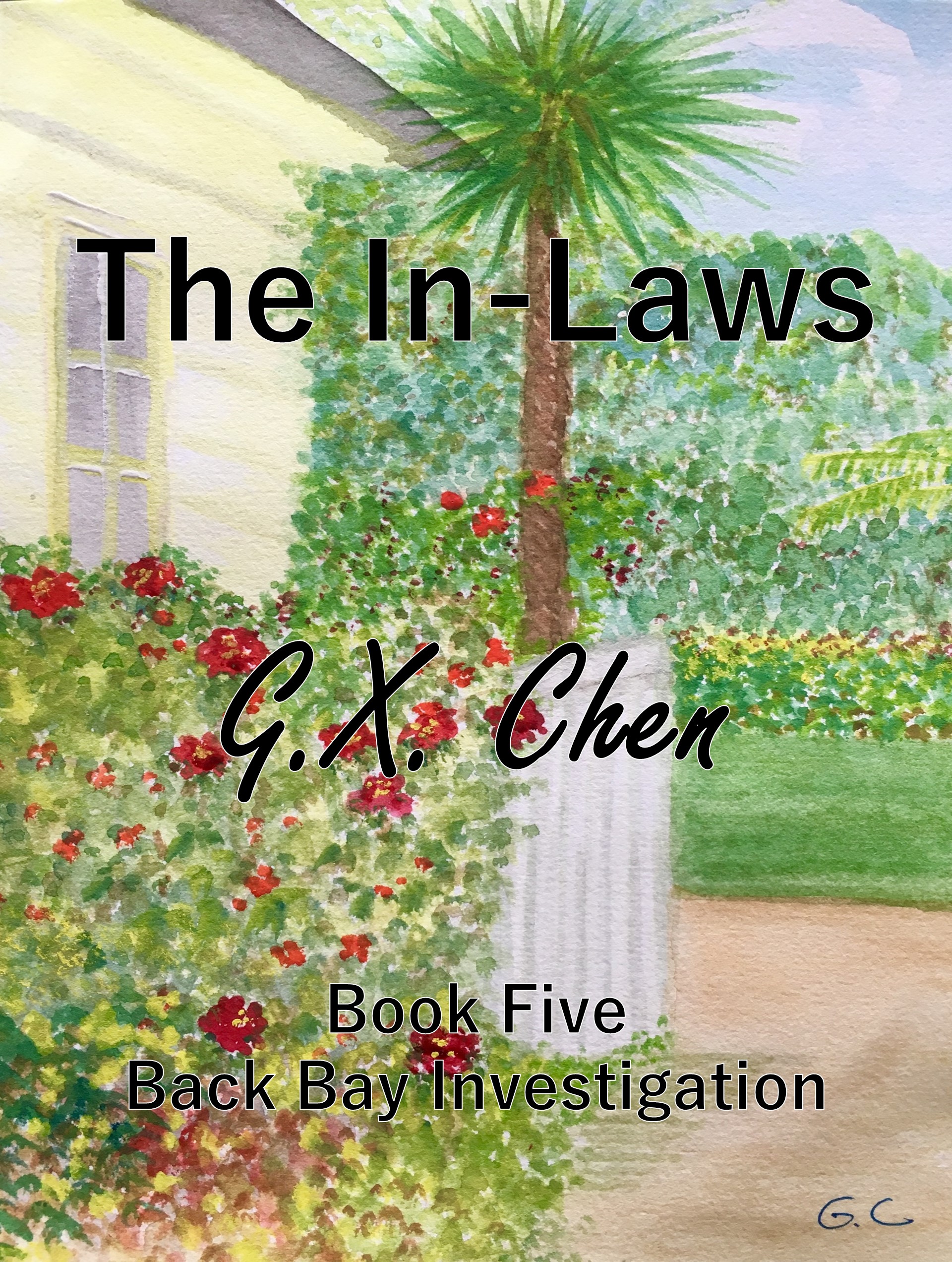
Several contributors are in search of something, which they may or may not ever find. In the prologue to G.X. Chen’s new novel The In-Laws, a wife and son lose track of time while mourning the sudden death of their husband and father in an auto accident. Poet John Sweet offers up a string of memories of losses: romances and lives that have passed away. In a piece from her upcoming poetry collection Perfection, translated into Serbian, English and Japanese, Tatjana Debeljacki ruminates on the loss of a deep romantic connection.
Ryan Flanagan stretches the humor in his vignettes to the point of absurdity, then offers up praise for childhood, when that sort of thinking would have been more natural and enjoyable. DS Maolalai’s speakers seem always to be thinking of elsewhere: the play someone’s girlfriend creates at work, the breakfasts they order away from home, the view they could enjoy if only they had more of a view out their window.
Mahbub returns with a set of pieces where the love the speakers seek is idealized, inspirational, and just out of reach. And Bhavani Rao speaks to the elegance of vintage housewares and antiques, reminiscing in a way about a lost past made more beautiful because it is distant.
We hope that these pieces will inspire you towards your own journeys and reveal to you the capability you have towards positive transformation.
Poetry from Jonathan Hine
I-80 Nevada
i was stretched
tight across the
wide open vistas
& high desert plains
but the feeling of
impending catastrophe
had passed
i had finally
lost my grip
everything
i knew about myself
was gone &
never coming back
Excerpt from G.X. Chen’s novel The In-Laws
Prologue
It was a dreary winter day in Boston. The gray sky was brewing up yet another storm that could cement the snow already on the sidewalks into banks of ice that wouldn’t disappear until late spring. A funeral home that hadn’t been renovated since the early fifties sat on the corner of a run-down street. It had a dark and damp interior, and the heat was anemically generated by a space heater. Shivering since she had walked into the room with her son, an eight-year-old wearing a pair of glasses that looked too big on his small and angular face, Emily Shi sat with her hands clasped tightly around her knees, trying to suppress the constant urge to scream and cry. She had been trying so hard and for so long that her fingers were stiffened into the likeness of the claws of a bird of prey.
Shy and timid, the boy sat close to his mother, glancing up at her constantly and anxiously. Emily was wearing a black jacket with hand-knotted buttons and a matching pair of black pants; her face was deathly pale and expressionless, as of a marble statue. He had tried to grab one of her hands but failed miserably because they were clasped as tight as iron hooks, so he had resigned himself to taking hold of her sleeve.
Staring at the closed casket in front of them with a pair of startled eyes, widened further by the confusion of a child who couldn’t get his mother’s attention, Peter Shi trembled. He had hoped to see his father, who hadn’t been home for the last several days, but with the coffin firmly closed, he didn’t know what had become of him. Was he inside? He knew his mother had brought along his father’s best outfit because she had thought there would be a public viewing.
It was a secondhand suit that Emily had bought from a thrift store in the neighborhood. Peter vividly remembered his father’s reaction when he first saw it, black with thin gray stripes.
“When will I have the occasion to wear a suit?” Rob Shi looked at his wife incredulously. He had been working as a chef at a Chinese restaurant since his family had migrated to the United States.
“Plenty,” Emily replied, counting on her fingers. “First of all, you’ll need it for the wedding of your friend’s son.” The wedding had been scheduled for the following month, and the Shi family had all been invited. “And then there’re Peter’s graduations.”
“Graduations! He’s only eight years old! Besides, I can’t wear a suit for the wedding because the banquet will be held at the restaurant where I work. Have you ever seen a chef in a suit while cooking?” Because he was the chef, the owner had given his friend a 20 percent discount.
“It doesn’t matter,” his wife said dismissively. “In a few years, Peter will graduate from primary school and then middle school, high school, and college. It’s the custom in this country that the father of the graduate has to wear a suit to attend the ceremony.” She looked down pleasurably at the ensemble that had been laid out in their bedroom. “It was only ten dollars, and the color looks great on you.”