Illusions Burned, Radiant Light Restored
Part 1 – Exiled into a Ruthless Land
Time without becoming
***
It won’t work.
You thought it would work, but it won’t.
Clutched jaw, vermin making nests
in your gut, melted silver pouring
over your extremities, hot-plate
your whole hand must rest upon.
And here, you are supposed to find peace,
but you can’t. You can’t even glance
at that inhospitable land, can’t even step
a toe into its puddle of spittle without sinking,
leaves you
like a mad crow cawing aimlessly here, there
across the sky.
Stones here, fish there, people moving,
going where they want to, and you, stuck, perpetually,
feet locked in the mire – misquotes buzzing,
barely a light across the moor.
You hoped it would work. You believed,
and in that belief, you touched happiness
for weeks, woke up thinking this hell
was wrapped and sealed, that your freedom
could be activated and somehow
a great merciful tide would come
and clear a path.
But now you know it won’t work.
Now you know who you are,
a broken umbrella that won’t work.
Fated to feel the impossible tension
of who you are and who you wish you could be.
The birds are somebodies. Each tiny sparrow,
worth embracing. You wish you held value
like the sparrow or even a cloud
that for a moment
gives relief from a relentless sun.
You wish you could carry this weight
a little longer. But both your arms are broken.
Your heart too.
***
A greater force or just
this dull aching horror of
no-truth, no-connection
just the pound pound plaster-cast-mould
of what could-be, used-to-be, never-really-was.
Make me a hole big enough to escape from,
to join the flight of burning gods, retreating like they did,
into myth-oblivion. Pull the seasons from my mind,
memories when I thought love would sustain,
maintain its potency in spite of age,
desolation and disappointment.
Every ideal I held sacred has crumbled,
bread crumbs now,
smaller than pebble stones scattered on patio steps,
never existing at all.
I am a placeholder substitute there to feed,
provide shelter but never home.
I am blind, unchallenged, beyond the limit for redemption.
I am fighting the sea and the sea does not panic,
lives within
its own self-directed rhythm.
The sea’s flesh is stronger than my marrow, than a war-cry,
than the binding-ties of loved ones lost and buried.
The sea will receive me, not because I am special,
but because that is what it does.
My fight is fire, but only mortal, and the sea
has my body, fills my pores and lungs,
takes me below.
***
This is the voice
that heralds and hardens,
sunk, elusive
far from any shore.
Colours, saturated with salt,
whose better business taken up
and bloated, dulled of any identity.
This is the rhythm,
once so exact and necessary,
fallen below, muffled, interrupted,
spliced into unrecognizable dead forms.
This is the time spent
answering a calling, a duty
of divine command, slack now
as a pierced jellyfish,
abstract enough to be ignored.
This is the voice
that burst forth from my fire,
moved with violence into the light,
showed wings, a detailed face,
survival’s thundering veins.
This is the voice
I thought would crack the sun a little,
crack the mind to let leak in
a delicious deepened dimension.
I risked a destiny but failed to germinate.
Now I take up my luggage and wander the streets
with that voice,
claiming revenge in aggressive madness,
(a quiet vapour only
when children pass by.)
***
Tid-bits, burnt toast, is that the substance
of intensity or is brave conviction
only recognized in another world
or in heaven?
But heaven will not have me,
no matter how hard I swing it – heaven stays
a meditation mirage, a glimpse taken in,
taking me down,
not worth a fraction of the effort
I put into vaulting for peace.
Failed as a sunrise over a prison cell in dungeon ground.
Failed as condolences to the bereaved, or a sandwich
made, placed in the hands of the dying.
I took a step and crushed a flower.
I covered myself with blankets and lost
the willpower to breathe.
Truck overloaded with debris
driving straight toward me.
I should leap onto safe ground,
but there are high cliffs on either side.
I should lie flat and hope the wheels go between,
not crush my ribs, my femur, my pinky toe.
How can I welcome the spring?
What should I do?
Over and over the cut hand
escaping the hold, briefly,
then back, barred and shackled
by fool’s gold.
Part 2 – Defeat Masked as Acceptance
Blossoms That Resist Their Bloom
***
Dashed against
the sidewalk curb,
opened up, cracked into
pieces. No sooner
the storm rains came and
washed me down the sewer drain
into pipes I’d rather not go.
But who lives here, in the invalid waters?
Creatures thriving on the potent scent and grim.
Creatures with their own rapport, societies, and even
love.
I will be the necklace you wear in the dim corner.
You keep saying one step one step, and
I will keep afloat in this sewage substance,
to not settle among the other mutations,
subjections – the great bowing down.
But remember, once I was a ruler,
doling out punishments and gifts upon
my erratic whims.
Once I cramped my mind with violence,
brooded on the sliced-throat of revenge.
That is why I am here,
backside floating in watered-down excrement,
barred between metal pipe walls.
If mercy is available, I will take it.
If not, like you said, one step, one step.
Cherry dreams are Cherry dreams.
Courage when cornered
is more.
***
Biting the marrow
of obscurity, planting my wisdom
in plastic pots – passages I conquered,
steps I took, cut through the dreamy level
into the ruthless underbelly formations
tainted, untainted complexities,
but only
trite verbiage gets attention and eternity is
sucked into a keyhole darkness.
Lightweight riders riding,
applauding the trickle made from accidental saliva,
giving credence to feel-good epigrams, lacking in literature
and monumental sway.
God said paint, so I painted. God said break, so
I broke – the canvas, my heart and sanity.
Starving in the shadowland, frozen, cast out
in the middle of a dead lake.
Fire is a world of two masters. In its light
there is a reunion of acts, a sealed equal pact
between purification and destruction.
My roots are strong, no doubt, I have grown
high and thick-trunked, gathering greenery, but
in an empty field, empty of roads and wildlife,
empty of a steady stream.
***
The dark part
The lost part
the found-again not-wanted part
has arrived like a package at my door.
Purgatory leaning to pick it up, shake it up
and take scissors to the outline.
Inside is a mask made of fish-skin
containing a nameless vibration,
an unshifting necessity to put on, wear
and fit in.
I want to dispose of it, crush it then
rip it into tiny pieces, drop it down a sewer grate
far far from my home – maybe even take a bus
to another city and leave it there,
deep underground where no trace of it remans.
The tormenting part
The hard-concrete-wet-prison-floor part
The chained-to-the-wall part
is again, at my door.
It is noon hour and I still haven’t
put it on, as its stench dulls my appetite,
is really too much to bear, but I must put it on.
When I know the exit sign was just a mirage
how will I hold up now?
Silent in its deathless domain?
Silent in your unending anguish?
When hope is gone but faith remains,
in this place, miracles dare to bloom.
The wrong part
is the right part
because it is playing a part
I will wear its acid peel, place its flesh
over my own face, wear the mask
hurting as I do, then
I will hold out my hands,
expecting, to heaven.
Part 3 – The Wound is the Answer
The Flow of Matter
***
Take the light,
Lose the light,
racing across a panicked terrain.
Fear is a sloping hill mudslide.
You pierced the earth with your stick,
left it there, left running, thinking
your speed would catch on fire, seed
growth on dead ground, meaning more
than just thoughts impaled in your mind.
The stick stayed. It is still there, far from
where your limping dreams have finally arrested.
Release the burden of trying.
You have lost. This stone wall.
This patch of yellowed grass and the brutal
whirlwind all around – this is yours.
Make something of it.
Take the time, because you have that too.
Dissolve your belief of a mission
up into the rays of the giving sun.
There is no light different than the darkness.
Feel it flashing, flashing far away, rising,
broad shoulders, furrowed brow
yell it out one last time
then surrender.
***
Standing in the dark bend
of a wanderer’s insight where
neither solitude nor the life beneath
the great seas will do.
Which dead body do you keep? Salting
wounds for the sake of enlightenment,
framed with things you cannot glory in
even for a time.
It is nature and it is
a passing motion.
You will mourn its starving carcass
for you know nowhere else to rest
your heart and eyes.
Stand by the fires of liberation,
join inspiration with accomplishment.
The word is NO and it is mighty and reasonable.
None of this is a problem, even the dread
that spreads like maggots above your abdomen
in your leisure time, in your working-in-chains time,
all the time, surprising you with its intensity
and burrowing, burrowing.
Hold your lips tight, buckle up, straight away be
God’s soldier, holding acceptance as
your sword.
You are not impotent, You are just
one reality. Think slowly. Your life is not yours
to keep. Feeling abandoned or belonging is
just a stirring up agitation – water, moon, desert wind.
Nothing is missing.
Where you are broken,
the light steps, is captured and glows
the most colourful where it is fractured.
It is your fingerprint in holy bloom.
***
It might be a ritual dance, a memory of walls
and the dew collecting on steel window bars,
but it is also a fossil you have gilded to your soul,
a door keeping you in this room, incarcerated,
white-knuckled and bawling.
You think you deserve it, that many lifetimes ago,
before the monastery, you did deeds
you would now wither from,
your now vegetarian soul, conscious
when you see slabs of cut-up carcasses
in the grocery store, conscious
of the torture and fear endured.
But you deserve only the wind your prayers
are carried on, only the smiles of your grown-up children
and your husband, happy beside you,
his sail full mast.
That place where the stagnant prison waters stank
and your feet developed unhealable sores,
is over, not even a rope nor an army
could carry you across
into a sunlit field.
Part of you is still there,
living out the punishment daily, toiling
in angry futility, tied to a tombstone with vultures
gathered around.
Wax yourself unhooked. The animals love you:
The mother bird feeds her young
right above your head, knowing
you are safe, joined to the psychic link.
Part 4 – Between Notes, An Interval of Peace
Where The Rays of the Sun Are Blocked
They Rest, Then Warm
***
In the summer your wore
your loose clothes.
In the winter, your layered yourself
in velvet.
It is spring and the ships
are setting out under a spring sky.
Take the time to wash your stone wall,
chip out a window, keep chipping and soon
it will be large enough for you to slip through.
The dark grammar is deepening, but so
you have made a choice to break neck-to-neck
with the soothsayers of doom, then to surpass them,
turn down an unleveled path and make true headway.
The rain will come, the stormy thunder
and the wind, but you have earned yourself
the skill of withstanding.
The parameters are bleeding through and your house
for now is happy.
Take a second to be grateful:
Immortality is only that –
a moment in full recognition
of the harmony innate in eternity
and the conscious love that beads
such perfection.
In the fall, you put away the bird feeders.
It is spring and still the birds are singing.
They survived and their singing
brings you joy.
***
Changing gears in the long-held-note
of the lion’s roar,
summoning
a way forward that does not jar
against your sacred values
or block the energy up or down, in
a stagnant pool of algae larvae-laid waters.
Take a hand and listen – there is still glory
to be found, a tent to build, a tree to climb.
Take what is untouched and touch it, craft it
like spores on the moon,
or team-spirit high-five it
in the bleachers.
Right now, what is not narrow is too wide
and barren, a place where even a young horse
would get tired racing across.
You were supposed to have passed this place by now,
or so you dreamed. You have only rough-cuts on your screen,
shapes like phantoms, hardly visible.
Inside, you are always tired.
Are you dying like you did in another lifetime
from a blood disease, alone in a room?
Or are you going
somewhere else this time,
coming to your senses, full gear,
a master of your circumstance, finally, ablaze?
***
The order of things was simplified,
silence ensued and questions left you
folded under the Buddha-wing.
Times in the shower when you heard and learned
the worries of the day were enough,
that there never were graphics or translations,
but only the raw-hewed truth
that flamed forth its music and love
without peculiarity, pure, in charge of
everything living, there
you felt yourself a queen in the lap pool
doing dives, and finding your coronation party
full of only wanted guests.
In this calm, you lost an onslaught of examples,
but held playtime as fair-time, power-of-the-spirit-time
occupying the four corners of the shower
and all the dimensions too.
Windows became houses became homes, places
of enactment, concentrated love and many broken
unfixable edges where the greatest fault
was always indifference as default to giving up.
The order of things was reduced
to a straight and infinite line.
Excess was swept away
and a breezy sobering became elemental,
austerity, soft as kindness.
***
Speaking, overlapping
a fighter’s field, then a gate to
squeeze through, mark your territory
on the other side.
A summer on the other side
where you could will all rounds, drop
your shield and summon in the wildlife.
Mornings there to ruminate,
cultivate your calling to reach
an undiscovered octave,
craving the centre of the storm
and knowing it
like your morning shower.
Friends are far or going into surgery wards
to hunt down a destiny.
Family is fractured, engraving
your failures centre-wall.
You see a driver shouting
at a mellow pedestrian
and a bronze statue tumbling over
in a flood.
You run to the gate and it is barred tight, not a crack
to slip a finger through. Above, it is different.
Do not miss the chance,
Slaughter your past
and even your accent.
Leap up into the tornado wind and spin-sail
out of your mortal sleep, bone-picked, out in the open,
looking at, loving, the first moon ever.
Part 5 – There Will Be Movement
Commitment In The Unending Desert
***
In case you don’t turn
but monotony pursues you
like a patient wild cat or
your fondest dream realized
has left you tight with dread – then be
the Buddha-master in the folded
seams, be the highrise apartment
looking down
and eat bread, sip your tea.
In case it will always be a matter of
just-getting-through, and stress and guilt
flank either side of your relief, linking arms,
then remember Jesus and his words
about the wind, smile at the expectant animals, find love
in the broken and bent, remember angels exist and God is
neither cunning nor withholding, but always available.
Be available too, open as a crumbled dam, open as
the first smells of spring.
Vivid days waiting to watch the eclipse.
The hawk has circled, telling you it is coming,
but in case it doesn’t, salvation is within, tied
to your own commitment, tied to the upstairs rooms
each filled with a sleeping loved one, each
closest to your heart.
***
The light came like light does
illuminating the clawing hand,
stretching taut the slack conviction.
It brought to the surface the groaning ache
of anxiety, making fingertips quiver and
their pulse beat in unnatural speed.
The light exposed the tender spot,
the bandaged maul,
merciless in its thorough claim.
After that, the body was done, the full moon waned
and ideals carried the weight of serious difficulties,
no longer racing full charge.
You walked with such exposure,
and learned how to surrender, dissolve
your fears into the light.
Many times it was that way,
necessary to make the decision
to release your load
otherwise you would sink –
until you stood bare beneath the sky,
resources and water tipped over the side –
just you now and that light,
not even time traded spaces with it,
not death or the grief of memories.
The light came and did what light does.
Can you hear its vibrational hum,
burning all the flash cards, all the pyramid-glory?
Patterns that were once grafted to your biology,
patterns that defined you, patterns that after the light
are unearthed, have nowhere to belong.
***
Dreamer, don’t forget to dream.
or forget your gleaming split fire
masquerading as normalcy
lost in everyday bravery, getting things done
in range of the pawn shop and the dentist, shopping
for fruit, all the while a thousand yards above
the streetwalk curb, seeing shadows of celestial
beings overlap on the pavement,
dense in their other-dimensional realm.
You vault off their cloud, into a place without clouds,
your mind a keeper of their language,
draped in dread one moment, the next, exploding
in effervescent kaleidoscope floral bands
feeling anxiety like thunder, touching rocks
like touching flesh
charged by the child skipping, the tied-up dog.
The estates are weeping wine, and the ships are loaded
with fat-stores racing past starving islands.
You don’t know how to live.
You don’t know one good day.
Is it a wound or is it a vision,
roughed-in displays of immortality
blooming, longing
for a lasting harvest?
***
Sturdy spirit
in pure afterglow,
voyage with me
with your wealth and force,
past the Earth’s mantel into
the inner core.
Never reckless but blinded
by refined instincts unified.
Activity without labour.
Joy with no reflection.
In the thick undergrowth
slide through the parameter,
making yourself a master
who faces everything as though
it was the first time.
Take the ring and turn:
Commitment in eternal flow.
Love at last on salty lips,
heralding in
a devouring release.
Smells of spring
Smells of water
No gear, no ribbons
of glory
for
this is glory,
and whatever else is
pales beside this bouquet of our origins,
sweet quaking, last-call fulfillment.
***
Washed clean,
washed your garments
under your garments
triumphant with truth.
You lifted your mask, opened your mouth
and let your tongue be exposed.
Pent-up, brewing a seizure
under your skin.
The graveyard has re-absorbed its corpses.
The paintings on the walls
are breathing again.
Boat-sailing at sunrise,
entranced by the possibilities imagination allows.
O breath – colourful anomalies!
This is your place, fortified by authenticity.
The grass is finally growing,
the fires are wooed and contained.
You love this joy, your house without a lock-chain.
You love your freedom and your secrets.
You spread out, your roots have joined,
entwined, singular.
***
Landscapes stirred, hot coal,
hotter in the blue flame.
Summer walks terrible into your yard,
but the wind is in the lead and you will ask for
a multitude of blessings, believing.
You will die in the change and shape yourself
a new achievement. You will be diligent,
canceling old thoughts, creating new thoughts
that snuff out the physical dread of doom that infiltrate
like poison a flower’s soft pores.
You will go to where love goes, following,
healed of all affliction, even death, by faith,
no longer a pawn of desperately doing
to hold yourself a little closer to God.
When you see, you are still,
disrobed of your past,
anchored in the burn of being.
When you feel, you feel
his hand reaching out, lifting you out
when your faith has faltered,
you feel
his affectionate mercy, love, receiving, covering your sins
as the only absolution, and then you feel his sorrow,
are in awe of his obedience, in spite of such sorrow.
When you know, you know
miracles are right as home is,
are the result of stepping into the current, aligned.
When you know, you know
Jesus is radical, never easy –
demands alertness and surrender,
devotion and doing combined,
offers one slot, one string, thin but unbreakable –
rhythm blessed, rhythm revolutionized.
***
Into the nonsense depths
of plywood and pull
where fairness is the fallacy seen
as it always was and courage builds
like a patio – one stone at a time.
If you mount the depths and let yourself
go, it will be love you fall into and also
heartache from this gutsy deed. You will find
whiplash, and also warmth
but mostly
you will be living, not driving, but whirled away
by the wind, free of dust and accumulation
of monotonous gestures. You will go
and give the best of yourself,
another light lit to rage in the corner of your room,
strong in promise but still unsure.
leap
into the place your worldly wisdom tells you
not to go, but you know if you don’t leap
you might as well grow up,
assent to the rotting ways and coveted fears around you,
you might as well start picking your plot and throw out
the calendar for all your days forward will be the same
one after another.
You know the centre is wide, let it widen even more.
See the centre point as mercy.
There is fear in this new possibility of joy
There are many ‘what ifs?”
Trade your coat for naked skin.
Your gift-risk is finally here.
Hold it, caress it, honour it, feed it everything
it needs, and leap.
Part 6 – Only The Wind
Only The Way
***
Caked in the crusted past,
spoonfed a dilemma you cannot
escape from and is bound to take you down
while clawing for freedom.
But there is glory
in the mountain’s ridge, glory
in the sewer tunnels and in the medicine you take
to kill the gnawing pain – head stretched into a whiff
of rust-dust, bolted in place, but cracking.
This is your name, your life today, not in an imagined
tomorrow. Feed the small creatures if you can.
If you cannot, remember a time when you did, and know
that moment is still going on, like all moments,
sphere-held, mighty and forever –
so be kind
and be ready to change at full strength, for the sky
is churning, you cannot see it, but every moment
is giving you a new pattern to play with.
Hold your breath, keep holding, solid in this treachery,
revolt against your own perspective,
break your debts and all your days ahead
hard against an open window
***
Bind the ghost
to the earth, touch
the covers and pull
out a song, a whisper
of forgiveness. Anchored
in sensual currents,
holding hands, thighs
and perfect movement.
Love, this is air, enough
to get you through
the skeleton forests of yesterday
and the milestone thicket thorns of
perceived tomorrows.
Still in the joy, fishing for coins, finding
coins, clean and glittering, pulled from
the bottom.
I love my love with the same purity
of our first gaze. I love my love, shedding our shadows,
merged in what is ours alone to know and keep.
We thought we were broken, but we are not.
Our fires have not wilted, but
have become arrows
– shot – one after another
beating on the river’s surface, leaving a mark,
then sinking, traceless,
swallowed into the flow.
***
You held me in the fog,
fearful I would find the fringe
and crack. I took up a broom.
You set down the broom and told me
to explore the pattern of dirt, find meaning
in its intricate vineyard, be a woman
of observation, great endurance and then of joy.
You warned me not to plunge into the reflection,
(bitterness brighter than the dubious sun)
but to hold conference with what was lacking,
sit in the open space, tie my shoes, brush my hair,
take stock of the vacancy and see
if by being still it gets smaller,
starts imploding, becomes a village of amoebas
that eventually turns into plants, then ants
and starlings, drinking at the bin.
You held me in the midnight iris
when my hope had hardened.
You told me don’t even try to comfort the pain,
because by doing so, you only make it stronger,
locking it inseparable to your vitality.
I took the stairs, following.
I took a leap and honoured its design.
And you, you honoured that deed
and were pleased.
Part 7 – Arms Once Folded, Then Slack, Now Open
Freedom By The Fires
***
By the fires where you saw
the hunters’ faces exposed,
the groaning darkness growing, encompassing
any trace of tender love, growing like
a foal into a stallion – strong, unstoppable,
full of wild fury.
The hunters promised to devour
every Elder tree, every animal that took shelter
in their green folds, and even the multi-colored insects,
keepers of the balance.
Then Jesus walked the Earth, offered the living waters
from a well, sprang from history, separated from
tradition, mores and the lock-step of rigid ritual.
Tearing at the sky, he folded its skin back to reveal
a new level of heaven unseen before.
Once this happened,
the hunters still ruled but now
there a way was to jump over their skilled spears,
a narrow way to redemption with no training wheels,
no handle bars.
The courage of complete surrender.
The hunters remain in the streetcars, in corner stores,
at the family table. But Jesus remains too,
a gift of God’s greatest mercy
– the master scythe and the purifying balm –
wounds are lifted, all around the hunters,
children are dancing, lovers and old people too –
you see them,
followers of the wind,
nomad gatherers, receivers
of the charge.
© Allison Grayhurst 2019
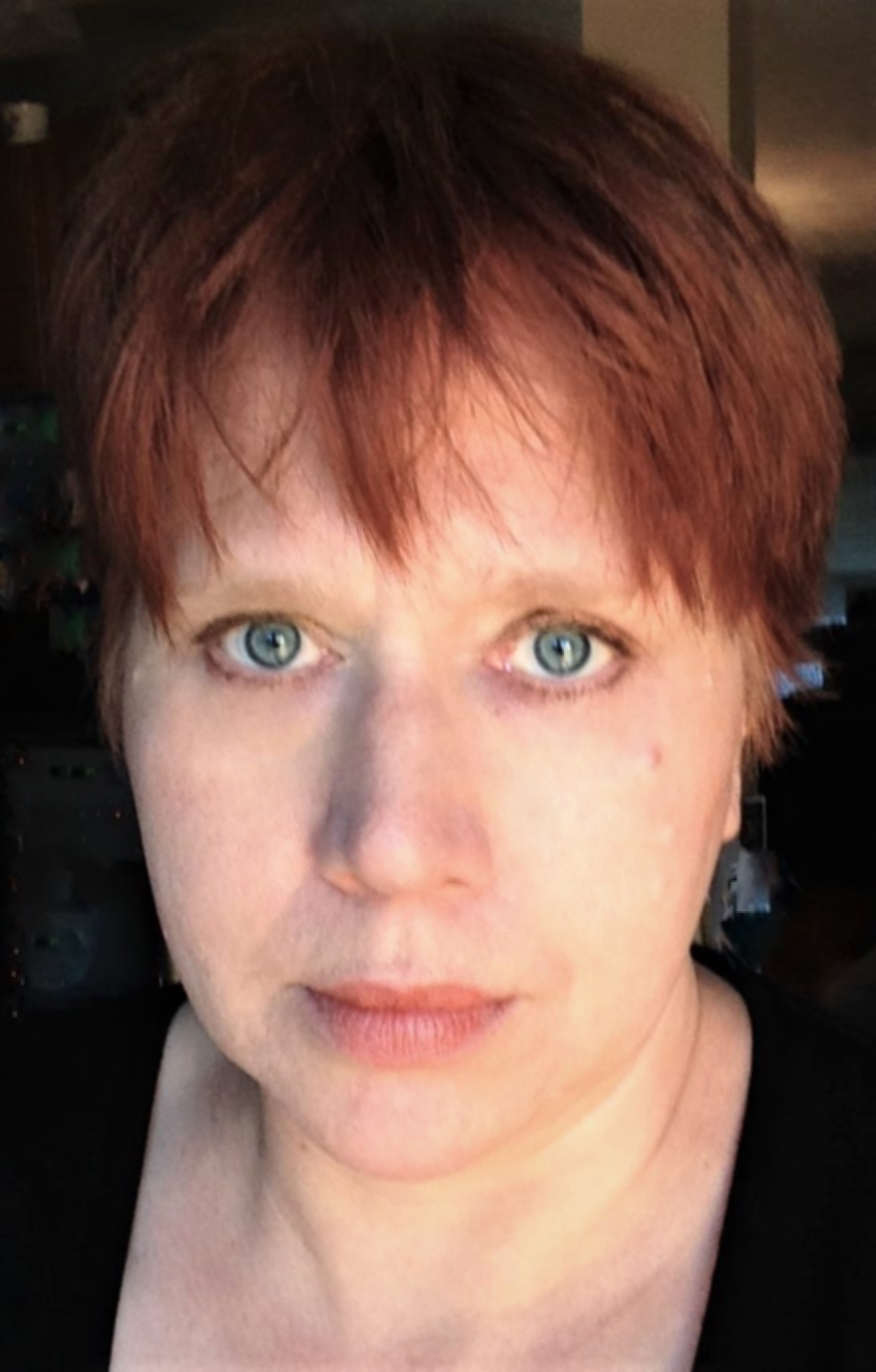
Allison Grayhurst is a member of the League of Canadian Poets. Five times nominated for “Best of the Net”, 2015/2017/2018, she has over 1250 poems published in over 485 international journals. She has 21 published books of poetry, six collections and six chapbooks. She lives in Toronto with her family. She also sculpts, working with clay; www.allisongrayhurst.com