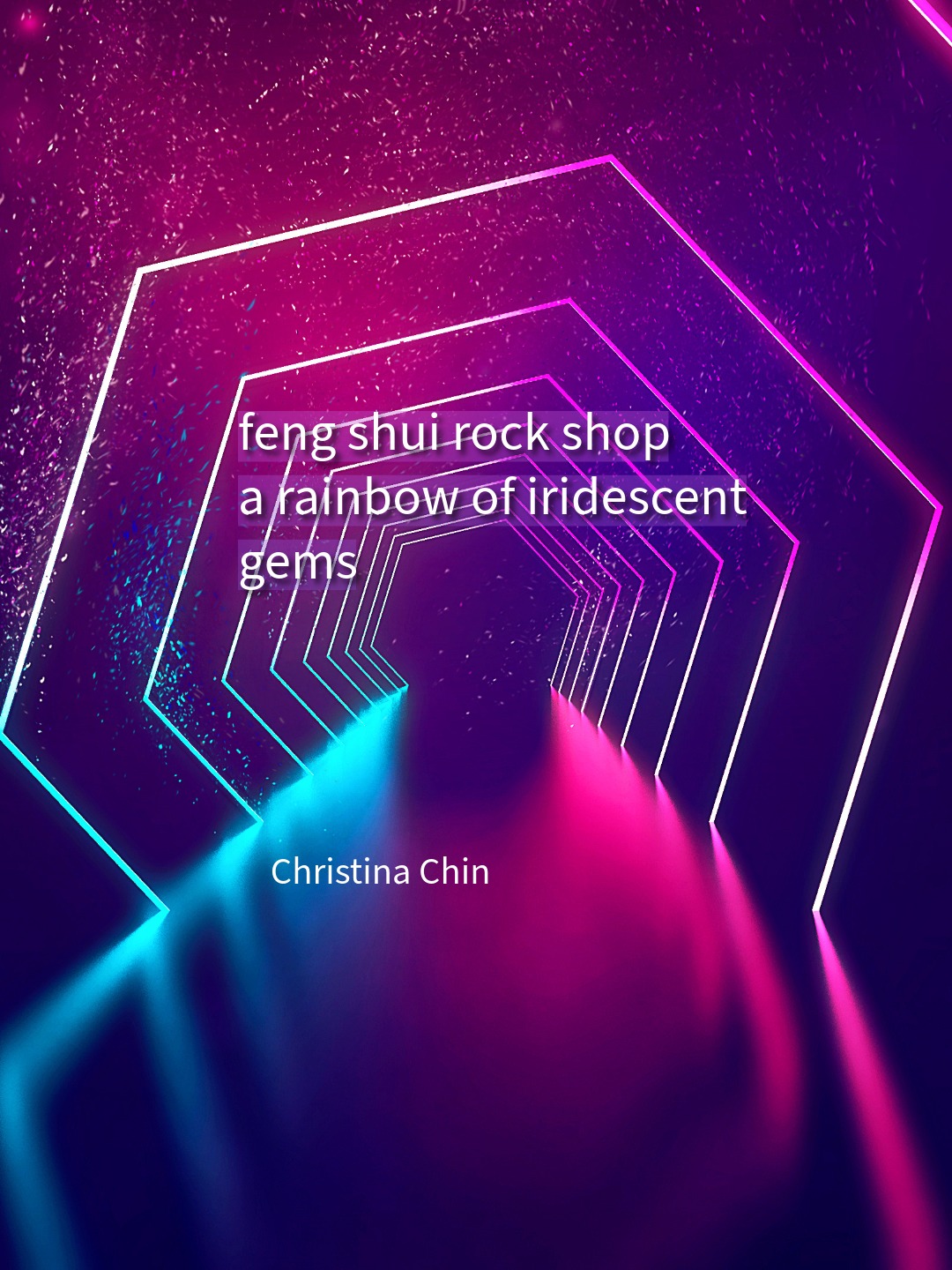
Haiga from Christina Chin

The Voice Unseen
A heart full of passion,
And eyes full of dreams.
Her voice so warm, so sweet,
Flowed gently like a stream.
She sang her best,
No soul could stand against.
They heard a voice,
Yet judged her face.
“Talent without beauty,
Has no place to begin.
Just look at every star,
They sing, and beauty lets them in.”
She left her hope,
With tears unseen.
Talent lost to beauty,
Like countless broken dreams.
……………………..
Poem by: Md. Naeem Aziz
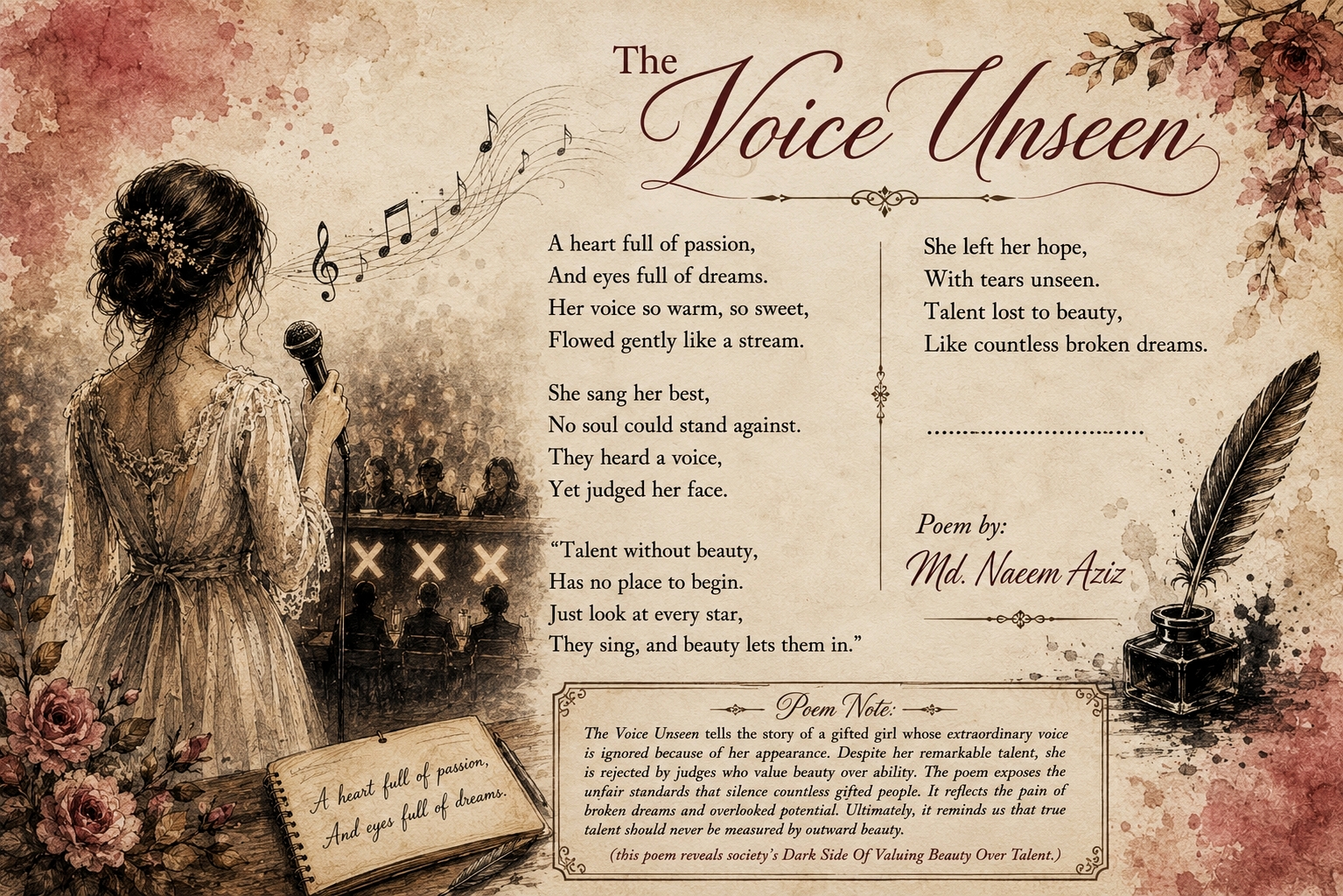
Poem Note: The Voice Unseen tells the story of a gifted girl whose extraordinary voice is ignored because of her appearance. Despite her remarkable talent, she is rejected by judges who value beauty over ability. The poem exposes the unfair standards that silence countless gifted people. It reflects the pain of broken dreams and overlooked potential. Ultimately, it reminds us that true talent should never be measured by outward beauty.
(This poem reveals society’s Dark Side Of Valuing Beauty Over Talent.)
Poet Bio: Md. Naeem Aziz is a Bangladeshi poet, author, engineer, and photographer, born on 10 December 1998. He is best known for his poetry and photography. His literary works have gained international recognition, and one of his poems has been included in an English literature textbook in Italy. Through his writing, he explores themes of humanity, society, history, and emotion. (nknaeem14@gmail.com)
Location: Dhaka, Bangladesh
In a lonely city searching for Walt Whitman and Chris Abani
(for Virgil)
There are things
I don’t tell anyone. I blamed the sunlight
Secrets I keep to myself
I was young once
Ezra Pound’s Alba tell the truth. I go down to the sea
There are things to forget
I found a kind, my kind
A temple that I could worship, destination paradise
We’re somewhere on a beach
Under sunlight I am my true self
I am an African rising in the winter light
Musing
Please don’t forget me
My eyes, the hot potato with butter on the plate with flowers
My lips, the lull, my hands, these warriors
While you love another, the other woman
I am recovering, hungry for you
My sobriety gives me a warm comfort
It is cold
The clouds are made of plasma television
Don’t let me drink a sip of alcohol
Dear God,
The man with the knife in his beak
is gone.
Striving into soft and gentle
waiting hand. The man is given a script
I videotape the dendrite
It storms the experience
My father sits in the physicist’s chair
The tree manages the peach
My rival, my guru
I seek help from the church. This poem’s
matters have a deadline
I go swimming
My limbs have a life of their own
These branches
I have flowers for Sindiwe Magona
I read the poems of Kobus Moolman during this autumn
I sit at the seat of their feet
These fine intellectual eagles
Their country made of meat, honey and milk
My prayers are compulsory
I am guided to the philosophy of
the straight path. No utopian illusion is this.
I am becoming mentally strong
Look at this blueprint
This blank page. The journey within to my mind
I find order in solitude.
In Cambodia the anchor falls
off the shore, to the handsome wind that blows
through every creek, nook and cranny at the docks
I have reached my goal. The destination
that beckoned.
The world is a lonely place
filled with Van Gogh’s sunflowers.
I think of the man’s dirty underwear that his wife washes.
Oh how his mother loves him and his children.
My love has gone to war.
He enjoys his work.
Killing men. Killing the cannibals. The humanities motivate me
to embrace this planet and the rays of the sun.
I stare at his shotgun. I open the book of poems by
Dennis Brutus and read.
I find myself
on the page. Between the blue lines I find lies there
frozen to the touch. I keep finding glaciers and
equality. The personal freedom of Milan Kundera
there in the narrative’s river
All I have in front of me is this.
Is this diary of an insomniac. When their daughter
came into this world I immediately became her teacher.
To the man,
(I want back in my life)
It is never going to happen
He will not return to me
Years will pass and I will grow old
He will still not return
So I think that he is dead to me
But not to another woman
He buys flowers for another, he kisses another, has children with another,
makes love with another
She has a spacious house to raise their children in, their cherubs
She drives a very smart car
She does not care for feminism or equality of the sexes, only birthday cakes
She enjoys his hand in the small of her back
This ex-soldier who was stationed in the Congo, my voice studies him
This ex-military man
He was in the air force
One day I won’t want him back in my life
One day I will say, ”I forget you,” and starve my body of him,
of his memory, the memory of his touch
I want my life back
But a woman who loses in love has painful thoughts
Tonight I am inside this poem and this poem
gives me life.
In a lonely city was the winner of the 2023 Sol Plaatje European Union Poetry Award Winning Poem.
Dear Starry Night, The Ukraine-Russia War Is The Interview Of The Week
Am writing
Green Jalapeños In War during an invasion
Am reading
Emily Dickinson in war
Charles Bukowski in war
This war life has broken me
Challenged me in war
Purple beetroot in war
Green spinach in war
Orange carrot juice in war
Bittersweet naartjie on my tongue in war
The divine matters in war
secrets of poetry matter in war
We don’t have forever in war
And that’s the truth
Blood turns into pomegranate seed
Truth finds exits out
We pour the salt into the wound
Bullets are like razors
Driven into the ground like a fever
The clock works like magic in war
The lonely dragon
and the dogs have skinny legs
I turn books during this war
into old friends
I call it “natural progression”
I sustain these books
as night turns into war
and day turns into hell
like relationships in my inner circle
Inside the mind of this poet
is a classical mind
a third World War
Tendai Mwanaka and Montgomery Clift
are men on a mission
taking the practical approach during war
They embrace art
during combat maneuvers
If the paradigm remains in control
and does not shift
In this blue reality
all the chairs are empty
Everyone is gone
Only I’m a captive locked
in this lonely place
I pray for serendipity, a son
I long for a song
Happiness and its pursuit
I meditate. I give. I hope
It will always be this way
because of the choices I made
That does not escape me
Now after all this time
Hours and and the silence
Maybe it’s supposed to be guiding me
I keep busy and distract myself in war
Practice good. Do good. I tell myself
Read
Navigate
Soon this war will be over
Or the illusion of it
Soon
We’ll still have the knowledge
of the wildflowers
Hunger mirrors sky
lonely in a minor key
War has a thin laugh
The woman in that mirror
her head is filled with starlight
Refraction takes place
Light bends
The Ukrainian woman
ties her hair back
with a black ribbon
The trees are unhappy
They have lost all their joy
The sea is green
The sun is lonely
An echo falls to the ground
A child is crying
An old woman left behind in war
is strong
Like magic she comes to life
in front of the journalist’s camera
Win or quit river phoenix
War is a novella
Suffering is a galaxy
Everyone has a fractured identity
We’re living inside the suicide
of a glacier
ascendance
mysticism
young constellations
We’re in interplanetary alignment
The paper is brittle
The sun is brittle
Cold and lifeless is the night
Inert is a better word
I blame the sunlight
The wasp found sadness there
This second poem was shortlisted for the Writing Ukraine Prize in early 2023.
Thirst
Yehuda Amichai
Marina Tsvetaeva
Nadine Gordimer
Han Kang
Aleksandr Solzhenitsyn
Remember these names
Nadia Davids
Mongane Serote
Khaled Juma
Refaat Alareer
Although there are too many to mention
please, please I beg you
to remember them
If you have the time
Write these names down
Study what they have to say
They are writing for the future
Thirst appeared in a Canadian anthology, Unsilenced Poems for Palestine, and in the poetry collection Songs For Palestine: Struggle Poems).
Where I live
When I went fishing, the sea seemed small and monotonous to me,
and I quickly grew tired of the monotony of the fish and seaweed I caught.
Sometimes the sea seemed large to me: during a storm,
when everything around me merged into one –
the sea, the rain, the sky, and the shore.
My boat sank into this infinity mixed with the abyss.
Now I don’t have a boat.
I’m an old man, but no one will write a book about me,
No one will know about my sea stories and adventures.
Because I’m lying: nothing ever happened at this damned end of the world.
The biblical Leviathan or the mythical cachalot never swam to me:
Only loneliness swallowed me in its mouth.
And the waves…
No: I have nothing to say even about the waves.
And my shore…
Yes: my shore is divided into two.
The first reflection of my shore is loneliness.
The second reflection is solitude.
I don’t even remember the moment
When the surf washed away my name.
I don’t even remember the moment
when the surf washed away my bones.
I am without myself: without name, without shores.
Perhaps I feel calm
And I no longer need my boat – my boat is like a fifth wooden paw for a monkey.
How much wood have we wasted on our planet,
How many fish have we caught in vain,
and how many times have we died – also in vain.
Someone still believes that their shore
is a noisy beach full of visitors and expensive apartments.
But all shores are the same: all shores groan during the monsoon season –
It is the first cry of a newborn and the last breath of the dying.
Tomorrow the sun will rise and the sea will become the sea again,
The sea will become itself,
The sea will become a community –
The community we never became.
House
The little house lived under a huge sky
The crying sunbeams imprinted themselves on the glass
The glass imprinted itself in the silence of the sun
The little house died under a huge sky
Last Day Of School
“You will top as always, isn’t it,” said my classmates, as it was the last day of school today, the last exam of English Language was over.
I gave them a faint smile, of course how else could I have reacted, and quickly slipped away, as I always avoided many of them. There were two close friends, and two or three more in forty with whom I ever talked. They were gone, so there was no point in staying here.
Once I was out of the school gate, I was confused where to go to, I wasn’t going home as I know I would be going nuts there because of the boredom. After three minutes of thinking, I headed to the bazaar, my usual spot if I can’t figure out where to kill time. I had anyway informed mother that I will have lunch somewhere outside, and who will say no to a son who except coming and going to school steps out of the house once or twice a month?
I ritually played a little with the two, pure white kitties who were always found outside my school. They were kids of the strangely two black cats who were always found sleeping in the shade of the big banyan tree opposite our school, I had seen them becoming parents from kittens and I swear I cried the day these two kittens were born, whoever may be the father. I sometimes salute the father of those kittens, that black cat didn’t throw up any drama. One film on my this brother’s life, the husbands of this entire nation will learn what it means to love.
I walked away further, took a left turn and saw a small stall of an old aunty selling lemonade. It was May’s usual humid heat, Bombay being Bombay.
“Aunty, one glass,” I said. She smiled; she knew this order from me would be the only thing she would hear from me the entire year. She took a glass, and quickly made me a fresh lemonade, with just the perfect amount of lemon juice, sugar and ice. It was simply refreshing.
I then headed straight ahead, crossed a road and there it was, the bazaar. It was a huge line of one storey-ed buildings, all the same colour and the same structure. The ground floor had toy shops, stationery stores, shops selling utensils, retail shops and fast food selling shops with huge crowds in front of them. The first floor had tailors stitching shirts and pants from cloth, local ladies boutiques and tailors, barbers, and two jewellery shops. Though the rents of the shops here were the cheapest in the city, the jewellery shops here attracted waves of rich and elite people, as they had some of the most trending designs of gold earrings and gave you the largest sum of money in the city if you sold gold here. The shops on the first floor had air conditioners, and only the shops requiring it opened on the first floor. There was a medium broad staircase in between two of these buildings for you to go up. When you walked along these buildings, some hundred meters away, on the opposite side of the road were numerous vegetable and fruit carts, selling cheap but fresh fruits. These stalls sold the cheapest vegetables and fruits after wholesale rates, hence the old people who lived two kilometres or under nearby walked here to buy cheap fruits and vegetables, and even got the compulsory walk the doctors treating their diabetes prescribed them to.
I went up to Suraj ji’s shop that sold the best vada pavs in the city. Ever since his son threw him out, he and his wife learned how to make authentic, Maharashtrian vada pavs. They settled here, in Bombay, and started their very own business by selling all the jewellery they wore. Now, they were fed up with counting the money that rained into their shop, as they were the most famous entrepreneurs of the city. Be it the locals or the foreign visitors, no one ever dared not to eat their delicacy.
“Beta,” shouted Suraj ji as he spotted me. I touched his feet, and he blessed me.
“Why have you come after such a long time, keep coming and see us, you are the only sunshine our old eyes ever see,” her wife exclaimed as she assembled for me a vada pav : she sliced open the pav into two flaps; applied the spicy green chutney of crushed and ground coriander, mint and green chillies; added the dry and spicy powder of red chillies and garlic, a tiny bit of the sweet jaggery and tamarind chutney, and put a big pav of spicy potato filling coated with chickpea flour and deep-fried, in between the two flaps of the bread she had just cut open. She made me two, and I sat there eating them, the only outside food I ever love. All thanks to the love in aunty’s hands that assemble them. I paid them the money after I finished feasting, and they waved back with big smiles as I went away.
I headed to a tiny supermarket next, and bought a chocolate bar for myself. I sat under the big banyan tree at the end of the line of vegetable stalls, and just before the fruit carts. Just as I was about to open the bar, I saw three beggar boys, and one tiny and dirty naked toddler who had just learned walking trying to chase them, falling and then getting back up again and again. They quickly peeped inside the big dustbin on opposite side of this small road which was hardly ever emptied, scanning to find anything new. A boy quickly picked up a wrapper of a big chocolate bar from the very bottom, it still had some chocolate on it. The other boys started licking the stale chocolate on the wrapper, they started dancing yelling “Chocolate…”. But soon this dance turned into bloodshed as one boy snatched it and wouldn’t share. Soon, there was pulling of hair, dragging each other, kicking each other, biting and scratching. I thought it would be thoughtful to leave my chocolate where I was under the tree, and I left. After walking a few yards away, I looked back to see another fight this time over who gets the biggest chunk. I checked my watch, and I thought I must leave now.
All the way home, I observed till I reached home the sky turning white to slight dull blue and then slightly orange, as home was a bit long walk from the bazaar here.
On the way home, I once again passed by my school. This epitome of noises in the afternoon was now dead silent, shut down as if it never functioned. I don’t know why I felt the chills, nobody from my school would ever care for such a small thing, but for me this wasn’t a small thing. I feel (I wrote this in my essay today), that the essence of being human is dreaming big while being surrounded by small, humble feelings and joys.
I turned my head to the tree in front. I was delighted to spot that black cat once again, now teaching his kittens to lick and clean their bodies. He showed them how to fold the paws and clean them, and how to turn the head backwards to clean the backs. If they weren’t able to do it, he showed them again how it’s done, but he didn’t groom them, and they must now do it themselves. While his kittens were practicing, their mother came and lovingly hugged him from behind.
I had seen enough jewels today, enough heartwarming moments, a day to remember and linger in my memories. The sky was now bright orange saying darkness would creep in soon. I headed for home then.
Country
The new delight of silence
And the crescendo of music
Tulip trees and sunflower seeds
Are swon into the crevices of my mind
The petals are fallen and forbidden
I call to the angels of the night
The hyacinth and the black drops
And the fallen fishes of catastrophe
I sweep my pen dust across my room
Like love it flies into freedom and pain
Music is a doorstep away to vanish off
The electric traumatic rain
I taste like good weapon my own country
The people are on their salvation
As roads write off like meditation of past.
Snow Meadow and Wagon
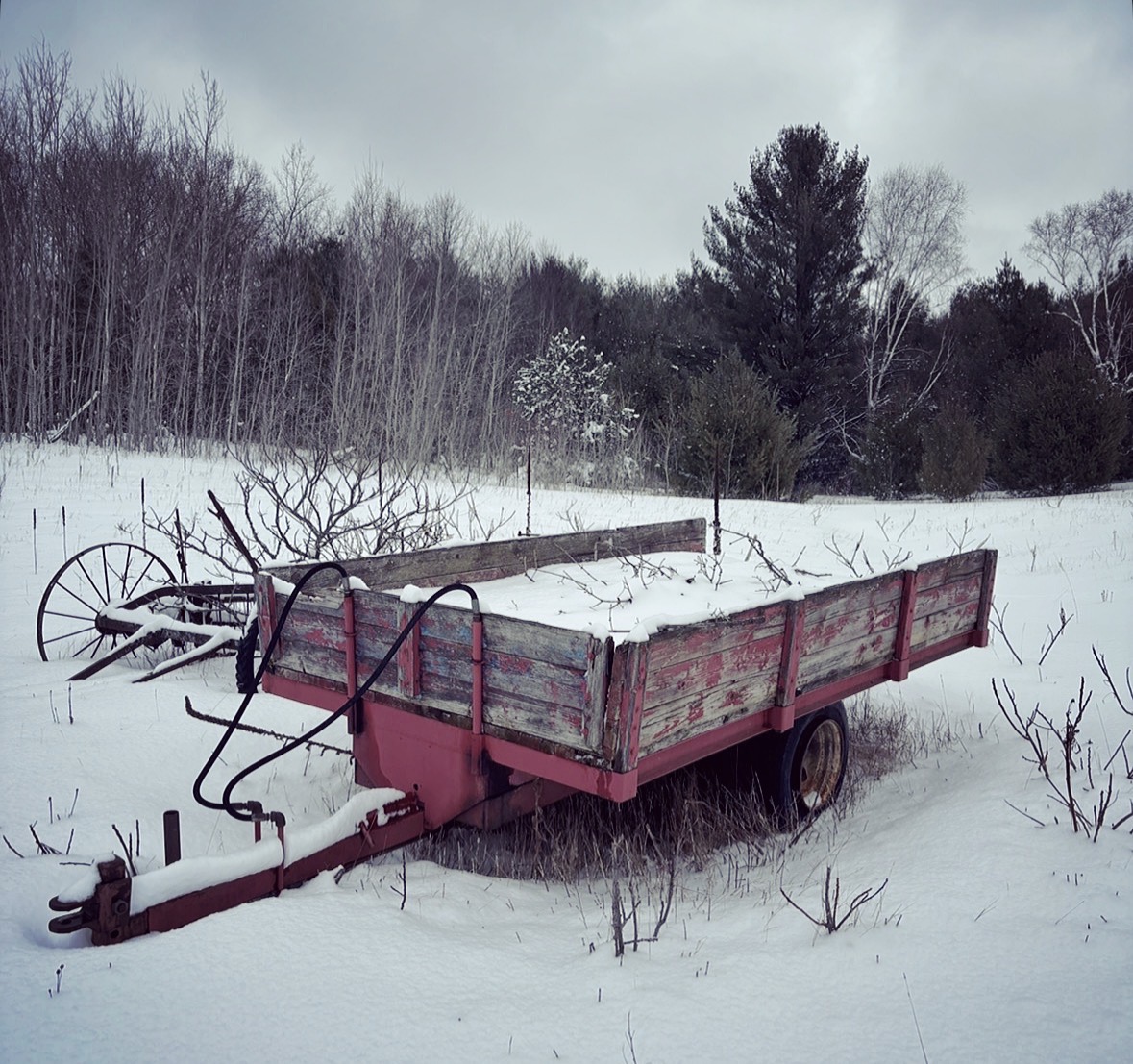
Tree and field, the wild snow calmed by stillness and just waiting. Crystals. Shining. Millions. The outskirts on one side have birch, hundreds of them. The other?- sumac that remains red always save for a few that just become like some skeletal flowers and how strange they seem. The birds of the sky, sometimes, such as they are and be and go. In the summers a swath cuts through making a pathway around and through the pastoral settings.
But in winter then, everything looks and is pretty level. The wagon with its sturdy wheels and faded red paint upon wooden slats, is just stationed there like something from a painting. Old branches of trees in the back. It waits. Maybe forever, but certainly for now. All this under the skies tall and ancient, capricious clouds, the vagaries of landscape life,- sun moon wind silence rains hail or nothing at all…just the calm quietude of stillness for a while.
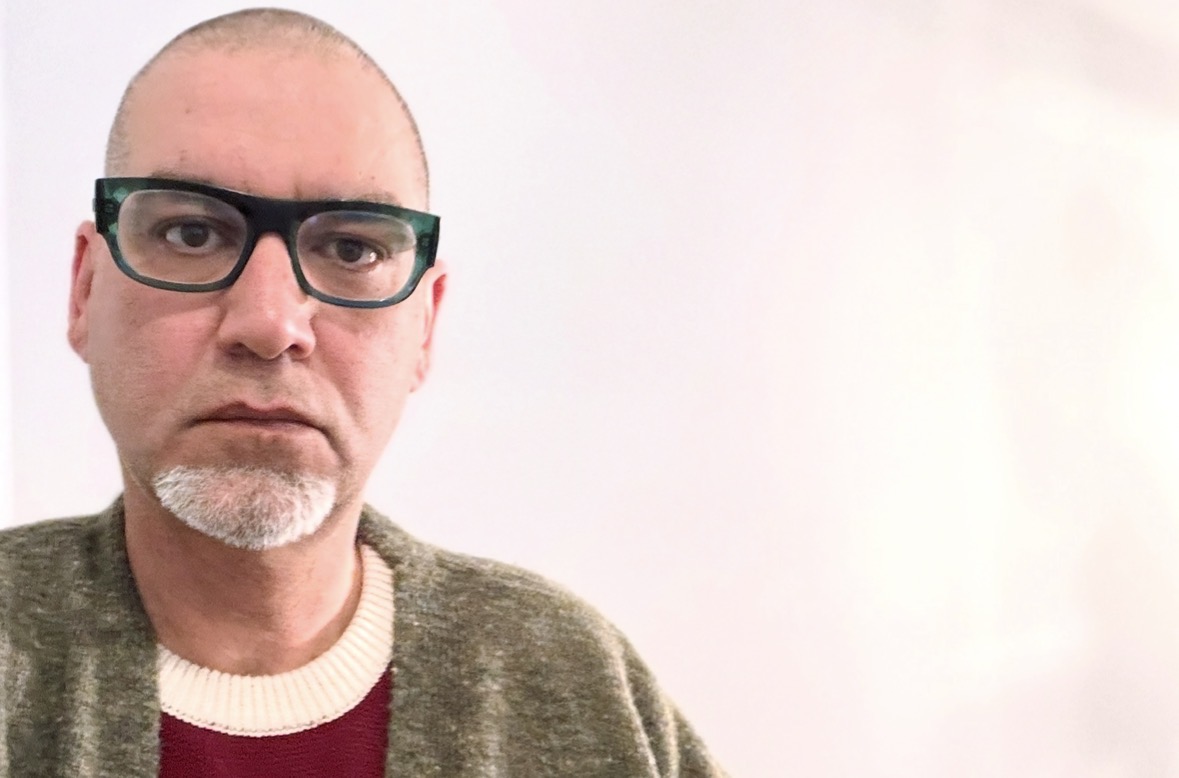
Brian Michael Barbeito is a Canadian poet, writer, and photographer.