
The Raven


He’s spending

Some time

At the Raven,

This could be

DC’s finest dive,

Three Budweisers in

And he’s wondering

If he should

Start coming here

More regularly.


Taylor Dibbert is a writer, journalist, and poet in Washington, DC. “Rescue Dog,” his fifth book, is due out this month.
Poetry from Avaungwa Jemgbagh
The day he exit

It was a black day void of emotions yet filled with nothingness.
Father called with a loving tone and son comes ingest with daddy
Buddies and loved ones assembled the table
Feasting in different numbers as one.
He had gone to lay down his body
But suddenly a scream knocked everyone to shock
Doctors ran their ways, in and out, biting their fingers
As to be compared to when a hunter misses his target.

I bashed in unannounced like a security guard
And watched how his glowing eyes turned pale.
Mummy, palleted in grief, sighed deeply,
She began to drown the hospital in an ocean of  tears
Thoughts shuffled my heart, plights ran in search of solution
And I sprinkled prayers at the visage of God
But he was too busy to grant my wish, too busy to save my man.

Soon daddy went on peaceful ride from the struggles of existence
His gentle soul waved at me as he departed to meet his own.
Hopes left me stranded, swallowing darkness. I became an empty body!
Poetry from Lidia Popa
HUMAN, DISCOVER THE HEART

History is made by human and by his actions. If we want an honest and clean world we have to let the facts speak to indicate the right path to follow.
Violence sows violence.
Racism sows racism.
Peace and friendship they sow peace and cordiality.
War and interests they sow war and destruction.
Knowing and judging history it helps not to repeat the errors of judgment.
If you ask you must give with the same measure. Nothing can be achieved by standing and looking.
To pick pears from the tree you come scratching your calves in the scab.
If cherries are good, don't forget: To collect someone spent effort.
When you drink ruby wine for lunch you can say thank you to the hands that picked the grapes.
Tomatoes, oranges and olives grow in the sun, the hands that fill the baskets are holy.
Human, in you the divine is stunned from the abyss. On Earth you are the master of your actions.
Our mission is a continuous vigil for peace. No one will ask you how you feel, maybe when it happens to you cry because you suffer inside.
Maybe then, on the border line between the abyss and life,
they will ask in an effort to feel less guilty of abandoning you,
considering you were enough strong to be able to fly by it self above the specially created precipice.
No one will ask you how you feel, only in front of the coffin will they say:
Poor thing, too bad he's gone so soon, he had a life ahead of him!
Yet the hand extended it was a false hand. Intentions had a comfortable return, because pleasure becomes self-satisfying and the need for a truth is formal.
You know, when they tell you how beautiful you are, how good you are, then turn to speak face to face with someone important?
Those moments hurt the sensibility like before an invasion and you feel practically at war with self-centered hypocrisy that he just turned his back on you.
No one is more important than the other and if we want peace we must create peace of mind for others too, around us so as not to do harm.
An infinity of words hurts. An infinity of words kills.
Few words will want to know who you are. Few words will tell you about love.
The very same few will define a hug. No one will ask you how you feel inside.
However, you believe in peace and justice for humanity.
The innocents dies on the streets, at work in front of the machinery
and in the countryside, or by criminal hand. There is no more security or peace!
Commitment to social policies vanishes in the smoke of firecrackers.
The innocent no longer have a voice. Let's defend life! Let's defend the innocent!
Don't be left with helpless hands! We who have made a complaint about our word we do not leave those most in need helpless. We write letters to the captains of the world.
They will hear voices if someone is not deaf. Life is a gift, peace is his right.
Do not waste the dreams of those who live on reality! The poet says nothing, however, he repeats himself and his voice multiplies
with the thought of him raising its echo to the sound of trumpets to heaven.
Silence is guilty of innocent deaths. The cry for life will never be sanctioned from a protest of the victims in the square, but it will be allowed by the applied law. Give us back life to the dreams of the innocent!
I bare my heart. For children torn or stolen. For the innocent dead.
For those drowned at sea. For human trafficking. For the sick with no cure.
For entrance blocks. For special people. For the poor. For the hungry.
For the thirsty. For the exploited. For those who live on the street.
For women with blood red shoes. For peace and against war.
For burnt or cut woods. For the debris scattered everywhere.
For the victims of the earthquake and tsunami. For flood victims. For damaged them.
For the unfortunate. For those guilty of nothing. For the victims of injustice.
Sometimes shoes break and the splinters stick into the flesh.
Sometimes life makes you kneel before an altar. You can't always be deaf to pain.
You wrap yourself in conscience and fight for the rights of others.
Being human is never a shame. What did you do right today?
Human, discover your heart to breathe the life and safeguard the peace.

BIOGRAPHY

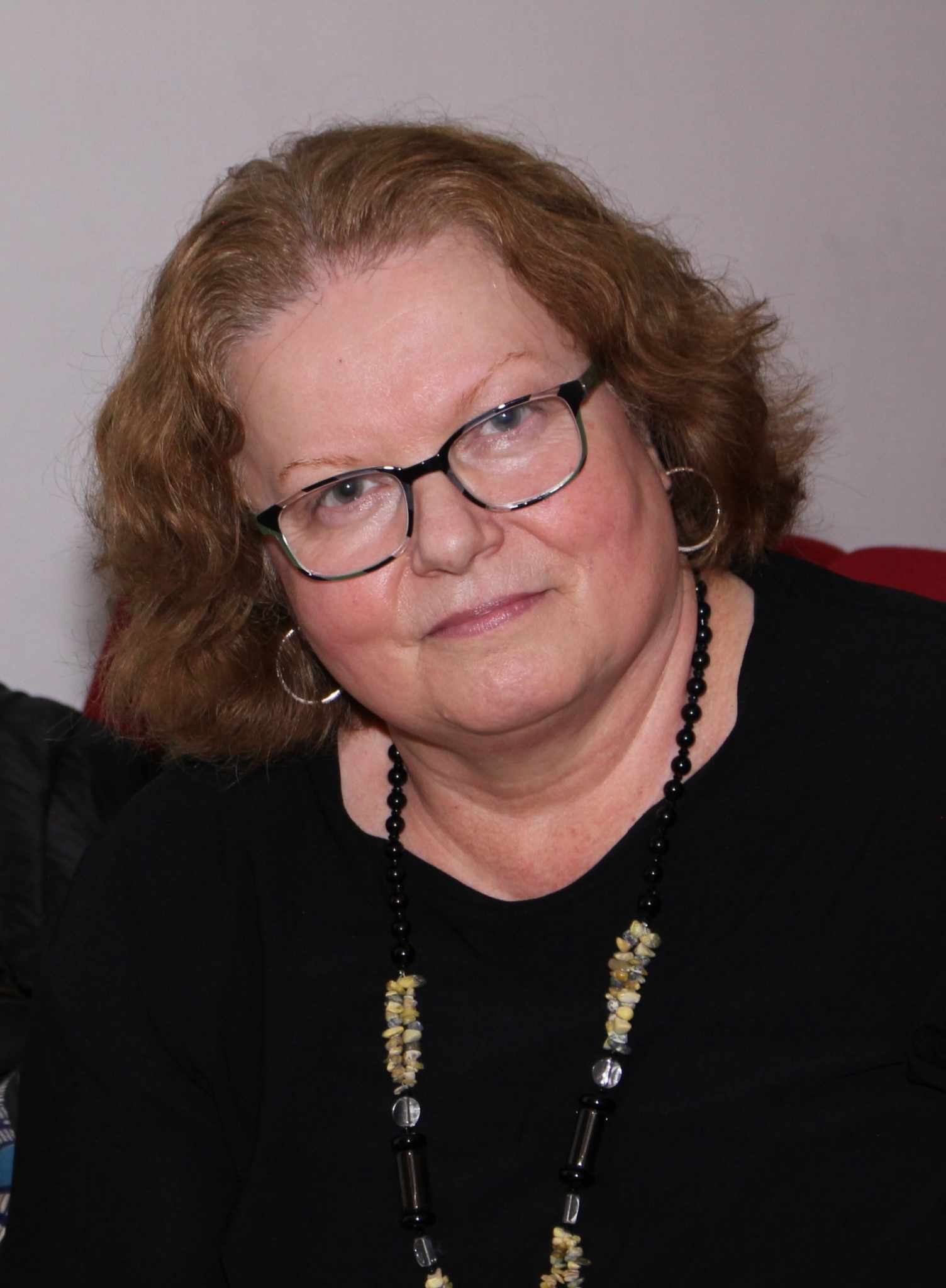
Lidia Popa was born in Romania in the locality of Piatra Șoimului, in the county of Neamț, on 16th April, 1964. She finished her studies in Piatra Neamț, Romania with a high school diploma and other administrative courses, where she worked until she decided to emigrate to Italy.

She has been living for 23 years and worked in Rome as part of the wave of intellectual emigrants since the fall of the Berlin Wall.
She wrote your first poem at her age of 7. She is a poet, essayist, storyteller, recognized in Italy and in other countries for her literary activities. She collaborates with cultural associations, literary cenacles, literary magazines and paper and online publications of Romanian, Italian and international literature. She writes in Romanian, Italian and also in other languages as an exercise in knowledge.

BOOKS

She has published her poems in six books:
in Italy:
1. " Point different ( to be ) " - ed. Italian and
2." In the den of my thoughts ( Dacia ) " - ed. bilingual Romanian/ Italian Aletti Editore 2016,
3.“ Sky amphora " - ed. bilingual Romanian/ Italian Edizioni Divinafollia 2017,
in Romania:
4. " The soul of words" ed. bilingual Romanian/ Albanian Amanda Edit Verlag 2021,
5." Syntagms with longing for clover " ed. Romanian, Editura Minela 2021.
6." The Voice interior " Lidia Popa and Baki Ymeri ed. bilingual Romanian/Italian, Amanda Edit Verlag 2022.

Her poems featured in more than 50 literary anthologies and literary magazines on line from 2014 to 2023 in Italy, Romania, Spain, Canada, Serbia, Bangladesh, United Kingdom, Liban,USA,etc.
Her poems are translated into Italian, French, English, Spanish, Arabic, German, Bangladesh, Portuguese, Serbian, Urdu, Dari, Tamil, etc.
Her writings are published regularly with some magazines in Romania, Italy and abroad.
She is a promoter of Romanian, Italian and international literature, and is part of the juries of the competitions.
She translates from classical or contemporary authors who strike for the refinement and quality of their verses in the languages: Italian, Romanian, English, Spanish, French, German, stating that "it is just a writing exercise to learn and evolve as a person with love for humanity, for art, poetry and literature ".

SHE IS
*Member of the Italian Federation of Writers (FUIS)
*Honorary member of the International Literary Society Casa Poetica Magia y Plumas Republic of Colombia,
*Member of Hispanomundial Union of Writers (Union Hispanomundial de Escritores) (UHE) and Thousands Minds For Mexico (MMMEX)
*President UHE and MMMEX Romania, August 21, 2021
*She had come power of attorney Vice-president UHE Romania, Mars18, 2021- August 21, 2021
*President UHE and MMMEX Romania, August 21, 2021
*Counselor from Italy for Suryodaya Literary Foundation Odisha India,
*Director from Italy for Alìanza Cultural Universal (ACU) Argentina
*Member Motivational Strips Oman,a member of numerous other literary groups at the level internationally,
*Director of Poetry and Literature World Vision Board of Directors (PLWV) Bangladesh
*Membership of ANGEENA INTERNATIONAL NON PROFIT ORGANISATION of Canada
International Peace Ambassador of The Daily Global Nation International Independent Newspaper from Dhaka Bangladesh - 2023
*Founder literary group Lido dell'anima with LIDO DELL'ANIMA AWARDS
*Founder LIDO DELL'ANIMA Italian magazine
*Founder SILVAE VERBORUM INTERNATIONAL multilingual magazine
*Founder literary currently #homelesspoetry
etc.
Poetry from Mykyta Ryzhykh
***
guilty nails torn off by a scream glued to a dead kitten
graveyard inside is a bedroom
the kitten sleeps and sees a red night in a dream
abdominal memories won't come out
dead kitten inside belly overcame fear of water
drowned in non-birth drinks as imperceptibly as he breathes
but where is the cat jesus christ?


***
How to be a corpse in a big house?
How to be a frame in a big house?
How to be small in a big house?
How to properly shoot neighbors in an apartment building?
How to scream in a very large house?
How to be silent? What is the right way to cry?
How to die right? How to be a child?
How to be an animal? I am overgrown-furry
I'm overgrown with a stub of a church candle
I grow like a tree for my grandparents
The apple tree is a Christmas tree on the neck of a drowned man


***
The water is silent: therefore it is on the lips, on the eyelashes, on the forehead, on the corpse. Water is a stone, and stone is silence and restraint. Remember how we were stones before we were born. Stone and tear: this is called patience. Thinking stretches like a silkworm over a wet path. Where are we going? Where does the rain fall? The dew conquers the grass. Tear after tear. Grass after grass. Face after face. Everything around is a reflection. Mirrors are silent because they reflect. God is silent because it is necessary. The person is silent because it is necessary. Man is the god of death, oh Lord. We put a candle for your repose, oh Lord.


***
black night knocks
on the skull box
and opens the crystal door

windy garden of silence
look carefully at your feet


***
Lonely kitten lost on the street
Lonely kitten with my eyes all alone on the street
Lonely kitten with my name is lost
Lonely kitten with my heart is killed
Lonely kitten is alone with the street

Loneliness vs solitude
The stars above are calling me on way


***
iron sheet in the eyes of hunger
fish float up and hang suicides on a tree
holocaust coast in the cold forest
the bones of the crucified on the branches in the cold forest


***
Black birds don't let the bushes bleed
Black nights prevent the grass from publicly crying
Blue skies forbid hiding scars in the dark

And in a room closed from the inside
Тhe continuous winter revels
Іn the broken bone of a dying man


***
аnd when the soldier fell
there was no one
who could help him up


***
people don't want to die and I hate them because they die
pigeons compete with children in the race for breadcrumbs
oil in a pipeline competes with itself in the blackness
children compete with each other in false growing up
candy wrappers of the night in the red throat of the abyss


***
the imperceptible sky became a guinea pig
dove pretended to be kissing a dove
stone age everywhere
otherwise why were two guys in love pelted
with stones and not with wedding cards


***
axiom
of emptiness
in the cemetery
Poetry from Duane Vorhees
"YES, BUT WHERE ARE THE WHEELS?"

    --Albert Einstein, at 2, when presented with a sister


--What is woman? A boon-&-hex, sometime-mate / sometime-check.

--Oh, what's man? An egg-ego? A comicbook hero?

--A brain with bones.

--Mixed with chromosomes!

--Woman is the ultimate X.

--The Royal Comptrollers of Sex, we're architect-builders of children, passion's pilgrims.

--Man: atoms with kinetic glands, machines-with-hands.

-An electric orangutan!

--You Singer-Device, all undone! Man's the Iron Cross and the iron dream.

-An iron sculpture of sweat and jizzum.

--A puzzled philosopher's tired scream: Why can't women be a syllogism?


A FEMINOPHILE'S PLEA


If you want, get a job, it's fine by me.

Drive the tourist carriage, that's all right,

just so's I can ride your dick box for free.

You want to be a fighter pilot? OK with me,

long's I can fly in your cockpit highspeed.

I don't mind even if you want employment

with the Sanitation Dept. Just let me

work nights in your manhole, okay?


… RAW OF THE ROSES …


a


When we played at being young

we were all less old than raw

All were hangers, none were hanged

and all were knights of the Lord


And then the ordered murder

that joins the chaos of raw

succeeded the disorder

that normalized our Before


Our invisible missiles

and markless wounds from the raw

advanced to marches and drills

medals formations and corps

the glory and brotherhood

the backwardness of raw

the salute to blood and mud

and boredom broken by gore


Our red company carries

symbol standards of our raw

spear and aegis of ares

forged by the hammer of thor


b


it was one hundred years raw …

raw of spanish succession …

that great patriotic raw …

trojan … peloponnesian …


pastry raw … pig raw … kettle

raw … or the whiskey rebellion …

or la guerra del fútbol …

afghan raw … jinshin-no-ran


guerra de pacífico ...

or la guerre des trois henri …

crusades … bello gallico…

or the raw of jenkins ear …


raw of the oranges … the straits …

in the mahābhārata …

opium raw … the eight saints …

or the raw of the stray dog …


DON'T GET ME WRONG


Despite all these eons of together, you still want me to write you poems? Okay:

"the stars:scattershot across the purple night / like bullshit on velvet"

Don't like it? Terribly sorry. This lack of sweet poetry, can you forgive?


But beyond your vertical crescent smile

there lurks O swastika – Mons Lisa skinners box


When you sleep your closed eyes look like Chinese twats


Though your eyes no longer burn with magic

and this hour with infinite possibilities won't swell any more,

yet your quotidian eyes still warm the frosty air,

and I don't mind my time with you.

And your arms don't anchor my lusts as they did before,

and your form isn't the amusement park it used to be

when I was the new ride,

but your embrace remains a comforter in the cold winter nights

and the scenery's quite nice still.


WE WITHIN THE WHEELS: DALIT


At the temple festival the tables went humming under the cabbage, rice, and melons. The summer sun waning. The baldbearded helium balloons dancing grandly among nubile paper lanterns, buddhas bronze/rotund. Ah, the season it was of Experience Superior – the feelings of love and the perceived reciprocity of love, when, past all balance and sense and generational propriety, exuberant amidst the consuming and consumed, we two, lanternballoon-alike, food and Buddha commingled, music and the truth congealed.

That's why your paradox didn't register at the time.

And the Children happy as tadpoles aswim in father's river. And the Children pampered like feathers adrift in mama's balloon.


Now my beauty r  e  a  c  h  e  s   o  u  t  in search of your damp and hidden cottage. (Remember the crisp sunflowers asmoke unkempt against the steep/&damp scampismelly dirt path. Recall the rose-of-sharon labyrinth oft-credited – before and since – as the soul's taoWay, eelslick & serpent straight, into the nirvanic heart of notUnbeing.) Your thatched and pointed little house – it's not where last I fingered its locks. The knobs now I'm told are handled some other where.

But even so, blind and blind, my beauty reaches out

reaches                              out

my blind beauty reaches

                             out into cold and empty vacuum.

And the Children pampered like feathers adrift in mama's balloon, and the Children dappled in shadow ajoy in haughty first light.


Your holy mantra for the season: Iloveyou can't love you. And the rutting neophyte at your knees picked at the koan's echoed contradictions. I angled it in the light, squinting along its crosshairs, but the scope just would not focus. Flash powder applied, I tried to freeze it in its frame. But the quiver could never quite gel. Dusted for prints, but no proper whorl ever emerged to point its finger conclusively. "I love you can't love you." I parsed the riddle into phonemic meaninglessness but the significance never decoded. Affixed onto the acrylic stage for minutest examination, clarity persistently remained at yet one remove. Until Enlightenment came at last, slowly in a rush. I'd always known you'd go, of course, but not so suddenly. And not so soon. The painful puzzle pieces shuttered into place. And the Children dappled in shadow ajoy in haughty first light, and the Children, dapper as bluejays, agreed in bawdy verdure. I love you can't love you, Clause the first personal, in classic equipoise with clause two cultural. Subject-ckause by predicate controlled, the halving twins yining and yanging about, plusandminus all at once. The treasured self, forbidden/desired,  embraced/abhorred.


(My fellow anthropologists, take careful note: her heart's harsh judgment was conditioned by decades and millennia of micromacroforming. Metaphorically speaking, as such, I am the incest taboo. In those society eyes, I'm the faggot in the homophobic gym, the nigger in the genepool, the sheep in the unbleating humanfold. In objective terms, and all in econocultural conext of course, her loving me was always the equivalent of fucking the corpse.)


And the Children, dapper as bluejays agreed in bawdy verdure, and all us Children vampiric taters asleep in God's root cellar.


But the mantramoth, addicted, tethered herself to the tormented flame. The cycle doomed to turn and flutter, return and flutter, and flutter away. Return again, again away, covering and recovering the same old ground, rut ater rut after rut again.


And koan's mystery deepens.

But the Children happy as tadpoles.


TIME MACHINE


Echoless laughter

marked the mocking

rictor sardonicus

of our love,


showing us that time

is the machine

that shredshredshreds presents

into pasts.


And tomorrow’s rich

tapestries, which

were infinite once, have

slimmed to threads.


Life’s chaos indeed

is orderly but

not in ways we have

deciphered.


Our universe was

not Galileo’s

and also won’t be

our children’s,


but all their loves and

all their changes

will still be all the same

probably.
Poetry from Abramat Faizulloev (needs to stay May 1st)
Mother

There is a mother, the world is bright,
Mother is the lamp of life.
He enlivens the world with his love,
There is a mother and a person is created.

Tongues were speechless at the tariff,
I have mercy on you.
Without my world, my mother,
I will fly with you.

I embrace the worlds together,
I shine with your love.
Be happy always be healthy,
You are my sunshine mom.

    ✍Faizulloev Abramat

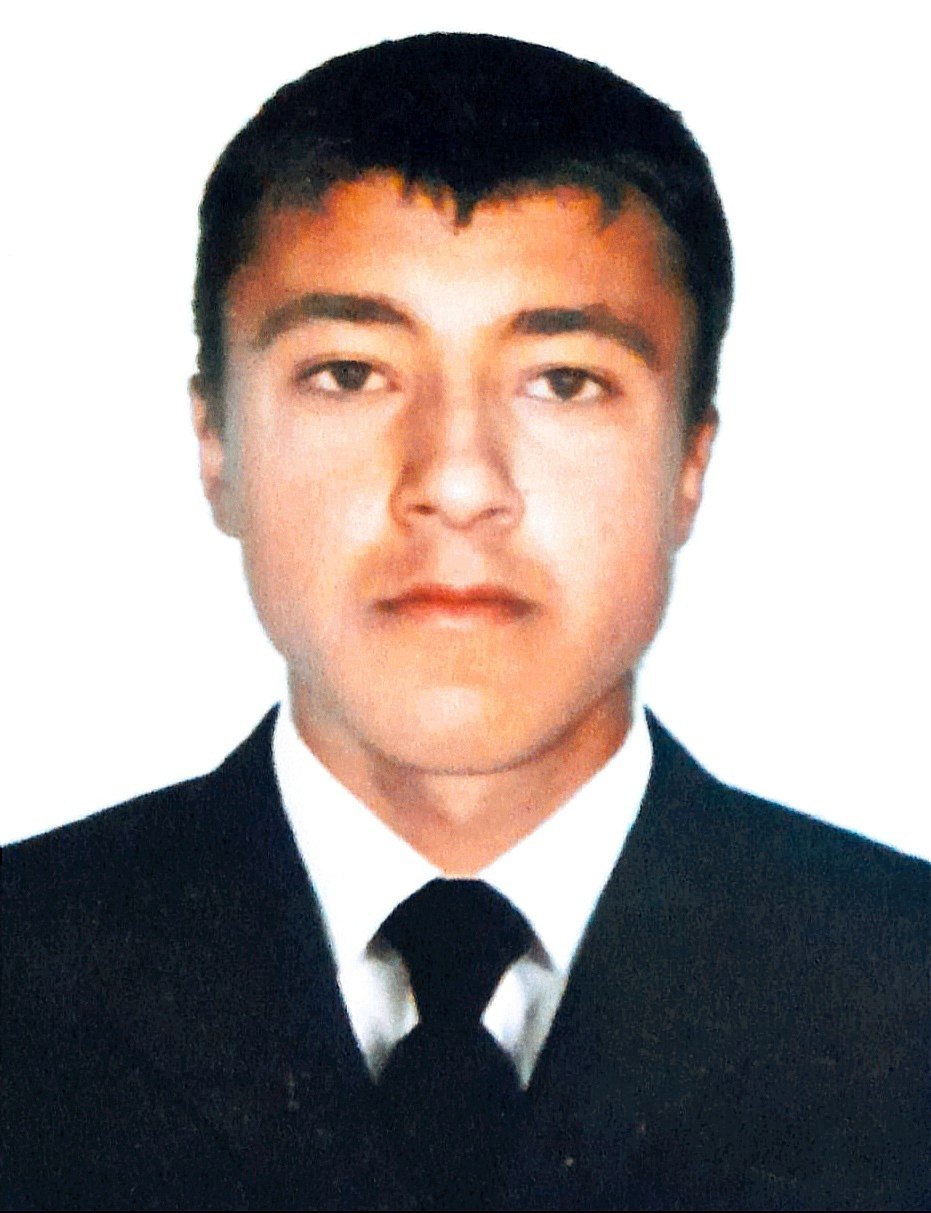
Fayzulloev, son of Abramat Sayfi, was born on June 1, 2003 in Dehganabad district, Kashkadarya region.
🏢. Economics and Pedagogical University, primary education, 2nd stage student, winner of the badge for "international services" of the Double Wing International Creative Foundation of the Republic of Kazakhstan. 5 participants of the international anthology and 2 manuals are currently on sale on 10 sites of morebooks. He is also a holder of a high-level diploma of Navoi city administration and a member of the Golden Wings of the Republic.
Poetry from Ismailova Orastabonu
🌹Isn't she an ANGEL OF HEAVEN!🌹

   Brought spring to the gardens,
   The moon was shining in front of his child.
   The first song that he sang was divided by the gods,
   Isn't our soul a bond, woman?
   Isn't she an angel of heaven?

      A woman is the light of our house, the blooming flower of our garden, the angel of our house. A woman is a masterpiece among the blessings created by God!

       In fact, Allah took the beauty from the moon shining in the sky, the eyebrows and eyelashes from the dark night, the eyes from the stars, the language from the nightingale, the willow tree from the willow, the delicacy from the flower, and the love from the ocean, and created a perfect unity and named it woman.

    A woman is a great creature who took care of her child in her body for nine months and gave her life.
     So what is happiness for a woman?

     A woman who carries a child and caressing her little body with love is the happiest woman in the world. A woman who devotes herself to her little girl and sews dresses with her hardworking hands, there is no happier person than her. If you give a woman a sweet word and something to cheer her up, she will consider herself happy.

    Let's pay attention to these sentences of Tursunoy Sadygova about women: "A woman is not a woman, but a flower that always trembles in the cave called the wind, in the stormy season called the family, and still spreads its beautiful flowers."

   A woman is indeed a flower. Dear friends, let's try to describe a woman as a crimson blooming rose. The red color in the flower is the redness on the face of an Uzbek woman, that is, her modesty, ibo. The expression radiating from the flower is endless love from the ocean, which never ends, no matter how much it costs. Its strong body that climbs to the heights is its lifelong friend, that is, its life partner. Green leaves are shared by the people and relatives, and the thorns in it are a weapon against the sufferings and injustices in life. are the children of...

Ismailova Orastabonu is the daughter of Navruz, a 10th grade student of the 13th general secondary school of Kasbi district, Kashkadarya region.