Story from Peter F. Crowley

                                            Dump

     From the early afternoon light filtering through the tavern’s off-white shades, Sharon’s frown had become apparent. She sat there watching Daryl eat an enormous pulled pork sandwich after finishing her grilled tempeh and arugula salad.
     “What?” Daryl asked, taking off his baseball hat and wiping the sweat from his brow.
     It was over 90 degrees. From where they sat in the back, not a trickle of air from the doorway fan was palpable.
     Sharon’s lower jaw sunk low as she started to open her mouth. She placed her pointer finger to her lips and thought for a moment before putting her shoulder-length, red hair into a bun.

     “He’s not a bro but he’s different from me,” she thought. “He doesn’t get the details of my paintings and how it’s really only them that matter. Kara even said that the details ‘overwhelm and inform’ the whole. But the last portrait I did of an old woman, all that Daryl said was, “Very cool.” Did he even look at it? I tried to show every skin cell of the woman’s face to depict the dark circles around her eyes and all her wrinkles.”
     “Not talking again?” Daryl asked.
     The waiter came by and asked if everything was ok. Sharon responded that all was well, as Daryl had just taken another large bite from his sandwich. 

     Did they want the check? Sharon shook her head.
     It’ll be ten years before he finishes that sandwich. He eats so goddamn slow and look how he chews! Like a cow chewing on grass all day. Hurry up, cow!
     Sharon tried to remember if Daryl had asked her something. He must’ve, but what?
    “How’s your sandwich?”
     “It’s good.”
     Sharon raised her eyebrows and nodded.
     “Why do you always have to be so sarcastic about everything? You don’t have to look down on me for eating meat.”

     “I don’t.”
     Actually, I do, but not that much. If you just ate chicken and beef occasionally, it’d be different. But you eat beef or pork every day. Don’t you realize how bad that is for the environment? Methane is worse than CO2, dude. And you say you care about climate change. That was probably just to get into my pants.
     “I have to say: I’m really loving this conversation we’re having.”
     “Me too.”
     “See what I mean? And I don’t even know if you mean it or not. But I guess not, right? Because we’ve barely spoken all through lunch.”

     “That’s because you’re eating.”
     “We’ve both been eating. You’re just done.”
     “Yep, I was done like ten minutes ago.”
     “Is it a race? I can’t help it if this place makes ginormous sandwiches.”
     “You don’t have to eat all of it.”
     “Come on, this kind of thing would taste horrible the next day. It’s eat it all now or waste it, you know?”
     “Interesting.”
     Was he always so boring? He couldn’t have been. Or maybe I was just blinded by his good looks and how into me he was.

     “Really? You don’t find that interesting. You shouldn’t say stuff that you don’t mean. It almost seems like you’re just responding to me on autopilot and you’re really just way off on another planet or something.”
     That would be preferable to being with you.
     Sharon got up and went to the bathroom. A thick cigarette smoke pervaded the air. The stall she went into had an empty Heineken bottle floating in the toilet. 

     “Figures,” she thought. “He always likes divvy places. Maybe that was cool when you’re 21 but not when you’re 35!”
     When she returned, Daryl was lying on the floor underneath their table, with his head popping out at the end. The plate of pulled pork sandwich, of which there was still ¼ remaining, was on his stomach. She rested her feet on his ribs as she sat down, and it felt particularly comfortable. The White Stripe song “Stop Breaking Down” came into her head and she tapped out the beat with her heeled shoes.
     “I think I got it! That’s Green Day’s “Basket Case,” right?”
     “No.”

      “What is it then?”
      “Why does it matter?”
      Daryl peered up at her, trying make eye contact and asked, “Don’t you love me anymore?”
     “Did we ever say we loved each other?”
     “Yeah, we both did. Remember? We were in Brooklyn at your favorite restaurant in the whole world.”

     Sharon thought back to a year ago, four months after they had met. They were seated outside at a narrow row of tables next to a dozen-story brick building. It was an Indo-Chinese vegan place. She ordered an amazing Gobi Manchurian appetizer; he just sat there with a coffee, saying that he wasn’t hungry. He looked into her eyes and said those words. When she replied in kind, his eyes hazel eyes beamed. 
     Love is weird. I thought I loved you then, but did I? Maybe? But maybe I was just really horny and lonely. I definitely don’t love you now.

     “Why do we always have to talk about these kinds of things?”
     Why, really, do we have to talk at all?
     “I don’t know. I guess that it’s nice to reminisce about the nice times that we’ve had together.”
     Sharon looked straight across the table to where Daryl had been sitting and said, “I’ve been thinking. We’ve been together for almost a year and a half now. Don’t you think it’s time to give ourselves a little space and maybe see other people?”

     “You mean like an open relationship?”
     “No. I just mean us not see each other anymore. Ever.”
     Daryl stopped chewing and looked up to the ceiling fan, which had finally whirred on.
     “…I don’t think that’s something we need to do.”
     “I do,” Sharon said, shoving her heels deep into his side as she pushed herself out from the booth. 
     She stood up, looked down at him as he masticated on a mouthful of pulled pork and said, “I’m dumping you, Daryl.”

                                       Nanny

     “Good timing,” Giselda thought, taking off her shoes. 
     Jimmy, the 13-month old she was hired to watch, had fallen asleep for his morning nap just before she arrived.   
     Giselda looked out the window, from the dried-up grass on the expansive front lawn to a sign in the neighbor’s yard across the street that read “We’re proud of our Christian Academy student.” 
     She took out her phone and scrolled through Facebook. Her friend Adriana and her new American husband had posted pictures from a fishing trip to New Hampshire. But Giselda knew that Adriana didn’t even like fishing. Giselda’s mother had finished reading the Harry Potter series for the fifth time. Her São Paulo high school classmate, Luiz, posted something new against Bolsonaro.

     “Would you like a coffee?” asked Lisa, Jimmy’s mother, who Giselda had responded to on a local Nannies/Babysitters community page seeking childcare. 
     “No thank you.”
     “Good, because I’d have to charge you for it.”
     Lisa laughed and stood over Giselda, watching her look into her phone.

     “How long are his naps, usually?”
     “What?” asked Lisa, unaccustomed to ESL speakers.
     “Jimmy’s naps, are they usually for one hour? Two hours?”
     “Oh, I don’t know. They could be anywhere from 15 minutes to three hours.”
     “Wow, quite a range!”
     Lisa nodded and walked away. 

     Giselda fished out a hair tie from her purse and tied her long, silky black hair into a ponytail. She looked to her phone and saw Rodrigo’s number pop up. They had broken up two months ago, but he kept calling her to “check on her health.” It was around the time that she had Covid when she stopped taking his calls. She had been symptomless for over a month and a half but the only foods she could taste were Guaraná and her roommate’s barbeque beef.
     Giselda texted, “I’m fine. Stop calling me all the time. Ok?”
     A few minutes later, just as she heard fussing coming from Jimmy’s upstairs bedroom, Rodrigo texted back, “Ok. But I care about you. If the feeling isn’t mutual then I’ll just go back to São Paulo.”

     “No, stay. Not because of me though. I don’t think we’ll ever get back together. But the money you make at your fancy job, it doesn’t make sense to leave now. Your family needs that.”
Rodrigo was a software engineer at a Boston financial firm. Although he didn’t make as much as his American colleagues, he was fairly content with his salary.

     Giselda felt a tap on her shoulder.
     “Umm, excuse me. Did you hear Jimmy?”
     Lisa looked down at Giselda with small, squinting blue eyes. Her dirty blonde hair was parted in the middle and tucked behind her ears. When she bent over and tapped Giselda, the right side of her hair fell across half of her face.
     “Yes, but it just sounded like a little fussing. Do you want me to go and get him?”
      Lisa stood upright and leaned towards the staircase with a tilted head.

     “He quieted down. Never mind.”
     Lisa went back to the kitchen and began chopping vegetables. She turned on the radio to her favorite soft rock station.
     “Just as an fyi, I don’t pay for the time when he’s napping.”
     “Are you serious?”
     “It wouldn’t be fair to us. I can’t pay you to just sit there. We aren’t loaded.”
     “It doesn’t matter if you’re loaded or not. This is my time that you have to pay for.”
     “It’s your time to go on Twitter or text your boyfriend. I won’t pay for that.”

     Lisa opened the freezer and took out a plastic bag with several pizza crusts from weeks ago. She placed them into the microwave to defrost, then put them in the toaster until they got warm and crispy and started chewing on them while chopping celery.
     Giselda remained seated in the family room and stared at the Persian rug. It had multiple gilded boarders, each one smaller than the others. In the center, there was a detailed depiction of a king seated on a throne. A woman wearing a wimple clasped his leg with both hands.

     “I like that we can still talk,” texted Rodrigo.
     Giselda started to text back when her phone was snatched away. Lisa stood over Giselda wagging it in her face. 
     “Hey, we provide free internet service for you here and we aren’t a public library. So, drop the sour face, k?”
     Giselda gritted her teeth as Lisa handed her phone back. She looked back to the picture of the king and woman. The king had one of his hands on the woman’s head, as though he was petting a dog.
     Giselda clutched the phone, put her arm back and hurled it at Lisa as she walked away.

     “Ouch, fuck!” said Lisa, holding the back of her head where the phone had hit. She pointed towards the door and said, “Get the hell out of my house!”
     Giselda walked slowly towards Lisa and picked up her phone from the off-white linoleum kitchen floor.
     She looked into Lisa’s eyes and said, “Gladly, you miserable woman.”

As a prolific author from the Boston area, Peter F. Crowley writes in various forms, including short fiction, op-eds, poetry and academic essays. In 2020, his poetry book Those Who Hold Up the Earth was published by Kelsay Books and received impressive reviews by Kirkus Review, the Bangladeshi New Age and two local Boston-area newspapers. His writing can be found in Middle East MonitorZnet34th Parallel, Pif MagazineGalway ReviewDigging the FatAdelaide’s Short Story and Poetry Award anthologies (finalist in both) and The Opiate.

Poetry from Beth Gulley

At A YMCA Swim Meet

The inexperienced,
unsupervised lifeguard
splashed the baby vomit
into the pool.
The mothers collectively gasp.


Last Chance

Last chance sunflowers
Wilt on the table
Winter claims it’s time


Brave World

I was brave today.
I went into the world,
and didn’t take a sweater.


We Find Out

This house 
hemorrhages nails.
Where from?
After a big wind
we find out.


Poetry from Charley de Inspirator

TESTIMONY

Darkness came upon me like a tsunami

And Scorched away my smiles

Pulling me through the shadows of death

Disassembling my tiles

Ignorance was my buddy,

We wined and dined,

And life that as once shining,

Has not started dimming.

I battled against myself

Cuz I couldn’t flee my fright

Anger reigned over my voice

And darkness was my sight 

At some point, I felt the turbulence circulating my veins

The rage of horror parading my scenes

I feared my fears and hid my pains

Pretending freedom but mentally in chains 

One day, I felt a man coming my way

No, not just a man but a God

A God who holds the world in his hands

His fragrance overgrown my odor

His presence made the day

And once again I felt I had a savior

He touched me and give my life a meaning

He broke me and gave me a new 

beginning

He scorched me so I could bleed away my pains

He baptized me and made me clean again 

He give me a new name and purpose

He called me his own though he wasn’t supposed

I knew I wasn’t worthy of him and all his glory but he called me his son; and to me, eternal life he proposed.

I gladly accepted to be his citizen

Rebored of his love

Justified by his blood

and Sanctified by his choice

FOR THIS, I TESTIFY

Because he rectified all my mistakes

Justified me no matter what it takes

Nullify my flaws

Amplified my joy

And Solidify my hope in him

So this is my Testimony

Charles G. Kpan, Jr, is a Spoken Word Poet and goes by the Penn Name: Charley De Inspirator. He termed his writing style as Inspirational Poetry. His work has been featured in Local and Internal Poetry Magazines including: PoetrySoup, We Write Liberia, League of Poets, Eboquils, helloPoetry, All Poetry, SpillWords etc.

Essay from Jeff Rasley

Darkness and Light, Despair and Recovery

In a dark time, the eye begins to see.

Theodore Roethke was born in 1908 and died in 1963. The quote is the first line of his poem, In a Dark Time. Roethke won the Pulitzer Prize for poetry in 1954 for his book The Waking. He won the National Book Award for Poetry twice. Despite the accolades he received for achievements in his chosen craft, Roethke was a tortured soul. “Dark Time” reflects his struggle with madness. It has many allusions to a psyche filled with fear and dread. For example:

A man goes far to find out what he is –

Death of the self in a long, tearless night,

All natural shapes blazing unnatural light.

Dark, dark my light, and darker my desire.

My soul, like some heat-maddened summer fly,

Keeps buzzing at the sill. Which I is I?

And yet, there is a hopeful note in other verses in the poem. Roethke struggled with mental illness, especially depression, but he did not let it extinguish his creativity. The darkness in his poetry is usually overcome by the light of hopeful change. The darkness of despair can be escaped. There is a way out of depression, if the light can be found.

Roethke was a nature lover. He found solace being outside in forests, fields, hills, or dales. But his soul seemed to respond as deeply to the dark side as to the bright side of the natural world. Nature inspired allusions to both darkness and light in Roethke’s poetry. There is the bloody evisceration of prey by the predator, and there is the shimmering surface of a tree-lined brook. Roethke understood that both are inherent in Nature and in human nature. We can’t have light without darkness nor darkness without light. They are yin and yang.

Humans may be unique in our capacity to despair, as well as our ability to recover from it. Another poet, May Sarton (1912 – 1995), in her Journal of Solitude, put it this way:

Does anything in nature despair except man? An animal with a foot caught in a trap does not seem to despair. It is too busy trying to survive. It is all closed in, to a kind of still, intense waiting. Is this a key? Keep busy with survival. Imitate the trees. Learn to lose in order to recover, and remember that nothing stays the same for long, not even pain, psychic pain. Sit it out. Let it all pass. Let it go.

Roethke thought humans must experience the dichotomy of the light and the dark. And so, his mental illness, loss of a professorship, and a failed love affair were dark experiences, but they became challenges essential to making him who he was. Living through those periods of darkness, as claimed in his poem, his eye began to see. And what it saw was light at the end of the tunnel. Roethke ends the poem so:

A fallen man, I climb out of my fear.

The mind enters itself, and God the mind,

And one is One, free in the tearing wind.

In your experience, does light always, eventually, follow darkness? I am sometimes haunted by dark thoughts. They usually come at night, when I wake up from a troubled sleep or I am having trouble falling asleep. I do not consciously welcome these thoughts into my mind. It feels like they come uninvited and unwanted, like they have surfaced from a murky subconscious level. Why am I unable to banish them forever and know they will never return? I don’t know. So far, light has always followed those dark thoughts and every other type of darkness in my life. But that is not true for everyone I have been close to.

Three close friends of mine committed suicide. I know why each one of them did it, and I am sure that two of the three thought that they could not find a way out of the dark place they were in, except through death. I hesitate to judge their decisions, but I think those two friends of mine could have found a way out of the darkness, if they had been willing to put in the time and work to find the light.

I wish Bob would have kept trying to find alternative ways to deal with his bi-polar condition. I wish Byron would have taken responsibility for his deception, accepted his marriage was over, and built a new life. But Bob had tried for over twenty years to find a satisfactory way to live with his mental illness, and finally gave up trying to find a way out of that darkness. I think Byron was so intensely ashamed of himself that he was convinced he did not have the strength to work his way back into the light with his family. He must have felt that he did not deserve forgiveness, so he sentenced himself to death.

If people see a lighted tunnel as they are dying, as some survivors of near death experiences claim, I hope Bob and Byron saw that light and could feel some warmth at the end.

Ray’s case is more difficult, because he killed his life-partner Juan and himself. Juan was an eminent physician and proud man, who lost the ability to control most of his faculties in his mid 80s. He wanted to die. Ray fulfilled Juan’s request and then immediately committed suicide. Ray left his estate to a school for Palestinian children. He let it be known that he preferred his remaining wealth to be spent on that worthy cause rather than dwindle over time maintaining a life he did not want to live without Juan. Ray thought that putting Juan out of his misery and dying at his side was the way out of the darkness that had descended on them when Juan became incapacitated.

I was surprised to learn of my friend’s murder-suicide, because I thought I had talked him out of the plan. Ray told me a week or so before he did it, what he planned to do. I thought I had convinced him to meet with a Quaker “clearance committee” to talk through the issues before he took any action. However, he executed his plan the day before he was scheduled to meet with the clearance committee.

Ray thought that ending Juan’s pain was the way out of the darkness for Juan. And without Juan, Ray thought he would never feel the light again. I know that Ray believed ending their lives together and giving $250,000 to a school for Palestinian children was the right thing to do. He was convinced that putting an end to Juan’s misery and ending his own life was the best way to end the darkness they were experiencing. Ray was an atheist who did not believe in an afterlife, so he did not expect to see any light when his life ended. He just thought it would end.

As for us survivors, whether it is light, darkness, something else, or nothing at all that is at the end of this life, well, that is something we will eventually discover. If physical or emotional pain is terrible, and there is no hope for relief from the suffering, does death hold the only possibility of escape from that darkness into light? Will those who have faith in a lighted after-life be disappointed or rewarded for their faith? Does light always follow darkness, as Roethke implies, or will there only be darkness at the end of a lighted tunnel?

I don’t know the answers to those questions, but I agree with Roethke’s wisdom. There will be periods of light and darkness during our lives. That is natural and inevitable. The challenge is to find a way to use our dark times as opportunities for deep reflection, and then find a way back into the light. If we can find meaning in the darkness, and then find our way back into the light, Roethke’s assurance is that life will be even better. Do you believe it?

The enigmatic artist, M.C. Escher (1898 – 1972) wrote this in a letter to his son: A person who is lucidly aware of the miracles that surround him, who has learned to bear up under the loneliness, has made quite a bit of progress on the road to wisdom. Escher struggled with depression. Although his oeuvre now holds an honored place in modern art and eventually became popular with academic critics and the general public, he felt misunderstood by the critics and the art-buying public. His work was such a unique blend of mathematics, multi-dimensional perspective, optical illusion, fantasy and realism that it was and is weird and confounding. A common reaction to an Escher painting is, How did he do that!? What kept him working at his art, despite feeling unappreciated and misunderstood, was his sense of the miraculous in Nature and in human consciousness. Escher was convinced that, although it was a lonely one, he was “on the road to wisdom.”

May we each find that path.

This personal essay by Jeff Rasley is a chapter from his recently published book, 72 Wisdoms: A practical guide to make life more meaningful, published 2022, Midsummer Books.

Essay from Z.I. Mahmud

Write a note on the functions of the chorus in Sophocles’ Antigone.

Or

How does Sophocles use the chorus in Antigone ? Do you think it represents his own point of view?

M.H. Abrams denotes chorus as a group of dancers, persona wearing masquerades, who sang songs and chanted verses, performing dancelike maneuvers at religious festivals. Sophocles has implemented the choral character and chorus to enchant, enlighten, enliven, enthrall and entertain the spectator of audience through commentaries and lyrical relief. Instances of dramatic actions and scenes wherein the chorus express traditional, moral, religious, ethical and social attitudes is revealed in the tragic drama Antigone. In this case, chorus functions in eulogizing lamentations of the cathartic plight of Creon associated to the tragic fate of his transgressions of heavenly laws. Or grieving maddening love of Haemon for Creon

The universality of the chorus survives in musical comedies and operas alike and tragic drama Antigone engrossed with the chorus in choral interludes as in the heart wrenching emotions arousal by the song of the chorus recalling the curse befall on the House of Labdacus. King Oedipus, King Creon and the progeny of royal clan are haunted by the grime murder and bloodshed. Furthermore terrible sufferings undergone by Danae, Lycurgus and Cleopatra resonate in contrast to Antigone’s awful suffering. During the Elizabethan age the Chorus was also applied to a single character who spoke the prologue and epilogue to a play, and sometimes introduced each act as well. The choral character served as the author’s vehicle for commentary on the play as well as or exposition of its subject, time, and setting, and the description of events happening offstage; ironic perspective of Chorus imitates invocation of Dionysus after Tiresias’ prophecy which can be starkly contrasted with the erelong justification of Creon’s edict; defiance to the divine laws or denial of Polynices’ corpse burial.    

Chorus of Theban council consisting of elderly citizenry laments te grimacing grime of the royal legacy whose generations are preys to ruination. They are ruined throughout their race like ‘mounting tide’ and later ‘rolling dark heaves of sand as proclaimed by the chorus as reechoed and resonated in these lines as soon as Creon sentences Antigone to death and ironically absolutizes politicization of death.

Chorus:

“The ruin will never cease, cresting on and on

from one generation on throughout the race—

like a great mounting tide

driven on by savage northern gales,

surging over the dead black’ depths

rolling up from the bottom dark heaves of sand” [pg no. 91 lines 660-665]

“To combine, to harmonize, to deepen for the spectators the feelings excited in him by the sight of what has been passing on the stage—  that is the one grand effect produced by the Chorus in Greek Tragedy.”   

Bibliography and Further Reading

M.H. Abrams A Glossary of Literary Terms 7th Edition 1999.

Is the central figure in the tragedy not Antigone, but Creon? Discuss.

Or

Between Creon and Antigone who is the real tragic figure? Justify your answer.

Or

Describe and discuss Aristotelian tragic hero Creon and the protagonist Antigone with reference to textual evidence and critical evaluation.

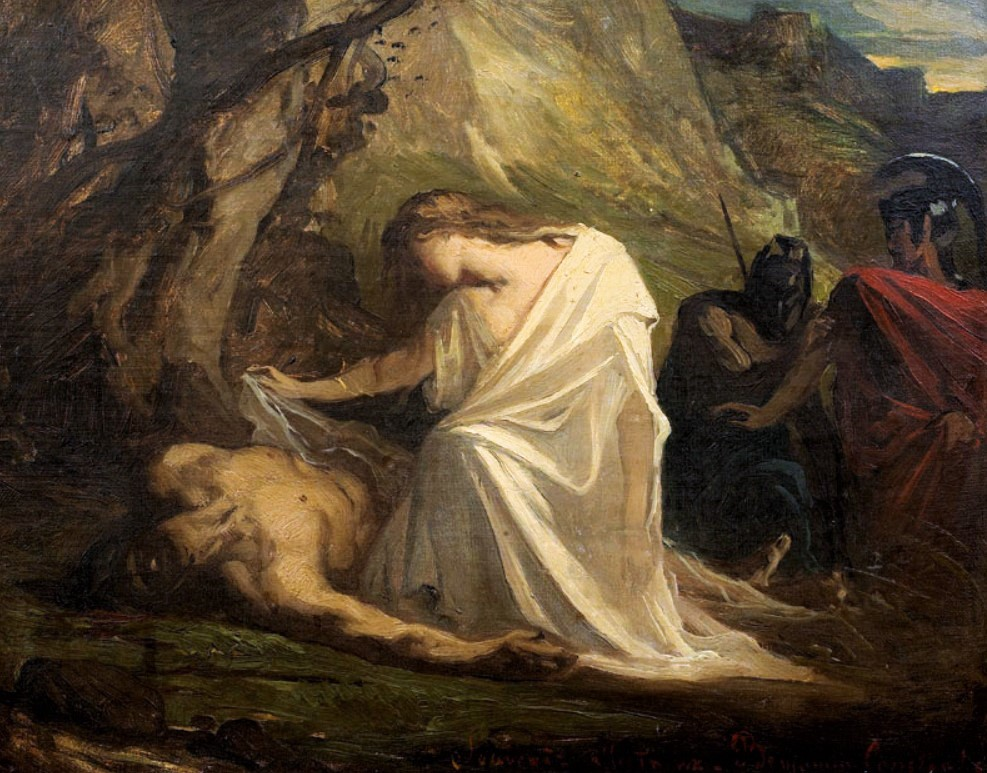
Creon and Antigone are evidently manifestations of avowal to political sovereignty and commitment to fraternity of kinship respectively. These archetypal characters or dramatis personae are of Sophocles’ classical masterpiece Antigone. In the tragic drama Aristotelian hamartia invokes a provocative evocation through the fatal flaw of Creon’s defiance and transgressions to the divine laws of Heaven due to utmost denial of deceased Polyneices’ burial. And as far as hubris is concerned, readers and critics alike surely cast a probe to trace the superciliousness and haughtiness in the feminine figure of Antigone. Textual evidence and excerpted quotable illustration should be cited to be befitting; “I will bury him myself. And even if I die in the act, that death will be a glory.  I will die with the one I love and loved by him—- an outrage sacred to the Gods!” (pg no. 63 lines 85-88) Antigone’s arrogance and vanity can be impersonating glorifying martyrdom as an eternal seeker of truth and justice. Antigone’s fate truly arouses in us feelings of pity, fear, awe and admiration which a tragic character is expected to arouse.

Although Creon embodies the epitome of loyal patriotism and welfare of polity nevertheless, this overindulgence with conscientiousness springs up arbitrariness, callousness, narrow-mindedness and obstinacy. On the contrary, Antigone is a damsel of family bonding, who exhibits the essence of humanity through advocacy of the claim of funerary rites of her dearest sibling Polynices. Creon establishes a hegemonic and patriarchal monarchy through defiance of unalterable and inevitable laws of divination. Despite being a secular believer, Creon’s utmost denial of granting funerary burial is the tragic flaw which delineates the peripetia or the reversal of fortune as  the ominous foreboding misapprehensions prophesied by Tiresias, the disavowal and premonition of the enactment of the choral character, the rebellious spirit of Haemon and his stabbing of himself and finally suicide of Eurydice. Being neither villainous nor daredevil, either crafty or spiteful except viewing the world in a different light is the characteristic trait that Creon manifests within himself. In concluding Antigone symbolizes familial kith and kin brethrenship and adoration of cherishing fraternity whilst Creon symbolizes absolutization of polity through championing legendary statesmanship in his politicization of royal monarchy.                            

Write a note on the character of Haemon in Sophocles’ tragedy Antigone.

Creon’s heir, Haemon, is a main character emboldened with romantic engrossment with soon to be bride Antigone. Haemon is a personae of sacrificial romance for love of sweetheart maiden Antigone, who forsakes her living life in the ardor of life-in-death situation within the tombed rocky cavern. Creon is heroic in lambasting the royal decree of the injunction ordained by his father, Theban monarch, Creon. Disdaining the imprudence and absurdity of hegemonistic Creon, Haemon, the interlocutor, remonstrates “the city mourns” of the idealized fiance, Antigone. Furthermore, such a ‘brutal death’ for such a ‘glorious action’ arouses the tenderhearted Haemon in pity and admiration for his soon to be wife  and thereby lectures Creon to the pathway of contemplation reawakening conscientiousness or prudent judgment.     

Truly Haemon is in fact, maddened by the romantic love for the girl she idolizes and this is reflected as he exposes Creon’s vicious follies to peril Antigone at the enterprise of misfortune misery and injudicious entombed death. In this anticipation, ignominy of Creon, faces the harshest grumbling of Haemon, who scowls him to be a monarch of a desert island. This is manifested evidently in these crystal clear bold statement which delineates that he could stake life even soaring cliffs in justification of Antigone’s glory:

“She deserves a glowing crown of gold” and “What a splendid king you’d make of a desert island—

you and you alone.” [pg no. 97 and lines 826-827]    

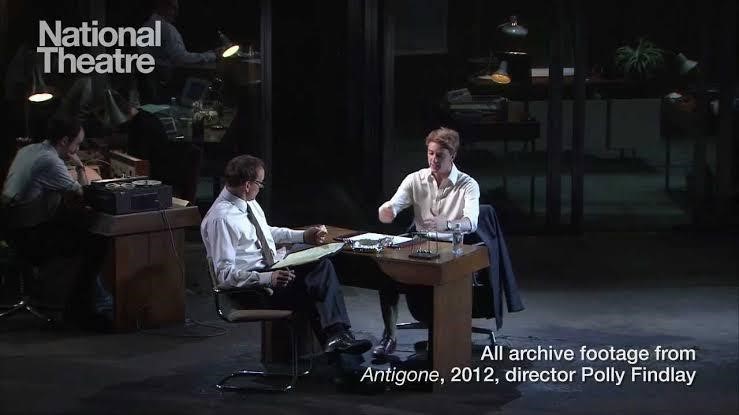
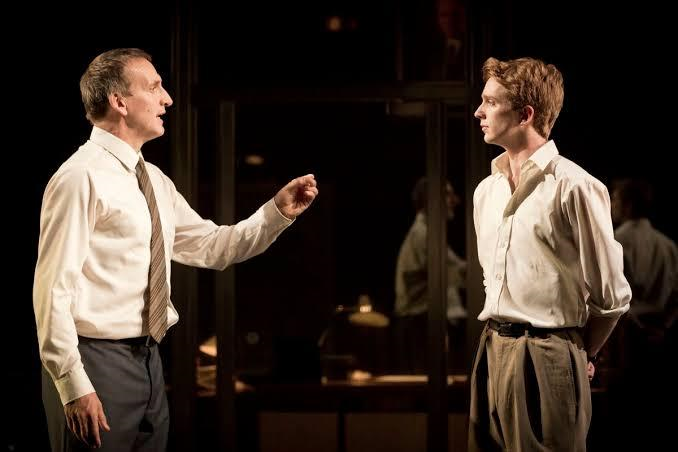
“Haemon is sort of between his father, Theban monarch, Creon and his betrothed lover and soon to be wife, Antigone, fighting to stay on both of their favors…” Luke Neberry the cast of National Theatre Antigone’s Production: Antigone and Haemon observations as the role of Haemon. Haemon is intensely desperate to be driven by the aura of passion and this is heightened by the obvious action in embracing death hood in togetherness with Antigone.   

Vignette from Daniel De Culla

BRAVO! OLE¡

         One cold, sad and sunny morning, I was walking my grandson along the Paseo de la Isla, in Burgos, when, suddenly, I had a horrible urge to urinate, remembering that my family doctor, in his day, already told me that: “every individual who has undergone prostate surgery, the cold makes him urinate a hundred times.”

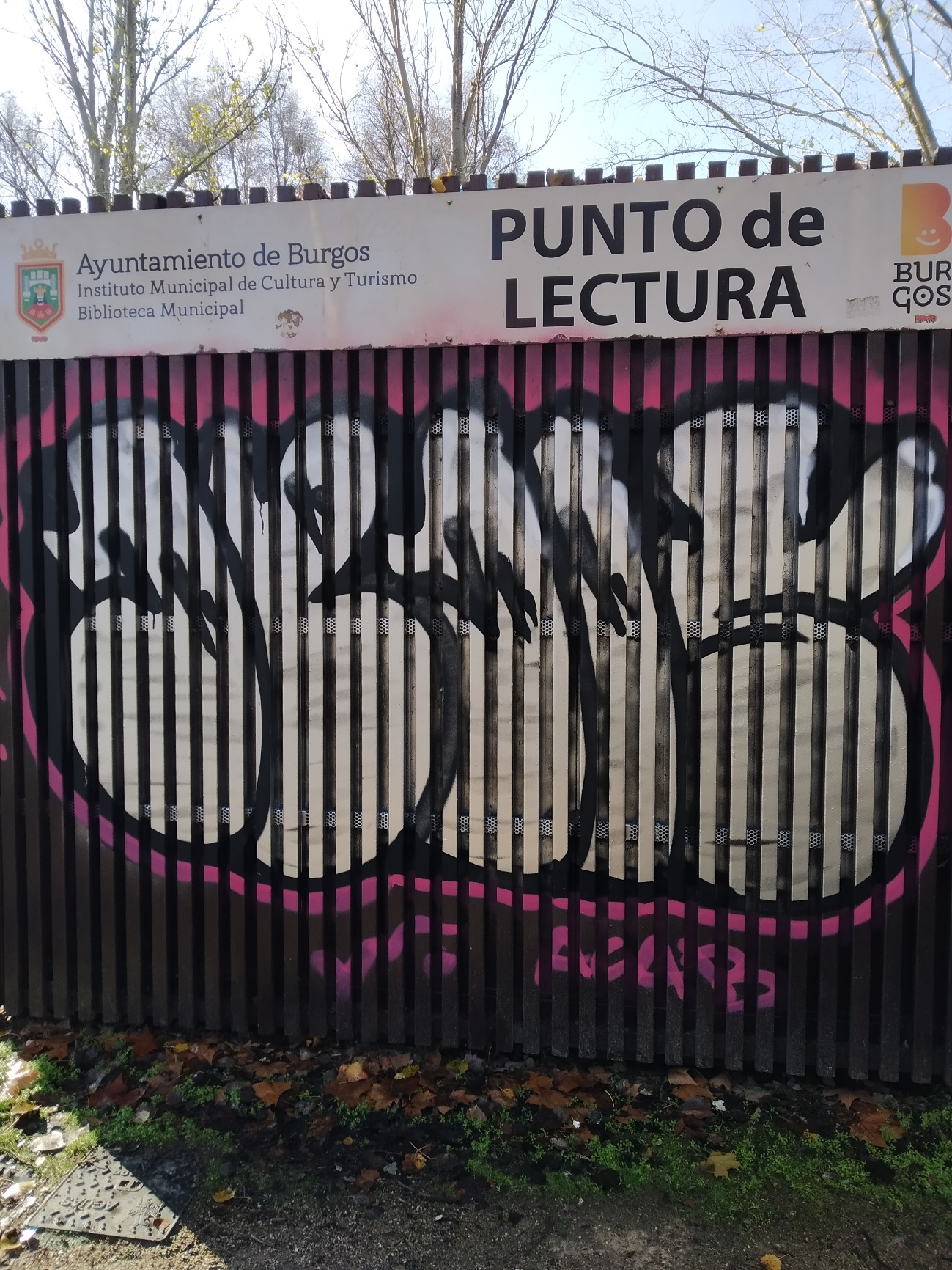
         The itch to urinate caught me next to the “Punto de Lectura” (Reading Point) booth; leaving my grandson in his car right next to the side of the booth, urinating where no one could see me.

         While I was urinating, while I was ecstatic in the piss as if I were contemplating a masterpiece by Velázquez, Goya or “El Greco”; suddenly, an old and ugly lady appeared to me like a “Menina” by Velázquez, who told me:

– Hello, friend: have you lost the horn, because I only see a skin? I thought we could have rented the booth for both of us!

It’s been a few days since I’ve seen you coming to this place to urinate, but I never thought you’d have a penis smaller than my husband’s when, at the funeral house, they embalmed him to take him to bury.

-Ma’am, I replied, from the scare that you have given me, I have saved “the skin” as you say, before finishing, and with the zipper of my fly I have caught it.

Don’t even dream that here, in this booth, we’re going to ride. Zambomba!

“Whoa!” she replied. What annoyance I have taken to see myself represented, seeing you, in the “Burial of the Count of Orgaz”from “El Greco”.

Her copulative conjunction is minuscule, master!

– But, ma’am, I answered, I don’t ask that they give me a rabbit, but money. You are similar to the grandmother of Little Red Hood, when she told the wolf that she was, when she said no; and this one, instead of fucking her, ate her.

         Unintentionally, a fart escaped me, telling to the lady:

-There goes, Menina, the service and the tip. Bye¡

         I took the car with my grandson, marching towards the Castilian and Leonese Language Institute, listening to the lady yelling at me:

– What a blow you have given me when you peered, scoundrel!

         Instantly I saw a crowd approaching; a brave man came out from among them and shouted:

– Bravo! Olé! The task that you have done to the lady is reckless. You could have given her a spanking!

-Daniel de Culla