
The Sun's Farewell To Its Flames

I confuse myself to buy a coffin
I am no longer curious about
pursuing my dreams anymore!

I don't want to feel comfortable
I want to wear the image of a sad
soldier, with a pack of cigarettes.

I envy everyone's in the cemetery
People's treatments are no longer
offensive, nor an intense silent pain.

I blinded the universe of my direction
I drank the cloud's latest drops of rain
I giggled at the sun's farewell to its flames.

I might smile & nearly describe the world
-as the reason why I collaborate with my
tears to fall in an empty room with a coffin.

Don't mention my name, just slice my tongue
Don't remember my words, just burn my poems,
Don't drink a bottle of alcohol & cry about missing me.


Bleeding Heart Poet ©️
Reflection from Norman J. Olson
From London to Ft. Lauderdale by: Norman J. Olson
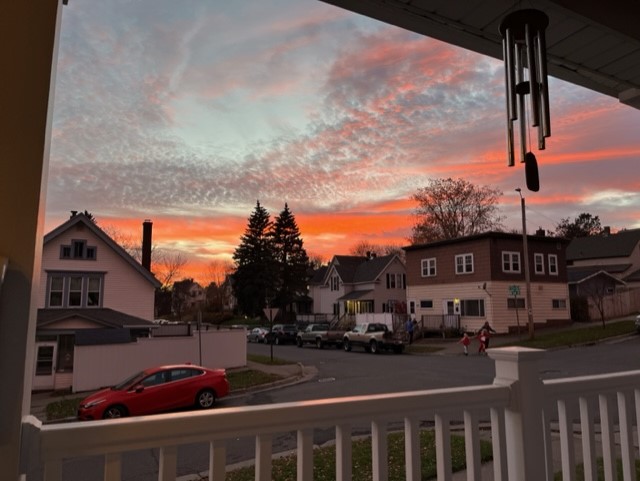
On Halloween, 2022, we were in Duluth, Minnesota to celebrate with our grandkids… we had a beautiful evening with a spectacular sunset (ribbons of orange clouds behind intricate silhouettes of ragged pine trees and the pointed gables of West Duluth houses) and lots of kids in costumes looking for candy… later in the evening, after the grandchildren had sorted their candy and gone to bed, we left Duluth for the 150 mile drive back to Maplewood…
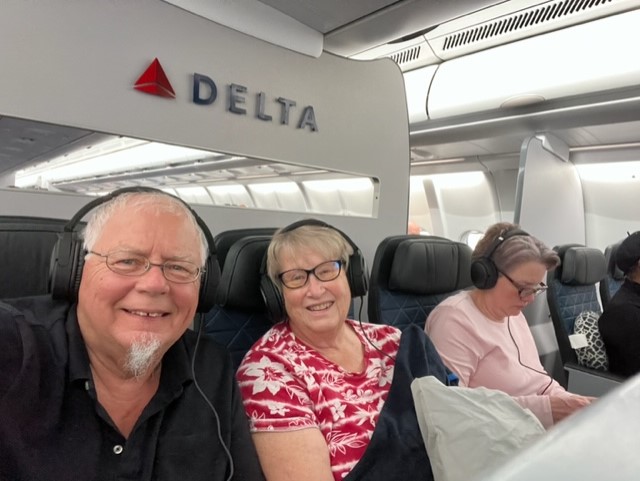
The next afternoon, we caught a direct flight from MSP to LHR (London Heathrow)… in Heathrow, we topped up our Oyster Cards and caught the Piccadilly line tube (subway) to Kings Cross/St. Pancras… we had one large bag and one small one so tried to arrange the trip with as few subway transfers as possible when we were carrying luggage… anyway, we got to the hotel and dropped our luggage… then we went into the Kings Cross/St. Pancras station and had lunch at our favorite London easy eatery, Pret… then we went back to the hotel on Argile street, a block from the station, checked in, realized that the bed was a bit slim for us old American fatties, but nonetheless, went to sleep about one pm…
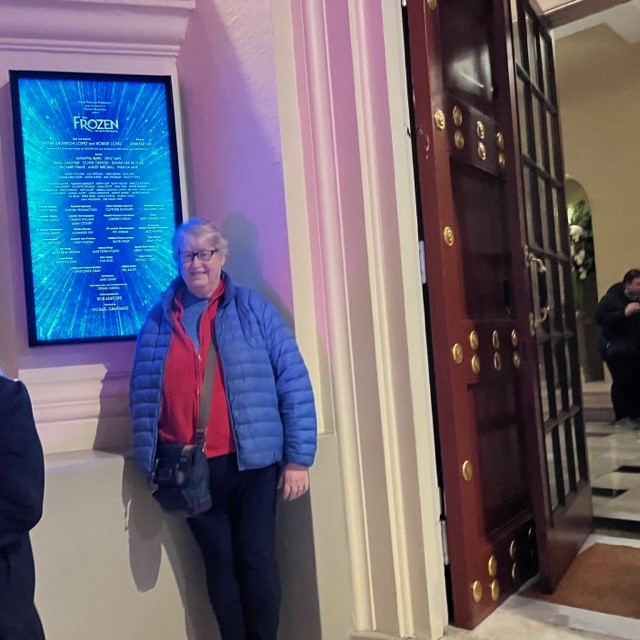
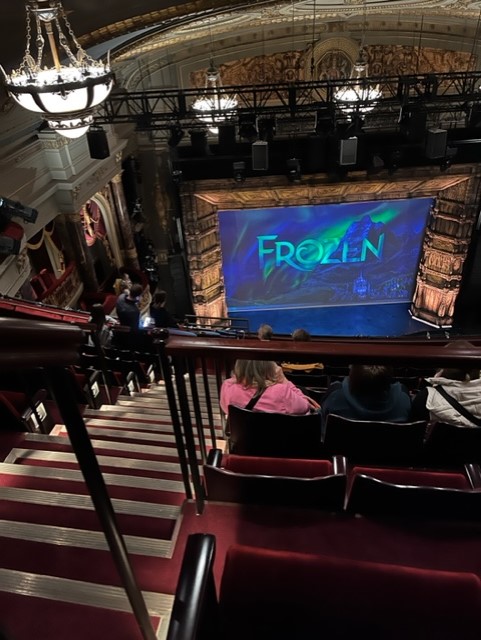
We got up around four pm and purchased tickets on line for a West End play… for this first night, we picked Frozen at the Drury Lane Theater… we had dinner at a Greek place, which was super good although, we ordered too much… and then enjoyed the play from our cheap seats in the balcony… Drury Lane is a huge old theater, very ornate and a wonderful place to see a play… everyone is familiar with the wonderful, Scandinavian flavored songs of Frozen and it was a lot of fun, “the snow glows white/on the mountain tonight”… LOL… we bought an ice cream at the intermission from the ushers who set up a portable stand at the foot of the balcony stairs… and after the show, caught the Piccadilly subway back to Kings Cross/St. Pancras… we slept until nearly noon and then had a nice brunch at the Pret…
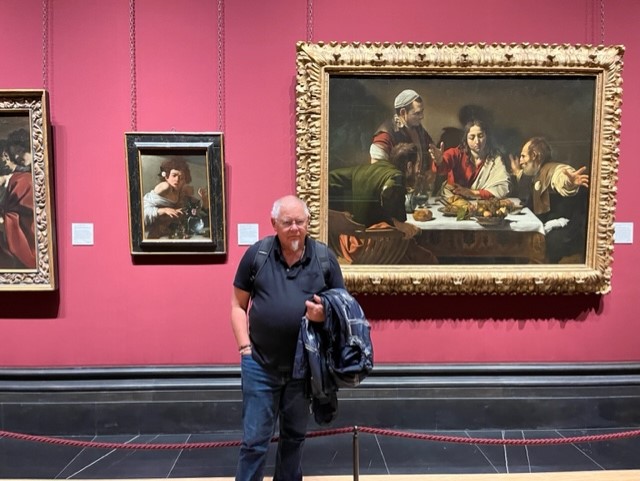
then it was off to the National Gallery of Art… this museum is just a wonder and every time I am there, I get to see many of my old favorites… like originals by Leonardo Da Vinci, Caravaggio, Velazquez, Turner…. etc. etc… I was a bit disappointed as one of my very favorite paintings of all time, An Allegory with Venus and Cupid by Bronzino, a lovely late Renaissance/mannerist masterpiece and a truly enigmatic painting… was not on display… anyway, it is such a treat for me, a sometime oil painter, to see up close and personal how masters like Titian or Turner smeared their paint around to make these wonderful pictorial effects…. to wonder what part of the small painting attributed to Michelangelo, was actually touched by his hand… to see the magical transformation of paint into picture in a Velazquez portrait of the superbly homely and inbred king Phillip IV of Spain…
we then had dinner at a tandoori restaurant near Trafalgar Square which was superb and then saw Jersey Boys at the Trafalgar Theater… it was fun to hear all of those Four Season songs from our high school years… of course, the songs were done perfectly as all the musical pieces on the West End are… the star did an amazing recreation of Frankie Valli’s weird falsetto delivery… altogether, it was another wonderful afternoon of art and evening of theater… the next day, we took a double decker bus (no, we did not go up to the top deck, we are too old and slow to climb the stairs – LOL) from in front of the station to The Tate Britain….
the bus is nice in that we can see a bit of the town as we pass along the streets, while from the subway, you only see the tunnels… the middle gallery of the museum was taken up by a huge contemporary work that did not seem to amount to much to me, but we walked past it to the gallery with all of my favorite Pre Raphaelite paintings… what a treat for me to again see these works that I have loved and studied for so many years, Watts’ Hope, Millais Ophelia, Burne-Jones Golden Stair… and so many more, two lovely Rossettis including a wildly weird and beautiful portrait of Rossetti’s girl friend (William Morris’s wife Jane) as Proserpine…
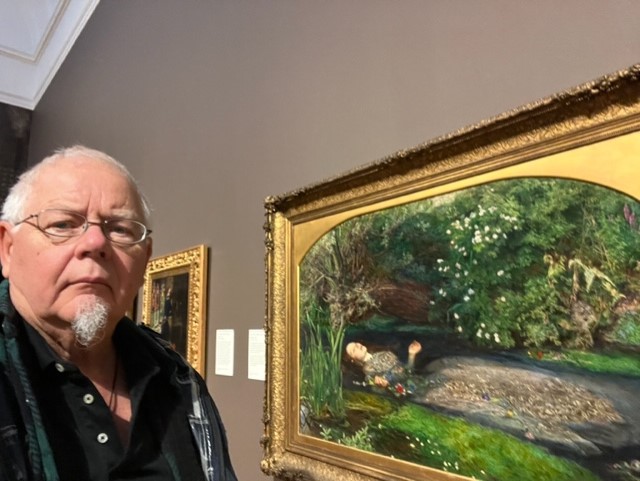
I would love to be able to look closely at every inch of these paintings that I love so much, but they are hung too high to do that… but anyway, it was a real treat for me to again stand before these works and just drink them in with my eyes… leaving the Tate, we walked a bit along the Thames and then took the bus back to near Trafalgar Square where we found a lovely little authentic Italian Restaurant (I had the antipasto and Mary had a wonderful squash ravioli) …. then, a block away to another theater to see a riotous slapstick and very British comedy called Only Fools and Horses, based on a long running British sit-com… we loved it even though we probably missed a good deal of the very British humor… “Bob’s your uncle”… okay…
the next day was Saturday and our last full day in London… we started out toward noon taking the Piccadilly subway to Kensington to visit the Victoria and Albert Museum… this place is an enormous repository of arts and crafts with thousands of exhibits ranging from casts of classical sculpture to very old and gorgeous stained glass, jewelry, silver, and other “collectables…” they have two original paintings by William Blake that were amazing to see… William Blake was a genius and a visionary… he is my favorite of all the British poets and while his painting is quirky and interesting his lyric poetry is some of the best ever written and these small paintings are interesting to me more as artifacts touched by the hand of the great poet than as works of art in their own right… here is a line from a Blake poem that has always haunted me: “when the stars threw down their spears / and watered heaven with their tears…”
my purpose in going to the Victoria and Albert was to see one of my favorite Dante Gabrielle Rossetti paintings, another amazing weird and witchy portrayal of Mrs. Morris, in a painting called The Day Dream… I would never argue that Rossetti is a great painter, a Velazquez or Titian, for example, but for all his flaws, I love his work and especially his portrayals of Mrs. Morris… I guess because they do look so weird and witchy to me… Rossetti was also a poet, but his ornate, complex poetry is virtually unreadable today… and certainly not read by anybody… well, we then took the Piccadilly line back to Charing Cross and walked along the Strand until we found a lovely little Thai restaurant where we had a fabulous Pad Thai… and a few blocks further to the Strand Theater where we saw the musical, Pretty Woman… another retelling of the old Pygmalion story (like My Fair Lady)… it was very nicely done… and a lot of fun… we were sorry as we left the theater that we did not have more time to sample the artistic and theatrical treasures of London…
the next morning, we said goodbye to the skinny bed LOL of our hotel and lugged our bags to the subway station across the street… the Victoria Line also stops at Kings Cross/St. Pancras so, we were able to get to Victoria station without changing trains… just outside the station, we found a little restaurant where I was able to get another “full English breakfast” (two eggs, back bacon, pork and beans, grilled tomato, mushrooms and toast) for a reasonable price… and it was right on the way to the Victoria Coach Station where I had booked coach tickets to leave at one pm for Southampton… it had rained/drizzled on and off for our whole time in London, typical of the weather there at this time of year… but we had our rain jackets and an umbrella so we were fine…
for the coach ride to Southampton, it poured rain all the way which made the incredibly green English countryside even more green and lush, looking for all the world like the England we saw in the John Constable paintings at the National Gallery… or the misty landscapes of Turner… we even saw a gorgeous rainbow as we were approaching Southampton… I had booked the motor coach because of a pending rail strike that never actually materialized, but the coach is a fine way to travel and to see the countryside and was less than $20 for two tickets from Victoria Coach Station to Southampton… the rain stopped just as we were pulling into Southampton so we got off the coach and lugged our bags the half mile or so to our hotel which was near the cruise port… this hotel was far cheaper than the hotel in London but relatively sumptuous, with a big bed and a large room with a fancy shower… we dumped our bags and walked through a thin drizzle to the nearby shopping mall where we had a very nice Italian dinner looking out over the city…
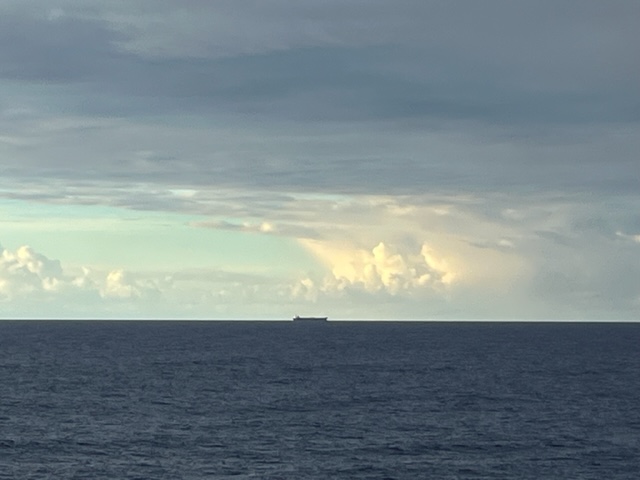
the next morning, it was raining lightly, but we had our rain jackets and I thought I knew the way to the cruise port (about three quarters of a mile), so we started walking… a few minutes into our walk and we could indeed see the beautiful Emerald Princess tied up at the dock ahead… about the time we passed a street called Cuckoo Lane, it stopped raining, so we continued walking toward the ship… taxis and buses hurried past us, but a few hardy souls were also headed out on the dock on foot…
we paused briefly to be impressed with the lovely white and blue bulk of the ship looming over the dock and I could not help thinking of the accounts I have read from people like Somerset Maugham or the movies I have seen featuring travel from the classic era of ocean travel one hundred years ago, that was all but ended with the explosion of cheap air travel in the late 1950s… we dropped off our bags, glad enough to be rid of them and boarded the ship which was to be our home for 16 days… our stateroom was one with a window looking out on the lifeboats… the bed was super soft and comfortable and since our first stop was the buffet, we discovered that the food was just terrific… everything fresh and tasty…
we have done several of these trans Atlantic crossings and usually the ships have been pretty full, but this ship was half empty leaving with about 1300 passengers and nearly as many crew… it was the end of the European cruising season and so, the ship was “repositioning” to Los Angeles for the winter… the ship sailed at five pm as we were sitting down to our first dinner in the sumptuous Da Vinci dining room… the next morning we were docked at Cherbourg France by about seven am… I had found that one of the ships tours went to Mont Saint-Michel… we usually do not do organized tours in cruise ship ports, preferring to explore on our own… but we had never seen this famous site and since it was an hour and a half drive each way from the port, we thought we better take the ship tour, so the ship would not leave Cherbourg without us…
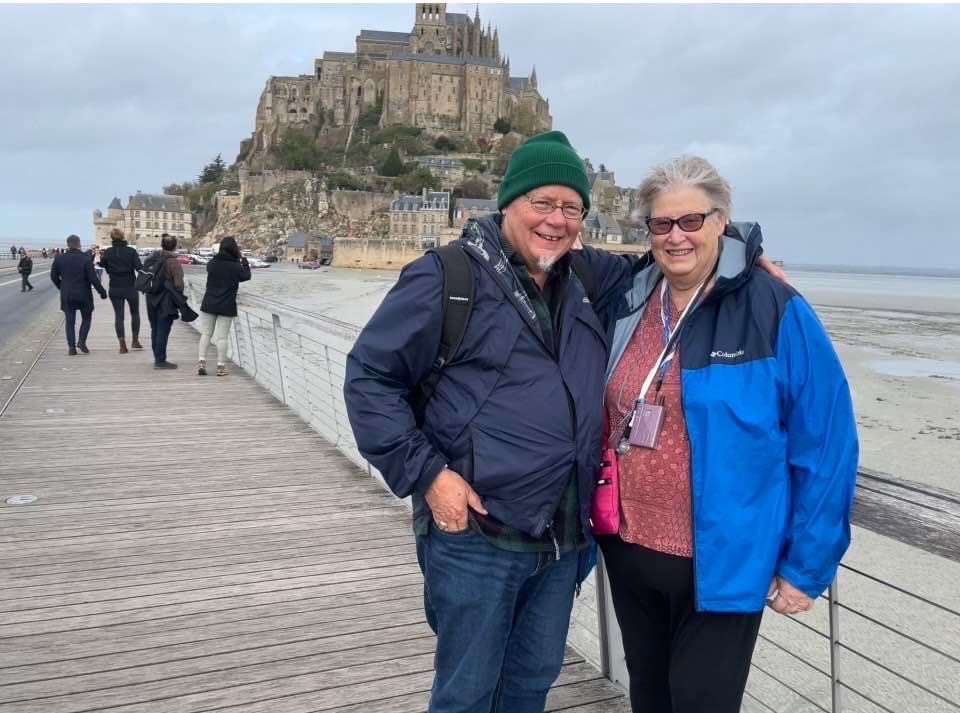
so, we left by about nine am on a motor coach for a lovely drive across the Normandy landscape to arrive at Mont Saint-Michel… Mont Saint-Michel is a small medieval town built on a rock in the middle of a bay… at high tide, it is surrounded by water but at low tide, it is surrounded by mud flats… there is a church at the top of the rock… there is a shuttle bus from the parking lots across a causeway to the town… we got off the bus and walked around the cobble streets of the old town… we were told that less than fifty people actually live there now… and the town is full of restaurants and souvenir shops… we did not walk the 400 steps up to the abbey… it is supposed to be very beautiful but we cannot do that many stairs anymore and so we stopped in a coffee shop and Mary had a coffee while I had a soda… it was fun to watch the tourists from literally every corner of the planet walk by and to see the old stone work of the houses and walls… we were told the history of this place but I don’t remember much except that before it became a tourist destination, it was last used as a prison…
the next day the ship stopped at Le Verdon sur Mer, where a shuttle brought everybody to a small French seaside resort called Soulac sur Mer… the resort season was over, so this town was very quiet with many resort cottages shuttered for the season… it had a small shopping street with a shop where we bought a wonderful French pastry… we walked a few blocks to where the street ended with an esplanade that overlooked a long, wide beach where we could see the waves of the Atlantic Ocean crashing on the sand… it was a lovely day, so we sat in the sun and watched the people walking on the beach and the waves rolling in… the next stop after a day at sea, was Bilbao Spain… this is the site of a branch of the Guggenheim museum of modern art in New York… the actual building is designed by Frank Gehry… this is one of his famous “tin can” buildings that looks like a building made of shiny metal that has partially melted… other examples of his work can be seen at the Weisman Museum of art on the campus of the University of Minnesota and other places around the world… I do love these odd looking buildings… my favorite is in Las Vegas, Nevada… I find going into these museums of modern art sort of depressing… I am sure that is some kind of personality failing on my part, and I am sure that if I went into the place, I would see things I found interesting, non the less, I took the path of least resistance and enjoyed the Guggenheim from the outside…
it is sited on a river that is developed with a very nice river walk… we had a gorgeous sunny day, so we walked along the river enjoying people watching with breaks to enjoy one of the many benches with a view of the river, the Gehry building and the buildings across the river… it was fun to see the many fit and stylishly dressed Spaniards of all ages strolling along the river, many with little dogs on leashes… there were trolley tracks near the river walk, so we hopped on a trolley and ended up in the “old town” part of the city where we had a nice long Spanish lunch with a view of the Cathedral square… we then took the trolley back to the shuttle bus stop and made it back to the ship, tired and a bit sunburned… the next port was A Coruna, also in Spain…
looking at a map at the tourist office when we got off the ship, we found the old Roman lighthouse which was the main tourist attraction in the town… the very helpful information person told us how to catch the city bus to get to the lighthouse… so we hopped on the city bus, paid the 1.2 euro fare and got a nice tour of the old town part of the city as the bus made its way to the lighthouse… the lighthouse was up a steep hill, so we contented ourselves with looking at it from the parking lot instead of climbing the hill… we then walked into the neighborhood where we found a Tapas Bar and had an amazing lunch of Tapas… this lunch was at a table on the sidewalk with a warm sun and a gentle breeze… then we caught the bus back to the ship and sat in the lovely park overlooking the marina and the huge graceful bulk of the Emerald Princess until it was time for all aboard…
the next port was Lisbon Portugal… we have been to Lisbon a few times and this time Mary suggested we go to the elevator…. this elevator is a huge very old steel structure with an ancient elevator that goes up to a viewing platform overlooking the city… we bought an all day bus pass for a few Euros which included the entrance fee for the elevator… we took a bus from the station which was right across from the ship to the old town part of the city and walked around until we found the elevator properly, Elevador de Santa Justa… after waiting in a short line we did indeed go up to the viewing platform and had a wonderful view of that part of Lisbon, including the old fort on the mountain across the valley from the elevator… descending from the viewing platform, we stopped for our usual coffee, soda and people watching and then took the bus back to the ship…. our final port before six days at sea crossing to Ft. Lauderdale, was Ponta Delgada on San Miguel Island in the Azores… these islands are part of Portugal but the small city is far more laid back than the bustle of Lisbon… it reminded us of what Europe was twenty five years ago…
we went to the farmers market and bought some honey and jam… the woman in the market stall gave us two small and surprisingly tasty mandarin oranges…. we spent the rest of our time here just walking around or sitting and watching the people… we have seen the tourist sites on the island and someday would like to go to the mineral baths, but this day, we did not feel that ambitious, so we had a lovely quiet day roaming around and people watching, talking about our trip and how lucky we have been in this life to still be seeing these amazing places at age 74…
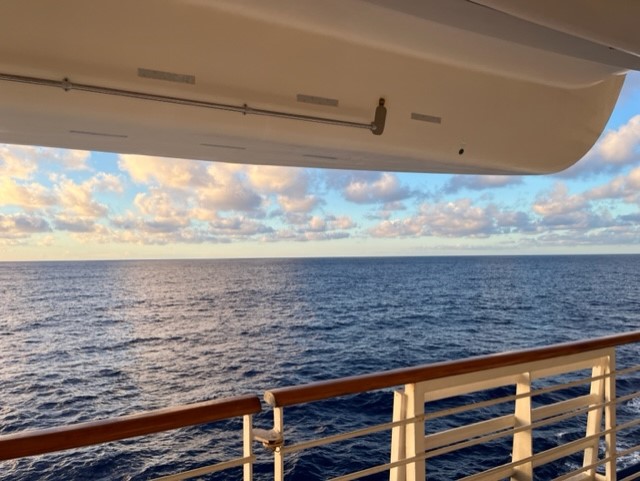
the Portuguese people we met were invariably friendly and seemed to enjoy talking to us and helping us find our way to things like bus stops and cafés… the next six days were spent at sea… we enjoyed the sea days… the ship provided various “enrichment” lectures, which were lectures by retired college teachers on all kinds of interesting subjects… Mary enjoyed many of these talks… I mostly spent the days in a deck chair on the Promenade Deck, reading, drawing and just looking at the ocean… Mary also enjoys spent many relaxing hours looking at the ocean and reading… on these ocean voyages, one seldom sees any sea life… occasionally we will see flying fish jumping out of he way of the ship’s bow wave and there are sometimes frigate birds swooping over the waves… mostly, it is just vast, blue water right up to the knife edge of the horizon….
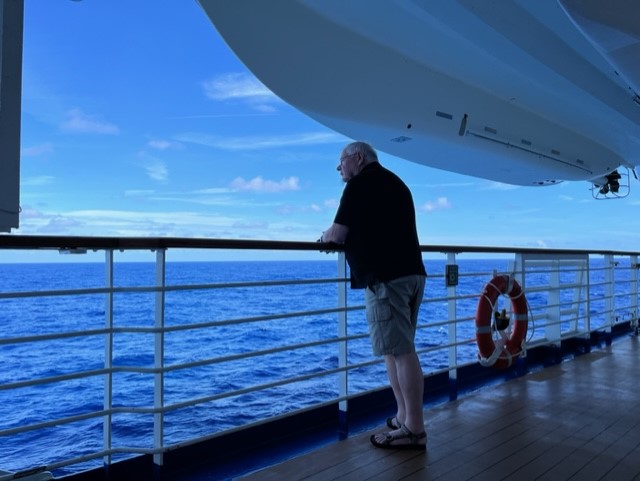
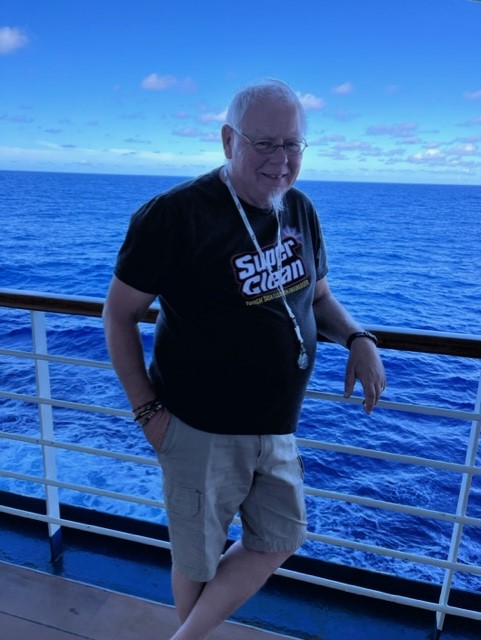
we had great weather for the crossing with it getting a bit warmer everyday until the last two days, the highs were in the 80 degree Fahrenheit range… every morning, I would start with my usual forty minute walk, except instead of walking around Beaver Lake, I would be walking around the Promenade Deck, Deck 7 on this ship… during the morning walks, I would recognize the same people who liked to get out and walk at that time… it was never crowded, in fact, the ship was never crowded anywhere due to it being half empty… then Mary and I would have a breakfast at the Buffet on Deck 9… I would usually have a modified English breakfast with lovely fresh croissants substituting for toast… then I would spend the whole day and Mary part of the day reading and drawing on Deck 7…
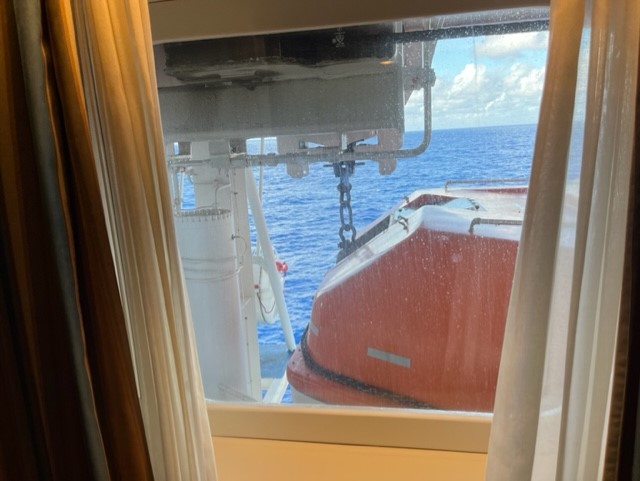
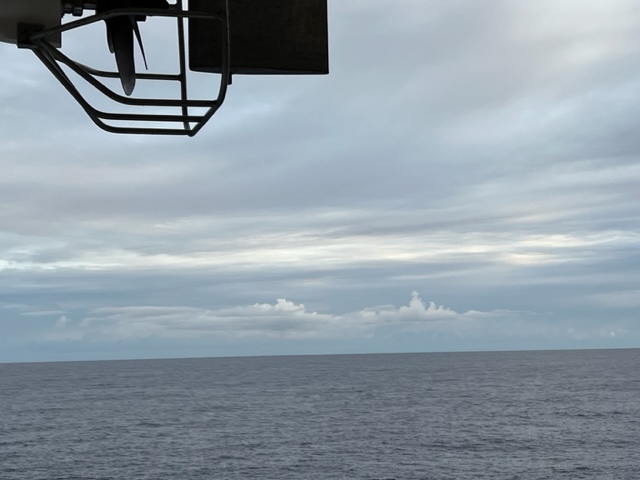
every day at noon, the captain of the ship would come on the sound system that covered all of the public areas of the ship and make an announcement of just where we were in degrees and minutes and make comments about the condition of the sea (very calm for the last six days) and other points of navigational interest… it was impressive to me when he said for several days in a row that the water beneath the ship was three and a half miles deep… we saw little shipping but would occasionally see a container ship or a tanker on the horizon… on a couple occasions, we saw other cruise ships… we would have a light lunch at noon, usually a salad from the extensive salad bar… and then back to Deck 7 for a few more hours of drawing and reading…
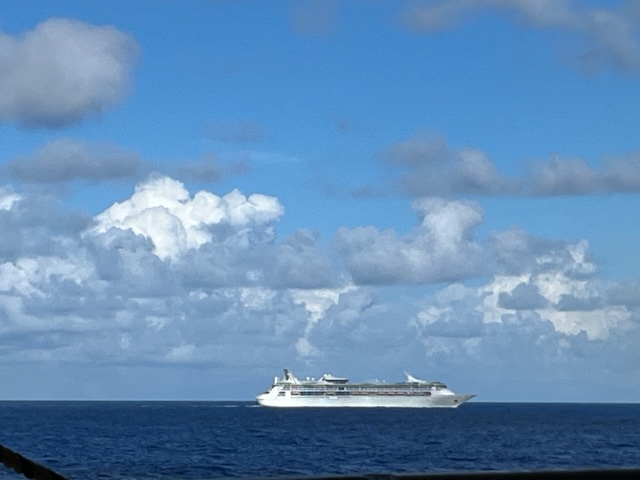
Mary had brought one of her favorite board games with so we would end our day on Deck 7 at three pm to find a quiet spot out of the wind on Deck 9, to play Ticket to Ride… at five pm, we would go to the Da Vinci dining room… usually, we would have a table of six people, so it was nice to meet different people and we could brag about how wonderful our respective grandkids and kids are… the people on the ship were mostly in our age range, aging baby boomers… and the ship catered to us by playing the greatest hits of the fifties, sixties and seventies continuously over the sound system in the buffet room and on the open deck by the swimming pools… the crew were mostly youngish, early 20s people from Philippians, Indonesia and dozens of other countries and from their constantly hearing those songs these people who knew nothing of our history or pop culture would be walking around singing “Sherry… Sherry baby” in a Jersey Boys falsetto… or “Pretty Woman…”
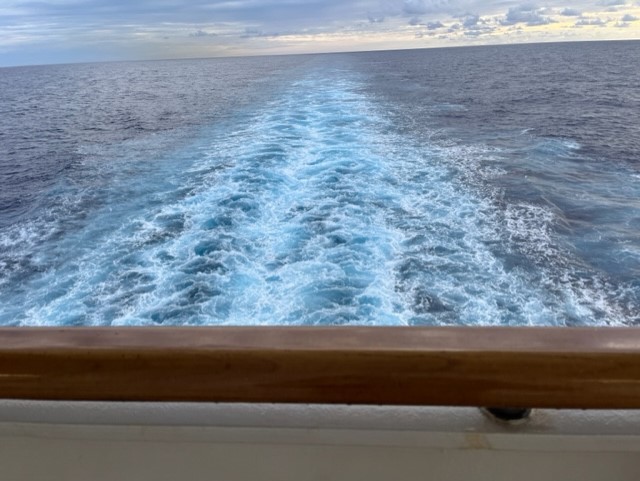
after dinner, there was always a show of some kind in the theater at the front of the ship…. sometimes it was singers, sometimes dancers… they were mostly young, beautiful and talented and obviously delighted to have an actual job as a singer, dancer, etc… there was a juggler who did magic tricks and a group who sang show tunes… there were a few production shows with the regular singers and dancers of the ships entertainment group… after the delicious meal and the show, we would sometimes go out on deck so Mary could finish her “steps” or else we would just sit and look at the black water and sky…
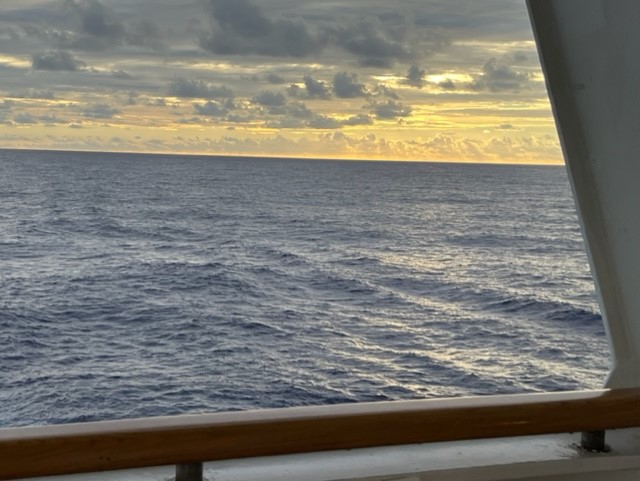
I know that some people are hostile to cruise ships as guzzlers of fossil fuels and disrupters of the sea… I am not a scientist or a politician and the ship is the only way a person like me can have the experience of sailing across the Atlantic ocean… which is an amazing experience… I hope that even as the future charges toward us with all of the many challenges known and unknown that it will bring, that people will still be able to travel… meeting people from all over the world, I have learned that we are not that different from each other… we all have the same wants, needs, loves and desires… and solutions to problems will come from us being able to come together across walls, borders and barriers as brothers and sisters…
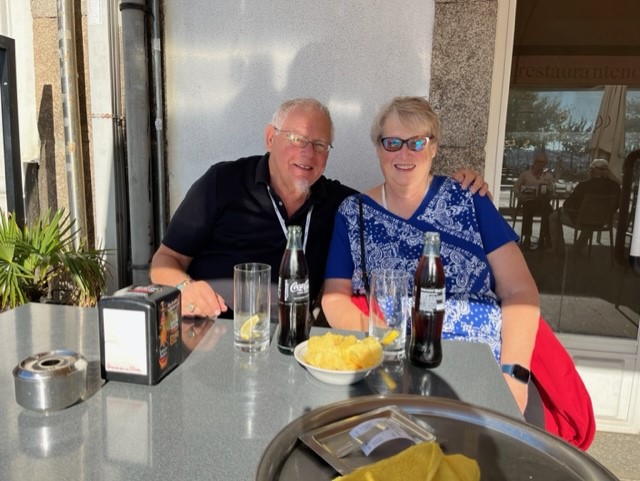
on November 23, the day before Thanksgiving, we arrived in Ft. Lauderdale… after a quick breakfast, we were off the ship into the hot south Florida sun… we made it to Miami and caught our flight at noon and were back in Minneapolis on a bus heading for McKnight Road by four pm… now, a few days later, we are getting 7 inches of snow in Maplewood, Minnesota… so from sitting in the shade looking at the ocean to shoveling snow in only a week… Yikes… we certainly are a couple of lucky old baby boomers…
Movie review from Jaylan Salah
The Husband, The Wife, and Their Two Dead Sons Review
Satish and Santosh Babusenans’ Winter of Discontent
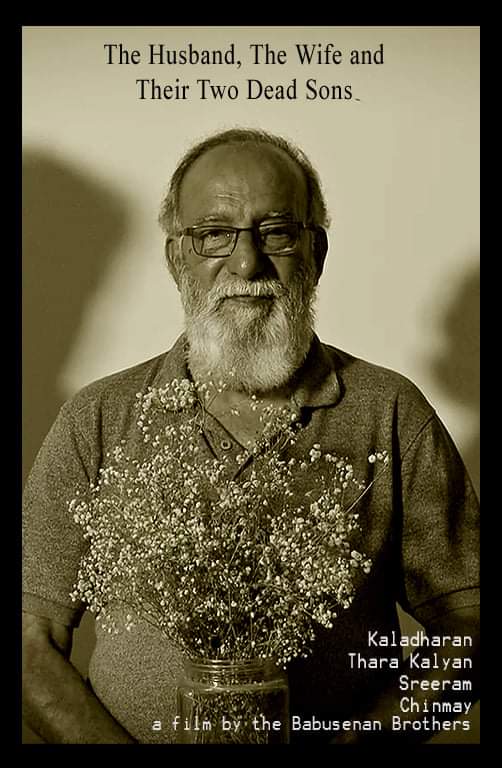
The world of Santosh and Satish Babusenans’ cinema lures me in. Their lush cinematography, toned-down visuals, and deep philosophical undertones make their films a train of thought for the soul. Their newest film, “The Husband, The Wife, and Their Two Dead Sons” uses scenery resembling Korean and Japanese cinema masters of manipulating time. Asian cinema is a breed of its own, leaving spaces for breathing between shots, and allowing characters to grow through a scripted dialogue that feels rich and compressed. The Babusenans always create a sense of presence in their films. They are not concerned with the past or the future but with what is in front of the camera.
Time is an integral part of the Babusenan brothers’ cinema. Events stretch and extend, shots are long, and cameras are left rolling and absorbing whatever events are happening onscreen.
Kaladharan Sika is no doubt the Babusenan Brothers’ muse and inspiration. These two use him for the essence of what their cinema wants to say; wisdom, philosophy, the passage of time, sickness, and death.
Ever since the first film I saw by Satish and Santosh Babusenan, I’ve known them to be explorers of major themes and complex topics through the lives of simple people. Through a dissection of the day-to-day Indians going on with their lives, intertwining and mingling through various explorations of sexuality, existentialism, mortality, and morbidity.
Death in the Babusenan world is neither created nor destroyed. It is not a challenge to be conquered nor a feast to be celebrated, but like many Eastern Asian philosophies and religions, it is present as a parallel to life. They coexist in harmony and lead others through and through. Talking to dead people, accepting death, or questioning it does not seem like a part of a gigantic Western epic but more of a natural part of the course of life. That is what Narendran does with his dead sons. A conversation is still a conversation. The fact that half of it is in the land of the living and the other is not part of this world doesn’t change a thing. There’s no eeriness or creepiness in the mood. Death is just there and so are life, sexuality, birth, and mythology.
In this mystical tale of spirituality and modality, Narendran is a man who has come to terms with Death. Like Bergman’s “The Seventh Seal”, Narendran plays board games with Death, and has existentialist conversations with the Grim Reaper, as represented by his two late sons. He seems to have solved the ultimate dilemma of life. He made peace with the ones who left and the aftereffect of loss and grief. But even as Narendran’s world harmoniously unravels the equation of death, his morality, philosophy of life, dreams, and aspirations are challenged as he faces the epitome of challenges, a death beyond his capacity for acceptance, a void more prominent than his burden to bear.
Satish and Santosh Babusenan dissect Indian society, touching on heavier stuff such as familial ties, financial struggles, and patriarchy. Absent fathers who traveled to secure a better life for their children who -in turn- were not appreciative or celebratory of their parents’ decisions. Mostly the Babusenan brothers rely on familiar worlds, familiar territories, and faces. Their heroes and muses are usually the same, their stories doused in the local flair.
The Babusenan brothers do not fear voicing their passion or dissatisfaction with the world. Their characters are highly opinionated, expressive, and thoughtful. Their films reflect deep thinking and a technique that relies on realism and minimalism. Conversations in “The Husband, The Wife, and Their Two Dead Sons” are crucial to the plot dynamics and they are left unscathed, unedited. Richard Linklater script types where people’s dynamics are at the narrative’s core while heavier Bergman philosophical questions immersed in French realism are in control of the stylistic aspects of the films.
Ever since their first film, “The Painted House,” the Babusenans have been asking questions they seek answers to along with the viewers. But as their filmography progressed they stopped inquiring and became more introspective, more intrinsic in their quest to decipher the big mystery of the world. Their fiery spirit might not have died, nor has their fights with artistic oppression, but their nature has become more docile and forgiving, their technique more confident.
A different color palette dominates throughout the film, from shades of dark blues to orange hues, greens of the outdoors, and open spaces to dark shadows as Narendran faces his deepest fears and existential wonder. Forced into a corner when his wife’s death looms on the horizon, Narendran confronts his faith and the so-called harmony he has made with Death.
“The Husband, The Wife, and Their Two Dead Sons” is a movie for all the senses. This movie demands feelings and empathy. It projects its themes through a lens of humanity and understanding. Characters are going through crises of faith, certainty, and disillusionment, replicating their feelings through a series of events and sequences well crafted by the Babusenan brothers.
In a particular scene, an unseen character is quoted as asking one of the dead sons, “Do all poets love to be sad?” This question got me thinking about what defines the Babusenan brothers’ films. Is it melancholy? The eerie inevitable feeling of finite possibilities and endings to a life rattled with questions and accusations. Is it the monotony of rotating time or the familiarity of actors’ faces interloping from one film to the other? But I realized that it was all of the above. Against all odds, fighting a systemized global opposition to alternative art and artists, the Babusenan brothers carved their names as veteran filmmakers and authentic creatives. From their hearts and minds came a series of films that map out a world so intricate in its simplicity. For viewers from different parts of the world, the Babusenan brothers will stand out as proud artists who have refused to mold into more approachable moviemakers and auteurs, and for that alone, still they rise!
Story from Alison Owings
On their after work Thursday TGIT happy hour (Friday was too crowded to bother), Ginny and Tina sat at their regular places in the Fiasco and conjured their regular theme: perfect lives. The Fiasco reigned as their perfect bar, and for several reasons. The barstools had backs. The peanuts were free. The bartender, Maribel, was strong.
She began working the Fiasco’s happy hour shift almost the same week Ginny and Tina showed up on their search for a perfect bar, two years earlier. Now, without being asked, she brought their usual first drinks, Bloody Mary for Ginny, club soda for Tina.
“Priming the pump,” said Tina every time.
By their second sip, the two friends started on what Tina called their “topic de jour,” a specific category that would contribute to perfect lives. This week was Ginny’s choice. “High end motels,” she announced. Or better than ones she had experienced, she added. “Where the fitted sheet, you know, the bottom one….”
“I know the fitted sheet goes on the bottom,” interrupted Tina, getting ready for her stronger order.
“… where management ordered the right size, not too small, so a top corner doesn’t creep off the mattress in the middle of the night and whack you in the mouth.”
Tina nodded. “I hate when that happens.”
Ginny smiled wanly. Tina and her clichés.
“Once,” said Tina, “I encountered someone’s sock.”
“Ewww,” they said in unison, drawing the attention of Maribel, who walked over and put out a second bowl of salted peanuts. “The theme tonight is perfect what?”
“Motels,” said Ginny.
Maribel, nodding, leaned on the bar briefly, stretching her Achilles tendons, first her left, then right “What’s with fluorescent lights by the bed?” she asked. “I’m all for lowering my carbon footprint, but can anything make you look uglier?”
The two women shook their heads.
“My least favorite kind of motel,” said Tina, “has the outside hallway by your door and the window, the only window, next to it. So if you open the crappy curtains an inch, anyone can see in.”
Ginny announced, “Perfect motels have windows, plural, overlooking a real view. That is,” she added with some passion, “a window that opens.”
“Bliss,” said Tina. “Bel, when you get a chance? Bloody M now for moi?”
Tina was using bliss often these days, thought Ginny, rattling her ice cubes in irritation and watching the drink disintegrate into an unattractive color. A perfect world would have Bloody Marys made with frozen tomato juice cubes.
As Maribel prepared Tina’s drink, Ginny whispered, “We could ask Bel about her new tattoo, back of her neck, looks like. But that would be off topic.”
“Agreed,” whispered Tina. “And would a perfect world have tattoos?”
Maribel returned. Placing Tina’s Bloody Mary down, she said, “How about, if the motel advertises `continental breakfast,’ it’s not the phony kind.”
This prompted Tina to part with another cliché that annoyed Ginny. “Tell me about it.”
“Fake orange juice, bleh,” said Maribel, “Brown liquid labeled coffee.”
Ginny, wishing to escape the imperfect for her weekly dose of perfection, spoke up. “The perfect motel, let’s even say hotel, has fresh squeezed o.j., real coffee, and a great carb whatever. Not one of those pop tart things.”
“Under duress,” asserted Tina, boldly, “They do the trick.” She returned to her drink. “Actually, this motel one is even more challenging than last week’s.”
Ginny winced, remembering. A perfect world meant that the things you pick at get better. “I liked the one a month ago,” she said. “Non-medical behavior by doctors in a perfect world.”
Tina swirled her drink briskly, quoting the clincher. “Doctors who do not pat us on the head.”
“If only,” said Ginny. “Like employers who don’t make you feel all affirmative actiony.”
“Amen.”
“Affirmative actiony. Cool phrase,” said Maribel smiling, as she moved off to open someone a beer.
By the time Tina finished her second happy hour Bloody Mary, a virgin for Ginny on round two, and Tina paid and tipped their agreed upon 50 percent, for it was her turn, the two friends had conjured a perfect world’s motel. Its wide entrance door opened automatically, real plants, even if they were ficus, lived in the lobby a perfect continental breakfast was available as room service, the room’s carpets were not too dense and very clean, the bathroom, like the room, had a wide door and lots of space. Good soaps were provided and the motel’s notepads had more than two pages left on them.
The fractionated piece of a perfect world complete, Ginny and Tina clinked their empty glasses in accord, and said, “Done!”
At the familiar signal, Maribel excused herself from other customers, came around the bar, and unfolded both women’s wheelchairs. With practiced motions, she helped Ginny and Tina descend from their stools and land upright, as earlier she had helped them ascend.
“Thanks, doll,” they chorused.
“Decided next week’s topic?” she asked, leaning down to adjust their footrests.
“You give us one, Bel,” said Ginny.
“How about,” said Maribel dreamily, standing back up, “in a perfect world men have a sense of humor about themselves?”
“Be still my heart,” shrieked Tina, as she rolled toward the door, which opened automatically, another positive feature of the Fiasco.
Ginny shook her head, hearing echoes of Be still my heart, I hate when that happens, Bliss, Tell me about it. Tina also had taken to saying, “It is what it is.” In a perfect world, thought Ginny, people would invent their own expressions. ###
Poem from Sayani Mukherjee
Dream
By Sayani Mukherjee

Fallen leaves ashen branches
Candy cream by nightswim high
Pinky promises candyfloss gardens
My beautiful headlines floor
Penguins swarm around
A lethe ward booking river
My mushroom floor
Icy clouds roadside shadows
Horses catching for the cherry blossoms swim
Newly renovated daydreaming gardens
Nothing to do with reality bites
For smacking paperflowers high
From the ceiling top
Little bunnies and Alice dream
Down the rabbit hole dream
For moonstone and ruins of paper work
My eyes fleck
Raining hard over the open skies
Purple hibiscus disc and tulle flowers
The nightstand of fallen leaves
Potential for the first time
Trying my Cinderella shoe.
Synchronized Chaos December 2022: The Thin Veneer Over Wildness
Welcome to December’s first issue of Synchronized Chaos Magazine!

First of all, we encourage you to come on out to Metamorphosis, our New Year’s Eve gathering and benefit show for the Revolutionary Association of Women of Afghanistan and Sacramento’s Take Back the Night. This will take place in downtown Davis, CA, at 2pm in the fellowship hall of Davis Lutheran Church (all are welcome, we’re simply using their room as a community space). 4pm Pacific time is midnight Greenwich Mean Time so we can count down to midnight. Please sign up here to attend.
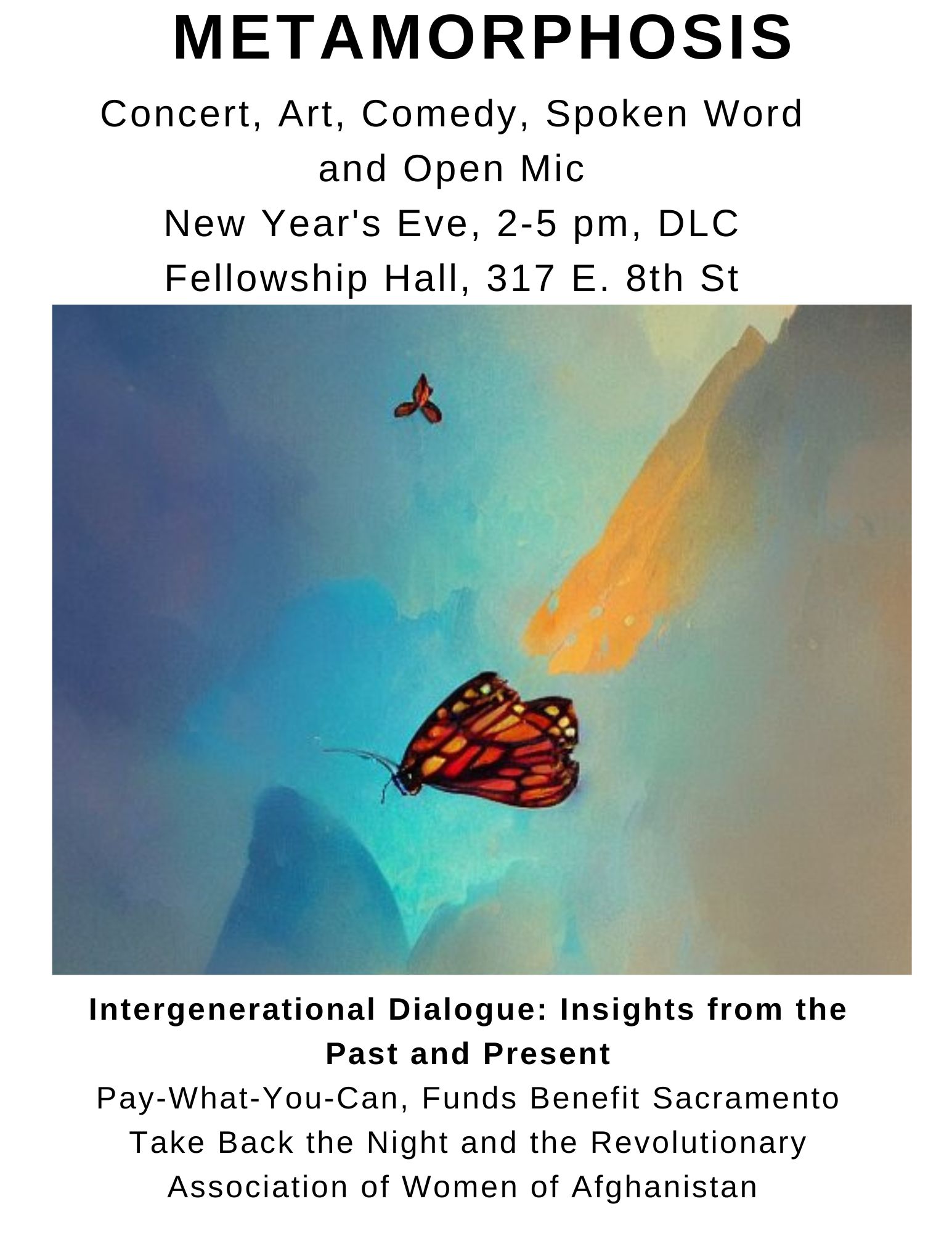
The theme “Metamorphosis” refers to having people there from different generations to speak and read and learn from each other, challenging us to honor the wisdom of our parents and ancestors while incorporating the best of the world’s new ideas in a thoughtful “metamorphosis.” We’ve got comedian Nicole Eichenberg, musicians Avery Burke and Joseph Menke, and others on board as well as speakers from different generations.
Second, our friend and collaborator Rui Carvalho has announced our Nature Writing Contest for 2022.
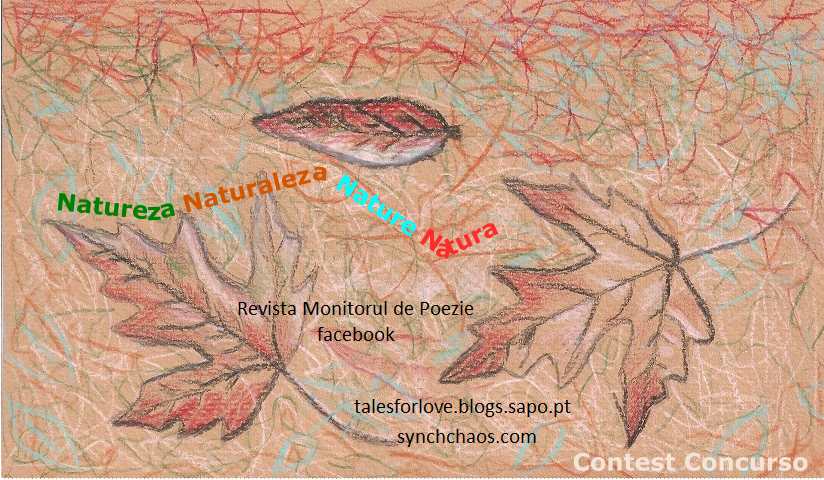
This is an invitation to submit poems and short stories related to trees, water, and nature conservation between now and the March 2023 deadline. More information and submission instructions here!
This month, our issue explores the often quite thin veneer between ourselves and the world’s wildness.

J.K. Durick’s work looks into time, memory, and the fears humans and animals bring into the most mundane encounters. Daniel DeCulla, in a more humorous vein, writes of people who embrace dog poop as part of our world.
Nathan Whiting’s concrete poetry reflects layered physical sensations of nature: intimacy, hibernation, and composting fruit. J.D. Nelson points out a few of the hidden natural encounters people may miss in a suburban neighborhood. Christopher Bernard illustrates a mysterious character who forms a deep bond with the ocean.
Rose Knapp’s pieces reference theology and cultural history along with the natural world. And Thomas Reisner’s artwork reminds us that the natural world can be one very wild place indeed.
Jim Meirose highlights the “wildness” of the general public by illustrating one type of distinctive character clerks encounter while working at a store. Jaylan Salah analyzes the film Emily the Criminal and suggests that the main character is perhaps more of a regular person facing the gritty reality of life rather than a villain. As in Meirose’s shoe store, the workplace can be as harsh and uncivilized as any natural landscape.
Lisa Reynolds suggests that there can be more drama than meets the eye within a simple family scrapbook.
Emdadul Hoque Mamun contributes a sensual ode to the beauty of raucous Parisian nightlife.

Our problems, the unpredictability of our lives, are another aspect of “wildness.” Alison Owings describes a gathering of Native American people for dinner and a drum circle in a piece that touches on their everyday struggles and society’s inequities.
Jalaal Raji references Greek mythology in his piece on the possible instability of romantic love. Christina Chin and Uchechukwu Onyedikam’s collaborative haikus capture moments of connection and loneliness.
J.J. Campbell describes the ferociousness of our modern highways, along with glimpses of bravado and defiant cheer in the face of illness.
Our own minds can be as untamed as any wild place, and several contributors’ work represent that reality or efforts to manage it.
Fernando Sorrentino posits a seemingly ludicrous situation, a man repeatedly hitting the narrator with an umbrella, which becomes a meditation on how we can get used to just about anything and then become anxious about any change, even a return to normalcy.
Ivars Balkits evokes how our minds wander while watching blue screens on old television sets or staring out the window. Debarati Sen probes the restless and absorbing nature of memory.
Aisha MLabo writes of the hidden passion burning within her creative mind. Z.I. Mahmud analyzes various narrative techniques behind the structures of internationally recognized literary works.

Poet Shine Ballard arranges words on a page, then trims them down to fit certain poetic structures. Mark Young crafts experiments with language that approach an internal logic.
Channie Greenberg exhibits a diverse collection of photographs unified by the color beige.
Some writers explore how and where we can experience the world’s wildness, or assert and defend our place within it.
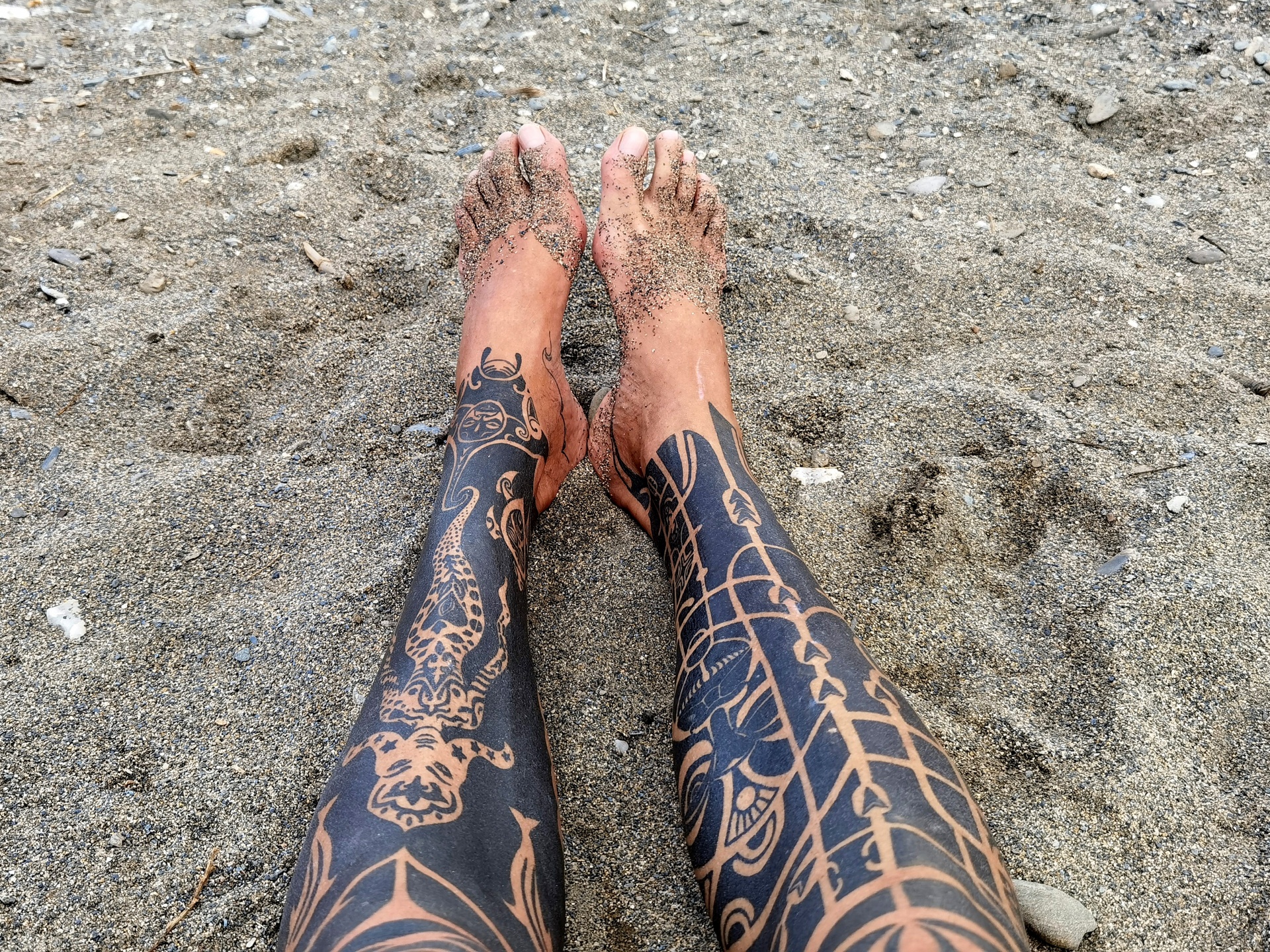
Sayani Mukherjee suggests that tattoos on adults are a natural part of the process of claiming one’s physical body and identity that begins in childhood.
Clyde Borg stares intently into a painting, imagining and interacting beyond the flat canvas with the living woman who served as its model.
Gaurav Ojha points out how we can claim mental and psychological freedom from the world’s pressures. Gerard Sarnat points out the give-and-take needed for a marriage to stand the test of time, along with the many “subtle absurdities” of aging and educational pursuits.
Christina Chin and Matthew Defibaugh collaborate on haikus of autumnal scenes, reminding those in the Northern hemisphere that most of December is still fall. Meanwhile, Chimezie Ihekuna continues his Christmas countdown.
Finally, Mesfakus Salahin offers up a gentle blessing for those who live within the many layers of our world.
Poetry from Debarati Sen
A Rendezvous with Memory

Memory is a linear equation
joining dots on the graph of reminiscence.
Memories, moments and a rendezvous with tales of yore!
An emotionally turbulent jigsaw,
perambulating through life's shores.
Surfing through the ocean of samsara,
memory is the grass sprouting on the gravestone.
On a lonely winter afternoon, it keeps you warm
It acts as an amulet in the race of life.
 The colour of memories is lilac.
It spray-paints our lives with its incandescent hue.
Memories shine like fireflies on gloomy days.
 I am in love with the memories that didn't love me back.

Like the wind sketching the afternoon,
memories draw life's portraits with acute finesse.
Memory is the sawdust gradually settling on the old wooden furniture
That lies untouched in the corner of a room.
Memory is like a drunken lullaby
That puts the moon to sleep on a low-tide night.
Memories are footsteps to the cosmos
Bearing the chalice of yesteryears.
Memory is like the mist settling on the leaves on a winter morning.
Like a rusty evening immersed in carmine bohemia!
Memories leave your unfinished stories on the bosom of the sky
Very often memories make you fall headlong
 Into the mire of wistfulness.