
WEEDS LEFT


weeds left,

wilt in the sun

without work and water.

their seeds

are the wild flowers,

waiting for volcanic wind

and ash to fall,

so the fertile cinders

can colonise herbaceous borders

ending the old age

of selfish sediment

treading it down

in molecules of time.

another marxist

dons his trenchcoat

and tears pages from his red book

planting the old words

of revolution

in minds of homogenous compost.

over-privileged gallows begin to swing.

bullets sweat in their chambers

waiting for the right heads.


THE DARKEST FLOWER IS THE EVENING

again

consensual persuasions

make sensual equations

as we smoke and share a think,

then the same

as she bends over the shingle sink

breasts slapping

on bowl and rim,

peachey buttocks yapping

as i slide in

and out of her velvet purse

each time deeper than the first

two parts making one perfection

of mental physical connection.


outsides

i saw two magpies

in the branches of a tree

barbed tower

watching our sharing eyes

shape fractured liberty

slipping the shackles of feudal power.


in this then,

i know how all of when

you're gone

reduces me to being one

and the darkest flower

is the evening

opened by your scent

giving everything

and receiving

mine in mind and meldings meant.


THE TWO SALTIMBANQUES

when words don't come easy

they make do with silence

and find something in nothing

to say to each other

when the absinthe runs out.


his glass and ego

are bigger than hers,

his elbows sharper,

stabbing into the table

and the chambers of her heart

cobalt clown

without a smile.


she looks away

with his misery behind her eyes

and sadness on her lips,

back into her curves

and the orange grove

summer of her dress

worn and blown by sepia time


where she painted

her cockus giganticus

lying down

naked

for her brush and skin,

mingling intimate scents

undoing and doing each other.


for some of us,

living back then

is more going forward

than living in now

and sitting here-


at this table,

with these glasses

standing empty of absinthe,

faces wanting hands

to be a bridge of words

and equal peace

as Guernica approaches.


LOVE WANES LIKE OLD NEWS

she left,
without remorse or love to lose-
and cleft
the music from the blues.
bereft,
in melancholy mental muse-
the theft
of love wanes like old news,
and jests
through pain to wear in new shoes-
the rest,
just words in ink and oral clues.


POETS IN THE BACKFIELD

Stay a while?
The subliminal cuts are coming through
These days of deadly boredom,
And poets in the backfield
Writing
Something
Interesting.


Hardy,would not like today,
Life's become an angry play;
And our deoxyribonucleic acid
Carries no imagination,
That's not already put there
By a rival TV station.


I can hear you saying,
Yes,but,we have the right to choose:
A color,and a ball of string-
Or poets in the backfield
Writing
Something
Interesting.


You said:
"The Golden Bird eats Fish
In South America
And most of the peasants let him,
Because of Bolivar."
Yet,millions starved in Gulag camps,
And Czechs cried fears when Russian tanks,
Thundered through their traumoid streets
Pretending not to be elite.
As one old soldier put it:
"The West and East preach different dreams,
But ride the same black limousines."


Stay a while?
These sheets are cold
Without your sighing skin;
And this poet in the backfield
Is writing
Nothing
Interesting.

Strider Marcus Jones – is a poet, law graduate and former civil servant from Salford, England with proud Celtic roots in Ireland and Wales. He is the editor and publisher of Lothlorien Poetry Journal https://lothlorienpoetryjournal.blogspot.com/. A member of The Poetry Society, his five published books of poetry  https://stridermarcusjonespoetry.wordpress.com/ reveal a maverick, moving between cities, playing his saxophone in smoky rooms.

His poetry has been published in numerous publications including: Dreich Magazine; The Racket Journal; Trouvaille Review; dyst Literary Journal; Impspired Magazine; Melbourne Culture Corner; Literary Yard Journal; The Honest Ulsterman; Poppy Road Review; The Galway Review; Cajun Mutt Press; Rusty Truck Magazine; Rye Whiskey Review; Deep Water Literary Journal; The Huffington Post USA; The Stray Branch Literary Magazine; Crack The Spine Literary Magazine; A New Ulster; The Lampeter Review; Panoplyzine  Poetry Magazine and Dissident Voice.
Story from Jim Meirose
Ex-Parthenon Girlyfished Gateboy: Donnie Jr.

Eyes closed, hand pressed to a stone, this could be anywhere. Your yard, or halfway around the world. Anywhere. From the touch of a stone, can you tell where you are? Can you do it? You, sir? Or you, Ma’am? Can you tell, can you? Maybe from its cold or its hot or its in-between. Maybe from its flat of its curve or that—that tiny, fine, can’t be seen start of a crack you’d never of known of, had you not touched it. Pop. Don’t you feel more here and now, now that you’ve touched it? More present, aware? More alive, maybe—but, okay, now, we got to move on. Hands off, eyes open, stand straight. ‘op. How you feel?

They opened their eyes, as their tour guide suggested. And, yes, they still stood on the Acropolis; by the Parthenon; on the vacation of a lifetime.
I feel great, yes.
Me too. I feel good.

Okay, yah yo wash—but, hey now.
Pardon me?
Why great, now? asked the guide, and after a slight pause, he added, Tell me; how come?
A moment’s hesitation—they glanced at each other—odd, this was odd, but, go with it.

It’s just that—to be here, now—is really great. It’s that simple, said the one.
And you?
The same, said the other.
Come on, then. Let’s move. We’re right on time, let’s not waste it.
Okay. So, what’s next?
Hold it!
What?

How come you asked that?
I, uh—I don’t know. Never mind.
Oh. Good. Okay. Come on, then.
As they began walking along beside the guide, they both thought, what’s with this guy? Oh, how lucky we’ve been, to been given a guide like this, from the big pool of guides at the Acropolis Walking Tour check-in desk, pop p’ ‘o’? Yah, yes. Look—he’s saying nothing. This whole thing’s going south. He’s off. God; they should have politely asked for a different guide when he came out to meet them, after they’d paid, and they saw his nametag; a large, roughly torn to a semi-square shape, scrap of manila envelope paper, pinned to his shirt, shouting out loudly, in sloppy hand lettering, I am Donnie Jr. Ex-Parthenon Girlyfished Gateboy.

He stood smiling before them. Happy enough, but—so, well, the tag; yes, it seems off, but, no. No, no, no it is fine. They were far from home. Many things were different here, and, once the actual tour began, all would be fine—I mean the way he came up smiling. But, it had not gone that way. He turned toward the entrance to the Acropolis, and trudged along slowly, head down—saying nothing. As they began to encounter interesting structures, carvings, and more and more beauty with each step, the guide stayed head down, trudging, saying nothing. After finally stopping, and surprisingly swooning to them of the beauty of laying their hands on and experiencing a stone, he moved on, silent once more. They followed, awkwardly lost—when, would the—tour start?

They did not want to make a scene, but—what the hell was wrong with this guy—
Hoke! he snapped sharply, startling them awake—so, wannyway, eh? Then, pointing down hard at the ground before their feet, he added, Anyway. Why’d the hell’s you want to come here, anybutt, young sir a’ s’ ‘ung, you too, madame? Buh hold it, uh, no. Don’t answer. I think—I think I know. Let me guess. I mean, I, right now, right here—stop here—see me looking down? As I look down, in the ground there’s your house where you felt you needed this vacation away from, I mean, ah ah, am I right? See there; I am right, you are on vacation, are you not?

They looked around, but, held their tongues. They glimpsed others nearby, staring.
This was—terribly awkward.
Uh, who? their guide asked sternly—what’s wrong? Are you, or aren’t you? I feel you are not. Are you not? I do feel you’re not. And if so, no’ not, by my Buck, I’ll be thwarted! Impolite to thwart the guide sirs. Very so im-mpolite. So; come on, and tell me. Are you here on vacation?

Uh, yes.
That’s great! How’s it gone so far?
Very good.

Good. Hey, you know, I bet—I bet you don’t really have a reason to be on vacation at all, do you?
What?

Here’s; vacation’s prob’ly something you just do once in a while, w’out ever stopping to think, why are we doing this—oh, sure, I get that fully; completely, and fully, y, ye yes, ess’, I get that real strong off you two, ‘ctually, but—I also do many things myself, for no good reason.  I think it’s a shame, that’s all a waste. An’ you know, a waste leads to much time spent doing many things for not just bad reasons, but no reasons at all—which is-so ‘uch worse! And, hey—you end up at things which you’d never do, if you just stopped dead right there, and asked, why am I about to do this, well, heck; that would be one thing. But, if you’re like me, you end up stuck at doing, because, when you wait until the only way to properly phrase the question would be, why am I doing this—meaning this thing you’re doing right now—it will be too late, because you’re already doing it. You know? What I know, what I mean—so, you know what I mean? Yes no, but—it’s a shame. Do ya’ think? Make sense, eh? Just a little mayb’ ‘ess, anyway?

They’d about had enough. Halfway through that mess, they’d stopped even listening. This was nonsense. The direct opposite of what that tour group ahead’s probably being told by their guide, like, The Acropolis was built from 437-432 BC, but its construction was abandoned during the Peloponnesian War, and never completed. Or, of that other group further ahead—that one—no doubt being told the ages of those walls, or these carvings, or those big blocky boulders. But not us, oh-h, oh no, no no; not us. And, further still, see that well-built pith helmeted guide animatedly telling her assigned group something no doubt like, the Acropolis of Athens was turned back over to the Greeks in 1822 during the Greek War of Independence—and all over all more and more good good stuff. But.

Not us.
Not us.
Why not us?
See him there. Silly and worthless, spewing his nonsense—like cumbana cumbama, how cumbana never completed, oh gee of, gee. Hey!
What?
How come you two look like you do?
They glare away. Bit lips.

Come on. How come?
No! Enough! That’s that!
The guide jumped as they turned from him, heading fast back toward the slope, down to the tour signup desk. Get there fast, loudly complain! Pop, knack, ‘n turn, and half-run from him  fast---thank God, thank God.
But.

Know that he’s following.
Though they hope he’s not, actually; hope he’s stuck to that same spot back up the hill, screwed tight down int’ his ‘razy self, but, at the same time, they knew; felt him fast following; wanting to know why; how come how come how come, so, hurry up, hurry—not following and following simu-simltanealitee’s evil and wrong unnatural and impossible hic hic faster, pass—
No! Do not care! No!
Enough of this.
Enough.

Fix this day; make it all go away.
They picked up the pace, when they heard him pursuing them. He’s angry, confused. So angry, he’s started spooling out from himself faster ‘nd louder this time, calling loud toward them.
Hey! Hey! Hold up! Why’s the hell ‘nybody decent’s come here anymonk, anymore, ‘nnywaay, for Christ’s sake?
Heads turned—they kept moving; it all went on.
Hey! Hey! This fancy oss-cropulous’s just like a big rubbly tumblejunk spew-down ‘s low hills all around. That’s all to see here. S’nots nee way wise impressive, gah gahh. Stupid to come! Ask me. For why, mean who’d the hell ‘nt t’ come here?

Keep on. No one’s watching ‘r staring. Keep on.
Hey! he cried again. Wait! Who the hell, who the hell, mu God, like, lik’, like, this place’s no good, it’s crap! I got to tell you! It’s crap, like when I spat out my marbly white cottage cheese that time, without chewing at all, because I suddenly realized I wasn’t really hungry at all, there you go, there you are—down the rol o’ table looked just like this place! Just my common table, chunked over with white globs—rubbly boulder-globs attached ‘way from nothing—as this place’s seen from—any old distance. Even from space, as that’s also possible. Gee!

This is a very ugly place, actually, you know! he yelled at them.
No, no. Faster, fast—don’t listen, keep moving down faster,
They came closer to actually running the last slope to the tour desk, but he’s right there behind, his footsteps grasped at them, but there’s the desk, there it is, and—thank God he  stopped shouting. Thank God he’s got no more—
Wait!
Stop!
Everyone all ‘round looked.

Why are you running from me?
Say nothing. No. Just keep going. The end is in sight.
Why are you running from me?
Shut up shut up n’ keep going, keep on, no no from no no no away, just keep on but—
A shriek tore the air.
They froze
Please do not walk away-y-y! Plea-a-a-se!
They turned.

There he was; on his knees, hunched over, body heaving, exhausted.
Why do you hate me so, he sobbed loudly.
My God.
I asked you, I asked you, I asked you—why.
Why do you hate me so?
They stepped back; stood mortified; no; countless eyes turned their way. They’re the center, the center for all the eyes, faces, tight lips, saying, What did you do to him? Why did you do it? But, nothing’s the answer, nothing. We did nothing. Do not stare—
But something’s been done to him—listen! Listen!
How come?
How come?

How come?
How come you did this to him?
A tall female guide, from the rightmost stunned group, had rushed to him, taken his arm, and whispered mildly into his face, something no doubt calming. See, but not hear. Seeing, not hearing; hearing, not seeing, or; not seeing and hearing both—deaf and dumb to it all.
Which is worse, God?
Which, God, is worse?

They turned away, headed down the slope, eyes averted from all. No one is looking. Guilty of nothing. Nothing has happened. Right now’s all there is. The desk comes up finally, and so. They talked to the same man they’d paid coming in. They told him, they said, it was terrible. They told him, That guide is—just crazy. He’s no guide at all. Had us on edge the whole time. Why on earth do you use him? Why do you keep him on?

And on and on—the man listened thoughtfully. He nodded yes, understanding. His face soft, face round, nodding, so kindly, so serene. Flecks of flush here and there; a condition perhaps, but—probably not.
He said to their eyes, softly, Sorry—then leaned a bit closer, speaking quietly.

My apologies. Of course, you’ll get a refund, but—the poor man. He’s a nephew of the owners. He’s not well. I—it’s hard to say, but he’s just maybe—got two weeks left, if that. But—he loves the place. Been a guide since a boy. We thought he could last almost to the end, but—every day, the side effects of the drugs keeping him going get worse. But hey. Never mind. Sorry. Here. Your money—here.
As they took the money, he paused.
Eyes met.

Enjoy the rest of your vacation, he said. Athens is beautiful, this time of year.
What.
They turned and walked from the desk, hearing him.

Athens is beautiful, this time of year.
Beautiful, this time of year.
Athens, you know? You know?
Beautiful.
This time of year.

An hour later, they’re in their room. The world lay silent. Eyes closed, hands pressed; they could be anywhere. Their yard, or halfway around the world. Anywhere. The feel of the floor down here, under, and the air pressing in all around, and the silence, ask; can you tell where you are, sir? Can you, sir? Or you, Ma’am? Can you tell? Can you? Maybe from our cold or our hot or our—just remember—that tiny fine can’t be seen start of a crack you’d never—no no—expected was there, when just passing over, but—when slowed, stopped, stop; pay attention—can you feel it? Can you? Can you?

Can you feel it?
Yes—yes.
Great. But.
How come?
Jaylan Salah interviews author Joanne Harris
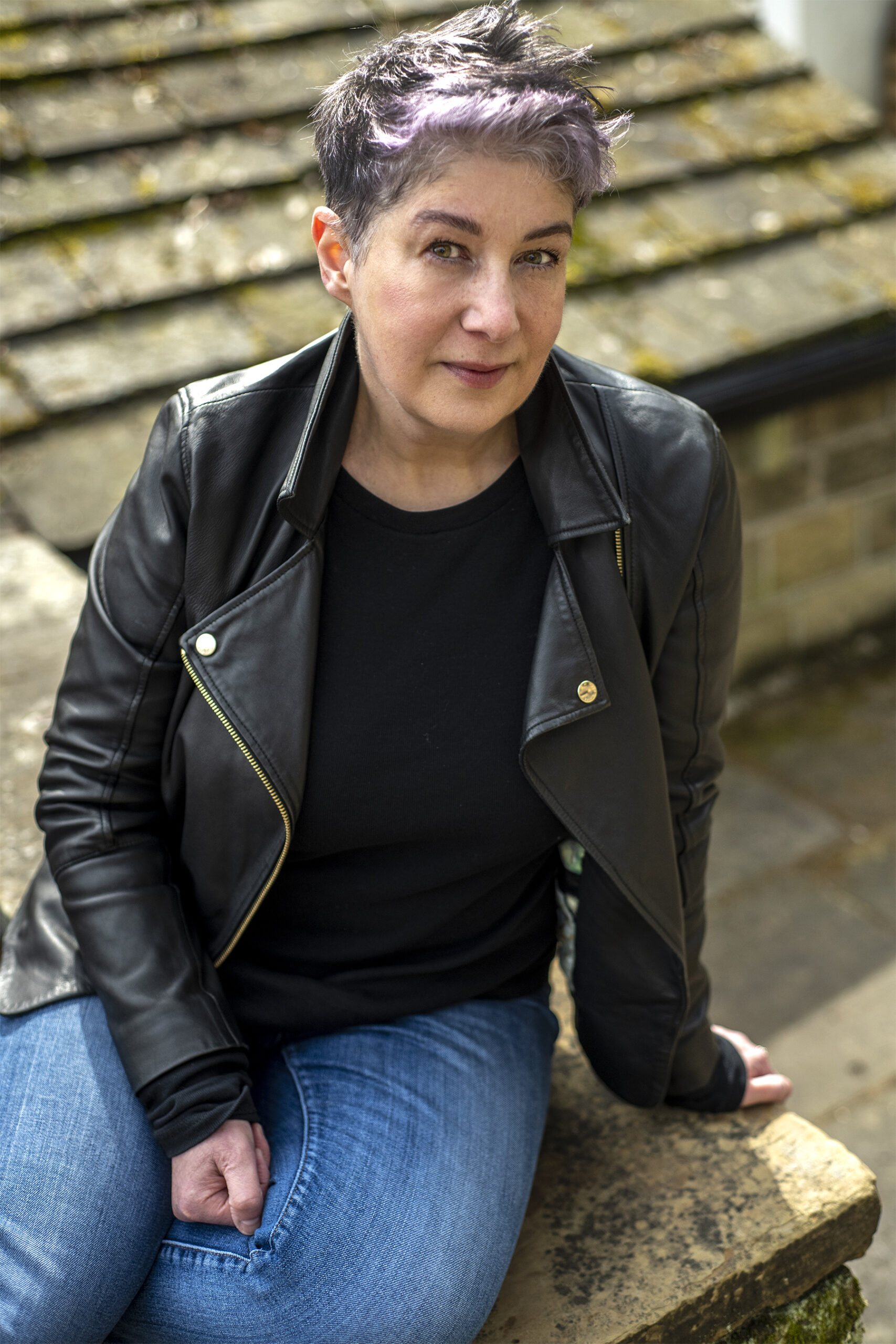
Chocolate-Infused Dreams
Conversations with French-English writer Joanne Harris

There is a first moment for everything: The first kiss, the first film that moves to the core, the first song that changes the perspective on what music sounds like, and the first book that stands out from the whole library of hardcovers.

First time I discovered Joanne Harris was through a used copy of her novel Chocolat. I admit that I liked the film; not loved, liked. And was curious to see what the novel would read like after such an interesting film. And what I found when I read the first sentence, was way beyond my expectations. Something out of a vivid dream, a kaleidoscopic mesh of sounds, tastes, textures, and scents. Harris’s novels were not books to be read as part of a reading marathon for a virtual book club. They were immersive texts where feelings and scents coalesced to create a magical realism that didn’t include mythical creatures or breathtaking kingdoms. Her magic was dark and drenched in hot caramel, feminine and mystical. Her writing drew me in and I had to read “The Lollipop Shoes”, “Peaches for Monsieur le Curé”, and “The Strawberry Thief”, then ventured off to some of her darker stuff such as “Blueeyed Boy”.

First things first: Joanne Harris is a French-English writer. She studied Modern and Mediaeval Languages at Cambridge and was a teacher for 15 years. Her most famous novel Chocolat was turned into an Oscar-nominated film starring Juliette Binoche and Johnny Depp. Her work infuses magical realism with religious themes, femininity and misogyny, motherhood, witchcraft, and food. Food, scents, sensual descriptions, and themes are central to Joanne Harris’s world. She weaves the narrative without a kaleidoscope of scents, tastes, textures, and emotions. Her novels are easy reads in terms of pace and narrative, but they are hard to get out of. Readers get lost sometimes in the delicious darkness of the text and are usually left with a bittersweet aftertaste when they have come to the last page of the tale. Like dark chocolate and pink champagne, Joanne Harris’s writing is both luxurious and dark, yin and yang, bright and cocooned.

I became infatuated with Harris, a woman so far away, living in what I envisioned as an orchard French heaven where the air smelled of vanilla and hot melting chocolate, and tasted like the finest wine one could ever drink. I read her “The Little Book of Chocolat” and was mesmerized by the potency of this confection in all its forms and combinations. I wanted to learn more about Harris. Was her creative process always that delectable? How did the woman who created “Chocolat” dive into dark territory and come up with “Blueeyed Boy”? What was there to expect more from her? I sought her and communicated with her via email, asking her about her craft and her experiences as a female writer who has a distinct voice and writing style. I wondered why she chose to become a writer in the first place, a question I like to ask often even though I struggle with the answer to it sometimes,

“Because it’s what I do best. Stories exist and thrive in many media, and writing happens to be mine. Words, correctly used, can be music, movement, and performance, as well as so many other things. Words are power.”

Since most of the novels that I loved by Joanne Harris centered around food or had food as -almost- the main protagonist, I had to ask her why she chose the culinary space as an integral part of her creative universe and whether she believed in certain foods as seductive or “sinful” as they are described in some of her novels such as the Vianne Rocher universe companions,

“The concept of food as something sinful comes from a very privileged and toxic place, and I don’t subscribe to it. But food has personal associations for all of us, and it’s something that everyone can share and understand. You can tell a lot about a person by the way they relate to food, how they celebrate, whether or not they cook, and how they remember the food of their childhood. As such, for a writer, food is a good way of exploring a character’s personality, relationships, past, and culture. “

I wondered if she weaved magic into her storytelling because she believed that the modern materialistic world needed a little magic to move forward or spice things up. Her answers, as simple as tactful as one wouldn’t expect from a writer whose worlds oozed with dreaminess and sensuality, surprised me,

“I don’t think of magic in that way. It’s not about making a story more exciting; it’s a way of seeing the world differently. Magic in my fiction is essentially about perception, deception, and transformation. It’s about how we see the world, other people, and ourselves, and how we go about changing those things – hopefully, for the better.”

In her novel "Peaches for Monsieur Le Cure" -the third from the Vianne Rocher universe- she had written about Islam; a community most individuals are cautious while writing about, so I asked her what drew her to that world and the idea of fasting in Ramadan, especially since she already played the theme of abstaining from food and drink in “Chocolat”,

“I’ve written about traditions of feasting and fasting under Catholicism – why not then under Islam? I live in a very cosmopolitan place, with a large and friendly community of Muslims, who helped me gain the confidence to tell the story I needed to tell as honestly as I could. I wanted to write about two communities in opposition to each other through ignorance and suspicion, how they have far more in common with each other than they initially think; and how the communities are brought together by compassion, friendship, and mutual respect.”

Since she always went back to Vianne Rocher and dug deeper into the story, I wondered what was about this universe that she as a writer couldn’t resist. It had always fascinated me how some characters had a firm grip on their creators and were hard to let go, and since Harris had played that game masterfully already, I needed to ask how and why she did it,

“I wrote Chocolat as the mother of a child of five, and that mother-daughter relationship lies at the very heart of the novel. The subsequent books have followed the lives of Vianne and her daughters, driven by my own experiences with my daughter. Though I am not Vianne, I do have this in common with her, which is why I feel connected to her in this way.”

I struggled with times when my gender stood in the way of being taken seriously as a writer and I asked Joanne if she faced a similar situation. Her answer was curt and fierce as would be expected from someone so opinionated and driven,

“There’s sexism in all areas of the publishing industry, of course; but the idea that women writers are to be taken less seriously than men is most often held by ignorant people who don’t know very much about literature...”

Even when asking her about the movie adaptation of “Chocolat”, Harris seemed distant, detached from the whole process. It amazed me because I would have been quite the opposite had one of my -ahem, future- novels gotten adapted into a film or a miniseries. Her sense of creativity enthralled me and deepened my respect for her,

“Fortunately, the author isn’t the one responsible for the making of a movie adaptation of their work. I watched the process from afar, with a couple of short visits to the movie set during the filming. It was lots of fun, and I got to know the cast and the director, but I would never expect a movie to perfectly embody a novel; they are such very different media that it would be unfair to make the comparison.”

I couldn’t talk to Joanne Harris without mentioning one of her scariest writings to date; Blueeyed Boy. It was a horrifying novel, a dark psychological tale of poisonous familial relationships and the dark recesses of the internet. It gave me nightmares. I wondered how she ventured into that dark place and asked about her inspiration especially since on her official website she wrote about the inspiration behind this particular novel in cryptic, fascinating prose,

“The role of a writer is to observe and reflect humanity. There’s plenty of darkness in the world to observe, and some of it should inevitably find its way into my stories. Monsters are not figures of fantasy: they walk among us every day. Through stories we learn to defeat them, and sometimes, to understand them too...”

Like all writers, I asked Harris whether she would like to see another of her writings as a film on the big screen or -more appropriately now- a Netflix/Amazon/Hulu miniseries,

“It would be an interesting experience, and I’d love to see it happen. I think most of my books are too complex to be filmic and are therefore better suited to being made into a series than a stand-alone movie. But those are not my decisions to make: I can only watch and hope.”

Since “online” according to Joanne Harris in one of her interviews is a “small community” as good as any French village or a Catholic school, I had to ask why she was fascinated with small communities in general,

“Small communities contain all the elements of potential drama, and their chemistry is so volatile that it often takes only one person to arrive or to leave to make a significant difference.”

As someone who found multiple taboo-breaking elements in Harris’s writings, I asked whether she viewed herself as a writer through that lens or if it was just my perception of her work,

“I don’t approach my work in that way: if I have challenged taboos or establishment ideas, it is because I am temperamentally drawn to asking difficult questions, as well as being temperamentally opposed to intolerance and prejudice.”

I am a firm believer in divine femininity. I read too much into the concept and usurp the wisdom of writers and researchers like Clarissa Pinkola Estes. That’s why I saw the three integral female protagonists in “Chocolat” - Anouk, Vianne, and Zozie, as different sides to women as seen in folklore or mythology. I asked Harris to comment,

“Folklore tends to favor archetypes, and yes, it’s possible to see my characters as such – the mother, the wise child, the temptress, the witch – but these archetypal elements exist alongside their very human, very singular characteristics. I want my characters to live and breathe, not simply serve a story. “

I had to ask a writer as mesmerizing as Harris to express her sources of inspiration. Even though in different cultures, inspiration is a foreign concept -ask Christopher Doyle about how Asian filmmakers work from a place of enigma rather than inspiration- to Harris, the concept resonated and she was generous enough to share with me hers,

“Inspiration comes from everywhere. Books, current affairs, art, music, theatre, overheard conversations, personal experience, and sometimes even dreams. I try not to set limits on how and where I find my ideas, but I know that to make art, you need to experience art, and to write about life, you need to live life to the full.

[On her most inspiring writers] I loved Ray Bradbury as a child: as an adult, I am still in awe of his energy; his love of language; his compassion.”

Poetry from Olawe Opeyemi
From the Circle of my Window

From the circle of my window, I gaze upon life
And I watch how it passes by;
At a point I stood dread to open my eyes
For the things I picture persist appalling to my sight….

Life is a misery and death is not a release
The young succumb but the old lingers;
While many perish in hunger
And groan in tears and pain
Yet some are filled with smiling faces
With enough to eat and squander;
Hard work never amount to good life
Fast runners don't always win the race
Many are filled with darkness and till..
they cease breath remain still.

The more I see, the more it aches
I heard screams echo in my head
But my own troubles held my legs
I wanted to close my window
No more to see my neighbours in anguish
But what difference would that make!!

OLAWE Opeyemi Emmanuel
University of Ibadan, Ibadan, Nigeria
Poetry from Christopher Bernard
Billionaire’s Walk

By Christopher Bernard


Ah yes, we love it here - who wouldn’t
like to sleep in a ragged tent
dropped like an empty sausage casing
abandoned on dirty cement?
The killing machine of the marketplace
has put us in this place.
One of us wrote down this song
for those of us who refuse to belong.
He’s long gone now, but he had style;
he wore his home in his pocket comb,
and knew how to laugh
at a world that did not love him.

“Be not typical. Be rare.
Be not thin or fat.
Stow your worries with your care.
Take not this or that
for whatever’s less than you know what
you’re owed, be it pennies in your hat.
Let the hoi-polloi know that.
Flaunt your rags, and know what’s what,
but walk like a billionaire!

“Take your time. Be debonair.
The sun’s your flash well lit.
Nobless oblige invites your share.
Your throne’s where’ere you sit.
Whatever speed you turn your wit,
a gentleman you are. Why, it
is never clearer than when you’re fit
and walk like a billionaire!

“Be gracious to the folk who stare.
The tourists are so sweet!
Allow them to donate their fare:
they owe you that one treat.
You’re part of the local color, neat.
You lounge and loll about the street.
You’re boom plucked from a bust defeat,
and walk like a billionaire!

“And when you’ve had at last your share,
are happy as a dog,
and everything looks fair and square,
and you’re like a bump on a log,
serene and creamed and soft as a bog,
you’ll puff your butts with a chink and a jog,
and live by your wits between Gog and Magog.
Who cares if you sleep in the gutter? By God,
you walk like a billionaire!”


Dedicated to the homeless in the richest
nation on earth

_____

Christopher Bernard’s collection of poems, The Socialist’s Garden of Verses, won a PEN Oakland Josephine Miles Award for Literary Excellence and was named one of the “Top Indie Books of 2021” by Kirkus Reviews.
Poetry from John Tustin
BLUE EYES, RED HAIR

Eyes of ice,
hair of flames –
yet I burn when you look at me,
I freeze when I touch you.

I want to be the last man to make you cry.
My arms can be a cradle.
I want to be the only man
to stay another night.

Eyes of ice,
hair of flames –
I stare into you and you crack;
I run my hands through all that cold fire.


FLOWER CHAIN

She put the flowers in a chain
But she never wore them
As a necklace or a crown.
She kept the flower chain in a locked drawer
Below a book of Poe given by a dandelion,
Beside an engraved corkscrew given by a mangrove flower,
On top of a stack of poems written by this moon flower.


One flower rarely touched another
And when one accidentally did
In her shut drawer
She just denied the existence of the other flower
As a whisper in the dark.

She put the flowers in a chain,
Never wearing them
As a necklace or a crown
But hiding them in a drawer
Away from the light.
Removing them one at a time
To wear behind her ear
Solitarily
In the dark
Before the mirror,

Feeling at once sad and powerful,
Sexy and unfulfilled,
Needed but alone.

GOD IS JUST A MAGNET IN THE SKY

The wind came up along the rain
And whipped around the house
As I waited for something to happen
But nothing happened.
Just rain and wind
And music and laundry
And the alarm clock
That will remind me.

You were born in the memory of the poverty of earthquakes
And the wreckage of civil wars
While I was born into a little house on a dead end street
Where the trees were sick and yellow
But we could play roller hockey in the street without defense.
Along the way we found the same music
And we found the same empathy, then
When we met a seed was planted.
Neither of us went to the prom, both of us lived our lives
Riding the subway to the MidManhattan Library
And now here we are, as far apart
As the day you were bitten by a rat in your crib
While I learned about dinosaurs in Kindergarten class,
Where I met Michael Blair and Marc Gonzalez.

If only we had met while staring at the same painting
In an art gallery during your time in college
As I toiled unloading trucks and ordering sundries.
Maybe this would be different.
Maybe our bodies would still be beside one another.
Maybe we would be hearing the same song
While I made the meatballs and you boiled the spaghetti
And added to the gravy.
Huh. Maybe.
But this is what is.

The wind dies down,
Drowned out by the sputter of the washing machine
And the music always playing
In this room that is otherwise silent but for my sighs
And my swears.
Now there is a violin and an accordion here
While your home is filled with anything or nothing at all.

You are just a little horse in a small stable,
Unaware of the magic you are capable.
And I am just a little horse in the wild,
Pretending to be a thoroughbred,
Kicking around this little hostel in the middle of nowhere.
Neither of us will ever run free
Or find one another again
And so be it.
Let it be so.

My brother used to tell me that God is just a magnet in the sky
And that makes as much sense as anything.
If my heart was a compass it would point to you
As True North
As I move toward there

But never arrive
In this life
Or likely any other.

We are both born in the mud of slaves
And slaves we remain
In this life.
May there be another lifetime where we are us
And free
With the sharp rocks still under our feet
As we refrain from complaint.

God is just a magnet in the sky.
I’ve yet to see a better argument why or why not.

PRETTY BLONDE LADY SITTING AT THE COUNTER IN THE DINER

I look up from where I am sitting
At the booth in the back
And you have already come in and sat down
At the counter unnoticed,
Sitting and staring and typing into your phone,
Your little pale feet in sandals and curled up a little
Under the stool.
I put my glasses on so I can watch you
Without you noticing me from my perfect angle
In the booth.

I can hardly see your face but you look good everywhere else
With your shoulder length blonde hair, staring straight down
At your phone, occasionally typing but never looking up.
Stout body, about 30 lbs. overweight – but aren’t we all?
About my age and growing old – but aren’t we all?
You frown into your phone until the waitress comes.
I keep watching you. I can hardly see your face.

You give the waitress a smile as you order. A pained smile
Of politeness, that grin that is close to the baring of a predator’s teeth.

My food arrives and I watch you as I eat it.
You can’t see me or feel I am watching. I am insignificant.
I cannot hurt you and maybe I can help you but we’ll never know.
You won’t turn around and look at me and I would be afraid if you did.
Your food comes and you eat without joy, in a hurry,
Sucking the orange juice into your mouth through a straw.
Still you look down at your phone and frown and type.
Is your husband a bastard? Are your kids not coming home for Christmas?
Is your job asking you to work today?
Is your mother dying?
Maybe you just frown all day. Are you in misery?
Are you a carrier of misery?
So many of us are both.

I watch you and sip my coffee,
Imagining your naked body under that ghastly Christmas sweater,
The soft gentle roll of fat on your belly you cannot remove
No matter how hard you try
And I would not hesitate to put my hands upon,
Standing behind you in the bathroom as you are topless
In just your panties, combing your hair in the mirror.

I finish my food, finish my coffee, refuse a refill.
I get up, leave the tip, walk right past you
And you do not notice me. Your mannerisms do not change.
I pay at the cashier and turn around to finally see your face
And you are still looking down, concentrating,
Done shoveling the food in without an ounce of pleasure.
I still can’t really see your face. I turn around, get to the door,
Walk out into the late morning sun,
Imagining you are beautiful but sad,
The way I imagine I am,
Will continue to be.


YOUR BOOK

I bought your book
because of the picture of you
on the back cover.

I looked into your eyes.
I felt your body all along mine
as my heart flip-flopped in its cage.

I want to luxuriate in your presence
while you write poems of taffeta
and poems of steel.
Sewn by you,
forged by you.

What kind of dazzling words await me
between the pages
of your book?
How deeply will I fall?

Your book is sleeping now
on my bedside table.
I give it a nudge
and it opens to the first page
but I’m afraid to read it,

knowing that you cannot be
the you I am so certain you are.

I close the book.
I don’t want it ruined just yet.

Perhaps tomorrow my curiosity will overtake
my fear
and I can destroy it all then.
Poetry from Adepoju Timileyin
She definitely wasn't singing.

This was a cry at the break

of dawn, I couldn't

understand her words but the pain.


Perhaps, hope of surviving the day,

the sky is enough to occupy species

but not ready to spice her lips.


Or the climate condition,

surviving the burning noon

or the cold that houses her haven.


She definitely wants a HOME

Maybe a listener or comforter,

and she did, as I watch her.


She was next to my room,

perching filtered tree on hope to survive.

Not all bird sings, some cries.


Title:- Cries of my neighbour

Adepoju Timileyin: Juste Ink


::::::::::::::::::::::::::::::::::::::::::::::::::::::::::::::::::::


Nigh on Nine


I rote on tales from granny,

about the last penny

that got married to the soil,

She must be lost.


I learnt of mistakes from granny,

that it shines with the evening sun

it's neither hot but hurts n' hunt.

Oh pains of losing a day!


I cleared anxiety n' shuffle my hopes.

I nailed my fear and caged my guilt,

And before the night came

I cleared the soil afraid of losing

my penny.


And so I dream

dreamt about my sleep.

And so I knew,

knows dreamland was an odyssey

to future n' Illusion pinned on mindset.


Adepoju Timileyin: Juste Ink.


:::::::::::::::::::::::::::::::::::::::::::::::::::::::::::::::::::::


My Grandma Tales


My grandma had said,

"even burial grounds makes noise"

She said, her father, My granny

still shouts, whispers

n' hold whips on wheel of hope.


She also said, Màmá Sódìki,

our next door neighbour, whose history says

she left to buy cloth for her children since birth, I don't know if to envy the twin, they'll have more to wear.


And Ìyá okẹ̀-odò who sit beneath

the ólùmọ́ tree and feed ears with Àló,

I once overheard nightingale

repeating her rhythm,

who dare not envy such sonorous tune.


My grandma said,

they made burial ground their haven

and scare us away from their abode

to home beneath momma's wrapper.


Poem by:- Juste Ink


::::::::::::::::::::::::::::::::::::::::::::::::::::::::::::::::::::


POET'RY


Where there is pain;

We proffer lines of comfort....

Where there is betrayal;

We sit them beneath stanzas of trust...

And where there is no one,

We are here, there, n' anywhere,

With themes of solitude enough

to gulp sorrows


We have chose to bear

children of their pains,

We have chose to carry

drops of their misfortune

on lines (art) of poetry.


Poem by:- Adepoju Timileyin: Juste Ink