Vignette from Doug Hawley

Mercy 

By Doug Hawley 

A few years ago, maybe five, I was supervising and working with a man who was doing community service for a crime that he says he didn’t commit.  We were removing ivy from an area around the tool yard of Tryon State Park south of Portland Oregon USA.  Two police cars showed up and informed us that they had a coyote with a broken back that had to be killed because the injury was fatal.  It had been hit by a car about a mile away on Terwilliger Boulevard which borders the park.  They told us to get behind one of the buildings while the shooting took place.  We heard more than one shot, making me wonder about their marksmanship. 

Afterwards, I thought that I had not reacted well, but then who expects to have a coyote mercy killing interrupt one’s day?  I should have either tried to send the police to contact the park ranger before the shooting or done it myself.  No one wants unexplained shooting in a state park.  The police had explained beforehand that there was no better place to go in the residential neighborhood surrounding the park.  Shooting in someone’s yard would have been worse. 

Afterwards I explained what happened to the ranger, who was not pleased.  The carcass was refrigerated for the possibility of taxidermy for addition to the park’s beaver and other stuffed animals. 

                    **************************************** 

Coyote sightings were more common at the time this happened.  We saw one a few blocks from our house.  A couple crossed our path in Tryon.  We later learned that there was a coyote family in the park.  Same couple and pup?  We were warned not to leave out pet food for fear of feeding coyotes and pets being killed.  There was at least one report of a cat killing by a coyote, which was at first feared to be some twisted ritual killing by humans.  At the time, some were worried about attacks by coyotes on humans.  Nothing like that happened, but we were disconcerted by the fearlessness of the coyotes that we encountered. 

Other animal sightings are becoming more common.  In the last few years, unverified cougar observations have happened within a few miles of where we live in residential areas and the first killing by a cougar in Oregon was recorded on a hiking trail. 

Essay from Abigail George

Your skin reads like emptiness

By Abigail George

My love had style. Irony. The sketches of subtle pleasure and pain. The resentment that comes with frustration. His motion hollowed out something in me. Perhaps a hollowed out bitterness. There was a yellow river in his hair. In the palms of his hands he held something back from me. The life of his family secrets. A room filled with the music of treasure. Earth becomes with weaving. Earth resonates in that most rare personal space of touch. The wide health of touch that makes you feel extraordinary on days hellbent, and filled with winter.

He was grace. He was mercy. When I was with him, I knew what desire was. There was always going to be the possibility of silence between us in the early hours of the morning. We had nothing to talk about. Nothing to say after the dry thirst that followed the physical act of the sexual transaction. I always felt apologetic for the fatigue I felt. I don’t know what he was thinking. What he felt.

He called me ‘doll face’. Now, I don’t look like a doll. A doll wears a painted expression. Rosy cheeks that blossom. A pained smile. I have put on weight around my middle. I haven’t seen him in the past fifteen years. I don’t know what he’s doing right now. Living. All people live. Others do it extraordinarily. Others extremely ordinary. I know what you’re thinking. Why am I here? Why do I come here week after week to rehash the past, to live there as if I was part wild/part history wilderness/part object/part possession? Is it just a sham, this insane vanity that I have to talk about him repeatedly when I come here, now that I am flying solo single handedly? 

Even when I was younger, during adolescence I was always drawn to the older man. The man with the accent who served me in a restaurant. Cultured. Educated. The writer. The teacher. The math teacher. The English-English teacher. The film and television production lecturer. Portuguese, British. The introvert. The man ten years older than I was in the summer I turned the lush age of twenty-two.

I thought I would be safe in the city surrounded by buildings. People who did not care for me, about me. Who would not turn their heads to look at me. To acknowledge me. Yes, I thought I was safe. The same way I feel when I come to see you every month. I feel safe here. I feel I can say anything. Know I will not be judged. I remember the electric blueness of the light. Nature was translated into pollution, climate change, global warming, buildings, banks, delis, foot traffic, cars everywhere you looked, grassy parks in the city where men played chess. Time meaning nothing. Time meaning everything.

The first day we met I looked up. Met his gaze head-on, chin up. He did not look away. I did not look away. A flicker of inquisitive excitement filled the void I felt in my heart. I knew what he was thinking. Passion. This was what I was looking for. A boyfriend. To be part of a couple. I was too young to know the difference. The difference between passion, and betrayal. Love in his hands. When he kissed me hard or soft. Gentle. Going all gentle on me.

I knew what his childhood was like without him telling me anything about it. His relationships with his siblings. Rivalry. Abandonment issues. A father addicted to drugs. Alcoholism on my side of the family. Cancer. It was the tapestry of loss that connected us.  Love was the photosynthesis of an awakened loophole into place.

I’m apologetic about love now. It’s walls made of brick history. I’m sorry for loving you. The glare has shifted mysteriously. The hours tick on. The clock inside the glass cabinet minding seeds’ growth. He was magic. It’s been one those days. Long, empty. The day dulcet. Elegiacal. Summer burning the nape of my neck, my shoulders. The back of my arms in my sleeveless dress. Admiration.

That’s when it started. I think I admired him with my perfumed hair. I don’t know what he made of me. I was a girl way back then. New to the city. Johannesburg. I think about him like family. That closeness close up, That quiet intimacy that belonged to men and women who find themselves at a loss for words in museums or art galleries or the theater. You see I don’t need people. I was lost in the city. Dust, flowers of plastic rubbish washed away off slick, cement pavements.

What is the meaning of couples anyway? We weren’t a couple in the truest sense of the way. The sky a polychrome blue. His eyes awash with a blue ink. His self control powerful. The control of a man who knows what he wants. Who also knows that he is going to get what wants come hell or high water. My memory is still raw of that day. The flow of the talk was always intense. Yet we could always sit for hours in each other’s presence and not say anything. Lost in our own world. Our own thoughts.

Yes, let us talk about the men in my life. My brother’s remoteness when his girlfriend lived with us for off and on for a year. She moved in with her color television, double bed, chest of drawers, and oven but after the year she was gone again. After that my brother and I were closer than ever. Confiding in each other over the skinniness of cigarettes and lukewarm coffee.

My wiry father’s absence, and abandonment. The Johannesburg men. Powerful men with hybrids of status, and large sedans . Influential men. Men who had the life experience of women and children in their lives. I want to remember them all, and what they meant to me.

‘You’re beautiful. Good girl.’ He whispered. It was always like that.

Poetry from Mahbub

South Asian man with a gray suit and a white collared shirt and a green and black tie. He has glasses and short black hair.
Writer Mahbub

A Flashback to the Journey

When I went there it was winter

At the time of my returning

It opens the new sight of spring in nature

A lively exuberance in all objects of nature

That makes our heart dance all through the way

Plants worn in the green leaves and the buds

The sun-beam flashes out the glorious past

The sky and the waters engulfed in

By sneezing and coughing, touching and hugging

Breaching the bond we have had

The virus creeping through in the air

Drove us into the storm and war

Never thought before.

Chapainawabganj, Bangladesh

12/04/2020

On a Strange Platform

People are living in the cave

Though they had no experience before

Feel like elaborate or suffocated

At the same time awakening the heart

Our existence and the predecessors’

Imagine the self and others on present, past or future

Pervaded nature all over

People forgot that

Roads and beaches redressed in its own blanket

Birds and butterflies, crabs or red crabs and turtles

Fly and float free with new notes and hopes

Green, red or rosy always smiles over 

Nature wants this to be in such kind

People take exercise in the yard

They like to have been among the family dears

Or deep in heart to prayers, music or drama

And try to get removed from the pain of virus fever

The world stands on a strange platform

Where one leg is on stair and the other waiting on the point of the train

Starts to run with the whistle by the uniformed man in duty.

Chapainawabganj, Bangladesh

13/04/2020

In the Battlefield

Deaths and the reflection of deaths all around

In the left, right, front or back

Fighting for the reconciliation

A reformation, recognition

The spreading hands of the lifeless bodies on the ground

What can we do for them?

We are promising, singing and praying

Carving the sight in mind

Lightening the heart a new hope

Though the self breaks and regenerates

No diplomacy here acts on

A joy over the matter fighting for

Swells up in courage

Never breaching the hand raised to pace with you.

Chapainawabganj, Bangladesh

14/04/2020

How the World Running

Sitting on the rickshaw the man suddenly felt uneasy

Waiving his hands to get any help

The people encircling him

Stood silent and waited for what is going to happen

The poor condition became poorer and more helpless

Without taking any more time, he collapsed

Instantly and slowly breathed his last spreading the hands

The man was not other than the rickshaw puller

Waiting for the passenger on the turning point of the highway 

Nobody came in touch of him if he bears Covid-19

People see the death in their open eyes having no feeling over there

More interested to have snaps or videos

Again the fever attacked mother kept away alone

In the jungle by her sons in fear of the virus

How the life appears before the eyes!

What a world it prevails at this moment!

Maintaining a social distance?

The world has lost its vows to make over

Hey you agree or not.

Chapainawabganj, Bangladesh

15/04/2020

An Agreement with Corona

Corona, a virus attacks the human body

Though not visible this virus, this disease

The same intuitive 

Greed or avarice, selfishness, jealousy, exploitation, economic barriers

And what not that breaks the whole system of humanity

You build so many missiles by which

This green world can be destroyed six times in a moment

Is there any use of this in place of Corona?

In spite of spreading the helping hand you make yourself powerful

Spending the gross amount of money for the atomic energy

On the other hand crores of people die out in hunger

This invisible virus destroys the whole community of the earth

Fight to survive, helpless to meet the quick get pass

Have belief in heart one day soon or later

The vaccine will come to light to recover

In the meantime it will cause an irreparable loss to the earth

Then after some while you will rule your objects the same as before

Forgetting all the deaths and the sufferings 

In lieu of the firing the fire

Please pull me up dear from the chimney door

Make a way living altogether in the fresh water

Under the shade of the large trees

Refreshing the mind in the green fields.

Chapainawabganj, Bangladesh

Synchronized Chaos April 2021: Escape Room

Wishing everyone who celebrates a very happy Easter and Passover and beginning of spring, or fall if you’re in the Southern Hemisphere.

First, a special shout-out to the Yiddish Theater Ensemble (Berkeley, CA) for the invitation to view a Vimeo video production of Sholem Asch’s 1906 play God of Vengeance, directed by Bruce Bierman, translated to English by Caraid O’Brien. We announced this play in last month’s issue and it represents a creative triumph of translation of live theater to the virtual environment. Everything between the actors and actresses, from a slap to a kiss, was cleverly conveyed through highly coordinated gesturing from within tiny Zoom boxes. Whether you see this play, concerning a socially questionable Jewish family determined to marry their daughter off well, as a tragedy or a tale of the daughter’s empowerment, you will likely agree that the Ensemble carried it off with passion and energy.

This month Synchronized Chaos’ contributors explore themes of escape and presence. How do we escape, or try to escape, the world around us, and when and how do we choose to stay present and experience and learn from situations we face?

Nondescript shadowy male figure running against a blue and black background carrying a briefcase in his right hand.
Public domain image from Gerd Altmann

Mark Blickley, in an ekphrastic poem inspired by Belgian photographer Inge Dumoulin’s image, comments satirically on the artistry of a man who has ducked his head under a table.

In the same spirit, John Robbins’ piece explicates why someone slips away from the world into the bar for cocktails. Stephanie Johnson reminisces about lunches and wine shared among expatriate women in Turkey, in an enclave they created for themselves away from the local culture.

Dan Flore also writes of disconnection: how our minds, and varying mental states, can separate us from each other. Even when we’re physically near each other, we’re not always on the same wavelength.

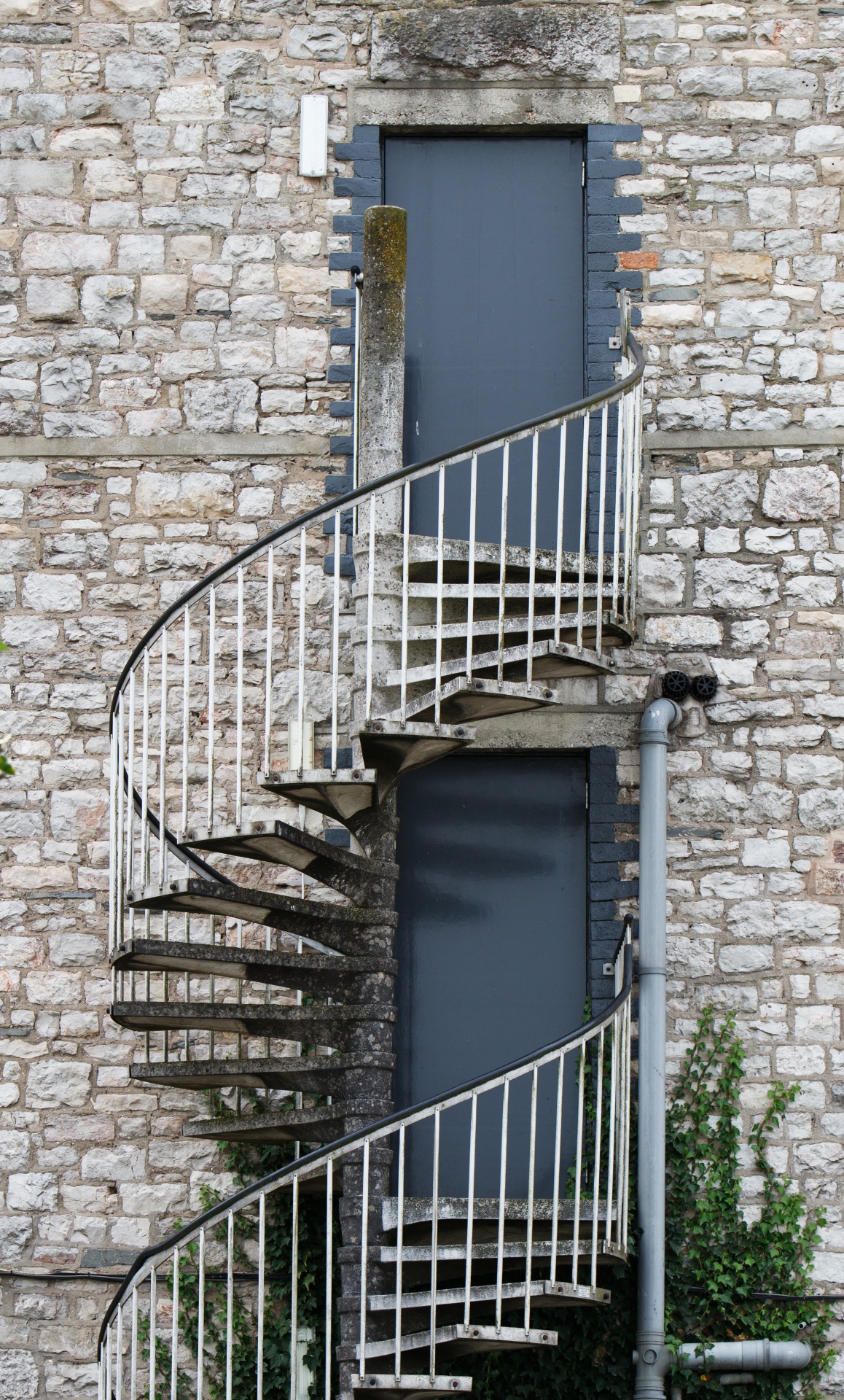
Brick building with white stone bricks and a gray painted door. A spiral concrete staircase with a railing extends out of the door as a fire escape.
Public domain image from Karen Arnold

In a different vein, Canadian poet Allison Grayhurst’s pieces embrace the merging of individual identities into the partnership of marriage. Rather than escaping into one’s own space, her speakers join with others at an intimate level and choose to embrace the uncertainty, risk, and joy that can bring.

In his poem, Christopher Bernard mourns the loss of someone he deeply loved with an ironic, poignant image; while John Culp illustrates the process of change and personal transformation, something that can happen when we choose to stay present and hear the lessons life has for us.

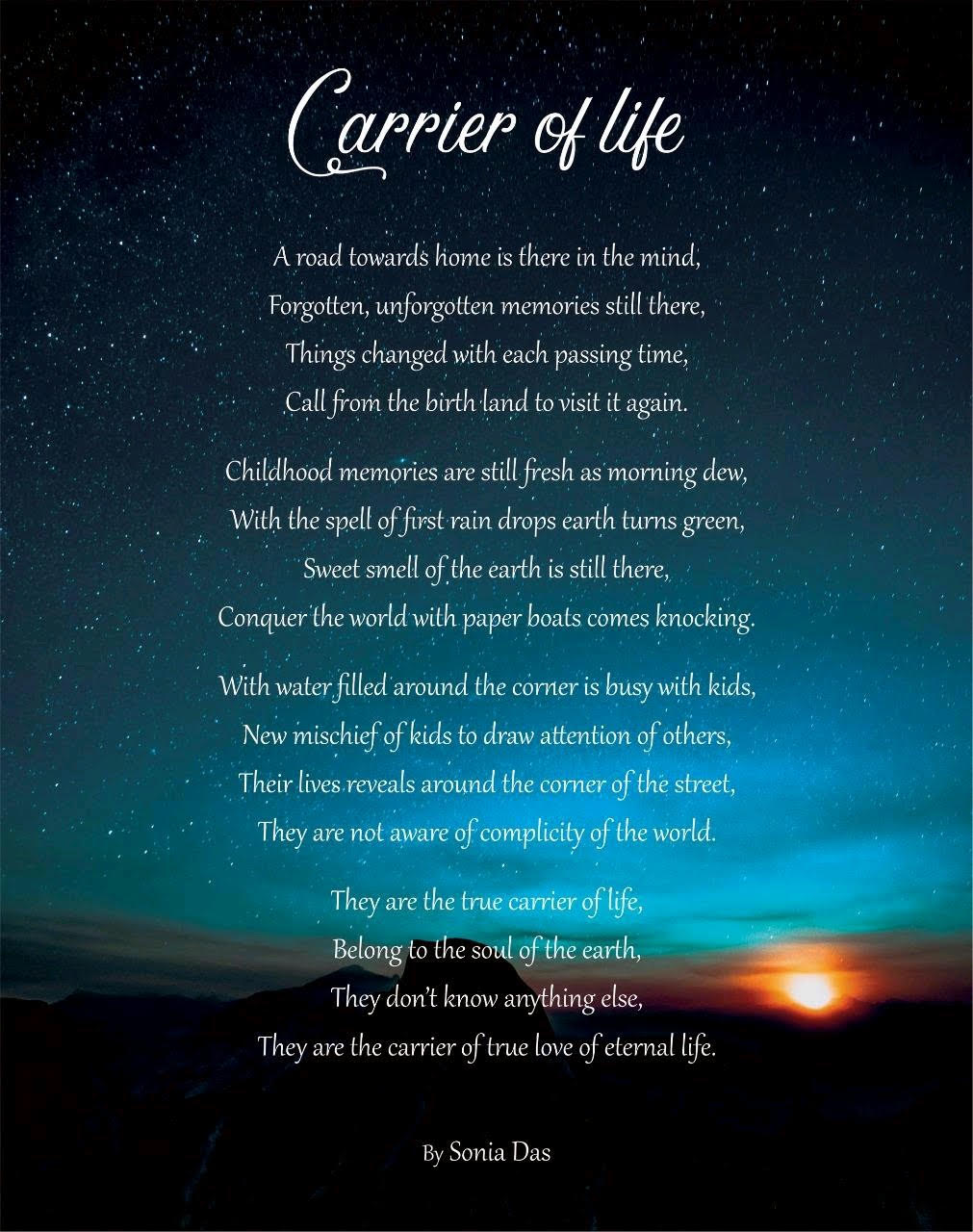
Sonia Das writes of childhood, home, and memories, while Alan Catlin presents a stream-of-consciousness look at cultural nostalgia and musings on the fragility of life. Dave Douglas celebrates the joy of playing and connecting with a little autistic girl in a piece he submitted for Autism Awareness Month in April.

J.K. Durick’s pieces also probe the effects of time: our memories, what we put away over the years and what (and who) we bring out again to remember. Drifting down memory lane can be an escape, but choosing to remember can be a way to be present in your life, deciding what’s important.

Arched opening in a brick wall opens to a view of a large body of water with clouds and a sunrise/sunset in the background. A green island looms in the distance.
Public domain image from Flash Alexander

In other pieces, Allison Grayhurst illustrates people healing from loss. South African writer Abigail George’s impressionistic essay also processes a loss: the speaker mourns and struggles to understand the end of a relationship she had with an older male writer. As part of this, she reflects on her life journey, relationships and writing and what she brings to her personal and artistic lives.

J.J. Campbell also points to themes of loss and loneliness as his middle-aged speakers reflect on their lives. Yet he finds space to mention what he enjoys as well: friendship, caring, and the joy of artistry for its own sake.

Michael Johnson presents various characters in persona poems who are unafraid to be themselves, including a Native American woman proud of her heritage and a girl comfortable in her own skin and ready to have fun.

Mark Blickley presents a rather unique character who helps a boy cope with his father’s impending death and his mother’s misplaced anger. Kahlil Crawford also writes of mortality, commenting through a single image on what we can leave behind us when we depart.

Bangladeshi poet Mahbub brings us short pieces from speakers hoping to escape their lives, or who find themselves unable to get away from their realities. Nigerian poet Daniel Ezeokeke’s speaker turns to history and academic study as an escape from the trauma of war and violence.

Nigerian writer Chimezie Ihekuna warns in his screenplay about the psychological dangers of developing an obsession with horror and violence as entertainment. Bruce Mundhenke speculates on the mysteries and hidden dangers of Internet technology, also an obsession and escape for many, in a piece evoking the Trojan War.

Nondescript clip art white male figure in a business suit runs from his shadow, which has grown and morphed into a menacing creature with teeth and claws.
Public domain image from Mohamed Mahmoud Hassan

Samara Hayley Steele uses the Free Britney Spears movement as a cultural touchstone in an essay where she hopes that ‘celebrity culture’ will become more than a mindless diversion. Perhaps the increased awareness of some social issues that we gain through watching celebrities’ lives will inspire us to liberate non-famous people as well.

Chinese poet Hongri Yuan and translator Manu Mangattu continue to craft poems illuminating a celestial world in which some may wish to escape.

Chris Butler tackles real world issues through surreal poetry: humans’ rapacious fingerprint on our planet, melting glaciers, rising seas.

Australian poet Nathan Anderson transmutes the language of his poetry into a jumbled concoction to convey the mindless monotony of oppression and the futility of assuming the world operates according to simple manufacturers’ instructions.

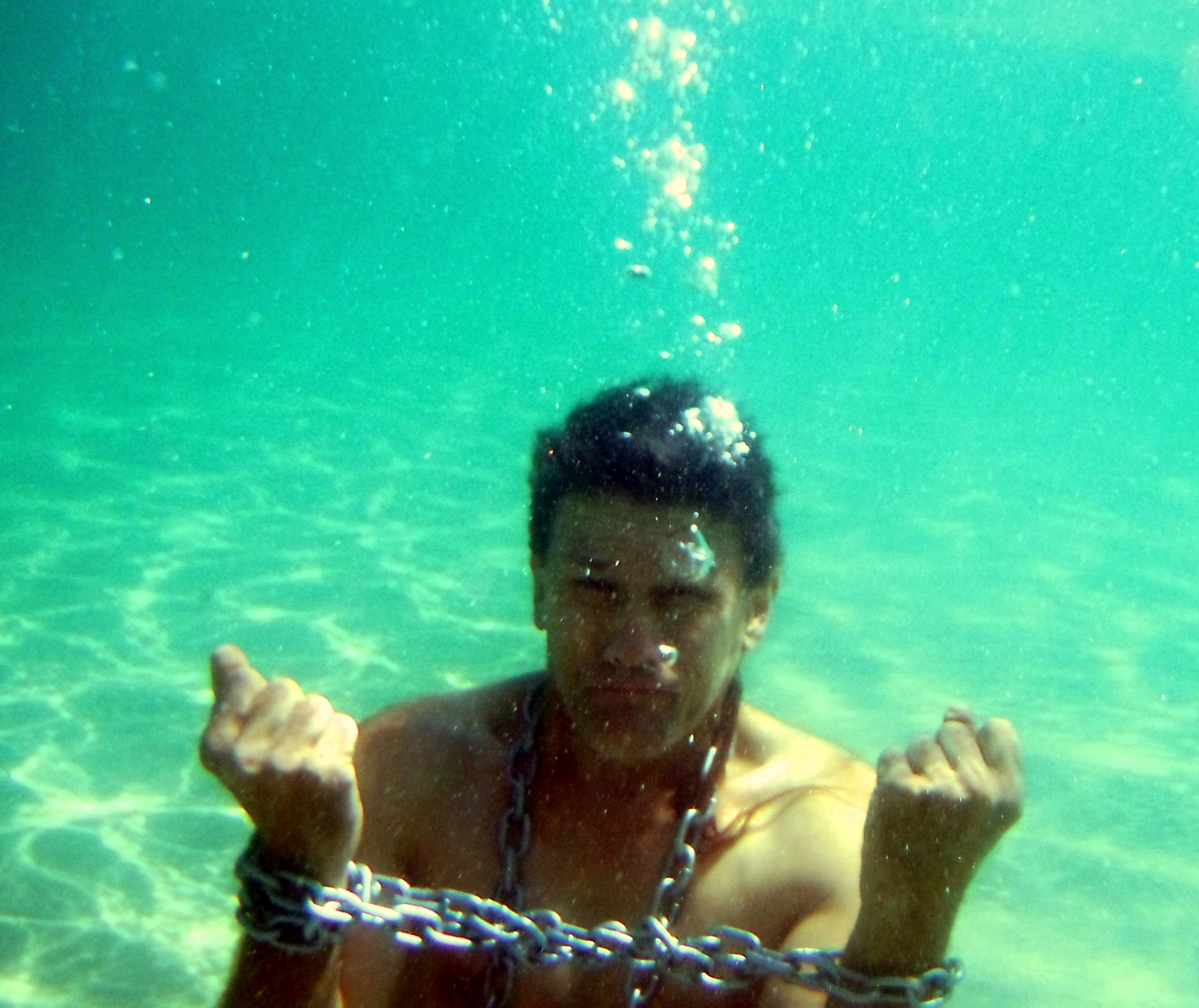
White or Latino man with short brown hair (real image of a person) with chains around his neck and hands underwater. Part of an escape stunt game.
Public domain image from Ron Sanderson

Other writers play with words and language to express mood rather than literal meaning. Mark Young’s poetry sounds resolute in its opacity and J.D. Nelson’s lines flow together in a poetic rhythm. Jack Galmitz showcases a ‘gallery’ of ordinary folks in plain language, to show that writing can be intriguing without being incomprehensible.

Chimezie Ihekuna contributes a piece of bold determination. He will not escape difficult situations or surrender to them, but will persevere in the face of any obstacle.

Synchronized Chaos Magazine is happy to have persevered throughout the time of Covid-19 with you. We are always flattered by the number and diversity of submissions we receive and encourage readers to leave comments for the writers and artists.

Poetry from Dan Flore

I can’t hear you, Tracy

I can’t hear you, Tracy, the sun is in my eyes like a strange portrait of light, and I’m stuck in a seashell, drowning in the sound of the ocean. I am staggering like I’m drunk. Slurring my words. Having a seizure over and over again and I just wanted to smile for you and talk about that day at Peace Valley Park when your clothes were plain and everything was going right. When the sun was my ally and everything was green, even the dirt. This strange sphere of a planet dropped me off on the side of the road when I wasn’t looking. I’m at the graveyard now. My tombstone reads rest in pieces. I can’t hear you, Tracy. I can’t even hear myself. Tip toeing into traffic. Knees all crumpled up. How many shades of blue can one man radiate? The clock ticks like Chinese water torture over me and I wish I knew what you were saying, with your hands in your pockets, walking along the grass somewhere.

Screenplay from Chimezie Ihekuna

Title: Wake Up, Dream Boy
Adapted from a book by Chimezie Ihekuna (Mr. Ben)
Screenwriter: Robert Sacchi

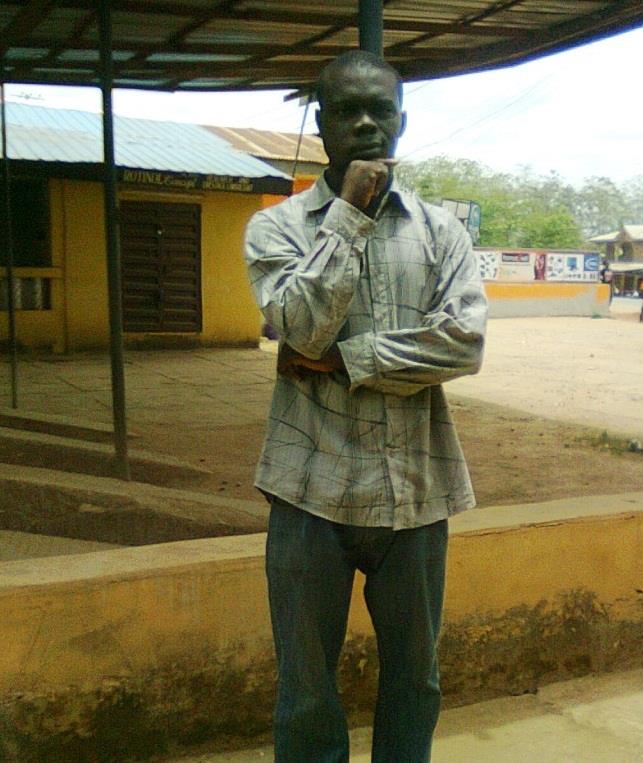
Chimezie Ihekuna (Mr. Ben) Young Black man in a collared shirt and jeans resting his head on his hand. He's standing outside a building under an overhang.
Chimezie Ihekuna

Genre: Fantasy Mystery

For reviews, production consideration and other publicity, please contact us through the email addresses below:

mrbenisreal@gmail.com

rsacchi@rsacchi.20m.com

Synopsis/Details: 

‘Wake up, Dream boy!’ explores the ordeals of a young teenage boy, Tom, through a dream he had. It combines geographic names, conceptualized characters, metaphysical locations and various thought realms.


Things turned upside down as Tom, in high school, became obsessed with horror films and books that had satanic themes. Anything scary caught his attention and he hardly paid attention in class. Left alone, he looked out for books flooded with zombies, ghosts and other extra-terrestrial entities.
Tom’s friends eventually got tired of hearing about his special interest and kept him at arm’s length so they wouldn’t have to hear all of his evil visions of blood-feasting demons, cannibals and dark voices telling people to commit suicide. He became somewhat of a loner.


His mother, Sarah, whose husband had died shortly after Tom’s birth, tried to distract him from the horror. However, she eventually gave up, since she had two other children.


However, Tom’s nightmares played themselves out. For every action, and every obsession of humankind, there is an equal but opposite consequence.