In The Wrong Side of Honor Eddie Donevant was in Vietnam going after the CIA that were bringing Opium into the U.S. to be made into heroin. In the Wrong Side of Loyalty, Eddie and his wife Elaine start out in Russia as visiting professors. Then people start getting murdered and he is brought back into active duty chasing terrorists in the Middle East. This is another fantastic novel filled with action that will keep the reader engaged from the very first page to the very last. I absolutely loved it and very highly recommend it.
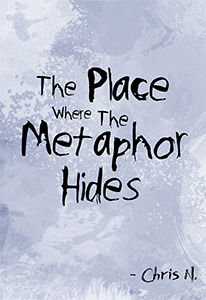
The Place Where The Metaphor Hides is a book of poetry. It is much different than most others I have read. It is interesting and would appeal to older teens and adults. It is the tale of the journey of Jenny who has spent six years searching for her love. Her love has been stuck in a journey that has taken him through being chased and lost both physically and emotionally. It keeps the reader’s interest and would be a great gift for the older teen or young adult.
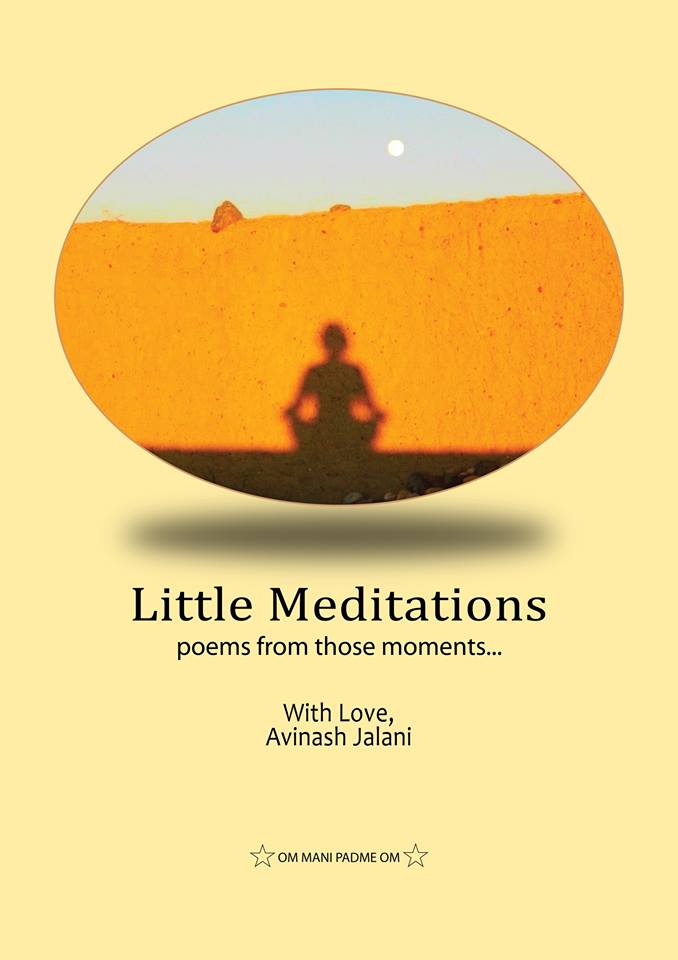
This is a book of poetry. The poems are written to give you a sense of peace and easy to read. My favorite ones are (although, they are all excellent) ‘Finding Blueprint’, ‘When Silent Eyes’, ‘Do You Know’, ‘Exploring With’, ‘Immortal Love’, ‘Abundance’, ‘Invisible Love,’ and ‘Broken Star’. If you love poetry, this is perfect for your personal home library. If you have never really read poetry, this would be a perfect book to start with. I very highly recommend it.
I’m seeking a land, and not a homeland
Without the aid of Google maps, instead
I will discover a new land with a loyal pet as
I gave up from my friends a long time ago
I want to work like a bee, and fly with
the birds by the beautiful blue skies
I create a family of different plants
with seeds of my own, and rain from God
being a writer is being a father of griefs, and
writing about what the city lights hid from me
the rain drops wash the rooves of leaders
and damage the shelters of few believers
with my eyes I see, while nothing stops me from
crying when I hear my adopted brother’s dying
I jump into the dead sea to cure my wounds
as I will have new cuts with no pain as long as
I will be drinking whiskey, and creating an unhealthy
cloud from the smoke of my addiction to cigarettes
being happy doesn’t mean I’m sleeping without
counting the stars, instead it’s another way to
forget that I am actually being hanged to death
since the day, I decided to own a colour of the rainbow
I will be quite with the mirror, and hold
The candle dropping more wax in my throat
Accent of Grief
I stepped above my spirit
to release the joys from the bottom
of my belly button
I broke my heart a few times
To feel a healthy beat to enjoy
every misery I face on my own
I cracked my brain to recall
the times when my father wasn’t a man,
when he knew about death
I drank dark roast coffee
to bitter my words from saying them
to the clock on the dull wall
I cried as a powerless musician
because I knew that my blues and jazz
have a deep accent of grief
A Foreign Student and Shaving Blades
A few weeks ago
I went to the washroom in a
Coffee shop nearby to my school
there by the sink
I saw shaving blades
I was shocked and terrified in the moment
I went back to my table
to study my homework, next to me
a foreign student was talking on the phone
he spoke the same language as I do,
his mouth was smiling, and his eyes were
watery creating a river of lonesome homesickness
turns out, the shaving blades
have a chemistry in his current life
so do I, but I would use it on some other day of the year
Ahmad Al-Khatat was born in Baghdad on May 8th. From Iraq, he came to Canada at the age of 10, the same age when he wrote his very first poem back in the year 2000. He also has been published in several press publications and anthologies all over the world. And he currently studies Political Science at Concordia University in Montreal. He recently has published two chapbooks “The Bleeding Heart Poet” and “Love On The War’s Frontline” through Alien Buddha Press. They are available for sale on Amazon. Many of his new and old poems are also available on his official page Bleeding Heart Poet on Facebook.
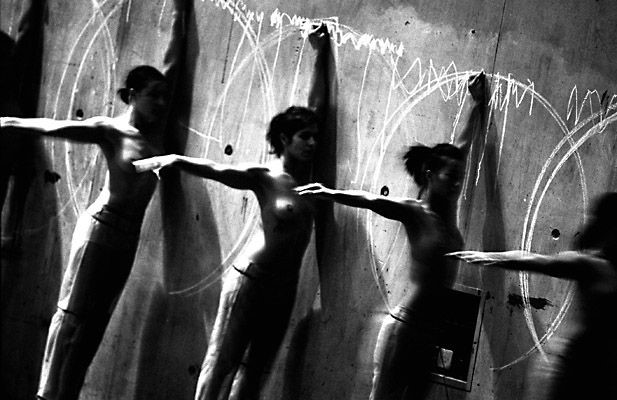
As part of their much-welcome “Women’s Work” series, Cal Performances recently brought Sasha Waltz & Guests’ provocative dance “Körper” to Berkeley. “Women’s Work,” the latest instalment (titled with definite tongue in cheek) in the “Berkeley RADICAL” series, brings a much-needed corrective to what has too often been a male-dominated world.
As an unapologetic straight white Eurocentric male myself (to put my cards smartly on the table), I applaud, and cheer, the impulse behind this. The modern world has been over-driven by testosterone since the Enlightenment and the Industrial Revolution and the autocratic isms that have followed, beginning not least with capitalism, and has left us careening toward an Armageddon of our own making. More than ever before, the world needs a woman’s touch – the deep generosity of woman’s concern for the vulnerable, for others besides themselves; an essentialism that I suspect not even the most deep-dyed feminist will deny, at least privately. What bothers me about feminism, however, is that it too often has bought into the masculinist, and hubristic, assumptions of liberalism, voluntarism, individualism, modernity and the Enlightenment project, and by doing so merely has strengthened the chains that bind us all. Some feminists do not seem to realize that their liberation – and our salvation – requires that we overcome, and replace, modernity itself. Otherwise it will not be merely our souls that are lost.
We are very happy to announce that the literary contest ‘Nature’ is about to start. This year’s theme is “The Nature of the Universe”,
with Earth’s terrestrial nature remaining central to the theme.
All are welcome to enter by submitting a piece of writing on the theme of nature and the natural world. This can be a poem, a short essay, or a short story. American author Janine Canan, who has a long and established reputation writing on these themes, will serve as judge, and Portuguese author Rui Carvalho sponsors the contest and prizes.
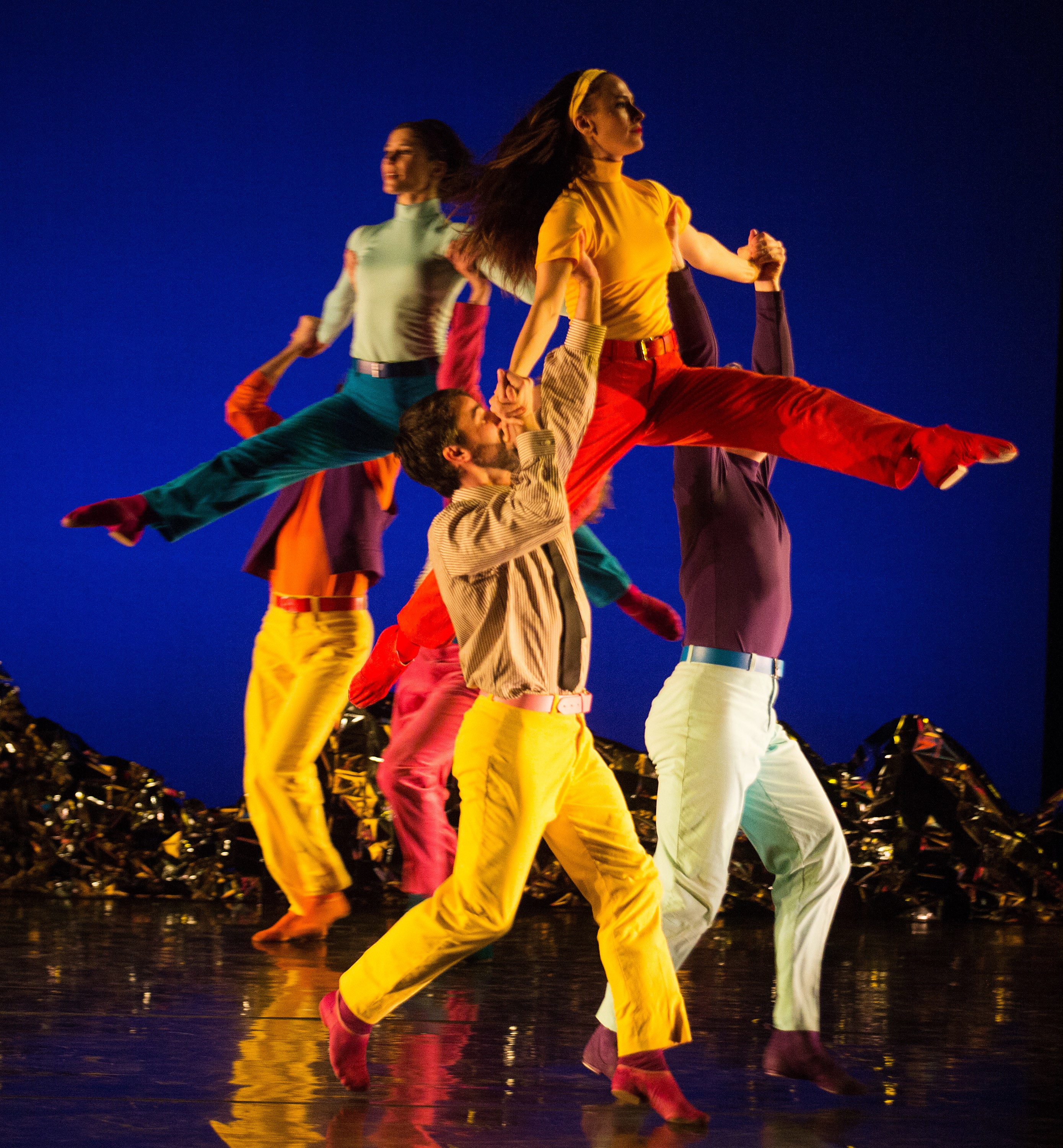
Mark Morris Dance Group performing Pepperland. (Credit: Mat Hayward.)
Eat your heart out, atheists: there is a god, and his name is Mark Morris.
To prove his divinity once again (though what god needs to prove his divinity? I should say: to display it to us hapless mortals), he brought his company of angels, fallen and otherwise, to Berkeley over the last weekend in September to ravish mere humanity with an hour-long dance based on one of the most inspired and exuberant and original and humane of all albums of popular music—the Beatles’ seminal (for once, the word is apt) contribution to what few virtues we have left in our world today: Sgt. Pepper’s Lonely Hearts Club Band.
It is almost embarrassing to salute so fulsomely a work of such wit, humor, graciousness, humanity, and eternal youthfulness. It stands uneasily on its pedestal, threatening at any moment to throw itself onto a 60’s dancefloor and show the rest of us how it is actually done. Continue reading →
Welcome to October 2018’s issue of Synchronized Chaos! This month’s theme is Aerial Perspective.
It’s a time for reflecting on your life’s journey. This month’s contributors look at life from a distance: processing trauma after the fact, considering entire scenes and landscapes, heading off into flights of fancy, and expressing ideas poetically through metaphorical language.
Mahbub’s poetic speakers, whether thinking while awake at night or while hiking in the woods, have enough mental distance to consider their lives and situations.
Logan Lane celebrates a fun Halloween tradition that began with Linus in the Peanuts comic strip: going to a pumpkin patch and waiting for the Great Pumpkin. Her piece is a genuine, sincere tribute to tradition. In Joan Beebe’s poem, her tears mingle with the dew. She’s part of nature, part of a natural scene that actually brings her great joy.
In her monthly Book Periscope column, Elizabeth Hughes reviews novels and memoirs that dramatize suffering and survival via self knowledge, self respect, heroism, crime-solving or whatever else it takes to triumph. She reviews Crissa Constantine’s Love and Accept Yourself Now, Marshall Ginevan’s The Wrong Side of Honor, Ellen Payne’s Finding Joy, Rob Watson’s Friends List, and Astra Ferro’s Stepping Stones on the Spiritual Path.
Chimezie Ihekuna’s poetry highlights how living a life of love and truth is a choice, something we must do, but are also empowered to do. Leticia Bradford’s poems also demonstrate the choice to stand in one’s truth, by speaking up for social justice in a nationwide march.
Some writers reflect on their inner feelings and wishes from enough distance to be able to understand themselves and others in the big picture.
In James Diaz’ love poems, his speakers want to understand and heal their partner’s pain and past grief, blame, and loss. They extend this compassion regardless of whether they’re currently together with that person or whether the relationship has ended.
Eliza Segiet contributes poems of war, referencing the Holocaust and concentration camps. Segiet alludes to things rather than describing them directly, addressing the daily indignities of oppression in fresh ways: ‘numbers are born’ rather than human beings, inmates lose the ‘ability to lie by choice’ as they must conceal some matters to survive.
Ian Copestick gives us poems of struggle, writing of addiction and pawnshops and his amusement with books that describe an easier, more refined life. He, like Mahbub, reflects on his existence after consideration, although he’s in the midst of the struggle. His work illustrates how poverty is not always composed of moments of desperate action, but also long periods of waiting and contemplation when one is unable to afford to move forward in one’s life.
Thank you for joining in the Synchronized Chaos journey by reading our publication and leaving comments for our contributors. Hopefully this issue will cause you to contemplate and ponder, then pontificate in our direction, about the major themes in your life and our world.