
HAWKED AND DOVES

Love is hawked from every ad,
is sent likes doves from all our arks,
is aimed at every easy mark,
is scribbled on every poet’s pad
Through it all we keep in mind
what we, every one, know is fact:
that what we seek is really Sex

ORDER AND ENGAGEMENTS

I thought love’s inherent anarchy
erodes the institution.
I my co saw the situation starkly,
imposed institution,
and then, to defend love’s covenant,
fortified all my redoubts.

But I abandoned my battlements
and witnessed my army’s rout.
Too late, enlightenment came darkly;
the armistice was troubling:
I learned no lover’s a monarchy,
all lovers are republics.

AMAZING FANTASY #16

To locate her elongated man,

an invisible girl
hoisted her green lantern.

Her archenemy – that scarlet witch! --

countered with a dark spell
hidden in a shadow

that would blind any moon knight’s vision.

But concupiscence stirred
this lightning lad to flash.

Firestorm-sparked, my tinder kindling breached
her lonesome miracle:
I’m now her human torch.

CONQUERING LOVE

With hope my single ideology, innocence my only weapon,

I rose out of the nursery and went to conquer Love.

I passed all the girls in cellophane, said No to the ones in bows.

No purpose found I in frivolity: I was out to conquer Love.

And Love was a Virgin in a Pershing tank, a saint in burnished chain mail.

And I was Bubba in a pickup truck, an Eskimo in underwear.

Still, no purpose found I in frivolity. I was out to conquer Love.


So: I fell on Love with my Weakness, and I fell on Love with my Hope,

Fell on Love with my Purpose – was all-out to conquer Love.

But my belief blunted to memory, and my arms were battered to guile.

I fell back into my hatchery – I was out, oh! conquered by Love.

‘Cause Love’s a Virgin in a Sherman tank, Guan Yin in a steel nuptial veil.

I was a hick in a beat-up truck, an Eskimo exposed to the bare.

Though I found no purpose in frivolity, I was downed, conquered by Love

MY YOUNG SELF:

Your many ghosts haunt these my yellow years,
they still shout because I cannot speak.

The center of your infinity constricts to dimensionlessness. My unstable molecules made me your atomic traitor from the start.

I bartered your generous energy for this my degenerate austerity,
your oratorios and vision for these my parrots and mirrors.
I traded the fire and the wine for diet coke and ash, your altars of sacrifice for a sepulcher and some artifice.

That elusive wholeness I was to complete reduced to incoherent ruins.

Somewhere along the line a promiscuous warrior traded guts with a riskfree prayer
who avoids your fruit for fear of the rot.
Somehow an artful scientist of metaphor
transformed into this jester of awkward gestures.

Perhaps,
in time,
that I I now condemn
may become
the I I understand.
Category Archives: CHAOS
Poetry from Kristy Raines

A PROMISE FULFILLED
    "As Two Souls Join"

Our hearts are adorned by the beauty of purity and love
We are one heart that resides in two bodies
Our souls blend easily and can not be separated
Every feeling and emotion is shared without shame
for there is only pureness in such a joining
Every emotion drenches my being
Every touch is felt deeply and is welcomed with pleasure
Your intoxicating scent fills my nostrils
causing my body to shiver as our souls join
Hear my sighs and let me take in your every breath
until the thunder claps and the lightning strikes
within the realm that we share
When the silence comes, the promise is fulfilled
I will be with you in every turn of our lives
and will reside with you in eternity when I take my last breath...


MY SACRED SONG

I am the bluest sky that holds your sunlight
The memories in a tear that falls from your eye
I feel you walking in the garden of my love
Praying those prayers meant only for me
I sing of your love like a sacred song from Heaven
O' my greatest purpose in life, never stray from me
I open the doors of my heart so our love can fly free
Like a beautiful Phoenix that rises from the ashes
The loneliness inside of you will disappear once again
Where only the colors of love will remain forever
And a golden chain will tightly bind our hearts together.


Kristy Raines was born in Oakland California, in the United States of America. She is a poet and author. Kristy has five books which have not yet been published. One with a prominent poet from India, and four of her own books, which she hopes will publish this year. She  has received many literary awards for her unique style of writing. Kristy is a former civil servant for the United States and later retired from the medical field.
Poetry from Dr. Prasana Kumar Dalai

SOMEONE SHOULD TELL ME!
In that glittering touch of my dreams
Something new rises in my heart
Perhaps a smiling bud that giggles
In the deep and dark forest of my mind .
My new poetry sings and vanishes
Behind innumerable hopeless hopes
Someone should tell me in a dialect
My river of love flows in a new rhythm
And the sea of joy maddened in waves
I find not what new hue of her form
Can draw my image eternally lavish ;
Why is she acting all secretive today?
LET THE NIGHT COME!
Let the night come, my heart burns
I miss you in the middle of my life
Your love has destroyed me in toto
I have been a slave to your love
The pity is I’m neither living nor dying
You have turned my life like a hell
My heart is such I can’t ignore you
It hurts badly for the wound is deep
My eyes do cry; let them roll tears
Let the dark night come again
I want to sleep in your slim arms.
NEVER MIND!
A chasm does open up as all roads fail
Why any cure now for a broken heart
Happiness always far-fetched for me
May you be blessed with it as you go
I pray fervently you do prosper in life
May your hopes and dreams come true
May you be free from my nothingness
I’ve closed all my roads to come to you
Never mind, simply ignore and walk away
Be progressive and productive all way.
JUST IN A MOMENT!
While walking alone I saw you other day
It rained and you got lost somewhere
Like a dream you passed away from me
Just in a moment you entered my life
Your pain did break my heart instantly
I clearly remember your wet face then
I smell the rain drops down the memory
I feel you’re with me same as before
I’m crazy thinking about none but you
Someone’s evil eye obstructed my love
My lips were silent, yet heart cried a lot
I could say nothing for you aren’t mine.
Dr. Prasana Kumar Dalai (DOB 07/06/1973) is a passionate Indian Author-cum- bilingual poet while a tremendous lecturer of English by profession in the Ganjam district of Odisha.
He is an accomplished source of inspiration for young generation of India .His free verse on Romantic and melancholic poems appreciated by everyone. He belongs to a small typical village Nandiagada of Ganjam District, the state of Odisha.
After schooling he studied intermediate and Graduated In Kabisurjya Baladev vigyan Mahavidyalaya then M A in English from Berhampur University PhD in language and literature and D.litt from Colombian poetic house from South America. He promotes his specific writings around the world literature and trades with multiple stems that are related to current issues based on his observation and experiences that needs urgent attention.
He is an award winning writer who has achieved various laurels from the circle of writing worldwide. His free verse poems not only inspires young readers but also the ready of current time. His poetic symbol is right now inspiring others, some of which are appreciated by laurels of India and across the world. Many of his poems been translated in different Indian languages and got global appreciation. Lots of well wishes for his upcoming writings and success in the future.
He is an award winning poet author of many best seller books. Recently he is awarded Rabindra nath Tagore and Gujarat Sahitya Academy for the year 2022 from Motivational Strips . A gold medal from world union of poets France & winner Of Rahim Karims world literary prize 2023.The government of Odisha Higher Education Department appointed him as a president to Governing body of Padmashree Dr. Ghanashyam Mishra Sanskrit Degree College, Kabisurjyanagar. Winner of ” HYPERPOEM ” GUNIESS WORLD RECORD 2023.
Recently he was awarded from SABDA literary Festival at Assam. Highest literary honour from Peru contributing world literature 2024.Prestigious Cesar Vellejo award 2024 Completed 200 Epistolary poems with American poet Kristy Raines. Books. 1.Psalm of the Soul. 2.Rise of New Dawn. 3.secret Of Torment. 4.Everything I never told you. 5.Vision Of Life National Library Kolkata. 6.100 Shadows of Dream. 7.Timeless Anguish. 8.Voice of Silence. 9.I cross my heart from east to west . Epistolary poetry with Kristy Raines
Essay from Gulmira Polotova

About “my Oybek” book
Undoubtedly, Oybegim Mening is one of the rarest and best works of Uzbek literature. Oybegim, which occupies a deep place in my heart, has such a powerful effect on every person who reads it that you can’t put this book down and fall in love with how it will end. my respect increased even more, this work did not leave a slight impression on my most sensitive feelings. They are so strong in the ways of life that no matter how many evil-minded people try to break them, they will not be able to do this.
Even some writers who are enlightened and learned in society are doing everything they can to arrest Oybek, to break him, they look for flaws in his works, they slander Oybek… But Oybek, a strong writer, does not give up. Oybek’s poems and works, with such a pure conscience and such a wonderful nature, are still in the hearts of not only Uzbek readers, but also readers of the whole world. The conspiracies against him did not leave a small impact on Oybek. Oybek was in severe pain, lost his speech, but did not give up.
Zarifa Saidnosirova is the one I admired throughout the play. He was so pure, religious, and knowledgeable that he stayed by Aybek’s side until the end, always supported him, was always by his side in the most difficult situations, he was a real life partner. In fact, Zarifa Saidnosirova was not a writer, she was the first Uzbek chemist, but one cannot help but admire the fact that she was able to create such a beautiful, immense work, a work that is more beautiful than the works of some writers, a work that will be imprinted in memories….. Zarifa Saidnosirova is the child of a rich family. He will have a child, his father will be a knowledgeable, highly spiritual person who helps the elderly (if he lived for 52 years, he will spend 11 years away from home).
Oybek is the son of an ordinary farmer, but Zarifa did not care about this at all, even during the play there is no mention of Oybek being the son of a farmer, the person who reads the work does not notice that Oybek’s family is a troubled family, even if you read it very carefully, it can be noticed. Only a person familiar with the life and work of Oybek knows this for sure. Zarifa Saidnosirova, like some girls today, does not even think about the fact that she is poor and I am rich… This is pure and true love…
In fact, Zarifa Saidnosirova was not a writer, she was the first Uzbek chemist, but one cannot help but admire the fact that she was able to create such a beautiful, immense work, a work that is more beautiful than the works of some writers, a work that will be imprinted in memories….. Zarifa Saidnosirova is the child of a rich family. He will have a child, his father will be a knowledgeable, highly spiritual person who helps the elderly (if he lived for 52 years, he will spend 11 years away from home).
Oybek is the son of an ordinary farmer, but Zarifa did not care about this at all, even during the play there is no mention of Oybek being the son of a farmer, the person who reads the work does not notice that Oybek’s family is a troubled family, even if you read it very carefully, it can be noticed. Only a person familiar with the life and work of Oybek knows this for sure. Zarifa Saidnosirova, like some girls today, does not even think about the fact that she is poor and I am rich… This is pure and true love…
As soon as the play ends, saying that Oybek will never take it, he is just resting, something breaks in everyone’s heart….
I just congratulate these people
Oybek and Zarifa…..just a real proof that there are pure love and pure hearts.
I am Gulmira Poʻlotova. I was born in October 29.2005 in Uzbekistan. Bukhara city. Nowadays I am a freshmen of National university of Uzbekistan named after Mirzo Ulugʻbek. In my free times I really keen on short stories and articles also. In the future I want to be a professional translator.
Poetry from Royal Rhodes
Street Video

These stories almost escaped
from order into dizzying chaos,
with linear cartoon-like panels
in the rows of tenement floors,
letting us glimpse the dramas
inside, without subtitles to read.
The lens took in the flaking paint,
acid-yellow wall-paper strips,
and a woman gazing out at us,
squinting through a bruised eye.

The action moved along from here
to there, inventing a melodrama
of gunshots and alley dumpsters
But we also had seen in the street
the image from a pin-hole camera
a homeless man had documented
from when he was living rough
a block from the stately capitol
where legislators reiterated claims
that no veterans ever slept on grates.
_________________________________

THE SCHOOL MOVIE

Almost as soon as the lights
snapped on as the credits ended
those around me started asking
which character in the film
shot on summer location here
was me or should be me
or why was their cameo cut?
And a few joshing friends
with their cinema radar on
emailed or blogged the same.
Perhaps that sad-sack retiree
who quit, then recanted,
with nothing new to fill a life
spent teaching 37 years,
like a modern Mr. Chips.
("That's Mister Chipping to you")
Or perhaps a gender-bending
version of the straight-backed
harsh female faculty star,
played like, not modeled
on. a former colleague, quick
tongued and creator of quips.
The friends in joking missed
the pathetic theatre of teaching,
the sweaty wrestling with angels,
the jazz of long, dark nights,
the cries of "Help me. Help me."
as we all stepped in quicksand
that we had not seen ahead.
And this film the boy genius
shot was the perfect medium:
the plastic loops of stuff
that will eventually decay,
like our bodies and minds,
the young and old alike,
as the quick, flickering light
passes through and is gone.
___________________________________

TESTAMENT

"Ithaca gave you the beautiful journey..."
                    -- K. Kavafis

His bed table was bare
except for his glasses, propped
up as if being worn,
beside an open book.
Others would later say
outside his poems his life
does not really exist.
The silence here implies
there is "nothing left to give,"
as a darker voyage begins.
His poetry strips down,
exposing itself as prose,
its "double life" is finished.
Later, reading his books
we felt the heat of his work.
 From such a room as this,
with oriental carpets,
a black desk with gilt,
a velvet armchair,
such conventional pieces,
he inhabited his pasts
like bits of arcane clothing,
and he allowed the secret lives
of those who were not consistent,
unsurprised by their faults,
those undone by misfortune,
bad-timing, and knowledge
imperfect in source and expression,
or the crowned goddess of luck
who rules even the gods.
And now he sits alone
in this room without a light,
recalling nights that were endless
in brightly illumined cafes.
He heard a figure at dawn
enter and sit on his bed,
the place where the fortunate die.
Once when asked to write
his farewell, he took a pen
to a drawn circle's center
and placed a single dot.
The glasses he left aside
were for me an empty mirror,
looking at myself
looking at myself.


Royal Rhodes is a retired educator who taught classes in global religions for almost forty years. His poems have appeared in several literary journals. He lives now in rural Ohio.
Haiku from J.D. Nelson
Five One-Line Haiku
rose blooms of mid-June a dandelion gone to seed
—
near sunset summer’s first bat circles above Broadway
—
staring contest a small rabbit hops out of a bush onto the sidewalk
—
morning errands little horseflies bite my calves & ankles
—
were crews able to put out the fire a bit hazy this morning
—
bio/graf
J. D. Nelson is the author of eleven print chapbooks and e-books of poetry, including *purgatorio* (wlovolw, 2024). His first full-length collection is *in ghostly onehead* (Post-Asemic Press, 2022). Visit his website, MadVerse.com, for more information and links to his published work. Nelson lives in Boulder, Colorado, USA.
Poetry from Shaxribonu Qoziyeva
The Beacon of Knowledge
In halls where echoes softly tread,
A world of wisdom gently spreads.
Where minds awake and spirits soar,
Education opens every door.
A child’s first steps in learning’s grace,
A teacher’s patience lights their face.
From letters formed to stories told,
A bright future begins to unfold.
The books are gateways, vast and wide,
To realms of knowledge, far and wide.
In pages worn and pens that glide,
Dreams are nurtured, side by side.
The sum of all our hopes and fears,
Reflected in the students’ tears.
For every challenge met with might,
Brings forth a dawn, a clearer sight.
In science labs and art rooms bright,
In every quest for deeper light.
The seeds of thought are gently down,
In every heart a wisdom grows.
Through history’s lens and language’s song,
We find our place where we belong.
In numbers’ dance and nature’s law,
We see the world in silent awe.
For education’s gentle hand,
Shapes the mind to understand.
In every lesson, deep and true,
Lies the strength to start anew.
So let us honor every mind,
With paths to knowledge, unconfined.
For in each scholar’s fervent quest,
Lies the hope to be our best.
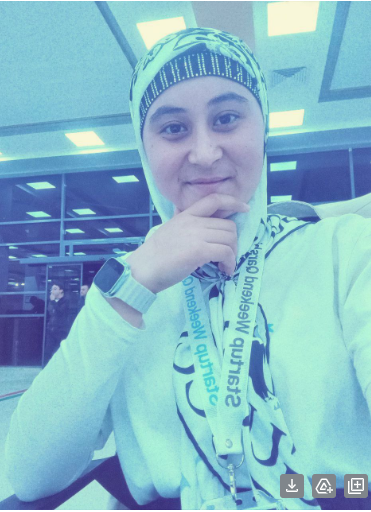
Qo’ziyeva Shaxribonu Muzaffar qizi was born on September 5, 2004, in Mirishkor district, Qashqadaryo region. Currently she is a 3rd year student in the Mathematics and Informatics program at Shahrisabz State Pedagogical Institute. She is also a mathematics teacher at School №19 in Shahrisabz district. She is learning Turkish.