Story from Dildora Toshtemirova

Diagonal shot of a young Central Asian girl with curly black hair and a blue sweater. She's standing in the corner of  a room.
Dildora Toshtemirova

I miss you

Today, my parents, is my birthday. But this birthday is not happy at all. You know, father and mother, I miss you, that innocent girl of 7 years old. I was very happy at that time. I still remember those days. I have not yet heard from anyone what I heard from you. No one could support me like you. I really miss those moments and days with you.

You know, I’m so tired of the day you left me at my grandmother’s house and went to the girl’s house. Every year when that day comes, I can’t find a place to put myself. I still remember my parents telling me “Don’t go, take me too.” And you said, “Daughter, we will definitely come tomorrow, we will bring you lots of chocolates and dolls.” Then I boasted to my grandmother and said, “Grandma, you see, tomorrow my father will bring me many toys and chocolates, they will not give them to anyone, they will bring them only for me.” Then my grandmother smiled and said, “Of course they will.” I will never forget these words.

When I woke up the next day, I was very happy that my father and mother would come today. But this feeling of joy left me. My grandmother was crying, her eyes were full of tears, she was punching the ground and crying. I went to my grandmother and said, “Don’t cry, why are you crying? Mom and dad are coming, they will be sad to see you.” My grandmother couldn’t stop the tears in her eyes and said “I won’t cry, my daughter, I won’t cry”. I could not understand why my grandmother was crying.

On this day, all our relatives came to our house. My aunt, uncle, aunt, uncle, etc. I was looking for you among them. Then I slowly went to my grandmother and asked, “Grandma, when will my father and mother come?” Then my grandmother said “Tomorrow will come tomorrow” and added “Last time” while crying softly. And I could not understand what was happening. The next morning, many people started coming to our house. Women used to come to our house wearing white veils, and men wore caps on their heads, and I didn’t like this situation. 2 months ago, many people came to the house of our neighbor Saliha’s grandmother. The people who came to their house were dressed in the same way. After that, grandmother Saliha disappeared. I was afraid when I remembered them. I cried because my father and mother would not come again, so my grandmother came to me and asked, “Why are you crying? What happened?” And I kept crying, “I need my parents, find me, I’ll go with them, where are they?” My grandmother tried to persuade me, but she could not.

All of a sudden, at that moment, the surroundings became silent. I could not understand anything as usual. I also became silent. Two big things were coming out of the door. I was wondering what it was. Now I know that it is a coffin. That’s why you were there, mom and dad. Then they took out the coffin, that is, you. After that, I did not see you again. You disappeared like grandmother Saliha. I used to harass my poor grandmother by asking for you.

You know, parents, these things will never leave my mind. Maybe when I told you not to go, if you had not left, such incidents would not have happened. Maybe we would celebrate my 17th birthday with you, I don’t know… I wouldn’t spend every day, month, year in loneliness. Now I wouldn’t miss the words “We love you girl”. I always miss the days spent with you. I love you parents. You are not with me, but I know that you are always with me from the heart, my beloved father and mother.

Essay from Azi Umurzoqova

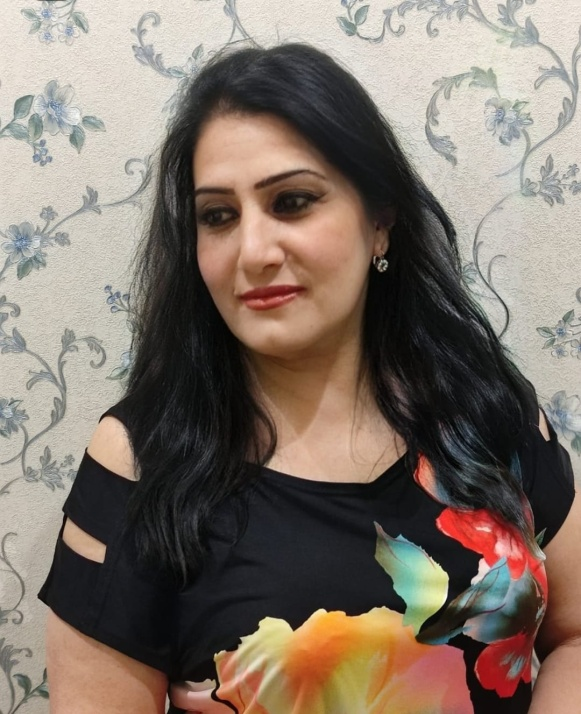
Young Central Asian woman with earrings, a necklace, a lanyard and a white sweater, standing in front of a chair.
Azi Umurzoqova

Jizzakh State Pedagogical University 1st grade student Umurzokhova Aziza.

 A modern approach to the preschool education system.

Abstract:

The economic power of each country, the rise in the level of social and spiritual life is determined by the competitiveness of the educational system and the development of science.

Key words: 

Action strategy,preschool education system,decree and law,reforms.

Therefore, in the Strategy of Actions for the further development of the Republic of Uzbekistan, the priority is to fundamentally improve the education sector, increase the quality of education, form a generation with intellectual potential, physical fitness, in-depth training of specific sciences and training of qualified personnel for various sectors of the economy. were defined as tasks, and it was planned to create an educational system that could ultimately meet the requirements of today’s era.

As a result of reforms in the field, the management mechanism in the preschool education system was fundamentally improved, the non-state educational service provision system was reformed, the secondary special, vocational education system was revised, the quality of training of highly educated specialists was improved. improvement measures were strengthened, a two-level system of post-university education was introduced.

Preschool education. This field, which is considered the primary link of the continuous education system, is extremely important in raising a healthy and well-rounded child and preparing him for school. However, the analysis showed that in recent years, under the influence of various factors, instead of development in the pre-school education system, in terms of preparing children for school education, there have been cases of backwardness, the enrollment of preschool children in pre-school educational institutions during the year has decreased. there was no trend of increasing indicators. On the contrary, during the last 20 years, the number of state-owned preschool educational institutions has decreased by more than 45 percent, and today the coverage of children in preschool education in the republic is 30 percent.

In his speech at the solemn ceremony dedicated to the 26th anniversary of the independence of the Republic of Uzbekistan, the head of state said: “Our goal is to fully cover children of kindergarten age in our country in preschool educational institutions in the next 3-4 years, and we will definitely achieve it.” had emphasized.

In fact, in the past short period of time, the President of the Republic of Uzbekistan “On measures to further improve the preschool education system in 2017-2021”, “Measures to fundamentally improve the management of the preschool education system” on” decrees and decisions “On organizing the activities of the Ministry of Preschool Education of the Republic of Uzbekistan”, as well as

“Unprecedented work has been done on the basis of the 2017-2021 Program for the further improvement of the preschool education system and the “Road Map” for the further improvement of the preschool education system in the republic.

We are witnessing that the changes implemented in the system, along with other areas, the implementation of the tasks defined in decrees and decisions, along with other areas, are under the constant attention of the head of our state. As a result of the implementation of the adopted decrees and decisions, it is expected that by the end of the year, the coverage of children in preschool educational institutions will increase by 10%, and in 2018, the costs of maintaining preschool educational institutions will increase by 32% compared to the current year.

Yesterday, at the meeting of video selectors chaired by President Shavkat Mirziyoyev, the reforms implemented in the system were analyzed and future tasks were defined.

In particular, taking into account advanced foreign experience, creating conditions for all-round intellectual, moral, aesthetic and physical development of children, increasing the quality of preschool education, fundamentally improving the quality of children’s preparation for school in preschool educational institutions, bringing the world into the educational process the implementation of modern educational programs and technologies that are widely used in practice, and the improvement of the mechanism of training and professional development of pedagogic personnel in preschool educational institutions were set.

In particular, due to the lack of adequate conditions for the activities of preschool educational institutions, the fact that the buildings have become neglected and empty, and they are not being used effectively, seven strategic tasks have been defined, which should be implemented in the first half of 2018.

As part of them, it is planned to allocate 771 billion soums from the 2018 state budget for the construction and repair of 427 kindergartens, including the construction of 14, the reconstruction of 256, and the capital repair of 157. establishment of new type of preschool educational institutions based on partnership, starting from January 1, 2018, for 5 years, half of the funds spent by private kindergartens for natural gas and electricity will be reimbursed from the state budget, healthy feeding of children in kindergartens and in order to ensure the quality of food products provided to them, starting from 2018, 10-15 farmers will be attached to each preschool educational institution to supply quality food products at low prices,the establishment of a state enterprise that supplies high-quality ready-made hot meals to kindergartens, the development of a mechanism for the establishment of the “Catering” service, the improvement of the activities of the institute for the retraining of leaders and specialists of preschool educational institutions and their professional development, preschool education There is no doubt that setting the admission quotas of the institutions that prepare personnel for education based on real needs and the revision of the requirements for preschool education pedagogues will literally serve to bring the field to the level of world standards.retraining of preschool leaders and specialists and improvement of their professional development institute, setting admission quotas of institutions that train personnel for preschool education based on real needs, and revision of requirements for preschool education pedagogues. It will undoubtedly serve to bring the industry to the level of world standards. Retraining of preschool leaders and specialists and improvement of their professional development institute, setting admission quotas of institutions that train personnel for preschool education based on real needs, and revision of requirements for preschool education pedagogues. It will undoubtedly serve to bring the industry to the level of world standards.

The implementation of such huge tasks set in the future requires improvement of the regulatory framework of the sector. Therefore, the very urgent task of developing the draft law “On Preschool Education” based on advanced foreign experience was assigned.

It should be recognized that the development of this draft law, in turn, serves to further improve our national legislation related to the field of education, and to strengthen the legal basis of all relations related to the field.

Therefore, ensuring the implementation of the tasks set before the system requires activity and responsibility from the deputies of the Legislative Chamber. 

 References:.            

1 M.Vahidov. Child psychology. Tashkent. “Teacher ” -1882

2 Bahtiyarovna Y E Portfolio as an assessment tool for individualized insturction 2019

Poetry from Uzbekoyim (needs to be April 1)

Central Asian teen girl with long curly dark hair, a white collared sweater and a black jacket.
Erkinova Elbek (Uzbekoyim)
Only you don't cry, don't laugh in pain!

May my body be frozen, my soul is in pain,
I'm sick, even if I'm sick
Only you don't cry, don't laugh in pain!

Let me take your pain away
May God make me happy,
Let there be a drop of blood in my body,
Only you don't cry, don't laugh in pain!

Ask me anything you need.
I can deliver what you want,
I fear not even death for you
Only you don't cry, don't laugh in pain!

Pains in the body are more than numerous,
It's all painful, it hurts my soul,
I forgot everything, patiently
Only you don't cry, don't laugh in pain!

I bring the herbs of paradise,
I will bring the waters of Zam Zam,
every sweet word I said to you
Only you don't cry, don't laugh in pain!
                                        Uzbekoyim

Erkinova, daughter of Charos Elbek, was born on November 13, 2008 in Navroz Mahalla, Pastdargom District, Samarkand Region. Currently, she is a 9th-grade student at School No. 105. She studied English at the B2 level, knows Russian, and Karese languages. Examples of her work are in the international magazine Kenya Times, Raven Cage Zine. published twice in the international magazine, on the ChaOS international website, in magazines. Member of the YUKSALISH organization, Member of the Volunteer Association of Uzbekistan, member of the Golden Wing organization, holder of the State certificate in the 2nd season of Shahida Yusupova's personal development competition.

Poetry from Christina Chin, Shane Coppage, Marjorie Pezzoli and Jerome Berglund

Lower case typed font of a straight vertical line with another line of text winding around it like a snake.


[tan-renga, untitled] deciduous conifers the secret not enjoying it

        seabreeze lifts 

        a mini skirt

Jerome Berglund& Christina chin [rengay]

Shane Coppage    & Jerome Berglund

Lots of text in loops like dolphins or birds or flower petals all around a page's center.

    Light Mana
fooly electric shoals of koi live live neon

    winsome bird

    before the blur
virtual fall the numbers behind purple rain 

    faraday cage 

    color coding

    french ballets 
data castles arabesque in replica dreams

    singularity

    fake it  

    till you make it[split sequence]

Marjorie Pezzoli       & Jerome Berglund

Tiny lines of text looking like a mountain or a city scape with Throw Down in larger black type arched around the top peaks. Marjorie Pezzoli and Jerome Berglund in angled smaller text underneath that.

        Throw Down 
Sisyphus smiles

        high John 

        the Conqueror 

        swine keep disappearing
daisies cheer
        moonbeams laugh        mannish boy dreams         petal drops
rock-paper-scissors 

        Nana Buluku

        no way to contact directly

        submit a support request

Jerome Berglund has worked as everything from dishwasher to paralegal, night watchman to assembler of heart valves. Many haiku, haiga and haibun he’s written have been exhibited or are forthcoming online and in print, most recently in bottle rockets, Frogpond, Kingfisher, and Presence. His first full-length collections of poetry Bathtub Poems and Funny Pages were just released by Setu and Meat For Tea press, and a mixed media chapbook showcasing his fine art photography is available now from Yavanika. 

Christina Chin is a painter and haiku poet. Her work has been featured in numerous publications online and in print: https://haikuzyg.blogspot.com/ https://christinachin99blog.wordpress.com/

Shane Coppage is an emerging writer with a fine arts degree. His words have been published in Humana Obscura, Cold Moon Journal, The Japan Society London, Shadow Pond Journal, and The Winged Moon Magazine. Connect with him on Instagram @shane_coppage.

Marjorie Pezzoli is a silk painter for 25+ years, visual artist, storyteller, and poet. Her writings deal with grief, hope, cosmic wonders, and stuff that catches her eye. Her poetry has been published in numerous anthologies since 2019. Many of her writings are inspired by her photographic observations taken while walking Beau, the dog with Betty Davis eyes. Marjorie looks for words that are worth a thousand images. wwwPezzoliart.com

Poetry from Bill Tope


Reap the Harvest


Emptiness.  Unfilled shelves and barren

cupboards stared back at me.  The win-

dows had been smashed in when they

couldn't get through the door.  Shards of

glass littered the muddy carpet.  Not a

trace of food was left and every precious

bottle of water taken; the tap hadn't work-

ed for months so we were left with literally

nothing. They even took my mother's

insulin.


The baby was crying, eager for the milk

that they had stolen.  At least they hadn't

harmed the small children, or the elders. 

My husband's arm was broken when he

resisted, but all in all our injuries were light. 

They could have killed us all.  And then

burned the house to the ground.  It's hap-

pened before.  However, they knew we would

get more provisions and that they could re-

turn at their own convenience.


Of course they raped me and my teenage

daughters, but they didn't kidnap one of

them.  Probably they were unwilling to share

their loot with captives.  Very prudent on their

part, I thought emptily.  They were a roving

gang of mostly young men and women, mar-

auding from town to town, one household to

the next, as if they were reaping a harvest:  of

food, money, medicine, anything they needed,

anything they wanted.  Then they left.


Next, I prayed aloud.  I asked God that none

of the women would become pregnant from the

assaults.  And that the children would overcome

the shock that the bewildering attack had caus-

ed them.  Had caused all of us.  And finally, I

prayed that for a change, the crops would grow

this year; that John could find work; that the

drought and the plague would be over and that

the wildfires and the war would end.  I prayed till

I was hoarse and had run out of breath.


It was a lot to ask for, a tall order, but after

all, what other recourse did we have?  The

government had been dysfunctional for

years and now distributed food and medicine

only twice a month.  Yes, I decided, if I were

a gambler, I'd have to bet not on politicians or

police or the warm heart of a stranger, but on

a higher power, so-called.


We had to wait three days before a doctor could

set John's arm.  We got more milk for the baby

but once again all our clothes hung a little looser

on us.  The new year is just four days away.  It'll

soon be 2028 and I truly believe that it will be a

better year all around.  It must be.  After all, it is

an election year.


Adah and Me


I was wakened by the touch

of Adah's small hand on my

shoulder. She whispered,

"Miriam, the rockets are

falling again."


I sat up, to find the stone walls

shuddering, wondering how I had

slept through the bombardment.

One can perhaps get used to

anything, I suppose.


The Israelis told us to go

south, but my grandmother

couldn't walk and we couldn't

find anyone to help us, so

we stayed with her. Last

week, Jida was killed in a

missile strike, so Adah and

I are alone now.


I don't know where the

rest of my family is. My

parents and my two

brothers. There's just

Adah, six years old, and

me. I'm thirteen -- just

today!


It's amazing how you

can forget what's

ordinarily so important

to you. There won't be

a party.


There's little clean water

and almost no food. The

nahibs have taken

everything. I don't

understand; they are

Palestinians like us -- but

not like us, I suppose.


I want to take Adah and

go back home. But, there

is no home remaining.

Just the rubble.


I Held My Breath


We had been crowded into a low-ceilinged

room the size of a small church.   Cement

walls and floor.   The soldiers had confis-

cated all our clothes, our shoes, what jewel-

ry and personal effects that had remained

with us.  Most of it had long ago been

bartered away for food or clean water or

other privileges scarce in the compound.


We were completely naked:  the men, the

women, even the little children.  Our heads

had been shaved.  Rumor had it that the

Huns stuffed their pillows and mattresses

with our hair.


The room was entirely vacant but for the

human bodies; our pale white flesh was the

color of a fish’s belly, and we were stuffed

into the room like oysters into a turkey.


We had all been shipped to the death

camp--Todeslager--like cattle to the

slaughter, in box cars, with no food or

water.  With scarcely enough room

to breathe.  Once or twice a plane flying

overhead had strafed the train with

machinegun fire.  Perhaps our own

brave pilots.


There were no youths or middle aged men

and women; they had all been absorbed into

the vast slave labor network the Huns oper-

ated.  Only the crippled, the maimed, the

feeble and the old, like myself, were here,

save for the very young, who weren’t hardy

enough for slave labor.


We were in Treblinka.  It was June, 1943

and the rumor was that the camp would

be closed soon.  We had no room to lay or

sit or even turn around.  We were like the

kippers that were packed in oil or mustard

and that the inmates in labor camps--the

Arbeitslager--got from the Red Cross.  At

Treblinka we never received our kippers.

There were nothing but rumors flying

throughout the compound:  I had heard it

said that the German women made lamp

shades with our skin.


Some of the old men stared up at an aperture

in the ceiling, about a foot and a half over our

heads.  That, they said, was where the Ger-

mans would deposit the Zyklon B, the poison

they would gas us with.  The Commandant,

addressing the prisoners some time ago, had

bragged that superior German industry had

created many wonderful things.  This was per-

haps the example he had in mind when he

said that.  He had seemed very proud.


One of the younger of the men had been a

helper, removing the bodies from the chamber

after the gas had dissipated.  After everyone

was dead.  He told us all about how it worked. 

The poison--prussic acid--he said, worked fast. 

There would be a rattling over our heads, in the

chute that the poison was fed into.  Someone,

he said with a grotesque grin, always tried to

keep the pellet from descending.  But fall it

always did.  For his labors he had received

an extra crust of Brot.


We waited.  And waited.  Suddenly there was a

clattering overhead, in the chute.  The pellet of

Zyklon B was descending.  A tall man, as if act-

ing a part in a movie, attempted to prevent the

pellet from falling, where it would crack open and

then dissipate in a cloud of murderous vapor. 

His hand slipped.  Suddenly, a large white pellet

crashed to the floor, burst open and a deadly,

diaphanous cloud rose up.  A woman cried out.

The lethal “showers” had begun.  I held my

breath.

Essay from Inobat Karimova

Young Central Asian woman standing outside in front of trees and a house. She's got black hair and bangs and earrings and is in a lacy white top and a pink jacket and is giving a thumbs up.
Inobat Karimova

“Eastern woman’s enlightenment”

     Woman! Ever since humanity appeared on earth and recognized itself, this mysterious and strange creature has not yet been defined and explained! Just as every soul discovers the feeling of love anew, definitions of women are updated every time and always. However, there is one divine truth that will never be forgotten and will never change – this is that the Creator created woman with the high status of MOTHER. That is why it is not for nothing that special emphasis is placed on the sacred and respectability of Motherland. For centuries, the cultural level and spiritual perfection of any society was determined by the attitude towards women. Honoring women and showing respect to them is one of the characteristics of the Eastern peoples, including the Uzbek people. The more the nation glorifies women, the more it is glorified. Here, in the words of Simone de Beauvoir, “They are not born as women, they are formed as women”, that is, the development of women’s intelligence is a product of the education she received in her youth and throughout her life.

In the Eastern nations, women were brought up with great attention and sophistication from birth. It would not be wrong to say that these traditions still continue today. Because we see the attention and respect for our women in every part of our society and our women are also a pillar for the development of the country to the extent that they are no less than brave men in every field, be it politics, society, or agriculture. we can witness that he is working hard. Because today, the efforts aimed at protecting the rights of women, helping to develop their intellectual and business potential, and encouraging their initiatives are creating a basis for the rise of the status of our sisters in the family and society.

Here, as an example, we can cite the fact that the “Irrigator girls” club has been operating in a small corner of this country at the agricultural institute, and it has managed to do a number of things before it has been long. This club aims to identify creative female students in the fields of science, art, poetry, sports, who are studying at the Karshi Institute of Irrigation and Agrotechnologies under the initiative of the head of this institute Z.Z.Mukimov was established for the purpose of development and support. As soon as we hear it, you can say how poets, connoisseurs of creativity, and gentle souls can get an education in the field of agriculture. However, in this institute, the girls are not only educated in agricultural fields, but they are showing that they are all-round talented and sharp companions, including their leadership skills. The head of the “Irrigator girls” club, Mrs. Yakubova Shakhnoza, extends her hand of help to the girls in every way and gives more energy to the creations of our girls.

Two women teachers in a short dress and in a skirt and jacket stand in a library flanked by young teen girls. The girls are in school uniforms that are collared white shirts with blue designs on the collar and white skirts with blue designs.
The Irrigator Girls

We can conclude from this that as our respected first president Islam Karimov said, “Glorifying a woman means glorifying the Motherland and life.” Today, this is literally proves that our women can show their leadership ability in any corner of our country and in any field, and also unite the family and society, bringing blessings to it. It is proof that they can illuminate our homes with the light of kindness. Maybe that’s why there is no such kind and playful woman anywhere in the world as an Uzbek woman who rocks the cradle until dawn, bakes sweet cakes from the oven for her child, puts her glasses on her child’s eyes.

Essay from Amirjonov Og’abek

Architectural monuments of the ancient architecture of Samarkand

Central Asian young man with dark short hair, glasses, and a white tee shirt and wristwatch. He's in front of a patriotic painting of something to do with Uzbek history.
Amirjonov Og’abek
Architectural monuments of the ancient architecture of Samarkand
Shahi Zinda. "Living Shah" mausoleum complex occupies a special place in the history and fate of our ancestors. It is located in the southern part of old Samarkand and is one of the holy shrines.The name Shahi Zinda is related to the name of Qusam ibn Abbas, cousins of the Prophet Muhammad. Shahi Zinda architectural complex was built in three parts. The complex is entered through a huge carved gate.This monument shows the taste and artistic skills of the masters of the XIX-XX centuries. Behind the mosque, on the left side of the hill, there is a two-room high blue-domed mausoleum (middle of the 15th century). had a small room (tomb). There is one tombstone in the cemetery, with a dahma under it. Dome cap and tahmans have multi-tiered muqarnas. The walls are decorated with flowers, but the patterns are partially preserved. The double-domed mausoleum is covered with a veil of mystery and has caused a lot of controversy among researchers. The second part of the shrine "Shahi Zinda" begins at the foot of forty steps. The width of the stairs is 5 gas. Here, there are architectural solutions of a completely different era and life. There are completely different scenes in the attic of the dear ones. Hazrat Khizr Mosque - an architectural monument in Samarkand. The gate has a domed gate, and two corners of the gate are decorated with dome-ribbed bouquets-towers; on the left side of the facade, the arched, carved 5-pillar peshayvan is richly decorated with attractive patterns, and the ganch ornaments are skillfully made. From Peshayvan, it is lost to a room covered with a high dome. Outside, the piltavor dome is placed on an 8-sided plinth, and the intervals are decorated with muqarnas. The peshtok and caged minarets are decorated with tiles, arched windows are made on the peshtok base-dome. Tomb of Amir Temur. It is recognized as a unique work of Central Asian architecture. The outer dome of the mausoleum - a second dome was installed on top of it in order to ensure that the external appearance of the monument is more healthy and the interior of the mausoleum has a moderate climate. How large the structure was can be determined by looking at the unfinished complex on its western side. One of the four lamps placed in the great hall has been preserved. A corridor passed on both sides of the 10-meter-wide porch. A two-story building with a double dome is entered from the north side of the corridor, and a gallery is entered from the south side. Amir Temur's mausoleum is entered through this gallery. The walls surrounding the courtyard are divided into two-story decorative arches. There were four minarets at the outer corners of the courtyard. The minaret is decorated with honors. The Khoja Ahror complex is an architectural monument in the vicinity of Samarkand in the Ulugbek village of Samarkand district. Near the grave of Khoja Ahror, there is a complex consisting of Nadir Devonbegi madrasa, two porches, a mosque, a minaret and a courtyard with a pond, built in different periods. The center of the complex is an 8-sided pool, on its south side there is a white marble tombstone of Khoja Ahror, on which a dirge is written in Arabic script. In the north is the madrasa of Nadir Devonbegi, and there are cells around the square courtyard. Jame' mosque. It is one of the largest constructions in Central Asia. The total area of Jame' mosque is 167x109m, there were high minarets in the corners, and these minarets have been restored in the present period. Jame' mosque was gradually destroyed due to neglect and earthquakes, only the lower part of the north-western minaret was preserved, its height is 18.2 m.The foundation of Bibikhanim Jame Mosque is made of stone, and the walls are made of brick (thickness is 4.4 - 5 m). Before the restoration, the mosque consisted of 6 architectural parts that were not connected to each other. In the net of the courtyard, there was a building with a mihrab and a high gable, a small copy of it on both sides, a divided gable of the mosque at the base, and a separately preserved minaret in the northwest. Qusam Ibn Abbas complex. The path in the northern part leads to the base of the complex. In its introduction, the following hadiths of Muhammad (pbuh) are written: "Muhammad p.a. They said: "Qusam ibn Abbas is one of the people who resemble me in his behavior and appearance." On the eastern side of the hall there is a wooden door with a two-layered carved pattern. The shrine was built in the 30s of the XIV century. The date 735 Hijri (1334-1335 AD) is silently written on the southwest side of the octagonal part where the mural dome is placed. Qusam ibn Abbas mausoleum is the most important and ancient mausoleum in the complex. The mausoleum consists of a chapel and a shrine. Each of them has its own etiquette for visiting.