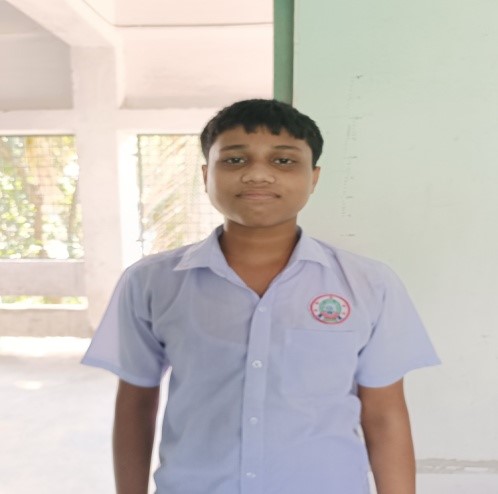
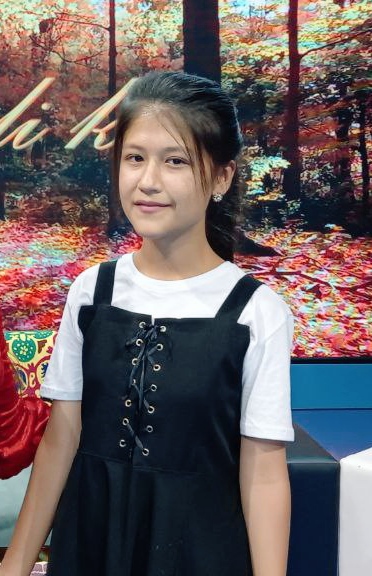
Essay from Shamuratova Shoira

PODCAST IS THE MOST BENEFICIAL WAY OF LEARNING ENGLISH

Shamuratova Shoira Fayzulla qizi

Student of Foreign Language and Literature: English, Department of Urgench State Pedagogical Institute

ANNOTATION: In this article, l am going write about podcasts and their benefits in learning English, l hope that it will be beneficial for all of the people who are learning English or interested in learning English by listening to songs, music, especially podcasts.

The main purpose to write this article to give more information about podcasts and also giving tips to improve listening skills and to find the best podcasts on the lnternet.Furthermore,l really want to help learners to make easier learning English by making fun.

KEY WORDS: Podcast (British Broadcasting Council),smartphones,music, learning languages, Educational tool, Attention span,hormones, flight or fight response.

PODCAST-a radio programme that is stored in a digital form that you can download from the Internet and play on a compeuter or on an MP3 player.

History of the word: This word came from the combination of two words iPods and Broadcast.

When learning English many people choose listening various podcasts in order to improve their English skills.Some people believe that listening Podcasts only help us to enhance our listening skills, however, it has proven that, Not only we can improve our listening skils but we can also easily improve our other skills including, Reading, writing, speaking,communicational skills and social skills that is the most essential part of English and our everyday life.So, maybe the number of listeners icreased significantly over the past 3 years.For inctance, studies show that the number of active podcast listeners was about 464.7 million around the world (in 2013), that makes up around 22% of all Internet users.These numbers have been increasinf by over 40 milion years and maybe it will be a more higher in the future as the interest for listeninf to podcast are increasing day by day. It is predicted that it will be around 504.9 million al around the globe by the end of 2024.

Here, l am going to write a number of key benefits that help us to understand the importance of podcasts.

1.Podcast can stimulate the mental imaginary, it means we know that podcasts include various topics which is interesting and full of meaningful information when we listen the podcast automatically, we imagine or think abour the topic in our mind in order to understand completely.In this process the brain start to work to build pictures and enhace our visual process so that we can easily comprehend what we are hearing.

2.Listening to podcasts will be helpful for the brain.ln other words, they enhance the essential parts of the brain that cause to increase the levels of empathy, relationships and boost compassion. Moreover, hearing the podcast can lead to the brain to release neurotransmitter called oxytocin that is also called ‘love hormone’. This hormone help us to reduce anxiety and stress which cause to improve our attention span when doing their work, this might be only one example that the right genre of podcast to nourish our brain.

3.Podcast as an educational tool.Another major benefit of listening podcast is learning new information cause they help us to take an important data as excellent source of educational material.We can find various podcasts that is always freely available for everyone on some platforms like Youtube and Spotify.Moreover, the topics of the podcast will be different.It also might be other advantage of them

4.Podcast can enhance our concentration and attention span.Many people prefer listening crime-scenes of podcast that causes to release adrenaline in some listeners.It is the main reason to the adrenaline rush that activatate this process and it leads to flight or fight response it means that our body will be more active and alert and also try to engage with our surroundings that support to absorb more information.When we hear the podcasts For instanse, it is about “Environmental problems” we only focus on our attention to the environmental issues (effects, causes, solutions) namely we only think about one issue that help us to improve our attention span.

5.Listening to podcasts give a chance to know others opinions and to change our outlook.One of the main reasons of listening to podcasts to expand our mind, horizon by listening new ideas, opinions and to listen about different experiences that we never normally face in our real life. Thet give an opportunity to see or meet with some people who has similar ideas or interests and also the same job as we.However, live in other country or different corner of the world it means that we can easily find like-minded people within a second without any problem or any difficulties.

Now, l am going to give information about a number podcast apps on Android in 2023.By downloading these apps you can easily find and listen them in everywhere at any time.But, some of them is online.Therefore, l will try to give offline apps also.

1. Pocket casts- is a simply yet multi-faceted podcast app, making it our pick for the best podcast app.lt offers hand-curated podcast suggestions to make it simple matter to discover new podcasts and episodes.ln this app there are different kind of podcast episodes, both new and old, with easy management of our favourite podcasts, we can access them that much faster.Benefits of this app:    a) have extra tools to switch dark to light background b)have different modes like split view, slide over

2.Podbean-This app helps us to earn money by creating, promoting and monetizing our podcast.Therefore, we can easily say that Podbean is an easy and powerful way to create, promote and monetize our podcast.Everything is available that we need in this app.Nowadays, more than 600.00 podcasters trust Podbean in order to create podcast and this app is very important to start our podcast and to achieve goals.This app provides IAB- certified podcast analytics and intuitive charts to help us to measure our success and get insights into our audience.

3.Castbox – This app is availableb on IOS  and Android, supports 50 million podcasts, on demand radio programs, and audiobooks in 70 languages from 175 countries.This app helps us to download and listen to our favourite pocasts(such as The daily) radio and audiobooks.This also give a chance to earn money by creating podcast channels and apply premium channel on Castbox

4.Stitcher- is the easiest way to listen, download and discover podcasts for free across iOS, Android, Web and more. The free version of stitcher gives us access to over 65.000 shows from almost every genre imaginable.Stitchers are pieces of code that are used by different network manager processes.They take information from database, place the information and process it and send the information from one to another.

Here, There are some student’s and teacher’s perceptions towards the use of podcast in learning English.

The topic of podcasts could help educators excite students’ curiosity and interest and eloborate connection between new and previous materials or difficult concepts( lstanto&lndrianti 2011, Ogott & Odera, 2012).

Podcasts help to us to improve our listening skills and our overall language skills( Chen, 2005).

Listening to podcasts give a chance to enhance our concentration skills.(Adler & Lucas, 2013, Hullbert, 1989).

 When listening to podcasts atmospheric condition also affect to the listening performance and how the stimuli were perceived(Zaman&Sidhu, 2013).

There are definetely exact reasons why many people , nowadays, prefer listening to podcasts and they made it a part of their daily routine.lf we want to improve our English skills (IELTS,CEFR) we should listen to more podcast instead of doing other activities and In this article l gave some apps and programs’ names that we can find podcasts easily without any distraction.l think they will be helpful and encourage us to listen more podcast and learn English by listening to music by making fun.

REFERENCE: 1.          Buzzsprout Platform Statistics.(How to start a podcast: Complete step-by- step guide)(2023)

2.Vulture( Podcasts are always the next big thing).

3.Brain and life Magazine( The role of Podcasts as an alternative Media for learning).

4.Articles written by national Institutes (Podcasts:accessing, choosing).

This article was written by Shamuratova Shoira who is the first year student of Urgench State Pedagogical Institute                                                              

Essay from Diyora Bakhodirovna

The role of psychological characteristics in the development of a person as a person

                Karakalpak State University

              Uzakbaeva Venera Abatbaevna                                                                                     

Individuality as a personality trait. The essence of individuality is that an individual has his own existence, remains himself, and carries out independent activities in another integrated system. Human individuality is the uniqueness of each individual. A person does not lose his independence even if he belongs to a group in the social existence around him, he remains as a subject with his own identity.

The individual identity is reflected in all the signs of individuality. However, the essence of the uniqueness of individuality is not only related to the external appearance of the individual, but also manifests itself in unique ways as a subject of activity. Individuality can be called a special form of a person’s way of life in society. When we compare the concepts of person and individuality, they cannot be put together, because individuality is a characteristic of a person.

The concept of personality reflects the socially important characteristics of a person as a separate individual. However, if the essence of a person is the personification (personalization) of his social relations, then a separate person manifests his social essence in the form of individuality. In individuality, he creates his own image, becomes the “author” of his own behavior. “If a person is the highest “peak” of the composition of human characteristics, then individuality is the deepest structure of a person and a subject of activity. A person without individuality and identity cannot exist abstractly and realistically.

Thus, a person is social by nature and individual by way of life. It embodies the unity of sociality and individuality, essence and existence.The concepts of person and individuality are not only interrelated, but also mutually support each other. The formation of human personality qualities is interconnected with self-awareness. The behavior of an individual, his attitude to his social roles and duties depends on his individual consciousness, level of development and individual characteristics. Thus, individuality is not only associated with a person, but also constitutes his most important characteristic.

Therefore, it should also be included in the definition of a person. The concept of individuality does not fully correspond to the concept of a person. If the concept of a person expresses the social aspects, social content of a person, reflects his social status and values, the concept of individuality reveals the forms and methods of his life. Natural characteristics do not form individuality by themselves. In order for a human individual to become an individual, he must cease to be a “unit”, a “copy” and gain independence in his existence. Individuality is an important formed feature of an individual, it is a unity of natural and social properties, consciousness and activity.

Thus, individuality is manifested in the object world, nature, and personal society. According to the most important definition of individuality, it reflects the identity of an individual. If the concept of person represents the social content of a person, the concept of individuality reflects his lifestyle and forms. The concept of individuality is closely related to the formation and development of a person’s individuality and uniqueness. In general, the individuality of a person is acquired in the society during his life, provides a goal in the hierarchy of values, can control his behavior during the struggle of motives, is manifested in the process of communication and activity, in others and in himself. is a set of meaningful relationships and guidance.

The Swiss psychologist J. Piaget (1896-1980) recommends to study the development of a person in several periods: 1. Child – external environment – data processing. 2. Thinking: a) before the social era; b) social period.3. Intellect (mind); a) sensorimotor – up to 2 years; b) operational period – up to 2-7(8) years; c) period of obvious operation – up to 7(8)-11(12) years; g) officially (formal) operation period – 11(12) – 15 years old.

American psychologist J. Bruner says that there is a two-way relationship between the formation of a person and education, and if the human’s striving for perfection increases the efficiency of learning, the improvement of education He claims that it accelerates the process of his socialization. In this way, the science of youth psychology has gone through several stages of development and reached its current level.

Scholars of Central Asia, psychologists from near and far abroad contributed to its development. The aforementioned theories, practical and scientific data, methods created by researchers retain their importance. Theories of the classification of age periods in psychology There are a number of independent theories on the classification of age periods into periods, they approach the study of the human personality from different points of view and illuminate the essence of the problem in different ways.

They can include biogenetic, sociogenetic, psychogenetic, cognitivist, psychoanalytic, behaviorist theories. A person is a member of a certain society, he is psychologically developed, distinguished from others by his characteristics and behavior. In the national model of personnel training, a person is defined as the main subject and object of the personnel training system, as a consumer of educational services and as a provider of them.

The state policy in the field of personnel training envisages intellectual, spiritual and moral education of a person, and his manifestation as a comprehensively developed person. The implementation of this social demand guarantees the right of every student to get knowledge, to show his creative abilities, to develop intellectually and to work in a specific profession. In order for a person to become a person as a social being, social environment conditions and upbringing are necessary. Under the influence of these, a person develops as a person and becomes a person. Age and specific characteristics of development. Anatomical, physiological (physical) and psychological characteristics characteristic of a certain age period are called age characteristics.

Education and training work is organized taking into account these young characteristics. Then the influence of education on the child’s development will be strong. It is important to know and take into account the characteristics of the different age periods of the child’s development in order to have a proper approach to the education of children and to teach them successfully. Because the growth and development of the child’s organism, as well as mental development, are different at different ages. Abu Ali Ibn Sina, Yan Amos Comensky, K. D. Ushinsky, Abdullah Avloni also emphasized the need to educate the child. It is very difficult to take into account the unique characteristics of the child.

Because even children of the same age can be different mentally. For example, their ability to see and hear, their activity, their quick perception, their slow thinking, their calmness or restraint, their eloquence or lack of speech, their enthusiasm or lack of enthusiasm, their laziness or diligence. . and it is important to know the methodology of studying the child’s unique characteristics. Temperament (lat. “temperamentum” means “relation of parts to each other”) is a set of individual psychological characteristics of a person.As we have already said, a person is not born as a person, but is developed over time, and most psychologists agree with this.

Maklakov in his book “General Psychology” states that “there are different views on the question of what laws the development of a person is subject to.” These inconsistencies arise as a result of a different understanding of the importance of society and social groups in the development of a person, as well as the laws and stages of development, crises in the development of a person, opportunities to accelerate the development process, and other issues. There are different theories of personality, each of which deals with the problem of personality development in its own way. For example, psychoanalytical theory understands development as adaptation of human biological nature to social life, development of certain defense mechanisms and ways to satisfy needs.

The theory of social learning represents the process of personality development as the formation of certain methods of interpersonal interaction between people. Humanistic and other phenomenological theories explain it as a process of becoming “I”. However, in addition to considering the problem of personality development from the point of view of one or another theory, there is a tendency to consider the personality holistically, from the point of view of various theories and approaches. Within this approach, several concepts have been formed that take into account the coordinated, systematic formation and interdependent change of all aspects of a person. These developmental concepts are called integrative concepts. The peculiarity of the socio-psychological approach to the personality problem is that it is considered as a consequence of various forms of interaction with different groups.

That is, Social psychology, first of all, studies what laws the behavior of a person who is a member of a group obeys, how the effects of a person in the communication system are reflected in his mind. The way in which the influence of the group on the psychology of the individual takes place is intrinsically related to the problem of socialization in social psychology, and how these effects are directly manifested in the behavior of the individual is related to the problem of social guidelines. is liq. It is one of the main tasks of social psychology to develop mechanisms for managing individual behavior, determining the qualities that are formed in a person and their manifestation in different types of people.

The concept of socialization is a socio-psychological category, and it is a process that expresses the level of a person’s exposure to the external social environment surrounding him, his tendency to assimilate its norms and rules. A person is born and grows up under the influence of the external environment that directly surrounds him, he is brought up surrounded by this society and this environment.

References:

  1. Ghaziyev E. G. General psychology. Tashkent 2002

2. Ivanov P.I. Zufarova M. General psychology T. 2008.

3. Shoumarov G’.B. “Family psychology”. Tashkent. “East”. 2008.

4. G’aziev E. Psychology. T. 2008.

5. Haydarov F., Halilova N. General psychology. T.2010.

6. D. B. Elkonin. Izbrannye psychologicheskie trudy. M. Pedagogy. 1989.

7. Psychology of a modern school teacher. — T.: TDPU publishing house, 1997.

8. General psychology, youth psychology and pedagogical psychology. Edited by Gomezo. — T.: “Sharq”, 1982.

Essay from Chimezie Ihekuna

Chimezie Ihekuna (Mr. Ben) Young Black man in a collared shirt and jeans resting his head on his hand. He's standing outside a building under an overhang.
Chimezie Ihekuna

As a kid in nursery and primary schools, I learnt the song: 

Parents, listen to your children
We are the leaders of tomorrow
Try to pay our school fees
And give us sound education 
(Song repeats as many times as possible)

This song would be heralded by all pupils present at the assembly ground, after general announcement as made by the head teacher. We will take our matching orders as we sing the song to our respective classes. 

I remember as well  another song I was familiar with,  back in primary school.  It was a match-to-your-class. The song is titled
For Learning Is Better Than Silver And Gold
It reads:
We're going to our classes
with clean handsome faces
to pay attention to what we are told
for Learning is better than silver and (2ce)
For Learning.....
Is better......
Than. Silver.....
And gold

(The song repeats for as many times as possible till the pupils all match to their respective classes)

My formative years were characterized by attending the best of schools at the time. My parents, being comfortable, were able to send me to the best of private schools: nursery and primary.  They ensured I was like my peers whose parents were also comfortable and richer. I had what could be termed education. My primary three teacher would tell us before the commencement of his class : "If education was expensive, you would have to try ignorance". My formative years was all about education. 

That psyche accompanied my to my secondary school days. I was all about my academic pursuit. I was about familiarizing with my type. If we perceived you weren't in our level of intellectual demands, you wouldn't get the chance of mingling with us. I was picky about my association of friends, despite.my facial condition. We actually frowned at those who didn't have the privilege that we did. Some parents in my neighbourhood couldn't afford the children and wards to private secondary schools. They settled for public schools while the rest subjected their children to vocational schools to become artisans. We were groomed to accept that "Education is key to success.'
 
Years after school, I was in the university continuing the pursuit of my academics while those who did vocational learning 'graduated' to own their businesses. Meanwhile, I was struggling to pay my school fees as my parents fell short of their purchasing power due to unforeseen circumstances.

By the incidence of financial difficulty I encountered and the need to define what my purpose was, I took a U-turn from my agriculture-led mechanical engineering course to just being a writer. That was a burning desire right from my childhood. My colleagues were still in the euphoria I'd graduating from school and becoming job seekers while those of our peers we frowned at, years ago, were successful entrepreneurs, getting married and birthing children. It was done on me what Oscar Wilde once said: 'Education is a wonderful thing but bear in mind from time to time, anything worth learning can never be taught.'

It was in the labor world I realized those childhood songs I was inculcated to sing were for entertainment purposes. Growing up, I watched the leaders on television discharging their duties to the nation. Years later, I still see the same old leaders on TV doing the same old things they did when I was a kid. All my peers are all grown (some are gainfully employed, others are still searching while the rest have been retrenched from their places of work) watching the same leaders we knew when were children deciding the future of we, children-turned-grown-adults! Our contemporaries who learnt being artisans are on the same boat but this time, comfortably watching those leaders recycle themselves over the years.

This leaves me with the question: "Are Nigerian children really going to become leaders of Nigeria's tomorrow?'


Word Count: 800 (Approx)

Poetry from Jerry Langdon

Light skinned man with dark short hair and a white collared shirt seated at an angle.
Jerry Langdon
The Flood

It started with droplets on hot concrete
Pooling in the cracks between my feet.
Drop for drop a puddle grew;
Reflecting only you.
I wanted to drown there,
Ringing for air.
On a sinking ship made from love letters 
But the rain is the only thing that matters
The puddle became a pond
Which I couldn't see beyond.
I was but a tadpole
Swimming through your soul. 
Rain drops on the surface writing poetry 
But you were all I could see.
Just when I thought it was all I could take
The rain raged on and the pond became a lake.
I was a steamboat of desire 
The Captain ready to retire 
Sinking into your embrace 
Setting to harbor in this place.
And the rain raged on and fell like thunder 
And I was a ship going under.
The lake broke the shores becoming a sea
Still the expanse can't contain me.


In The Dark 

Does a candle stand a chance
Here where the shadows dance;
When the stars are swallowed in darkness
In the grasp of the gaping abyss?
Can a whisper be heard 
Here where a screamed word
Is carried to a void of endless silence 
In a world of dismal existence?
Is there anything but misery 
Here where everything dwells in agony;
When everything leads to pain?
Can one remain sane? 

From South-Western, Michigan, Jerry Langdon lives in Germany since the early 90's. He is an artist and poet. His works bathe in a darker side of emotion and fantasy. He has released five books of poetry titled "Temperate Darkness and Behind the Twilight Veil", “Death and Other Cold Things” “Rollercoaster Heart” and “Frosted Dreams.” Jerry is also the editor and publisher of the literary magazine Raven Cage Zine which features poetry and prose. His poetic inspirations are derived from poets such as Edgar Allen Poe, Robert Frost and Henry Wadsworth Longfellow. As well as from various rock bands. His apparently twisted mind, twists and intertwines fantasy with reality.

Synchronized Chaos January 2024: Through the Hourglass, Darkly

3D gold letters saying Happy New Year 2024 on bumpy ground with a yellow firework exploding in the background.
Image c/o Freddy Dendoktoor

Welcome, readers, to a new year! This time, Synchronized Chaos Magazine focuses on time’s passing, whether that represents new growth and fresh possibilities or the sobering reality of grief and loss.

Regular contributor Channie Greenberg has a new book out, Subrogation, which includes many of the images she’s published with us.

Otkir Mulikboyev celebrates the New Year with festivity and hope and celebrates a new morning with energy and passion.

Adhamova Laylo Akmaljon urges people, as much as possible, to maintain a positive attitude while Dilfuza Salomova encourages people to take action on their hopes and dreams. Shahnoza Ochildiyeva reflects on her 2023 accomplishments and comes into 2024 with excitement and hope. Elmaya Jabbarova beckons readers to step forward, away from lingering griefs, into the new loves awaiting in the new year.

Ike Boat broadcasts the news of a spectacular dance show and concert in Ghana.

John Edward Culp illustrates people who connect with childlike innocence, finding and then losing and finding each other again. John Mellender shows heartbreak transmogrifying into inspired creative writing and the beauty of platonic friendship between people of different genders.

Duane Vorhees evokes natural beauty and romantic, sensual, and spiritual love in his poetry and Aminova O’g’iloy celebrates the lush floral beauty of a Central Asian spring. Graciela Noemi Villaverde highlights the singular moment of capturing a rainbow at the dawn of the New Year. Sterling Warner arranges symphonic bouquets around themes: waterfalls and rapids, a woman’s silk clothing, astronomy and cosmology.

Munnavar Boltayeva encourages compassion and unity among the world’s people while Maid Corbic details his personal quest for a world of freedom and mercy. Kristy Raines declares her holiday and New Year and perennial wishes for a world of kindness and tolerance. Jerry Langdon crafts a ballad asking Santa to bring him peace and hope as an adult, while in another piece paying tribute to personal heroes.

Diyora Kholmatjonova finds and claims her identity and self-esteem in a world where people can abandon and forget each other, as Jamshidbek Abdujabborov expresses her human insecurities and hopes for the future.

Winding dirt path heading through a green field with a few leafy trees and a blue signpost in the distance.
Image c/o George Hodan

Michael Joseph comments on the journey through life, as our paths narrow and focus as we age and feel the impact of our choices and circumstances.

Noah Berlatsky reflects on how life goes off in its own directions regardless of our plans, while Devin Rogan probes the stories we tell ourselves and each other about our origins and existence. Bill Tope reminds us that physical and emotional attraction will take its own course, regardless of our plans and thoughts.

Christopher Bernard describes ways to subsume our small human consciousnesses into the larger, ever present Cosmos.

Maja Milojkovic writes of her desire to stop time and preserve a moment with her lover.

Ian Copestick suggests that not everyone needs to reminisce about their pasts and some should happily move forward into the future.

Peter Cherches’ vignettes add some whimsy back to our existence and Jim Meirose crafts a fanciful deck of cards with surreal conversations and images.

Isabel Gomes de Diego comments on the passage of time with photos of small children in front of the skeletons of extinct prehistoric animals. Daniel De Culla renders the trip to the Museum of Human Evolution (Burgos, Spain) into poetry.

Daniel De Culla illustrates love and nature in ways that are at once exotic and commonplace, and also remarks on death through a skeleton’s fanciful trip to the dentist. Robert Fleming “reports” on weather conditions in the Rocky Mountains through a set of photographs that bring up thoughts of climate change, chemistry, nature, culture, and humor.

Mark Young creates synthetic “geographies” of fictional lands that carry their own forms of symmetry and intricacy. Stephen Bett creates new metapoetry by riffing off of existing metafiction and postmodern novels. J.T. Whitehead probes and questions our senses of certainty with his poetry, destabilizing our perspectives and opinions, yet returning us to a sense of awe and wonder at the universe, symbolized by a majestic flock of birds.

Mitchel Montagna‘s poems lament the inevitable losses of our world and our lives, while Mukhlisa Safarova laments love’s losses to betrayal and death in lyric poetry. J.J. Campbell captures the chilly monotony of winter suburban loneliness while Sherova Orzigul laments cruelty and social isolation that can begin in childhood, and Zofia Mosur’s poetic speaker hides herself away in grief, taking solace from the moon.

Vanitas style composition with skulls, old books, a rolled up paper, candles, leaves, and an hourglass.
Image c/o Kai Stachowiak

Gabriel Flores Benard writes of life’s impermanence and our overwhelming universe through the metaphor of stellar death.

Henry Bladon probes our own minds’ shiftiness and confusion, sifting through the surreal landscape many find in our interior. John Grey probes the different layers of our existence, the assorted things, people, and experiences who together shape our identities. J.D. Nelson conveys scenes from everyday life and develops a narrative around a person’s developing bond with nature in the form of an old crow.

Faleeha Hassan’s speaker expresses how she is only a normal woman, not as reminiscent of the scriptural figure of Maryam as the people around her seem to hope and believe.

Adolatxon Shermuhammedova looks forward to the time after death when she believes she will be forever free from sin and temptation.

Brian Barbeito’s poetry expresses how “the world is too much with us” and lets us escape into nature, as Skye Preston recollects a visit to their aunt’s home and colorful garden and Gulsevar Khojamova compares the beauty of her country to the colors of the rainbow. Mahbub Alam writes with grace of his tender love for and intimate knowledge of both the winter and spring seasons in his country.

Meanwhile, Azemina Krehic crafts evocative language on how human bodies and minds adjust to darkness.

Blue Chynoweth illustrates the difficulties of being feminine and vulnerable and dealing with society’s insults to the female body and mind.

Mesfakus Salahin grapples with the question of how to be a good man when visiting sex workers where there is clearly an economic and power imbalance.

Z.I. Mahmud explores the role and social position of women in Victorian times through an analysis of novels by Charles Dickens and Charlotte Bronte.

Mykyta Ryzhykh’s pieces highlight the absurdity of wars, especially those waged by the powerful for abstract reasons, as Aituvova Khurshida outlines the need for and ways to purge Uzbekistan’s government of corruption and Akhmadjanova Muslimakhon urges Uzbek leaders to make rooting out bribery a priority on moral, cultural, and pragmatic grounds.

Odina Xonazarova outlines Uzbekistan’s friendly cultural relations with other countries in the region and the importance of embassies and diplomacy.

Two hands holding a blue ball and a small sparrow in the foreground.
Image c/o Linnaea Mallette

Manzar Alam renders his hopes for a more peaceful, socially just, and ethically managed nation through the very personal metaphor of a tiny baby. He wants a better future for the small child, whom he sees as uncorrupted.

Ahmad Al-Khatat reflects on the nurturance and comfort people find in each other in a healthy relationship. Stephen Jarrell Williams illuminates the beauty of a romance between people who find unity despite their differences.

Baratov Quvonchbek translates a poem by Rumi that reminds us that true love requires caring action. Annie Johnson crafts multi-layered morning and evening moments of perfect stillness and communion between people in long-term love and with nature.

Wazed Abdullah sends up a simple, heartfelt tribute to his friends, and the importance of friendship.

As a teacher, Sitora Mamatqosimova relates an experience of encouraging and befriending a shy student, while Madina Abdullayeva reminds us of the preciousness of children and encourages compassion for orphans.

Surayyo Xolmurodova describes the mixture of care and guiding discipline she received from her father and Zuhra Ruzmetova reflects on her mother’s constant care and nurturance. Munisa Narzulloyeva finds joy and comfort in the love of her family.

Eva Petropoulou Lianou pays tribute to the mothers of Gaza who are going on with parenting in difficult wartime conditions, in a piece translated into Swahili by Charles Lipanda Mahigwe, a refugee from Congo resettled into Malawi and part of the African Youth Artistic Poetry organization.

Lilian Dipasupil Kunimasa gently encourages people to retain hope, especially at the turn of the year, because one’s circumstances can always change and there is still beauty in the world.

Nasiba Kamalova explores what a person needs to feel happy and suggests that joy comes through contributing to one’s society and achieving one’s goals, rather than just through wealth or comfort.

Behruz Toshtemirov urges Uzbek youth to live up to their ancestors’ ideals, while Lobarxon Bazarbayeva outlines the history and architecture of the Grandfather Sultan Uwais Pilgrimage Complex.

Farrukh Amirov envisions his future literary career reading his own poetry to enthused audiences amidst the world’s despair. Jullayeva Sitora laments the inadequacy of her craft to inscribe the merits of her home country while Shahzoda Imomova reflects on her passion for poetry, developed at a very young age.

Abdunazarova Khushroy celebrates the poetic beauty of the Uzbek language while Lobar sings the praises of Uzbekistan’s centuries of literary heritage and Nigunabonu Amirova highlights the state of the literary, publishing, and journalistic scene in Uzbekistan.

Yahya Azeroglu pays tribute to the departed Bangladeshi literary writer Abubakar Siddique in a poetic essay.

Old style printing press, text and gears and paper in view.
Image c/o Petr Kratochvil

Chexrona Pulatova extols the personal and professional benefits of learning a foreign language, particularly English as a second language. Sarvinoz Mamadaliyeva describes the intellectual growth she experienced through learning another language.

Qurbonova Shakhriyo describes the growing respect and societal support for and professionalization of teaching in Uzbekistan.

Aziza Amonova encourages educational leaders to incorporate and facilitate creativity in the curriculum alongside practical skills, as Shloka Shankar harnesses song lyrics from now and yesteryear to comment on the creative process.

Iroda Bahronova encourages Uzbek children and youth to make their country proud by excelling in academics and sports, while Farkhodova Nodira takes pride in her country’s athletic prowess and urges young people to take up sports and exercise.

Rosiyeva Gulbahor outlines new directions in Uzbek vocational programs while Maftuna Torayeva probes possible new directions for Uzbekistan’s primary school system.

Cartoon image of a man in a suit embracing a light bulb descending from a blue sky with a few wispy cirrus clouds.
Image c/o Gerd Altmann

Saidabonu Abdumakilova explores the possibility for human and machine translators to work together.

Abdurahmonova Lazokat discusses better methods for agricultural fruit drying.

Kadyrova Arofat Abdukarimovna explores the prospects for geothermal energy’s use in central Asia and encourages the development of renewable power. Muslima Najmiddinova points to the possibilities of privatizing oil and gas firms within Uzbekistan’s developing economy. Mashhura Ikromova looks at energy use in heating and cooling buildings and suggests what we have to gain through improved efficiency.

Hilola Hojimamatova explores how to define values in mathematics, and Akmalova Nargiza outlines the mathematical properties of square and triangular numbers.

Old time diagram of astronomical devices and models of the solar system.
Image c/o Andrea Stockel

Omondi Orony’s protagonist describes the complicated relationship he has with his brilliant father, whom he comes to respect over time as he grows.

Maftuna Yusupboyeva reminds us that we can’t expect to be wildly successful every minute of our lives and to achieve things in a moral way even if that takes longer.

This perspective may temper some of our ambitions, but it reflects wisdom and patience that comes through life experience.

We hope you will benefit from the thoughtfulness and insights within this issue.

Poetry from Sherova Orzigul

Young Central Asian woman with straight black hair, brown eyes, and her head resting on her hand. She's got a wristwatch on and is in a white buttoned top.
Sherova Orzigul

Last Call

A step taken by little boys and girls,
It was fun every time that passed,
But today the eyes are dripping wet,
It went like a breeze, far from what we expected.
Hold on for a while Last call.

A wish in the language of these eyes,
Even a special sky shines,
Dew wipes the face of a flower,
It went like a breeze, far from what we expected.
Hold on for a while Last call.

How many statements have not yet been made,
Fall has passed, winter is long for you,
Now we’re leaving broken hearts
It went like a breeze, far from what we expected.
Hold on for a while Last call.

They can never be your friends like a sister

If you tell me a secret, they will buy it.
Sometimes they throw slanderous stones at you,
When you see your actions,
They can never be your friend like a sister.

Sometimes you fight and frown
Then you sit down and take heart,
Others will listen to your pain.
They can never be your friend like a sister.

There is no mercy for you,
Sometimes you laugh when you remember the words he used to say,
If he goes too far, he’ll kill himself.
They can never be your friend like a sister.

Don’t fight sometimes – sometimes,
Love shines in every glance,
God bless you,
They can never be your friend like a sister.

Poetry from Farkhodova Nodira

Young Central Asian teen girl with black hair up in a ponytail and a white collared shirt.
Farkhodova Nodira

A person who excels in sports!

Sports that keep us upright,
Takes to the heights,
Set a record in every field
Athletes win always!

Gyms are waiting for us,
It only requires worked,
A chance for a boy or girls
The doors are opened!

A person who excels in sports,
In training full of energy,
Get up early every day
Runs, eats healthy!

Sports-health guarantee,
Make the words a slogan,
To do sports
Consider it a glory for the nation!

Farkhodova Nodira Ulugbek’s daughter was born on November 14, in 2008 Shafirkon district of Bukhara region. She is the student of 8 th grade of 38th Specialized State General Education School of the Shafirkon district public education department. She is a young amateur who is interested in writing poetry. There are more than 30 poems in total. “A person who excels in sports”, “My Motherland”, “My mother language is my pride and joy” and many other poems were published in newspapers and magazines.In addition, he took pride of place in several contests.