Daddy's Daughter

Dad, you wanted my name to be Julia
Maybe because I was born in the 7th month
Or what you liked that name,
I am too late in this life to ask you about your wish.
My mother wanted me to be called Maya,
But there is a seal of 5 letters of that name carved in me.
Dad I send you a hug wherever you are,
I'm sure you're in a better place than I am now.
I love you, your Julia!


AWAKENING

The awakening of the soul from the material shackles,
The body of flesh and blood through the mind
And false ego holds us back,
But it is a trick for naive people.
Let us rise above material conception
And be in harmony as one living organism.
Let us unite in unconditional love,
we poets who convey the message through the magic word,
Which is AWAKENING.
Let us stand up as warriors of light
And show others the path that leads to spiritual transformation
And self-realization of the soul.


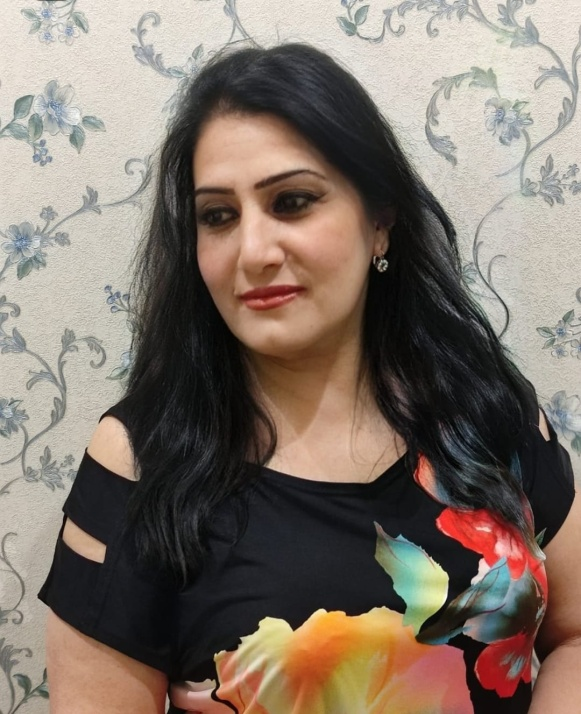
Maja Milojković was born in 1975 in Zaječar, Serbia.
She is a person to whomfrom an early age, Leonardo da Vinci's statement "Painting is poetry that can be seen, and poetry is painting that can be heard" is circulating through the blood.
That's why she started to use feathers and a brush and began to reveal the world and herself to them.
As a poet, she is represented in numerous domestic and foreign literary newspapers, anthologies and electronic media, and some of her poems can be found on YouTube.
Many of her poems have been translated into English, Hungarian, Bengali and Bulgarian due to the need of foreign readers.
She is the recipient of many international awards.
"Trees of Desire" is her second collection of poems in preparation, which is preceded by the book of poems "Moon Circle".
She is a member of the International Society of Writers and Artists "Mountain Views" in Montenegro,and shealso is a member of the Poetry club "Area Felix" in Serbia.
Responsibilities of a Teacher

Teachers are the personalities who deal with education to students. It is the responsibility of teachers to give proper education of and treat them well. Teachers guide the students to the right path. They give good advice to students for their better future. In every case teachers are very punctual and regular in taking classes and do their duties sincerely. Their pronunciation is good. Almost teachers work with their students both in classroom and outside the classroom. They try to make their lesson interesting and keep their students active in the class. Teachers know well how to increase the curiosity of the students in their respective performance. Every language teacher should speak in English with the proper accent.

Teachers should give love to students. Teacher should maintain their responsibilities properly. And student should respect the teachers. Teachers guide their students to maintain the right path of the students. Every teacher should look after their students. Teachers are also responsible for updating their knowledge in rules such as health & safety at work and child protection guidelines. Students need to have a teacher that has values and understand the importance of values. Teachers are instructors, guides, philosophers, friends, tutors, and evaluators. So only the teachers are the persons whom we think to be the torch bearers for the students.


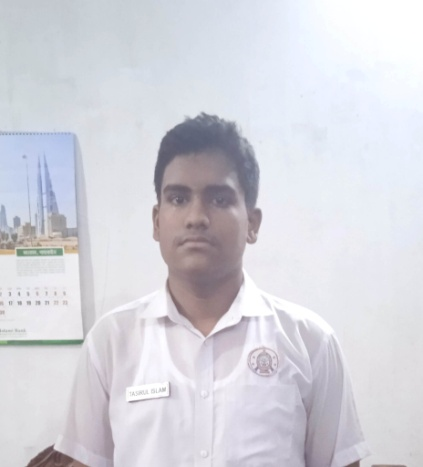
Md. Tasirul Islam is a student of grade 9 in Harimohan Government High School, Chapainawabganj, Bangladesh.
Uzbek Historiography: Tracing the Development of Central Asian History
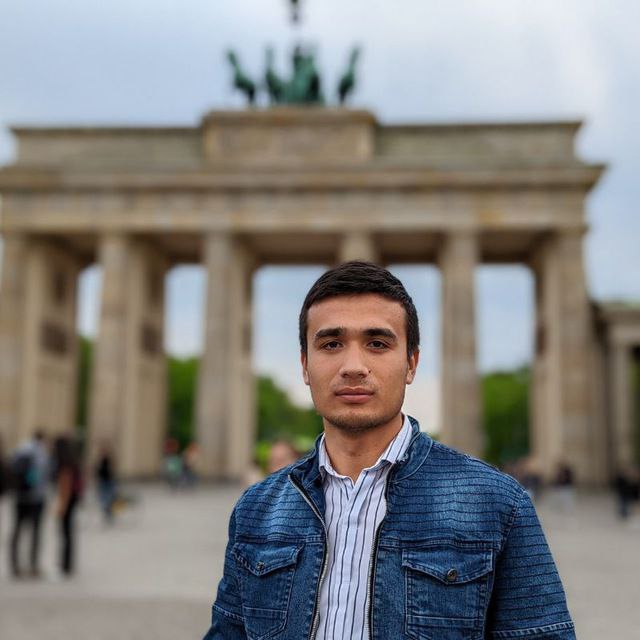
Umrbek Ibragimov
Freie Universitaet Berlin
Nadira Kuzieva
Urgench state university
Annotation: “Uzbek Historiography: Tracing the Development of Central Asian History” This article provides a comprehensive overview of the development of Uzbek historiography, from its earliest accounts in Persian language to contemporary challenges faced by the field. The article traces the various themes and periods of Uzbek history, including the influence of Soviet-era historiography and the current efforts to promote a more inclusive understanding of Uzbekistan’s past. The article highlights the importance of Uzbek historiography in providing insights into the cultural heritage and complex history of Central Asia. It also sheds light on the challenges faced by scholars in the field, such as the lack of resources for research and the need to promote greater academic freedom and diversity of perspectives. Overall, this article is a valuable resource for anyone interested in the history and culture of Central Asia, and provides a useful introduction to the field of Uzbek historiography.
Uzbekistan is a country located in the heart of Central Asia, with a rich history that dates back to the ancient Silk Road. Uzbekistan’s historical significance has been recognized by the various empires and powers that have ruled the region throughout history, such as Alexander the Great, Genghis Khan, and Tamerlane.
The study of Uzbekistan’s history, as well as Central Asian history in general, is referred to as Uzbek historiography. Uzbek historiography has been a subject of scholarly research for many years, as it provides valuable insights into the region’s past and cultural heritage. In this article, we will explore the development of Uzbek historiography, its major themes, and the challenges it faces today.
Early Uzbek Historiography: The earliest Uzbek historical accounts were written by the Persian-speaking scholars who served the Timurid dynasty, which ruled over Central Asia and Iran from the 14th to the 16th century. These accounts focused on the reigns of Timur (also known as Tamerlane) and his successors, and were written in the form of chronicles or biographies.
During the 17th century, Uzbekistan came under the rule of the Kazakh Khanate, which was followed by the Bukharan Emirate in the 18th and 19th centuries. These periods saw the development of the first written works in the Uzbek language, which mainly focused on religious and ethical themes. One notable work from this period is the “Hikmat al-Israr,” a collection of Sufi teachings and stories written by the Uzbek poet Alisher Navoi.
Soviet Era Historiography: The early 20th century saw the emergence of Soviet rule in Uzbekistan, which brought about significant changes in the field of historiography. Soviet historians emphasized the economic and social transformations that occurred during the Soviet era, such as the collectivization of agriculture, industrialization, and urbanization.
Soviet historiography also placed a strong emphasis on the role of the Communist Party in shaping the course of Uzbekistan’s history. This approach led to the creation of a new canon of Uzbek historical figures, such as the Bolshevik leaders Abdulla Oripov and Sharaf Rashidov.
Post-Soviet Historiography: Following the collapse of the Soviet Union in 1991, Uzbekistan gained independence and embarked on a new phase of historiography. The post-Soviet period saw a renewed interest in Uzbekistan’s pre-Soviet history, with scholars exploring themes such as the region’s cultural heritage, architecture, and literature.
However, the post-Soviet period has also been marked by political tensions and controversies surrounding Uzbek historiography. The Uzbek government has been criticized for promoting a nationalist narrative of Uzbek history that downplays the contributions of other ethnic groups and marginalizes critical voices. Some scholars have also expressed concern about the lack of academic freedom and the government’s control over the publication of historical works.
Challenges and Future Directions: Uzbek historiography faces several challenges in the present day, such as the lack of resources for research and the difficulty of accessing archival materials. In addition, there is a need to promote a more inclusive and nuanced understanding of Uzbekistan’s history that acknowledges the contributions of all ethnic groups and accounts for diverse perspectives.
To address these challenges, scholars and policymakers have called for greater investment in historical research and the establishment of independent research institutes. There is also a need to promote greater dialogue and exchange between Uzbek and international scholars, as well as to encourage the publication of works that reflect diverse perspectives and interpretations.
Conclusion: Uzbek historiography provides valuable insights into the rich cultural heritage and complex history of Central Asia.
REFERENCES:
1. Б.Ж.Эшов, А.А.Одилов Ўзбекистон тарихи 1-жилд – Тошкент 2014, 246-бет
Few people flourish at one point of time because of their past concrete Deeds, but, at the same time, people criticize such people mercilessly for any gain without useful strategy.
EARNING FOR SUFFERANCE
People earn money for self and family happiness, but there will be no sight of happiness seen anywhere in their life, rather such people land in more & more problems with complicated tax evasion cases and ultimately such people suffer for want of peace of mind.
STRUGGLE FOR PEACE OF MIND
I don’t think so, there is Peace of Mind for any person. If anybody say’s so he has, it is sure such person is bluffing with an eye on some favor. But, it is sure that Peace of Mind cannot be purchased, but one will get the Peace of Mind by virtue of his/her good character deeds and discipline in life.
IMAGE TARNISH
The brand image of a person cannot be tarnished by anybody other than himself/herself, if his/her deeds, character and antecedents are not good.
STRATEGY FAILURE
I can’t blame anybody for my own failures, but, during the success period, had I maintained good financial management discipline and good public relations, the failure should have not dared to reach me, if my strategy in management and execution of projects was good.
NO FREE MEAL
One can’t work for free as there is no free-meal, but, free-meal can’t be given for free as at the end of the free-meal, management may ask for little donation like fund for use of developmental activities.
QUALITY OF FOOD
In olden days, the quality of food items was so good that peoples’ longevity was 100 years; whereas, these days lack of quality of food items makes the longevity to 50 years, it’s all because of adulterations and bad habits, as is evident these days.
PATIENCE IN LONG QUEUES
People can’t wait in long queues at ATMs, Banks and at Cinema Theatres, but, people wait in long queues for long hours at Temples to have a one minute God’s darshan, as this is linked to sentiment.
SATISFACTION MEMORIES
The broken stones represent the broken failures, but, molded stones are the success and concrete diamond stones.
Plate Tectonics Versus Gamma Ray Bursters

An old man remembers what he has been
yet the details are unimportant. Then
the outline disappears, and the meaning.

Good, I can die or go to work, be wise
or a jerk. Rich or poor, the wind and rain
wear us away and it’s o.k.

Ask what matters, that
question. Feeling the seasons, wearing a hat,
loving your woman, a good shit.

Children born. Two cells meet, multiply,
spiral into fetus. The mother is amazed:
an intelligence apart from herself.

The violent rainstorm kept me awake
although the lightning was still far away.
I lay in my bed and listened naked.


Cosmo's Moon

The only problem with "Moonstruck"
is Cosmo's moon could never be so large in winter,
stand for luck.

Mid-winter sledding brought joy
snow, speed, although the kids were beautiful
none were boys.

Walking the boundaries, and the old field
boundaries. Aged maples, barbed wire
past the cambium.

Northern hardwood all the way, except
less than an acre scotch pine plantation
and a few primeval spruce.

Pendant spruce cones in tree tops
colonizing the old field too. Conifers
a primitive civilization.

Lyonia has red, scaleless buds.
Shrub or small tree, maximum height 12 feet.
It's a heath, Ericaceae.

Small, white, bell-like flowers become
seamed capsules, similar to but smaller than
laurel, Kalmia.

The buds had me thinking red chokeberry,
Rosaceae, but of course the fruit
was completely wrong for a rose.

A timber stand improvement now
in the scotch pine would encourage tall
even straight trees, a cathedral.

The maples on the upper rocky slopes
where the skidders couldn't or wouldn't go
are impressive as eagles', hawks' nests.

Mid-summer, Spiraea, field of pink flowers
fully encircled by mountain ranges.
Bees working them.

Nancy, the broker, coming at five.
These 160 acres, a dream, are unnecessary.
Offer 500 dollars per acre.

Not an investment, a sanctuary.
Backed against the Taconic ridge,
real moon rising.


What Have I Seen?

1

Sunrise, late winter
skunk smell
turkey flock
playful otter, too.

The white heron
a great blue,
white phase,
in the abandoned beaver pond.

Purple clematis
its long-awned achenes
in globose heads
spidery, fiery, extravagant fruit!

To identify or classify
birds by
the complexity or beauty
of their songs.

And so
what is over that
ridge or hill
a sink-hole, a sand dune, a steep bluff.

2

What must I do. Organize
the heretofore unorganized. The rabble
of unemployed child abusers.
Molesters of their intimates.

Are there dysfunctional bird families?
Simply put, they do not survive.
We have hope
that everyone alive is essential,

consequential. We classify
and specify.
The commonplace and everyday
is sanctified.

What happens everyday?
Morning is quiet, everyone at work.
Home writing, watching birds.
Afternoon, kids come back from school.

Evening, watch tv.
Scotch and Star Trek.
Captain Picard's problems eclipse
ours who stayed behind.

3

Pray to Allah
and maybe he will spare you
when he sets the world
on fire.

Where or with whom
will I be on that day?
And how many people and adventures
will I find in the wind storm and rubble?

I may live, but will it matter
whether or not I help anyone else to live?
This is no Last Judgement.
Those who have learned or who still know how to live

will survive.
Nobody will go to hell, they will just die.
There is no limbo either.
Anyone who didn't find a way to be immortal is just dead.

So, what am I trying to do.
Organize the unemployed, the welfare mothers
and alcoholics
into a flying chevron of purposeful explorers?

4

The doctor's conscious, organized,
naive attempt to do good,
his legacy, versus the randomness
of the road and the war zone.

There his legacy is his rectitude and natural
rough compassion for the damaged people
he encounters. The difference
between planning a legacy

as if you knew enough to control events
and letting the legacy arise
from events themselves, controlling,
insofar as you are able, only

your own actions and reactions.
The doctor's leadership role such as it was
grew out of not his material possessions
like the car

but his mission, his personal quest
to find the young doctors he had naively trained
and sent into the war zone
where all died.

5

July-a cold city
not as great or as gritty
as I thought, summer theater left
the shoe shine bereft of customers

eyes cold as a bureaucrat's
except for our soles
and their leather. Sweat-soaked
girls, the beautiful ones left town.

Emotionless as a bus.
Sparrows, no chickadees.
All that's important happens indoors.
Exercise to philosophies.

You get what you see.
The panhandlers ask
just once, won't risk
friendship, justice.

No sale today
in the finite city
where, for the shoe shine,
pedestrians are infinite, times two shoes.

6

Faith = wait + trust.
But don't anticipate.
Popper prohibits prediction.
Niebuhr expects destruction.

I believe in God
doesn't mean there's a sketch
of a man in my head. It must mean
all will be well in the end.

Satisfied with snow
or summer. And now
with dying old or younger.
Gold or paper clips. Gulps or sips.

In the final resting place
in the city of the dead
are there all night card games
and sometimes open swims?

Each inch, square, or cube of Earth
brim with grasses and sedges, dragonflies and spiders,
      sparrows and eagles.
The tiger lily and the water lily and the lily of the valley,
      the calla lily.
When a girl on a bicycle smiles, that is a smile.
Robert Ronnow’s most recent poetry collections are New & Selected Poems: 1975-2005 (Barnwood Press, 2007) and Communicating the Bird (Broken Publications, 2012). Visit his web site at www.ronnowpoetry.com.
There are good things too!

Friends and acquaintances who loved us true,
Beloved birds chirping with cheerful glee,
Once again on that shore, sands askew,
Love's feast they've set, inviting you and me.
See how long it's been since our paths diverged,
No arrivals, no tidings brought our way,
Sweet desires dwindling, barely emerged,
Arriving at your intent, missing the day.
Frail souls, blinded by grudges and spite,
One day the wedding you boasted will rot,
Fueled by hatred and greed's endless fight,
The jug will shatter, unable to be sought.
Let's momentarily forget the days that passed,
Observe the skies, the moonlit night's dance,
Shake off the dust, let go of the past,
Rooting our hearts anew, in this fresh chance.

Elmaya Jabbarova - was born in Azerbaijan. She is poet, writer, reciter, translator. Her poems were published in the regional newspapers «Shargin sesi», «Ziya», «Hekari», literary collections «Turan», «Karabakh is Azerbaijan!», «Zafar», «Buta», foreign Anthologies «Silk Road Arabian Nights», «Nano poem for
Africa», «Juntos por las Letras 1;2», «Kafiye.net» in Turkey, in the African's CAJ magazine, Bangladesh's Red Times magazine, «Prodigy Published» magazine. She performed her poems live on Bangladesh Uddan TV, at the II Spain Book Fair 1ra Feria Virtual del Libro Panama, Bolivia, Uruguay, France, Portugal, USA.
Evil Brothers

Once upon a time two brothers lived in a village. The elder brother was very hardworking but the younger brother never worked. They had a cow farm. There were ten cows in the farm. Five younger brothers and five elder brothers. The elder brother used to take care of ten cows alone and the younger brother used to rest all day. If the milk of ten cows were sold the younger brother would take half of the money. This continued for several years. One day suddenly the elder brother got upset and said, "I can’t handle your cow anymore." This
started a fight between the two brothers. After the quarrel was over the elder brother decided to sell his cows and go abroad. So that day he sold his cows. On the other hand the younger brother decided to kill his elder brother’s cows. So he went to the farm at midnight
and killed five cows. Next morning his elder brother told him good bye and went abroad.

Hearing the younger brother said “Where did you get the money to go abroad?” The elder brother said he had sold the cows. Hearing this, the younger brother ran to the farm and saw the dead cows and started crying. And said what happened to me while harming to others.

Moral lesson: If you want to harm others, you harm yourself.


Ali Haider is a student of grade 7 in Harimohan Government High School, Chapainawabganj, Bangladesh.