Beauty of Village

Oh, the beauty of a village fair,

With green fields and fresh clean air,

The chirping of birds, and buzzing of bees,

The rustling of leaves and swaying trees.

The smiles of children, playing in the sun,

The sound of a stream, and the river that runs,

The fragrance of flowers, blooming in May,

The simple life and joys that stay.


Wazed Abdullah is a student of grade 8 in Harimohan Government High School, Chapainawabganj, Bangladesh.
THE VILLAGE OF GOBDIN AND THE SHRINE THERE
FROM THE HISTORY

Murtozayev Matlubkhan
Samarkand State University

A student of the Faculty of History
 https://doi.org/10.5281/zenodo.5978543

HISTORY OF THE ARTICLE
Accepted: December 15, 2021
Approved: January 15, 2022
Published: February 05, 2022

Abstract
In this article, G'allaorol of Jizzakh region
located in the district, is still scientifically complete
the unexplored village of Gobdin and Father Gobdin
Some comments about the history of the shrine are made
Gobdin - Gallaorol, Jizzakh region in the southwest of the district, Nurota mountain at the foot of Gobdin Mountain located in the stream.  From the district center One of the villages located 35 km. A few on rural etymology there are views. But, clear thoughts do not meet and their most of them connection with narrations is a scientific conclusion to give complicates. Including the term "Gobdin" come pronunciation depends on the root word "gób". in this case, ancient Sogdian and modern Persian-Tajik corresponding to the word "gob" in the language "mountain" means. "Gob" was formerly "Kaufa" called [3:6]. Another similar one according to the view, both of the name "Gobdin". components - "gob" and "religion" have changed may be gone. His first  the ancient form of "gob" is based on changes губ/хуф/куф/кох/ based on the word, as we quoted above means mountain, height. Last part of the words din/diz/deh/ in the case of religion as a modified form, it is used in the sense of fortress, fortress. Name in this contained two the word too sound changed. That is, the word Gobdin high up fortress or high up means village [9: 32-33].

      Another view is among the local population connected with the narrations, they are "Gobdin" the name goes to father Gobdin. Narrative it is said that our prophet Muhammad Seven people who are the descendants of (s.a.v). among the holy fathers is also the name "Gobdin Father".There are assumptions that it was. 1. Father Gobdin 2. Father Shepherd 3. Father Nur 4. Father Savruk
5. Father Novka 6. Father Saifin 7. Father Parpi. This uncles of the holy fathers, Saad ibn Abu There are also legends that Waqqos is the father of Kazan there is. But in this case, Gobdin is a father not his real name, but a nickname, The fact that he was a judge in Samarkand for 40 years and that in order to spread the religion of Islam to the earth are said to have been sent [6].

This is definitely one approximate view because periodically abstraction is visible. Because, in our opinion, in Central Asia, including In relation to the institution of judiciary in Samarkand present-day Gobdin, which is nearby Islam in the villages at the foot of Mt its non-proliferation is a controversial issue. In our opinion, Gobdin and adjacent to it . The history of villages is the origin of these villages must be sought in the history of being. To Gobdin Neighboring Gumsoy (deep stream, from the riverbed flowing stream) [4:15],

Apple (-li of this object with the suffix refers to existence and abundance) [5: 38] attention to the naming of villages if given, these villages flow from the foothills along the natural spring waters formed, that is, existing at the foot of the mountain Each village has its own spring was Besides, this one at the foot of the mountain rural population is "forty" of Uzbeks belonging to the clan, almost every the village belongs to this clan consists of "balls". For example,
badal, karamoyin, boytopi, etc.

However, it should be noted here that this among the villages, only in the village of Gobdin, is the largest and oldest cemetery, far away
years are forever for those around me has been a place of residence. This is also the history of the village that it is ancient and with the name of the village the person concerned is truly Islamic that it has a great place in history confirms. Gobdin village of the 20th century
on the heads of Jizzakh, Chashma- Koriz, belonging to Yangikurgan Volost.

It is part of the rural district was close to him along with the village
Almali, Almali-Saray bulak, Gobdin, Gumsoy, Koriz, Kotal, Kotal Kazakh, Marjonbulok residential addresses names are given. 20-30s of XX century the existence of 83 yards in Gobdinand that 376 people lived in them noted [8: 22]. Also this again based on data
it can be said that 21 per yard and populationAugust of 505 Hijri (1111 AD). died in Bukhara. [2: 90-91]

4. Abulhusayn Ala ibn Muhammad Ibn Naim Ibn Is'haq Ibn Ubaidullah Ibn Hatim al-Ghobdini is the father of hadiths Muhammad ibn Naim al-Ghobdini, Khalaf Narrated by ibn al-Khayyam and Abu Ahmad ar-Razi. From all hadiths Abu Ali al-Nasafi and Abulabbas Narrated by Ja'far al-Mustagfiris.

Abulhusayn al-Ghobdini 337 Hijri He was born in 948 AD and died in 409 AD.
  (AD 1019) on January 25 died on Thursday. [2:55-56]

5. Abu Naim Hussein ibn Muhammad ibn Naim al-Ghobdini, a virtuous person of his time, one of the ascetic, pious imams,
He received his primary education in his village. Later, with the demand of science, Khorasan, Iraq, he was educated in cities like Hijaz.

In particular, Abu Salih al-Khayyam in Bukhara, Abu Sahl ar Astrabadi, Abu Amr From Muhammad al-Bukhari, Naysabur
from Abul Qasim Abdullah al-Nasawi in Baghdad, Abu Tahir in Baghdad Muhammad al-Mukhlis and Abu Hafs Umar al-Kattani heard the hadiths and wrote them down received Abulabbas hadiths from Allama Ja'far al-Mustagfiri and Qazi Abu Ali Hasan narrated by al-Nasafi. Allama in June of 341 AH (952 AD). born in 427 AH (1036 AD) died in April. [2:54]

6. Abdulwahid ibn Husain ibn Ahmad Ibn Nasr Ibn Nazar Ibn Yusuf Ibn Ubaidullah ibn Muhammad Hammad ibn Abbad ibn Yaqub ibn Ibrahim al-Ghobdini is very narrated many hadiths one of the muhaddis. In available sources the name of the scholar and what he narrated only the hadith was written down, and any of it what is his position or position in his time was born or died year is not given. [2:76)7. Abul Hasan Muhammad ibn Naim al-Katib al-Ghobdini was a secretary. Abu They learned from Muhammad al-Bukhari.
Muharram of the year 381 Hijri (99 AD). who died in [2:85]

8. Abu Ali Hasan ibn Abdullah al-Ghobdini al-Bathudani, reciter, virtuous, righteous Abu Bakr al-Baladi and those who received education from Muhammad ibn Ahmad. Muharram 491 Hijri (1099 AD). Born on the first day of the month, he died in 551 Hijri (1157 AD). [7:175]

At this point, pay attention to one consideration let's look at it. As a result of research in several places of Uzbekistan, the population referred to by the name of Gobdin addresses or community gatherings became known. These are Jizzakh region, Gallaorol district, Kashkadarya region, in the Karshi district, Samarkand
Jomboy, in the Bulungur district of the region are addresses located in the district. But, in history under the name of the above Gobdins
which of the remaining allamas exactly that he is from the village of Gobdin of the region
 is an issue that requires further research

Because it belongs to the Gobdinites seven "Jizzakh alloms" by M. Atayev cited in his book as a jizzakh. He wrote the history of Gobdin in Kashkadarya scholar Abdulkarim al-Samani regarding Gobdini of Kashkadarya past [7: 175]. Another point is that among the historical figures of the Gobdinites one is Abu Muhammad Abdullah al-Ghobdini in the biography of that person, in the village of Gobdin, Uturshona was said to have been born. It is this sign belongs to the village of Gobdin in Gallaorol
. Because in the Middle Ages
a part of the structure of Ustrshona is present. It was organized by Gallaorol district.

Secondly, you have received it so far, both in Usturshona and in the current oasis of Jizzakh another address also called Gobdin
does not occur. It can be seen that more research about the Gobdinians continue and their today Jizzakh, as cited in the literature
or Alloms of the Kashkadarya oasis to scientifically clarify that
much. The village of Gobdin is nearby with its historicity in relation to the villages stands out. Above, we are here the surrounding villagers are sacred Gobdin father's cemetery, as we mentioned already.
This is a cemetery operated under the same name the relative antiquity of the cemetery and with my great respect, Father Gobdin.
The merit of this place is sacred and ensured that it became a shrine.
In conclusion, it should be said that this village was famous in the Islamic world in his time where scholars are born and raised, science
is developed, and of the muhaddiths we quoted above
hoki of ancestors and descendants, theirs is a saint who has reached the blessed step is one of the shrines. Supposedly, it is a shrine from the end of the 19th century to the beginning of the 20th century

[4]. This is a shrine the place of the old mosque in the area
and khanakah, some more ancient forms of tombstones also confirm. This 13 one-meter marbles with triangles Qur'anic verses and years on tombstones stands the test of time, resulting in unreadable writing
has arrived. That's why it's a tombstone, writing is difficult to read.
According to the villagers, until 1941, the roof of the house was
covered in shiny tin. Later, the center of the tin above the house
took it to the building and stuck it. The size of the old mosque is 20 meters by 12 meters organized. On the qibla side of the mosque
the thickness of the wall is 1.5 meters, the rest of the sides are 1 meter. It's been repaired four times to date.

The son of Ahmad Khan Ziya Khan led the construction by Usta Umar, Usta Adil, Usta Abbas actively participated in the mosque
as shown by the columns.
This old mosque was active until 2010. From 1970 to 1994 the son of Mahmud Khan Mamirza served as imam in this mosque. He is the great grandfather of the author. 2010- to the current appearance of the mosque, Donokhan Haji, who led the way.

Mahmud Khan's son is a descendant of that person is considered to the mosque until 1970 Ahmad Khan Eshon, and before him Domla
.

A person named Kubay served as imam, and Ghaffar Eshan was the imam before Kubay. Currently, Mahmudov Sirojiddinkhan
is imam.

This is basically the origin of the new construction going to the village and neighboring villages' roots, ancestors settled forever aimed at the well-being of the place. Donations from generous donors
were given for the new mosque pillars in Buvai, Fergana region, from
a group of flower craftsmen of the district. Now 250-300 people can be in the mosque at the same time performing Muslim prayers
.

It should be noted that this shrine is today a cultural heritage of the republic but not included in the official list.
According to my grandfather Donokhanhoji, based on the antiquity of the shrine, no written sources have been found, based on the antiquity of the cemetery. In the ancient Arabic writing that was once in the cemetery, tombstones of the river made of limestone in different years after new graves are opened, according to custom.

According to Muslim custom since the corpse in the grave has turned into rotting soil then a new corpse can be placed on it.
In this, of course, the respect of the old corpse, carefully placing it in place, must be performed before the new body was buried on top.  Today as a result of the focus on our history, we think in the near future.

The written sources that give the history of the shrine are included in the scientific treatment, maybe an ancient one buried by time
tombstones are found.

In conclusion, it should be said that Gobdin village and related to it
the history of the father's shrine is still full of our history and are considered unexplored pages.

Studying the history of a village and shrine through the great material of our people, our homeland with its spiritual heritage,
past migrations, and cultural history, a lot of new information about the processes and ethnography is revealed.

Used literature and sources:

1. Resolution of the Cabinet of Ministers dated December 5, 2014 "Historical, artistic or other cultural
a list of objects that cannot be pledged and mortgaged due to their value
Decision No. 335 on approval"// http://www.lex.uz/ .
2. Atayev M. Jizzakh scholars. - Tashkent.: Adib, 2014. 270 p
3. Nafasov T., Nafasova V. Educational annotated dictionary of toponyms of the Uzbek language. - Tashkent: New century
generation, 2007. – 88 p.
4. Ohunov N. Interpretation of place names. - Tashkent.: Uzbekistan, 1994. - 86 p.
5. Sindorova F. Ancient Turkic toponymy of Uzbekistan (in the example of Jizzakh region). - Jizzax.:
 13. - 56 p.
6. Story by 84-year-old Tilavov Mahmud Haji of Gobdin village, Gallaorol district
done April 2016.
7. Abu Sad Abdulkarim al-Samani. Genealogy (al-Ansab). - Tashkent.: 2017. - 273 p.
8. Spisok naselennyx mest Uzbekskoy SSR, Kamarkandskaya oblast. 1925. - 53 c.
9. Tilovov T. Gubdin and Gubdinites. 2015. – 279 p.// ziyonet.uz/

Authors: Guzal Sunnatova
Sohiba Rahmanova
IN A THOUSAND YEARS

In a thousand years
I want to be remembered
in a volume like 300 Tang Poems.

100 thousand college students will see my name
and read four lines I wrote
about an egret dismissing a marsh

or an ingenue losing her locust hairpin
under a moon that is a kicking rabbit
or an old man finding solace in his memories.

I would rather be remembered
for four lines written in haste
after hefting seven or eight bottles of Sam Adams

than not be remembered at all.
To be honest, it would be nice if the students liked the poem –
but it’s not a dealbreaker.

A SCURRY OF SQUIRRELS

Every day I walk past a tree in front of a house
And under this tree is usually a collection of squirrels –
Many gray squirrels and up to four fox squirrels.

The person who lives in the house behind the tree
Puts nuts out under the tree every day
And there are so many the squirrels can never eat them all.

I walk by and the squirrels scurry away –
Which is a good reason a group of squirrels is called a scurry, I guess.
Only one squirrel doesn’t retreat at my approach.

As I said, there are four fox squirrels among the grays –
One of them is melanistic and one of them is very big and pudgy.
The first time I saw the big one I thought he was a raccoon.

That first time I saw him he was alone under the tree
And when he saw me he stood up on two legs and stared me down.
I turned around after I passed and I found he was still watching me.

There was one time he decided to retreat at my approach
And it was like watching an old fat man as he climbed the tree.
I imagined hearing him huff and puff, cursing me under his breath as he clambered.

There are many gray squirrels and four fox squirrels –
One is melanistic and one is pudgy and larger than the rest.
I wonder if the fat one would be picked first or last for dodgeball

If the squirrels were human children. Powerful but slow, I imagine.
These are the kinds of things that go through my mind
When I forget to bring my headphones on my walk

And why I almost never do forget.


SOME POEMS

Some poems are meant to be inhaled,
then exhaled through the nose.
Some poems are meant to escape through the teeth.
Some poems enter through a hole
that it drills into the back of your head.
Some pulls pull you by the ear
all the way to the principal’s office.

Some poems are ghosts,
howling between your ears.
Some posts are nettles
beneath bare feet.
Some poems stutter as they ascend.
Some poems need a paleontologist’s pickax.
Some poems pummel your roof
like hailstones.

Some poems are cryptological; zoological;
illogical; scatological.
Some poems are dead hair
beneath a barber’s chair,
waiting to be swept away.
Some poems are not poems
because they are limp and useless without the music.

Some poems are living things
and some poems are dead things
and some poems are living dead things
and some poems are dead living things.

Some poems take flight
and some walk the earth.
Some wallow like happy pigs in dirt.

And poems about poems, like this poem,
are meant to be balled up
and tossed into the nearest wastebasket
so,
after you read this,
I better hear you crumpling.


SPINNING


There’s this little divot in the ceiling
I am studying here in bed
While lying on my back
With the room spinning

As well as the moon outside
Spinning, I imagine, like a pinwheel
Even though there’s not even the hint
Of a breeze.

I’d get up to look and make sure
But somehow the door and the windows
Are gone
And the floor is
Gone

And all that is left in this room now
Is me and this bed
And this little divot in the ceiling
That I have convinced myself
Is of great importance.

I finally close my eyes
With the moon out there
Spinning like a pinwheel
In a night so hot and still
Without even the hint
Of a breeze
And

The divot in the ceiling has
Disappeared


THE WRONG TIME

I meet the mountain
and the mountain
is the wrong mountain

&
I fall in love
and it’s the wrong woman

&
I send out my poems
but they come back

having gone to the wrong places.

I am here –
in the wrong home,
living at the wrong time

&
Li Po looked up
saw the moon
offered it a drink

a thousand years ago

&
smiled in deep sleep
even though he knew
it was the wrong time.
John Tustin’s poetry has appeared in many disparate literary journals since 2009. His first poetry collection is forthcoming from Cajun Mutt Press. fritzware.com/johntustinpoetry contains links to his published poetry online.
SWEET ANXIETY OF MOTHERS

      A piece of children's heart always lives in the hearts of our mothers. So long as he is still a child. We children always make mothers think and worry. Although there is really no need to worry, you always care for us with motherly love. Your imagination is always busy wondering if my child is calm, has a full stomach, and is not covered. Mothers, your hearts are white, your love is a river, your wishes are abundant, and your prayers are endless.
    We children will reach your value only by becoming mothers, and even then we will remain children for you, your worries and sorrow for us will not end, on the contrary, your time and life will increase for you, now our children - your sweet grandchildren.
  My mother, be happy that you consider these sweet worries to be the meaning of life! May you be healthy for our happiness, even though your dreams are busy with sweet worries, never let your eyes cry for my child!!!

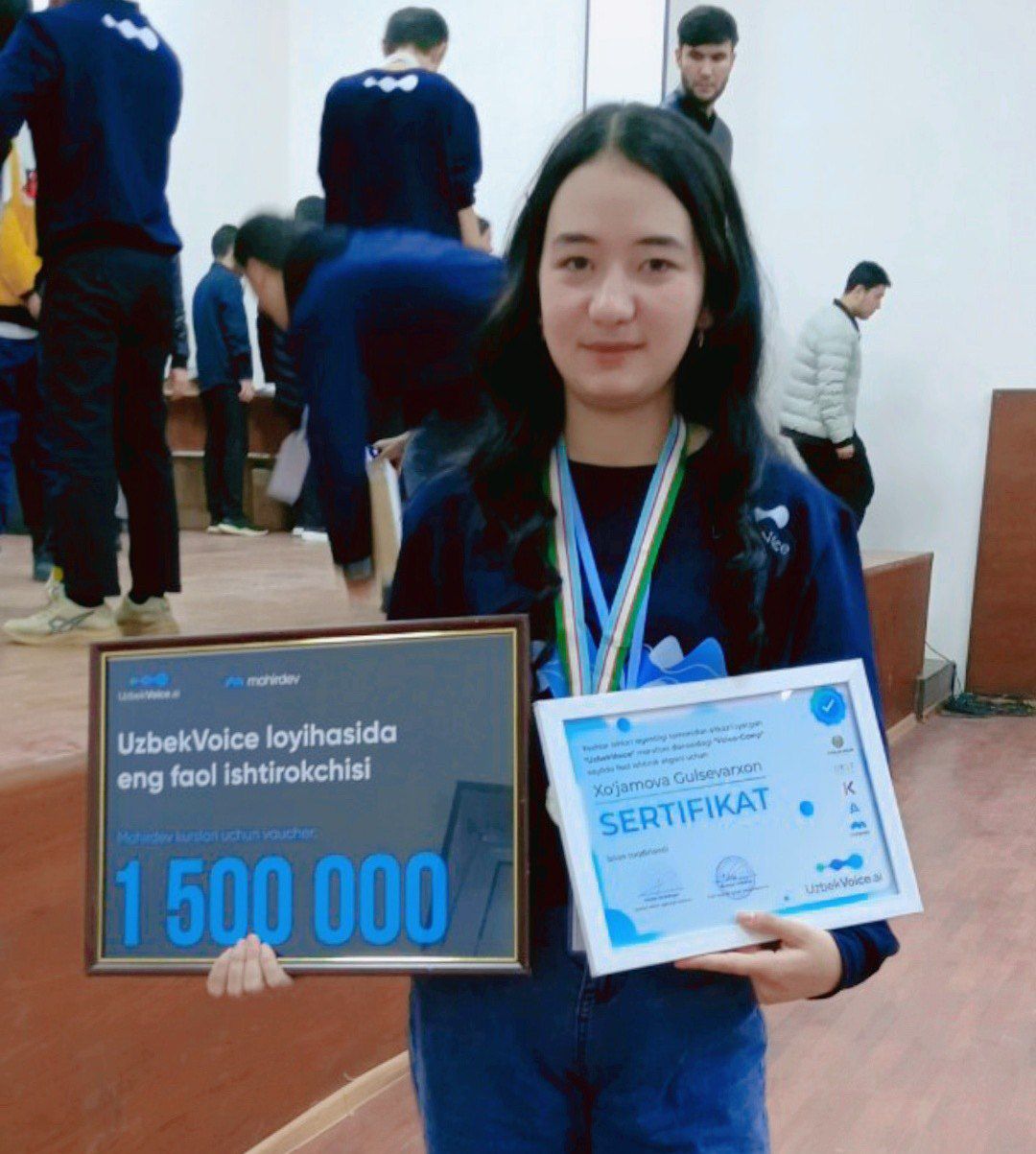
Gulsevar Khojamova
Student of Andijan State Pedagogical Institute
James Beattie’s critical appreciation of Gulliver’s Travels exalts in acclaiming “the keenness of satire, the energy of descriptions and the veracity of language”. Examine the critical appreciation of Gulliver’s Travels spotlighting themes of misogyny and misanthropy.

Felicity A.  Nussbaum’s stroke of criticism in the vein of the politically naive and inept giant whose masculine authority comically seems to be in jeopardy, “Gulliver himself is a gendered object of satire and his antifeminist sentiments may be among those mocked.”

Deborah Needleman Armintor critiquing the progression of Gulliver’s milieu from a man of science to a woman’s plaything…toylike and accessible pocket microscope: Swift has Gulliver frequently invoke the sensory (as opposed to the reflective) word nauseous to describe this and other magnified images in Brobdingnag not only to reveal the neurotic depths of Gulliver’s misogyny but also to show how the male nausea can be used as countermeasure against the perceived threats of female consumption. Swift has Gulliver associate these magnified acts of female consumption with the act of “throwing up” —the opposite of and the antidote to the act of gastronomic consumption.”

Eminent English novelist and journalist William Makepeace Thackray critical reception of Gulliver’s Travels as ‘blasphemous’ can be examined in exploitative ostracization of  humanoid to the brink of dehumanization as dehumanoids. And thus this decadence of human spirit can be sheerness poignancy in ludicrousness and idiosyncrasy. On the contrary, Edward Stones appreciation of the beast fables interwoven in the travel adventures fantasy of Gulliver’s Travels ought to be viewed as comical rather than cynical misanthropical interpretation. Shortcomings of humankind are further allegorised in   Gulliver’s mental malady of exaggerating comical description upon his return homeland from Houyhnhnm Land. Swift delineates satirically for humours effect and horses Houyhnhnms superiority over the inferior humankind Yahoos personifying prudential intellect, judgmental conscientiousness and moral reasoning  are not meant to be taken literally.


Explore and explain Gulliver's Travels as a social and political prose satire.
Or
Explain the geopolitical and historical context and significance of the Swiftian prose satire Gulliver's Travels.
Or
Fantasy is the literal level of Gulliver’s Travels. Discuss.
Or
Gulliver’s Travels was accused of that “it  was full of improbable lies.” Elaborate your views on this statement.
Or
Consider Gulliver’s Travels as a story of fantasy and adventure.
Or
Gulliver’s Travels is a bitter satire wrapped in a fantasy of adventures. Discuss.
Or
Gulliver’s Travels is a blend of fantasy and satire. Do you think so?Justify your answer.
Or
Children enjoying Gulliver’s Travels but, there underlies the bitterest comments on mankind. Elucidate your answer in this context.
Or
‘Scintillating touch of suspense and sheer mindblowing Gulliver’s Travels is Jonathan Swift’s political satire and prose fiction. Examine the 18th century novel in the vein of this commentary.
Or
“...It was only an heap of conspiracies, rebellions, murders, massacres, revolutions and banishments, the worst effects that avarice, faction, hypocrisy, perfidiousness, cruelty, rage, madness, hatred, envy, lust, malice or ambition could produce.” Examine Jonathan Swift’s Gulliver’s Travels in the light of the passage.
Or
“A most pernicious race of the little odious vermins that nature ever suffered to crawl upon the surface of the earth…impotent and grovelling insect…could entertain such inhuman ideas.”  Examine Gulliver’s Travels as a sociopolitcoeconomic allegorical prose satire.
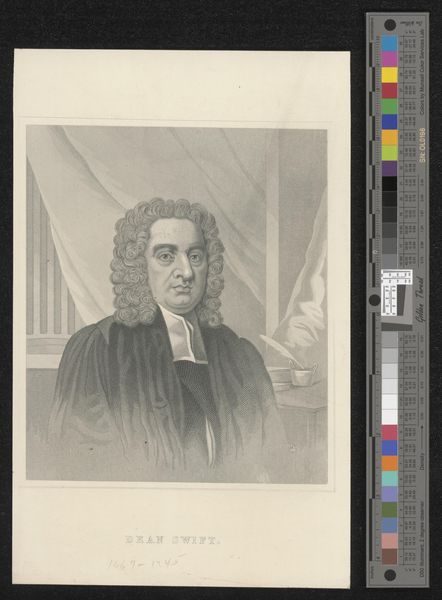
Jonathan Swift’s 1776 Gulliver’s Travels is a prose satire of adventure fantasy and travel journal chronicling the faction partisan vehemence unrivaled even in the vehement and partisan age of the animosity between the Whigs and Tories. Swift was the servant of human liberty, the defender of the poor clergy of the lower gentry, the advocate of the common ordinary men and women and the spokesman for the Irish economic, political and ecclesiastical interests. As a champion pamphleteer and demagogue, Jonathan Swift polemically satirizes the follies and vices, depravities and decadence of humankind as depicted in the Blefuscian and Belfaborac rivalry. His propaganda favored the reign of British monarchy over the parliament, and in this sense, Swift is often caricatured to be a Jacobite for his allegiance to the castaway Stuarts over the reigning Hanoverians in the reign of Queen Anne (1710-14) [Jonathan Swift worked for the St. John viscount of Bolingbroke and Robert Harley Earl of Oxford as well as Tory administration].  Jonathan Swift portrays Gulliver in the vein of Irish anti-catholic Protestant and spirit of Irish nationalist patriotism.
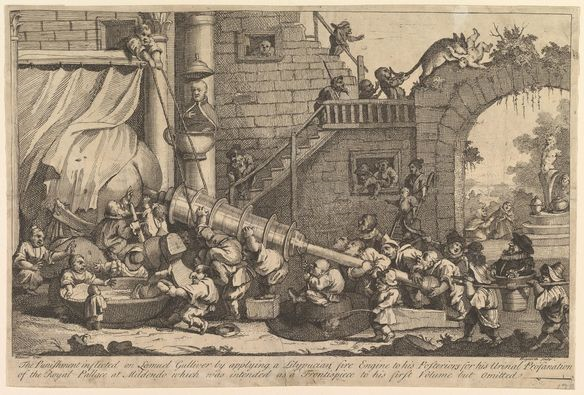
Swift’s satire on human pride and pretense in Gulliver’s Travels hints pointing insult upon humankind and establishes the author’s stature as archetypal misanthrope. Gulliver, who seemed to be more lovable and humane among Lilliputians appears to be an ignominious and morally insensitive being in contrast with the much more benevolent and enlightened Brobdingnagians. Mountain giant Gulliver was loaded to a cart with provisions of basketful fruits, breads and beer caskets to be pulleyed by nine hundred six inches height Lilliputians and discarded to a dilapidated ruins of a temple. Gulliver damages the fleet of Blefuscu and achieves the monarch’s appreciation and finally extinguishes blazing flame of the royal palace by urination. Spots, pimples and freckles of English lady’s breast looking through magnified glass whilst glancing the nanny's breast -feeding in a farming community’s pastoral countryside cottage. Being Queen’s royal consort upon the Brobdingnagian king’s behest, Gulliver’s was entrusted to Glumdalclitch-the pleasant frolicsome and tender teaser girl. Gulliver’s confrontation with another Dwarfish creature like himself makes him wedging upon cream and dipping into hollow of the bone-marrow. Gulliver is trapped in hailstorm and eventually giant hailstones torments his misery to a further extent. Swift disparagingly criticized the Struldbruggs as decrepit and deranged and dirty and disgusting Yahoos provides atonement for the moral exemplum and divined  poetic justice for misanthropy and misogyny. Anglo Irish allegorical satirist Jonathan Swift exposes the European civilization staked with progressive degeneration through the sorcerers and magicians fantasy of Glubbdubdrib. Gulliver acquaints himself with scientific and mathematical philosophical foundations and appetites of the royal society in Balnabarbi and Laputa such as sunbeams from cucumber’s extracts, recycling human excrements to be converted into edible food, and spinning of spiders’ webs. In 1726 Jonathan Swift’s satirical novel Gulliver’s Travels Struldbruggs are humans of luggnaggs whose caricature depicts the evils of immortality without youth. Struldbrugg’s association intrigued Gulliver to compelled by the alluring enticements of wealth, wisdom and philosophic serenity.  Humanoid and grotesque yahoos portray symbolic misanthropy that is intolerance toward humankind. Psychological distortion and psychological disposition caused the author to satirise the human nature in the novel. Gulliver prefers to endanger his life by drowning and from this metamorphoses springs forth his misanthropic disposition.
Swift was a Tory who became a champion against the oppression and exploitation of adopted Ireland by the English court and parliament despite his detestation of Irish Catholicism. [I would but conclude the bulk of the most pernicious race of little odious vermins that nature ever crawled upon the surface of the earth.  Religiously different sectarianism of Christianity including the Roman Catholic, Lutheran and Calvinistic Churches, aroused resentment among Jonathan Swifts’ more contemporaries with good reason, that Swift by implication was deviating from the pristine truth of Christianity. Swift became a chief publicist and trusted friend of the Tory administration. In 1713 he was entrusted as Dean of St. Patrick’s Cathedral, Dublin, Ireland.
          Aspects of economic and financial implications of the satirical novel highlights these following points:
The South Sea Bubble and the Mississippi Crash together contributed to the proposal for establishing a national bank [1720s].
Wolverhampton Metal Manufacturing Company’s William Wood was entrusted and sanctioned to produce copper pennies and farthings to ameliorate the dilapidated and grossly inadequate currency management. [1723-25 controversy]
Furthermore economic instability and financial crises triggered by the debacles of catastrophic famines in the 1727 till mid 1729 contributed to the poor harvests and subsequent critique of ‘A Modest Proposal for Preventing the Children of the Poor People in Ireland from Being a Burden to their Parents Or Country..
The Church had undergone depredation and despoilation initiated by Henry VIII, who confiscated the fruits of the Anglican Churches in the form of treasury parish revenues, which Queen Anne had recently restored to the Church of England, creating a funding for the poor clergy known as the Queen Anne’s Bounty. James II threatened the Restoration through political settlement by appointing Catholic to officialdom, eventually provoking the Glorious Revolution of 1688 and thus, forfeiting his throne to the Dutch Protestants William of Orange and Queen Mary. In 1701, Parliament passed the Act of Settlement restricting the throne to the Protestant heirs. Henceforth, loyalties of the Catholic Stuarts or Pretenders, they were called Jacobites, from Latin for James I. Foppery and godlessness following the accompaniment of absolutism and republicanism thence prevailed. Swift was a profound skeptical conservative who placed his trust more in intuitions and stability rather than individual and changes— warfaring and wayfaring Christian. Swift satirizes the Whigs in allegiance of commonwealth republicanism and alteration of the churches. In Gulliver’s Travels, Swift recapitulates his bumbling position as a government employee ascertaining his punishment for unclean expedients: when Gullivers puts out a palace fire by urinating on it, he wins not gratitude but the Queen of Lilliput’s confounded indignation. This maybe Swift’s most ironic commentary on his brilliant career as a government propagandist. The treacherous intrigue against Gulliver has a choice of either destroying the Lilliputians or submitting to the barbarous intentions or fleeing. Gulliver is acclaimed for his sound judgment, morality, uprightness, humility, humanity and Englishness in the first voyage of the narrative.
‘Everyman, as a member of the commonwealth ought to be contended with his own opinion in private without perplexing his neighbour or disturbing the public.’ Swift cherishes this view in Gulliver’s Travels when he assigned a similar view to the wise king Brobdingnag. The War of Spanish Succession as a ruinous lawsuit involving rural neighbours is later satirized: In the same spirit, Swift later literalizes the issue of the standing army presenting, “Gulliver as a one man expeditionary force in Lilliput whose appetite threatened to bankrupt the kingdom. By refusal of enslaving Blefuscudians, Gulliver exemplifies noble generosity and respect for others liberty. Gulliver’s voyage to the Brobdingnagians appears to be more caustic mockery compared to the Lilliputian voyage, Gulliver boasts of what he would have done to the idiosyncratic monkey by unseathing the sword, he glories in the seamanship spirit while he exhibits to court ladies and finally demonstrates his physical prowess in the unfortunate affair of the cow-dung.

Further Reading and Notes

Cambridge Companion to Jonathan Swift Editorship of Christopher Fox University of Notre Dame Indiana.
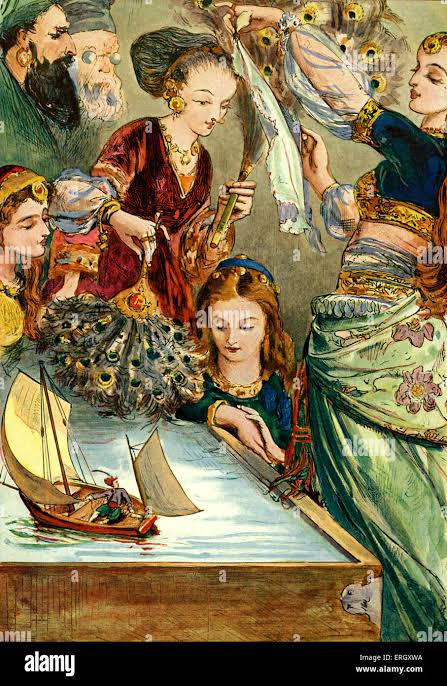
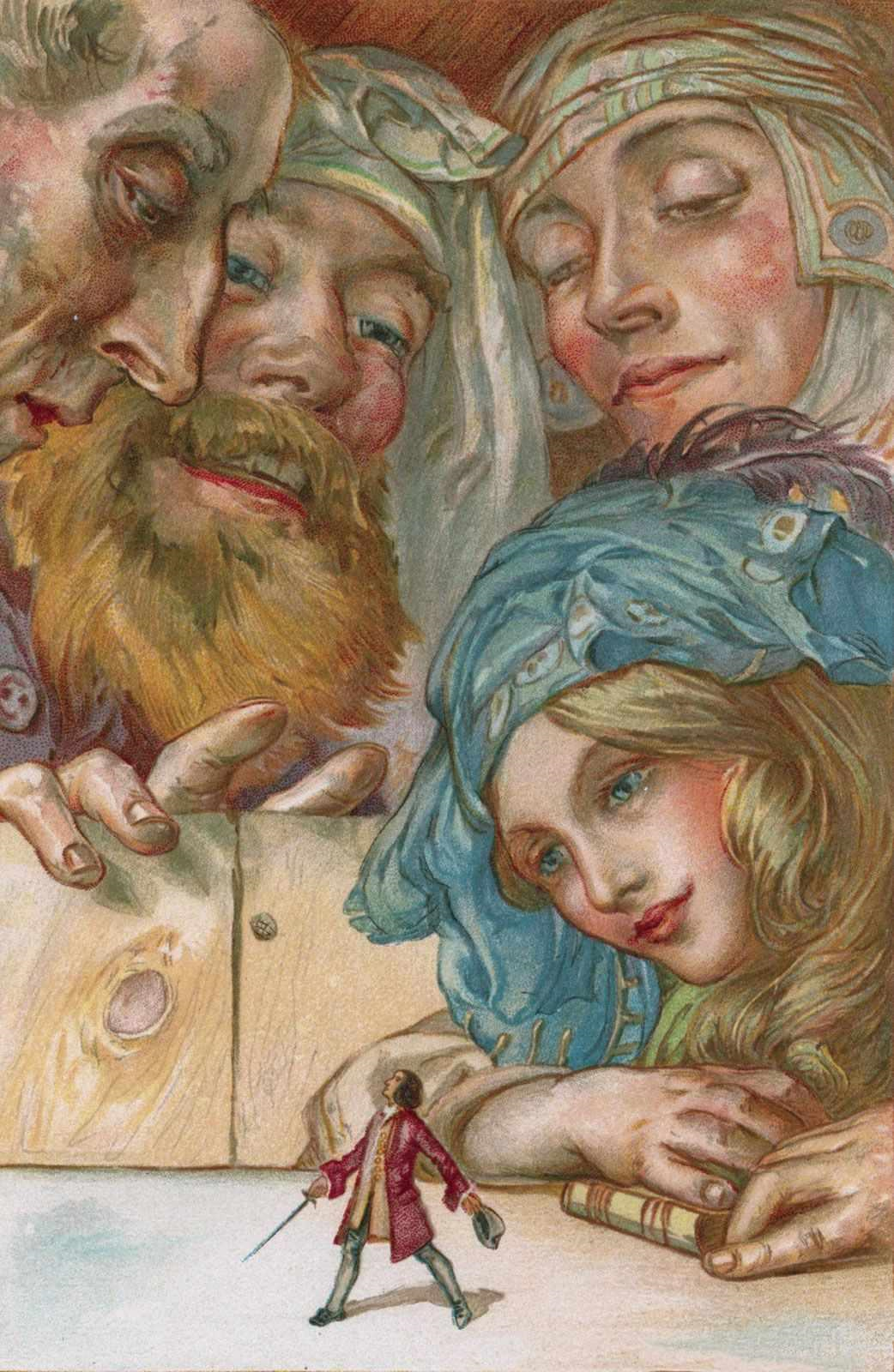
Jonathan Swift Illustration of Gulliver’s Travels
Critical commentary of The Voyage to the Lilliputs The Greenhaven Press Literary Companion to British Literature Jonathan Swift’s Gulliver’s Travels

Elaborate the significance of the discussion of Gulliver’s voyage to the Lilliputs.

Or
Explain the allegorical satire of the Gulliver’s travels to the land of the Lilliputians,’
Or
Examine a critical study of allegorical significance of Gulliver’s England with the Lilliputian kingdom.

 Gulliver, who seemed to be more lovable and humane among Lilliputians appears to be an ignominious and morally insensitive being in contrast with the much more benevolent and enlightened Brobdingnagians. Mountain giant Gulliver was loaded to a cart with provisions of basketful fruits, breads and beer caskets to be pulleyed by nine hundred six inches height Lilliputians and discarded to a dilapidated ruins of a temple The Emperor issued a commission obliging “all villages nine hundred yards round the City” to furnish victuals necessary for Gulliver’s sustenance. The inhabitants dwrafians would be grduallyh less apprehensive by degrees malevolent alien, and moreover, children from the surrounding clan ventured to come and play “Hide and Seek” amongst gullible Gulliver’s hair.  Gulliver damages the fleet of Blefuscu and achieves the monarch’s appreciation and finally extinguishes blazing flame of the royal palace by urination.

Gulliver’s mountain giant expeditionary force stands out as the stark foible of the England’s Spanish Succession’s ruinous lawsuit leading to the bankruptcy followed by financial crisis during the reign of Queen Anne through James I and Charles II. Gulliver’s insurmountable gluttony satirizes the vehement appetite causing bankruptcy and his association with Big Endians and Little Endians alludes to the banishment of the Catholics by the Protestants after the Reformation springsforth numerous religious disputes and fanaticism. Wolverhampton of Metal Manufacturing Company’s William Wood was entrusted to the functionary of the dilapidated and instable currency controversy of 1723-25 after the proposal for the establishment of a national bank and treasury for the management of South Sea Bubble and the Mississippi Crash.

Docility, gentleness and modesty personifies Gulliver’s triumph of the bloodless fleet over the Blefuscians. The Emperor’s ambition is thrown into relief by the innocence, generosity, magnanimity, clemency, humility, humanitarianship and humaness of Gulliver’s attitude: the most idealistic of the Roman Republicans or the Humanists. The ambassadors from Blefuscu hails appreciative praises in Gulliver’s valour and generosity in in opposing the Lilliputian Emperor’s military expedients

With his humanistic attitude, Gulliver is willing to fight even the Emperor and the country against invaders ( he shall not “force Consciences or destory Liberties and Lives of the innocent People”); but he will not pursue the war for glory to be got at the cost of enslaving free people. The parallel to the Tory attitude toward {English general considered among the history’s greatest military leaders] Marlborough’s continental campaigns against France is clear, the Tories were the “Lovers of Peace”, Swift believed.


The Queen’s  palace caught on fire and Gulliver’s attempt to put off the fire earned the Queen’s wrath and this act of indecency was condemned. Her Excellency Queen Anne’s Bounty Act of 1703 was an act of the Parliament of England granting in perpetuity the revenues of the First Fruits and Tenths for the support of the poor clergy in England. Gulliver’s seditious activities pertaining to the treason of staking the innocent Blefuscians of their liberties and Queen’s Palace contaminated by urination allegorises articles of impeachment brought by the writ of the courtiers of the Emperor such as Skyresh Bolgolam and Flimnap, who privilege far resourcefulness and zestfulness in murdering their benefactor-the government pamphleteer and political propagandist. Starvation aftermath of blinding as a retribute justice was compromised by Reldresal’s intervention amidst the malice of injustice’s viciousness.

Discuss the main points of the plot in the II part of the voyage of the Brobdingnagians by experienced by Gulliver.
Or
Critically examine the satire of the second voyage in Gulliver’s Travels.
Or
“The steady Torry of the I Part became the war crazed of the II Part.” Elaborate from the context of both voyages to the Lilliputians and the Brobdingnagians.
Or
Nicholson argues “A Voyage to Brobdingnag” serves as one of many examples of the covertly and overtly microscope oriented fiction, drama and periodical literature of the Enlightenment. When read together as a genre, Nicholson argues, these texts demonstrate how the figure of the microscopist and his fascination with little worlds made large was a popular object of both satire and awe in the age of Enlightenment. Describe the significance of the Voyage to Brobdingnag,

Swift satirizes the metaphorical shrinkage of the fate of microscopes —the worst symbolic castration from   a sizeable and relatively inaccessible tool of male dominated society transforms into feminized commodity —plaything —-a portable pocket microscope by the upper and middle class women and ladies of the English society as Gulliber is taken to be fit inside the travelling closet beside the windowsill by gigantic female owner Glumdalclitch. In the close reading of the wasp stinger incident Gulliver is only in a position to observe these enormous specimens in magnified detail.The baby’s attempt to consume Gulliver, followed by the breastfeeding scene further satirizes the devolution of the microscope and microscopist from participants in the elite masculine world of the Royal Society to consumable objects in the world of women and children. Deborah Needleman Armintor argues, “Swift has Gulliver frequently invoke the sensory (as opposed to the reflective) word nauseous to describe this and other magnified images in Brobdingnag not only to reveal the neurotic depths of Gulliver’s misogyny, but also to show how male nausea can be used as a pathetic countermeasure against the perceived threat of female consumption. Swift has Gulliver associate these magnified acts of female consumption with the act of “throwing up”-----the opposite of and antidote to the act of gastronomic consumption.
Part II of the voyage to Brobdingnagians the inferiority of European culture has been exposed to familiarize readers, if not demystify the entire narrative plot of the travel adventures.  Swift has managed Gulliver’s transition into a new world of wonders with extraordinary physical and psychological imagination. Gulliver overcomes from ‘Grief and Despair’ in the harvest seasons of the cornfield to be picked up by reaper farming community in a manner as if he wouldn’t scratch or bite the giant forty feet people, which might be comparable to the translocation of Weasel of England.

Monster midget Gulliver was a subject of puppetry to the exhibiting Rabble of the House of the entertainment fair by the exploitative farmer. Later on, the Queen of Lorbulgrud purchases him from enslavement and keeps him as the Court Jester under the caregiving supervision of the farmer’s nine-year-old daughter Glumdalclitch In contrast to the Lilliputians the Brobdingnagians have no military crises even though there are trifle dissensions between monarchs and nobles. Society and government have been the matter of utmost important discourse between the midget monster Gulliver and the giant king of the Brobdingnagians.

Gulliver was exploited to humiliations and frustrations while he was pantomiming for spectators and marshaling in defensive feedback loop.  Humorous stream of episodes develops satirically and tragically with the encountering of birds and beasts and even the Court Dwarf throughout the second part of the narrative.

Swaggering Dwarf was a deplorable stigma to Gulliver’s conscience and this prompted Gulliver to wrestle in wrangle with the repartees of being addressed in mockery of ‘littleness’. Afterwards the woman with  cancer in her breast swelling to freckles of pimples and bumps, horrifying cliff hanging revelations including the limbs of the vermin and the fastidious Queen’s feasting. Best-looking and frolicsome maid of honour astride upon one of her nipples enchants Gulliver’s wonderment to awed feelings. Gulliver’s interviews with the Brobdingnagian Monarch pertaining to the party faction in polity and clergy envisioned the conclusion to be mostly quoted passage of the whole travels, “I cannot but conclude the Bulk of your Natives to be the most pernicious race of little odious vermins that Nature ever suffered to crawl upon the Surface of the Earth” and this discovery was the result of the aftermath in the words, “an heap of conspiracies, rebellions, murders, massacres, revolutions and banishments…the worst effects that avarice, faction, perfidiousness, hypocrisy, cruelty, rage, hatred, madness, envy, lust, malice or abhorrence could produce.”

Standing armies, war, taxes and national debts were also coverage of the conversation featured in this voyage. Mercenary expeditionary standing army of Britain and the instability of the currency system and sunken debts of national treasury are satirized henceforth. Gulliver stormy and fiery temper evokes the protest of “narrowness of thinking” ….”wholly secluded from the rest of the World” justifies the viewpoint of an ignominious and morally insensitive being in contrast the more enlightening and benevolent Brobdingnag.

His rejection of the commonwealth cause can he cited as exemplary manifestation in this regard despite the king’s proclamation for stability and organization, “Every man as a member of the Commonwealth ought to be contended with his own opinion in private without perplexing his neighbor or disturbing the public.” This is an ironic reversal of Gulliver’s adopted views of the “Effect of narrow principles and Short Views!”

 In the end, Gulliver is rescued the swoop of an eagle’s flight to be disembarked upon the deck of an English Vessel. His Evil Destiny was safely recused with a providential deliverance of six shillings from the English Captain. Meanwhile he feels like a giant and everyone else seems to him like a pigmy.  Compare and contrast the world of diminutive Lilliputians and the monstrous Brobdingnagians in Jonathan Swift’s satirical allegory Gulliver’s Travels.
IN TODAY’S WORLD,YOUTHS ARE CREATORS OF FUTURE IN EVERY COUNTRY.SO EACH DECISION AND CHANGING ARE ACCEPTING DEPEND ON THEIR FUTURE!!!
Nowadays, we may see the highly quality education in Uzbekistan. Because of this year’s campaign: “PAYING ATTENTION FOR HUMAN AND QUALITY EDUCATION” in Uzbek national discourse. There are so many changes in the name of this year. With the decision of President Shavkat Mirziyayev there is a new way of teaching pupils in schools. For instance: Mainly, each pupil must be ready for universities after graduating and must know two languages besides Uzbek. These languages may be Russian, Indian English, Spanish, Korean, Dutch or anything else. In addition to loads of useful activities are added to school routine and pupils may choose craft if they don’t want choose job. It can be beneficial to decrease poverty.
On the other hand, the quality of education is rising. We have opened many types of crafts: cooking, sewing, carpentry, carving, embroidery, guide class, computer programming and a lot of crafts of that sort. These crafts help for earning extra money for pupils besides from school. Proof of this in our school every weekend each member of this craft classes holds an exhibition of their works and they may earn money for that.
These ways of education are good enough. For example: on the 4th of March this year many guests have came to our country from Boshkortostan. They are the Minister of Boshkortostan for Public Education and his co-workers. I and my schoolmates were guides for them.
Uzbek education minister Boshkortostan and his colleagues escorted by Uzbek students.
We are members of a group of guides. Guests were very happy because we told them about our historical places.
Besides that, another aspect that pleases me is that women are becoming leaders not only in education, but in every industry.
On the 7th of March, Zamira Abdullayeva, who is the teacher at school number 22, has won a car as a prize for reading a lot of books. It is an amazing prize for being the winner. Reading books benefits people and helps their minds, and cars are given to the people who read the most books.
And Gulzira Shakarbekova who studies in class seven at school number 29 has won the gold medal in Kickboxing. Now she is the champion of Asia!!!
I HOPE THESE WAYS OF TEACHING PUPILS WILL BE USEFUL FOR FUTURE CREATORS OF UZBEKISTAN!!!
The little girl skipping rope in front of Fortgang’s building reminded him of his childhood sweetheart, Claire Needleman. Whatever happened to Claire? He’d never had as much fun with his adult sweethearts, that was for sure. He couldn’t even remember ever having played tag with one of them. With adult sweethearts there’s always the insecurity, the jealousy, the disagreements, the responsibilities, the compromises. With Claire it was all fun and games. Fortgang was overcome by a wave of nostalgia, a wistful question mark in the pit of his stomach. The little girl was singing as she jumped rope, “Little Brown Jug.” That voice—that was Claire’s voice he heard singing, “Ha ha ha, you and me, little brown jug how I love thee.” Fortgang was transported back to a carefree, joyful time.
“You have a beautiful voice,” Fortgang told the little girl.
“Thank you, mister,” the girl replied.
“You remind me of a girl I once knew,” Fortgang said. “Her name was Claire.”
“Claire was my mom’s name,” the girl said. “She died.”
The question mark in the pit of Fortgang’s stomach sank. “I’m so sorry,” Fortgang told the little girl. He wondered if he should, then he did. “By any chance was your mom’s maiden name Needleman?”
“No,” the girl replied, “Sanders.”
Fortgang breathed a sigh of relief. “Nice to meet you,” he told the little girl before heading back upstairs to weep in solitude.
Fortgang Attempts a Cake
There was a couple in Fortgang’s neighborhood, an older couple he would see on his strolls. They look like nice people, Fortgang thought. He never spoke to them, but when they’d pass each other on the street they’d all nod and smile, the standard courtesy among known strangers. He knew where they lived, a row house a few blocks from his own building, as he sometimes saw them coming out or going in.
I’d like to talk to them, Fortgang thought, but he was too shy to make an overture.
Then one day he had an idea. I think I’ll bake them a cake, he thought. He intended it to be a surprise, an anonymous one, but with a message on the icing. It would say “To the Kellers, You seem like a nice couple. Enjoy!” He knew their name because one morning, as he was passing their house, he stealthily went up to their door and saw a brass plaque that said “The Kellers.” He figured just maybe the Kellers would stop him the next time they met and mention the cake, maybe ask him if he had baked it, just the opening he was looking for.
Fortgang had never baked anything before. He hardly even cooked. He often got takeout, and also regularly consumed frozen food, which he’d microwave—TV dinners, chicken pot pies, Mrs. Paul’s fish sticks.
He wanted to bake the cake from scratch. A store-bought cake wouldn’t do, too impersonal. So he bought all the ingredients he thought he’d need: flour, sugar, salt, butter, eggs, yeast, and baking soda. For the vanilla icing he’d use a mix, and he bought one of those cake decorating syringes and some green frosting in a can to write his message with.
Fortgang looked at a couple of recipes and felt overwhelmed, so he decided to wing it. He mixed up some flour and sugar and water and eggs and salt and yeast and baking soda in random proportions in a mixing bowl, but since he didn’t have a mixer he stirred vigorously with a large fork. He poured it all in a baking pan he had greased with some butter and put it in the oven. He didn’t know what temperature to bake at, so he tried the highest setting, which was called “broil.” He put the cake pan in the oven and went to watch an episode of Dr. Kildare, from his collection of DVDs.
Toward the end of the episode, he heard his smoke alarm go off. He ran into the kitchen. Smoke was billowing from the oven. His cake was a charred lump. There was nothing he could do to salvage it. He could forget about the icing and the message. He was despondent. He poured himself a tumbler of Johnnie Walker Red and put another DVD in the player, an episode of The Untouchables.
The following morning, just before daybreak, he went out to leave a note for the Kellers, while he figured they were still asleep. The note read, “To the Kellers, I tried to bake you a cake, but things didn’t work out.” It was unsigned. He slipped it through the mail chute in the door.
The next time he passed the Kellers on the street they all nodded and smiled at each other.
Fortgang Simulates a Broken Heart
It’s been a long time since my heart was broken, Fortgang, now middle-aged, realized. Younger, he experienced frequent heartbreak. The objects of his affection rarely reciprocated, and he was mostly indifferent to the apparent interest of those who might have. Oh, he continued to experience sadness and disappointment in the realm of romance, but he bore them stoically, no longer the gut punch of a truly broken heart. Surely it’s better this way, he thought, none of the moping and misery, the crippling inertia, just, you know, sadness and disappointment. Still, there was something he missed from the time of broken hearts, he realized, an all-encompassing misery to luxuriate in, a most vivid darkness, when the one loved does not love in return.
So he decided to simulate a broken heart for old times’ sake. But first he had to imagine a heartbreaker because, ever since his last breakup, without a broken heart, the time for that was long past, he hadn’t pursued romance, felt he needed a break, a sabbatical. No, it wasn’t romance he was looking for, it was cut-to-the-chase heartbreak. But there’s no heartbreak in a void, you can’t just go through the motions, it needs at least the trappings of the real.
But who would the object of his putative affection be? He couldn’t conjure up memories of the ones who’d broken his heart in the past, that would be cheating, it wouldn’t be a simulation of a broken heart, it would be the echo of a heart broken long ago. And the desired couldn’t be wholly imaginary either—one might seek a partner based on an ideal, but an ideal can’t break your heart. No, it had to be a real person, flesh and blood and breath and eyes and laughter.
Perhaps Lydia, from down the hall, could be pressed into service of the imagination. She was attractive, smart, friendly, and they got along well enough in their limited encounters. Funny, she was single, and just a few years younger than him, yet he had never considered her a romantic prospect.
So Fortgang went ahead created a history with Lydia, alone on his sofa with the lights turned down low. He began with the desire for Lydia, then imagined his pursuit, a date, some misinterpreted signals, an attempted seduction, a rebuff. If at first you don’t succeed, lather, rinse, repeat, but no, it wasn’t going to happen, Lydia tried to be kind, tell him in the most considerate of ways that it was not meant to be. That was it! “Not meant to be.” Those were the secret words. Bingo! Heartbreak!
Fortgang was miserable. He’d lie on the bed in the fetal position feeling sorry for himself. One day he’d sleep poorly and the next for hours on end. He lost his passion for spicy food and swing bands of the thirties.
After several days of this he heard a knock at his door. Who could that be?
“Who is it”? he asked.
“It’s me, Lydia, your neighbor. I haven’t seen you in a while, and I just wanted to make sure everything was OK.”
Lydia! So I still have a chance, Fortgang told himself as he opened the door, happier than he’d been in days.
Peter Cherches’ latest book of miscellaneous prose and poetry is Things (Bamboo Dart Press).