Christopher Bernard reviews Cal Performances’ production of Octavia Butler’s Parable of the Sower in Zellerbach Hall

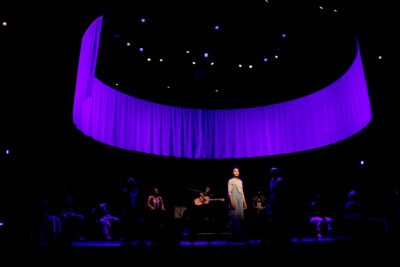
Image of people singing and playing music onstage in a dark theater behind a purple curtain.
             Octavia E. Butler’s Parable of the Sower, May 5-6 in Zellerbach Hall (Photo: Ehud Lazin)

A Seed on Rich Soil

Octavia E. Butler’s Parable of the Sower

Cal Performances

Berkeley

Exactly thirty years ago, a novel appeared, with little fanfare or publicity, that would have disappeared under the ocean of similar books that die on the day they are born if it hadn’t been for the kind of chance that has saved more than one book from oblivion.

It found a handful of readers – just the right, lucky handful – who passed the word along to other readers, who did the same for others, until it created a union of enthusiasts who found its disturbing vision compelling and entirely too plausible, yet strangely beautiful. The author continued to work in obscurity for many years, and was just attaining recognition as a significant voice in American literature when she died, at 59, in 2006.

The book in question is Parable of the Sower, the author Octavia E. Butler. And the vision that commands it, and its sequel Parable of the Talents, is the basis of the gospel plus rockabilly opera written and composed by Toshi Reagon and Bernice Johnson Reagon and performed at UC Berkeley’s Zellerbach Hall that I saw on this year’s Cinco de Mayo.

The 1993 novel is set in Los Angeles in 2024, its sequel a few years later. And its vision, at the time it quietly entered the world, must have seemed at the margins of plausibility, a Mad Max version of California fed with cocaine, speedballs, and the rest of the paranoid arcana of the drug culture. Seeing the story play out in 2023 – after the bedlam of covid, the compulsive self-harming of San Francisco, capital of the worldwide technological empire that is shredding society while spewing billionaires like an army of combines across a field of ripe wheat, the descent of America into a cold civil war between the impossibly wealthy and the politically disenfranchised, culturally despised, and economically impoverished – makes one believe the notion of the oracular power of art may not be entirely a professor’s dream and a teenager’s nightmare, but mere palpable reality.

The opera the story has spawned, through the brilliant talents of the Reagons (a mother-and-daughter team of writers and composers – excuse me, but isn’t that the most inspiring and heart-warming thing ever?) and a much-talented ensemble of instrumentalists, singers and dancers (the two last often the same), created a thoroughly inspiring evening for a packed and extremely diverse audience in the heart of the UC Berkeley campus.

The opera plays without intermission for a little over two hours; a probably wise decision, since a lengthy break between the two parts may well have weakened the tension built up so skillfully in the first hour. Though the performance is called an “opera,” it feels more like an oratorio, since there is less emphasis on an involved plot and dramatized action than on a series of musical and dance numbers presenting states of mind, moments of crisis, experiences of trauma and loss, and brave attempts to make sense of them and take away, in the teeth of destruction and chaos, some shred of moral and spiritual guidance, some basis for faith and hope.

The plot insofar as there is one revolves around a young woman of color, named Lauren Oya Olamina (a luminous Marie Tatti Aqeel), who lives with her family in a poor community walled away from a collapsing outside world and trying to find meaning in an old-time religion under the leadership of the girl’s reverend father. Between musical numbers that fluctuate between the young girl’s fears and longings and the anguish (alleviated by a strenuous but sometimes forced optimism) of her community, she retreats to a notebook where she gathers her thoughts in search of a meaning her father’s faith has failed to give her.

The tensions within the community, exacerbated by having no escape to the outside world, explode at last, destroying the wall that has been both protection and prison, and scattering a group of destitute survivors, among them Lauren, wandering across a landscape devastated by the forces of the postmodern world, toward a nameless destination “to the north.”

When the wall falls, Lauren loses her family and, joining in destitution and poverty in her march across a California wilderness while hiding her vulnerable youthfulness and femininity behind a masculine cloak, she leads her group – a “chosen family” of the homeless, despairing and forlorn – with a new faith, a new religion that she calls “Earthseed,” with a text written by herself: “The Books of the Living,” and a central doctrine exalting “change” as the essence of the divine.

But there is desperation in her new faith. Indeed, it is a tragic doctrine, one that Lauren herself does not seem willing to face. Because to worship change for its own sake is to worship death. Those who exalt “change” seem to think that “all things change (but I’ll still be here).” But that is not so: if all things change, it is precisely you who will not be here.

The resemblances between the 2020s imagined in the mid-90s and their actualities today are often uncanny. And Butler’s vision, conveyed with both passion and enchantment by the Reagons and their ensemble, gripped this viewer with a persuasiveness, long after the last chord, that is rarely sustained for so long. Here indeed (to use Keats’s famously controversial phrase) beauty was truth, truth beauty.

The performance, despite the grimness of the story, ended on a note of hope that avoided both bromides and fraudulent optimism (a curse of much serious art with popular pretensions). It concluded with a rousing musical version of the biblical parable that gives the work its title. For those who don’t recall it, it amounts to the basic truth that, though many seeds of the sower fall on barren ground, on rocks and among thorns, some few fall on rich soil and fertile land, and these take root and thrive and grow to flower and fruit “a hundredfold.”

Toshi Reagon served as both introducer and guide into Butler’s world; she was also lead guitar and commenting “folk singer” bringing Butler’s vision up to date in a way the author would no doubt have enthusiastically approved. Toshi was aided by a strong singing duo, Abby Dobson and Shelley Nicole, and a backup band that sounded far larger than its five members.

After the show, there was a wide-ranging discussion with five of the performers. Toshi left us with much wisdom to savor, not the least of which was this: “There are those who believe what they know, and those who deny what they know. Whatever you do, believe what you know.”

Amen to that.

_____

Christopher Bernard is a co-editor and founder of Caveat Lector. He is also a novelist, poet and critic as well as essayist. His books include the novels A Spy in the Ruins, Voyage to a Phantom City, and Meditations on Love and Catastrophe at The Liars’ Café, and the poetry collections Chien Lunatique, The Rose Shipwreck, and the award-winning The Socialist’s Garden of Verses, as well as collections of short fiction In the American Night and Dangerous Stories for Boys. His children’s stories If You Ride a Crooked Trolley . . . and The Judgment of Biestia, the opening stories of the Otherwise series, will be published later in 2023.
Poetry from Don Bormon

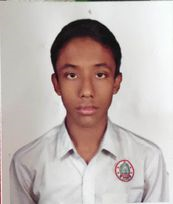
Young South Asian boy with brown eyes and brown hair. He's wearing a white collared shirt with a school decal on the right.
Don Bormon
The Sky

Sky is a part of nature.

It is a great gift from the creature. The earth is cover the world around.

And we see it from the ground.

In the morning sky, sunrays given by the sun.

I think, the sun is glowing with fun. Sometimes, the clouds make so dark.

And give boundaries to the sunrays, to reach on the earth.

In the morning sky, the birds are flying.

I think that they are jolly with the morning.

The night darkness covers the sky.

But, the moonlights remove the darkness from the sky.

In the sky, the planes are flying.

We use planes for traveling.

In the clear sky the white clouds are floating.

Like that the cottons are flying.

I think, if I could be one of the clear clouds

I will fly on the sky around.


Don Bormon is a student of grade 8 in Harimohan Government High School, Chapainawabganj, 
Bangladesh.

Poetry from Ibn Yushau

MY SISTER'S NAME IS FORBIDDEN ON MY TONGUE OR IN MY HEART

I do not know why,
but my sister's name is forbidden on my tongue or in my heart.
The last time I saw her, the lines from her mouth were
"if I don't marry him in your presence, I would in your absence"
Those words were seeds of death to my father
& To me, they were displaced wanderers seeking recognition.
Now, we are like borders apart
Isn't it right to say we're living in a different world?
But for us it's the third; a world of strange & unfamiliar things.

Poetry from Duane Vorhees

OUR PLACE IN SPACE


Our egg and our girdle – from our toelines to stars’ beyonds,

edgeless sky occupies. Continents and constellations

indicate sky’s compass points in all directions.

Here, and there, it corrals our air. Sky’s only brake is our imagination:

We house our deities in this infinite bubble, map every manifestation

of this cosmic envelope. We extract our character and extort destinies

through constant observation, keen ingenuity, endless speculation

as we contemplate wonderingly at sky’s progress and creation.


AMERICSSON


Whores parade their hymens

and diplomats their swords.

Priests display their diamonds.


With confusion since birth

futures ignore their pasts.


Cowards hang their medals

and gluttons wear their fasts.


The sugar tastes bitter

from the sweat of the slaves.


All the stones and banners

can't cover all the graves.


The lame think they're dancers.

The blind behave like seers.

The deaf play musician.


Hiding behind paved mirrors,

the meek show ambition.


Our clear insight is blurred.


O NIGHT, THE DOMAIN OF OUR DREAMS


The full world by day

is a speckled shade,

but colors at night

all coordinate.


Our humanity

claims its sanity’s

enshrined in marble

but held together

by spirit and breath,

yet we live in dust

and we choose to starve

amidst much rich stock.


Only dark’s tattoo

clears checkered shadows.


THE SINS OF POETS AND PASTORS


When preachers and poets exercise

our metaphorical rhetoric

we much prefer the dramatic

--the pitchfork of lightning--

above the anticlimactic

--a blanket of sunshine.

The wrinkled and crippled shall arise

sooner than the smooth and the spry.

The salve is shadowed by the sting,

and Found, by Wandering.

The tornado and the torrent

and the volcano’s ring

are prized beyond plastic ornaments.

We tend to the tortured and the tried.


TELL ME. ARE YOU SURE?


I wonder if once half our limbs were wings, like a fowl,

or if they all had thumbs once. Or is that only now?

The asker wants to know.

Do we see us in mirrors, or need a fluoroscope?

Are lovers on the level or are they on a slope?

This doubter wants to know.

Was Tigris always Tigris or once was it Paradise?

Was Jesus a carpenter or always just a christ?

This skeptic wants to know.

Are the answers on the internet? Or in ourselves?

Or should I communicate with oracles and elves?

This searcher wants to know.

We learn through maturity? But ages are cages….

Or from these ancient books of fingered, faded pages?

Don’t we all want to know?


QUANDARY


Flatter me – Do I receive or repeat?

With contempt or reciprocity?


THE PROCESS


My appetite

is my engine.


I transubstantiate

the wine of night

to morning wind,

body to pulsed headache state.

And I might write

undisciplined

doggerel to celebrate.


I eat that shite.

I take it in

and digest it. I translate

rails into kites

and doubt to djinn;

vomit; and hope it pulsates.

Poetry from Wazed Abdullah

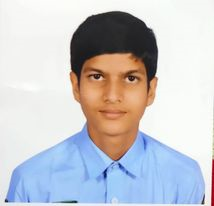
South Asian boy with short brown hair, brown eyes and a light blue collared shirt.
Wazed Abdullah
Beauty of Village

Oh, the beauty of a village fair,

With green fields and fresh clean air,

The chirping of birds, and buzzing of bees,

The rustling of leaves and swaying trees.

The smiles of children, playing in the sun,

The sound of a stream, and the river that runs,

The fragrance of flowers, blooming in May,

The simple life and joys that stay.


Wazed Abdullah is a student of grade 8 in Harimohan Government High School, Chapainawabganj, Bangladesh.


Essay from Guzal Sunnatova and Sohiba Rahmanova

Guzal Sunnatova
THE VILLAGE OF GOBDIN AND THE SHRINE THERE
FROM THE HISTORY

Murtozayev Matlubkhan
Samarkand State University

A student of the Faculty of History
 https://doi.org/10.5281/zenodo.5978543 

HISTORY OF THE ARTICLE
Accepted: December 15, 2021
Approved: January 15, 2022
Published: February 05, 2022

Abstract
In this article, G'allaorol of Jizzakh region
located in the district, is still scientifically complete
the unexplored village of Gobdin and Father Gobdin
Some comments about the history of the shrine are made
Gobdin - Gallaorol, Jizzakh region in the southwest of the district, Nurota mountain at the foot of Gobdin Mountain located in the stream.  From the district center One of the villages located 35 km. A few on rural etymology there are views. But, clear thoughts do not meet and their most of them connection with narrations is a scientific conclusion to give complicates. Including the term "Gobdin" come pronunciation depends on the root word "gób". in this case, ancient Sogdian and modern Persian-Tajik corresponding to the word "gob" in the language "mountain" means. "Gob" was formerly "Kaufa" called [3:6]. Another similar one according to the view, both of the name "Gobdin". components - "gob" and "religion" have changed may be gone. His first  the ancient form of "gob" is based on changes губ/хуф/куф/кох/ based on the word, as we quoted above means mountain, height. Last part of the words din/diz/deh/ in the case of religion as a modified form, it is used in the sense of fortress, fortress. Name in this contained two the word too sound changed. That is, the word Gobdin high up fortress or high up means village [9: 32-33].

      Another view is among the local population connected with the narrations, they are "Gobdin" the name goes to father Gobdin. Narrative it is said that our prophet Muhammad Seven people who are the descendants of (s.a.v). among the holy fathers is also the name "Gobdin Father".There are assumptions that it was. 1. Father Gobdin 2. Father Shepherd 3. Father Nur 4. Father Savruk
5. Father Novka 6. Father Saifin 7. Father Parpi. This uncles of the holy fathers, Saad ibn Abu There are also legends that Waqqos is the father of Kazan there is. But in this case, Gobdin is a father not his real name, but a nickname, The fact that he was a judge in Samarkand for 40 years and that in order to spread the religion of Islam to the earth are said to have been sent [6]. 

This is definitely one approximate view because periodically abstraction is visible. Because, in our opinion, in Central Asia, including In relation to the institution of judiciary in Samarkand present-day Gobdin, which is nearby Islam in the villages at the foot of Mt its non-proliferation is a controversial issue. In our opinion, Gobdin and adjacent to it . The history of villages is the origin of these villages must be sought in the history of being. To Gobdin Neighboring Gumsoy (deep stream, from the riverbed flowing stream) [4:15],

Apple (-li of this object with the suffix refers to existence and abundance) [5: 38] attention to the naming of villages if given, these villages flow from the foothills along the natural spring waters formed, that is, existing at the foot of the mountain Each village has its own spring was Besides, this one at the foot of the mountain rural population is "forty" of Uzbeks belonging to the clan, almost every the village belongs to this clan consists of "balls". For example,
badal, karamoyin, boytopi, etc.

However, it should be noted here that this among the villages, only in the village of Gobdin, is the largest and oldest cemetery, far away
years are forever for those around me has been a place of residence. This is also the history of the village that it is ancient and with the name of the village the person concerned is truly Islamic that it has a great place in history confirms. Gobdin village of the 20th century
on the heads of Jizzakh, Chashma- Koriz, belonging to Yangikurgan Volost.

It is part of the rural district was close to him along with the village
Almali, Almali-Saray bulak, Gobdin, Gumsoy, Koriz, Kotal, Kotal Kazakh, Marjonbulok residential addresses names are given. 20-30s of XX century the existence of 83 yards in Gobdinand that 376 people lived in them noted [8: 22]. Also this again based on data
it can be said that 21 per yard and populationAugust of 505 Hijri (1111 AD). died in Bukhara. [2: 90-91]

4. Abulhusayn Ala ibn Muhammad Ibn Naim Ibn Is'haq Ibn Ubaidullah Ibn Hatim al-Ghobdini is the father of hadiths Muhammad ibn Naim al-Ghobdini, Khalaf Narrated by ibn al-Khayyam and Abu Ahmad ar-Razi. From all hadiths Abu Ali al-Nasafi and Abulabbas Narrated by Ja'far al-Mustagfiris.

Abulhusayn al-Ghobdini 337 Hijri He was born in 948 AD and died in 409 AD.
  (AD 1019) on January 25 died on Thursday. [2:55-56]

5. Abu Naim Hussein ibn Muhammad ibn Naim al-Ghobdini, a virtuous person of his time, one of the ascetic, pious imams,
He received his primary education in his village. Later, with the demand of science, Khorasan, Iraq, he was educated in cities like Hijaz.

In particular, Abu Salih al-Khayyam in Bukhara, Abu Sahl ar Astrabadi, Abu Amr From Muhammad al-Bukhari, Naysabur
from Abul Qasim Abdullah al-Nasawi in Baghdad, Abu Tahir in Baghdad Muhammad al-Mukhlis and Abu Hafs Umar al-Kattani heard the hadiths and wrote them down received Abulabbas hadiths from Allama Ja'far al-Mustagfiri and Qazi Abu Ali Hasan narrated by al-Nasafi. Allama in June of 341 AH (952 AD). born in 427 AH (1036 AD) died in April. [2:54]

6. Abdulwahid ibn Husain ibn Ahmad Ibn Nasr Ibn Nazar Ibn Yusuf Ibn Ubaidullah ibn Muhammad Hammad ibn Abbad ibn Yaqub ibn Ibrahim al-Ghobdini is very narrated many hadiths one of the muhaddis. In available sources the name of the scholar and what he narrated only the hadith was written down, and any of it what is his position or position in his time was born or died year is not given. [2:76)7. Abul Hasan Muhammad ibn Naim al-Katib al-Ghobdini was a secretary. Abu They learned from Muhammad al-Bukhari.
Muharram of the year 381 Hijri (99 AD). who died in [2:85]

8. Abu Ali Hasan ibn Abdullah al-Ghobdini al-Bathudani, reciter, virtuous, righteous Abu Bakr al-Baladi and those who received education from Muhammad ibn Ahmad. Muharram 491 Hijri (1099 AD). Born on the first day of the month, he died in 551 Hijri (1157 AD). [7:175]

At this point, pay attention to one consideration let's look at it. As a result of research in several places of Uzbekistan, the population referred to by the name of Gobdin addresses or community gatherings became known. These are Jizzakh region, Gallaorol district, Kashkadarya region, in the Karshi district, Samarkand
Jomboy, in the Bulungur district of the region are addresses located in the district. But, in history under the name of the above Gobdins
which of the remaining allamas exactly that he is from the village of Gobdin of the region
 is an issue that requires further research

Because it belongs to the Gobdinites seven "Jizzakh alloms" by M. Atayev cited in his book as a jizzakh. He wrote the history of Gobdin in Kashkadarya scholar Abdulkarim al-Samani regarding Gobdini of Kashkadarya past [7: 175]. Another point is that among the historical figures of the Gobdinites one is Abu Muhammad Abdullah al-Ghobdini in the biography of that person, in the village of Gobdin, Uturshona was said to have been born. It is this sign belongs to the village of Gobdin in Gallaorol
. Because in the Middle Ages
a part of the structure of Ustrshona is present. It was organized by Gallaorol district.

Secondly, you have received it so far, both in Usturshona and in the current oasis of Jizzakh another address also called Gobdin
does not occur. It can be seen that more research about the Gobdinians continue and their today Jizzakh, as cited in the literature
or Alloms of the Kashkadarya oasis to scientifically clarify that
much. The village of Gobdin is nearby with its historicity in relation to the villages stands out. Above, we are here the surrounding villagers are sacred Gobdin father's cemetery, as we mentioned already. 
This is a cemetery operated under the same name the relative antiquity of the cemetery and with my great respect, Father Gobdin.
The merit of this place is sacred and ensured that it became a shrine.
In conclusion, it should be said that this village was famous in the Islamic world in his time where scholars are born and raised, science
is developed, and of the muhaddiths we quoted above
hoki of ancestors and descendants, theirs is a saint who has reached the blessed step is one of the shrines. Supposedly, it is a shrine from the end of the 19th century to the beginning of the 20th century

[4]. This is a shrine the place of the old mosque in the area
and khanakah, some more ancient forms of tombstones also confirm. This 13 one-meter marbles with triangles Qur'anic verses and years on tombstones stands the test of time, resulting in unreadable writing
has arrived. That's why it's a tombstone, writing is difficult to read.
According to the villagers, until 1941, the roof of the house was
covered in shiny tin. Later, the center of the tin above the house
took it to the building and stuck it. The size of the old mosque is 20 meters by 12 meters organized. On the qibla side of the mosque
the thickness of the wall is 1.5 meters, the rest of the sides are 1 meter. It's been repaired four times to date.

The son of Ahmad Khan Ziya Khan led the construction by Usta Umar, Usta Adil, Usta Abbas actively participated in the mosque
as shown by the columns. 
This old mosque was active until 2010. From 1970 to 1994 the son of Mahmud Khan Mamirza served as imam in this mosque. He is the great grandfather of the author. 2010- to the current appearance of the mosque, Donokhan Haji, who led the way.

Mahmud Khan's son is a descendant of that person is considered to the mosque until 1970 Ahmad Khan Eshon, and before him Domla
. 

A person named Kubay served as imam, and Ghaffar Eshan was the imam before Kubay. Currently, Mahmudov Sirojiddinkhan 
is imam. 

This is basically the origin of the new construction going to the village and neighboring villages' roots, ancestors settled forever aimed at the well-being of the place. Donations from generous donors
were given for the new mosque pillars in Buvai, Fergana region, from 
a group of flower craftsmen of the district. Now 250-300 people can be in the mosque at the same time performing Muslim prayers
.

It should be noted that this shrine is today a cultural heritage of the republic but not included in the official list. 
According to my grandfather Donokhanhoji, based on the antiquity of the shrine, no written sources have been found, based on the antiquity of the cemetery. In the ancient Arabic writing that was once in the cemetery, tombstones of the river made of limestone in different years after new graves are opened, according to custom.

According to Muslim custom since the corpse in the grave has turned into rotting soil then a new corpse can be placed on it.
In this, of course, the respect of the old corpse, carefully placing it in place, must be performed before the new body was buried on top.  Today as a result of the focus on our history, we think in the near future.

The written sources that give the history of the shrine are included in the scientific treatment, maybe an ancient one buried by time
tombstones are found.

In conclusion, it should be said that Gobdin village and related to it
the history of the father's shrine is still full of our history and are considered unexplored pages.

Studying the history of a village and shrine through the great material of our people, our homeland with its spiritual heritage,
past migrations, and cultural history, a lot of new information about the processes and ethnography is revealed.

Used literature and sources:

1. Resolution of the Cabinet of Ministers dated December 5, 2014 "Historical, artistic or other cultural
a list of objects that cannot be pledged and mortgaged due to their value
Decision No. 335 on approval"// http://www.lex.uz/ .
2. Atayev M. Jizzakh scholars. - Tashkent.: Adib, 2014. 270 p
3. Nafasov T., Nafasova V. Educational annotated dictionary of toponyms of the Uzbek language. - Tashkent: New century
generation, 2007. – 88 p.
4. Ohunov N. Interpretation of place names. - Tashkent.: Uzbekistan, 1994. - 86 p.
5. Sindorova F. Ancient Turkic toponymy of Uzbekistan (in the example of Jizzakh region). - Jizzax.:
 13. - 56 p.
6. Story by 84-year-old Tilavov Mahmud Haji of Gobdin village, Gallaorol district
done April 2016.
7. Abu Sad Abdulkarim al-Samani. Genealogy (al-Ansab). - Tashkent.: 2017. - 273 p.
8. Spisok naselennyx mest Uzbekskoy SSR, Kamarkandskaya oblast. 1925. - 53 c.
9. Tilovov T. Gubdin and Gubdinites. 2015. – 279 p.// ziyonet.uz/

Authors: Guzal Sunnatova
Sohiba Rahmanova

Poetry from John Tustin

IN A THOUSAND YEARS

In a thousand years
I want to be remembered
in a volume like 300 Tang Poems.

100 thousand college students will see my name
and read four lines I wrote
about an egret dismissing a marsh

or an ingenue losing her locust hairpin
under a moon that is a kicking rabbit
or an old man finding solace in his memories.

I would rather be remembered
for four lines written in haste
after hefting seven or eight bottles of Sam Adams

than not be remembered at all.
To be honest, it would be nice if the students liked the poem –
but it’s not a dealbreaker.
 
A SCURRY OF SQUIRRELS

Every day I walk past a tree in front of a house
And under this tree is usually a collection of squirrels –
Many gray squirrels and up to four fox squirrels.

The person who lives in the house behind the tree
Puts nuts out under the tree every day
And there are so many the squirrels can never eat them all.

I walk by and the squirrels scurry away –
Which is a good reason a group of squirrels is called a scurry, I guess.
Only one squirrel doesn’t retreat at my approach.

As I said, there are four fox squirrels among the grays –
One of them is melanistic and one of them is very big and pudgy.
The first time I saw the big one I thought he was a raccoon.

That first time I saw him he was alone under the tree
And when he saw me he stood up on two legs and stared me down.
I turned around after I passed and I found he was still watching me.

There was one time he decided to retreat at my approach
And it was like watching an old fat man as he climbed the tree.
I imagined hearing him huff and puff, cursing me under his breath as he clambered. 

There are many gray squirrels and four fox squirrels –
One is melanistic and one is pudgy and larger than the rest.
I wonder if the fat one would be picked first or last for dodgeball

If the squirrels were human children. Powerful but slow, I imagine.
These are the kinds of things that go through my mind
When I forget to bring my headphones on my walk

And why I almost never do forget.

 
SOME POEMS

Some poems are meant to be inhaled,
then exhaled through the nose.
Some poems are meant to escape through the teeth.
Some poems enter through a hole
that it drills into the back of your head.
Some pulls pull you by the ear
all the way to the principal’s office.

Some poems are ghosts,
howling between your ears.
Some posts are nettles
beneath bare feet.
Some poems stutter as they ascend.
Some poems need a paleontologist’s pickax.
Some poems pummel your roof
like hailstones.

Some poems are cryptological; zoological;
illogical; scatological.
Some poems are dead hair
beneath a barber’s chair,
waiting to be swept away.
Some poems are not poems
because they are limp and useless without the music.

Some poems are living things
and some poems are dead things
and some poems are living dead things
and some poems are dead living things.

Some poems take flight
and some walk the earth.
Some wallow like happy pigs in dirt.

And poems about poems, like this poem,
are meant to be balled up
and tossed into the nearest wastebasket
so,
after you read this,
I better hear you crumpling.

 
SPINNING


There’s this little divot in the ceiling
I am studying here in bed
While lying on my back
With the room spinning

As well as the moon outside
Spinning, I imagine, like a pinwheel
Even though there’s not even the hint
Of a breeze.

I’d get up to look and make sure
But somehow the door and the windows
Are gone
And the floor is 
Gone

And all that is left in this room now
Is me and this bed
And this little divot in the ceiling
That I have convinced myself
Is of great importance.

I finally close my eyes
With the moon out there
Spinning like a pinwheel
In a night so hot and still
Without even the hint
Of a breeze
And 

The divot in the ceiling has
Disappeared 

 
THE WRONG TIME

I meet the mountain
and the mountain
is the wrong mountain

& 
I fall in love
and it’s the wrong woman

&
I send out my poems
but they come back

having gone to the wrong places.

I am here –
in the wrong home,
living at the wrong time

&
Li Po looked up
saw the moon
offered it a drink

a thousand years ago

& 
smiled in deep sleep
even though he knew
it was the wrong time.

John Tustin’s poetry has appeared in many disparate literary journals since 2009. His first poetry collection is forthcoming from Cajun Mutt Press. fritzware.com/johntustinpoetry contains links to his published poetry online.