Direction


Can this moment be a fruit,
a moist secret, picked and juiced?
Can I follow through with my leap of faith
and leap into the coal fires of survival’s uncertainty,
be selfish as the hunter who conserves nature
so he can have enough nature to kill
and make into wall trophies?

Am I a dead mouse on the porch who made it
as far as the first freeze, forgot
to build a nest and suffered the consequences?
Am I fortunate as the found street dog,
given kibble, a warm place to lay,
a pack to call her own?

Am I here maimed but alive,
like all things living,
crippled by the weight of time?
Why is everything half-formed?
Only young things leap and frolic,
free because of their dependency
on maternal sustenance and protection.

My endurance is threadbare.
If I wash and wear it one more time
it will disintegrate and not hold form.
I know nothing but
I do know Jesus -
the bridge and the tunnel below.
I know one way, one path
all else is
phantom blood, phantom fulfilment,
just renderings humming ‘yes yes -
take my false face as truth,
count my money, my grand accomplishments,
my soft seats, my high seats,
my triple thaw and my double freeze.’

The butcher is a psychopath. The liars are in charge.
Steady now, the hand, the moon dangling on a string,
say your necessary farewells.
Jesus is walking, walk with him,
eyes forward, summoned.

Cure

Joy is but a minstrel’s flower,
lightening under the thumbnails.
Preach of mud around the eyes,
myself a centipede, fast but fragile.
I gaze and I know the way is a path is a dream
of a hawk landing and inside that dream
anguish quickens to gold, despair into
overcoming. Inside that dream, Jesus stands
insistent in a child’s purity, burdenless, fresh
as the sun always is and always burning.

A small stone that cannot break, a love so graced
it welcomes the flooding tide. But I am broken,
eaten in tiny increments by the changing mirror -
around the evenings, around the first day’s light,
blind to all but the persistent churning.

Jesus’ great love has left me weeping, has opened
my heart, brought forth the healing, suffering mended,
miracles under a white desert sky. Be mine. Let me be
yours, travel with you, bend fully into your mystery.
The joy you give is small, unassuming,
but is an opening like a lifting,
where all grief and savagery
invert into its opposite, separated
from lasting damage.


Someone other


Someone said - “Be sensible,
a song is essential only if it can be traded.”
Someone squandered decades of rich meaning
then died on the rafters of an abandoned ballpark.
“Pack up your consciousness,”
someone else said “Be out of character
and draw the short straw with glee.”

Intellectual dreams have no limitations,
strong in complexity, strong without drama
or the heartache of disappointment.
I will dream intellectual, taste desire
as an idea, be friends with the professional
and marry into a profession.
How much time does it take to fashion an identity,
keep it with solid sides and a resistant core?

Someone said - “Don’t bother
nothing is for keeps, ideals exist
until they inevitably become soiled and then
start reeking of their opposite intent.”
Many years seized you up in spasms,
aching and making
a mockery of such lofty extremes.
This planet is overstrained, never a gentle
day of just sitting.
Someone said - “Learn mediocrity if you want
happiness. Bark at the impossible squirrel
in the impossible tree.”
Faith must be fought for, in every choice,
in the mid-days of winter and when love has gone astray.
Everyday I own nothing but this day.
Someone said - “Deal with the collapse of
what you hold as true - contemplate it like a cloud
that shifts form and wisps away.”

I heard that someone, but the joy of love
is real even when it lies flattened. Hope
is not for the faint-hearted, but for the persistent,
the reformers of gravity, the warriors against inertia.
I say - Hope void of illusions
draws its first breath as faith
only in the purity of complete darkness.

Casual Garden

I keep a casual garden
burnt in places, lush by
the climbing trees.
When in despair,
I examine the corners of that garden,
pluck the dangerous weeds
and re-set the overturned steppingstones.
I scrub the birdbath
and fill it with fresh cold water
placing stones as platforms
for the bees and small birds.
This garden is my favourite place to walk,
small, but with hidden nooks
and a seat for solitude.


It took years of tending to get to this place.
A once-thought cursed corner is now deep green
with violet hues and the prefect shade.
Still there is more to tend
as it is ever changing. Birds come,
leave their droppings and kill
what can be restored.
Squirrels explore, dig holes, preparing for winter.
Raccoons work their nocturnal havoc -
birdbath on its side, flipped steppingstones - evidence
of their hunting for grubs.

God gave me this garden as a living meditation,
help when all other help is gone.
Before this, I never had a garden.
For twenty years, I had a backyard.
My children enjoyed it, my husband
took care of it.

Now this garden is my sacred duty,
an extension of my wonderous home,
mine to walk in as we all take in
its bright varied living tones -
all four people, cats and even the guinea pigs
have an exclusive window to view its glory.

The sounds when the neighbours
are sleeping or away
are best. The smells are perfect
of marigolds on the deck and the rain.
My mother says this garden is beautiful
and she would know.
I rejoice in its poetry.
Everything wants to live,
expand, overflow in this garden.

I don’t even know how this love affair started
or how over time it has grown into a beautiful marriage.
There is an animal graveyard in my garden -
a place in front of two tall trees, the same place
we buried silver coins,
the best place of ease
where the white dove first arrived,
before walking around the whole garden,
blessing every inch before it took flight
never to return.

When I forget God loves me,
I look at my garden,
I step onto its bumpy terrain
and know I am one -
joined to its hallowed ground.

Revived


Sideways into the thicket
prickly roar, eyelids closed
and then a decade later, a sunbeam
latches to your arm and pulls you out,
renews your skin, the tone of your hair.
A decade lost without a voice, without
connection to your core.
Here you stand, stride, hardly limping,
a queen, tall, sure of your kinship,
sometimes still weakened by past sentimentality,
but mostly preparing for a sacred adventure, remembering
the promise to you that was made on the swing
when you swung high as the swing could carry you -
your childhood legs gleefully kicking, your long hair
behind you, and a smile that was more glorious
than the first spotted spring flower.
Whole again, set right, upright,
shedding the last of your apprehension,
growing deeper into maturity,
letting the shadows go,
as the sweet nectar wraps around you
you start to sing - Hosanna!
finally accepting
love is everything.


Creature


Out of step, filled
with a flame that ignites
a windfall and dreams
upward reaching, past
the umbrella and the cherished flight
of the cardinal.

One step, dancing, then tomorrow
comes and there is no dancing to be seen.
Maimed and fearful - the setting sun
coils its rays around an unhappy future and feeds
the roots with sewage.

Preferring the hope of a soft landing,
I count the pillars and a make a roof, a home.
I fall asleep with this glorious creature at my side.
I wake and it is the first thing I see. It takes me
out into a land of picnics by the water, out
of the stark slam of poverty and ancient debts that
must be repaid.

It takes me to a greener land
where I can walk, turn corners
and run. Where I can do my rituals,
relieved of desperation, at one
with the hand that opens, at peace
with the hand that holds.


Bridle


Tear and rip and proclaim
a path you cannot follow
but can taste its every nuance.
Bend into its horizon as though it
were yours, there on glorious display.

When change does not come, and it sleeps
like a long clouded-over moon, and spirits
are bones sucked of their marrow -
the most vital of these eaten by mechanical doom -
metal teeth and the turning, turning
of grinding eventuality, wait
and watch the images come and go.

The windows are stained
and there is no way to clean them.
Through them I see growth.
I see days I long for that may not come
for another decade, where I will be free.
What is a day? But this thing done, this thing not done.
What is a life? Stealing wakefulness violently
from slumber, pressing into joy
despite the chains and another
book is read. All dreams are singular. Know
the in-breath counts. The out-breath is simply
exhalation.


I Need My Blood


I need my blood.
I need the mornings
sightless of dark duties
and encumbering failures
that rise like a high wave
teaming with unseen predators.
I need a house without deep mud
at its doorstep and a fire menacingly
burning in the furthest backyard tree.
I need to wake up like I used to,
energized, a life to look forward to, bow to,
and say yes, I can do that, I am full.
I need God’s blowing kiss, a dream
that is more than a dead seed or grand illusion,
to step here and there solid in authenticity,
shed the dread and the pounding trip and fall.
I need my blood
not horror-cold professionalism,
being polite while vital body fibres
ricochet against each other, bawling inside,
ripped and rolling like a fish
on a hook, heartlessly pulled
from my home and element, amazed
by how long I am still breathing,
here, without oxygen
or the salty waters of my belonging.
I need a bridge
to walk across,
a landscape of freedom and prosperity,
away from this decaying island I sit upon
where massive reptiles wrap
their spiked bodies around, many
creeping on the shore.
I need my blood,
to keep my blood,
flowing, be a voice at full strength,
no longer a sigh or a held-back moan.
I need this now
to carry on.

My branches are all but broken.
My spirit is hardening, tight, tighter
than a heavy stone.

Building a Temple


I held the hand when the body
lay sleeping, ready to erupt, erode
but it never did.
These words are a goodbye
to the dust-bowl chaos, a vision
to act by, pick up pebbles and throw
across a field, over a fence, almost
to the other side.

The angels make a wall protecting, bending
their bodies of light like shields
over my beautiful children, as they find their way
through uncertainties, undercurrents of terror
and the moon’s dropping glare.

Addiction in the ice.
Organs enflamed and removed.
But God’s love is merciful, takes us
to the threshold, but not beyond.
Secrets are exposed, talked about without shame,
and then are burnt like charred large balls
in a sacred flame, rising
into a steady shimmering golden canopy peace.

Sometimes the storm creates a treasure,
a blooming happiness
after its destructive force, its taking away.
Sometimes after the emptiness, there is finally
a conscious letting go, letting in
the zig-zag flight of finches.

There is love spoken
without conditions, love heroic.
There are ghosts silenced, pathways
rushing forward, hearts so broken,
now repaired, thundering forward, redeemed.


Allison Grayhurst is a member of the League of Canadian Poets. Five times nominated for “Best of the Net,” she has over 1300 poems published in over 500 international journals. She has 25 published books of poetry and six chapbooks. She lives in Toronto with her family. She also sculpts, working with clay; www.allisongrayhurst.com
failure after failure

this endless display

a woman still acting
like a child that needs
attention

trying to figure out
how to attract the
man of her dreams

hard to sit back and
watch failure after
failure

the sheer inability to
get her shit together

too old for games

too old for loose
ends

too old for more
chaos than is
fucking needed

best that none of
us think about what
could have been
--------------------------------------------------------------
the lobby of a hospital

watching porn
in the lobby
of a hospital

tempted to turn
up the volume
just to see if
anyone is
paying
attention

the woman at
the desk gives
me an evil stare

she'll probably
understand when
i ask where is
the bathroom
--------------------------------------------------------------
loved dancing in the rain

you always wanted
to be the carefree
soul that loved
dancing in the
rain

instead that rain
triggers all the
arthritis slowly
killing you and
leaves you
crippled in
a chair

the alcohol only
helps so much

the pills don't
do much anymore
either

there's a bent spoon
and a needle on the
table beside the bed

just enough to take
the edge off

hopefully soon enough

it will be more than
enough to carry you
to the other side
-----------------------------------------------------------------
nowhere to be found

i was asked to take
an honest look at
myself

so, i did

five foot nine
339 lbs.

moderately depressed
morbidly obese

arthritis from head
to toe

a failing liver

a love for alcohol
crazy women and
a passionate lover
of sports, music
and the word fuck

the doctor then asked
where is god in all of this

as usual, i said
nowhere to be found
-----------------------------------------------------------------
dance between the dull moments

after hours in medical facilities
always gets a little creepy

you used to be one of them
perverts on the cleaning crew

you know what kind of thoughts
dance between the dull moments
on yet another boring ass day
J.J. Campbell (1976 – ?) is old enough to know where the bodies are buried. He’s been widely published over the years, most recently at Horror Sleaze Trash, The Beatnik Cowboy, Black Coffee Review, Terror House Magazine and Cajun Mutt Press. You can find him most days on his mildly entertaining blog, evil delights. (https://evildelights.blogspot.com)
INTERNATIONAL UZBEKISTAN AND INDIA LITERATURE FESTIVAL

Organizer: Noel Lorenz (India)
Abdulloh Abdumominov
(Uzbekistan)

- Rajabov Muxriddin  (Uzbekistan)
- Marjona Yoqubova (Uzbekistan)
- Hakimov Feruz  (Uzbekistan)
- Altinay Tilegenova (Uzbekistan)
- Muhitdinova Dildora  (Uzbekistan)
- Jo'raqulova Mashhura  (Uzbekistan)
- Behzod Gapparov (Uzbekistan)
- Umirzakov Zarpulla  (Uzbekistan)
- Tashtemirova Nodira  (Uzbekistan)
- Mansurova Aziza  (Uzbekistan)
- Bo'ltakov Tursunqul  (Uzbekistan)
- Noel Lorenz  (India)
- Pankhuri Sinha (India)
- Perwaiz Shaharyar (India)
- Deepti Shakya (India)
- Deepika Sinh (India)

Thank you so much to the participants!

The festival was attended by participants from both countries. The festival was organized by Noel Lorenz to further develop the culture of the two countries. At the festival the friendship between the two countries was further strengthened.
“Look up at the stars and not down at your feet. Try to make sense of what you see, and wonder about what makes the universe exist. Be curious.” – Stephen Hawking
“When you reach for the stars, you are reaching for the farthest thing out there. When you reach deep into yourself, it is the same thing, but in the opposite direction. If you reach in both directions, you will have spanned the universe. ” – Vera Nazarian
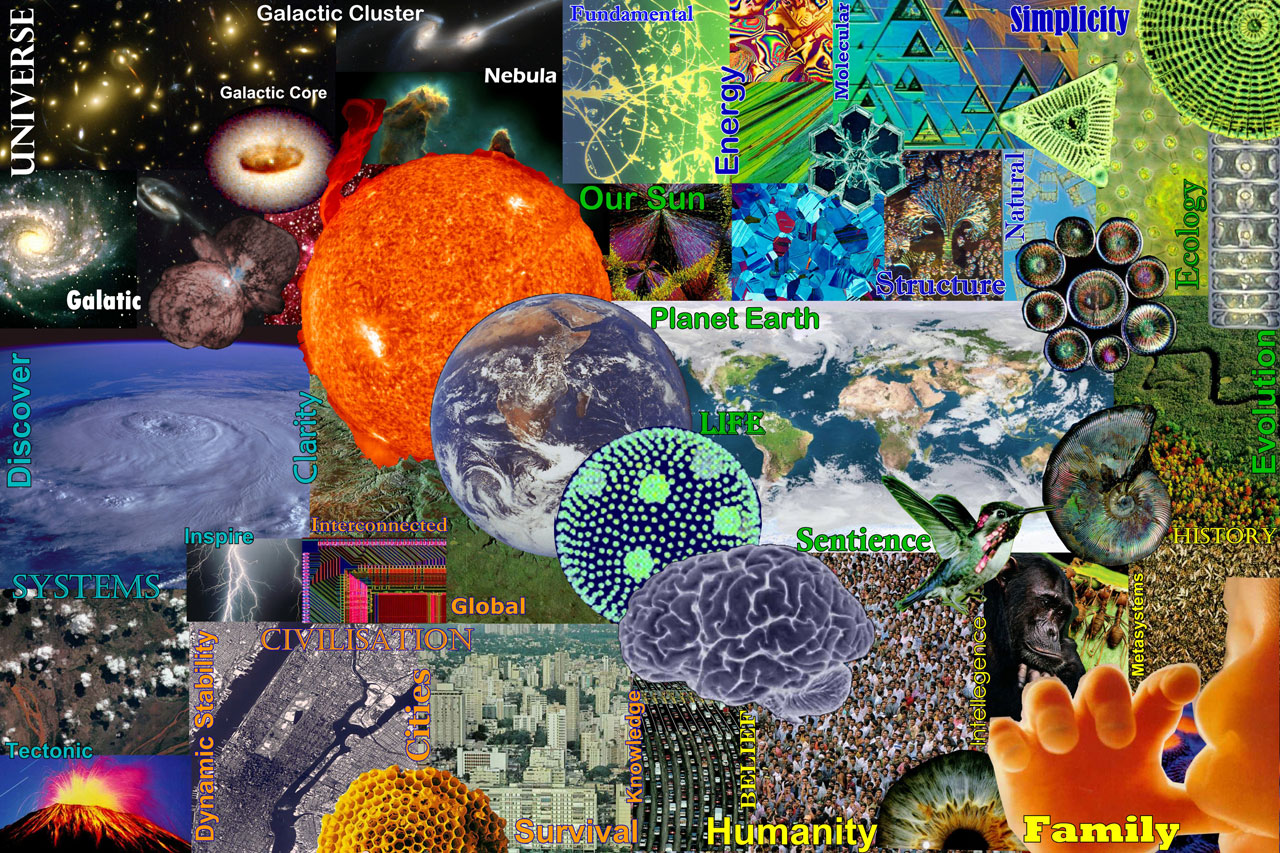
This month we explore what it means to be a member of the universe. We are one part of a larger whole, a resident of a vast world beyond ourselves, but we belong here just as much as anyone else.
Writers and artists this month convey the large human and natural worlds in which we find ourselves, and how we integrate that reality into our lives.
Fabio Sassi’s technicolor images meld together artifacts of modern life: product names, advertising, and technology.
Terry Tierney, in an interview on his recently published historical novel Lucky Ride, describes how his characters’ lives intersect with both the specific history of the 1960s and broader human experiences. He draws on road trips as both reality and metaphor, looking at how travel and a change of scene helps when we attempt to make sense of our lives.
Michael Robinson writes of the spiritual redemption he finds through Easter and his Christian faith.
Umar Yogiza evokes the shadows of death and grief (as well as the title of our publication) in his poetry, which explores the dislocation of personal and public loss. J.J. Campbell evokes disillusionment on a smaller, yet still personally relevant scale, with faith, with romance, and with his own body. Peter Cherches explores mortality and the limits of our creative imaginations with whimsy.
Susie Gharib contributes poems of imagination. Her speakers indulge the worried speculations of a creative mind and highlight their determination to carve out the independence to maintain that state.
Cortney Bledsoe writes of shaky mental health and grief and the various stratagems by which we keep ourselves alive. Mark Young evokes our confinement within the mystery of our existence, where different forms of knowledge are our means of escape.
“The goal oflife is to make your heartbeat match the beat of the universe, to match your nature with Nature.” – Joseph Campbell
Mahbub’s poetic speakers highlight how they are connected to the broader natural universe. We all experience birth and death, we all are physical creatures.
Chimezie Ihekuna’s essay urges humanity to work together with nature to improve overall health as a means of addressing pandemics.
“Kindness keeps the universe fastened into place.” – Maureen Joyce Connolly
Poet, musician, and DJ Ike Boat describes his project to feed homeless children in Ghana.
Abdulloh Abdumominov writes of the seasons, creative writing, family – all aspects of life that can be preserved and celebrated when we have international peace.
J.K. Durick’s speakers speculate into the lives of others: an elderly woman who dies while on a walk, tornado survivors on the news, Chekhov characters, aware of the limits of their imaginations.
Santiago Burdon’s visual poem depicts a woman worn down and bled dry by the harshness of city life. Mike Zone’s anti-hero Roadrunner character takes on real evil: coyotes perpetrating human trafficking in the desert.
Steven Hill’s consciousness expands at night until he grows to encompass many voices beyond his own: Ukrainians, Chinese forced labor survivors, Rohingyas, Black people experiencing racism in the United States.
We hope that this issue will broaden readers’ points of view to encompass the worlds around them. Thank you very much for reading and for opening up to the wider world within our international publication.
Roadrunner v. Coyotes

He parted the blinds.
It was still a desert out there.
The sign he’d put up, INTERCOURSE WITH A STRANGER- FREE COFFEE…had gone unanswered.

The room he had was the best in the house as it was located kitty-corner from the motel office which was connected to the gas station which in itself contained a fair amount of food, plenty gas (obviously) and was pretty well stocked with what he would need for years, especially if he had another one of those episodes again.
However, living among this bounty of microwavable cheeseburgers along with gallons of subpar coffee and a wide variety of cigarettes to accelerate his way towards death, he would starkly wonder how long had this kingdom been abandoned?

The only times he encountered other humans was when he patrolled the border.
No vehicles had ever stopped by in all his months of living here.
He smashed all the mirrors in the rooms, one day when the violent heat of the moment unleashed something stomach churning yet thunderous from his mortal belly.
After what he did even though it was with good cause, he could no longer face himself in a reflective surface, incapable of fully accepting the beast who masqueraded as the man…the man on the road.

Those were the times he was happiest.
Out on the blacktop into the desert where the real road was.
Along with the coyotes hunted.
Tricksters running the numbers game. A nonzero logic resulting in exploitation and death with minimal profit afforded to these animals scratching out a meager existence.
A fury of dust in the distance caught his attention.
It would be instant coffee today and a few hits of peanut butter off the knife to start the day in higher gear than usual. He looked at the hammer stuck in the wall, now well over a week. He pulled it effortlessly from the cheap drywall and flung it on the floor, seeing that bits of bone, hair and meat were still the residents of the spattered collective.

He lit a cigarette as he drank his instant coffee nude.
Nothing better than a smoke and naked coffee drinking, even if it tasted like boiled chalk.
He felt that in a former life, some woman or even non-binary companion would compliment how the orange plastic mug accentuated his olive tone getting darker for desert days.
He never used to kill coyotes.
Nor had he taken any joy from it.
Until the hammer incident.

It already had been an upsetting scorcher of a day, but he could never fully justify the use of the hammer nor the shrill howling that ensued from the beast’s mouth akin to maniacal laughter.
The coyote’s particular name had been King Cock. Cock or rooster was a common name among coyotes. This one had slain the rest of the “roosters” for the most part in a display of unnatural dominance in which the only beak and set talons ravaging the henhouse would King Cock’s fangs and claws.
	“Beep, beep!”

Were the words, he seemingly heard as he delivered the deathblow to the coyote which caused him to question reality, pondering how much of this was actually real and imagining a time he used to pray and what it meant and how, even if he truly believed in anything none of it would have made a difference.
Coyotes like King Cock would still exist.
Men left abandoned and dying of thirst would still be cooking from the inside, making love to cacti as their lovers and daughters would be ravaged and dismembered before reaching the promised land.

Bodies left headless and nude.
Limp. Like many a hen.
KING COCK “You know, Roadrunner…this reminds me of a joke.
Roadrunner had raised the hammer over the bound figure up against the office wall.
KING COCK “Actually, everything has been reminding me of a joke…children with cancer, decapitated teenage hotties, poor chumps boiling inside from the sun on the hot sand-“
THWACK!

King Cock, undeterred. Spat blood. Grinned.
KING COCK “So what did the hooker say when her head got-“
THWACK!
Eye socket cracked. A few loose teeth. Manic gaze. Unhindered.
KING COCK “…blown off?”
THWACK! THWACK! THWACK!

Until there was just a jaw and shoulders were dislocated.
Roadrunner sat in silence.
Covered in blood, guts and skeleton fragments.
He wondered what color his hair color used to be, and would it still look the same once the gore and excess grime had been shampooed from it.
He sat like that until sundown.
Sunrise and sundown again.

So what did the hooker say after she got her head blown off?
The world was falling.
People still crossed the border from some kind of hell in the stillborn belief that angels protected America.
He vowed never to take dreams away from the people living nightmares.
Any dream worth dreaming was a dream worth fighting for.
Did he say that?
Was it his grandfather or something from a movie?

The 1970 Plymouth Roadrunner drove like flowing water, the 940-horsepower engine sounded like hell breathing fire. A sun faded black with speckles of exposed primer much like the bird’s feathers it was named after. Oversized tires with lethal rims for flattening tires or people along with a protruding battering ram in place of a bumper akin to a warlike beak improving speed through aerodynamics.
He was called Roadrunner, but this was the real Roadrunner.
The driver’s side was insulated from the rest of the car, in a queer booth that was once referred to as being “death proof” as long as you were driving…the passengers or anyone else in the trunk…not so good.

DRIVER “We are on the road Roadrunner! We’re running!”
ROADRUNNER “No need to shout Billy-Jack, I am everywhere.”
The hastily constructed mock AI replied to the driver who had an affinity for the lost years of television and cinema.
Billy-Jack/Roadrunner, he never thought of himself as either of those.
Just a man in a leather jacket and jeans with a simple sawed-off shotgun and chainsaw.

Today it was sans jacket and a woven poncho instead like an oil burning Sergio Leone anti-hero. He drove toward the glint he saw moments ago to find nothing but desolation until something or rather plural something rose from the sand…humanoid shapes tied together in masks, hands behind their backs with heads down.
He slammed the brakes.
Too late.
The car hit someone.

Meat cracked, organs crushed, and wet snapping noises invades his ears before the explosions occurred.
The car flew in the air and landed on the passenger’s side.
Luckily for him, the “death proof” booth was actually death proof. There would be bruises.
He surveyed what he could.
The hit were already dead. Corpses as landmines. Entrapment.

More things less than noble and more wicked headed his way. Head to toe denim, gasmasks and welding masks, brandishing cutting torches, tire-irons, some sort of industrial saw and small power generator held by two others. One crazy figure stood over him, a rotting hallowed out pig head as a mask, clad in denim longhair with bullets tied in them. He pumped his gun.
Ears ringing. Sparks flying.
The coyotes would have vengeance.
Pulled out, he tried to remain limp.
A barrel shoved against his rectum proved he wasn’t unconscious.

Something, with pointed ears and a snout was placed in front of him or rather it rode in front of him. Flanked by more masked individuals in fire-retardant suits holding transparent shields around it. A corpulent figure in a motorized wheelchair, army fatigues and an oversized paper mâché Coyote head.
They called him KING COYOTE.

There were a lot of kings in this land of insane kings.
A mad king was something to be afraid of but a mad king with a vendetta with command over the nomadic criminals with a sinister sense of order was like hell erupting through the earth and not stopping. It wasn’t just about halting human trafficking, the king who had put in his motorized throne by the Roadrunner which had decimated his original throne months ago.

KING COYOTE “Roadrunner, it is now time to die, yes?”
He gestured to the men holding the generator who grabbed Billy-Jack and held him with his arms outstretched like a martyr.
Pig-head placed the barrel of his weapon underneath his victim’s chin, while a welder who used the torch to help open the driver’s side door placed in the white-hot flame near his sternum.
KING COYOTE “A hero’s death intrigues. A hero’s death offers us power. Head or heart? What shall we reap of first, hero?”
He wasn’t hero. He didn’t know what he was only that he was going to die, and no one would remember him and then the Earth began to shake…
The ground gave way as if hallow.

The Roadrunner, both man and car were swallowed into darkness along with those on the opposite side of the shields.
There was screaming and tearing sounds. Gunshots. Teeth sinking into something and someone speaking in tongues and hissing.
He couldn’t move, too broken and disoriented but he had landed on something soft. A sensual naked thigh from under a green dress glided over his chest. He looked up at the loveliest yellow eyes he had ever seen, and raven hair on the copper skinned woman who flicked out a serpentine tongue.

“Coyote Trickers pay homage to the reptiles of the desert. I am the Venom-Queen, you are my consort. My prize. My property.”
Being dead would wait another day.
Nightstill
		By Steven Hill

Bruised moon, imperfect crystal
I am tied to the land where I am,
and the land maws like a pit bull's jaw
sucks from me through my feet.
I am no plant
converting sunlight effortlessly,
I break the dirt with a hoe
and want to own my own
square piece,
as any plant sprouting leaves.
It is not perfect, my situation, or perhaps it is
my expectation, or my explanations,
my imperfections, or
my description of the world,
not Buddhist, not billionaire, not America First
but mine.

And now there is time
for refinement and deep breaths,
and what of that?
Now I shall breathe shallow and always come up short, and
what of that?
                 And that, and that?

                 Forced labor in China coal mines,
that is that and hard to deny,
and lethal to take deep breaths for
the fine black soot petrifies
bronchial tubes;
the air is thick
in Ferguson ghettos,
in Rohingya temples and Berlin bordellos,
among Emanuel AME Bible study death prayers,
and there
the short quick breath is life,
the walls have ears,
              and that is that.

The short, quick breath is love,
is resuscitation,
for who in love has time for long, deep inhales?
There is so much to love, so much that requires constant spark.
Fragile life withers and the plant needs water,
the roof begs repair, the faucet leaks,
the dull rock of entropy evaporates
by what divine rule shall I choose?
My child cries in the purple of the night,
and off I go
       to comfort her:

                 and when the child is once again asleep,
                 bald head reflecting moonlight

back to bed I crawl
to the sound of my partner's hairy snores.
At the edge of the bed and rapid eye dreams
on my knees I pause
and claim all my voices—

none are silenced under the bruised moon,
rising up as crystal dew through the straws of my legs

                 voices dialogue back and forth,
                 they find common ground for armistice and conditions

                 "Silent night, holy night
                  All is calm, all is bright..."

and for a few deep breaths I love this terrible land,
like the bombings in my body
of Mariupol.

Time appears as an imperfect crystal,
a jagged silhouette rising in the nightstill  sky.
Moonlights, bouncing on the water,
silhouette branches that drip like black fingers,
                 that grip a hammer or a sickle,
                 or a galaxy balanced sideways,
for humans to comprehend.
[1] On June 17, 2015, white supremacist Dylann Roof murdered nine African Americans in the middle of an evening Bible study at the 200 year-old Emanuel AME (African Methodist Episcopal) Church in Charleston, South Carolina.
[1] The German language often smashes together two or more words to form a longer word that becomes a concept, such as freundschaftsbeziehunge, which means “bonds of friendship.” Nightstill is that quiet time in the middle of a sleepless night, when suddenly you feel content and whole in the knowledge of all things and your place in it. Yet you cannot corral that knowledge, and by the morning you remember almost nothing.
Steven Hill (www.Steven-Hill.com) is an author whose essays, articles and media interviews have appeared in the New York Times, Washington Post, The Atlantic, Wall Street Journal, The Nation, Guardian, Le Monde, NPR, PBS, BBC, C-SPAN, Democracy Now and many others. He has published short fiction, poems and plays in a number of publications, including Columbia Journal, Minnesota Review, San Fernando Poetry Journal, Struggle, Kinnikinnik, Sea-Town Crier, Written Arts, Prophetic Voices, and the anthologies Sparkle and Blink, Grasp the Rainbow, Poets for a Livable Planet, and Seattle Poets. His plays have been produced in New York City (Off Off Broadway) , Washington DC and San Francisco. He also paints, collages, and composes and plays music. He is a graduate of Yale University.
A Conversation with Terry Tierney,
author of LUCKY RIDE

Lucky Ride is a historical novel, set in the ’60s. Why did you decide to set the novel when you did?

Initially, I did not intend it as an historical novel. The novel is based on my own experience of the ’60s, and as I wrote the novel the story evolved into a broader portrait of the ’60s and a reflection of our contemporary time. Although many of the characters and situations in the novel can be seen as cultural artifacts, I believe resonant themes like escape, renewal, friendship, and romance provide valuable insights. The cultural divisions of the’60s, in particular, bear similarity to what we experience now. Slogans like “America Love It or Leave It” echo in both eras.

During Flash’s hitchhiking trip across the country, he confronts many discordant types of people, including law enforcement, who question his values, and he must defend himself. The hostile conversations Flash encounters, even around the dinner table, are similar to ones I have recently seen. In some ways the ’60s seem less divisive, but that might be my view in retrospect. Despite the distrust of other voices and the general malaise of the Vietnam War, along with their own personal failures, Flash and his fellow characters embody a sense of hope and possible reconciliation. I wish we could get back to that tenuous feeling.

How autobiographical is this story?

My experiences provide the grist of the novel. I hitchhiked across the country, served on Adak, smoked a lot of weed, confronted poverty, and experienced relationships both idyllic and doomed. However, the ultimate story of Lucky Ride is invented as are all of the characters. Some scenes are similar to events that happened in real life, but more scenes are entirely imagined. It’s possible though unintentional that a character might share a quirk or trait with a real person. This includes Flash the narrator, who is not me, though I wish I had some of his qualities. My intent was to tell an entertaining story--an historical novel--not a history or a memoir.


Why did you decide to make use of flashbacks to help tell Flash’s story?

I understand that some editors and writing teachers discourage flashbacks, but they provide key dramatic devices and perspectives within Lucky Ride. Since much of hitchhiking, and travel in general, involves long durations of dullness between moments of excitement, the flashbacks fill in dramatic space. I see them as similar to Shakespearean comedy scenes within his tragedies.

Flashbacks also fit because Flash is trying to reconcile his past with his present and future, and he recalls his friends on Adak, for example, when he is on the road to visit them. Similarly, Flash remembers earlier scenes with Ronnie when he is considering the next steps in their unraveling relationship. The flashbacks tend to be stories themselves and often humorous. The Adak flashbacks in particular might be stories you would tell your friends over a beer.

The entire story is told over one long cross-country road trip from New York to California and back again. How did you decide to structure the novel the way you did?

On one level Lucky Ride describes Flash’s wild hitchhiking trip, but it’s also the story of his dying marriage and his struggle to reconstruct his life after his military service, which is echoed by several other characters. I structured the novel around the road trip because it contains both the desire for escape and the yearning for home and closure we endure when our relationships are falling apart. Similarly, characters separated from their families or stranded in places like Adak confront the depths of homesickness. When they emerge from an experience of physical and emotional displacement, they try to reconnect the pieces of their former lives, but none of it quite fits. I liken this to the feeling of coming home after a long trip when everything has changed but your memory of the way it was before you left.

What feeds your writing process?

I like to write first thing in the morning, after a short walk and a cup of coffee. My walks and  my dreams often give me an idea or phrase to get me going. Music is a great background for writing, but I find I cannot listen to vocals. My preferred genre are jazz and classical music, though I tend most often to queue up jazz. Miles Davis is one of my favorite artists, and his album “Bitches Brew” has carried me through many writing sessions. The unstructured feel of the tunes sets my mind free.

Can you describe your journey as a writer, how you got to the point of publishing your first novel?

The key word for my writing journey is persistence. I always wanted to write, and while in high school my first career choice was journalism, which I stoked by writing for my school and college newspapers. After I dropped out of college and got sucked into the draft, I returned to college under the GI Bill and finished with a double major in English and Political Science. Unfortunately, I found no viable journalism jobs. To pay the bills I fell back on the technical experience I had gained before I entered the service. Along the way I also acquired a passion for literature, which blossomed into writing my own poetry and stories.

I earned an MA in English by attending night classes, and I eventually left my job to accept a PhD fellowship. After graduate school I taught college English as a visiting lecturer, but I could not land a position with any stability. So I went back to technical work. In parallel I continued to write whenever I could, and I picked up a few poetry and fiction publications. Now that I’ve retired from chasing software bugs, I have concentrated on writing. I am grateful to my publisher Unsolicited Press for allowing me to live my dream.

Who are the authors who most inspired you while writing Lucky Ride?

The road story is integral to our narrative tradition, of course, from Homer and Chaucer through Jack Kerouac and later writers. When I realized the book was best structured as a road story, my first inspiration was Jack Kerouac, but most novels are journeys of one kind or another, e.g. birth to adulthood, infatuation to marriage, courage to disillusionment. I love Kerouac’s characters, their visions, and their literary aspirations. His prose is mesmerizing. But Kerouac’s characters seldom if ever hitchhike, so in that regard I feel kinship with John Steinbeck’s characters who have nothing but the road. I also draw on Tom Wolfe with Ken Kesey’s famous bus, and Hunter S. Thompson. My narrative style probably owes more to Hemingway and Raymond Chandler, but I love all good writing.

What would you like your readers to take away from the book?

I hope readers will share moments of realization and epiphany with the characters as they confront quirky people and unusual places while struggling with their own cycles of young love, divorce, and reconciliation. I hope the irreverent content and fast pace of the novel will draw readers into the experience. I want readers to enjoy the ride.