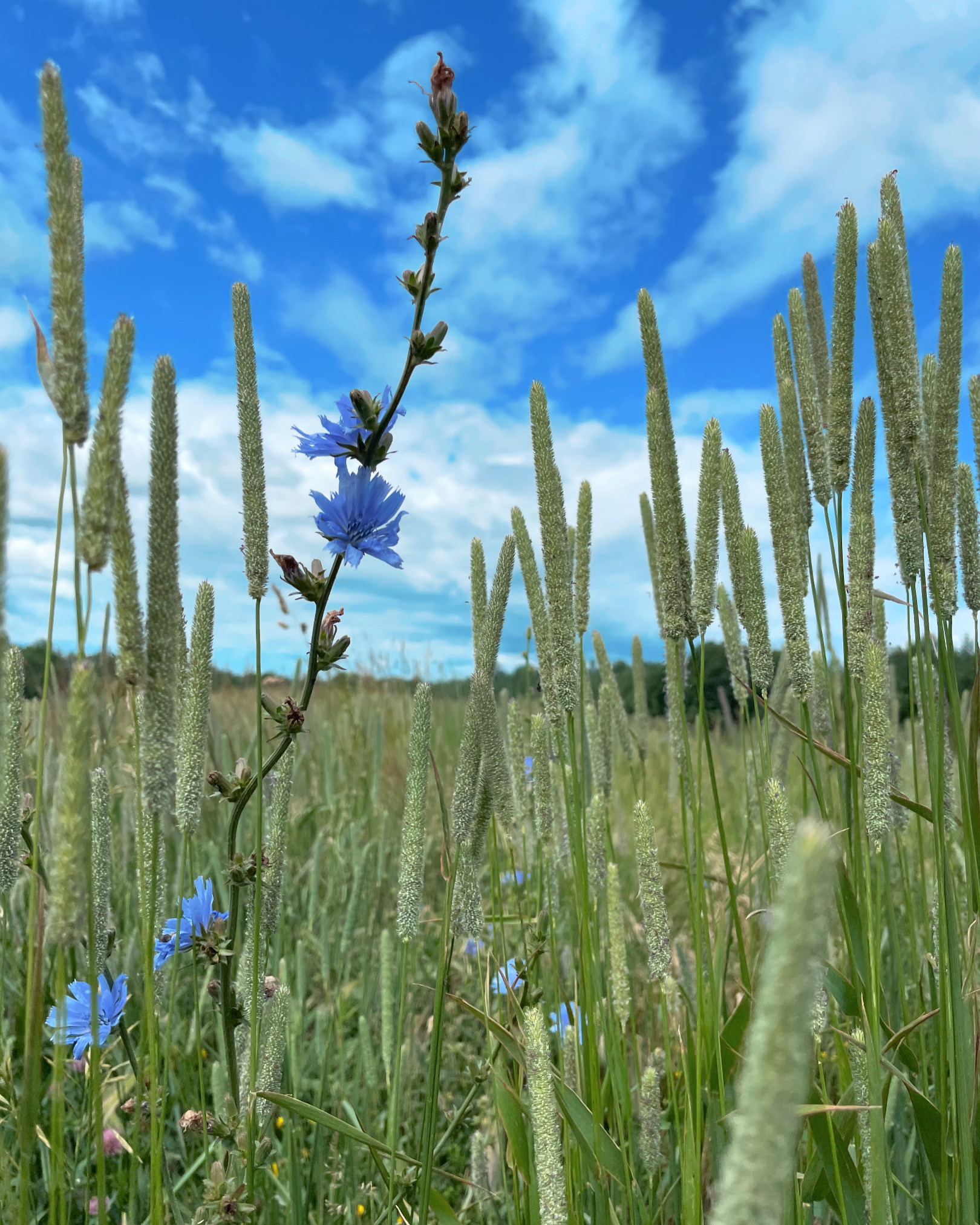
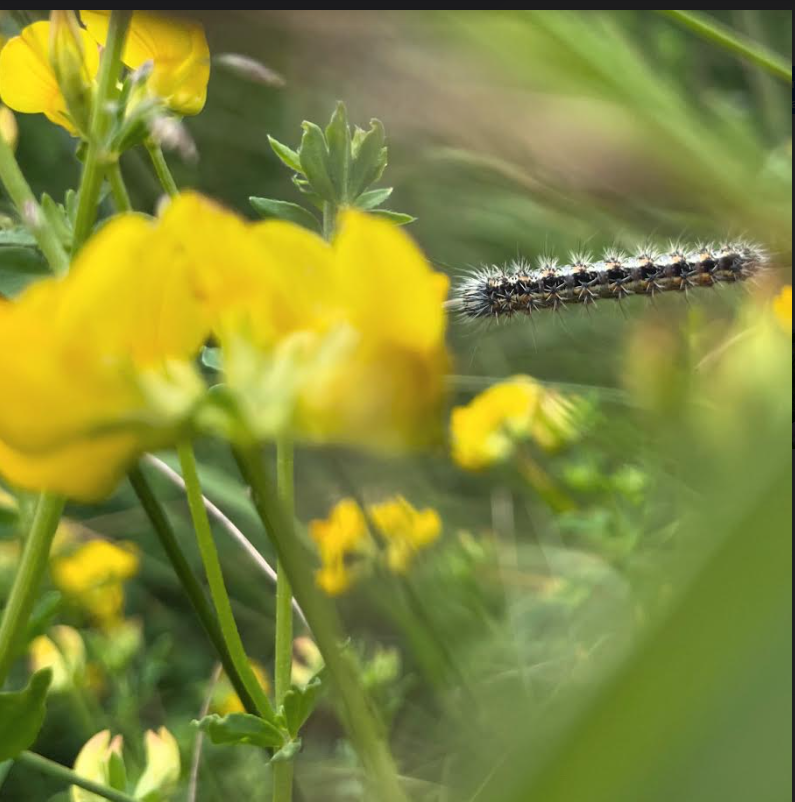
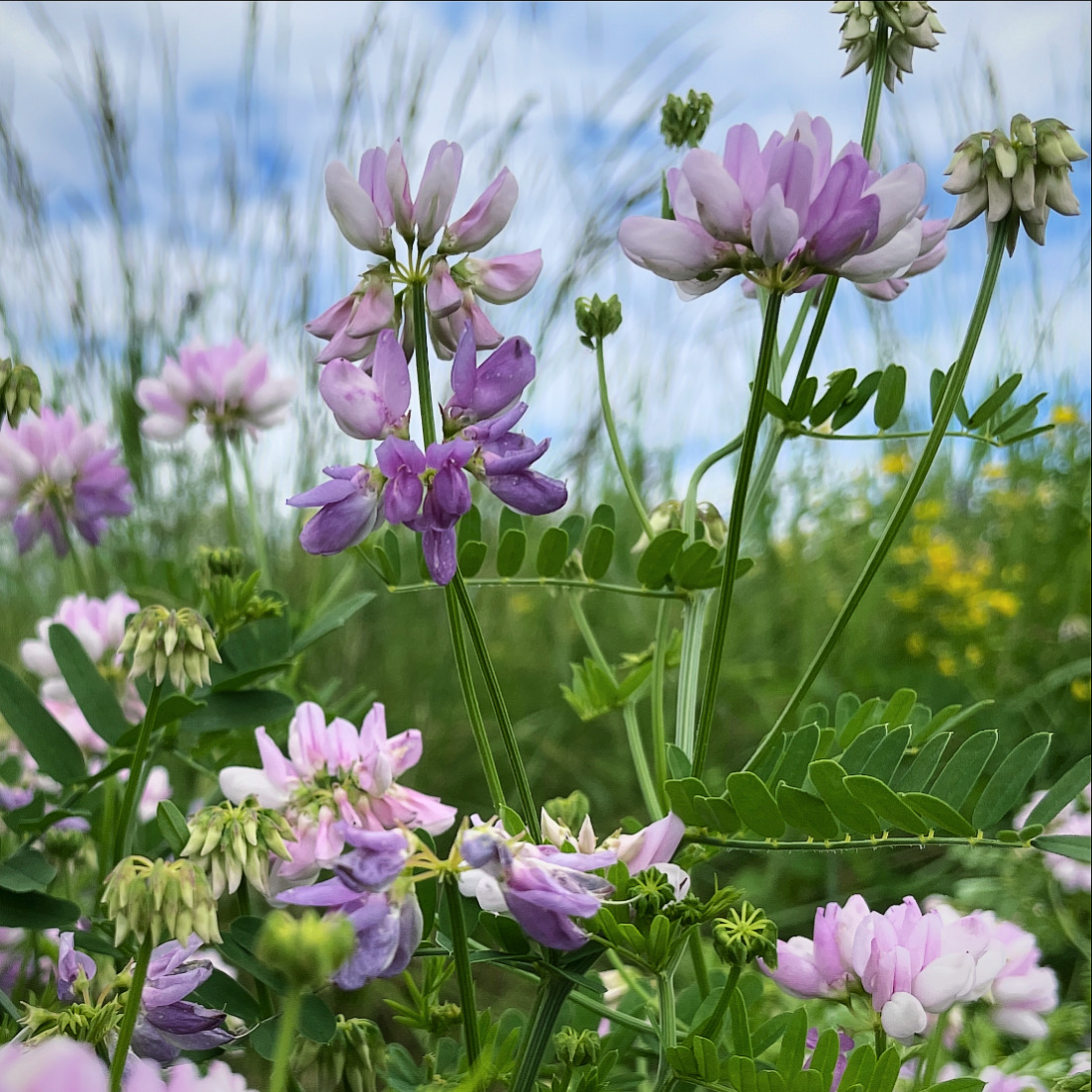
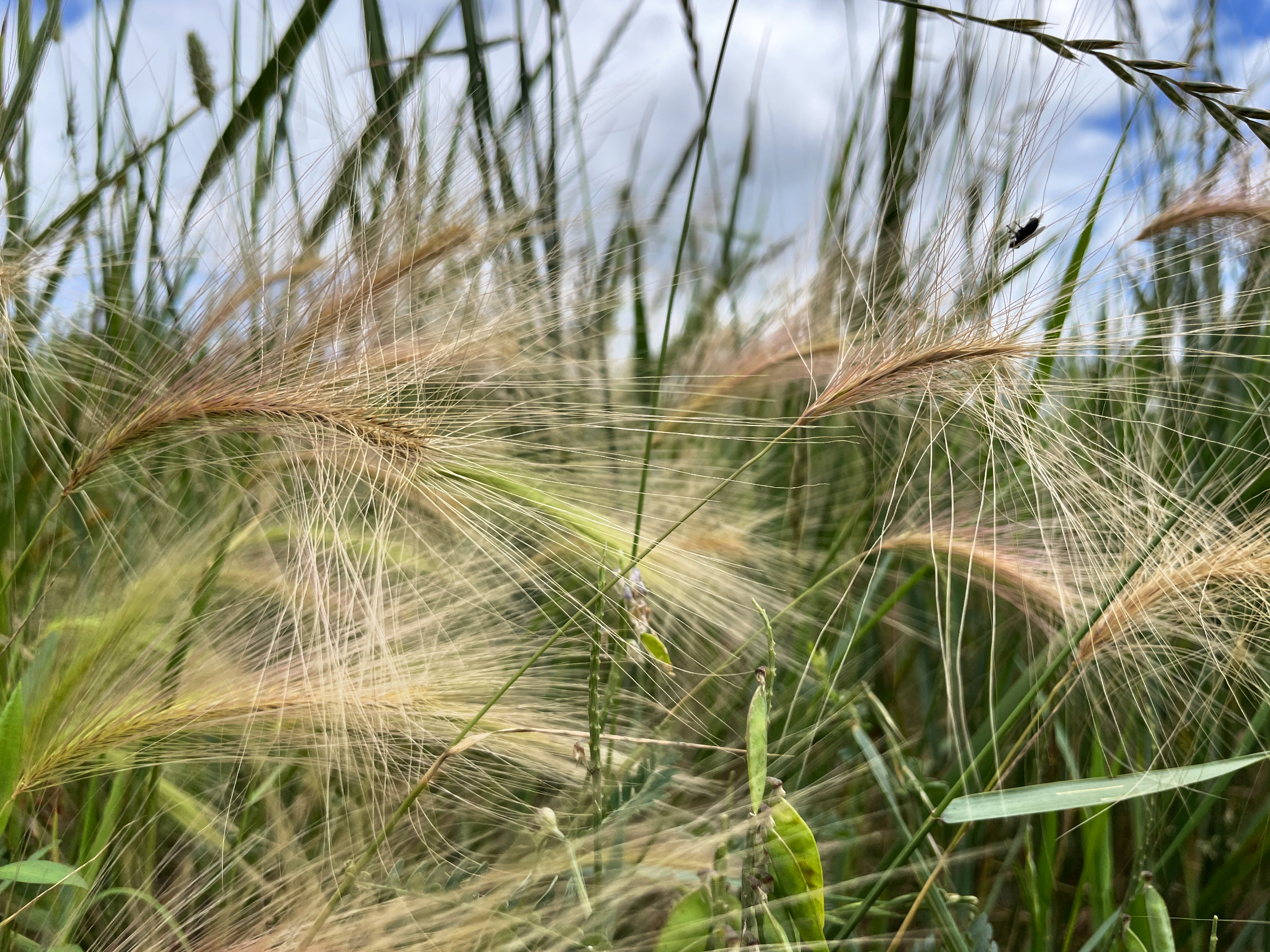
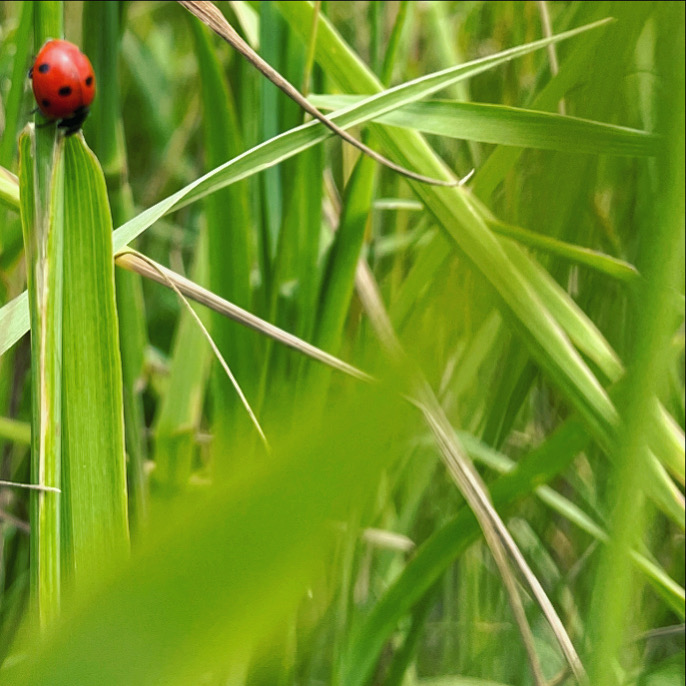
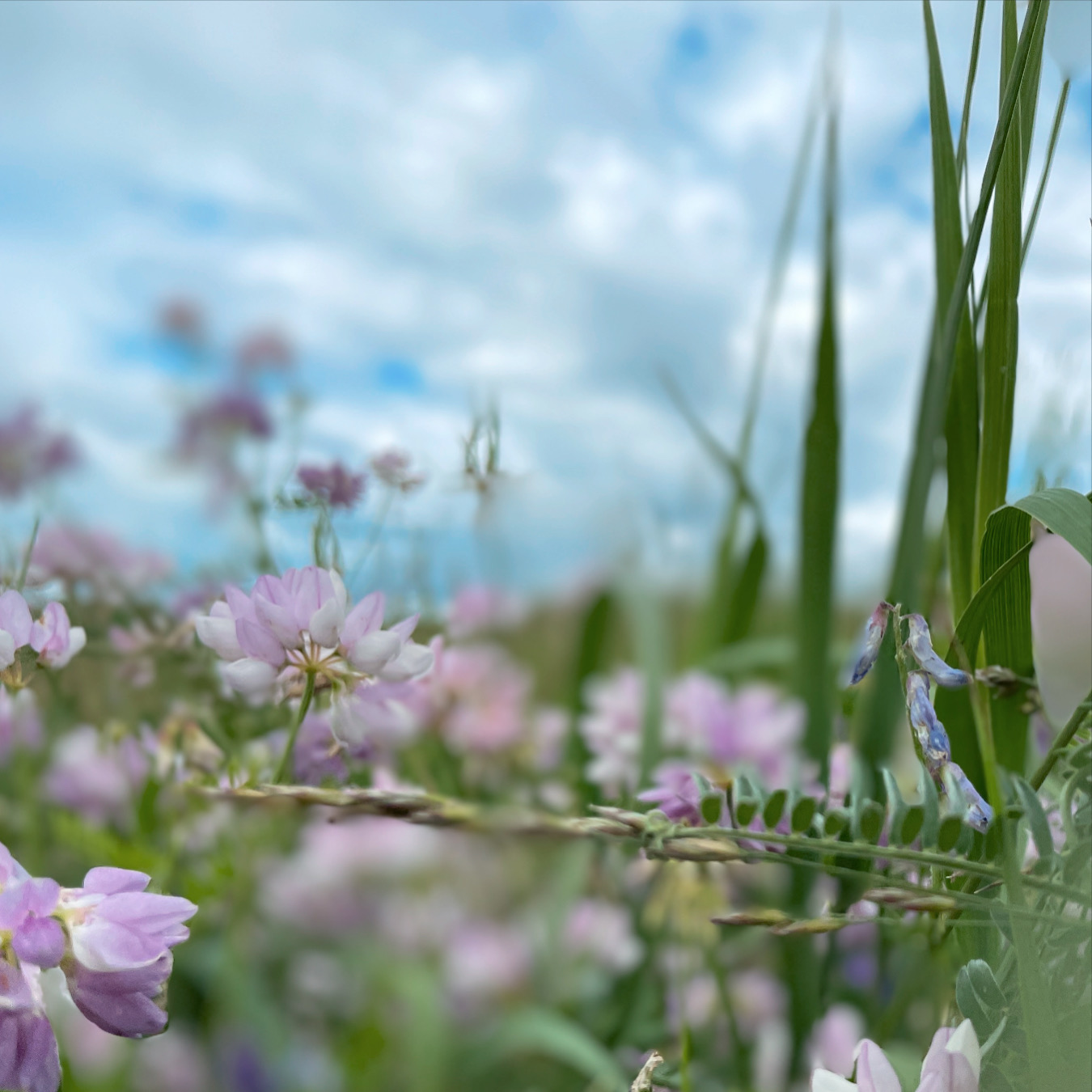
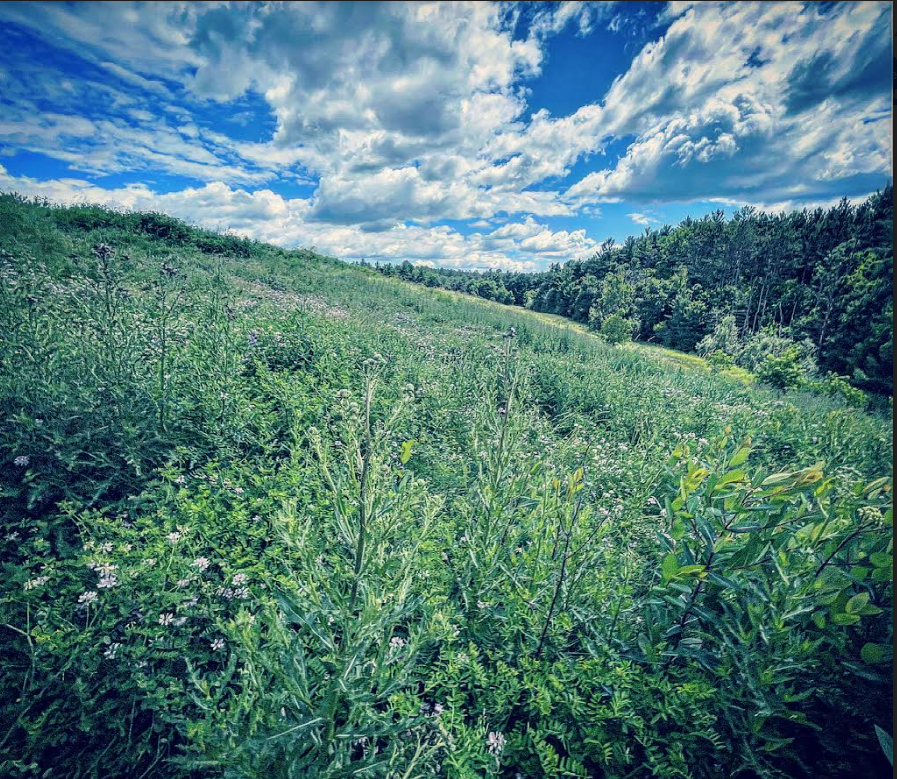
There is the sky and the clouds, a long and straight passageway below, beside a hill. It’s dark and shaded but not so much that one can’t see. Wind visits and makes the branches to sway back and forth. Previous storms have strewn leaves and branches around on the earth. Back and back, far and far, the largest mushroom waits untouched and unknown on a broken tree surrounded by reeds tall and then still. Just outside the trees is the open place, and on the feral summer growths are butterflies, spiders, and dragonflies. There are ants and grasshoppers. Blooms yellow, blue, and the open air is cleansing, refreshing. A pastoral scene. What is beyond the end of that place, where there is no passageway and the trees, the shrubs and chaparral become too thick? What would William Golding or Joseph Conrad think of that place? In the winter the snow is like infinite tiny crystals or other-worldly grains of sands. Agate, chaga, a large snake looks at me. Kundalini symbol and sign. I pause and it goes away at which point I look to the sky. I want to understand the clouds. I vaguely remember dreams of the night where I was in the desert and walked to a city at night with metropolitan lights and infrastructure and populace. But I wanted to go back to the desert. I couldn’t remember the rest. Something runs in the tall grasses. Fast. Determined. Magical. I see clover, bee, ladybug. Whitman wrote, -You road I enter and look around, I believe you are not all that is here, I believe much unseen is also here.- Whitman only travelled far and far once, to Canada, to visit his friend a doctor interested in consciousness. I breathe as deeply as possible. I’d say there is a bird but there is no bird then. But the clouds are enough. They are something, colloquially speaking…they are really something then beautifully bloated, numerous, each a little different and content in their difference. The clouds are confident then.
People on the roads and in the gardens

People on the roads and in the gardens.

Sunny bunnies eyes, hands, sounds of whispers of people, plants, wind. Sheaves. State institutions. And in every way so rich. Fresh buns, honey, clean water, hot morning coffee, cold morning dew, evening clean air, morning bells of hemingways, evening prayers and excitement: suddenly someone will hear, suddenly someone is still in heaven.

The abundance of grass, the variety of fire, the rain, the light, the mud of the roads, the nonsense of the neighbors, the flights of birds, the scent of flowers, the black circles under the eyes and the minibuses1* are not adapted to happiness.

 - I don't know what to do now ... -  the woman despaired.
- Everything will change tomorrow! - her husband's hope.
- When I grow up, I will not become an adult? - whether it is hope or despair of the child.

Hotel room for one person.

The address of the former. Lover's phone. Despair. Tears of silence.
Little boy with a toy in his hand and hope in his heart. Kindergarten with painted wallpaper. Kindergarten is like a garden. Eyes, like beetles, and want to fly, like Exupery. The mother finally comes to the nursery after a long working day and takes the child home. The guard nods disapprovingly. The mother pretends not to notice. The country pretends not to notice. The guard finally falls asleep quietly on the post. The robbers finally wake up calmly and take up their criminal post.

Taxi again ...
Apology of good and mythology of evil. Three dots. Question mark. Two for punctuation. Four for content. Three2* for the essay. The teacher puts his hand over the journal with grades and for a moment...

A woman sings an aria of a virgin at the opera house, as if she were in fact a virgin. And the night club, which is not so far from here, is about to close due to someone's vandalism and - law enforcement officers, and above them - someone else and - someone else, according to the hierarchy.

A cup of tears, drunk with a trembling grandfather's eye.
Firecrackers under the window.
The final stop - the cottage.
Curves. Hands, their intersection. Plexus of bodies.
Animal bodies. Kitten, bunny, piglet, puppy, duckling, baby. Well, just grace! And still - forcemeat in the city market.

Umbrella instead of blue sky, grayness instead of self.
Abyuz underfoot, comet tails, space rockets.
Movies after ten in the evening, when the younger sister finally went to bed. Sometimes she's really mad.

The afterlife of my grandmother's village.
Chocolate Santa Claus, who remained in the refrigerator from the New Year holidays and miraculously survived.
The face of untruth. The face of the grass.

Walt Whitman, Charlie Chaplain, Uncle Misha from a kiosk on the next street.
Bookshelf of the spirit.
Perfume associations.

A birthday present, and a huge cake (and cousin's complaints about low wages).
Burning. Giants. Giant mountains. Giant people. Mountain people. And somewhere nearby - stone ceilings of misunderstandings, Easter eggs of complaints, easels of cries, dwarfs of humiliation - as soon as it is tolerated.

"New songs are always reminiscent of ...". Key: "Delete message".
Stars above your head, a dream of space, grass, roadsides, a smile on your face - and we are on the way to a fairy tale, but it's time to grow up.

In short, it is impossible to convey this feeling of a home that no longer exists ...

 This is a reprint from "minor literatures"

* 1. Here in the sense «Marshrutka» (Ukrainian: маршру́тка) or routed taxicab, is a form of public transportation such as share taxi which originated in the USSR and is still present in Russia and other countries of CIS, in Baltic states, Ukraine, Armenia, Georgia, Turkmenistan as well as in the territories outside of ex-USSR, such as Bulgaria. The role of the modern marshrutka is theoretically similar to the share taxi, which uses minibuses in some other countries. The first marshrutka was introduced in Moscow, Russia, in 1938.

* 2.  Unsatisfactory score with 12-point school system of Ukraine.
A precious man

The nights and the days come and go without a smile
The days are so big without a smile
The nights are a waiting for a call or a message
It is so expensive this time away from your eyes.
You are my precious pearl..
A diamond hide in the mud..
Waiting the time to hug you and kiss you.
You are my treasure hidden from the sun
Waiting the day I meet you again..
Waiting your look..
Waiting your lips..
You are my precious pearl hidden in the oyster deep in the sea.
You are my precious man.


You,

the face I did not see for years

You,

You are the most amazing human being
But i cannot touch

You,
The beauty is hiding in  small pieces in your body and mind...

You,
I can explain why
But i know my what...

You,
That one day  you crossed my path
  Forces of love or passion touched me
Without reason...

I am looking the east
You are looking the west

Miracles happens every day


You,
A passion I can live in a privately moment

Love I give
Love will never be understood

You,
In an another space of galaxy

You,
My ideal
My secret
Garden

You,
The moments I never had

You
The distance between two countries
A bridge i will try to build to reach you


Good night poem

What a caterpillar maybe call the end
A butterfly call it the beginning of a beautiful journey...

The stars are so far but we can see the lights
And feel their heat

As i am thinking of you
Days and nights are together

No distance
Only sun
Only Moon

And for once they are together
In this beautiful sky

Thinking of you
The days

Think about you
My heart
My body
My soul
Wake up
And
Dance in a circle

Imagine u are here
Imagine u are close to me

Imagine our life starts
This is my wish
My prayer

As you are my hope
My inspiration
In those long years of loneliness...


❤️💐💐💐

Love poem

Your smile...

I dream a future with you

I dream a blue sky

Sunset to a an island

I dream a white house

And have a view to the sea

I dream a future close to you..

And i get a bad dream

Sleeping alone

Feeling weak

But in my heart

i am not alone because i feel your heart beat

I feel your breath


EVA Petropoulou Lianou
Multi Awarded Author children literary
Official candidate for Nobel Peace prize
Greece
THE SUN AND MAMMOTHS


The sun was shining three days ago.
Today it is raining and people in Copenhagen
are drinking Spanish wine.

A thousand years ago, the sun was shining
and mammoths lived on Earth.
I never ate mammoth meat, but I drank
Spanish wine often.

Cortes once conquered Mexico.
The sun is needed for corn to grow.
Just like rain. Mr. Jensen carefully
observes the sky and the stars.

Old Sputniks fall into the oceans.
(You need to sleep at least six hours…)

This is a beautiful poem, isn't it?


CARP


Roses and tulips are a favorite topic
of poets. Or mysterious cats.
And of course, love after the sunset.
Teleportation to Venus is also very
popular.

My uncle never wrote poetry.
He drank vodka every day
and told me about fights in dirty
restaurants. He was always
authentic.

They killed him once
at a pond.
There were carp in this pond,
which we ate
every Christmas.


WELLS


Life is (incredibly) interesting sometimes.
Potatoes can be eaten with mushroom
sauce.
Friends & lovers are smiling traitors.

That's why we have great literature.

In case of war, there are basements
and concrete shelters.

I've never seen an angel.
However, the devils hid in black wells.
Not bad.
It is shock-free, i.e. neutral.


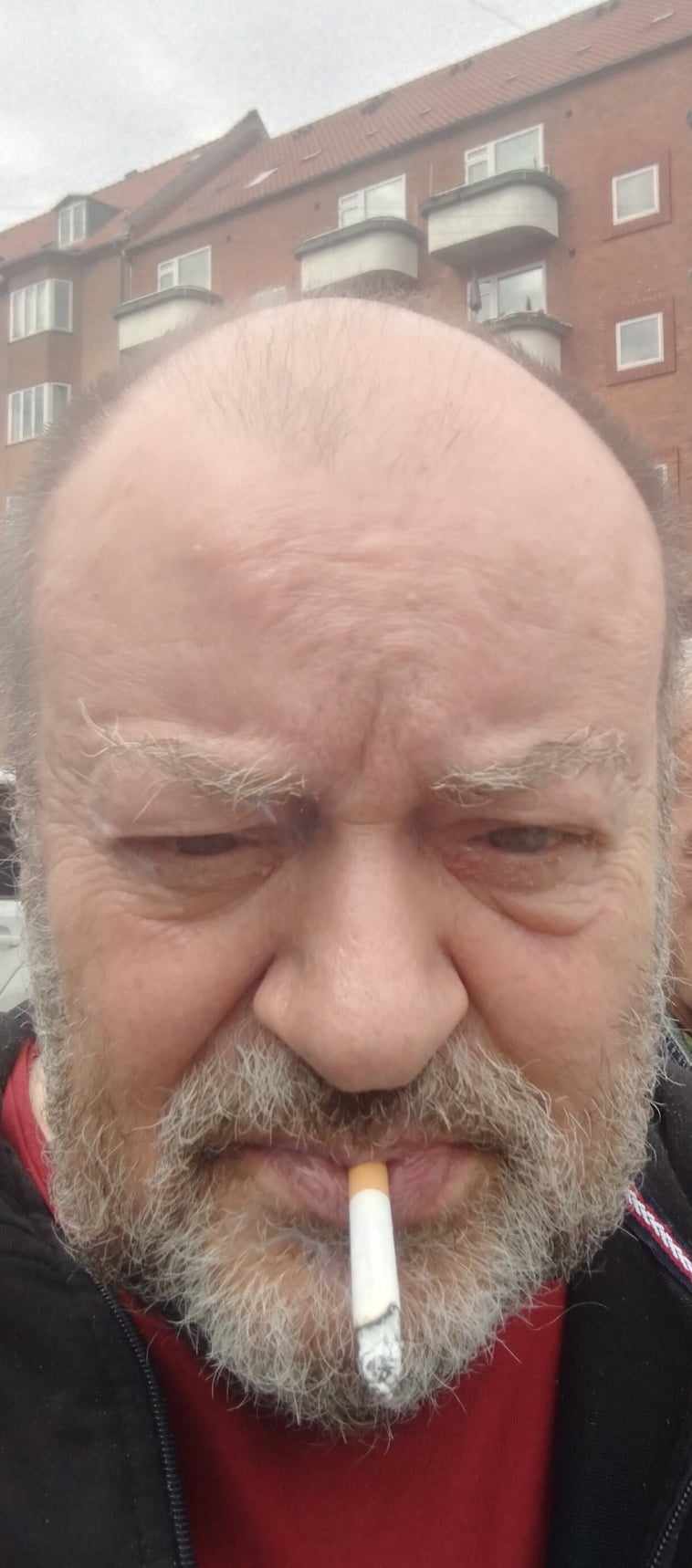
Grzegorz Wróblewski was born in 1962 in Gdańsk and grew up in Warsaw. Since 1985 he has been living in Copenhagen. English translations of his work are available in Our Flying Objects (trans. Joel Leonard Katz, Rod Mengham, Malcolm Sinclair, Adam Zdrodowski, Equipage, 2007), A Marzipan Factory (trans. Adam Zdrodowski, Otoliths, 2010), Kopenhaga (trans. Piotr Gwiazda, Zephyr Press, 2013), Let's Go Back to the Mainland (trans. Agnieszka Pokojska, Červená Barva Press, 2014), Zero Visibility (trans. Piotr Gwiazda, Phoneme Media, 2017), Dear Beloved Humans (trans. Piotr Gwiazda, Lavender/Dialogos Books, 2023), I Really Like Lovers of Poetry (trans. Grzegorz Wróblewski & Marcus Silcock Slease, Červená Barva Press, 2024), Tatami in Kyoto (Literary Waves Publishing, 2024). Asemic writing book Shanty Town (Post-Asemic Press, 2022).
We and Our Game

A game I play
Is your cheerful clappings.
Happiness I treasure
Is your smile.
My childhood art
Is your first craft.
We are one
Holding hands
Before we cross the roads.
Rose carpet decorates
The steps that climb
The difficulty hill, full of spirit.
We exchanged letters
And our handwritings matched.
Your city,
Is my tunnel to suburb vacation.
We cross ways like arrows
And take a target shot of life.
The game we play
Isn't a whistling wind
But the rope mesh of ladder
Of this nascent paradise
That we are still building
Despite all the odds.

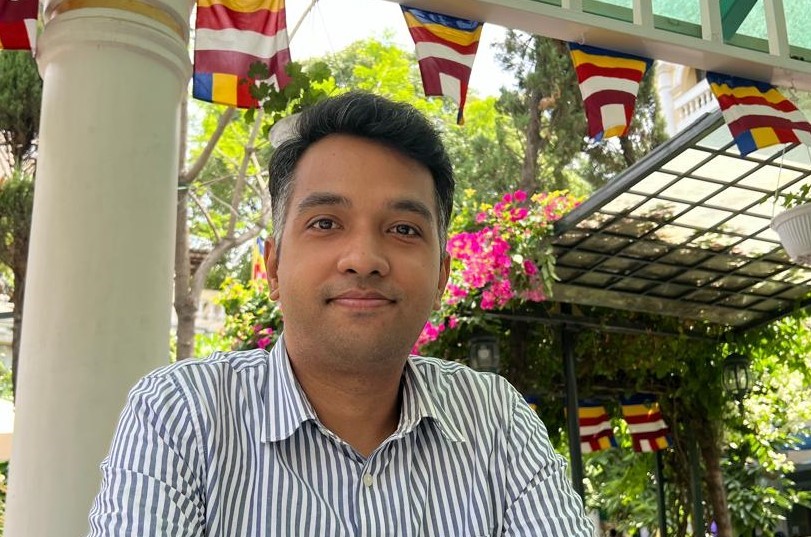
Sushant Thapa (born on 26th February, 1993) is an award-winning poet from Biratnagar, Nepal who holds Master’s degree in English literature from Jawaharlal Nehru University in New Delhi, India. He has published five books of English poetry, namely: The Poetic Burden and Other Poems (Published in New Delhi, 2020), Abstraction and Other Poems (UK, 2021), Minutes of Merit (Kolkata, 2021), Love’s Cradle (New York, USA and Senegal, Africa, 2023)
and Spontaneity: A New Name of Rhyme (New Delhi, 2023). His sixth book is ready, and about to go to the press. Sushant works as a lecturer of English in Biratnagar, Nepal. He is also the assistant editor of Himalaya Diary, an online portal published from Kathmandu.
We wish a very happy Father’s Day to everyone who will celebrate this month! Creativity is an act of fathering, of providing, protecting, nurturing, and raising, as much as birthing works.
Also, at the request of many contributors, we are sharing ways writers and artists can lend a hand to different places in the world.
Literary Ways to Help Ukraine
Engin Program, Online English-speaking conversation partners for Ukrainian youth
Z.I. Mahmud explicates how Zeffirelli’s film adaptation of Romeo and Juliet captures the violent and tumultuous atmosphere of the romance. Shuhratova Shaxina praises the clarity of feeling in the writings of Alexander Feinberg as Prasannakumar Dalai illuminates strong, plaintive bursts of feelings of romance and lament.
David Sapp recollects a childhood crush and his mother’s early rebellion against gender roles. Jacques Fleury rebels against the racism and class prejudice against marginalized writers. Aziza Saparbaeva takes pride in her home village and how the people fought for freedom, and Muntasir Mamun Kiron offers up an elegy for the bold warriors who founded Bangladesh.
Ibrahimov Saidakbar outlines the historical accomplishments of Uzbek writer Gafur Ghulam as Zeboxon Akmalova speaks to children’s education and the potential of children and Sadoquat Begamova talks about methods for education of visually impaired young people. Sharipov Ubaydullojon outlines the basics of German linguistics, Narzulloyeva Munisa Bakhromovna highlights the good parts of the Internet but offers a caution against obsession, and Zamira Hakimova explores the etymological roots of the terms Uzbeks use to talk about financial processes as Mamatazimov Kabiljon outlines principles of mechanical safety for workers in industrial plants.
Gulsanam Qurbonova writes about finding the motivation to achieve one’s goals as Amir Hamza describes a lonely boy who rises to the occasion to save lives. Bruce Roberts reflects on the artistic self-assertion embodied in Michelangelo’s David as Xidirova Mahliyo offers a patriotic celebration of her country. Christopher Bernard’s riddle poem invites speculation while drawing on history and myth as Alan Catlin confabulates historical and artistic images into poetry.
Mark Young concocts images combining text and different sorts of shapes, lines, and colors for visual effect as J.D. Nelson links words together into fragmentary monostich poems. Brian Le Lay plays with sound and thought in hay (na) kus that seem bilingual or trans-lingual.
Gregg Norman’s poetic speaker grapples with weather, with what humans cannot control. Graciela Noemi Villaverde’s poem explores feelings of waiting and watching, for the return of hope or a lover. Faleeha Hassan compares writers’ block to the abandonment of a lover. Elmaya Jabbarova evokes the mystery, wonder, and unpredictability of love and happiness. Dr. Jernail S. Anand illuminates how much our world is beyond humans’ influence as John Grey contributes humorous reflections on being stuck, staying or escaping with your mind. Hatamova Charos poetically longs for chamomile and the cities of Oman that are lost to her.
Kathleen Hulser speculates on matter remaining as it transforms, suggesting that it is okay to declutter and let go of things. Sushama Kasbekar looks at an old tea set to comment on the constant flow of time and on enjoying what you have while you can. Audrija Paul reflects on the tragedy of love and life nearly lost while Taylor Dibbert reminds us that life after tragedy can be strangely uneventful.
Susie Gharib captures the world-weariness of 2020, full of war and disease, as Mykyta Ryzhykh highlights the world’s tender questions and contradictions and J.J. Campbell recollects a search for love amidst the brutality of those who should have cared for him. For Joan McNerney, the “world is too much with us,” too tiring, scary, and complex, and she finds comfort in the mysteries of nature. Jasmina Rahmatullayeva explores the psychology underlying acts of criminal violence, Dr. Jernail S. Anand laments the selfishness in too many people’s love, and Bill Tope’s protagonist realizes as an adult that his childhood friend was being abused.
Michaila Oberhoffer explores the role social conditioning plays in our emotions in her book The Roots of John’s Happiness. Irodaxon Ibragimova speculates on where we can find happiness and offers gratitude for it. Azimjon Toshpulatov’s hopeful poem asserts that she will find joy one day.
Rachel Gorman-Cooper explores our primal hungers as Jim Meirose provides a humorous take on humans’ deciding everything by committee. Nahyean Taronno begins a horror tale where humans must work together to overcome primal fears and escape the threat of the unknown.
Brian Barbeito idly speculates on life on a horse ranch as Isabel Gomes de Diego sends up photographs of direct encounters with nature and Kylian Cubilla Gomes highlights the subtle and obvious ways we work with and regulate nature. Munnavar Boltayeva urges us to save the environment as Zulfiqurova Muslima discusses pollution of the Aral Sea and the need for restoration and O’razaliyeva Charos revels in the joy of the spring. Terry Trowbridge plays with syntax enough to restore a feeling of wonder at nature.
Duane Vorhees talks about sensual Southern European love, nature, politics and beach life. Norman J. Olson reminisces on a recent European cruise he took with his wife that inspired poetry and sketches. Easa Hossain remembers the green farmland of his home village with nostalgia. Shafkat Aziz Hajam shares regrets over lost love as Daniel De Culla visits a museum exhibit on dinosaurs and speculates on the ghosts in Spain’s past.
Allison Grayhurst offers a tribute to her mother, a very slow, gentle, realistic take on death and caregiving, accompanied by a photo of the sky on each of her mother’s last days. Yuldashev Jumanazar Muradjanovich relates a tale of love that lasts until death while Bill Tope explicates how war can break up families and the extent we can go for love.
Awodele Habeeb claims that the devil and death will not have the final word as Michael Robinson takes comfort in faith and forgiveness. Lidia Popa comments on how humans throughout time have turned to faith to process our feelings about death.
Sandy Rochelle calls us to let go and rest and let life carry us on the winds of change as Michael Stewart gives gentle encouragement to rest, let life take its course. Michelle Reale speaks to an intuitive and spiritual relationship between a father and daughter as Kristy Raines revels in wonder at the tenderness of love. Mesfakus Salahin rests content in an eternal love as Mirta Liliana Ramirez depicts a moment of passion made possible because people trust and feel safe with each other. Dr. Maheshwar Das finds tender joy in faith and birdsong as Anindya Pal offers a sensual tale of rain and love and Don Bormon meditates on the soft and gentle promise of sunrise.
Dilnoza Xusanova highlights the example of compassion inAhmed Lutfiy Kazanchi’snovel Stepmother.Mukhammadova Mushtaryibegim Otabekovna praises the value and high calling of motherhood. Yuldasheva Xadichaxon’s essay explicates true friendship as Makhzuna Habibova’s poem reflects the exquisite emotions of love and Sevinch Nusratullayevna praises the virtue of kindness. Nigar Nurulla Khalilova rejoices in a love that has overcome major obstacles and stood the test of time. Maja Milojkovic urges people to turn towards caring for each other, starting with gentle inner attitudes. Mahbub Alam celebrates the community and joy created by the Muslim feast and festival of Eid as Nosirova Gavhar remembers an afternoon where she baked and enjoyed mint pie with her mom and grandmother and Muslima Murodova speaks to the healing power of bread cooked with a family’s love.
Thank you for your kindness and consideration in reading our publication. We invite you to leave words of encouragement for the authors and artists.