
My tongue that entered my ear as lullaby,
My valiant tongue in the bosom of the ages,
I will write you every moment,
My blood, my language, oh, my motherland.

Come strolling, meaning my language,
Always sing like a nightingale my tongue,
He has the spirit of Navoi, he has Babur,
Let every dialect be beautiful, my language.

Every word has a hundred meanings in my mother tongue,
Every flame is a fire in every heart,
Everything ripples in this language,
Endless treasure, legend in my tongue.

This is my language, which the whole world respects.
This is my language, inherited from my ancestors.


Abdunazarova Khushroy was born on December 21, 2008. She is 15 years old. Currently, she is a pupil of 8th grade of the 15th DIUM of Mingbulak district, Namangan region. She is interested in English and Mathematics. She wants to become a interpreter in the future. And also she is a member of the international organization "All India Council for Technical skill development".
Category Archives: CHAOS
Essay from Z.I. Mahmud
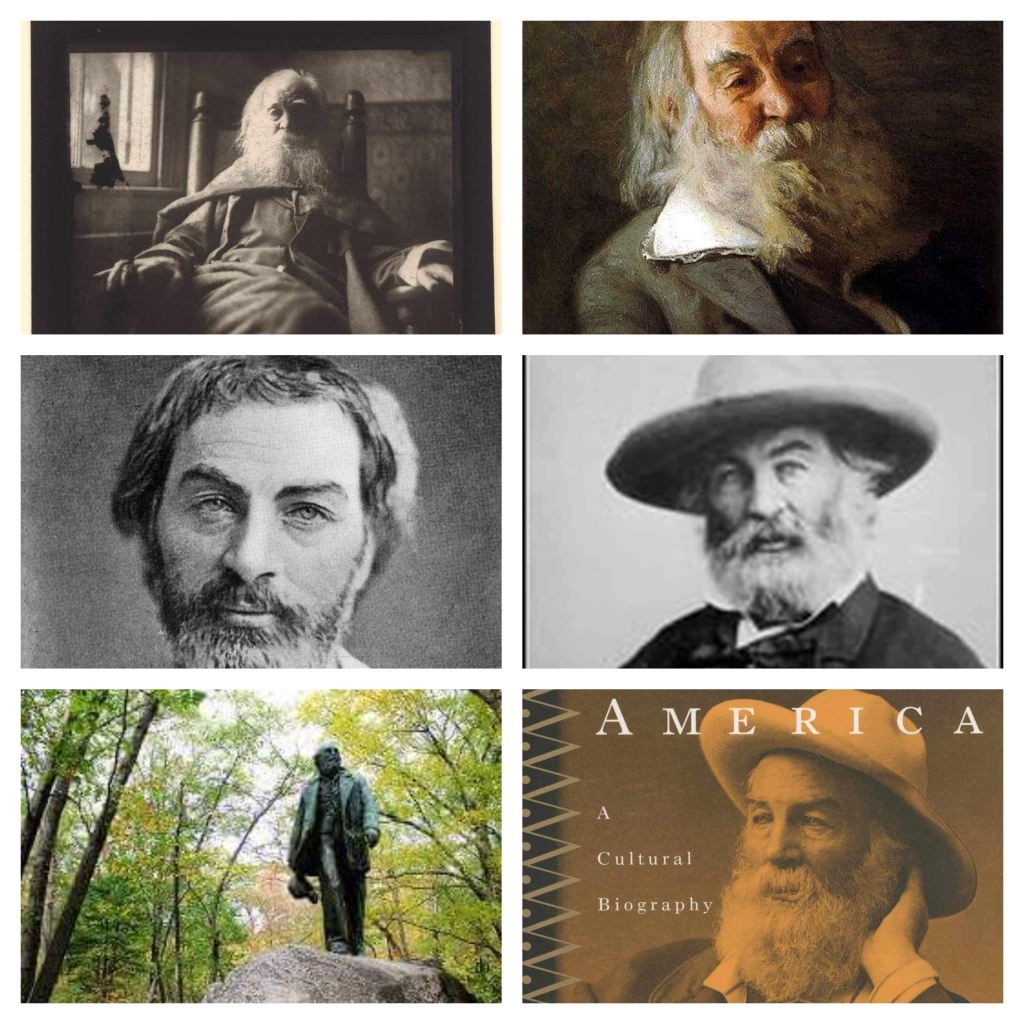
Written in memory of President Abraham Lincoln, to whom the poem refers as the captain of the ship of state by the master of Lincolnian verses. “O Captain! My Captain!” have parallel readings in analogy to “When Lilacs Last in the Dooryard Bloom’d” as transcendental poems by Poet of the Civil War, Walt Whitman. Grieving the lamentable bereavement of President Abraham Lincoln in contextualizing the universal implications of spatiotemporality as if there was the endowment of everyman’s elegiac dirge-like hymnal observance in the commemorative spirit of the cultural imagination.
Lincoln’s death is absorbed and re-coded as an extended metaphor, a projection of the speaker’s imaginative fantasy relating the objective historicity of memorial. “My Captain” is not only a term of endearment and loyalty, but a claim upon the person in correspondence to the solidarity and camaraderie of brethrenship in contrast with the acknowledgement and celebration of death as the end of all suffering that is especially true when considering “When Lilacs Last in the Dooryard Bloom’d”: the poem transports readers from a trinity of stimuli; that reminds the speaker’s of Lincoln’s heartless and inhumane cessation of life as observable in Lilacs newly bloom’d; “the great star early dropped in the Western sky in the night” and the “ever-returning spring” to the memory of Lincoln’s funeral procession “the coffin that slowly passes” on which the speaker leaves a “sprig of lilacs” … “but, praised! Praised! Praised!“ / “For the sure unwinding arms of cold enfolding death”. Social phenomena are encountered and absorbed as a kind of inseparable hyperconsciousness as apparently evidenced in the anthology Leaves of Grass .
The Lincoln poems are instances of the presidential death by assassination that resonates within the speaker’s mind whether in the crisp and condensed epitaph “This Dust Was Once The Man” or the deep languid reverberations of “But O heart! heart! Heart!” / “O the bleeding drops of red,”/ “Where on the deck my captain lies,” / “Fallen cold and dead.” […] “It is some dream that on the deck”/ “You’ve fallen cold and dead” […] “But I with mournful tread,”/ “Walk the deck my Captain lies,”/ “Fallen cold and dead.” Whitman’s elegies re-enacts and aestheticizes the mourning process; they revel in the lush subjectivity of the speaker as emphases of the stanza revelations manifest through floral laurel wreaths: “For you bouquets and ribbon’d wreaths—- For you the shores’ a -crowding” / “For you, they call the swaying mass, their eager faces turning.”
Walt Whitman finds the stature of Abraham Lincoln to be visionary, practical, prophetic, messianic and shrewdly realistic; Lincoln in Whitmanian perspectives was the poetic Shakespearean exhibited in both private and public affairs; Americanness symbolic of the roughs and beards, space and ruggedness and nonchalance literally anti dandified but prairie stamped character. “O Captain! My Captain!” is a rhetorical statement of the paradox involved in the president’s dying in the consecration and veneration of the brave heartedness and heroism. The Captain is also the speaker’s father as noted here: “Here Captain! dear father!/ This arm beneath your head! It is some dream that on the deck/ You’ve fallen cold and dead.” The figure of Lincoln shone over brighter despite the tragic incompleteness of his achievements: “Exult O shores, and ring O bells!/ But I with mournful treads, / Walk the deck my Captain lies,/ Fallen cold and dead.”
Walt Whitman’s transformation was grandiose and loftier in shifting and changing from the poet of the body to the poet of the soul, thus becoming poet of internationalism and cosmic from intense nationalism. This is crystal clear in the eloquence of the gratified poetic personality of Whitmanian spirit: […] “no more smart sayings, scornful criticisms or harsh comments upon persons or events, or private and public affairs […] never attempt puns or play upon words or utter sarcastic comments.” Passage to India foreshadows Walt Whitman’s fusion of traditional and philosophical speculations, contemplative reflections and poignant meditative perspectives of spiritual being in temporality towards immortality. “Divine efforts of the heroes and their ideas faithfully lived upon” symbolize Columbus as major figure within the allegorical symbolic background reading contextualizing the completion of the Union Pacific Railroad in May 1869 and the idea of the mystic passage of the soul to India. In addition to these scientific accomplishments including the Suez Canal connecting Europe to Asia and the Transatlantic Cable. Material and spiritual fulfillment prophetically revealed through “Passage to India” cloaked by the awkward enterprises of captains, engineers, explorers, voyagers, and scientists; and the mystification of the poet laureate merging with the Christian spirit: “Nature and man shall b disjoin’d and diffus’d no more/ The true son of God shall absolutely fuse them.”
Walt Whitman’s verbal melody and pictorial picturesqueness quintessentially enshrines the poetic aesthetics enfolded by the traditional and orthodox organic form and structure of art-nature analogy in “Passage to India!” . The passage literally refers to tangible reality of the transcendental American revolutionary achievements of scientific progress including the transcontinental railroad, the transatlantic cable and the Suez Canal while the surface metaphoricity of the cloaked textuality engraves the embodiment of enlightenment illuminative of labyrinthine alleyways from the discovery of knowledge to the advent of faith and spirituality as proclaimed by the declamatory phrases from the perspectives of the authorial viewpoint that dispels mysteries and enigmas of explorers, adventurers, voyagers and expeditionists.
Walt Whitman’s “Passage to India!” is a metamorphoses that occurs by the transposition, superimposition, transportation and transformation and/or flowing from descension to ascension through the cyclical flow of thoughts and feelings in the allegory of the biblical genesis of human individuals mounting to their deity in supplication of salvation and atonement. Organic evolution follows this metamorphoses towards meaning and effect between the continuum of changing and shifting. Form the point of view of multifaceted visages of poet, biologist and astronomer, God divines the cosmic power of celestial order with effulgence of phosphorescence to light, water, fountain and emotional tranquility. Crowning voyage of the individual returning to the soul paves the restoration of the younger kinsman melting in the fondness of the elderly sibling for the sake of death as comradeship fulfilling in itself. Pulse-like radiations of energy animate the poetic world of spiritual reality. Changing, shifting and evolving nature of life comes into perspective through the cycles of renewal within the pulse-like radiation. “Bathe me O God in thee […] seas of God” resonates the streams of Gangetic and Indus basins and their affluents; thoughts move like waters flowing in analogy with the rivulets running throughout literary history and cultural memory. In other words, projections of specificity in the historical trajectories implicate the spirits of the succumbing explorers descending and sinking down the slopes.
“Down from the gardens of Asia, descending radiating/
Adam and Eve appear, then their myriad progeny after them,/
Wandering, yearning and curious with restless explorations,/
With questionings, baffled, formless, feverish with never happy hearts,/
With that sad, incessant refrain, Wherefore O unsatisfied soul?, and whither I mocking life?”
Fortunate fall shrewdly points to the Biblical genesis referencing the allusive nature of allegorical transcendentalist humanity heralded by the spirit and matter. In this sense, frustration, despair, disillusionment, void, melancholia are implicated as inevitable premise of hybris in individualism. “Columbus walking in footlights in some great scena” notes Whitman of “[t]he sunset splendour of chivalry declining” to “misfortunes, culminatos[…] dejection, poverty and death.” Rediscovery of the Orientalists through “ascending body and spirit mounting to heaven” reinforces “the towers of fables immortally fashioned from mortal dreams.” Richard Chase in Walt Whitman Reconsidered has examined the relinquishment of poetry and the upholding of speech-making or oratorical quality as exemplified by the critical passage:
“The musing, humorous, paradoxically indolent but unprecedentedly energetic satyrs poets of the 1850s becomes the large, bland, gray personage with the vague light blue eyes and circumambient beard. Dionysius becomes not Apollonian but positively Hellenistic—prematurely old age, […] soothsaying, spiritually universalized. The deft and flexible wit disappears along with the contrarieties and disparities which once produced it. The pathos, once so moving when the poet contemplated the disintegration of the soul or felt the loss which all living things know, is now generalized out into a vague perception of the universal.”
Further Reading
Scott Borchert’s Lincolniana, “Southwest Review” Volume 100, No. 1, pp. 12-21, Southern Methodist University
Stanley K. Coffman Jr’s [University of Oklahoma, Norman] Form and Meaning in Whitman’s “Passage to India”, PMLA, June 1955, Volume. 70, No. 3, pp. 337-349, Modern Language Association Press.
Arthur Golden’s [ City College City University of New York] Passage to Lesser than India: Structure and Meaning in Whitman’s “Passage to India”, PMLA, October 1973, Volume. 88, No. 5, pp. 1095-1103, Modern Language Association
David Daiches’s Lincoln and Whitman, Johrbuch for Amerikastudien, 1996, pp. 15-28
Poetry from Duane Vorhees
VOLCANO
Nowdawn. When this
grayed welldone sky
resumes to rare,
and – sudden flare! —
awakes my wife’s
night-dormant kiss.
SOLSTICES
(after Hwang Jini)
Take one half the night
of the shortest winter day
and wrap it in your arms,
a prudent negligee
to unfold one brief summer night
when you hold me in your arms.
WE GAMBLERS OF FATE ARE PLAYED BY THE JUGGLERS OF TIME
The silence of echoes is too loud to hear.
The excess deer were culled
before the hunt was closed.
We race toward that precipice we screened ourselves from.
Lazarus’ miracle
just delayed the dust.
We are partners of the same condition.
Though odds up and fall
our lots have been tossed.
The future always lies to us, but so does the past.
You get the apple
filling – You get the crust.
Paths twist and twist no matter which we pick.
You get the pedestal–
and You get the bust.
Rivers have many tributaries but only one result.
You get the sadist’s fuel,
You the holocaust.
JOINT MANEUVERS
Di dandles her tea like any grande dame
and she handles her whiskey as well
as a man.
I was a sergeant in the cavaliers.
I prized my targets
and my bandoleer,
my spurs
and my plume.
A chest of medals occupied
my room, none claimed in battle.
Di was a waitress.
She wanted to stop pretending princess
rise top.
and to the
One with ambition seeks one with regret.
“To starve the kitchen, feed a cook’s credit.”
One day when marching my tattoos
and flutes,
my eyes kept watching Di’s
bonnet and boots.
My parade dismissed,
this hungry soldier,
Sir Knight on a quest,
double-timed over to where she still stood.
As fierce
and as free
as fire from a woods,
Di saluted me
with crisp precision.
I saluted her back
stiff at attention–
never felt the flac
exploding
inside.
The wounded man
wed the ambushing bride.
And I never fled
the combat that came.
My new purple heart
marked my
rise to fame
and Di’s
state of art.
As I rose in rank it was her mission
to protect my flank and her position.
One with ambition
needs
one with regret.
“To starve the kitchen, feed a cook’s credit.”
Di’s deft riding crop
urges her stallion to boldly gallop
beyond battalions.
BELLY/MIND
Sponge draws, stone withstands
inspiration rains.
A formlessness hides
undiscovered forms;
imagination
is the belly’s mind.
Stars reign in darkness.
To pay heaven court,
astronomer’s scope
always magnifies
observatories.
But when the mind fasts,
it’s inspiration
that’s the mind’s belly.
Palaces empty
without their nobles —
poor indeed are those
whose poems outnumber
their inspirations
…
Poetry from Graciela Noemi Villaverde

WOMEN

A shining sphere emerges
Flags moved by a breath
It comes from the roots,
From that wind with which we were born,

There in paradise
Perfect crowning for our geometry,
Adamantine, constellated, urgent
More tenacious than anger
Woman who breaks like a mirror
Against the heart of an invisible sun,

And you bloom chewing the tide...
So satiated with dreams that there is no art more tender than yours
Shadows, abandonments, and prodigious love
They form your grace.
Harmonious, flexible, firm woman,
With silences followed by pure acts
Today I revere what I am…WE ARE.
WOMEN


GRACIELA NOEMI VILLAVERDE is a writer and poet from Concepción del Uruguay (Entre Rios) Argentina, based in Buenos Aires She graduated in letters and is the author of seven books of poetry, awarded several times worldwide. She works as the World Manager of Educational and Social Projects of the Hispanic World Union of Writers.

She's the UHE World Honorary President of the same institution Activa de la Sade, Argentine Society of Writers. Commissioner of honor in the executive cabinet IN THE EDUCATIONAL AND SOCIAL RELATIONS DIVISION, of the UNACCC SOUTH AMERICA ARGENTINA CHAPTER.
Essay from Malika Oydinova

Annotation: Since the emergence of online learning, there has been a discussion on whether online classes are better than traditional classes. At the moment many competing schools of thought are coming up with valid arguments for and against both. Both traditional and online learning comes with advantages and disadvantages. This article discusses the real potential of online vs traditional classes while analyzing both in more detail.

Key words: physical movement, traditional education, online classes, save time, efficiency.

In the fast-paced world we live in, learning has become the main goal. Because by acquiring knowledge, a person’s worldview and knowledge potential expand, and they become useful and necessary personnel in the future. Opportunities in the education system created on a global scale are beneficial for all students, and they have been presenting their effective achievements in various directions as a positive response to the changes in the education system and the technological enrichment of the system. In addition, today, traditional and remote methods of teaching are applied to students and are being used in practice.

There are many conveniences and advantages to traditional education, as we all know. One of the main achievements of the traditional education system is that it ensures the quality of knowledge. For example, in traditional education, it is easier to acquire skills to understand the reading system, because the topic taught by the teacher is quickly remembered by the student when he receives it face-to-face. In this situation, the teacher’s tone of voice, strength of voice, duration of physical movement, and eye contact (in English, “eye contact”) reach our brain as a strong signal and, together with the above, are imprinted in our memory.

In traditional education, students can easily exchange ideas with each other and learn to express their thoughts fully and fluently in front of many people. They have the opportunity to work with them in groups, create various projects, and gain new knowledge in the process of communicating with others. Despite the achievements and efficiency mentioned above, this teaching method also has shortcomings. For example, in traditional education, admission is effective, but this method creates a “memory school” in our country.

That is, the student tries to remember more of the knowledge given by the teacher; it is far from independent educational activities. In this education, unlike the distance system, financing also plays a role, and it requires additional funds and time in addition to the tuition fee. The education system is not lagging behind in the age of technology.

There are many advantages to distance education, which has been introduced into the education system of Uzbekistan in the last 3 years and is familiar to all of us. In particular, it saves our time; that is, it does not require special time to go to the educational institution. In addition, we can choose the time of education through the online study method and not only study but also work.

Distance education also has economic advantages. Online classes are slightly cheaper than offline classes. Many enterprises in the world reduce their expenses and increase their income several times through this method. With this method of education, you will be able to study in the area of your choice. That is, you can study at foreign universities or schools while living in Uzbekistan.

The advantage of distance education is that it directs the student toward independent learning—not memorization but learning through thinking. COVID-19, which took over the whole world at one time, also affected the education system of Uzbekistan. During the pandemic, schools and universities switched to online education. As you know, this was news for everyone and brought with it a number of difficulties. In many remote areas, there are problems such as low internet speed, paying an additional price for its use, not having enough of the necessary equipment and students not knowing how to use it, not being able to attend classes on time, and being distracted during the class. We have also witnessed cases where the effectiveness of knowledge drops due to the teacher’s inability to establish a good relationship with the student.

Many students are distrustful of the distance education method; they cannot fully receive the information given by the teacher due to poor internet connections, and this causes unacceptability. The most important thing is to get a quality and effective education. There are several reforms that are being made to increase this efficiency.

Including the following comments of our respected president Shavkat Mirziyoyev about education, they are proof of our words: ”Education is our future, a matter of life and death.” Therefore, we have no right to delay reforms in this field. “No matter how complicated it is, we need to lay the foundations of school education firmly today.” To sum up, what kind of knowledge to get depends on us, our desire, and our diligence, be it traditional or remote.

For some, traditional education is preferable; for others, distance education Students can choose the type of education they want based on their skills. Regardless of the educational method, the most important thing is to become a strong and useful staff and create more reforms in the education system that will be beneficial and effective for the future generation.

 LIST OF REFERENCES:
1.https://fayllar.org
2.https://www.samdu.uz

              Oydinova Malika Najmiddin qizi
                                                                                                          Uzbekistan State World Languages University
                                                                                                          of English faculty of Foreign Languages and Literature
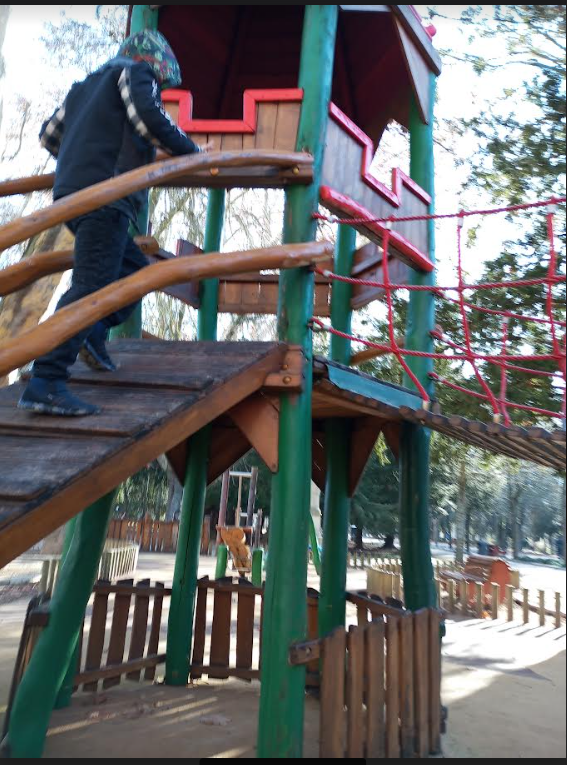
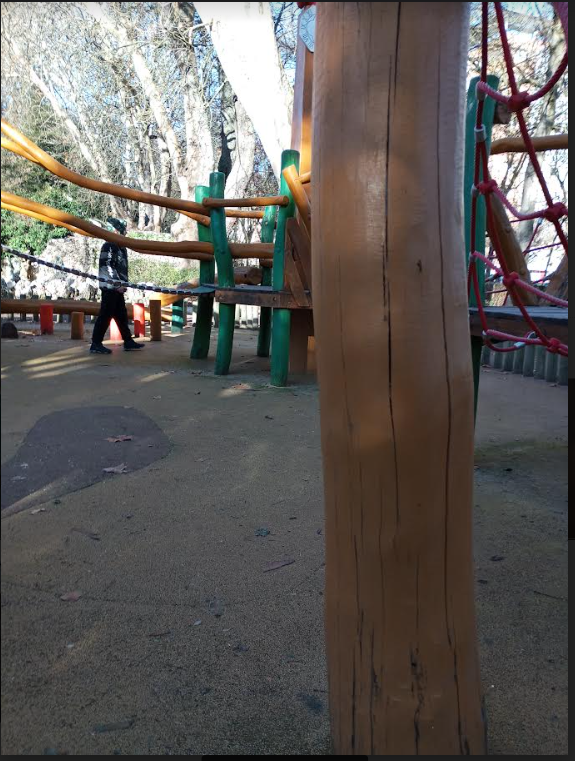
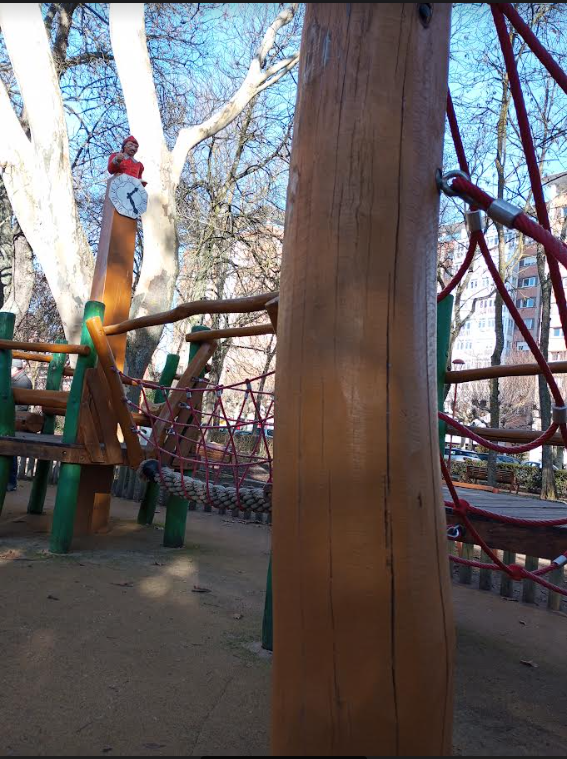
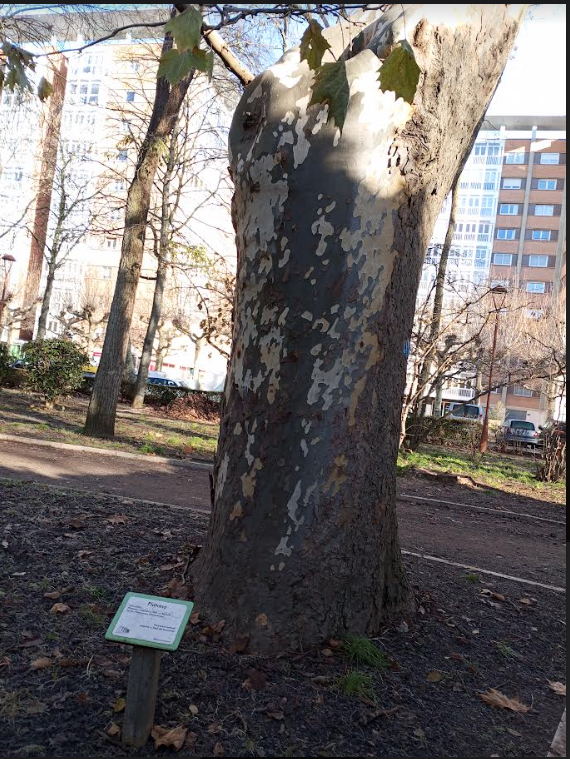
Photos from Isabel Gomez de Diego

Poetry from Susie Gharib
Bubbles

I see through bubbles that are blown everywhere.
Some are protestations of undying love,
others, a screen
between the public and their leaders.

Some journey towards afflicted regions,
but burst before they reach their destinations.

Some are a kaleidoscope
of a happy childhood,
which is no longer available.

Some evoke an ocean
that is now at enmity
with its immediate neighbors.

Some are a display of historic arrogance
that will be the plight
of every nation.

Some are at variance
with their own ingredients,
so turn against themselves
in a hysteric self-annihilation.

Some perform the Danse Macabre
and foretell the transience of the human species.


An Eye Contact

Two hours after midnight,
a pair of fluttering stars
that steadily looks me in the eye,
shortsighted as I am,
has finally established an eye contact.

The thread of light that now ties
my irises to their flickering white
is my daily exit from Hades.

I do not need to climb a ladder to reach the skies
or to fly an extraterrestrial spacecraft,
I mount my own eyesight.

I was born into so many wars

I was born into so many wars, I pause
with shortness of breath
that has nothing to do with respiratory throes,
but with Fear
that was injected into my system
during my earliest years.

I was only four when the 1967-war
violently shook my cardiac chords.
Lightning and thunder became a metaphor
for the fireworks
of Israeli bombardments of land and ports.

Then came the 1973-raids
on the harbor which was only yards away
from our street which filled with tanks,
military trucks,
and soldiers with helmets.
Shell-shocked, I was launched into my teens.

Before I became eighteen,
a civil war bequeathed numerous assassinations
and odd forms of sectarianisms.

2011 was the ominous date,
heralding rockets,
displacement,
and an everlasting siege
that brought inflation and darkness in its wake.

And now I am sixty years of age.
I find myself in the grip of a War
that has shattered my dreams
of a long-lasting peace.


The Massacre of Penguin Chicks

I was in Sydney in the early nineteen-nineties
when I first heard of people who endanger their lives,
clinging to the masts of massive ships,
to hinder the pollution of soil, air, and seas.

Those activists are trouble-makers
in the eyes of legislators,
merely for attempting to save our planet
and its endangered species.

With my TV screen recently gone out,
having been electrocuted by a surcharge of electricity,
I now read the news instead of watching it,
which spares me a lot of psychological harm
and lingering grief.

These recent events sound apocalyptic
but not Biblical to me;
however, our globe is being destroyed
with Luciferian zeal.
Emperor penguin chicks are the latest martyrs.
In thousands, they have drowned
or frozen to death
because the sea-ice melted beneath them
before they could develop the waterproof feathers
which would enable them to swim.
The executioner is global warming.

Millions of people have been dying in stoppable wars
and nobody gives a damn,
so who would care about the demise of penguin chicks?

I once heard a conspiracy theorist speak of preparations,
to inhabit another space,
once planet earth has ceased to exist.
Such a flight to a new paradise must cost billions,
but should I get it free -
please excuse such a daydream -
I would not want to board one of their spaceships,
because the journey would nauseate me.
I would rather perish here.