Essay from Zara Miller, author of the YA novel I Am Cecilia

HERO VS. VILLAINS

“Honestly, the closest I can think of them, as well made as they are, with actors doing the best they can under the circumstances, is theme parks. It isn’t the cinema of human beings trying to convey emotional, psychological experiences to another human being.”

So, Martin Scorcese compares Marvel movies to theme parks. And honestly, what a mood.

True, this isn´t exactly the newsworthy material, Ricky Gervais discussed Scorcese´s top-notch diss of superhero culture movies during his monologue at the 2020 Golden Globe Awards.

But it recently popped up in my recommended videos because the Youtube algorithm works in mysterious ways and got to thinking – is it just about shallow screenwriting and the allure of cheap CGI action, the mindless fun?

And I realized that the problem of Marvel storytelling runs even deeper than the genius director conveyed to us out loud – that it heavily influenced the type of novels we get to read – and it´s not exactly Marvel´s fault … Not entirely.

ONE-DIMENSIONAL CHARACTERS

One-dimensional characters or flat characters do not change or grow from the start of the story to the end. Their purpose is to highlight the main character, to be a plot device, or a tool, and they typically are simpletons with a one point of view on life – they only see one dimension – hence one-dimensional characters, hold a simple and small perspective about life or the situation in the story. Their character is often used as a literary device to keep the narrative moving – many times when the script has written itself into a corner, or the writer has run out of effective ways to move the plot forward.

Now, Marvel, from the three-hundred and seventy-two movies total from which I´ve seen eighteen, does not suffer from one-dimensional characters on the hero side of the story. All the good guys go through trauma, they learn, they grow, they develop new opinions (ehm-ehm- some of them).

Marvel has been criticized for sucking at writing an effective villain but the problem is not the villains, the problem is the root of the Marvel storytelling – the good guys are good and the bad guys are bad.

One would think that they would take their own advice and write all the villains the way Loki is written – which is the reason (not the only one, yeah, Tom Hiddleston is awesome and all that) why audiences flock to him so much. He has a strong motivation, he´s smart and his character is a rainbow of personalities – just like a regular human being, which makes him likable and most importantly, relatable.

But Marvel is not the inventor of one-dimensional characters.

William Shakespeare is.

Benvolio from Romeo and Juliet, Gertrude from Hamlet, Shylock from The Merchant of Venice very effective plot devices with one stubborn character feature that poses an obstacle to the protagonist.

However, Shakespeare didn´t have Hollywood studios behind him to balance out the lack of personalities in his stories with raging beam in the sky and generic CGI armies. To give a complete experience to audiences, he had to support the narrative by creating strong protagonists, interesting antagonists, and villains with complex personalities (Lady Macbeth, Hamlet, Portia). And when you do that, your story not only allows for the one-dimensional character to make sense, it makes it even more immersive and realistic – because we all know that one blank person who is just sort of … there. Existing, with one opinion on all the debatable, morally grey, complicated stuff we deal with in life.

And that´s why people will never have such a raging allergy if a Marvel movie turns out bad and will keep watching them and paying for the next one and the next one and the next one.

Low stakes, low damage.

Now compare that to a show heavily driven by character development where there are no villains and heroes like the Game of Thrones. 

Feel like re-watching it? No? Me neither. And no one can blame us. That show became un-rewatchable due to replacing the complexity of the human heart with a hero vs. villain storytelling and adding some explosive Marvel-type action as the final lethal, cyanide-like icing on the cake. 

IN BOOKS

All the teenage apocalyptic series. Thank you for your time, good night.

….

I really didn´t want to get into this but there is no better example than the popular doomsday book series where children hunt each other in a world that no longer resembles a rational society. And they gave us all the subsequent movie franchises in which those very same teenagers are at least twenty-six years old, of course.

However, there is a silver lining on the horizon in a form of Shadow and Bone. I´ve never read the books but the popular fantasy book series The Grisha has been picked up by Netflix and the first book has been adapted in a form of a limited TV series.

And if the source material is as strong as the adaptation, we might just be plunging out of the lazy storytelling brought about by the likes of Twilight and 50 Shades of Grey.

DOES I AM CECILIA DO BETTER THAN THAT?

Cecilia used to think that being born to a small fortune, accompanied by chrysanthemums on the way from the hospital and surrounded by exploding fanfares of affection, would set her up for a never-ending life of lottery wins, parades without rain, and smooth slides on the slopes of adoration. She never realized how slippery that slope of adoration was. Maybe money was not the root of all evil. Family dysfunction was. 

An Excerpt from I am Cecilia by Zara Miller

As promised last time in the first article, I would reveal a little bit behind the story and the inspiration behind writing this YA novel.

The hero vs. villain in the Marvel movies is something that was always on my mind and tried to avoid during writing. Blurring the lines in the protagonist/antagonist/villain/anti-hero characterization. Not just because it´s a lot of fun but because it makes for a rich experience.

When you find yourself disliking the hero yet rooting for them anyway, or loving the villain yet understanding that they have to be stopped – the writer is probably doing it right.
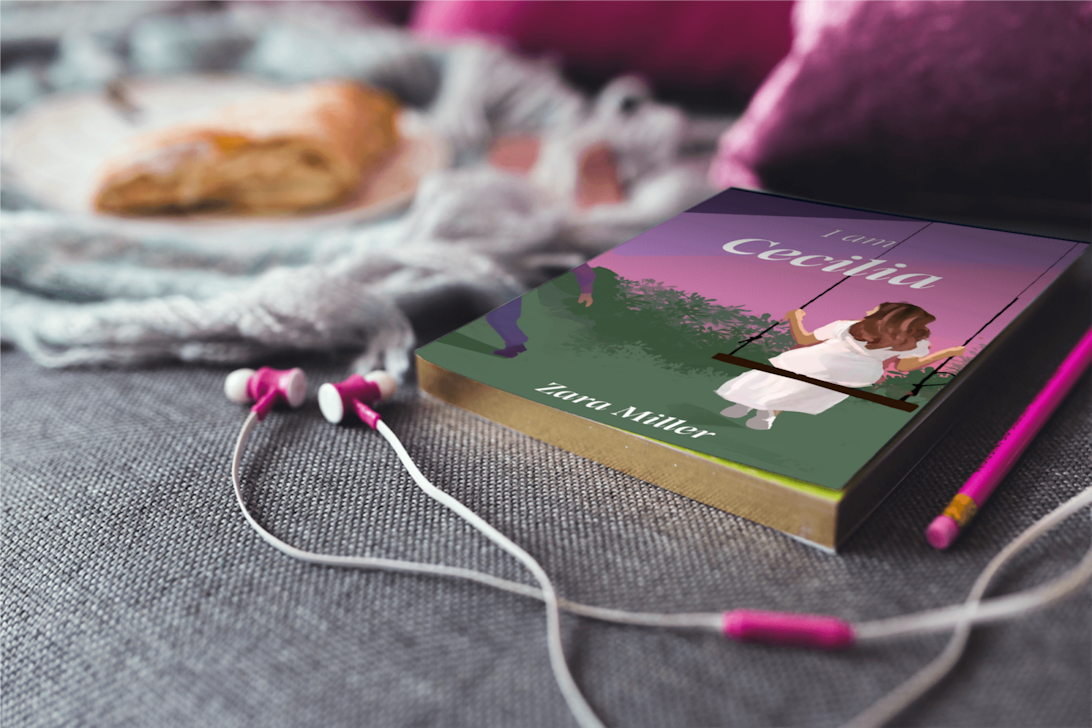
I am Cecilia is now available on Amazon: https://www.amazon.com/I-am-Cecilia-Zara-Miller-ebook/dp/B094519D7T/ref

You can follow me on Instagram @zaramiller_author, or on LinkedIn under Zara Miller for more news and swoon-worthy fiction content. Looking forward to meeting you all!

Poetry from Chimezie Ihekuna

C- Caring is a good Character
R-Resilience is the path to actualizing Recognition
I- Information is Important
S-Sense speaks Sanity
T-Truth is Thorough
I-Initiating an idea is an innovative Inevitable
T-Teaching is Technical
I-Introduction makes understandable a subject Interest
N-Nature is the observed Norm
A-Appreciation encourages Accountability


D-Defining your purpose is a life Decision
E- Encouragement is also useful to Empowerment
P-Purpose leads to Profoundness
T-Training people is a part part advancement's Totality
U-Unity is Unbiased
L-Love Subtly resist the power of Lies
A-Availability is the engine room to Advancement.

Poetry from Jerry Durick

Pills

I ‘ve become a pile of pills

standing up here

waiting for my refills

I remember my grandmother

and her pills

they seemed endless to me

back then

“do you need your pills”

“did you take your pills”

they’d say and she’d obey

put them in her mouth with

a sip or two of water

her last days were like that and

I was too young to know what

that is like, couldn’t imagine

myself this old

passing my time waiting in line

for more pills for the pile of pills I have become.


Winners or Losers

Perhaps it’s a roll of the dice

Or a coin flip

Or one of those childhood games

Rock, paper, scissors,

But somehow, we end up winners

And/or losers.

It’s hard to tell where it comes from.

Perhaps it’s written in the stars

Or in the lines crisscrossing our palms

The Ouija Board or tarot cards.

Too often it seems like the luck of the draw

Some of us win, others lose.

I remember being given a book about

Andrew Carnegie to read.

Back then they thought that role models

Like that would move us along

Especially those of us who seemed to be moving

Off in the wrong direction.

Needless to say it didn’t work, but I still have

The book somewhere

Gathering dust in some pile of my lost projects

The millions I was going to make, the books

I was going to write, and all my inventions,

Inventions that never quite worked. All this must have been written in the stars.


Hiding Places

What happens when you lose

Your hiding places

And you must

After all these years

Move things, things you piled up

Put aside for another day

Sure you would need them

Use them

Two of this, two of that

Things you barely remember

Half empty, half full

Hiding away until now

And now you reach in

Reach over

Pull things out and try

To think of what you can do

There’s the rubbish of course

Or other places

New hiding places to set them aside

Again

Prizes you can accumulate against need

Against an uncertain future

Hiding places you won’t have to face

For years or

Maybe you’ll never have to do this

Again.


J. K. Durick is a retired writing teacher and online writing tutor. His recent poems have appeared in Literary Yard, Black Coffee Review, Literary Heist, Synchronized ChaosMadswirl, Journal of Expressive Writing and Highland Park Poetry.

Poetry from Sheila Henry

Blue Stain

Slavery was abolished in America almost 200 years ago
but the system refuses to relinquish a sad history
binding young black men as they remain prey
and are locked up in a system to perform free labor
blue mood cops the modern day crackers
the new age slave hunters to capture them.

They clip black wrists in handcuffs
the updated version of chains once
used to shackle down the slaves 
for transport on market days
now they fill prison cells to work for
masters whose guns are trained 
on their backs just in case they should run.

The traffic stop a gold mine to capture new blood
a broken taillight, a freshener on the rearview mirror
tinted windows will get a white male a ticket or warning
will get a black male maimed, killed or imprisoned
driving while black/brown the underlying crime.

I can hear their deceitful voices in my quiet mind
thirsty cops wanting to get their
fix of blood on their hands excited
to get their bragging rights and to pump
their chests ‘I got another nigger today’, they boast
laughing at their conquests.

Stop resisting they shout while punching
and kicking a responsive body to pain.
How can one not move receiving such an assault to
one’s body and with punches to one’s face and head?

What a bunch of evil men are Chauvin and his kind 
may their souls cry out from the heat that awaits them
when they meet their master—grateful for all the
blood they’ve collected for him through the merciless 
killings they performed on black livesafter all these years reminding us againthat unfortunately black lives just don’t matter. 
They say reform of tactics is needed for the bad seeds, 
but how about reforming the entire broken structure and adding
some empathy to go along with that please?

The cry “Black Lives Matter” not a threat to a nation
is actually a cry for respect, compassion, empathy
it’s to spotlight the cruelty and inequity
placed on a group of people seeking to overcome
the knee on their necks to get the same treatment
as everyone else.


Sheila’s writing style can best be categorized as Visual Poetry, blending emotion and vision into a poem or story of color. Her poems and short stories are featured at Spillwords Publications, Literary Yard,  Sweety Cat  Press Anthology, I, The Writer, and Youtube Poetica2 series, cafelitmagazine.uk and Clarendon House Publications  Anthology Poetica 2 and 3.

Synchronized Chaos May 2021: Cultivating Thoughts

Image by Marina Shemesh

First, a few announcements: We’re co-hosting a free Mother’s Day poetry reading through Los Angeles’ Chevalier’s Books on May 3rd at 7pm Pacific time. Come out to support an independent bookstore and hear liz gonzalez, bridgette bianca, Gail Newman and Lynne Thompson.

Please sign up here for the Zoom link.

Also, our longtime contributor, poet and essayist Michael Robinson, who writes about his life as a Black person in the USA, about overcoming a challenging childhood, and healing through connecting to nature and growing older, has self-published a collection of his work, From Chains To Freedom.

For a copy of the book, please contact Michael at mjrobinson@rollins.edu

We will gladly publish a review of From Chains To Freedom if someone would like to submit one to us!

Michael Robinson

May’s theme is Cultivating Thoughts. Cultivating rather than cultivated, in process rather than fully accomplished. Rather than on display in a medieval court or country club, our contributors are at work gardening, tilling the soil of experience.

Actor and humanitarian activist Federico Wardal describes an experience that was on public display, a massive civic parade in Cairo celebrating Egypt’s Pharaonic history.

Mark Blickley follows the semiconscious thoughts of a Covid patient in the hospital, while Giovanni Mangiante traces a quiet descent into madness after incredible loss.

Chimezie Ihekuna’s screenplay The Broken Mirror portrays a family torn apart by lingering resentment and jealousy.

Michael O’Brien illustrates our recent period of indoor isolation through disjointed reflections beginning with ordinary household items, while Robert Thomas takes more sensual joy in food while also commenting on grief and loss.

Photo from Alex Borland

Thomas also shares a travel diary of a recent visit to Varanasi.

John Thomas Allen gives us a meditative piece on a past film star, looking back as her memory fades from the silver screen.

Jaylan Salah reviews a quiet film, Josef: Born in Grace, celebrating kindness and community. John Sweet suggests that real life may be as surreal as a painting of that sort, and Mark Young sends in some stylized and at times humorous art.

Some spiritual teachers advise us to remain in the moment, and this might be good advice for Henry Bladon, whose poems liken the past to garbage and see the future as a source of anxiety.

Image from Petr Kratochvil

Bruce Mundhenke, in his poem and in his short story, creates a dystopian future of totalitarian control, fear, and betrayal.

Victoria Kabeya urges would-be social justice and anti-racist activists to check their motives. Are we working to dismantle systems that oppress people or simply replicating them in a different way by becoming celebrity influencers in our movements?

A few people reflect on how we experience nature.

Jack Galmitz contributes a gentle image of flowers, poignantly titled Flores para las Mueres (Flowers for the Dead). Ian Copestick writes of how the world around us can be both personal and timeless, intimate and abstract, and how the pandemic colors our perception, at least of human nature.

Spring and new life break through in Mahbub’s work, after a long period of virus-imposed isolation. And Doug Hawley recollects nearly bearing witness to the mercy killing of a coyote.

Image from Vera Kratochvil

Abigail George looks over her past dating life, considering her attraction to older men. Paul Cordeiro offers up various thoughts on age, loneliness, and feisty independence.

Zara Miller points out the unreality of the romantic trope where lovers come together for no other reason than ‘destiny.’

Santiago Burdon probes the emptiness of addiction, while Hongri Yuan examines sources of creative inspiration, from within and outside ourselves.

We hope this issue will shake loose inspiration from the fertile soil of your mind. Thank you very much for reading!

Also, fyi, contributor Daniel Anaya invites interested readers to research and contribute to the world’s literary heritage through Los Angeles’ Sims Library of Poetry. More information below:

The goal of the 44 Campaign is to find 300 giving people who will donate $44 a month for the sustainability and growth of The Sims Library of Poetry. These dollars will help us keep the library open, buy more poetry books, offer events to the community, and hire much needed library staff members from our own community. We currently have two employees working for the library, and we’d love to hire more in order to expand our services and better serve our neighborhood. We’ll also put the money towards expanding our Black and Latinx poetry collection and further renovating the library space to add a reading room and office.​

We are calling it the 44 Campaign because in 1731, Benjamin Franklin created the first library in what would soon become the United States called The Library Company of Philadelphia. He did so by asking his friends to donate 44 shillings a month for the creation of this library. He successfully did so, and created the first public library in this country. ​

The Sims Library of Poetry is the first library of poetry in the city of Los Angeles, and we endeavor to create and support a space dedicated to the reading, writing, and performance of poetry. We are looking for people who believe in the power of libraries, and the significant impact they have on the literacy of their community members.

Membership & Donations | Sims Library (simslibraryofpoetry.org)

And we have three more books from Synch Chaos contributors which we would love to see people read and review. Please comment or email us at synchchaos@gmail.com and we’ll send you a copy of any of these titles and publish your review. Please also email if you have a book you’d like to invite people to read and review, especially if you write for Synch Chaos.

Poet and essayist Santiago Burdon’s Stray Dogs and Deuces Wild: Cautionary Tales

Horror Sleaze Trash proudly presents, Judge Santiago Burdon.

“When I first read Burdon’s work I instinctively realised that here was a man who knew the score. That he was not a fake or dilettante. I could feel a bitter, hard-won experience that lay behind every line. These stories are both beautifully written and capture conclusively the humour, excitement, sadness and disappointment of a life lived on the edge. I cannot recommend this book highly enough.” —Ian Copestick”

Burdon presents a highly amusing collection of bohemian stories from the fringe. He finds literary pearls at the bottom of a dark ocean of smut and sin, propelling us into wild and unhinged terrain in a fashion similar to such luminaries as Charles Bukowski, William S. Burroughs, and Denis Johnson. Buy this book today!” —Matt Nagin

Stray Dogs and Deuces Wild: Cautionary Tales | IndieBound.org

Sonia Das’ poetry collection Window of Hope

Window of Hope is the journey of a woman to human emotions, society and understanding life. Her path takes you to raw emotions, feelings to understand life and its significance through love, passion, sacrifice and contentment. It also talks about the purpose of life, divinity and connection between the soul and the universe.

Window of Hope by Sonia Brajabandhu Das, Paperback | Barnes & Noble® (barnesandnoble.com)

Mark Wasserman’s Skaboom! An American Ska & Reggae Oral History

Musician, podcaster and author Marc Wasserman’s debut book is an exhaustive, extensive tale of the pioneers of the American Ska and Reggae movement as told by the people who lived it. Three and a half years in the making, the story is lovingly told through hundreds of hours of intense interviews with musicians, artists, managers, club promoters, writers, promoters, and the fans who were there at the dawn of the 80s through the early 90s to witness the birth and spread of a uniquely American version of ska and reggae. From a chance sighting of The Specials on Saturday Night Live in 1980 to the mighty Skavoovee Tour of 1993, Marc collects stories, anecdotes, history, gossip, and (most importantly) the feeling of what it was like to be there as groups of young, ska-crazed acolytes spread their passion and ignited a fiercely loyal dedication to a burgeoning culture. Interviews include members of seminal bands The Untouchables, Bim Skala Bim, The Toasters, The Uptones, The Scofflaws, Let’s Go Bowling, Mephiskapheles, and many more! The book also features photos, an essay from Stephen Shafer, and a forward penned by Horace Panter of The Specials.

Skaboom! An American Ska & Reggae Oral History by Marc Wasserman PRE-ORDER — DiWulf Publishing House.

Screenplay from Chimezie Ihekuna

Title: The Broken Mirror
Adapted from a book by Chimezie Ihekuna (Mr. Ben)
Screenwriter: Robert Sacchi

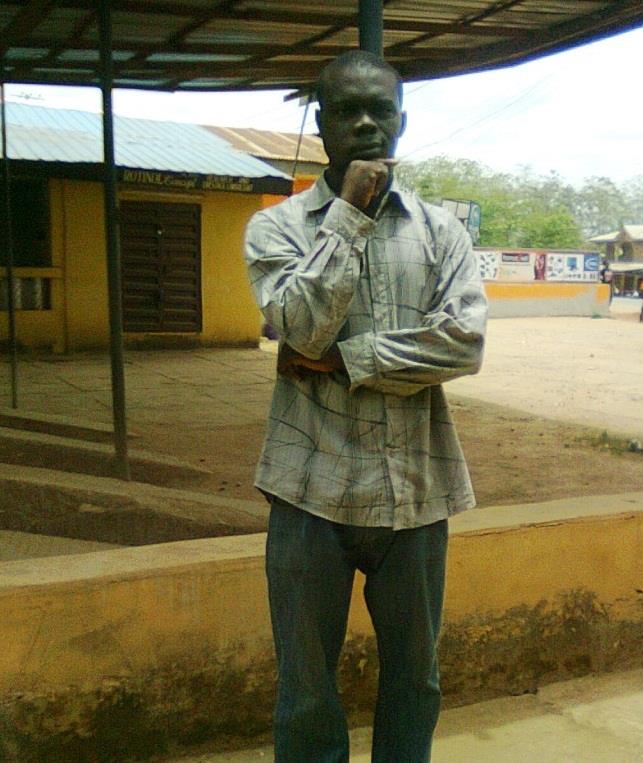
Chimezie Ihekuna (Mr. Ben) Young Black man in a collared shirt and jeans resting his head on his hand. He's standing outside a building under an overhang.
Chimezie Ihekuna

Genre: Drama

For reviews, production consideration and other publicity, please contact us through the email addresses below:

mrbenisreal@gmail.com

rsacchi@rsacchi.20m.com

Synopsis/Details: 

As the title suggests, The Broken Mirror is a story that reflects on the aftermath of a couple’s marital failure. Like a mirror’s reflection, it makes obvious the consequences of divorce on children. The Broken Mirror is a family drama with unique twists as a bedrock to its plot. The tragic story follows the family as the children grow into adulthood.


Raheem, friends with Joke, twin sister to Shade, narrates the story. The title comes from Raheem’s diary. The relationship struggles of Bode and Cynthia, parents to Shade and Joke, get mirrored in the lives of their two daughters.

After incessant quarrels became the order of the day in the family, Cynthia hired legal luminary Ken and filed for divorce from Bode. Cynthia and Ken later married, and Joke lived with them in Calabar while Shade lived with her father, who was devoted to her and also chose not to remarry.

Heartbroken and enraged after the divorce, Bode lied to Shade, telling her that her mother and sister had died and that no one should ever mention their names again. Joke also grew up hating her father and twin sister, feeling that they had abandoned her.

Bode also lost his job and livelihood due to the divorce and a nasty smear campaign.

Ken abandoned Cynthia and Joke and was never seen again after that. After a rough childhood due to her father’s joblessness, Shade fell in love with a young man, Emeka, and got engaged. Joke grew up angry, looking forward to the day she would get back at Shade, whom she believed had stolen away their father’s affection.

Bode passed away after a lingering battle with leukemia and Cynthia died of cancer.
One day, Joke realized that Shade was still alive, about to marry Emeka. This set a tragic chain of events in motion that took the lives of both Emeka and Joke.

After Emeka’s violent death, Joke’s friend Raheem found Emeka’s diary and was able to piece together this twisted tale of family relations.


Essay from actor and humanitarian Federico Wardal

The Pharaohs’ Golden Parade event : new splendor after 3500 years

by Federico Wardal

The Pharaohs’ Golden Parade in Cairo

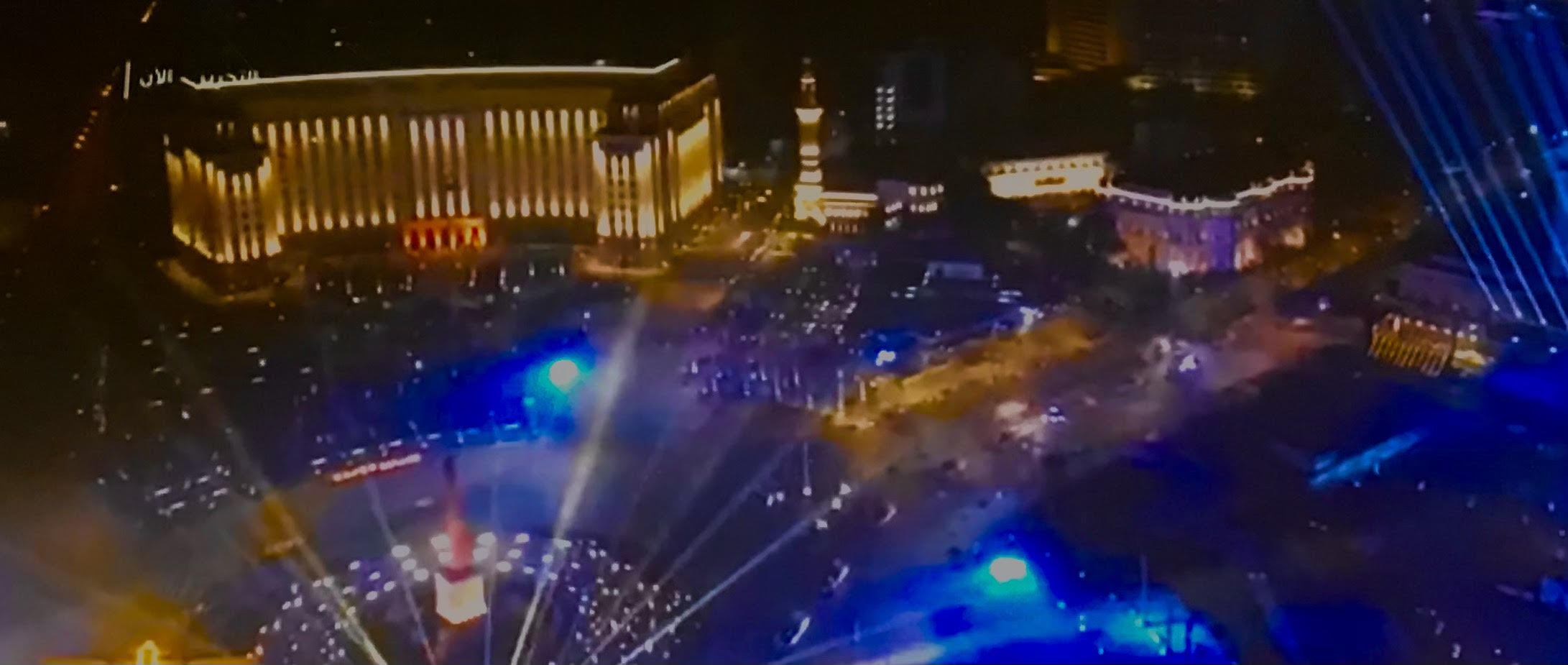
Cairo.  The Pharaohs’ Golden Parade event, which I had the luck to see, is the most spectacular event at least of this millennium, even visible from space.  Powerful beacons of light projected into space and illuminated the center of a crowd of 20 million people in Cairo for ​​five miles.

This accompanied the passage of the mummies of 18 pharaohs and four queens from 3500 years ago (18th, 19th, 20th dynasty era) placed in spectacular hearses with immense beautiful processions with people in period clothes and singers who sang ancient songs.  

The glittering golden parade was channeled over a five-mile path, guarded left and right by guards in ancient uniforms, from the Egyptian Museum in the immense Taharir square to the National Museum of Egyptian Civilization, located in Old Cairo.

At the entrance to the museum, the Egyptian president H. E. Abdel Fattah Al-Sisi gave a welcome from modern Egypt to kings and queens who brought Egyptian civilization to the world. A very touching magical moment. The news caught the attention of the media and so it spread all over the planet, as the lighthouses of Cairo have reached the world. Everyone knows how the ancient Egyptian civilization, one of the most spectacular and advanced of the ancient world, was fascinated by the skies and galaxies and their scientific discoveries were amazing for their time.  

I find ancient Egyptian art beautiful and reflective of a culture with a high degree of wisdom and insight. The cult of the beyond, of life both before and after death, is predominant. Souls are based in eternity and find themselves in an endless circle of death and resurrection.

This is the profound meaning of the event: to pay homage to everything that the immense Egyptian civilization has created and continues to create. And this is certainly how this spectacular parade arrived, thanks to the strength of the love and respect with which it was made. It was a worthy tribute to the energy of the 22 royals, whose mummies, now, finally, have a home equipped with today’s most sophisticated means of preservation.  

Prof. Zahi Hawass, legendary archaeologist and friend of mine, said in his major media appearances that this is an event that Egypt gives to the entire world and that calls the world to visit Egypt. But another fascinating event will occur soon: the inauguration of the Great Museum of Giza, the largest and most grandiose museum in the world. This museum, with its sophisticated and spectacular structure, will remain as one of the wonders of our planet, even as archaeological research continually advances, to offer us all beauty for our eyes.