Christopher Bernard reviews Eunice Odio’s new collection The Fire’s Journey Part III: The Cathedral’s Work

EXPLOSION IN THE CATHEDRAL


The Fire’s Journey: Part III: The Cathedral’s Work

By Eunice Odio

Translated by Keith Ekiss with Sonia P. Ticas and Mauricio Espinoza

Tavern Books

 

Eunice Odio


A review by Christopher Bernard


Eunice Odio, considered by many to be Costa Rica’s greatest twentieth-century poet, spent most of her life in Mexico City and published volumes of poetry as well as essays and short fiction; her most important work being El tránsito de fuego, “The Fire’s Journey,” which (and in particular the third part under review) brings to my mind, along with the psychological themes of C.G. Jung, the prophetic books of William Blake, with their wealth of creative mythology, epic dimensions, obscure allusiveness, complex rhetoric and intellectual demands, and even some of their political implications. The poem thus far (the concluding part four is slated for future release) has been brought into frequently brilliant English by Odio’s translator, the poet Keith Ekiss, with help from Sonia P. Ticas and Mauricio Espinoza – we are in their debt for bringing so much of the work of this poet finally to the attention of anglophone readers.


The third part of Odio’s monumental epic of creation of self and world can be read (thanks to the translator’s helpful introduction) without having read the first two, “Integration of the Parents” and “Creation of Myself.” But it would be disingenuous not to recommend doing so; a little homework in this regard can go a long way to warming the reader to the poet’s unique symbolic vocabulary, her rhetorical leaps and rapid shifts, and often elliptical lyrical flights. We enter a forest, with few paths opened for us, and dense with meanings, some of a deceptive clarity and simplicity, many evocatively obscure, under a skyscape of clouds and twilight and peopled by often only half-seen characters, of misty outlines and gigantic presence, forcefully symbolic, willful, fierce, like figures in a dream whose demands leave us unable either to wake up or sleep on.


I won’t pretend this part is as easy to take in as the earlier ones. Despite the cascades of brilliant details that illuminate every page, the poem can seem willfully obscure and confusing on first reading, though it unlocks its meanings less reluctantly upon reacquaintance.


The epic’s first two parts brought us the chaos and void of the beginning of all things, the cloudy retort of the void and the womb, followed by the creation of the poem’s central character, a poet, god, creator and sufferer named Ion, named after the complex figure from Greek mythology of notoriously ambiguous identity and birth.


Part three, “The Cathedral’s Work” (itself divided into three parts: “All Things Created,” “Opposite Dreams” [though “Opposing Dreams” might have made its contents plainer] and “The Cathedral’s Work”) throws us into a world that is in some obscure sense Ion’s responsibility: he partly creates, or at least assembles it, even as he is created by it. He (for Ion is definitely male) is called on by various members of the world to provide them with essential things: a horse, a bird, a stone; from the stone a column, a vault, a wall, an apse; in the end a cathedral.


Ion is at once namer of the world (for from his words beings come) and dreamer of the world:


4th MAN

Who is the man who sleeps?


5th MAN

A vagabond flung on the morning,

who else could he be?


6th MAN

Who is this ragged man?


7th MAN

I know the one who sleeps


3rd MAN

You know the one who lies asleep?


7th MAN

He is the maker of all things


Ion works in Gemini-like tandem with an older brother figure, introduced in part two, with whom he has a conflicted but essential relationship, Daedalus, named after the Greek inventor and builder of Minos’ famed labyrinth and the wings by which he and his son Icarus flew, escaping Crete – the “patron saint” of technology and distant, troubling father of Silicon Valley.

Various, obscure figures appear throughout the book – appear and usually disappear, never to be heard from again, at least in part three: for example, Gune and Andros (female and male humans) who open this part of the poem by asking Ion to help them, in their endless labor on the earth, by providing them with


A beast of uncontainable body—

an animal that’s gentle within

like a tree’s orbit in its shadow

firm outside

fully born in all its extremities


ivory hooves, curved and narrow


the voice long


reaching the pastoral stars without faltering;

hills and laborers hear it up high


all throughout


our afternoon


And Ion sends Daedalus to search and capture a creature that will meet their needs, and Daedalus goes forth and steals a horse:


. . . a flash, long as God’s syllables

and strong as day.


. . .


. . . so male, so transparently young

so exactly the heat of my thought.


. . .


The horse is truth.


There is a companion and helpmate in creation named Arkhos (his name based on the Greek root meaning “in the beginning,” although he appears to be a “son” of Ion).


There is Shed – a woman, though something like a female principle, a Jungian “anima” figure, who craves of Ion the knowledge of “what she wants.” There is Nebo the Seer, and a chorus of children, and a group of unnamed men (alluded to above) who demand to see the “bird” Ion has created from the word “bird” (“pajaro” in Spanish), then use the “stone,” which Ion found with Daedalus’s help, to kill it.


And there are many others, some only mentioned, others appearing and speaking: the father of Ion, Odon, as well as other sons of Odon, including Thauma (ancient Greek for marvel or wonder) and Logos (Greek for reason or “the Word,” as it appears in the opening lines of the Gospel According to John).


The relationship between Ion and these creatures remains tantalizingly ambiguous: are they separate creations (as it would seem at least some of them must be) or were they in some sense willed into creation by Ion? Ion himself does not seem to know: we may be in the presence of a god whose unconscious is as willful, wayward, yet fruitful, as the unconscious impulses of human beings. He calls himself “pluranimous” and, at one point, “possessed,” as by demons: “The Name of the Word is Legion”: he is single yet plural, one yet many, his many parts in conflict; a crowd of loneliness.


The climax of the poem is the creation of the Cathedral – a work of worship, containment and illumination for the spirit – but which is contaminated by a demonic presence (perhaps Ion’s “shadow,” to use the Jungian term) and must be demolished stone by stone, then rebuilt into its intended splendor in part three’s closing pages:


The sky pauses when you pass by, pure

unpredictable presence of the air, Cathedral,

capital of the heights, a straight delirious flower.


The sky pauses

when you pass by, as you become visible ecstasy


. . .


Oh, Cathedral, oh palace of flight!

Oh, edifice on its journey through dawn!


_____


Christopher Bernard is co-editor and poetry editor of Caveat Lector. He writes on dance, drama, and art for Synchronized Chaos. His most recent book is the poetry collection Chien Lunatique.

 

Poetry from Ian Copestick

The Sad Sabbath

Ian Copestick

Whoever was it who invented the Sabbath ?
And I don’t mean Ozzy
They’ve been responsible for ruining
One seventh of my life
I know that it’s nowhere near
As bad as it used to be
But still, they’re a pain
In the arse.
The sheer melancholia
And drabness sinks into
Your bones, leaving you
Depressed and uneasy
No matter what you do.
Of course I remember
When they were a hell of
A lot worse.
When the shops and the pubs
All used to close.
And between 3’O’Clock
And 7 on a Sunday, you
Couldn’t get a drink
For love nor money.
This was a nightmare
At any time, but if you had
Been on a weekend
Long bender and you
Didn’t wake up until
Say, ten to three
Aaaaarrrrgggghhhh !!!
I remember running to
The shop, every step
Agony, stopping to gag
About every five yards.
Then !
The shop is in view
You think that you’ve
Made it !
But as you enter
The place you notice
That the alcohol aisle
Has  ” Wet Floor ” signs
At each end.
The shop is still open
But until 7’O’Clock
The only thing that you
Can’t buy is a drink.
As I say, it’s not as bad
Nowadays. At least
You can buy a drink,
But still the overwhelming
Feelings of sadness has
Always ruined
Sundays for me
Another Day Gone
Half dead hungover
Nicotine stained fingers
Dirty, brown/yellow
Look like my soul feels
Stumbling down the street
Hating everything I see
Drown stuck on my face
Along with stubble, dirty, greasy skin
Light a cigarette
Start to cough, nearly puke
Queueing for a cash machine
” Come on, come on, for fucks sake
Stupid fucking prick. ” I mutter to
Myself, or to the person in front.
I fumble with my card
Put it in the wrong way
Finally manage to sort it out.
Worrying slightly about my
Lack of funds.
” Fuck it ! “
Into the nearest supermarket
The cheapest whiskey
£11:99
Dirty look off the cashier
“Filthy drunk “
I can see it in her eyes
Or is it just my paranoia ?
Either way, I stare her down.
Take my change and out to the street.
Cold, grey, misty morning
Waiting for the bus
To take me back
To a darkened bedroom
Drunkenness and daytime T.V.
Sanctuary.
Ian Lewis Copestick is a 46 year old writer ( I prefer that term to poet ) from Stoke on Trent, England. I spend most of my life sitting,  thinking then sometimes writing. I have been published in Anti Heroin Chic, the Dope Fiend Daily, Outlaw Poetry, Synchronized Chaos, the Rye Whiskey Review, Medusa’s Kitchen and Horror, Sleaze, Trash.

Poetry from David Boski

Dinosaurs Too


you used to download porn on LimeWire

using a dial up internet connection,

watch wrestling when the WWE was still the WWF,

use a Zenith VCR to record movies

off of your gigantic television set,

own a Walkman and after that a Discman;

there are kids out there who have forgotten more

about technology than you have ever known,

you get tired for no reason,

your hangovers are much worse now,

it takes you longer to piss,

and you have grey’s in your pubic hair;

you can’t get up without having a cup of coffee

or two or three,

sometimes your back hurts

and

according to WebMD

you’re completely fucked;

plus,

you’re old enough to be

a father —

to a teenager,

and one time a woman

at a bar replied

‘wow that’s old’

after you told her your age

but that’s ok;

cause one day

she’ll be a fucking

dinosaur

too.

Continue reading

Elizabeth Hughes’ Book Periscope

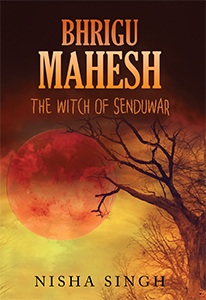
Nisha Singh’s Bhrigu Mahesh

Bhrigu Mahesh is a detective novel. it is very intriguing and grabbed my attention from the first chapter. Bhrigu Mahesh is a private investigator, he has taken on what was thought to be an accident in the death of Malthu. He agrees to look into the death for his mother. Malthu has died in a place called Senduwar that is filled with superstitions of bad luck and death. This is definitely a must have for the readers of mysteries. A good mystery is one where the reader cannot guess who the murderer can be. This is definitely a great mystery.

Nisha Singh’s Bhrigu Mahesh can be ordered here from publisher Book Venture. 


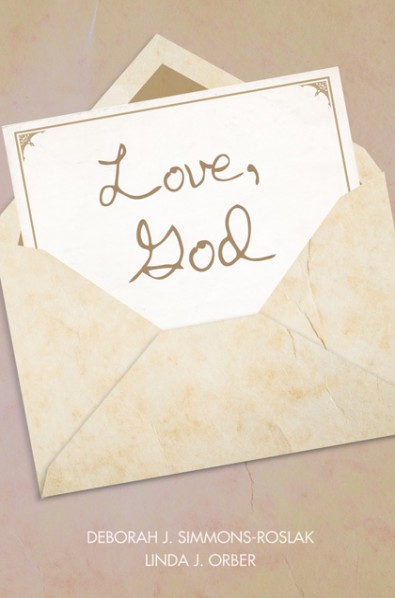
Love, God by Deborah J. Simmons-Roslak and Linda J. Orber
Humans are always looking for and created to be loved. People will let us down in some way or break our hearts. God will never let us down. God will always be there for us and guide us. We may not always receive the answer we want or, it may not be in our time frame, but, we can always count on God doing what is right for us. Love, God is an excellent book that explains God’s love for us. God has unconditional love for us and will always be there. This book teaches us how to be still and learn to listen. It teaches us how we can learn to live in peace in our hearts and minds. This is an excellent book whether you have been a Christian or want to learn to quiet your mind and restless soul. I very highly recommend it. This is a book you can read all the way through then come back if you want to look up a passage or paragraph to meditate on.
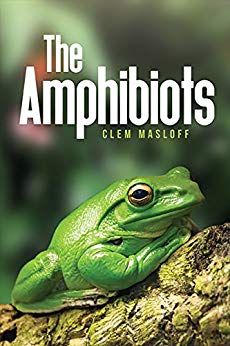
Clem Masloff’s The Amphibiots
Ranid Rolis is a researcher who has been hired to do research in the Salamandrine Archivum. In his research he comes across evidence of a secret sect. The sect now wants to hush him up before he reveals anything. The Amphibiots is an intriguing and exciting scifi book. If you love scifi/suspense this is definitely a must have for your home collection. I enjoyed it very much and highly recommend it. It’s the perfect book to read on these rainy and cold nights.
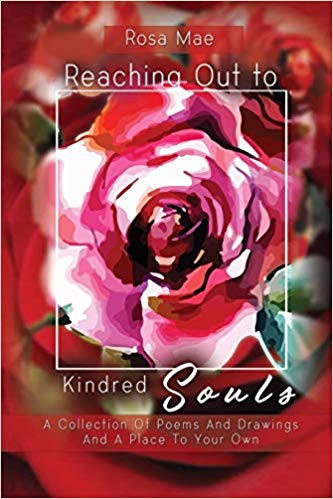
Reaching Out to Kindred Souls by Rosa Mae
Reaching Out To Kindred Souls is a very sweet and endearing book of poetry. It is written in a very unique way. In the back are pages added for the reader to write their own thoughts, poetry, sketches or doodles. Although each and every poem is very good, my personal favorites are ‘My Ray of Hope’, ‘Blessings of the Night’, ‘The Burden’, ‘The Healer’ and ‘Precious.’ This is a must have for poetry lovers. If you have not really read poetry books before, this would be an excellent one to start out with. It would also be absolutely great for a gift for someone you know. I absolutely loved it and know you will too.

Elizabeth Hughes

Poetry from Rajnish Mishra

Recipe for happiness


I realized it late, but not so late as not

to feel it in real time. I knew it. I was

happy that afternoon. I was happy

after a long time indeed. What made it happen?


Nearly one hundred gram of groundnuts,

roasted and whole. Shelling to get the nut

is an important ingredient of happiness. Guava,

medium sliced pieces, say, ten to twelve


pieces per guava, the core eaten by my

two and half year old. The winter sun shining mildly

and warmly, rays falling over me and over

my folding cot, and a thin red shawl, as I

lounged, as the cover against sun burn, the shawl

from my past that my mother gave to my wife.


Thou shalt…
I have managed to stay alive; yes,
till now.
So, I should know.
I’ve lied a thousand times,
and one.
Not liking it sometimes.
Done it well every time.
That gives me the right to preach,
to pontificate, even.
What do I tell my child?
Should I ask her never to tell lies?
Then how will she survive in this world?
Should I command her to tell lies then?
It increases the chances of survival,
indeed.
It’s settled. I’ll train her in the science,
or arts,
of hypocrisy, corruption, lies and deceit.


Define ‘friend’


Definitions are often inadequate, sometimes misleading;

necessary too. I tried to define “friend”.


I miss you my friend.

To you I never needed to explain

the stupid puzzle I sometimes am.


You knew the streets and alleys of my mind.

You proved it many a time, telling me of many

a secret passage, and many a dream I dared not dream.


There hasn’t been any after you,

none with whom I talked about my darkest,

deepest fears and brightest hopes.


I’ve managed well without you.

I am not alone, and mostly

am not lonely, but sometimes, like this evening,


I feel like I could use a pair of ears, set into a head

that understood what I spoke,

and did not need explanations.


Wistful thinking! You’re gone.

Not dead, just gone.

You changed, I changed; we changed.


“A friend is one who you cannot forget or flush out of mind.

He is as much your part as your past is”.


How time flies!


Today I plucked the first grey hair from my nose.

It surprised me:

one more step

towards old age.


It threw my mind back

to the day

I’d seen the first gray hair on my head,

the grey hair that remained the only one

for many years as it stood as the end of a phase.

It affirmed life.


This one confirms death.


How time flies!


Silent house


Return when there’s no one there.

Go home, when it’s empty of sounds.


It’s strange.

I’d never imagined how silence stings, stinks.


Whether it’s felt for a moment,

or life.


Rajnish Mishra is a poet, writer, translator and blogger born and brought up in Varanasi, India and now in exile from his city. His work originates at the point of intersection between his psyche and his city. He edits PPP Ezine. 


Synchronized Chaos January 2019: Connection

Happy New Year! Welcome to January’s issue of Synchronized Chaos. Our theme is Connection – how we connect with each other, with ourselves, and with the larger world, or not.

Ryan Flanagan’s poetic speakers encounter and notice bits of the physical world: entrails, sweat, earwax. His humor stays grounded in, and stems from, reality. While less humorous this time around, Mahbub also grounds his experiences of the intangible (romance, social disintegration) in terms of physical images. Acts of selfishness sully the bright green of the Bangladeshi flag, while the passion of a friendly soccer game played on green grass enhances our experience of romantic love and interpersonal connection.

Along with connecting to the sensations and objects in our personal worlds, we can identify with pieces of the broader social culture and relate that to our own lives as a kind of language for our experiences. Michael Robinson’s sensual and tragic essay describes his admiration for Sylvia Plath as a fellow writer and as a human being, at a time when he has a tenuous grasp on reality. Along these lines, Gabriela Carolus shares a proud tribute to Michelle Obama that conveys both the author’s and the subject’s self-respect.

Chimezie Ihekuna speculates on the different socio-economic classes within human society and what it takes to belong to one group or another. While Carolus, Robinson, and Mahbub take bits of the larger social world and incorporate that into their personal thoughts, Ihekuna starts with the large scale society and explores where individuals might fit. 

Several contributors share the experience of glimpsing bits of other lives and other cultures, or imagining them as an exercise in creative empathy. In a second piece, Michael Robinson, who grew up in the inner city, writes of the death of a farmer and the impact that has on the man’s family. Melanie Browne’s pieces describe international exchanges, often on a small scale between Uber drivers and passengers, or in someone’s mind when they learn about or think of someone who lives elsewhere. Norman Olson also contributes an imagistic travel memoir, where what stands out is not the big moments where he sees national landmarks or world-famous art, but the vignettes where they encounter inauthentic Chinese food and passengers twerking on a Caribbean cruise.

Some writing here reflects moving in and out of connection. D.S. Maolalai’s poetry explores how and when a couple flows in and out of balance and relationship with each other, and Gabriela Carolus’s second piece reflects on forms of news coverage of poverty that inadvertently alienate and dehumanize the world’s poor. Abigail George’s poetic essay explores the complex relationship she had with her mother and how it has informed her future romantic relationships. Elizabeth Hughes’ monthly Book Periscope column illustrates the tension between relationship and alienation with two titles: Emory C. Vaughn’s Life by the Drop, a narrative about the rising drug problem in the American South and the resulting violence, and then Ann W. Phillips’ The Lady of Esterbrooke, about a happy couple’s love for each other and for the land and the animals where they live.

J.J. Campbell’s poetic speaker brings up the concept of robots taking over human tasks in a set of poems where he seems to be isolated watching the world go by from afar. He seems to feel a tenuous connection to the universe, as he senses that he will be replaced someday, even if not yet. He is caring for his mother, though, so perhaps he has found some form of human bond.

We hope you will find something with which to connect here in these submissions. Please reach out to a writer and leave a comment on their piece – you have the chance to make someone’s day! 


Poetry from D.S. Maolalai

We’ll talk later.


we get up

to alarm clocks

like children clawing the duvet,

but we have no children

to make waking

any better

than it is,

and we don’t talk

as the coffee boils

and the microwave

heats our oatmeal.

I wait for you

to be done in the shower

so I can get in myself,

shaking cold

in boxershorts,

sitting on the bedspread

bottom.


no need

for conversation

in winter

early on – we’ll talk later

when we get warm

and have something

to talk about. right now

just cups of coffee

and feeling the carpet

for my watch

and work id. making sure

I have a phone in my pocket

and that you

have enough change

for the train.


outside the window

dark sits

like a wolf

waiting to devour

and sometimes mist

comes down from the rooftops

and tears around us

like toilet paper

stuck

to our shoes.

at the train

I kiss you quickly

and watch

as you run

away. empires

have fallen

with more attention

shown them. the bottoms

of your shoes

flash white

against grey dawn

and frozen leaf-puddles.


On form rejection letters.


and what?

as if I

were some statue,

standing still

to be shot in the dark?

me, here, drunk,

manic at the midnight computer,

looking (I imagine)

like a picture

of what poets think

modern poetry

is?

I,

who have never appeared

in Kenyon

or Granta –

am I to be slapped

and put outside

like a cat? – in the sea

are creatures

who live forever;

some clone themselves indefinitely,

others never die at all. ants

are small

unchanged scurrying things

scattering like coffee beans

dropped on a tile floor – why

should it be me bent over

when I receive

another form letter

with my titles

copied in

saying

NO?


Bright green.


I’d spent the whole week

trying to convince you

that london

was flying

with wild parrots.


like bright birds

in distant trees,

our time fled

before we could

get close to it. but we got drunk

and went to comedy shows

all the same,

independent theatre

and english

folk music. trying out

markets together

and looking at art. there had been something

to us

but we’d lost it

and ourselves

in our time apart.


3 day

weekend visits

like bringing the dog home from the vet

only underlined our cowardice

at not ending things

all at once.

I put you on the train

in golders,

kissed you

in the monday morning,

cold

as blue rocks.

and I went to the park

to put some time in

before a night shift.


and the trees

were full of parrots then – bright green

and alive,

moving

in couples

against dark

london

colour.


An evening with my girlfriend


and dinner

born out an argument;

see

I made a joke

about one of her friends

who is in the middle

of another of

her breakdowns,

just as I have

many times before.

but this time

she didn’t laugh

or agree with me

she’s nuts

and the carrots were cut

with a weight like steel pistons

and the stovetop

licked hot

and fast

as an angry dog.


I offered help

and was told

I could just

fuck off

out of it;

watch tv

or go play on my phone,

just get out of her fucking

kitchen

you fuck.


plates coming down

with a planecrash

and frogs going splat out of cooking pots.

wine spilled

like run from a sewage pipe,

the cutlery

a declaration of war.


it was delicious though,

the potatoes done

just right,

but cleaning up

is something I still have to take care of.


Morning to Wednesday.


the thing is

the whole bay is sheltered. no interesting

formations of rock

brought in

by collisions

with storms. you move along,

trudging,

halfway between

a straight tideline

and a razor edge

of sea,

balanced on the part

where the sand stays walkable – dry enough

to take your weight

without being so loose

it blows.


a mile ahead

the seagulls

crowd on lobsterpots,

and a little closer

the dog

had found a crab. she jumps in circles,

barking at it, unsure of what to do. the crab

makes progress, doesn’t snap,

just walks slowly

toward the shoreline.

better this

than last time – she found a dying jellyfish

and threw up

in the car

driving home. and the flat sand


could convince you

you can see past her

from morning into

wed


collection forthcoming from Turas Press in 2019. He has been nominated for Best of the Web and twice for the Pushcart Prize.