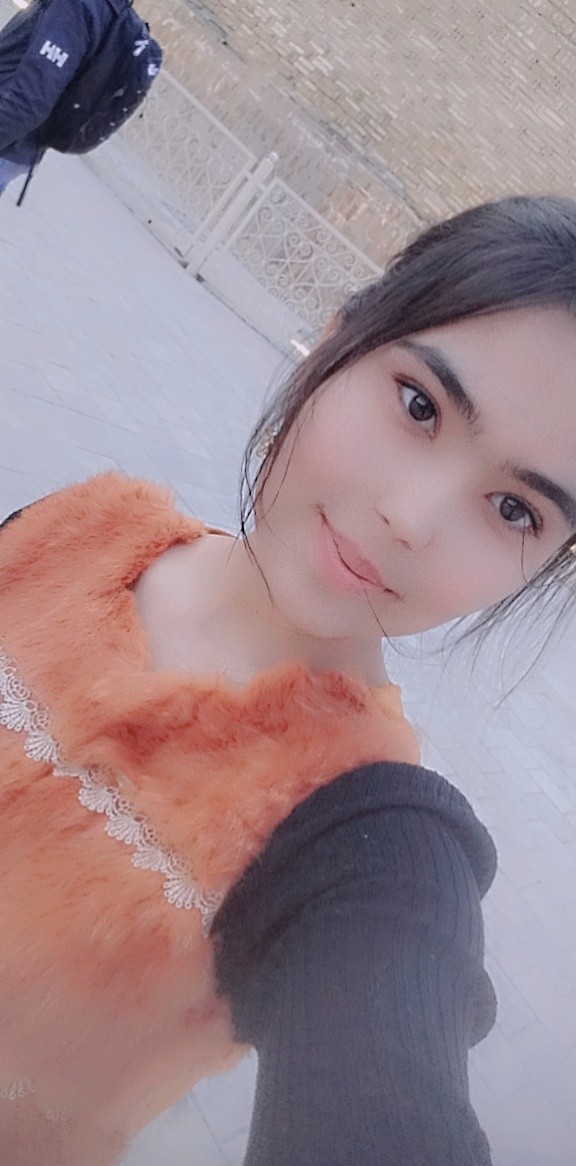
Essay from Malika Kaxarova

Young Central Asian teen girl with long black hair and a blue collared jacket standing outside in front of trees and buildings.
Malika Kaxarova

THE LINGUISTICAL STATUS OF “HYPERBOLA” IN MODERN LINGUISTICS

ABSTRACT. 

Annotation. Cognitive science can be developed in linguistics today. The “concept”, which is the object of study of the basis of cognitive linguistics, is a framed view of “cognitive semantics” as a result of mental processes, in language to its verbalizers. The concept of “hyperbola” is among such concepts. Articles, the universal nature of hyperbola stylistic tool is highlighted, the similar and different knowledge of verbalizers of their lexical and semantic “deeper research, their lexical and deeper study in Uzbek languages” hyperbola” tools is highlighted. 

 Keywords: cognitive linguistics, concept, semantics, hyperbole, tropes, stylistics, anti-hyperbole.

 INTRODUCTION. Today, in world linguistics, as well as in the linguistics of our country, attention is being paid to the study of the use of language as a social phenomenon. The interest of scientists in the fact that language is an important means of communication between people and its unique mediating function in communication, to study a number of aspects arising from the need for communication, is growing more and more. The department of general linguistics called stylistics or “stylistics” that investigates language as a means of communication performs an important task of consistent and systematic study and clarification of its communicative-pragmatic issues and problems.

Another direction in world linguistics – cognitive linguistics – is developing and flourishing. The subject of his analysis is the role of language in the process of understanding the objective existence of language speakers or writers, as well as the role of cognitive factors in the process of the formation, development and use of language as a means of communication, the unique role of the human factor in it, conceptualization and categorization of the system of human knowledge about the objective world. is the scientific research and scientific illumination of the techniques, tools and methods of language storytelling through processes. In linguistics, the “concept”, which is the main object of the study of cognitive linguistics, as a result of mental processes, has its own special verbalizers, i.e., means of realizing them directly in the language. The concept of “hyperbola” is one such concept. 

  Hyperbole is one of the most common stylistic tools. In order to exert a strong influence on the interlocutor in the process of communication, the speaker is inextricably linked with his communicative-pragmatic purpose-goal, that is, the need to exaggerate one or another description of an object or event. With the intention of fully realizing the “cognitive/conceptual semantics of hyperbole”, using the stylistic tool of “hyperbole”, he tries to make the speech in the dialogue consistent with the situation, attractive, impressive and expressive. The universal nature of hyperbola is related to such an important factor that its linguo-cognitive basis is “the conceptual semantics of hyperbola, existing in the thinking of every sane person who speaks and writes in the language, is normalized by the received society. Therefore, it is a perceptual phenomenon expressed in the social conceptosphere, and such semantics cannot legally be manifested in any living language through a special system of specific verbal and non-verbal means” (Karaboyev J.B 2015, 74-75.

In conclusion, it can be said that in modern linguistics, a new, interdisciplinary direction – cognitive linguistics-is increasingly developing. Research specific to this direction is based on the principle of anthropocentrism, and the focus of such research is the human factor. At the same time, “concept”, which is the main category of cognitive linguistics, as a mental unit, is used to acquire world knowledge. Among various concepts or conceptual semantics, the concept of “hyperbole”, which is one of the cognitive stylistic concepts, is among the concepts that have a universal nature, and it is impossible not to exaggerate them deliberately and often according to the situation. This indicates that this conceptual semantics is a very important and necessary semantics from the communicative point of view. All synonymous, homonymous, hyponymic, hyponymic and patronymic relationships related to hyperbola are implemented within the hyperbola concept area through its components based on the laws of this system.

 REFERENCES 1. Karaboyev J.B. Linguistic status of hyperbole and phraseological units with integrated semantics//New trends in linguistics and their problems. Tashkent, 2015. p. 74-75. 2. Kunin A.V. Frazeologicheskie intensifikatory v sovremennom angliyskom yazyke./ I.Ya., 1960 3. Krysin H.P. Hyperbola in Russian conversational speech. Problemy strukturnoy lingvistiki. 1988, 9-11.

Malika Kaxarova was born on July 10,2001 in Uzbekistan, Navoi . She graduated school №2 . Malika is a fourth-year student of Kimyo International University in Tashkent. Currently, she is a student of primary Education. Holder of Yeoju Technical Institute in Tashkent “ Scholarship 2021/2022” and Kimyo International University in Tashkent “ Scholarship 2022/2023”.

Malika has written articles on the topic of education and has appeared in one of the education journals of the Russian Federation, Indonesia, and Uzbekistan. In 2022, the article on the topic “Aesthetic education of students of higher education institutions on the basis of artistic values of Uzbekistan” was published in the scientific journal “ EUROPEAN SCIENCE” on April №1(63) ISSN 2410-2865, MOSCOW.

The article on the topic “Methods of developing interest among students of higher educational institutions in the artistic culture of Uzbekistan” was published in the scientific journal “ WEB OF SCIENTIST: INTERNATIONAL SCIENTIFIC RESEARCH JOURNAL” on JAN,2022 ISSN:2776, VOLUME 3, of in Republic of INDONESIA. the Republic of Indonesia

Additionally, she is learning new languages: Korean, Turkish, Russian. 

Story from Oaoao Pbobo

Liza is 9 years old. She lives in a big house. She has an enormous room. She has too many toys and she has a lot of friends But Liza is not happy. She has a secret. She does not want to tell anyone about her secret. She feels embarrassed. The problem is that if nobody knows about it, there is no one that can help her.

Liza doesn’t write her homework. When there is an exam-she gets sick .She doesn’t tell anyone, but the truth is she can’t read and write. Liza doesn’t recollect the letters of the alphabet.

One day Liza’s teacher finds out she sees that Liza can’t write on the board.

She calls her after class and asks her to tell the truth. Liza says, It is true. I don’t know how to read and write. The teacher listens to her. She wants to assist Liza. She tells her “That’s OK. You can read and write if we practise and try together”.

So Liza and her teacher meet every day after class. They rehearse together. Liza works hard. Now she knows how to read and write.

Essay from Salomova Dilfuza

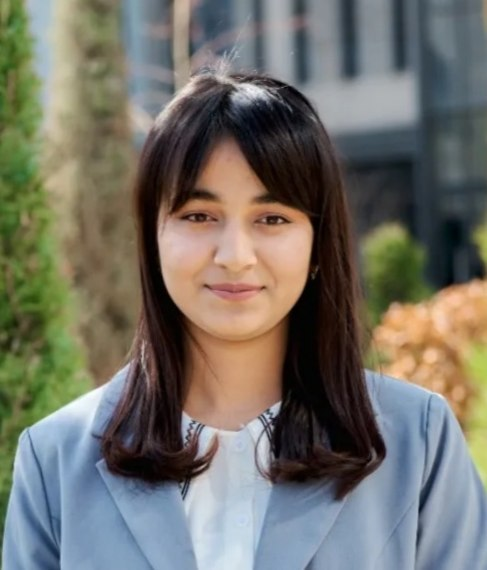
Central Asian teen girl with long dark hair, brown eyes, and a cream colored blouse.
Salomova Dilfuza

Time is running out, cherish the seconds… Time is something that cannot be returned, it is such a priceless blessing that every second of our life is a seal of our happy days, our happy life, our hard days, our unlucky years and our sad moments. In fact, we do not appreciate the time, we spend it on unnecessary things, useless games, most of our people cannot imagine their life without the Internet. Have you ever thought? How did people live in the past, they didn’t have a phone or the internet, they were happy, they used their time effectively, scientists and great people came out in our past They were writing about time, now it’s about the phone, the Internet, but the thing that is killing us is the phone. The saddest thing is that this time will not return. Even the world’s riches and most precious things cannot bring him back. No human has been able to turn back time. You know what ? Time is more expensive than money. For example, marketing is a developing field, and famous

Essay from Biloldin Mahmudov

THE BASIC RULES OF DIPLOMATIC ETIQUETTE
                                                                                                 Teacher, Andijan State Institute of Foreign Language 
Biloldin Mahmudov
Student, Andijan State Institute of Foreign Language 

Abstract: Diplomacy is the art of conducting communication and negotiations between nations or groups of individuals with different interests, cultural backgrounds, and objectives. Diplomatic etiquette refers to the established norms of behavior and protocol that govern the interactions between diplomats and officials from different countries. The rules of diplomatic etiquette help to prevent misunderstandings and foster goodwill among nations. In this article, we shall discuss basic rules of diplomatic etiquette which are essential to follow.

Key words: Diplomat, Protocol, Language and cultural sensitivity, Confidentiality and discretion, Respect for diplomatic immunity

1. Respect for the host country: Diplomats should always show respect for the host country's laws, customs, and traditions, and should never engage in behavior that could be construed as disrespectful. They should also be mindful of their personal appearance, dress appropriately, and adopt a courteous and respectful demeanor when interacting with local officials and citizens.

2. Protocol for official visits: When a diplomat visits another country, they should follow proper protocol with regards to their formal attire, the order of their arrival and departure, and their seating arrangement at official events. They should also adhere to the established protocol when addressing hosts and guests, and observe any cultural or religious protocols that apply in the host country.

3. Language and cultural sensitivity: Diplomats should demonstrate language and cultural sensitivity when communicating with officials and citizens of the host country. They should learn the language and customs of the host country to the extent possible, and make an effort to communicate in the local language when appropriate. They should also avoid any comments or actions that could be considered insensitive or offensive.

4. Confidentiality and discretion: Diplomats should maintain strict confidentiality and discretion about any sensitive information that they acquire in the course of their duties. They should also avoid any public display of their personal opinions or political affiliations that could be perceived as an endorsement by their home country.

5. Respect for diplomatic immunity: Diplomats enjoy diplomatic immunity, which grants them exemption from the laws of the host country. They should, however, conduct themselves impeccably in the host country and never abuse their immunity status. They should also respect the laws and regulations of the host country and avoid engaging in any illegal activities, as this could compromise their diplomatic status.

   The training of diplomats and the use of diplomatic language and protocol are specialist, but vital skills. Why? Because diplomats are representatives of their countries around the world and are the keys to successful negotiation of agreements and defusing political tensions at the highest levels. As Rosalie Rivett, author, teacher and Chief Executive of the Women in Diplomacy organization in London says, Protocol is the etiquette of diplomacy. It does so by following certain rules of behaviour. Protocol indicates an acceptable standard in diplomatic discourse, dialogue and negotiation.’

          Language and the way it is used in diplomatic documents is an essential part of protocol. As Rivett explains in the introduction, diplomacy is ‘a highly nuanced role played out in language – the diplomatic lexicon – which is carefully chosen and in a manner which enhances the standing of their countries among host nations’. Language, therefore, is crucial to diplomatic success and the word protocol itself is derived from ancient Greek protokollon meaning ‘first glue’. Diplomatic Protocol is a manual aimed at young diplomats in training and in simple language explains how protocol works. The 13 chapters, each with abullet point summary of key points at the end, examine the roles of diplomats in overseas missions. A considerable advantage of the book is that it contains many examples, some even as recent as 2017. For students of diplomatic language and culture the key chapters are those on Modern Diplomacy, Internet Diplomacy and Media Communications, and Crisis Management.   

The author makes the key point that the information age and the use of ICT (Information and Communications Technology) have increasingly robbed diplomats of a key asset in communicating information, that of time. Rivett explains: The world has become so small, thanks to instant communications and even faster forms of travel, that an event on one side of the world can spark an immediate reaction on the other, and all of it instantly recorded and shared online. There is no longer time to pause and ponder while a letter or telegram wends its way from an embassy to the home nation. 

Reaction has to be almost instantaneous, appropriate and at the very least designed not to exacerbate what might be an already volatile situation. It has to be diplomatic and governed by established protocol – the rules of diplomatic exchange and last but not least, it has to be media friendly.’ As Michael Cole, PR advisor and former BBC Royal Correspondent notes in the book, how a diplomat reacts to a crisis is key to how it will be reported and as a result how the diplomat, the mission and the country he/she represents will be perceived.

       The important thing is to take control of the crisis, talk to the relevant people, be available for interviews and answering questions, keeping it simple (avoid jargon), listen, apologise if you get things wrong (everyone makes mistakes), if you can’t answer, explain why (legal constraints, family, etc.) and above all, advises Cole, never say ‘No comment’. In an interesting and rather amusing illustration of how media can influence diplomatic etiquette, Rivett describes how the body language of the diplomatic handshake for the TV cameras can itself be a power play: ‘You may notice some people jockeying for position prior to a photograph being taken of them shaking hands; this is because they know that the person whose hand is closer to the camera and thus more visible will be perceived as dominant over the one whose hand is concealed. 

Rivett points out that diplomatic language is a formal and specific use of language. It is not the same as polite business language. Even in our modern world the very language of diplomacy is more formalised than general conversation or written exchanges. Even in protests or criticism of another state’s attitudes or actions, she explains that however harsh or critical the message, ‘it is traditionally understood that the ambassador is merely conveying the wishes, comments, even criticisms of his/her home state ... whatever language or tone is used, the aim is always to keep the channels of communication open.’

This is why it is important to maintain the protocol of third person singular or plural in Notes or Notes Verbales, as they are called in the UN, and use standard phrases, such as ‘has the honour to’, ‘avails himself/herself of the opportunity to’ and ‘expresses concern regarding’. 

Letters between Heads of State may be more personal, using ‘I’ and ‘we’, but will still be more formal in general style. The increasingly informal style of business correspondence is not the trend in diplomatic correspondence. ‘Dear Ambassador Smith or Dear Bill are not acceptable as diplomatic greetings, although you can get away with the equivalents in business correspondence where formality in some environments may be seen as a disadvantage.’

     There is greater convergence between business and diplomacy in the area of recognising and adapting to cultural sensitivities. In November 2010, British Prime Minister, David Cameron, turned up for an official visit to China wearing a red poppy to commemorate Remembrance Day which honours military personnel who died in World Wars I and II. The Chinese objected. For them the red poppy was a reminder of the opium wars of the late 19th century. The Chinese asked David Cameron to remove the poppy. Cameron’s advisers refused. Note to protocol officer, ‘Don’t send senior British politicians to China during Remembrance Week’.

On a visit to the G20 meeting in Hanzhou in China in 2016, President Obama had no red carpet laid out for him when he arrived whereas all other Heads of State did. Was this a snub by the Chinese or simply due to the fact that President Obama descended the steps of the presidential plane directly and didn’t wait for the red carpeted steps provided by the Chinese authorities? 

Rivett notes that etiquette sets the tone for all linguistic and cultural negotiations. What is said and done and what is unsaid are equally important, and the use of constructive ambiguity is an important linguistic and cultural skill in diplomatic communication. English, Rivett believes, is full of ambiguity, an average of six synonyms for every word. In Arabic, family terms are very important. English has only one word for ‘cousin’, but Arabic has eight words to denote first cousins and sixteen for second cousins, distinguishing who is being referred to and the degree of kinship.

      The last 20 years have seen major changes in how we communicate through the emergence of the Internet and social media. Does this mean that language and cultural protocol in the Diplomatic Service and international organisations like the UN are out of date? Part of the diplomat’s job, says Rivett, is to ‘evaluate and interpret information and advise the home nation on what is important and what is mere rumour and speculation’. The Internet and social media have dramatically increased the amount of information to be processed. In addition, cyberpolitik and cyber warfare has added a new dimension to political and diplomatic security and mediapolitik is the new reality.

In conclusion, diplomatic etiquette is an essential aspect of diplomatic conduct that helps to facilitate communication and cooperation between nations. Diplomats should be mindful of the established rules of etiquette and conduct themselves in a manner that respects the host country's culture, customs, and laws. By following the rules of diplomatic etiquette, diplomats can foster goodwill among nations and build tr ust and cooperation in the international community.

                                              
 REFERENCES.
1. Kukushin V.S. Theory and teaching - Rostov-on-Don: Phoenix Publishing House, 2005. - 474 p.                                                                                                                     2. Sidenko A.S. Method of projects: history and practice of application // Head teacher. - 2003. - No. 6. - P. 15 - 23.                                                                                               3. Chechel I.V. Method of projects: subjective and objective assessment of results // Principals of the school. - 1998.                                                                                               4. - S. 7 - 12.4. Sergeev, I.S. How to organize the project activities of students: A practical guide for employees of educational institutions / I.S. Sergeev. – M.: ARKTI, 2003. –80 p.                                                                                                                   5. Polat E.S. New pedagogical and information technologies in the education system: Textbook for students of pedagogical universities / - Moscow: Publishing Center "Academy", 1999. - 211 p .                                                                                        6. Миркасымов С.М., Рахимова М.А. Дипломатическая служба: теория И практика. Учеб. Пос. -Т., 2004.                                                                                              7. Yuldasheva G. Diplomatik va konsullik huquqi. O’quv qo’llanma – Т.:4’ TDYul, 2009 y.                                                                                                                                    8.Абдуллаева Л.М. Особенности дипломатического протокола:

Story from Ifora Bahramova

Young Central Asian teen girl with long black hair and a white top under black overalls.
Ifora Baxramova
The sun of my heart

As always, the sun nuzzled, dawned. In the morning, nature becomes more beautiful. My mood along with nature. When I look at the sun every morning, I remember an event in my childhood.
       I don't remember how young I was. I was around 10 years old. It was night. We went to bed. I, my sister, my brother and my mother. My sister has fallen asleep, and my twin can't sleep when he says little yes yet. He asked my mother a question. My relative is very slippery. Sometimes keeps asking me something from my mother. Sometimes I get angry and shout. My mother is not forgotten. He calmly answers my brother's questions one by one. Again he begins asking questions They think I'm asleep, but I close my eyes and listen and lie down. my brother asked:

-Mom...... Mm, 
-yes my son.
-Oh, why is the sun one? Why does he stand in heaven
-Who told you that the sun is one? There is a lot of sun. The sun is in every house. My brother looked at my mother in surprise. Honestly, I was also surprised by my mother's answer. My mother understood and explained it:
-The sun is in the hearts of every good person. The sun in their hearts encourages goodness.
-Oh it`s also in your heart. I know that, However do I have the sun in my heart too.

-Of course my little prince.
-oh? does the sun fit into my heart?
-Everything worships you in this broad heart.
My brother didn't understand this so well. But I had a very good understanding.
Every good man has the sun in his heart. Alternately all mothers. I realized that day, every house has a bright sun, and the sun in the sky is actually in our house. And my sun is my mother. The sun in heaven does not illuminate the earth at night. But my mother always shines brightly even at night. It should be said that the rays of the sun in the sky will fade one day, but my mother's rays will never fade.

   Bahromova Ifora

My name is Bahramova Ifora Sunnatillayevna. I was born on August 2, 2008 in Kuyi Chirchik district of Tashkent region. Currently, I am a 9th-grade student of school 29, Kuyi Chirchik district, Tashkent region. I am also a member of the “Parvoz” literary circle organized by Nargiza Asadova, a member of the Writers’ Union under the Lower Chirchik Hokimation. My poems and stories have been published several times in district newspapers and magazine “Gulkhan”. I am the winner of the Republican stage of the “Story of the Year” competition and several other competitions.

Story from Sevinch Saidova

Young Central Asian teen girl with straight dark hair, brown eyes, and an orange top, pictured at a diagonal.
Sevinch Saidova
He was brought to the hospital in a serious condition. His internal organs were also ruptured from the strong blows. The doctors could not find out who did this until the police officers arrived. The mother, who was crying on top of the child, was punching her chest, but it was clear from her eyes that she was hiding something. The child was connected to an artificial respiration machine and was on the verge of dying. Only then did the woman begin to tell the truth.

- When they came to drink, I was in the kitchen, Akmaljon was playing in the corridor. As a young child, he asked for money for ice cream, not knowing what condition his father was in.

Unfortunately, his condition worsened. The doctors provided all the help they could, but the injuries were so severe that the doctors were helpless. They brought the mother in to say goodbye to her child. Pib slowly opened his eyes after hearing the sound of his crying mother. He removed the artificial respiration device from his mouth and began to speak.

"Dude, I didn't ask for ice cream, I asked for money for medicine. You said you had a heart attack. So...
He began to breathe heavily. But he stopped the hurrying doctors and explained with a sign that he wanted to tell them what he had to say.

- Don't cry, my father doesn't drink anymore.
- Well, let him die without drinking, instead of putting you in this situation, wouldn't it be possible to break his legs?

- Don't curse him, he won't be able to walk if his legs are broken.
The boy stared hopefully at the door. If his father came in now, he was ready to throw himself on his lap and hug him tightly. Not the cursed one, whose eyes were filled with blood and brutally beaten two hours ago, but he once carried him on his shoulders and He finally wanted to see his lover, who led him to the store and bought him cars. His father is not there, he did not come. After losing hope, he called the detective who was standing on the corner.

- Uncle, please don't arrest my father, he is a very good person. You will see that he will be a good father again as before. Because I will become an angel and always pray for him.
The experienced officer, who had seen various crimes, could not stop himself. The boy's life was cut off before he promised the boy with tears in his eyes...

However, the law takes precedence over any promises. Taking into account the fact that he has a family and other children, a lighter punishment was given. The father could not bear this sin and committed suicide several times in prison. they did not punish him for it.

I turned to the mother who told me this story with tears in her eyes:
- Your husband got out of prison, has he stopped drinking?
He sighed deeply, showing a smiling photo of his sweet 6-year-old son in his hand, his voice trembled and answered...

- Yes, he gave justice, but in order for adults to understand, is it necessary to multiply such angels? My child entered his father's dreams many times...

Essay from Nozima Baxtiyorova

Sunrise or sunset, pink and light blue sky out a window.

METHODS OF INTRODUCING INNOVATIVE PEDAGOGICAL TECHNOLOGIES IN EDUCATION
Teaching English to Medical students during the COVID-19 pandemic

Baxtiyorova Nozima Atabek qizi

 Student of group 2212, the 3rd English faculty, UzSWLU

Abstract. Governments restricted face-to-face classes during the  COVID-19 pandemic. However, education must be an ongoing process, and the epidemic caused numerous issues in the educational system. Learning foreign languages, particularly English, has become increasingly important in recent years. As a result, the Department of Foreign Languages at Tehran University of Medical Sciences reacted to the new circumstances and devised effective techniques for teaching English to their students online.

Keywords: English language teaching, COVID-19 pandemic, virtual learning, learning management system.

    Relevance of the study English has grown in popularity in the modern era of communication, where expressing one’s views can lead to global integration. Because of the requirement for detail, this field has increased. The primary language utilized to communicate medical essentials is English (Faraj, 2015). According to Milosavljevi (2008), medical professionals and researchers must learn. English to teach in English, to be instructed in English, and to publish their findings in English. Some assessments indicate that the quality of English used in medical contexts, such as classroom instruction, research articles, and courses, has been steadily improving (Hwang & Lin, 2010). Because most scientific, academic, and technical information is communicated in English, English is vital in medicine (Creswell, 2013). As a result, finding means to boost English language training for students of medical and healthcare professions is critical (Milosavljevi, 2008). As previously said, English is the language of choice in global healthcare; consequently, a strong command of the English language is essential to access critical scientific and medical information (Heming & Nandagopal, 2012). Aside from conducting research and gaining knowledge, additional factors demonstrate the importance of the English language in medical education.

    In March 2020, the World Health Organization (WHO) declared the novel coronavirus disease (COVID-19) a global pandemic. As of August 7, 2021, a total of 200,840,180 confirmed cases of COVID-19 with 4,265,903 deaths have been reported globally. Reportedly it originally started in December 2019 in China, yet the first officially documented cases of the disease in Iran were announced on February 19, 2020. In order to control the spread rate of the infection in Iran, the Government decided to close all universities as part of a plan to encourage people to stay at home. As a result, TUMS had to cancel all the face-to-face classes, and as the exact date for the resolution of this calamity could not be determined, education had to continue virtually.

    In 2017, TUMS had already launched a Learning Management System (LMS), called NAVID, as an essential infrastructure for the establishment and development of e-learning. Now NAVID has different facilities for students and professors. Professors and students can see and monitor their current and previous courses, and as an important feature, it allows professors to receive different kinds of reports including all of their activities, students’ collective and individual activities in each course, students’ assignments, assessment of and feedback on the assignments, all the exams’ reports, and the students’ scores and performance in each exam. Professors upload the resources and materials for the students in the ‘Resources and Content Section’ where different types of resources and the prepared teaching materials can be uploaded in a variety of formats. In the ‘Homework Section’, professors can give the assignments and set a deadline for the submission of each assignment. Students can upload their assignments in different forms, namely audio, video, photo, or text, depending on the assignment and the instructions given by the professors. Here professors can give feedback to the students both individually and as a group.

    NAVID allows the professors to design and take various kinds of tests and examinations. Moreover, the ‘Conversation and Messages’ Section allows students and professors to raise questions and discuss ideas. The ‘Class Section’ provides professors and students with the opportunity to arrange for synchronous sessions.

    Since the beginning of the outbreak, in the Spring and Summer semesters of the academic year 2019-2020, and the Fall semester of the academic year 2020-2021, about 4,000 students participated in 183 classes which were administered through NAVID. In order to ensure the quality of education, four working groups were formed by the Department, and the part-time lecturers were asked to join the working groups based on the courses they taught. A full-time member of the faculty took on the responsibility of leading a working group. In these groups, part-time lecturers were asked to report in the written form (based on a certain format) at least two times during the semester to the head of each group. The lecturers could use these working groups to raise questions, discuss ideas with peers and also the head of the group, receive suggestions, and find solutions for the raised issues. The reports of the working groups were compiled by the head of the group and then submitted to the Chair of the Department of the Foreign Languages.

    As teaching has been affected during the pandemic, so has the students’ assessment. Since the academic year 2018-2019, the written summative examinations of English language courses offered by TUMS Department of Foreign Languages were held in TUMS Test Centre electronically, such that students attended the examination sessions in person and took the test online. In the first and second semesters of the academic year 2019-2020, however, the final examinations were held centrally and electronically, but virtually and remotely.

    Students and professors should take advantage of this opportunity to acquaint themselves with, and acquire the skills and competencies needed for, the new era. The pandemic seems to have opened new windows for teaching and learning. Bringing the future into the present and changing our views and attitudes towards virtual and distance education and moving in line with the technology dependent world in the right direction can prove to be a blessing in disguise.

References

  1. Kao GYM. Enhancing the quality of peer review by reducing student “free riding”: Peer assessment with positive interdependence. British Journal of Educational Technology, (2013); 44(1): 112-124. doi:10.1111/j.1467-8535.2011.01278
  2. Price M, Carroll J, O’Donovan B, Rust C. If I was going there I wouldn’t start from here: Acritical commentary on current assessment practice. Assessment & Evaluation in Higher Education, (2011); 36(4): 479-492. doi:10.1080/02602930903512883
  3. Shabani, E.A., Panahi, J. (2021). An Account of Teaching English to Medical Students During the COVID-19 Pandemic. Academia Letters, Article 3587. https://doi.org/10.20935/AL3587
  4. Tehran University of Medical Sciences (TUMS) – Office of Vice-Chancellor for Education;2020. Available from https://www.tums.ac.ir/content/details/377?lang=fa
  5. Tehran University of Medical Sciences (TUMS) – Statistics and Information Technology Center. TUMS Abstract of Yearbook. Tehran, Iran: TUMS; 2019. Available from https://sit.tums.ac.ir/uploads/2/2020/Aug/09/Abstract%20of%20yearbook98(6).pdf
  6. Times Higher Education World University Ranking (THE). The impact of coronavirus on higher education; 2021. Available from  https://www.timeshighereducation.com/hub/keystone-academic-solutions/p/impact-coronavirus-higher-education
  7. Times Higher Education World University Ranking (THE). Times Higher Education’s Digital Teaching Survey results; 2020. Available from https://www.timeshighereducation.com/features/times-higher-educations-digital-teaeching-survey-results
  8. Uto M, Ueno M. Item response theory for peer assessment. IEEE Transactions on Learning Technologies, (2016); 9(2): 157-170. doi:10.1109/TLT.2015.2476806
  9. World Health Organization. WHO coronavirus disease (COVID-19) dashboard; 2020. Available from https://covid19.who.int/