Poetry from Joan Beebe

SURVIVAL

Life is a long  fight for survival, or so it seems.
I know there are so many confusions and health issues –
Families can be part of this  and cause us to feel real pain.
Our thoughts become a source of sadness and longing..
Our emotions become deep with despair.
Yet, we keep a glimmer of hope within ourselves.
We pray, talk to friends and browse through old pictures
Suddenly our thoughts turn to the future and the feelings
Of hope and faith begin to shape our mind instead of relentless
Depression.
The opportunities and gifts have been so many as we remember
the joy and happiness some have brought.
So we begin to change our selves
and look forward to sharing time and talents
in special ways with those around me.
We finally experience peacefulness within our soul.


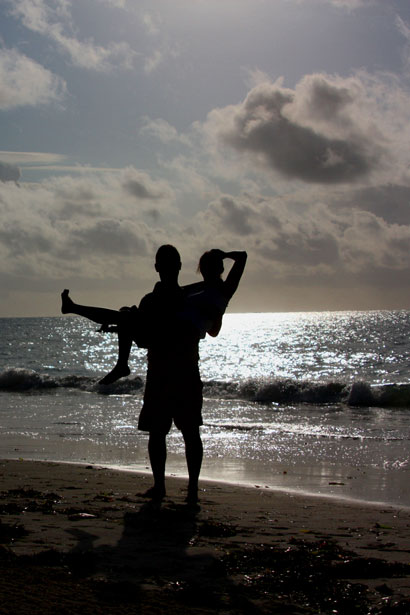
Joan Beebe (left) and fellow contributor Michael Robinson

Poetry from Ryan Flanagan

Sucking at Cartons of Milk as though You Never Left the Nipple


Learn to walk like a baby again and they think you jitterbug queer:

men, women, shapely pundits of the left foot right foot

all manner of insistences over the loudspeaker –

that you have lost your way or found the wrong way

which is simply not their way, of course,

and you start on your knees but they are knobby

and push into the hard floor in such a way

that you become a quick learner,

up and about in days, a few awkward steps on the sides

of your feet, crashing into tables you are still paying for

on the installment plan

simple glass tables with rod iron bottoms

and soon you are running down the halls

getting into all sorts of mischief

sucking at cartons of milk as though you never left the nipple

and you choose your first words carefully

a team of imaginary speech writers in heated coffeepot debate;

in the end you settle on sounds that have escaped the

mad dictionary’s purview,

the sounds a drafting board would make if it were forced

to draw up office towers between company picnics

with coal black garbage bins instead of harvested organs

and placards on the doors of fools.

  Continue reading

Poem from Christopher Bernard

W. E. S. Owen: Sambre-Oise Canal, November 4, 1918


                        Afterward—little spring become prattling rill

                        grown rushing stream through the Shropshire meadows,

                        flower-dappled, by damp shade trees

                        and fragrant fields littered with picnic laughter,

                        brotherly sniping, early loves, later loving, faith

                        won, and lost, then won again, and then lost again—

                        until it stepped into the garish sun

                        above an annihilated plain,

                        and the cool water filled with the casings

                        of spent shells and the crimson tunics

                        of lost boys and the stench of war,

                        the purer air rent with shouting

                        and the drunken symphony of the guns—

                        after the warm and witty words flowing

                        from a young man scratching over his knapsack

                        by candlelight or gaslight

                        or a glow of Vereys and flares—

                        after the warm life and the flowing life and the life-like seas of words

                        opening on that other life that always happens elsewhere—

                        the single bullet riving the early morning air

                        on the bank of the canal where all of that stream was flowing—


                        the stop of it all, in the mud, like a hammer.


                        A stunned silence in the throbbing of the guns.


                        An unbelief in a no choice but to believe.


                        So it—now man, young or old, no longer—falls—

                        like Nineveh, Ur, and rich Babylon—

                        back into the darkness,

                        a face fading into the waters of an infinite silence:

                        it was.


Synchronized Chaos November 2018: The Things We Carry


Reviewer Bernie Gourley recently described The Things They Carried, Tim O’Brien’s collection of short stories about American military personnel serving in the Vietnam War, as ‘disjointed,’ yet he saw this not as a failing of the book but a reflection of the dislocation of war.

While not always as psychologically intense and disordered as the battlefield, regular life can also be disjointed. Our pasts intrude upon our present, our relationships don’t always come together, and people don’t always tell us what’s true or what makes sense.

This issue, with a collection of pieces written in different styles and for different purposes, hangs together loosely. But perhaps we can see this, as with The Things They Carried, as a look at what things and ideas stay with us as individuals and as cultures, what we can keep and bring forward and what often burdens us, and whether healing is possible. And, also, when and how we ‘carry’ each other through challenging times.


Members of the Costa Rican Red Cross transport a 65-year-old female earthquake victim here from a Joint Task Force-Bravo helicopter to a waiting ambulance Jan. 10 in San Miguel, Costa Rica. Four JTF-Bravo helicopters and 34 American servicemembers deployed from Soto Cano Air Base, Honduras, at the request of the Costa Rican government to provide lifesaving support to those affected by the earthquake. (U.S. Air Force photo/1st Lt. Candace Park)


Doug Hawley highlights how people add confusion to life through his satire of the subterfuge that governments use to get people to support war. 

We carry ourselves with us wherever we go, and unfortunately that can mean that the memories and habits that come from and got us through past traumas stay with us even in new situations.

Ahmad Al-Khatat’s Iraqi refugee poetic speakers find themselves coping with lingering grief after resettlement when they remember the people they left behind, and even when they see seemingly innocent objects, such as razor blades.

Abigail George’s protagonist wonders if she can have a romantic relationship with someone because, in addition to the challenges her bipolar disorder poses, becoming intimate will mean facing memories of her past abuse. 

J.J. Campbell’s poetry reflects the regrets of lost or never-realized love, while Linda Imbler’s pieces grapple with the large emotional and psychological impact of our pasts, including relationships that can continue to affect us after the people involved have died. 

Some pieces speculate on whether the memories or thoughts we carry truly reflect reality or are in fact projections of our own psychology.

Jaylan Salah’s feature on Indian indie film directors, the brothers Santosh and Satish Babusenan, gives them the space to explain how elements of film, including character nudity, don’t have to be interpreted in one particular way, but reflect the state of mind of the viewer. To the Babusenans, nudity isn’t necessarily sexual, it’s just that the film audiences choose to see it that way.

Edward Lee’s poems deal with aspects of how we process memories: memory and love, memory and grief, and whether memories are accurate. Ann Tinkham’s short story presents a character who heads back to her childhood home to find herself, but instead finds people she used to know who are old enough to have started forgetting themselves.

Some writers demonstrate the possibility of overcoming our pasts, letting go of baggage that no longer plays a useful role in our lives.

In Allison Grayhurst’s poetry for this month, romantic love is a major theme. Some lovers aren’t quite together, physically or psychologically, and the past encroaches on some people’s lives. However, other pieces in her set show us couples who have connected and a person experiencing the warm, daily comfort of a relationship. So even though we don’t always realize it perfectly, Grayhurst points to the possibility that true love is something humans can enjoy.

J.D. DeHart’s poetry this time around centers on people who reconsider things, most poignantly a joke that ended up hurting another person’s feelings. Vijay Nair’s pieces deal with reclaiming one’s self-respect, particularly for Black women, by pushing aside social prejudices. Gwil James Thomas’ humorous poetry reminds us to let go of our complaints by putting our issues in perspective.

In a different vein, Mike Zone’s short story renders survival and competition in our modern low wage work ecosystem in a supernatural, mythological manner. His ‘everyman’ hero has to fight off a bully who is really a negative projection of who he could become before he can have a relationship with the woman he loves.

Life is cyclical, and the changing times of day and seasons encourage some authors to let go of past toxicity with a new season and others to maintain the good aspects of their lives.

Michael Robinson’s poetry celebrates long-term love: romantic relationships, spiritual faith, and just finding joy in being alive. He uses natural metaphors to illustrate how the love lasts from one season to the next.

Joan Beebe’s poem shows how a beautiful sunrise suggests the possibility of healing and renewal, and Kevin Rabas’ pieces use musical imagery to show how we can fit into the rhythm of life.

Other pieces go even deeper with the idea of carrying the good forward throughout life and tossing aside whatever holds us back.

In her monthly Book Periscope column, reviewer Elizabeth Hughes reviews novels and a poetry collection that all, in a way, present hero’s journeys.

Marshall Ginevan’s law enforcement hero Eddie Donevant, in the Wrong Side of Loyalty, fights a physical battle with fellow officials who have been corrupted by drug money, while Chris N.’s protagonist in The Place Where the Metaphor Hides rescues her loved one from a fantasy world that incorporates personified elements of literary craft and thus suggests a psychological as well as a physical journey. Ginevan has also said that his hero represents a person trying to live a life of faith in a corrupt world, that his book conveys psychological themes in a subtle, non-explicit way. Avinash Jalani’s poetry collection Little Meditations centers on the internal journey of thinking and understanding oneself.

Mahbub’s poems this time around convey loss and grief, and also encourage us not to discount the wisdom still held within older beliefs and traditions. He also includes a piece pointing to the gentle hope he finds in life’s continuing through his baby daughter.

Arthur C. Ford’s piece shows us a paradox: trees have died to produce the paper to print books, but ideas will die when people don’t even open the books. He suggests that we should not let the trees, or the wisdom, die in vain.

Chimezie Ihekuna, in the penultimate installment of his drama The Success Story, shows the moment when his protagonist receives the fruits of success on his unconventional life’s path and acknowledges and thanks all of the people from his past who have helped him move forward to where he is now.

And, finally, Piotr Kasjas reminds us to remember our stellar origins as living beings on this planet and to make the most of the time we have here.

We hope that reading this issue will be a good use of your time and that you will choose to bring Synchronized Chaos forward into your future. Please feel welcome to read all the pieces here and to leave comments for the authors!



Poetry from Michael Robinson

Dawn


Michael Robinson (right) and fellow contributor Joan Beebe


Remember the flowers singing in the morning showers,

While the yellow finches flew above the clouds,

And the grass was our bed.


Those days were familiar to our souls,

Something that kept our skin soft,

Our hearts fresh.


Nothing compares to those moments,

I now watch the cardinals and think:

How unique our love has become?

Continue reading

Poetry from Vijay Nair

Black is Rainbow

She has a sense of shame

That she is a black lady

Nobody loves a black girl

Not even herself, she thinks

Always in mourning as she is

Wearing her blackness

She believes it may be

A curse of her past deeds

If it was her past deeds

Then, what would have led

Lord Krishna into His complexion?

He is the embodiment of all beauty

Who believes that black is rainbow

That forces you to imagine

Continue reading