
THE AUTISM APPARATUS: Corbett, Lanni, and the Institutions That Shape the Narrative, by Alex S. Johnson

Alex S. Johnson

The story begins in the polished corridors of Vanderbilt University, where autism research is treated as both a scientific frontier and a moral mission. Within this environment, Dr. Blythe A. Corbett built a career studying autistic minors, focusing on their stress responses, emotional regulation, social behavior, and the delicate architecture of identity formation. Vanderbilt and its medical center provided her with everything a researcher could want: grant infrastructure, IRB pathways, participant recruitment channels, and a steady stream of graduate students eager to attach their futures to a well‑funded lab.

Among those students was Dr. Kimberly Lanni, who completed her doctoral training under Corbett’s supervision and co‑authored research with her. Their collaboration was not incidental; it was formative, a direct transmission of methods, frameworks, and institutional logic.

The relationship between advisor and student becomes especially significant when considering the lawsuit filed in June 2025: Wisniewski v. Vanderbilt University, Vanderbilt University Medical Center, and Dr. Blythe A. Corbett. In this case, the parents of an eight‑year‑old autistic girl allege that their daughter, enrolled in a Corbett‑run research study, was subjected to identity‑related psychological assessments—including gender‑identity probes—without their informed consent. They describe a child who emerged from the study traumatized, confused, and in need of ongoing treatment, a child who experienced the research not as a neutral inquiry but as an intrusion into her sense of self. The lawsuit treats Corbett’s research as a form of clinical intervention, collapsing the boundary between experiment and care and revealing how easily a vulnerable minor can be swept into procedures she cannot fully understand or resist.

Years earlier, before the lawsuit and before the public controversies surrounding Corbett’s research practices, I encountered the other half of this lineage in a very different setting. In 2019, I underwent neuropsychological testing at Kaiser Permanente under the care of Dr. Kimberly Lanni. At the time, she was not a researcher but a clinician embedded in one of the largest healthcare systems in the country, a system where a single clinician’s documentation can shape a patient’s life for years. What unfolded during and after that evaluation would later echo, in structure if not in content, the concerns raised in the Corbett lawsuit.

I reported contradictory diagnostic narratives, chart entries I did not consent to, and the application of a “dangerousness” designation that followed me through the system like a shadow. Attempts to correct or challenge these entries were met with institutional inertia, as if the documentation itself carried more authority than the person living inside the body being described. The experience revealed how easily a patient’s identity can be rewritten within a clinical bureaucracy, and how difficult it can be to reclaim one’s own narrative once it has been overwritten by institutional text.

The parallels between the two situations are not a matter of speculation; they are structural. Corbett and Lanni worked side by side on autism research involving minors. Corbett shaped the frameworks that defined what counted as appropriate behavior, risk, impairment, or identity development. Lanni carried those frameworks into a massive clinical system where documentation becomes institutional truth. The same conceptual language that once guided research protocols in a university lab now informs clinical interpretations in an HMO, where a single note can determine how a patient is treated, believed, or dismissed.

The controversies surrounding Corbett and Lanni reveal a shared architecture of power. Vanderbilt and Kaiser, though different in mission and structure, both operate on the assumption that their professionals are reliable narrators of reality. Both systems tend to protect their own, to treat written interpretations as authoritative, and to minimize or reinterpret the distress of autistic and neurodivergent individuals. In both settings, the person being studied or treated can find themselves overshadowed by the institutional narrative, their own account of events struggling to gain traction against the weight of documentation.

The apparatus that emerges from these intertwined stories is not driven by malice but by structure. It is a system in which research ambition, clinical authority, and institutional self‑protection converge, often at the expense of the very people the system claims to serve. Autistic minors in research settings and autistic or neurodivergent adults in clinical settings face similar vulnerabilities: their voices are discounted, their distress reframed, their identities interpreted through frameworks they did not choose. The line between research and care, already blurred in the Corbett lawsuit, becomes even more porous when research‑born frameworks migrate into clinical environments through the careers of those trained within them.

Understanding this apparatus—its lineage, its incentives, its blind spots—is essential for imagining a more transparent and humane system. The stories of Corbett’s research participant and of my own experience as Lanni’s would-be patient are not isolated incidents. They are connected by a shared institutional logic, one that must be examined if it is ever to be changed.

Biographical Notes

Alex S. Johnson

Alex S. Johnson is an author, editor, and cultural critic whose work spans fiction, poetry, journalism, and investigative nonfiction. He is the author of The Kandy Fontaine Chronicles, Brides of Doom, Bizarrely Departed, The Vivids, The Doom Hippies, Drag Cola & Other Stories, and For Iris: The Los Angeles Poems. Johnson serves as editor‑in‑chief of Black Diadem magazine and as publisher and curator at A Collective Paw. His work has appeared alongside Patrick Califia, Carol Queen, Caitlín R. Kiernan, Michelle Tea, Jan Steckel, and Poppy Z. Brite. Known for his incisive cultural mapping and high‑intensity prose, Johnson brings a unique blend of literary craft and investigative clarity to his nonfiction writing.

Dr. Blythe A. Corbett

Dr. Blythe A. Corbett is a professor and researcher at Vanderbilt University and Vanderbilt University Medical Center, where she directs the SENSE Lab. Her work focuses on autism in children and adolescents, with an emphasis on social behavior, stress responsivity, emotional regulation, and identity development. Corbett has published widely and secured significant research funding throughout her career. She is a named defendant in a 2025 healthcare liability lawsuit alleging that an autistic minor was subjected to identity‑related assessments without proper parental consent during participation in a research study.

Dr. Kimberly Lanni

Dr. Kimberly Lanni is a neuropsychologist trained at Vanderbilt University, where she completed her doctoral work under the supervision of Dr. Blythe Corbett and co‑authored autism research involving minors. She later joined Kaiser Permanente, working within its integrated clinical system. In 2019, she conducted neuropsychological testing on author Alex S. Johnson, who later reported disputed diagnostic narratives and contested chart entries associated with her clinical practice. Lanni’s career reflects the movement of research‑based frameworks into large‑scale healthcare environments, where clinical documentation carries significant institutional weight.

Synchronized Chaos’ First May Issue: Fluidity

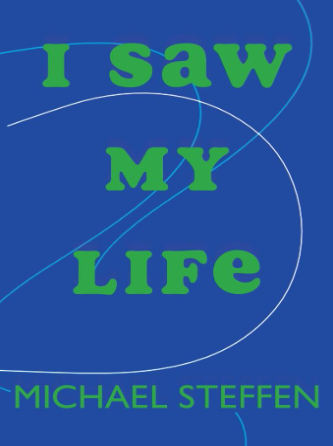
Announcing that contributor Michael Steffen has a new book out, I Saw My Life.

About I Saw My Life: From the saying “I saw my life flash before my eyes”, the book’s title announces thresholds, things and moments of arrest and luminosity, resplendent, but also shocking as a near-death experience might be, and fleeting as any flash may be. The stars in their constellations at night glimpsed up through leaves of a tree, the drama of a scull tipped in a powerful mid-river current, a woven shopping handbag, such objects in their places and handling evoke the weights and sensations revisiting the body in reflective memory, at the heart of poetry’s deeply personal yet widely shared and recognized expressions.

It’s available for review from Lily Poetry Review’s press.

This month’s issue rides high on a wave, surging towards us with a theme of Fluidity.

Image c/o George Hodan

Some contributors literally speak of water. Eva Lianou Petropoulou personifies the creatures of the sea as she calls for an end to litter and pollution. Xoʻjyozova Dildora discusses environmental damage to the Aral Sea and efforts to restore the ecosystem. Elaine Murray celebrates the wonder of the ocean, wishing to become a mermaid. Brian Barbeito recollects being stung by a jellyfish, resting, and turning out okay in time, comforted by natural and literary beauty. Later, he celebrates the seafaring-inspired writing of Joseph Conrad.

Others address different aspects of life that can feel fluid, such as light and vast open landscapes. Juan Vadillo’s review describes Beatriz Saavedra Gastélum’s poetry collection, “Lucid Breath of Light,” as a journey exploring light in its various forms, memories, and transformations. Mesfakus Salahin immerses himself into nature and creativity. Stephen Jarrell Williams’ serene piece evokes a feeling of gentle tranquility. JoyAnne O’Donnell meditates on a pleasant afternoon outside in a meadow. Sheikha A.’s short, lyrical pieces use vivid imagery and concise language to evoke a range of natural and serene scenes. Sayani Mukherjee celebrates the beauty and splendor of an outdoor festival. Yee Leonsoo’s poems use extreme natural places (a salt desert and a deep-sea sinkhole) to explore identity, memory, and the feeling of in-between-ness. Mark Young’s geographies creatively mutate random regions of Australia into works of art.

We can also perceive time as more fluid than linear. Chuck Taylor explores the idea of the “now” and how it can be captured in words, considering the brief moments between perception and recording. Barbaros İrdelmen’s pieces intertwine ordinary images with themes of love and loss to explore how human connection, memory, and longing persist within and against time’s flow. Kareem Abdullah speaks of love, longing, and memory. Mustafa Abdulmalek Al-Sumaidi reminds us that we are all mortal. Abdel Iatif Moubarak renders up a tale of a singer’s faded glory still piercing the darkness of night.

One’s personality and attitudes also morph and shift over the years. Sevara Matnazarova outlines how her personality and outlook on life changed as she grew older. Susie Gharib’s work addresses authenticity, self-expression, and a desire for a more compassionate and peaceful existence. John Grey’s work explores vulnerability and resilience within the human (and natural) experience. Elisa Mascia’s pieces draw upon changeable natural phenomena such as wind and butterflies to dramatize introspective and emotive explorations of love, loss, and transformation. Yeon Myung-ji’s poem uses the act of shelling beans as a rich metaphor for introspection, resilience, and the quiet, often overlooked, processes of life and growth. Duane Vorhees’ poems explore themes of love, identity, and transformation, often blurring the lines between reality and fantasy. Nattie O’ Sheggzy delves into the complexities of simple things and searches for meaning, beauty, and authenticity in a chaotic and often dissonant world.

A whole set of poems by Niall McGrath explore themes of memory, identity, social commentary, and personal struggle, often set against the backdrop of Northern Ireland. Poet Michael Todd Steffen, interviewed by Cristina Deptula about his new book I Saw My Life, explores the intersection of personal and historical memories, identity, and mortality, aiming to inspire reflection, acceptance, and a deeper appreciation for the world around us. Lan Xin highlights how holding space for wonder and gratitude can enhance our daily lives. Kandy Fontaine’s piece mixes theater and prose, celebrating artist Tricia Warden and the intersection of art, literature, and identity, particularly in the context of feminist and queer perspectives.  Christopher Bernard kicks off the next installment of his children’s story Otherwise, a mixture of cultural thought, suspense and middle-grade energy. Tanja Vučićević describes a personal journey, both physically and emotionally, as they navigate through challenges and seek solace and salvation.

Image c/o Jacques Fleury

Writing can play a part in personal reflection and development. J.J. Campbell uses poetry to process his own experiences and emotions and to comment on the human condition. Yongbo Ma’s poems are reflective and introspective, exploring themes of isolation, disconnection, and the search for meaning. Manik Chakraborty wakes us up with the graceful hope of a new morning and continues to seek artistic inspiration despite abandonment from a muse. Ryan Quinn Flanagan probes ordinary life with a poet’s eye, considering the significance of even mundane objects. Jacques Fleury uses rich imagery and references to mythology and literature to highlight the owl’s dualistic nature, embodying both positive and foreboding qualities. Ananya Guha creates a place where a moment of fear and the stories told about it later blend together into a lasting personal myth, half memory, half ghost story. High school English student Reilley Andre expresses a mature perspective on life, pointing out how different people see matters from various points of view, expressing grief, and showing gratitude for his caring sister.

Some love can remain steady amid the flow of time. Gulsanam Mamasiddiqova offers up words of respect and love for her father. Mubina Botirova expresses her love and gratitude for her mother. Tursunova Mehrinoz Oybek qizi pays respect to her mother’s dedication and kindness. Gulchiroy Axmedova expresses tender sentiments of motherly care. Afrose S. celebrates childhood and urges people to protect children. Prasanna Kumar Dalai evokes the tenderness and fragility of early love. Anwer Ghani depicts a steady, tender, and elegant love. Anindya Paul speaks to a profound and intimate romantic devotion that lingers after death. Daniela Chourio-Soto expresses nostalgia through the means of scent. Yongbo Ma’s playful work also encompasses themes of love and human romantic connection.

Of course, not all love stories end happily, and loss is a part of the human condition. Leon Drake’s poems of heavy nostalgia mourn words left unspoken and relationships left unexplored. Donna Dallas speaks of trauma, monstrosity, addiction, and toxic relationships. Kassandra Aguilera’s fragmented poem explores the intoxicating and often painful dynamics of infatuation. On a broader scale, Milena Pčinjski laments the weight of a troubled world, all that could be and all that will never be. Yet, vulnerability is not necessarily weakness, but a prerequisite for change and growth.

Love and caring can also encompass more than one’s own inner circle. Several contributors discuss the fluid state of societal and international relations and advocate for peace and justice. Alan Catlin’s work highlights the human cost of war and its echoes in art and the human soul. Abigail George’s melancholic, reflective poems mourn destruction in Gaza and a personal loss. Shlok Pandey’s fictional story is a poignant portrayal of the human experience during wartime. David Kokoette describes age-old power dynamics and struggles. Mark Wyatt’s fragmented pattern poetry calls out the atrocities made possible by unquestioning obedience to religious and political dictates. Patricia Doyne mocks Donald Trump’s pursuit of grandeur as Bill Tope presents another satirical take on Trump’s proposed arch. Staci Modisette reminds us to protect ourselves while speaking up for peace and justice. Eva Lianou Petropoulou’s gentle words are set to ethereal vocals and a drifting background melody, with an encore here. Аshurоvа Dinоrа Аnvаrqul qizi outlines the role of Uzbekistan’s National Center for Human Rights.

Image c/o Andrea Stockel

Cultural and world history might seem static, but it can also be fluid in the sense that we remember it differently, or remember different aspects of it, over time. What and how we remember can have repercussions in the present. Lan Anh, a Vietnamese economics student in Germany, illustrates the intricate web of relationships between nations, economies, and people, highlighting the invisible boundaries that connect and impact lives in unseen ways. Muhammadyusuf Kozimjonov outlines the historical and cultural development of Uzbekistan. Joseph Ogbonna revels in the intriguing cultural and political history of the island of Corsica. Nozima Gofurova describes the cultural treasures she saw during her tour of Uzbekistan’s Center for Islamic Education. Jernail S. Anand encourages us to look to wise examples from history to create the world we would like to see.

Tasneem Hossain celebrates the richness of the world’s heritage of dance. Federico Wardal highlights an upcoming star-studded event in Rome celebrating Dante Aligheri which will be attended by cinema and theater luminaries. Yatti Sadelli reviews Dr. Bashir Issa Al-Shirawi’s poetry, highlighting his theme of the inner strength and resilience of the world’s women.

Language and literature are part of world culture as well as a bridge among various cultures. Nozimova Shukrona highlights the value and importance of reading as a way to learn and participate in global thought. Jernail S. Anand urges readers to nourish our minds as well as our bodies, with a well-chosen and varied diet. Tursunaliyeva Zilolaxon celebrates the value of books, literature and libraries. Joseph Nechvatal’s review of Rus Khomutoff’s poem “Kaos Karma” examines the work as an abstract machine that combines literature and chaos magick philosophy, exploring themes of multiplicity, singularity, and the relationship between poetry and passion. Yulduz Kurbоnоvа explores how courtesies embedded in the Uzbek language can get lost in translation to other tongues. Delo Isulfi pays tribute to Rohini Kumar Behera, reflecting on his poetry, highlighting Behera’s themes of peace, gratitude, and nature, and how they convey a sense of spirituality and universality.

Education serves as a vital site where tradition and innovation meet—a place where societies negotiate fluid continuity and change. Many contributors discuss best practices for teaching language and other subjects in school. Subanova Dilafruz discusses audio aids for young language learners. Charos Mansurova discusses the phenomenon of English “loan-words” in Korean. Azimova Nilufar Egamberdiyevna compares word structures in English and Uzbek. Pardayeva Yulduz outlines methods of English-Uzbek idiom translation. Abduraufova Nilufar Khurshidjon kizi highlights the need for parents and educators to work together to teach young children. Qurbana Mubinakhon Umidjon qizi discusses how parents and educators can cooperate to inculcate national values in Uzbek children. Usmonaliyeva Bahora Abduvali qizi explores the role of idioms in Uzbek literature. Ahadova Feruzakhon looks at ways to improve student vocabulary knowledge.

Image c/o Omar Sahel

Abduhalilova Sevdora Xayrulla kizi asserts the importance of physical education in school. Isakova Mukhlisa Khusanboevna illuminates exercise as a stress reliever for students. Bakhromova Gulsanam discusses the importance of inclusive education for students with disabilities and practical ways to make that happen. Abdullajanova Shahnozals’hoqxon suggests ways to help shy language students feel more comfortable speaking up in class. Dildoraxon Turgunboyeva explores how to create nurturing and educational preschool environments. Abduhalilova Sevdora offers up a polylexical analysis of English language phraseology. Turdaliyeva Mohidil Baxtiyor qizi discusses classroom activities to enhance student vocabulary. Dildoraxon Turg’unboyeva highlights the value of dictionaries in education. Ahadova Feruzakhon suggests ways to work with vocabulary when teaching young students their native language. Shahnoza Amanboyeva points to 3D modeling and artificial intelligence as tools to enhance science classrooms.

One of education’s important social functions is to prepare students to join the workforce. The global economic landscape is continually in flux, as several contributors discuss. Satimboyeva Risolat Ilhomboy qizi outlines future prospects for job growth given emerging world technologies. Azamova Feruza Abduholiq qizi suggests ways to improve the service sector of Uzbekistan’s economy.

Turning to medicine, Mamadiyorova Durdona outlines the structure and function of the human placenta. Ashurova Parizoda explores the biological characteristics of the parasite Ascaris and its effects on the human body. Xamroyeva Shaxlo discusses the process of blood formation in the human body.

For a look at a widely discussed technology, Rahmonova Barno Kilich qizi probes the economic future of our world after the growth of artificial intelligence. Nurmatova Charosxon Pirnazar qizi also explores how artificial intelligence is reshaping education and the global economy. Toshbotirov Bekjaxon Asliddin o‘g‘li outlines useful roles for AI in the classroom. O’rinboyeva Ziynatjon Anvarbek qizi points to effects of artificial intelligence on society.

Image c/o Andrea Stockel

Dildora Sultonova celebrates human intelligence, singing an ode to her resplendent and resilient dreams. Eva Petropoulou Lianou interviews poet Eldar Akhadov, highlighting his optimism and respect for the next generation.

A common thread in this entire issue is the persistence of human connection in the face of change. Each contributor grapples with how individuals and communities relate to each other, to history and culture, to the natural world. Smaller scale personal narratives and larger stories intertwine as overlapping dimensions of the human story. The blending of artistic forms and styles in several works evokes the complex flowing of ideas within the creative mind, a current that dissolves rigid boundaries among ideas and cultures.

The collection suggests that while much of our lives inevitably flows and shifts with the passage of time and with cultural and technological change, the underlying human impulses to connect, to understand, and to create meaning remain constant..

Essay from Ashurova Parizoda

ASCARIS (ASCARIS LUMBRICOIDES) AND ITS EFFECT ON THE HUMAN BODY

Abstract:

This thesis discusses the parasite Ascaris, its biological characteristics, life cycle, and its effects on the human body. It also provides information about the prevention of ascariasis.

Keywords: Ascaris, parasite, ascariasis, helminth, intestine, larva, infection.

Introduction:

Ascaris is one of the large helminths that live in the human intestine and causes the disease ascariasis. This parasite mainly enters the human body when hygiene rules are not followed.

Main part:

Ascaris lumbricoides belongs to the group of roundworms and can reach a length of 20–40 cm. It mainly lives in the small intestine and feeds on nutrients.

The life cycle of the parasite is complex: eggs are released into the external environment through feces and re-enter the human body through contaminated water or food. The larvae migrate from the intestine through the bloodstream to the lungs, then are swallowed again and return to the intestine where they mature.

Ascaris causes several harmful effects in the body:

digestive disorders

allergic reactions

intestinal obstruction (in severe cases)

general weakness and weight loss

Conclusion:

Ascariasis is one of the most widespread parasitic diseases. To prevent it, it is important to follow personal hygiene rules, thoroughly wash fruits and vegetables, and consume clean drinking water

Ashurova Parizoda 

Uzbekistan

Poetry from Milena Pčinjski

UNDERSTANDING OF REALITY

We live, yet we do not understand reality.

Why do children starve?

Why do women sell their bodies to strangers?

Why do men ignite wars in the name of peace?

Who writes the rules that shape our suffering?

We inhabit a world that often feels merciless,

as if governed by fractured minds

granted authority over what we call reality.

Few realize that nothing truly belongs to us —

we are not the owners of the ground we stand on.

And even when those dark minds leave this world,

others arrive in their place,

equally distorted, 

sometimes even more so,

continuing what feels like an inherited task:

the slow erosion of what could have been lived in joy—

our lives, 

the purity of water, air, and food,

and the fragile abundance of nature itself.

It begins to seem as if everything is already decided,

as if the world has fallen into a logic we cannot reverse.

We try to understand,

but understanding does not grant control.

The rules are rigid, 

impersonal, absolute;

and we stand within them —

aware, yet powerless,

small against structures we did not design.

The burden of awareness is 

seeing clearly and feeling deeply 

the weight of a reality 

that cannot be changed.

Essay from Bakhromova Gulsanam

THE GOALS, OBJECTIVES, AND PRINCIPLES OF INCLUSIVE EDUCATION

Bakhromova Gulsanam, a second-year student in the Surdopedagogy program, Faculty of Pedagogy and Psychology, Kokand State University.

ABSTRACT

This article discusses the goals, objectives, and principles of inclusive education, as well as its significance in the modern context. It also examines why students should be included in inclusive education and highlights the priority of its current goals and objectives.

 Keywords: Inclusive, social, psychological, child, behavior, physical, mental, education, needs, pedagogical.

Based on the humanistic principles of any state policy, the conditions created in society for persons with disabilities and socially vulnerable groups, as well as comprehensive support in all areas necessary for their free and prosperous living, reflect great attention to people with disabilities. The fact that one of the five principles of Uzbekistan’s development is defined as a strong social policy is a clear indication that the country is moving toward improving the lives of persons with various types of disabilities and those in need of social support through the targeted implementation of comprehensive approaches. According to statistical data, there are about 240 million children with disabilities worldwide. Like all children, they need quality education to develop their skills and fully realize their potential. Nevertheless, children with disabilities are often overlooked in policy-making, which limits their access to education and participation in social, economic, and political life. Worldwide, these children are more likely not to attend school. They face discrimination, stigma, and persistent barriers to education arising from the failure of decision-makers to systematically include disability in school services.

Inclusive education develops the general education process and implements an education system suitable for all children. It creates favorable conditions for children with disabilities by organizing additional support and facilities that facilitate their access to education. Educating children with disabilities in a separate special education system makes it difficult for them to adapt to society after graduating from school. In addition, they are forced to live away from their families, which may contribute to the formation of various negative behavioral traits. These children may become dependent and develop difficulties in self-care.”

To implement inclusive education, the integral criteria of the developed system for staff consist of personal and procedural components. The personal component includes the following socio-psychological indicators: social activity, readiness for self-regulation of behavior, self-awareness, and self-esteem related to physical and mental health. During the learning process, students demonstrate changes in certain personal qualities, which makes it possible to assess the level of achieved socialization and identify emerging needs for creating and promoting additional conditions for social integration. The procedural (socio-pedagogical) component does not directly reflect changes in the personal characteristics of children with special educational needs; rather, it helps to understand the mechanisms of influence of technologies and methods applied in the socialization process.

This component includes the accessibility of inclusive education for children with special educational needs, the inclusive competence of participants in the educational process, and the readiness of the community to provide volunteer-based services. Ensuring access to inclusive education plays an important role in implementing socialization mechanisms for young people with special needs, as it helps remove key barriers to obtaining quality education and to full and independent participation in society. When evaluating the effectiveness of socio-pedagogical work, first of all, we identify the achievements made in working with applicants (providing information about study conditions, professional guidance, adaptation to the student environment, and preparation for university admission by teachers). The next indicator requiring detailed analysis is the adaptation of the educational base to students’ individual needs (architectural accessibility, adaptation of classrooms and workplaces, provision of learning materials and modern information technologies, and modifications in accordance with curricula).

The main goal of inclusive education is to involve all children who have access to education, including children with special educational needs, in the general education process. Inclusive education is of great importance as it provides access to education for children with special needs. It means the inclusion of such children in the continuous general education system. In many cases, parents of children with special educational needs have incorrect perceptions about their children’s educational rights and other opportunities; as a result, they do not demand proper education for these children.

The objectives of inclusive education are:

1.To create a unified adapted social environment that ensures equal treatment of all children and excludes any form of discrimination against students with different developmental abilities;

2.To develop a tolerant attitude among the public and all participants of the educational process toward the issues of students with special educational needs;

3.To develop the intellectual and social potential of both typically developing children and children with special educational needs within the educational process;

4.To provide opportunities for all students to master preschool, general secondary, vocational, and higher education programs in accordance with state educational standards;

5.To create conditions for the comprehensive development of students, activation of their emotional-volitional sphere and cognitive activity, as well as the formation of social skills and competencies;

6.To provide advisory support to families raising children with special educational needs, to increase parents’ awareness of educational and upbringing methods, pedagogical technologies, teaching methods and tools, and to offer psychological and pedagogical support to them.

In the process of inclusive education, students with special educational needs are taught together with typically developing children in the same school and classroom. Children with disabilities require special support from the very first days they enter school. Such support is considered necessary throughout their entire lives. Therefore, it is essential to create favorable conditions for the social development of these students starting from the early stages of schooling.

The educational process organized for students with disabilities requires identifying forms of inclusive education and integrating them into the general education system. Such integration must correspond to their specific educational needs.

Principles: The main principles of inclusive education. The implementation of an education system always requires adherence to certain rules and principles. The implementation of inclusive education is based on the following principles:

  1. Recognition of inclusive education.
  2. Accessibility of inclusive education for all learners.
  3. The principle of interaction and cooperation (communication).
  4. The principle of decentralization.
  5. The principle of a comprehensive approach in inclusive education.
  6. The principle of flexibility in inclusive education.
  7. The principle of professionalism.”

The role and significance of inclusive education in the development of society require the implementation of the following tasks: creating the necessary psychological, pedagogical, and corrective conditions for the education of children and adolescents with special needs in educational institutions; ensuring their mental development and social adaptation through the implementation of general education programs and corrective work oriented toward their abilities; guaranteeing equal rights to education for all students; meeting the needs of both children with and without disabilities with the active participation of society and families, and ensuring early social adaptation; realizing the right of children and adolescents with special needs to live with their families without separation; and forming a friendly, compassionate, and supportive attitude in society toward children and adolescents with special needs.

In the full implementation of the above tasks, special attention should first be paid to the following: a child with special needs is still a child like all others and has the right to be recognized and respected; therefore, referring to them by their impairment is considered inappropriate. Regardless of their condition or abilities, every child always needs the support of adults. Isolating or labeling them is not consistent with the principles of humanism. Previously, terms such as “abnormal children,” “disabled children,” “blind children,” “deaf children,” “mentally disabled children,” and “children with locomotor disabilities” were used. However, such terms violate the rights of children with special needs and have a negative impact on parents as well.

Although children with special needs may not perform tasks as quickly or perfectly as typically developing children, they are still able to complete tasks according to their abilities. Protecting the rights of the child and treating them positively is an important educational approach. Therefore, any form of discrimination or disrespect must be avoided.”

Inclusive education is an important approach that ensures equal access to education for all children, including those with special educational needs. It promotes the creation of supportive psychological, pedagogical, and social conditions that enable children to develop their potential and successfully integrate into society. The main principles and tasks of inclusive education focus on equality, accessibility, cooperation, flexibility, and respect for individual differences.

This system not only improves the quality of education but also strengthens social inclusion, tolerance, and humanistic values within society. It helps eliminate discrimination and negative labeling, ensuring that every child is recognized, respected, and supported according to their abilities. Therefore, inclusive education plays a key role in the development of a fair and compassionate society where all children have the opportunity to learn, grow, and participate fully in social life.

List of References

1.Sadikovna, Rakhimova Khurshidakhon. “Theoretical Foundations For Teaching Future Surdopedagogs To The Development Of Speech Of Children With Cochlear Implants.” Onomázein 62 (2023): December (2023): 2408-2416.

Amirsaidova SH.M. “Maxsus pedagogika fani taraqqiyotida sharq mutafakkiri g‘oyalarining o‘rni va roli” . Ped. fan. nom… diss. – T., 2006.

2.  IIektra Spandagou, Cathy Little, David Evans, Michelle L. Inklusive Education in Schools and Early. Childhood Settings.springer Springer Singapore. 2020.

3. Инклюзивное образование в Испании. Пашкова.М, Скуднова. Т.Д.2018.

4. Екатерина Михальч. Инклюзивное образование. 2021.

5. Наталья Микляева, Татьяна Чудесникова, Анна Виленская, Ольга Кудравец, Светлана Семенака. Инклюзивное образование детей с ограниченными возможностями здоровья. Москва Юрайт. 2021.

Essay from Shahnoza Amanboyeva

Digitizing Laboratory Education: The Synergy of 3D Modeling and Artificial Intelligence

Introduction

In the modern educational landscape, updating the teaching methodology is no longer just about providing hardware; it is about the complete digital transformation of the learning experience. Traditional laboratory settings often face significant hurdles, including a shortage of advanced equipment, high maintenance costs, and safety constraints that prevent complex experimentation. These limitations frequently hinder students from gaining the necessary practical depth in their fields.

The Power of 3D Modeling: Creating Digital Twins

The integration of 3D modeling offers a transformative solution by creating “Digital Twins” of physical laboratory environments. Unlike static diagrams, 3D simulations allow students to interact with machinery and chemical processes in a risk-free, virtual space. This is particularly vital for engineering and science students, as it enables them to perform high-risk experiments—such as high-voltage electrical testing or volatile chemical reactions—without the danger of physical harm or equipment damage. The ability to repeat these simulations infinitely ensures that the student masters the procedure before ever stepping into a physical lab.

AI Integration: Personalized Learning Trajectories

Artificial Intelligence (AI) acts as the “brain” of these digital laboratories. By incorporating AI algorithms, the virtual environment can monitor a student’s progress in real-time. It analyzes the logic behind their actions, the errors they commit, and the time spent on specific tasks.

Adaptive Feedback: If a student struggles with a particular step, the AI provides contextual hints or suggests supplementary theoretical material.

Customization: The system can adjust the difficulty level of the experiments based on the learner’s individual performance, making education truly personalized.

Challenges and Future Outlook

Despite the obvious advantages, the transition to fully digital labs is not without obstacles. Developing high-fidelity 3D environments requires significant computational power and advanced programming expertise (utilizing tools like Python, Unity, or Unreal Engine). Furthermore, digital simulations cannot yet fully replicate the tactile sensory experience of a physical laboratory. Therefore, a hybrid model—combining virtual preparation with physical execution—currently stands as the most effective pedagogical approach.

Conclusion

3D modeling and AI are not just tools; they are the architects of a new era in laboratory education. These technologies offer a scalable, safe, and cost-effective way to enhance the quality of higher education. To fully realize this potential, universities must invest in both technical infrastructure and the digital literacy of their faculty. The future of engineering education lies in this seamless blend of the virtual and the physical worlds.


Shahnoza Amanboyeva is a dedicated first-year Computer Engineering student at Urgench State University. She is passionate about the intersection of technology and education, specifically focusing on virtual simulations and AI-driven learning systems.

Essay from Isakova Mukhlisa Khusanboevna

ADAPTATION OF STUDENTS’ BODIES TO PHYSICAL LOADS AND METHODS OF SELF-CONTROL

Philology of Teaching English Language, Groups 25–26

Isakova Mukhlisa Khusanboevna

Supervisor: Senior Lecturer Khayitboev Nabijon Sheraliyevich

1st-year student at KUAF University

ANNOTATION

This article examines the impact of regular physical activity on students’ stress levels and academic performance. The importance of physical recreation as a means of preventing emotional burnout during examination periods is substantiated. An analysis of self-control methods and their role in maintaining the body’s homeostasis under intensive mental нагрузки is also presented.

Keywords: physical culture, students, adaptation, psycho-emotional state, hypodynamia, self-control, healthy lifestyle.

The relevance of this topic is обусловлена a sharp decrease in the level of physical activity among modern youth in the context of the digitalization of the educational process. Students spend more than 8–10 hours a day using computers and smartphones, which leads to the development of “muscle starvation” (hypodynamia). This not only weakens the muscular system but also negatively affects the cognitive functions of the brain.

The aim of this work is to study the mechanisms of the influence of physical exercises on the nervous system and to develop recommendations for optimizing work and rest schedules. The research objectives include analyzing the phases of fatigue and identifying the most effective forms of recreation.

MAIN PART

1. Physiological Mechanisms of Stress Reduction

Physical activity activates the endocrine system. During moderate aerobic exercise, cortisol (the stress hormone) production decreases, while the synthesis of endorphins and dopamine increases. This creates a “biological release” effect necessary after prolonged static tension.

2. Prevention of Hypodynamia at University

To maintain performance, it is necessary to introduce micro-breaks (physical exercise minutes) every 90 minutes of mental work. The author identifies three levels of adaptation of the organism to physical нагрузкам:

Immediate adaptation: changes in heart rate (HR) and deeper breathing during exercise.

Long-term adaptation: structural changes in the cardiovascular system and an increase in lung vital capacity.

3. Methods of Objective Self-Control

In order for physical activity to be beneficial, students must possess self-diagnosis skills. The most important indicators include the Quetelet index (BMI) and the Stange test (breath-holding on inhalation), which helps assess the condition of the respiratory system.

It is recommended to keep a “Self-Control Diary”, where the following are recorded:

Pulse rate at rest and after exercise

Subjective well-being (sleep, appetite, willingness to train)

Dynamics of anthropometric indicators

CONCLUSION

In conclusion, physical culture can be considered the only natural antagonist to nervous overstrain. Regular exercise (at least 150 minutes per week) not only strengthens health but also improves working memory capacity and concentration. The formation of a movement culture is not an optional task but a foundation for the successful professional activity of a future specialist.

REFERENCES

Lubysheva L. I. Sociology of Physical Culture and Sport: Textbook for University Students. — Moscow: Akademiya, 2021. — 272 p.

Matveev L. P. Theory and Methodology of Physical Culture. — Moscow: Fizkultura i Sport, 2019. — 544 p.

Kholodov Zh. K., Kuznetsov V. S. Theory and Methodology of Physical Education and Sport. — Moscow: Publishing Center “Akademiya”, 2022. — 480 p.

Vilensky M. Ya. Physical Culture and Healthy Lifestyle of a Student: Study Guide. — Moscow: KnoRus, 2020. — 240 p.