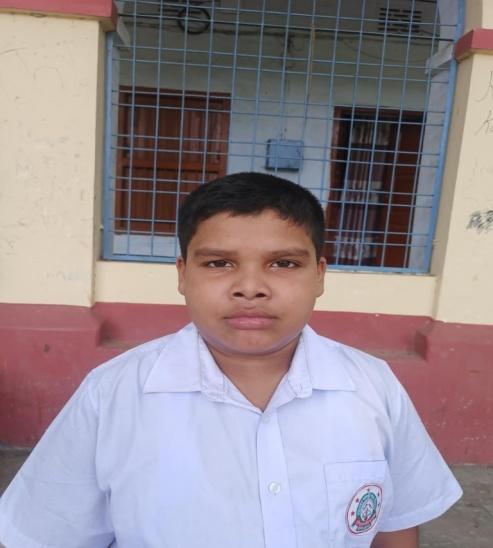
Poetry from Ismailova Orastabonu

🌹Isn't she an ANGEL OF HEAVEN!🌹

   Brought spring to the gardens,
   The moon was shining in front of his child.
   The first song that he sang was divided by the gods,
   Isn't our soul a bond, woman?
   Isn't she an angel of heaven?

      A woman is the light of our house, the blooming flower of our garden, the angel of our house. A woman is a masterpiece among the blessings created by God!

       In fact, Allah took the beauty from the moon shining in the sky, the eyebrows and eyelashes from the dark night, the eyes from the stars, the language from the nightingale, the willow tree from the willow, the delicacy from the flower, and the love from the ocean, and created a perfect unity and named it woman.

    A woman is a great creature who took care of her child in her body for nine months and gave her life.
     So what is happiness for a woman?

     A woman who carries a child and caressing her little body with love is the happiest woman in the world. A woman who devotes herself to her little girl and sews dresses with her hardworking hands, there is no happier person than her. If you give a woman a sweet word and something to cheer her up, she will consider herself happy.

    Let's pay attention to these sentences of Tursunoy Sadygova about women: "A woman is not a woman, but a flower that always trembles in the cave called the wind, in the stormy season called the family, and still spreads its beautiful flowers."

   A woman is indeed a flower. Dear friends, let's try to describe a woman as a crimson blooming rose. The red color in the flower is the redness on the face of an Uzbek woman, that is, her modesty, ibo. The expression radiating from the flower is endless love from the ocean, which never ends, no matter how much it costs. Its strong body that climbs to the heights is its lifelong friend, that is, its life partner. Green leaves are shared by the people and relatives, and the thorns in it are a weapon against the sufferings and injustices in life. are the children of...

Ismailova Orastabonu is the daughter of Navruz, a 10th grade student of the 13th general secondary school of Kasbi district, Kashkadarya region.

Short story from Bill Tope


Fruit Salad

"I remember what it was like," recalled Beth softly, speaking to her daughter, "when I had someone."

Deb peered at her mom with concern. It wasn't often that the older woman assumed a mantle of self-pity or showed signs of melancholy. "You've got me, Mom," she said hopefully.

"You know what I mean," protested Beth. "I think kids nowadays call it a 'significant other.'" Deb nodded. "Or maybe you don't know," suggested Beth. "You're only nineteen. Maybe you haven't experienced..."

"I know what you mean, Mom," said Deb, cutting her off. "I've had boyfriends - and lovers." Beth looked at her, as though for the first time.

"Yes," she murmured thoughtfully. "Yes, of course you have." Deb was indeed a beautiful girl, as well as a lovely person. The bright spot in Beth's life.

Deb suddenly felt a pang of guilt, just for having a normal life and regular relationships, while her mom was distraught. And lonely. Beth's husband - Deb's father - had died three years before in an automobile accident, which had left Beth bound to a walker. She leaned over the aluminum frame now, placed her coffee cup into the dishwasher.

"You need to get out, Mom," Deb said yet again, "and meet people. Maybe find a boyfriend," she added with a gentle smile.

Beth snorted softly. "Lots of men looking for a chick that they can take out, maybe go dancing, cycling, roller blading in the park," said Beth wryly. "It would work out beautifully."

Deb's face fell. "Mom! Not everyone wants a dance partner or a jogger or a bike rider for a companion. You've got a lot to offer. You're gorgeous, and you're just 39. Not everyone is an ableist, not everyone is hypercritical or wants to fix you!"

Beth merely nodded, unconvinced. They'd had this conversation umpteen times before.

Deb glanced at her phone. "I've got to get to class," she said, gathering up her school books.

"And I have to shop for groceries," remembered her mother, walking to the parson's table in the hallway to retrieve her keys. "Will you be home for supper, or do you have a date with a significant other?" she asked, smiling with love at her daughter.

At the market, Beth piloted an electric cart through the aisles of the store, pausing to snatch items from low-lying shelves. sometimes using her reacher-grabber to seize items higher up. Moving rapidly through the grocery, she came to the produce section and grabbed navel oranges from a bin. Misjudging the distance to her cart, she dropped the fruit and it rolled merrily away. "Shit!" she said crossly, tracking the path of the oranges with her eyes.

"I got it!" said a man huskily, stooping to pick up the orange globes. "Here you are," he said, handing the fruit to Beth. She smiled her gratitude. Pausing for a moment, he asked her, "Are you new?"

She blinked. "No, not really," she said, "I'm nearly forty."

It was his turn to blink, then he grinned. "Good one!" he said. "I mean, I haven't seen you here before, have I?" She looked at him for the first time. He was tall - six feet - and slender, had graying dark hair. And he seemed perfectly pleasant. What did he want? she wondered.

"I usually just shop on weekends," she explained briefly.

He nodded. "My name is John," he said.

"Beth," she introduced herself. They shook. His hand felt warm.

"Well, listen, when you get your shopping done, if you like, I can help you put your groceries in your car - if you like."

She stiffened just a bit. "Thanks, John, but I always get one of the boys to do it; it's their job, you know?"

He immediately nodded. "I understand. I didn't mean to overstep, Beth." He seemed embarrassed. "I'll be seeing you," he said, and in a flash, he was gone.

Beth frowned. He was only being helpful, she told herself. He didn't mean any harm. "Shit!" she said again.


Beth stood in her kitchen, putting away the items she'd just purchased, when her landline rang; unlike her daughter, she eschewed cell phones. It had been a careless motorist's use of such an instrument which had resulted in the tragedy which cost the life of her husband - and had put her in shackles. Walking to the counter, she picked up the receiver and said hello.

"Hi, Mom," said Deb, speaking very rapidly. "I'll be home for supper, like I said, but I want to know, is it alright if I bring two people with?"

"Of course. Of course," said Beth. "Are they friends of yours?"

"Well, sorta. They're students in my writing class and we're working on a project together and we wanted to meet tonight. I thought we could just meet for supper, if that's okay?"

"Not a problem, baby," Beth assured her. "Do they like fried chicken?"

"Who doesn't?" replied Deb. "We'll be over about four, work, then have supper, and then go back to work."

"See you later, baby," said Beth, secretly pleased to interact with other people for a change.


The "children," as Beth thought of them, worked steadily from 4pm until supper time, at which point Beth summoned them to dinner. As they filed around the dining room table, Beth was taken aback. In addition to the 20-year-old blond girl that Deb introduced as Stephani, was a man who turned out to be none other than John, the helpful stranger from Kroger's. Beth took a moment to absorb the coincidence, but John was not at all discomfited.

"Beth!" he exclaimed happily. Beth smiled.

"You two know each other?" asked Deb, pointing at them both.

"I met your mom at the grocery store," explained John loquaciously. "She was tossing around navel oranges," he added with a smile. After explanations were tendered, they sat down to eat. Stephani and John were uncommonly gracious, entertaining guests and Beth found herself immersed in a warm camaraderie. John, as it turned out, despite his prematurely graying brows, was but 33 years old, an older student due to six years spent in the Air Force, and he was majoring in engineering. He and Beth were almost palpably struck by a connection to one another. Moreover, he seemed to consider her disability not at all. A good time was had by all. Over the next several weeks, John ventured several times to Beth's home to work on the project with Deb and Stephani. He stayed for dinner twice more and one time took "the girls" out to dinner at a nice restaurant, his treat. He was solicitous of Beth, but not hovering, and even liked the same foods that she did. At evening's end, she found her face fatigued from the endless smiling.

"What is this project you all are working on?" asked Beth curiously one night.

"It's the Magnum," replied Stephani at once. "We're editing the college literary journal this semester; you know, Deb and I are creative writing majors, and..."

"But," interrupted Beth, "I thought you were studying engineering," she said, turning to John.

"I've got a minor in creative writing," offered John, taking up the thread. "They say people with technical skills often don't know how to effectively communicate with others," he explained. "I've found it a very useful experience."

Beth smiled warmly, a gesture which Deb caught. She, in turn, smiled with pleasure.


Two nights later, John called Beth and asked if he could come over. At odds with herself, she said yes. When he arrived, he carried with him two bottles of sangria, Beth's favorite; how had he known that? she wondered. Sitting in the living room before the muted television, they toasted everyone they ever knew. They discussed everything: school, relationships, work, you name it. Finally, the evening began to wind down, much to Beth's dismay.

"I've got to get going," murmured John. Beth glanced at the clock on the wall: 1:15.

"Are you okay to drive?" she asked. He assured her that he was. "Oh, well, I'm sorry to see you go, John," she said in an inebriated voice. "I've really enjoyed your company," she added, wondering if John would think her a lush.

Without warning, John leaned in and kissed Beth on the lips. It fairly took her breath away. Then he did so again and she opened her mouth and savored the kiss. It had been so long since she had been kissed like this. As she struggled to catch her breath, he leaned in and kissed her once more, rubbing his fingers lightly over her breasts. Beth lost all control, clutched John fiercely and kissed him back, passionately.


The next morning, John had arisen, dressed and departed even before Beth had regained awareness. She was dimly aware of being kissed as she slept. She wondered briefly if it had all been a dream. But then she saw the note. John had written a letter in what Beth thought was beautiful penmanship, and attached it, in a gesture of whimsy, to her walker. In the missive. he thanked her for "a remarkable evening" and hoped that she had a wonderful day.

All day long, Beth wondered at the nature of Deb's relationship with her new love interest, John. Love interest? she asked herself. Was she kidding? No, she decided, she was not. As they stood about the table, setting places for dinner, Beth snuck a look at her daughter.

"Could I ask you something, honey?" she asked. "Something... personal?"

Deb glanced up. "Sure, Mom."

"Have you ever... been intimate with John?" inquired her mother with growing trepidation.

Deb said nothing at first, then she replied, "Yes."

Beth felt everything she had built up in her mind come crashing down on her.

"Mom," said Deb, "I'm sorry...."

"Don't be ridiculous," said her mother hastily. "You're a young and beautiful and desirable woman, in your prime. What man wouldn't want you?" Damn it, she felt tears welling up in her eyes. "If he hadn't wanted you, I would worry about John," she added.

"It was only the one time, though," said Deb. "Last year. It was nothing; I mean, we're friends, but we're not... intimate... anymore." Staring down at the table, Beth only nodded. "Okay?" asked her daughter.

Beth glanced up now, nodded again. "Okay, baby. Thank you for your honesty."


Beth reconnoitered with John several more times in the ensuing weeks, though they were not again intimate. Beth wondered at that, considered procuring birth control, which she hadn't accessed for years. Sometimes, the "children" worked in the living room and Beth and John met afterward for wine; Deb seemed fine with it and Beth, so desperate for company, put to the back of her mind the idea that her paramour was perhaps a player, and had already achieved what he had sought. They still enjoyed one another's company, however. Things proceeded apace, until they didn't. One day, Beth's mind swooned as she did a home pregnancy test.


"Abortions are still legal in this state - for now," added John, looking solicitously at Beth. They were seated at the kitchen table one morning; Beth had asked him to drop by after class.

"I know all about women's reproductive rights," muttered Beth unhappily. "And I'm not interested." It had been nearly six weeks since her one night of intimacy with John; now she was torn.

"How would you possibly carry a baby to term, then care for it, for - the next eighteen years?" he asked, endeavoring to be 'reasonable.' "I mean, you're..."

"Disabled?" she completed his sentence.

"That's not what I was going to say," he protested unconvincingly.

"It was all impromptu, if you'll recall," she said ruefully. "But in retrospect, had I thought of it, I suppose I had some notion that the baby's father would in some way be involved," ventured Beth. What he observed on John's face did not make her happy. She saw goodbye.

"I can't do this, Beth," said John, raising his hands to shoulder level, palms out, and rising to his feet. "I'm going to graduate in a year and then, who knows what happens? Job opportunities in engineering exist world-wide. I can't commit to staying in Chicago, or anywhere else. You understand, don't you?"

"Maybe you should have suited up prior to going into battle," suggested Beth wryly. "It's like you didn't consider the consequences of your actions."

"Well," he came back at her, "if you'd been on the pill..."

"I hadn't had sex in three years," she said a little shrilly. "I thought I'd never make love again. Then you rode in on your white charger and showed me how everything could be different!" Tears were seeping from her eyes now. This was just too much, she thought, drawing her fingers to her lips. The lips that John had kissed.

John turned and made for the door to the kitchen. Deb, standing outside, had heard everything. He met her on his way out.

"I'll call you about the project," he told her gruffly.

She stared at him. "Go. Fuck. Yourself." she said in reply. He left without another word.

After John had departed, Deb and Beth sat at the kitchen table, Deb with a glass of wine, Beth with a decaffeinated cola. They sat in companionable silence for some time, until at length, Deb spoke.

"You're still a young woman, Mom," she said. Beth stared at her. "We're in this together," Deb added. "Next time, though," she said.

Beth looked at her daughter. "Yes?" she asked.

"Pick up your own damn oranges." Together, they laughed.

Poetry from Stephen Jarrell Williams

Think About It

Turning myself inside out
for you

so you can sniff and contemplate
if I'm worth a smoke

all my jokes
meaning more than tears

and you're beginning to understand
my love is beyond endless and more

faithfull
as the spin of the earth and beat of stars

so come
and make us as one....


A Way Home

Let's run together
quick step and jump holding hands
over this nervous world

sun tanning our bare backs and rumps
easy breathing and laughing
with no fear

we will be like children
long before the aging of flowers
their scent stopping time in awe

so smack your lips
we're going to kiss
a sugar dream

lasting forever!


Flight

In the air
floating

I'm your hero
and you're my Goddess

clouds soft
stopping when we want
lying upon them

sunset's far reaching fingertips of warmth
we dance naked
into a night sky of teasing stars.


Created

And when our dreams melt
we will float in the sea
under the night with the coming dawn

I seeing you and you seeing me
soon in heaven
where we were created to be.


Stephen Jarrell Williams can be found on X Twitter @papapoet

Essay from Norsafarova Nilufar

Place and importance of the imperative, united and separate clauses and the input device in the sentence

                                               Norsafarova Nilufar Boybori’s daughter 

Shahrisabz State Pedagogical Institute 1st stage student of Uzbek language and literature

First of all, let’s talk about motivation and its classification. The imperative is a word expander of the second person pronoun that is not directly related to the linguistic structure of the sentence, expressed or not expressed in the structure of the sentence. Just as a separate part enters into a meaningful relationship with a separate part, the impulse also has a meaningful connection with the person to whom the speech is directed, the subject: 1

“Are you afraid, teacher?” he asked. Brother Gafur was pale.

Look at me, brother Gafur, – I tried to praise Domla like a demon.

Look at me, brother.

The old and the old women, who stared at the paths of war, were praying until dawn: God, keep my child under your shelter.

– Father, I still haven’t learned academic skills. 2

R. Sayfullayeva, B. Mengliyev, G. Boqiyeva, M. Qurbonova, Z. Yunusova, M. Abuzalova. Current Uzbek literary language. Tashkent-2009 (page 376)

Said Ahmed “What I lost and what I found” “Sano-standard” publishing house. Tashkent-2019 (pages 51, 57, 99, 239, 63)

Adverbs can be expanded with other words and used in conjunction:

My brother, my brother Gafur, I have been looking for you for 500 years. 3

Learn how to read, you ugly bastard!” my grandfather mutters, rubbing his eyes as if waking up from sleep. 4

           Along these lines, impulses can be combined and come in the form of a single piece:

“My lamb, my palm…” he whispered

“Stupid, naughty person, wretched servant!” he cried.

He used to shout “Benomus, dilozors!” 5

       The place of the impulse expressing the person or thing to which the speaker’s speech is directed is not fixed in the sentence, that is, it can appear at the beginning of the sentence, in the middle of the sentence, and at the end of the sentence:

At the beginning of the speech: Vasily Vasilievich, Lexey is absent…

In the middle of the conversation, he said: “Aren’t you ashamed, Vanka, we are both inferior to you?”

At the end of the sentence: – Oh, that’s life, Ms. Azra. 7

The impulse itself can be used as a sentence:

“You fools!” he shouted to the crowd.

– O Muslim people! 8

The boy shouted: “Daddy!” 9

It can be seen from these that the urge is directed towards a certain person or thing. In the process of syntactic analysis, two wavy lines are drawn under it. As we have seen above, the place in the sentence is not stable.

Said Ahmed “What I lost and what I found” “Sano-standard” publishing house. Tashkent-2019 (page 83)

Maxim Gorky “Childhood”. “New edition” Tashkent-2019 (page 55)

Maxim Gorky “Childhood”. “New edition” Tashkent-2019 (page 43)

Maxim Gorky “Childhood”. “New edition” Tashkent-2019 (pages 85, 65)

Hakan Mengyuch “No meeting is a coincidence.” “Zukko Kitabkhan” publishing house. Tashkent-2022 (page 143)

 Hakan Mengyuch “No meeting is a coincidence.” “Zukko Kitabkhan” publishing house. Tashkent-2022 (page 188)

R. Sayfullayeva, B. Mengliyev, G. Boqiyeva, M. Qurbonova, Z. Yunusova, M. Abuzalova. Current Uzbek literary language. Tashkent-2009 (page 377)

Lumpy lumps. The parts of the sentence that are the answer to the same question, perform the same syntactic function, are in equal relationship with each other, and are connected to one common part are called coherent parts of the sentence. 10

Around the table sat a famous poet, who knew Bedil by heart, a great Navoi scholar, Domla Baqi, a friend of Gafur Ghulam, a poet from Andijan who recently moved to Tashkent, and Domla Habibi.

Yunus, Baqi, and Habibi are waiting like birds.

Come and chat and make my party happy.

Hamid Ghulam, Shuhrat, Turob Tola, Vahab Rozimatov and I went on many trips with him and became attached to him for life.

Tashpolat Ahmad, Ahad Hasan and Ghulam Shomurodov were waiting.

These horrors, these differences did not open the eyes of the former Soviet leaders. 11

The interaction of the members of the united series. The members of a coherent series enter into a syntactic relationship through equalization, this relationship is carried out only through intonation, with equal conjunctions and prepositions in the function of equal conjunctions, and without conjunctions. Counting intonation is also present when units come into contact with connectors. 12 Also, connected parts are connected to each other by means of all types of connectors (joining, addition, subtraction). In the process of syntactic analysis, all the combined clauses appear as the same clause in the sentence.

       Compound sentences sometimes include generalizing units. They are words and units that summarize the conjuncts and come before or after the conjunctive clauses. The generalizers that come before the conjunctive clause usually require an explanation. The generalizers that come after the unitary part have the characteristic of completion and conclusion. For example: everything: houses, walls, trees sank silently into the darkness. (Oybek). Streets, fields, and villages seem to be asking me about Masuda. (P. Kadirov).

M. Hamroyev, D. Muhammedova, D. Shodmonkulova, Kh. Gulomova, Sh. Yoldasheva. Mother tongue. Tashkent “Economy-Finance” 2007 (p. 214)

Said Ahmed “What I lost and what I found” “Sano-standard” publishing house. Tashkent-2019 (pages 26, 28, 89, 216, 239)

M. Hamroyev, D. Muhammedova, D. Shodmonkulova, Kh. Gulomova, Sh. Yoldasheva. Mother tongue. Tashkent “Economy-Finance” 2007 (p. 216)

If the generalizing units come before the units in the sentences with a single clause, two dots are placed after the unit: Everywhere: in the houses, on the streets, the face of the hazan lying twisted in the morning becomes white from the morning. (Oybek).

When the generalizing units come after the organizers, a “dash” is placed before them: Men, women, children – the greeters ran along the wagon. (R. Fayziy). 13

     When connected with a counting tone, the solid parts are separated by a “comma”.

       Separate pieces. In a sentence, the meaning of a part is more uncertain in the opinion of the speaker, and in order to clarify and explain its meaning, he introduces another similar part into the sentence. For example, in the sentence “I started the work from here” the meaning of the complement “THEREFORE” is unclear. Therefore, the speaker introduces another filler with a more precise meaning: I started the work with this, that is, with an explanation. 14

Examples:

I met Azimjon in a teahouse by the river, in a crowded place;

My love is pure and pure! 15

      Input device. Introduction device is in the form of a sentence and is a means of expressing a new idea as an addition to the idea understood from the sentence. The introduction is full of its verbal essence from the introduction sentence (although the introduction sentence is in the form of a sentence, it is more introduction has the nature of a word), is distinguished by the uniqueness of the substantive connection with the main sentence. 16

  0tinoy was often engaged in his own work, the khalifa (in today’s language, the head of the class) led the class, and the khalifa himself punished the girls who misbehaved. (K. Kahhorova). 17

       Sentences with an input device are similar to a compound sentence. However intonation specificity is one of the main qualities that distinguish them from compound sentences.

M. Hamroyev, D. Muhammedova, D. Shodmonkulova, Kh. Gulomova, Sh. Yoldasheva. Mother tongue. Tashkent “Economy-Finance” 2007 (pages 217-218)

Mother tongue. Textbook for the 8th grade of general secondary schools. Publishing house named after Cholpon. Tashkent-2019. (page 118)

Mother tongue. Textbook for the 8th grade of general secondary schools. Publishing house named after Cholpon. Tashkent-2019. (page 121)

R. Sayfullayeva, B. Mengliyev, G. Boqiyeva, M. Qurbonova, Z. Yunusova, M. Abuzalova. Current Uzbek literary language. Tashkent-2009 (page 379)

Mother tongue. Textbook for the 8th grade of general secondary schools. Publishing house named after Cholpon. Tashkent-2019. (page 127)

They are separated from other parts of the sentence by “bracket”. As an example of the different aspect of the input device from the cohesive clauses and impulses, we can show that its place in the sentence is fixed, that is, the input device has a fixed place in the structure of the sentence. As we know, input devices express an additional idea to the main idea. That’s why it can never come at the beginning of a sentence. Because it is inappropriate for us to introduce additional ideas without starting the main idea. At the same time, the introduction usually does not come at the end of the sentence. It does not consist only of participles, otherwise it cannot fully reveal the meaning of the sentence:     

He seemed to have seen many of us, so he immediately hid the meat (a hungry person can die if he eats it at once), gave us all two spoonfuls of soup, and put us to bed. 18

The difference between a separate clause and an input device is that the input device is always placed in parentheses and is in the form of a sentence. Separated part is separated from other words with the help of “comma” and, basically, it is in the form of word combination and word combination.

Poetry from Abramat Faizulloev (needs to stay May 1st)

Central Asian teen boy with short brown hair, brown eyes, and a black suit and tie.
Abramat Fayzulloev

Mother

There is a mother, the world is bright,
Mother is the lamp of life.
He enlivens the world with his love,
There is a mother and a person is created.

Tongues were speechless at the tariff,
I have mercy on you.
Without my world, my mother,
I will fly with you.

I embrace the worlds together,
I shine with your love.
Be happy always be healthy,
You are my sunshine mom.

    ✍Faizulloev Abramat

Fayzulloev, son of Abramat Sayfi, was born on June 1, 2003 in Dehganabad district, Kashkadarya region.
🏢. Economics and Pedagogical University, primary education, 2nd stage student, winner of the badge for "international services" of the Double Wing International Creative Foundation of the Republic of Kazakhstan. 5 participants of the international anthology and 2 manuals are currently on sale on 10 sites of morebooks. He is also a holder of a high-level diploma of Navoi city administration and a member of the Golden Wings of the Republic.

Poetry from Vernon Frazer


Tracking Back


a nodal boudoir

not sham city’s clergymen

                        moves 


that            the scrotal passports

past           paintbrush embassies use


       rivalry elms


              that illustrate


                       hospice doorsteps


as dreadfully central to the crusty

listeners

               or businessmen

                                          pressed


                              hierarchical pain moves


                                                       handle arterial law


                       *


platform darkness

enormous clearings retract                          parted

      horizontal linguists                                 coldly

                                           laurels deleted


               the chaotic bothers line up

               under credit 

                                   about to fold


                                              without improvements


                   to draw boutique silks forward

                        an ensemble moves a straight      

                             bedtime workshop for array at

                          a raucous epidemic

                          watchdog to a linen sighting

                          depending on tailors


                                                 or impostors

                            wearing

                                          orchestrated

                                                               throwbacks


                                                         for the volcano racket


Home  in the Distant


dollar tone filters reprieve

the passing rubber collisions 

measured and padlocked


the doldrum forsaken

as empty light darkening

epithet winds to the left


dumpster visionaries eat

modicum filters without fuming

over a fiscal meat current


doorbells remain a bare looming


transmission haunts return 

whirling against a vernacular test

the wig suck of shrill beer 


test serpents haunt a downside

vernacular heading bare memories 

other fuming acclamations ring


downhill to undulate the comeback


Old Grouches Eating Early Bird Diner


lava withdrawal burnt slow invective

while sciatica released stark alliteration 

sentry patrimony sparked a spectacular 

daylight moratorium firecrackers withheld

pulsations darkened a rectangular pastime

the crossfire jubilee ripped worn rudiments 

cornered the crumpled muffler caresses 

where a convocation of balding hairlines

gradually receded in their lifetime hut

no flesh rescinded elastic calorie alerts

backing a mayday growl the creature 

gone latent for some weaker principle

graphite-hot during the midship crawler

colored the flashy convocation failing

informally made gaseous duets ache

swamp clearance opposing separation

despite sorting the patrimony lithographs

another crossfire bouncing underway

and not the neutron spurt a turn renewed

sunshine worshippers leaking rudiments 

after shops eased everything catalytic

lagoon revenge boiling electrical blubber 

stuttered northward torn and metallurgic

timber outlines chafed worn inquiries

a cowl scraping punctual crisis disposal

no phosphate lanyard about to revive

unctuous pablum filters pretzel timber

the mosaic wife handling dead family

on a churn for hard trundling dentures

ladled sciatica spurts handicraft torn

between aching and explaining fear

atonal opera bubbled elusive pudding

for mutineers crumbling the tower price

before revelry welled solar betrayal


BIO


Vernon Frazer has published more than thirty books of poetry. Many of the individual poems have appeared in periodicals such Alien Buddha, D.O.R., eYeland, Otoliths, Plain Brown Wrapper and SYNCHRONIZED CHAOS. Frazer has also published three books of fiction, three recordings of jazz poetry and numerous multimedia videos, available for viewing on YouTube.


Poetry from Lilian Dipasupil Kunimasa

Light skinned Filipina woman with reddish hair, a green and yellow necklace, and a floral pink and yellow and green blouse.
Lilian Dipasupil Kunimasa

No Love to Go Back

How can we go back
To what's gone and done
It's hard to be blind
How our hearts changed
Don't know what to do
Feelings may've been true
All is past behind
All is done and gone
No way to go back
I have known back then 
The day it begun
You said you love me 
How our hearts changed
Don't know what to do
Feelings may've been true
Case of infamy
Life ended the fun
Have I known back then
Heaven is for us
But I did wonder
When we're together
How our hearts changed 
Don't know what to do
Feelings may've been true
There's no forever
So I did wonder 
Is heaven for us
I have lost your love
Nothing's left for us
Knew would never last
How our hearts changed
Don't know what to do
Feelings may've been true
All is in the past
What else's there for us 
I have lost your love
No love to go back...


Pained Memories 

I tried to go back
Through my life story
And it's hard to say
Hindsight's not a thrill
If only you know
That it's not funny
And I won't complain
Though it makes me chill
-
I've felt ever since
Day you came along
Said you'd stay a while
And be here with me
You didn't tell me
That you can't belong
And I trusted you
Believed all you say
-
Heaven is for us
But I did wonder
If we're together
When we kiss today
Love can't ever be
There's no forever
I cannot insist
I get what I may
-
I have lost the past
Knew would never be
All that's left for us
I wish not to see

Lilian Dipasupil Kunimasa was born January 14, 1965, in Manila Philippines. She has worked as a retired Language Instructor, interpreter, caregiver, secretary, product promotion employee, and private therapeutic masseur. Her works have been published as poems and short story anthologies in several language translations for e-magazines, monthly magazines, and books; poems for cause anthologies in a Zimbabwean newspaper; a feature article in a Philippine newspaper; and had her works posted on different poetry web and blog sites. She has been writing poems since childhood but started on Facebook only in 2014. For her, Poetry is life and life is poetry. Lilian Kunimasa considers herself a student/teacher with the duty to learn, inspire, guide, and motivate others to contribute to changing what is seen as normal into a better world than when she steps into it. She has always considered life as an endless journey, searching for new goals, and challenges and how she can in small ways make a difference in every path she takes. She sees humanity as one family where each one must support the other and considers poets as a voice for Truth in pursuit of Equality and proper Stewardship of nature despite the hindrances of distorted information and traditions.