REASONS FOR MY SUCCESS

If a person achieves some kind of result in the world, his parents, teachers, and relatives will definitely support him.
The key to my success in life is my parents and teachers. They have always believed in me and are always by my side. They always support me when I achieve something.

  My father, being a school teacher, created a lot of conditions for us, his children, because they want us to become mature staff in the future.My father teaches physical education, so I have a special love for sports, especially table tennis, checkers, chess, volleyball, etc.I got into sports through them, that is, I took a step and achieved many results, I got 1st-2nd places at the district level, at the regional level.
My father always gives me motivation: they encourage me by saying that you can do it, you can play it.My father is happy with my every achievement. I always try to make my parents smile.I always want my parents to be proud of me.

My teachers are also the reason for my success in life.To this day, I have learned from many teachers.including my first teacher Pirmatova Shoira. She is the person who introduced me to letters. She made me interested in knowledge from my youth.
 Another teacher of mine is Saidov Javlon, a german language teacher. I see this person not only as my brother, but also as my real teacher. Through him, I gained a lot of knowledge and achieved results.For example, in the 9th and 10th grades of German language, I took the 2nd place in the district and region and received a monetary award. In addition, my school team and I won 75 million soums. The main reason why I won these awards is my teacher.I think that these achievements are a great achievement. Even now, I regularly practice german with my teacher.I try to live up to the trust of my parents and teachers.

   My future goals are that I will always help others in life, find my place, become a professional specialist, and strive to be the child my parents dreamed of.I realized in life that when a person wants something seriously, he will definitely achieve it, because such a desire was born in the spirit of the universe. Every person was created for this reason in life. If you set a goal, you must achieve it, so do not stop working.The whole world is with you, don't forget that. I would like to thank the people behind my success and give them a reason to be proud of having daughter and students like me.
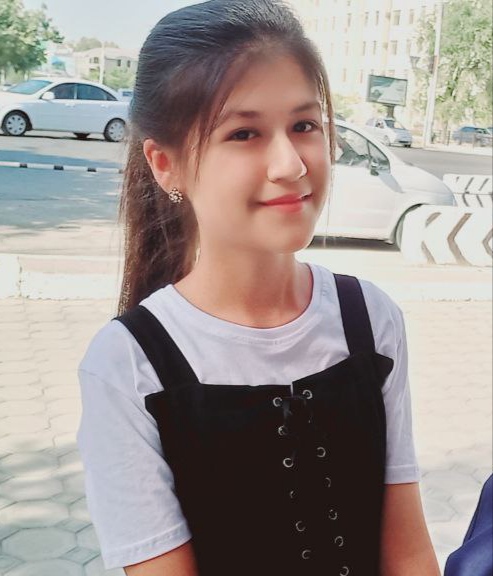
QURBONOVA GULSANAM Ilhom daughter was born on April 16, 2006 in Dehkanabad district of Kashkadarya region. She is currently studying in the 10th grade of school 68 in Dehkanabad district. She has achieved many achievements to date: in education, sports and others.her articles are published in international journals.
QURBONOVA GULSANAM was born on April 16, 2006 in Dehkhanabad district of Kashkadarya region. She is currently a grade 10 student at school number 68 in Dehkhanabad district and is proud of the regional German language. She has also achieved many results in sports, table tennis, chess, checkers.
------------------------------------------------------------------------------------------
the neon nights of my youth


listening to an

old elton john

song


thinking of the

neon nights of

my youth


where the drugs

lifted me to

endless heights


where the drinks

made me invincible


where women

seemed to still

be interested


where the yellow

brick road seemed

like it was still

possible it always

existed
-------------------------------------------------------------------
drink for courage


some people drink

for courage and

others are trying

to cope with the

pain of life


some like to unwind

and others think of

the magical powers

they suddenly posses


i find it more likely

these days that i'm

drinking to hopefully

end all of this way

sooner than the

powers that be

intended


plus, arthritis has

made it rather

difficult to hold a

gun or tie a fucking

noose


so, it's either the

bottle or a good

hose and some

duct tape


when the bottle stops

helping to write these

poems


be kind enough to

check my garage

if you don't hear

from me for a few

days
-------------------------------------------------------------------
the retired life


two cups of coffee


fall asleep in the

sun like a cat


i tell my mother

to enjoy the retired

life


she doesn't


can't come to terms

with getting older

and not being able

to do certain things

alone


i'm always there

to help


even though most

of the time she

doesn't bother

to ask


i tell her pride

will kill her faster

than any disease
---------------------------------------------------------
wars have been fought over less


soft brown skin


years of regret


a lover's lament


it was us against

the world


now we can't see

past each other to

accomplish anything


wars have been

fought over less


and no matter how

much either side

wants to give in

and let the calm

set in


pride and the ego

always get in the

way


a lack of

communication

will be the end

of us all
-------------------------------------------------------
the smallest nugget of joy


you ever noticed

the death poems

come easy


but how you

languish over

the page for

love


for happiness


for even the

smallest nugget

of joy


but death


that cold reality


the cruel mistress

that always laughs

at your pain


it's the old routine

or perhaps


you always

understood


that death was

always a part

of life


just a part that

most are unwilling

to talk about or

even consider
J.J. Campbell (1976 – ?) is old enough to know better. He’s been widely published over the last quarter century, most recently at The Rye Whiskey Review, Disturb the Universe Magazine, Carcinogenic Poetry, Lothlorien Poetry Journal and Horror Sleaze Trash. You can find him most days on his mildly entertaining blog, evil delights. (https://evildelights.blogspot.com)
+


Where nature walks
    If a tree falls
       but no one listens
           then there is no peer review

Sometimes attention catches natural presence,
   like flowing water turns the mill's wheel
       to bring flour from grain.

            The kitchen supplies
                      find
                 peer review
            at the dining center.

Who's is speaking?

My Heart Speaks!

Love has an invitation open to its Kind.

The peer within
    as freelance
         expressing
            found standing in faith

The forest speaks where faith raises ears

The fallen tree,
   Bless Thy Heart
       May seed freshen
           Soils and sun share the expression!

Where nature walks


by  John Edward Culp
       Friday morning
      October 27, 2023
MULBERRY TREE

Mulberry trees should not be planted near the house,
Not even a walnut tree.

Their veins are demonic
And if they scatter, the house will ensure to stay deserted...

In the morning, the mulberry tree was wounded.

Shadow lay dead beneath him for hundreds of lost birds.

Only goats ate his flickering tops,
Which are until yesterday
It could only be reached with the eyes...


Azemina Krehić was born on October 14, 1992 in Metković, Republic of Croatia. Winner of several international awards for poetry, including: Award of university professors in Trieste, 2019.,„Mak Dizdar“ award, 2020. Award of the Publishing Foundation of the Federation of Bosnia and Herzegovina, 2021. „Fra Martin Nedić“ Award, 2022. She is represented in several international anthologies of poetry.
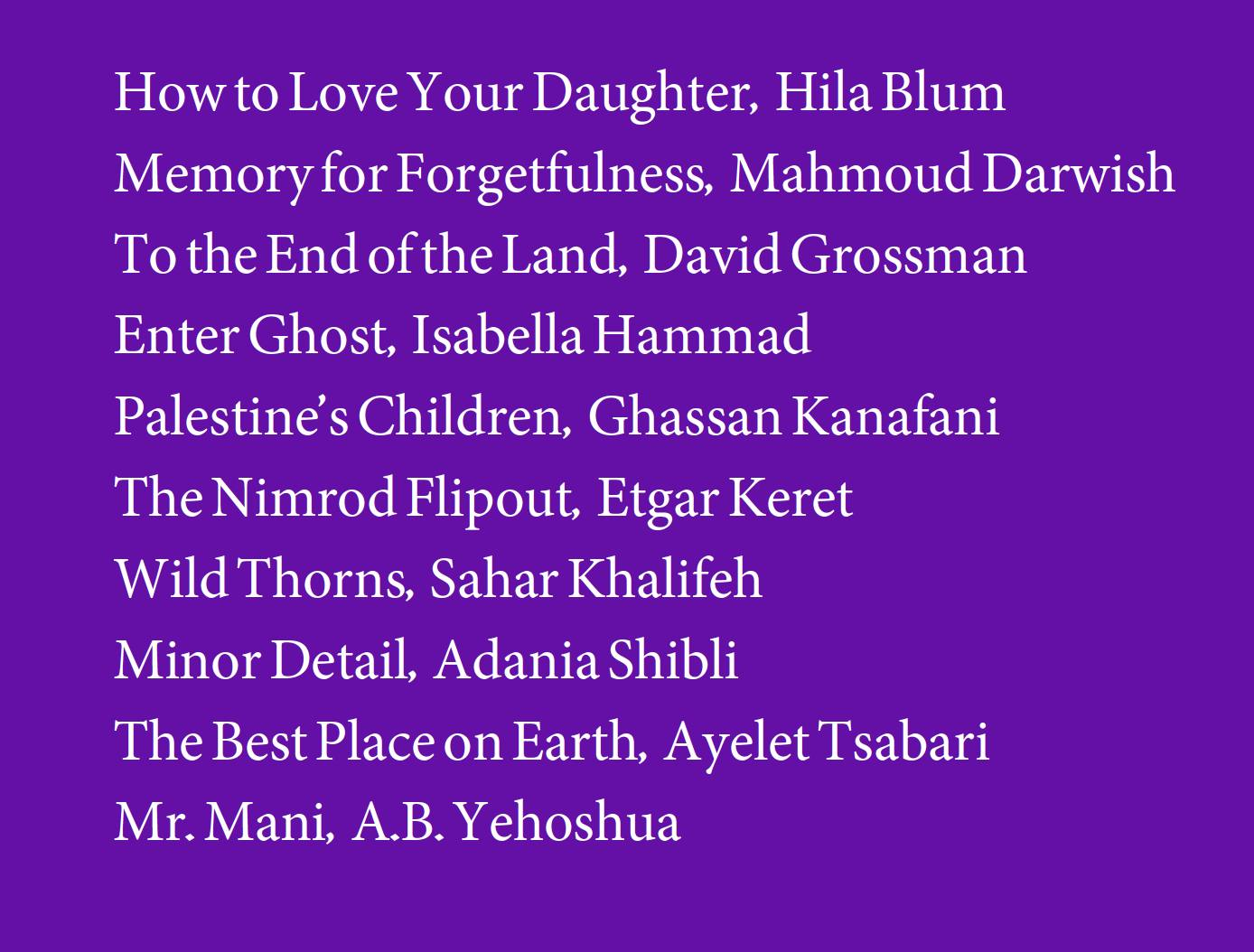
Synchronized Chaos Magazine expresses sympathy for all the people affected by the recent violence in the Middle East and shares the hope for a peaceful and just resolution and for justice and equality for the region’s many groups of people.
In the spirit of what we do here, we are sharing author Michael Lukas’ recommendations of fiction and poetry from both Israelis and Palestinians that he and others believe will help people understand the issues and the cultures in the region.
Please feel welcome to suggest other titles.
We are also aware that Afghanistan has suffered an earthquake that has killed thousands of people. We invite people to help however they can and suggest the Afghan-founded and led organization RAWA which assists those of all genders and racial backgrounds in the country. They are seeking people to translate articles on their website and help in a variety of ways.
Finally, we stand with the people of Burma who are continuing to undergo war and repression. We encourage people to assist through groups such as Doctors Without Borders.
On another note, this month’s submissions, and the whole project of Synchronized Chaos, bring to mind the research of Ilya Prigogene, whose scientific work demonstrated that when complex systems are far from equilibrium, small islands of coherence can shift the entire system to a higher order.
This magazine is an effort to synthesize various ideas and projects and pieces into a “small idea of coherence” each month.
Nigerian physician Ayokunle Adeleye urges people to rely on science and seek sensible and knowledgeable medical advice. Uzbek author Amirova Niginabonu recognizes the value of parents and teachers in imparting wisdom to younger people.
Adhamova Laylo Akmaljon speaks to the power of faith to heal through calming intense or troubled emotions. Adiba Pardaboyeva speaks to the comfort and calm she finds in her faith and her home and family. Nilufar Thoktaboyeva reminds us that while life’s emotions can be strong, they are transitory.
Anna Ferriero expresses her awe at the power of romantic love and large birds in her Italian and English poetry. Sayani Mukherjee reflects on a transformative love through a panoply of autumn and winter imagery.
Christopher Bernard reflects on another kind of transformative love, Aeschylus’ take on the ancient Greek myth of Io, a human woman who caught Zeus’ eye and was turned to a cow by his jealous wife. In this version, Io is not silenced and her voice continues throughout the ages.
Iftikhar Zaman Ononno explains the importance of trees to the natural environment and encourages tree planting and conservation. Muntasir Mamun Kiron joins in the song of nature’s beauty and diversity while Aklima Ankhi rejoices in the variety of colors present in each and every season. Mirta Liliana Ramirez recollects a time when she took comfort in poetry and the sea and the sky while in pain. Annie Johnson expresses her love for the totality of nature: summer days, moonlight, and morning. Channie Greenberg sends up hopeful photography of peaceful farm fields in the Middle East. Z.I. Mahmud explores the nuances of the creative and destructive imagery of the West Wind in Percy Shelley’s Ode to the West Wind.
Michelle Adegboro’s speaker comments on whiteness, blackness, and belonging in the world through childhood images of astronomy and eclipses.
Rafiul Islam shares a tale of best friends who seek adventure and find riches. Nahyean Bin Khalid presents a story of a boy who gets trapped in a haunted house. Fernando Sorrentino relates a tale of how a soccer game gone wrong causes a boy to question his character.
Nurujjaman’s story shows the danger of marrying without a realistic plan for adult life. Jim Meirose’s tale of a brickyard hod carrier presents a hard working man who never loses his imagination or capacity to dream.
Monira Mahbub extols the virtues of education. Oydinova Malika offers up advice for those in Uzbekistan teaching English as a foreign language, using her experience and research as a guide. Rano Dilshadovna offers advice directly to students on how to learn spoken and written English while Marjona Qurbonova discusses whether online language learning environments can be as effective as in-person courses and Ravshanbek Nasulloyev proposes strategies for learning to think in English.
Jerrice J. Baptiste, niece of our contributor Roodly Laurore, sends in photos and shares about a school in Haiti for low income children where her aunt volunteers. We are also aware that Haiti has experienced major violence and disruption in recent months and encourage people to support education as well as general relief there.
Mahbub Alam laments the human losses caused by warfare. Mykyta Ryzhykh expresses the utter dislocation and destruction caused by modern warfare in his prose and also echoes those themes in his poetry.Abdurrashid Abdulrahman (newbornpoet) mourns the violence and injustice in his native land, while Ajibade Abdurasheed sings out his hopes for justice for the poor and vulnerable. Olanrewaju Timothy Fatoye’s lyrics decry criminal violence against the vulnerable. Indian artist Mantri Pragada Markandeleyu harnesses Marilyn Monroe as a universal symbol to help him advocate for world peace in his graphic design. Giddi Vivian Hembafan speaks to redemption from the violence in the human heart through faith.
Don Bormon contributes a caring poem about his best friend. Leslie Lisbona speaks to the long-term, profound relationships she had with her family’s various dogs. Taylor Dibbert’s speaker mourns and remembers a very special dog. Catherine Arra illuminates adult and childhood grief through the story of a family dog’s dying in an accident.
Azemina Krehic speaks of a love beset with danger, longing, and loneliness. K.G. Munro evokes the joy of a first attraction between lovers who meet by a campfire, then turns to the dangers of vaping. Kristy Raines talks of a beautiful and unconditional love that might be too amazing to exist in waking life. Sergio Ortiz draws on both nature and mythology to explore his heart and speak to different relationships from his past.
Ahmad Al-Khatat celebrates a love that perseveres and helps him to navigate the memory of past trauma. Hannah Aipoh recollects how writing helped her survive mental illness and a traumatic family situation. Makhfiratkhon Abdurakhmonova relates the story of a breast cancer survivor who triumphs through resilience and patience.
Graciela Noemi Villaverde asks for clarity to understand the true nature of her situation. Elnura Mahammadiyeva urges people to clarify their dreams into specific goals and work towards them.
Zahro Shamsiyya finds her identity and self respect in her poetry and reflects on her life and possible afterlife. Jerry Langdon considers mortality through the metaphorical death of his journal and through another piece on vampires and nighttime. Roy Gu speaks to mortality, grief, beauty, and making the most of an imperfect life. Bruce McRae uses surreal whimsy and entertainment-industry metaphors to wonder about the stability and possible mortality of the universe itself.
Brian Barbeito contributes a lush meditation on nature, groundedness, love, and poetry. Steven Croft memorializes the former poet laureate of the state of Georgia, David Bottoms. Eva Petropoulou shares wishes for her poetry to become powerful enough to bring about transformative change.
Duane Vorhees explores identity, autonomy, travel and groundedness, and mythic wonder in his poetry. Precious Olugbodi highlights the importance of grounding your life’s projects with a solid foundation.
Nigirabonu Amirova highlights the up and coming literary scene in her native Uzbekistan. Another Uzbek writer, Bakhora Baktiyorova, shares her dream of becoming a journalist. Meanwhile, Parivash Sobirova regales us with a tale of a young girl discovering the joy of reading and the wonder of a library.
Lilian Dipasupil Kunimasa encourages readers to find joy where they can in a lovely but precarious world. J.J. Campbell writes of acceptance: of age, of change, of the presence of different parts of yourself.
Elmaya Jabbarova revels in the music all around her: sounds from nature and her Islamic services. Iqra Aslam finds elegance in precisely chosen language in a Zadie Smith novel. Noah Berlatsky finds a form of rhythmic art in the repetitive daily nature of life.
Maja Milojkovic speaks to the persistence of sorrow and longing for loved ones. Mesfakus Salahin reminds us in his short story that money alone cannot solve all the world’s sorrows. Laylo Bakhtiyorova addresses the all-too-common human condition of feeling dissatisfied, but not knowing what will solve one’s problems.
Mark Young probes the limits of AI algorithms in understanding us and guessing our preferences and interests. Edward Lee’s poetry looks at different types of human and natural creation and speculates on where we can find beauty.
Patrick Sweeney’s one-line poems combine the mystical, the logical, and the physical for unexpected results. Isabel Gomes de Diego’s photography captures whimsical moments of contrast or interest. Daniel De Culla combines whimsy and humor with curiosity and nature with human crafts. Mantri Pragada Markandeleyu contributes the first installment of a comic play about a group of beggars.
Laura Stamps jokingly laments how the pandemic has turned many of us into homebodies and “slugs.” Stephen House speaks to the need to make the most of our short lives, as we never know when we will face suffering or disaster. Meg Freer’s stories involve change and reconstruction of people and things. Peter Cherches plays with time and identity in his humorous short stories where nothing is as it seems and multiple ideas are simultaneously true.
AND JUSTICE SHALL REIGN

I extremely pledge to my country
Where peace had been dwelled in the past century
To not illegally compose an abusive write_up
Because Justice must be ours and my pen can't shut up

‘...And justice shall reign' is what ended our national anthem
More also we're practising a democratic system
The national anthem composer knew then that we will need peace
That was why someone made it as a song and put it into practice

Citizens are clamouring, both left and right
Unknown to them that their leaders have denied their right
Their clamour to them is like a sweet melody
That is why they refused to find its remedy

There is rule of law according to our constitution
But law was made for the poor as we dwell in destitution
Hunger makes a poet to strike for creativity
It is unfair, this is an enormity