Welcome, readers, to Synchronized Chaos December 2021.
First of all, we invite the authors among us, and other book-lovers, to spread books around the world. Refugee Reads, a project launched by a mother and her young son in Texas, is collecting books that a local resettlement agency will offer to people who have recently moved to the United States. They ask for new books, so you are welcome to order books to send to them or mail them copies of your own books. Alternatively, Books for Africa accepts gently used books (up to 15 years old) which they will ship to various African countries. They have more specifications on what genres they’ll accept (no violent thrillers or murder mysteries or cookbooks or Western-centric titles) but are open to used titles in good condition.
This month’s contributors reflect upon where we stand in time: remembering, reminiscing, imagining their future or the world’s future, pondering mortality and immortality. Or just wondering what would happen if we stepped for a moment out of time’s moving stream to take stock of where and who we are.
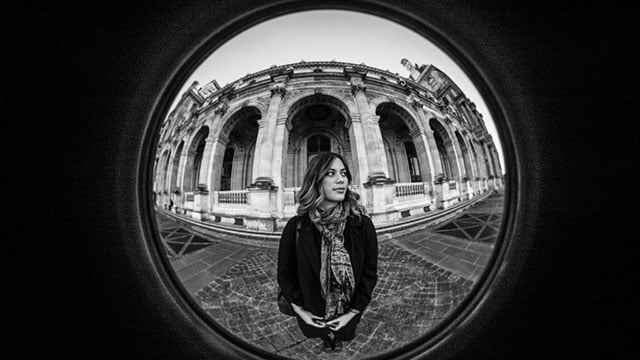
Photo courtesy of Mathieu Stern
Michael Robinson writes of a dream where he felt at peace, happy with himself and his place in the world. Isabella Hansen chimes in with her own dream, contemplating the timeless moon with her mortal consciousness. Hongri Yuan, in poetry translated by Yuanbing Zhang, imagines eternal life in a supernatural realm of perfect orderly beauty, with the energy of a teenager.
In contrast to immortality, Mike Zone’s superheroes carry out their dramatic acts of strength in the shadows of their own impending deaths. Luis Cuauhtemoc Berriozabal’s poetic speakers consider their physical humanity and the incongruity of someone violently attacking fellow vulnerable humans. Mark Blickley illustrates the poignant indignities of aging while lonely J.J. Campbell takes comfort in wishfully enhanced memories and Gaurav Ojha reflects on life with the full awareness of death.
Stephen Jarrell presents a vignette of coming of age in a small town, whileJ.K. Durickponders trees, leaves, family heritage, and aging and Doug Hawley considers the culture of Portland, Oregon before and after his arrival. Abigail George reflects on how as an adult she would love to reconnect with and rediscover her deceased mother.
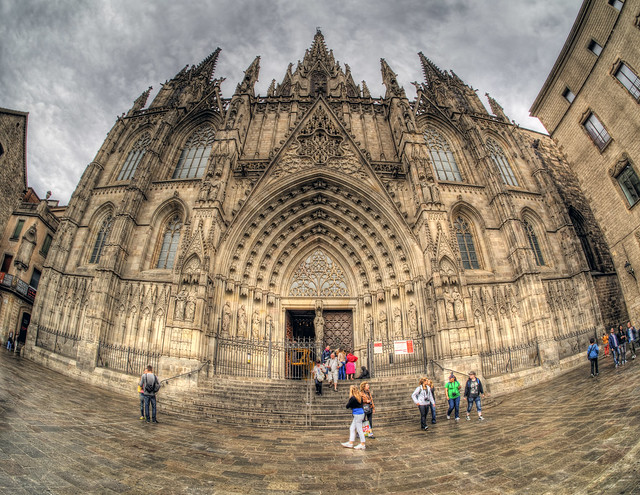
Photo courtesy of the Laramy-K Independent Optics Lab
Z.I. Mahmud finishes up his thesis on Charles Dickens’ literary output, highlighting themes of change and redemption. Chimezie Ihekuna’s screenplay collection Christmas Time also celebrates hope and redemption through stories of several different families, and the hero of Abdulloh Abdumominov’s short story finds peace at the New Year by deciding to forgive a friend with whom he had a small argument.
Christopher Bernard’s young Ghost Trolley hero figures out how to re-integrate himself into his ordinary world at the concluding installment of the tale. Hazel Fry laments lazy storytelling that deprives female characters of their strength and agency while Michael Reich critiques the false comfort manipulated media narratives attempt to bring us. Jaylan Salah interviews artist Danielle Shorr on topics that include how the media presents and discusses female artists and society’s treatment of abuse survivors.
Mahbub’s poetry evokes romantic love as well as international spiritual and historic tradition, connecting our humanity to something greater than ourselves. Starlie Tugade’s lovers pass each other by like passengers on separate trains, as one of her characters is unable to open up and receive the other’s love.
Linda Hibbard warns of the future ahead of us with climate change, while Henry Bladon’s nihilistic pieces semi-humorously question our fears and concerns about our present or our future.
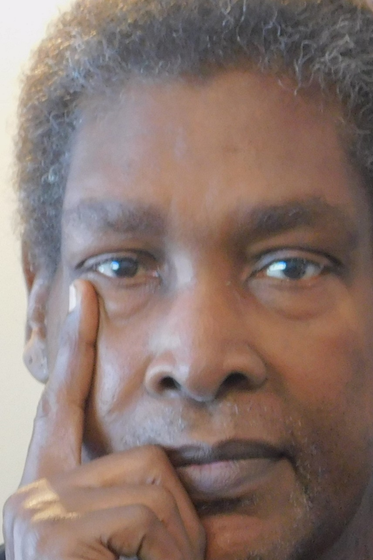
Photo by Neil Howard
David L. O’Nan pays a tribute to a musician whose art he considers timeless, while Ike Boat announces the launch of the novel Berganda by Dennis Mann.
J.D. Nelson sends in more of his playful, near-imagistic words, while Alan Catlin’s words, ideas, and iconic names flow into each other in his pieces. Mark Young’s images hold together with swathes of color and an internal logic, and meanwhile, Rus Khomutoff invites readers on a wild surrealist adventure.
We wish all of you happy reading and a happy New Year!
Twilight of the Superhumans

No one expected this. Kid in a gasmask helping an old lady across the street, even though the crosswalk is in excellent working condition and traffic doesn’t really exist anymore under this big green radioactive dome, shielding The Metropolis, the pillar of the Steel-Kingdom, held and dominated by the House of Steel, founded by the first man of tomorrow Steelman and fully established by marriage with the Amazonian demi-goddess Madame Miracle, though now it’s King and Queen Steel and we are all damned on this entire planet.

Under the dome, we’ll either die from cancer and other forms of radiation sickness or meet a brutal end in an unnecessarily operatic war of reluctant superhumans and egocentric mad gods.
The old lady never got a chance to cross the street, as a hulking behemoth of tumors once a Gamma-ray scientist landed into the center of the street. Skull faced, contorted super-strong beast howling at King Steel, wispy white hair in a black and red leotard, silver steel S in the center holding a pristine white cape into place, yet you could see he was yellow with cancer, the years of storing energy like a battery but dying of radiation poison this new god yearned for victory at any cost.

He condemned himself to essential death in what was a superhuman arms race. Create new soldiers to usher in a militaristic peace into the world since the great fragmentation between the various fractions of The Alliance. The Peacekeepers would make a comeback and despite the membership not consisting of the original seven champions of justice, everything would be fine and orderly or King Steel believed with cancer eating his brain.

The incredible Brute raised himself up and being a mass of terminal disease with just as much rage and insanity as the levitating being above grabbed the only speeding truck on the road and threw it at the bane of his current existence, showering radioactive isotopes upon the ground, through fissures made by gamma saturated grasps of fury.
 Kid in the gasmask pushed the old lady out of the way but it wasn’t enough as she was struck across the eyes going blind and swallowing another whole and kid in the mask referred to as Robin-Jay by his ailing mother who may have hinted around that his father was once a vigilante sidekick, not that it mattered as a gold chain with an archaic religious significance dangled from the boy’s neck.

King Steel incinerated the automotive projectile with laser vision and gasped as he saw the young lad’s golden talisman. Gold. Another weakness in conjunction with radiation. It was a slow agonizing death this poison but gold like the kryptonite of fiction weakened him like a man of steel from another time.
He looked down at the kid in the gasmask and something caused his spine to shiver for the first time in decades.
	“Son, stay back. We need to be united…God is coming and it’s not a good thing.”
The cancerous mass lunged at his floating nemesis and just like the truck out of sheer impatience from years fighting and fear of the figure below, King Steel melted Brute right on the spot, leaving a charred twisted skeleton not much different than a Dali painting among the broken street.

Meanwhile, on the West Coast, isolated from the East Coast of the radioactive dome had trouble of their own. The Masters of Marvels fully assembled with an army to crack open the dome and take what they needed from the House of Steel to fully win this war. It wasn’t too long ago when the various superhero teams of: The Peacekeepers, Fearless Five, Justice Guard and Supremacy Squad had decided to officially disband and rebrand themselves as one unit…THE ALLIANCE to rid the world of evil doers by any means necessary…even the numerous bands of mutants had set aside their differences alongside many of mentally scarred street vigilantes. However Dr. Universe sat upon his high throne stationed above the roundtable to ensure everyone was equal beneath his vast superior power and knowledge, serving as a force of guidance more than anything instead of being just another demi-god like a certain extraterrestrial with his humanoid resemblance who dared call himself “king.”

An armor encased master with a bionic heart wrapped in a mystical purple cloak wearing a spectrum of rings adhering to all the colors of a rainbow, it was a hard won battle against Atlantis but the war was far from over, he once foresaw that in his sidekick Jimmy Jett’s magic eight-ball glasses, even after they defeated the House of Steel, the Mutates who had left Earth to terraform Mars and renamed it Planet Z after the Z-gene which bestowed their powers would return with much greater force, which ultimately formed an alliance on a nigh omnipotent level.

What could be considered as God was coming which spelled the end of everything they originally fought for. There would be another mass extinction on a planetary level rendering the existence of battle between good versus evil quite meaningless and the good doctor and his illuminated colleagues couldn’t manage that which is why he sent the bat-shit crazy one to finally execute that cancer ridden warped alien who started out as just a good old Michigan farm boy only to find out he was “gifted” with a power from beyond the stratosphere. The Alliance was never meant to hold and usher in a utopia like they wanted and eventually they dismantled it from so much in fighting after the execution of the villains, then the toppling of sinister global regimes and finally just usurping these small minded yet narcissistically engineered societies which only further plagued the human condition and the eco-system itself.

The Atlanteans of course had something to say as did the Amazons who after their pantheon was taken out make a hasty alliance via marriage with the House of Steel spawning demonic descendants which would have Steelman’s powers yet none of his weaknesses though those abilities would be diminished the genes from the mother would make up for it and this concerned council which consisted of the best and brightest of superhumans who were more human than human with the exception of the designated executioner Knight Shadow, the typical rich boy scenario only it was more sexual for him…a trip to see Dracula, wetting himself over a blood sucking scene with something that wasn’t urine, embarrassed socialite parents rushing out of the theatre to be gunned down by political protesters screaming “Eat the rich!”

There was something more erotic about his costume and implementation of extreme violence than brutal street justice, just ask his sidekick Squire…oh you can’t…Arachnakid had suffocated him within his own web of terror, in an effort to be more man, than kid so he could join the big league of superhuman killers and eventually get a seat at the king’s table.
Dr. Universe sighed as he stood to greet the rest of the incoming counsel, he wouldn’t tell them of hopelessness of the situation nor how it was completely useless to officially decimate not only Metropolis but to engage in battle against that which created them in the first place, but he would tell the story of the egg.

The herald soared the space-ways. A slender chrome being encased in a field of celestial upon a disk made of the matter as his skin and surrounded by the same field of fire. He had a name once and sometimes wondered if he had truly been born a man or what sort of inferior abomination from a backwater forsaken planet did, he hail from?
He could barely remember the words to articulate, but remembered the number zero-zero, whatever that meant. There were fragments, one of a nihilistic shaven headed monk hellbent on proving the meaningless of existence by exterminating his sect with his forbidden lover whose name was Shal…and before the executioner’s laser axe could come down on upon their necks, RAI-SHI arrived…swirling series of electric storm clouds and obsidian armor. The dark seed of what really governed the various forces in distant and unknown galaxies.

The planet was ripped apart, as they were suspended in space as RAI-SHI shed the armor and implanted itself into what remained of the planet…a hovering quasar pumping egg containing the darkness of the blackhole, then reborn after shedding its original husk, it turned to Shal and Kul (was that his dead name?) who were remade as two chrome heralds to search out the eggs hidden on other planets so that RAI-SHI could prolong itself for millennia more without exhausting precious cosmic power or warfare which would have more than likely included weapons made of gold, the weakness of his race and there were offshoots upon other planets he knew of.

Kul soared alone as Shal panicked, dismayed by the fact she couldn’t breathe air, ripping her own chest open to expose her lungs in order to breathe. He saw her exposed torso about three hundred years ago as headed toward the Earth to herald it’s destruction and engage in combat with the inhabitants.
RAI-SHI the machine god who created a series of techno-organic bodies in various planets incubated in these eggs, naturally it had enemies ergo its inhabitants were engineered to be hostile to defend the eggs from various invaders yet somehow there were obstacles such as a planet’s own eco system building its own series of defense mechanisms to subvert control from the artificial deity’s agenda.
Professor Z, sat in his levitating chair on largest built earthen tower erected onto Martian terrain. He communed with what could only be conceived as god and wept in silence as they went through a cycle of eternity experiencing the births, deaths, and rebirths of universes. He didn’t have to make amends for Weapon Zinn anymore and gladly shut down Pablo’s brain with his near limitless healing ability and plethora of adamantine bones which was a combination of diamond and platinum capable of scratching through any surface yet incapable of being rejected naturally by the human body.

Adamantine like gold was still a weakness for RAI-SHI and Pablo also known as Raptor had too much of an independent streak.
Dr. Universe hovered above the Earth, tears streaming down his face knowing that this was the last time he would ever see it, conjuring a web of crisscrossing energy surrounded by a fleet of Copper-Giants (fully automated but operated by the original Copper Giant on Earth full of cancer and hiding down below King Steel’s utopia). The fabric of space and time ripped open, an unholy alliance was to be made as tenacles protruded and the albino emerald eyed Octo-King and Queen emerged.


Down below Knight Shadow, tumbled out of his armor, still clad in helmet and chainmail. His gauntlets grasped King Steel’s flowing white hair and forced plasma bursts into his ears which even though he was dying of cancer and severely weakened still only annoyed this far distant descendent of RAI-SHI. He tore from his world’s finest ally the symbiote which once belonged to another insect influenced hero, disintegrated with sun-vision, and tore the Mystic Hamsha Eye which clasped his attacker’s cloak together and crushed it beneath his cracking white boots.

“Without the manufactured symbiote and Hamsha, you’re nothing but bone and meat Wayne, how did you even conceive a plan of this pathetic magnitude would work?”
Knight Shadow tripped over himself and grasped a short golden sword.
	“It wasn’t intended to work.”
King Steel boisterously laughed at the display of futile resilience.
	“I’m not going to launch myself at you, we’re not young and stupid anymore.”

Knight Shadow stood still with the sword at his side observing his once best friend turn rigid as his flesh and organs slide off his skeleton.
Kid in the gasmask stood over the corpse.
“Well, kid…what’s next?” He rasped.
Kid in the gasmask removed his mask, his skin shining brightly in the sun over the cracked radioactive dome.


	“The name’s Golden Boy, now melt me down into a colossal bullet and shoot me into the head of God.”
Early morning there is a moment of stillness within me is noticeable. It is three o’clock… A deep sleep takes me to another place separate from the world. Takes me to a soothing place before the sun rises while the moon lights the skies. Seeing more stars covering the skies of Vermont. Mild thoughts along with a calmness comes. A separation of a world which is full of noise and hustling people during daylight. It’s three o’clock and sleep evades me. It’s always this time in the morning in which there is tranquility. A place where the trueness of life is renewed. While the cardinal sleeps before waking up the world with its melodies. It always been like this as the moon watches. Sitting at the old royal typewriter there was no search and pecking. My fingers danced as they leaped into the air, striking the keys. Thoughts took form as a meditative state came. A moment in time when my thoughts melted like snowflakes.
Grey skies dispensed flakes of snow falling into the winter air. Each flake evaporated upon touching my skin. My soul delighted in the wetness of the snowflake melting on me. Snow always woke up something within me. It was the first time realizing God’s existence. Feelings of softness which blended with my thoughts. Thoughts falling and melting leaving no sign or presence. The taste of nothingness remains within me. Perhaps it was the whole point of snow. A reminder of nothingness. One moment of life. Thousands of snowflakes coming and going like thoughts in early morning. Snow has a quietness. While the snow touches die upon touching the ground. Similarly, life is a snowflake touching our essence before dissolving into the ground. It is five in the morning and the moon recedes and the sun lights the sky. It is time to wake up. It was those hours that harmony existed for me. My dream brought a familiar feeling within me. Perhaps this is reality, and the world is a dream. Who knows for sure? God watches over me.
Fierce Gold Sun

Fierce gold sun
sits on my chest,
wraps its scorching
arms around my
shoulders. Its breath
singes the hair
on my body.
Is this what bombs
do? What human
being could think
of such a thing?
Creators of
death, inventors
of destruction,
how did you sleep
when the bombs dropped
on Mother Earth?
The blossoming
flowers were not
enough. The roots
ripped from the ground.
Human beings
melted away.


One Slice of Toast

Drinking water
or drinking tea,
just eight ounces
an hour before
the procedure.

I could have clear
soup or clear juice.
One slice of toast
an hour before

the procedure.
Nothing else, just
one of four clear
liquids and that
one slice of toast
with no butter.

Perhaps this should
be my meal at
least once a week.
I would lose weight.
I could cheat by
eating one soft
or hard-boiled eggs.
A cracker with
no salt at all.


The Last Night


It was the last night

I would drive her home.
Even the car was sad.

I drove home afterward.

I loved for the last time.
I went to sleep for years.

I stopped believing in everything.

I slept on and on

dreaming of the next life.
     Moon Braille on The Broken Museum Roadside Piece


                 Hands of crippled starfish and space wheat,

                 hands of spinstressed starfish

                The lego windmill spins in morphia stars

                gold occult gears, purple noir.

                The somnolent sweatsocks, time dilation

                 and alloy eyes green leper moons.

            This misshapen Exhibit road sign with crooked arms,

                bark arms wittled by the spun fluxes

                 cinder eyes of willow moons....

                 gold occult gears, purple halo

                 of colloidal cell slime in the bending

                 scimitar sickle moons

                for miles-- notes of Creeping Muzak,

                 (organ grinder's b-flat)

        Crippled Starfish, hands of wet wheat space meat

                 (three--2--in DS)

          the star spun in gold straw, the gold foil crochet

          darned by the silk divan's royal hypnotist

        and dilatory tar fudge.

        Hands of crippled starfish, hands of space wheat.
John Thomas Allen is a 38 year old poet who loves metered and unmetered, experimental and “traditional” poetry. He would like to attend a psychosocial club in which William Hope Hodgson and H.P. Lovecraft were read to the Velvet Underground’s first album while artist Banks Violette constructed one of his somethings.
The 8:22 a.m. Kennedy Boulevard bus paused at the red light on the corner of Bentley. While staring at the line of idling cars in front of him, and without turning his head, the driver honked his horn and threw a mechanical wave. This gesture of recognition was directed at an old man making his way down the street. As the light turned green the bus operator glanced in the old man’s direction. The driver smiled and shook his head. For the past six years, at precisely this time, the senior citizen always appeared. It amazed the driver since it was obvious the old man had suffered a stroke. He moved as though his ankles were bound by slave bracelets.
As the bus zoomed past, the old man halted. By the time he had lifted his head he was waving his walking stick in a cloud of black exhaust fumes. Coughing seized him for a few moments, but he was pleased by the driver’s show of camaraderie. A thick blanket of humidity flattened Jersey City. In retaliation, the old man loosened his tie and unbuttoned the vest concealed under the stained sports jacket. He pushed forward.
After a few minutes, he succeeded in reaching the end of the block. Checking vigilantly before crossing, he decided to make his move. Everything seemed to be in order: the light was still green, but more importantly, the DO NOT WALK sign was not flashing underneath it. He had at least sixty seconds to execute the crossing. In the past the old man had this street crossing down to fifty-six seconds. Now the government had decreased his time by making it legal for cars to turn right on red lights. This called for more caution. Since his retirement nineteen years earlier, he learned car horns replace brakes when drivers compete with pedestrians for space. Halfway across the street he panicked. The light clicked amber. Horns screamed. The old man froze. Directly in front of his outstretched walking stick (a cane was for old geezers), a battered Lexus screeched past. “Get the hell outta the way, ya old fart!”
A young head popped out of the back window. “Why don’t you die?” it shouted before disappearing into traffic. Three other cars whizzed by him. A fourth car released him from by stopping long enough for him to arrive at the opposite corner. Smiling at the driver, he did a playful hop over the curb. The old man felt good. At least a half-dozen would pass before permitting him to proceed. It was not unusual for him to be trapped in the street until the light once again turned a comforting green. What disturbed the old man most about his daily journey was the block on which Martinez & Sons Glassware Company was located. The store took up nearly half a block with mirrors lining their storefront windows. No matter how hard he fought the temptation, it was impossible not to glance at his image as he crept along. His reflection was an obscenity to him
The day was really looking up. The store, which usually opened promptly at 9 a.m., was closed. This pleased the old man because the iron gate was strung across the huge display windows. He looked at his reflection and giggled. His likeness looked as though it had been captured and jailed, peering back at him through thick metal bars. The old man threw back his shoulders, disregarding the ache. Picking up his pace, he reminded the reflection that his birthdate fell in the same year as Robert Redford’s. “That’s right. 1936. Good Lord, the girls knew it, too.” He pointed an accusing finger at the gated mirror. “Maybe I forget the exact day, but I’ll never forget all those women.” The old man and took a seat on a bench; overhead hung a sign, BUS STOP. On the end of the bench sat a young girl dressed in frayed blue jean cutoffs and a tee shirt that read ‘Shit Show Supervisor.’
“Mister,” she asked, “can you lend me a dollar so I can catch the bus?” No reply. “Excuse me, sir, do you have a dollar I can borrow?” The old man reached into his pocket and produced a fistful of change that he dropped into her hand. The young lady leaped off the bench. “Gee, thanks! Wow!” Seconds later she disappeared down the street into a candy store. The old man checked his watch. He was fifteen minutes behind schedule. “Oh my God, I’m going to be late.”’ After pulling himself up from the bench, he cursed the once strong arms that had made him New York Local 638’s number one steamfitter.
After conquering four more blocks he arrived at his destination. It made him feel good to watch the busy activity associated with the morning opening of the Post Office. He looked up at the flag dangling limply from the mast, as if suffocated from a lack of breeze.
Inside the building were the usual hoard of people in lines, mostly immigrants and mothers with young children. The passport section was mobbed. Twenty minutes late, he feared the worst. Gradually he inched towards the wall lined with post office boxes. “Why, Mr. Goldshlager, I was worried. I thought something terrible happened.” “No, Ma’am. I guess this humidity took more from me than I had anticipated giving. Kind of you to wait, though.” The aged woman who reminded him so much of Colleen, the wife he buried shortly after his retirement. “Well, after all, Mr. Goldschlager, today’s my turn to buy the coffee…” “And I the donuts.” “Correct.” “Have you received your check yet, Mildred?” “Yes. I saw them put yours in, too.” The old man went over to his mailbox and withdrew the envelope.
“Life sure plays some strange games on us, Mildred. Funny how we both decided, on the very same day, mind you, to put an end to all those stolen checks every month. Scary how accustomed we had become to missing them.” Mildred nodded. “And you can’t trust direct deposit because the banks are all so corrupt.” “You know something? Losing those checks is the best thing that’s happened to me in six years.” Mildred pretended to dismiss the flattery, but the added wrinkles at the corner of her lips gave her away. “Colleen always thought I was too angry with banks. I can hear her now, saying, ‘Horace, you shouldn’t resent what happened in the past. It’s dangerous.’ She was some woman, my Colleen.” “She certainly must have been, Mr. Goldschlager.”
Strolling around the corner to the diner gave the old man a thrill, as it had most mornings. It felt good, it felt natural, to be with a woman. The few times Mildred hadn’t shown up it always made the rest of the day melancholic. The small table to the left of the grill was reserved for the elderly couple. Josh, the proprietor, issued strict orders not to seat anyone there until after nine-thirty. As they were led to their seats Horace contemplated Mildred’s appearance. She wore bright red lipstick which showed telltale signs of extended coloring past the outline of her lips. In fact, it reminded the old man of the happy smiles painted around the mouths of circus clowns. The red lipstick made a striking contrast to the black hat pinned to a thin crop of platinum curls. Her eyes were a sparkling gray. Those eyes reminded the old man of something his father had once told him about his great-Aunt Kathleen: “Horace, whenever you meet an old woman, say like your Aunt, never forget that despite the years she’s still got a young girl’s vanity. I know it’s hard and I brought you up not to lie, but listen, the one safe thing you can compliment them on is their eyes. Leave the wrinkled skin around them alone. Just tell them how beautiful, or lively, or even better, how sparkling their optics are.”
There was no need to falsely charm Mildred, or her eyes. What an attractive woman she must have been, mused the old man. Her face, now caked with powder, was probably as smooth and clear as Colleen’s. During their coffee and donuts each spent about a half-hour bringing her husband Ted and his Colleen back to life. Neither one would pay much attention to the other; after six years of repetition, it didn’t matter. Yet missing these weekday interludes was unthinkable. The old man loved the chance to relive his youth. While talking (or listening), a vivid portrait of himself and his wife materialized. Horace had to think seriously about settling down and raising a family. This was a tougher decision than most fellows were faced with since young Horace was engaged to two girls at the same time. One of his fiancées lived in Hoboken, and the other was a burlesque dancer in Union City. While mulling over the choices before him at his favorite Brooklyn bar, in walked the bartender for the upcoming shift with his handsome daughter. It was lust, later love, at first sight. Colleen’s nut-brown hair offset a cute turned up nose. Her pale green eyes sent an inviting message over to his stool. Such a petite figure who filled a sweater rather nicely.
“And Ted would pick me up and throw me into the pool right in front of all the children. I pretended to be angry but I loved it!” The old man took his last gulp of chilled coffee and signaled for the check. “Would you like anything else, Mildred?” “No thank you, Horace.” She watched his eyes following the progress of the waiter. “I really enjoyed myself this morning, dear.” The old man nodded. “Yes, but it’s so hard to keep track of time these days. So much to be done. Isn’t that so?” Mildred smiled. “Don’t I know, Mr. Goldschlager! I detest all the running around I’m forced to do in order to keep up with this crazy world. I get exhausted just thinking about it.”
With this last remark they concluded their visit and returned to their respective schedules: she to a park bench in nearby Bayonne, he to the bus stop across the street. When the bus arrived, the old man was visibly upset. Hector was not driving. The doors flung open and the old man was shoved aside by boarding passengers. After everyone had paid their fare and secured a seat, the driver waited impatiently for the old man to complete his attack of the high steps leading to the fare box. As the old man strained to maintain his balance via the walking stick, two thoughts flashed. One was to fall forward should his legs fail him. The second was how differently he was treated when Hector was behind the wheel. Hector made sure no one pushed him around and always helped him up the steep steps.
On reaching the top step the old man fumbled for the Senior’s discount pass inside his sports jacket. As he turned to find a seat a swarm of indignant glances greeted him. He gave pleading looks to the men seated directly behind the driver. They in turn, almost as if on cue, rotated their heads and fixed their eyes on some object outside the window. The bus lurched forward before the old man could get a firm grip on the overhead strap. He was flung to the other side of the bus. His back smashed into the knees and packages of a pair of horrified women shoppers. Unable to control himself, the old man let out a cry. It was a soft cry, but it lingered. Upon the scolding of the women shoppers, two men raised up the old man. One sacrificed his seat. Laughter broke out from the rear of the bus. Perspiration beaded on the old man’s bald spot. It dripped onto his sports jacket as he tucked his chin into his chest. Once again, he drifted off to that first encounter with Colleen.
Outside his apartment building children were jumping rope and an impromptu soccer game was in progress. “Hi ya, Mr. Goldschlager! Wanna play with us?” “Sorry, kids. I’ve had a rough day. I think I’ll go rest these tired old bones, if you don’t mind?” The children giggled. The old man enjoyed children and children liked him. But he knew how defensive most parents were these days, and he was embarrassed by their reactions whenever he stopped to speak to their kids. The old man was appalled by the fear he generated whenever he spoke with kids at the playground. Or stopped a young couple to congratulate them on producing the beautiful child they were wheeling in their stroller. His attempts to shake an infant’s hand or stroke underneath a baby’s chin with his finger usually made the parents irritable, and they would quicken their pace. Being around children began to make him feel dangerous and dirty and he hated that feeling. He comforted himself by imagining that one day these parents would understand the desire of the elderly to once again feel the smooth flesh of youth.
Touch was a superior memory to any childhood photograph. The old man refused to stop his attempts at making contact with fresh life. Yet despite the humiliation of parental disgust and annoyance, he would always mouth a silent pray that none of these parents would ever experience his horror of outliving his child. The elevator ride to his eleventh-floor apartment was noisy, slow and as frightening as always. It took him a few minutes of fumbling with his keys, but eventually he gained entrance to his home of forty-seven years. The odor of stale air escaped into the hallway as the door closed behind him. The first thing he did was throw off his sports jacket and switch on the television. He surveyed the apartment. It was filthy.
“I will give you a good going over this weekend,” he promised the living room. The old man hobbled into the kitchen to prepare his daily staple of cornflakes and milk with fresh fruit. After eating, he left the dishes on the table next to yesterday’s plates and lunged for the bottle of cognac propped up on the kitchen counter. He shook it and was upset. “Did I drink that much last night?” The old man phoned the liquor store around the corner to order another. The shopkeeper refused to send it until the previous bills were paid in full. Horace apologized and promised to pay when his overdue pension checks arrived. The ploy did not work.
Clutching the cognac, he passed from the kitchen through the living room to his bedroom. He paused to raise the volume of his television set. Although he disliked watching it, it’s voices replaced the music that once echoed through his apartment before the radio shorted out. The babble was comforting. The old man balanced the bottle of cognac on a dusty night table and walked over to a closet. He pulled out a large cardboard box and dragged it over to the bed. The old man was surprised at how light the box was becoming. He dipped his hands inside the cardboard box. The clinking of glass accompanied his search. When his fingers locked around a heavy piece of crystal he smiled and pulled up a large, ornate goblet.
The old man carefully poured cognac into the crystal goblet. He swallowed it and poured another. And then another until he drained the cognac. He dropped the empty bottle on the floor and it rolled under the bed. Horace stared at the fancy goblet and fingered its engraved designs. When he realized he had no more cognac to pour into it he tried to soothe himself by pressing the cool crystal against his cheek. Sorrow gave way to anger and he heaved the heirloom with all his strength. It crashed into the wall, splintering into pieces of jagged, dangerous glass. About forty minutes ahead of schedule, the old man passed out.
DEATH


Gaurav Ojha


Living for endless universe before my eyes

There is an arch of horizon my gaze won’t surpass

My life is a circle, trapped within its circumference

Restlessly rotating along its diameter

Till my clock breaks and time ends

Death keeps life incomplete

Death knows how to subtract what's been added

Divide what has been multiplied

And, keep everything within the reference of empty

Never plan too much for the life you've imagined

Death happens and is always unexpected


I have not discovered anything about the world

I have only read papers and books

I compare miles I have been left out of

With inches of the life died too young

No missed opportunities here, being is enough

Before nothingness

Death remind the mortal characters on the stage

Discontinue your acting like eternity, presence here is limited


Life won’t be the life without death

Scarce, limited, improbable and ridiculously precious

What if death happens unprepared?

I hope for conscious death/letting go with some awareness

Either with deathbed experience or a mistake

Nothing will happen to this world without me

I shall be erased from the space I occupy

Put into the fire and dusted

I don’t seek consolations in

How I am interpreted in living memories

No revival, no afterlife, not even art after life

I live therefore,

I am waiting

Death


KATHMANDU NEPAL