School-age child and his psychology

Abdukadirova Mahliyo
Faculty of Primary Education, Kimyo International University in Tashkent, Tashkent Uzbekistan

Abstract: In the article, we will get acquainted with the education, upbringing and psychology of school-aged children. Information is given about the circumstances of early childhood and the circumstances that develop in the child's age and psychology. Parents are also informed about how to react at this time and what they should pay more attention to.

Key words: Psychology, early childhood, preschool education, age crisis, cognitive process, intensive memory.

Since when did psychology develop at this level, not only for school-aged children, but for everyone in general, the attention given to it has rapidly increased, and today such questions have increased a lot. From the years of independence, the attention to people began to change, their value was appreciated, and hopes for the future grew. Not only adults, but also children, their education has reached an important level. One of the main goals is to increase attention to them from childhood, to teach them the first stages of education before they reach school age, and to pay special attention to the psychology of each child. The future is in the hands of these children, so it is the duty of adults to create enough opportunities for them today. Every child starts his education in his family, then when he reaches a certain age, he goes to preschool, then to primary school, and so on, of course, his psychology also develops.

Psychologists define preschool age as three to seven years. Because the periods of crisis that occur in every era begin precisely in childhood from the age of three. A child who has reached the age of three begins to experience the first age crisis. At the same time, seven years are also called such a period of crisis. Of course, the reason for this is the school-going age, which is the period of every child's life from the first age crisis to the second age crisis, and it is also a very important period for pedagogues and psychologists. After a three-year-old child begins preschool education, very different changes begin to be observed in him, that is, now he begins to help, think for himself, make decisions, and even behave like adults. It is a period of rapid growth and development of the child to understand what is happening around him. When starting preschool education, parents give him the main support, the skills and qualifications that he has, because the process of transitioning from playing games to preparing lessons begins. A child who grows up playing various role-playing games and imitating them no longer imitates them at the age of five. His psychology now begins to prioritize education.

According to psychologists, it is very good for a child to grow up playing various games, because by playing games, he creates an event or a fairy tale, he searches for names for the characters in it, and the game during the playing process, they organize a conversation with each other, of course, this significantly increases the process of communication in the child. A child who has reached the age of six now wants to increase his conversation with children of the same age. Three or four children become friends together, their interest in drawing and listening to fairy tales increases. Of course, a child who is interested in doing everything has whims and masculinity, but it is easier to get out of such a situation by trying to understand him and not just leave him alone. This is how we can answer the question of how the psychology of a preschool child changes. A child of that age has a very good memory, but a child cannot imagine something without seeing or touching it. That is, his imagination will be limited. Parents and children to develop it he should take him on more walks, take him to museums and similar places and patiently and attentively show and explain everything. He should talk with the child about what he saw, ask questions and answer all the questions of the child. Of course, with this, memory develops intensively, the child's attention increases. It is very important to strengthen and develop memory in school-aged children.

Rapid mental development at preschool age, that is, the child's excessive curiosity and asking many questions, is also found in his psychology. As a result, the child develops cognitive processes: memory, attention, thinking, speech, emotion, imagination and creative abilities. A parent who sees a child's mental development and is not indifferent pays him a lot of attention and helps him take the first steps for his future. When a child comes into the world, it is like a white sheet of paper, and when the feelings that we count as adults are formed in him, gradually his life develops mentally and spiritually. School-aged children start coloring this white paper due to their interest in various things, and parents play the biggest role here. That is, they help the child to paint this white paper with suitable colors. In order to know and understand all this, first of all, they should be able to understand the child's psychology and show the right way. Giving birth to a child does not mean that everything is fine, the most important thing is to be able to give him appropriate education. Because that child is considered a person in society, a person who has not received proper education is not considered important for any society.

References:
1. Ghaziev E.G. General psychology. Tashkent. 2002.1-2 books
2. Vahidov M., Psychology of preschool education, Tashkent 1970.
3. Karimova V.M. Sunnatova R. Independent thinking Tashkent "Sharq" 2000
4. Nishonova Z.T Independent creative thinking Tashkent "Science" 2004
5. Ghaziyev E. Psychology of thought Tashkent "Teacher" 1990
6. Salayeva L.Sh. Child psychology and its study. Tashkent 2022
7. Khaitboyeva N. Rahimova U. Characteristics of children's psychology.
Category Archives: CHAOS
Poetry from Gregg Norman
MATRIARCH

Sarah stood a tall, broad-shouldered
woman of regal bearing
wearing a dress always
and faux pearls with a black toile hat
flat as a stove top lid.
She came from Stoke-on-Trent
in old Blighty where she worked
as a clerk for a milliner.
She married her love, Matt,
at a tender age but he toiled in a cage
in a mine and had no prospects.
The only way to escape indenture
was by adventure so they emigrated
uneducated as to their destination.
A trip by ship took them to Halifax,
then on by train to the vast plains
of Saskatchewan, where winter
was so cold, truth be told,
it tore the breath from their mouths
in gouts of astonishment.
But through it all she smiled with a style
far above her raising, a proud, penniless
émigré cleaved to her man standing alone
against a world of possibilities.
Matt hired out to farm a farmer’s land,
while Sarah took to cooking in the farmer’s house.
In time they went to rent  a place nearby
Where the wheat grown was their own.
She bore five children, three daughters
and two sons, her family then begun.
She suffered through the Great Depression
but never questioned her decision
to become the woman she longed to be.
She was a corner post for most
of the local women in a community
of immigrants, native-born, and transplants.
She thrived, so alive in her role
as a woman risen beyond her station
in a nation where such was possible.
When her Matt died she made her way
to stay with daughters, one, two, three,
then on to a home where she roamed
the long halls on the arms of her
grandsons, favored over the women
as was the British way. But a slip
and a broken hip sent her to hospital
undressed from her dress and bedded
without her pearls and teeth.
They called upon my mother, but Sarah wanted
no other to see her in what she knew
to be a sorry state, refusing all pleas
to please eat something, saying she knew
what she had to do – and she did, willing
herself to die at ninety-three,
a woman to be reckoned with
to the end.
Poetry from Prasannakumar Dalai
WITH A SWEET DREAM!
Mind never agrees though intently I see
I die checking who wrote these words
Who clings to my heart so very much
Lost and absorbed, my eyes overflow
I know not myself despite attempts
The evening wind blows with hisses
The mind for no reason goes shrinking
My Days drown as my heart throbs
I do my best to be absolutely genuine
But someone unforgotten cheats me
I do listen to her tremendous laughter
And fall asleep with a sweet dream.
SANDS OF TIME!
The wild emotions of mine fly away
Shedding all their faded feathers
Me so lonely now with none beside me
Deserted are the sands of time
Old emotions fade away like blooms
My soul does write desolate thoughts
Of my mind in odd and hidden tunes
My mind filled with an aroma unknown
Gentle breeze blows caressing quietly
All the hopes the sky and waves pour
I shape them into words to give you
Passionate are tunes and words I give.
MYTH OF LOVE!
The meeting is an explanation
My myth of love is older than we’re
Let the heartbeats stay tuned
Two hearts have to be brought closer
To rest on my beautiful dreams’ arm
Now I feel the world is at my feet
Sometimes find my dreams weaker
Than the broken bits of the mirror
Now settled from being shattered
Hearts are like shrines in a temple
Where we both religiously worship
God is sure to take care of our realm.
BREATH OF MINE!
If there is something in your heart
Your eyes have already expressed it
It feels like spending a decade to know you
Every time we meet I do feel afresh
As if your eyes were talking something
While alone, your eyes stalk behind my shade
A journey of ages has wound up in just one moment
I have no idea if my life has moved so fast
I keep thinking about you for hours
As if every breath of mine was just yours.
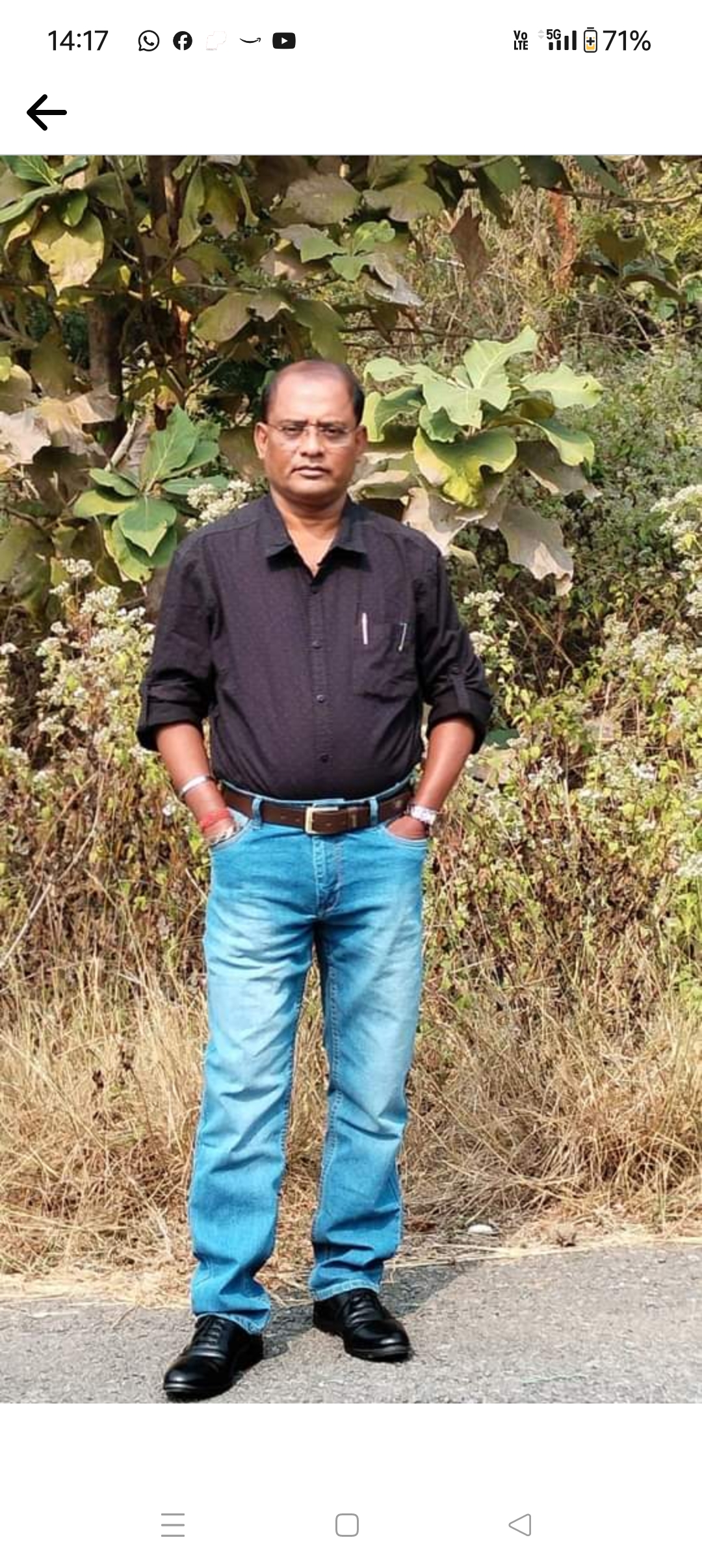
Dr. Prasanna Kumar Dalai (DOB 07/06/1973) is a passionate Indian Author-cum-poet while a tremendous lecturer of English by profession in the Ganjam district of Odisha. He is an accomplished source of inspiration for young generation of India. His free verse on Romantic and melancholic poems appreciated by everyone. He belongs to a small typical village Nandiagada of Ganjam District,the state of Odisha. After schooling he studied intermediate and Graduated In Kabisurjya Baladev vigyan Mahavidyalaya then M A in English from Berhampur University PhD in language and literature and D.litt from Colombian poetic house from South America.
He promotes his specific writings around the world literature and trades with multiple stems that are related to current issues based on his observation and experiences that needs urgent attention. He is an award winning writer who has achieved various laurels from the circle of writing worldwide. His free verse poems not only inspires young readers but also the ready of current time. His poetic symbol is right now inspiring others, some of which are appreciated by laurels of India and across the world. Many of his poems been translated in different Indian languages and got global appreciation. Lots of well wishes for his upcoming writings and success in future. He is an award winning poet author of many best seller books.
Recently he is awarded Rabindra nath Tagore and Gujarat Sahitya Academy for the year 2022 from Motivational Strips . A gold medal from world union of poets France & winner Of Rahim Karims world literary prize 2023.The government of Odisha Higher Education Department appointed him as a president to Governing body of Padmashree Dr Ghanashyam Mishra Sanskrit Degree College, Kabisurjyanagar.
Winner of “HYPERPOEM” GUNIESS WORLD RECORD 2023.Recently he was awarded from SABDA literary Festival at Assam. Highest literary honour from Peru contributing world literature 2024.
Completed 200 Epistolary poems with Kristy Raines, USA.
Books.
1. Psalm of the Soul.
2. Rise of New Dawn.
3. Secret Of Torment.
4. Everything I never told you.
5. Vision Of Life National Library Kolkata.
6. 100 Shadows of Dream.
7. Timeless Anguish.
8. Voice of Silence.
9. I Cross My Heart From East to West.
Epistolary poetry with Kristy Raines
Poetry from Michael Robinson
MOMENTS
Dedicated to Vilma “Willie” Murphy

God’s moment, as we touch each other's hearts.
Our souls move beyond the words of time.
A gentle touch of our hands bonding together.

The quietness of your heart touches my soul.
I’m transformed by the love you gave to me.
A glance of your twinkling eyes meets my heart.

We glance into the heavens, for we are never separated.
Eternal thoughts held together by a string of joy of life.
I kiss you on your forehead to remind me of your spirit.
A kiss and a kind thought remains a part of me forever.
Poetry from Rukn Al-Din Younis
Don't write my name on my tombstone And do not write my father's name Nor where I come from Nor what tribe am I from Don't mention my nationality Neither far nor near Nor do I belong to any religion or sect Because I haven't been through this life Except in passing of all that is presented So, you can cancel my burial ceremony As a tourist in this ruin, you have created By: Rukn Al-Din Younis Translated by: Mohammad Juda Al-Ameedi ….. Rukn Al-Din Younis is an Iraqi poet and writer from the 1980s and a member of the Iraqi Writers Union. He has five poetry collections published.
Essay from Mirsalikhova Robiya

The revival and development of national cultural heritage is the valuable treasure of Uzbekistan.
UDC: И 37.02
Mirsalixova Robiya
Mirsalikhova Robiya
Student of Uzbekistan State World Languages University
E-mail: mirsalikhovar@gmail.com
Annotation
The article is intended to examine the significance of the national self-awareness in the revival and prosperity of Uzbek culture.At the present stage of human development, marked by accelerating globalization processes, the problem of spirituality and spiritual values is more relevant than ever. Undeniably, the national self-awareness serves as a foundation to the strong revival and cultural prosperity. As socio-historical experience testifies, underestimation of spiritual heritage leads society to spiritual poverty and degradation, a crisis of culture itself. The past twentieth century has clearly demonstrated what happens to a person when he loses value guidelines and life meanings, when religion and morality as traditional carriers of spirituality gradually cease to fulfill their functions, and technogenic civilization gives rise to spiritual limitations.
Keywords: spirituality and spiritual values, national independence, social life, national self-awareness, national pride, literature and their popularization.
Spirituality is a complex and multifaceted concept. During the reign, of Islam Karimov published a number of books, most of which were published in the 90s. One of the valuable one is considered to be a book so-called “High Spirituality is an invincible force”. The book “High Spirituality is an invincible force” comprehensively analyzes the content of spirituality as a complex and multifaceted concept at the theoretical and practical levels[1]. It is unique to humans and covers a wide range of human activities. Spirituality represents the essence of man as a socio-cultural being.[2] It is not limited to the framework of religion, science or art, but covers all aspects of human life and permeates all forms of social life, ennobles and brings a higher meaning to everything. It is the total organic unity of such truly human traits as truthfulness, spiritual purity, conscience, honor, patriotism, love of beauty, hatred of evil, will, perseverance. Together with human qualities, spirituality also covers spiritual culture, both in a broader aspect – science, philosophy, morality, law, literature and art, education, media, customs, traditions, and in a narrow sense – religion and spiritual practice itself – worship, cult, religious rituals, religious art.[3]
After gaining national independence and state sovereignty, profound internal changes began in the political and economic life of the republic. Transformation processes covered almost all aspects of life in the republic. A special role in the process of formation of civil society belongs to the revival of spirituality. Thus, immediately after the declaration of independence in Uzbekistan, the strengthening and development of the sphere of spirituality of the people was recognized as a priority direction for building a legal democratic civil society in the republic, along with the economy. In the process of transition to a market economy, the national-historical features of the way of life, customs and traditions of the people were taken into account.
Thus, from the first days of independence, the revival of spiritual values by the country’s leadership became the most important task, raised to the level of state policy, and began to be considered as an organic, natural process of growth of national self-awareness, a return to the spiritual origins of the people, their roots. Thanks to independence, the opportunity arose to study and revive the spiritual heritage of our great ancestors. Events dedicated to their anniversaries were held jointly with UNESCO. [4]For example, in September 1991, the republic widely celebrated the 550th anniversary of the founder of the Uzbek literary language, Alisher Navoi. In honor of this event, the Institute of Language and Literature of the Academy of Sciences of the Republic of Uzbekistan was named after Alisher Navoi, the State Prize named after Alisher Navoi was established, and such works as “Lison ut-tair”, “Sabayi Sayyor”, “Farhad and Shirin” were published. , “Leili and Majnun”, “Khairat-ul Abror”, films and stage productions were created[5].
Folk art is not only one of the spheres of traditional culture, but also one of the most important components of spiritual heritage. Its revival contributes to the improvement of society, its self-organization and self-regulation in the process of transferring cultural values, experience, knowledge from one generation to another, affects the moral and psychological climate in society, providing its development with an optimistic orientation, stipulating the steady progress of social relations that contribute to the harmonious development of free personality in the conditions of independence of the Republic of Uzbekistan. With independence, folk art became one of the main factors in the revival, development and strengthening of the spiritual foundations of a renewing society.
It should be especially noted that, starting from 2017, issues of culture and cultural values have become the highest priority in state policy. Currently, in our country, on the basis of the Action Strategy for five priority areas of development of the Republic of Uzbekistan in 2017–2021. Large-scale transformations are being carried out in all areas and industries. At the same time, special attention is paid to further strengthening noble values and traditions in our lives. In accordance with the adopted Strategy, practical steps are being taken to develop culture, art, literature and the media. At the initiative of President Shavkat Mirziyoyev, work aimed at in-depth research into the unique cultural heritage of our people, establishing interfaith and intercivilizational dialogue, widespread propaganda of educating young people in the spirit of humanistic ideas and national pride has been strengthened and expanded on a large scale. Thus, one of the first resolutions signed by Shavkat Mirziyoyev as President was the resolution on the widespread celebration of the 80th anniversary of the birth of the outstanding poet and writer Erkin Vakhidov, who made a great contribution to the development of Uzbek literature and culture.[6]
A special resolution of the President of the Republic of Uzbekistan dated September 13, 2017 “On the program of comprehensive measures to develop the system of publishing and distributing book products and improving the culture of reading” was also adopted. [7]They are aimed at solving such important problems as high-quality publishing of books, timely delivery of book products at reasonable prices to places, including educational institutions, translation of the best examples of national and world literature, developing in the younger generation from early childhood a love of books and skills reading e-books, increasing the reading culture in our society. Attention is paid to posting on the Internet the best works of classics of Uzbek and world literature and their popularization, as well as ensuring accessibility for a wide range of readers.
The cultural policy of the state, based on the humanization of artistic life, the establishment in various spheres of art of freedom of creativity, free choice of themes and artistic means of expression, as well as the multi-vector nature of cultural relations and the entry of Uzbekistan into the world cultural space had a positive impact on the processes of revival and development of artistic culture republics.
References.
Mirsalikhova Robiya Timurovna. (2024). Islam Karimov as a daring initiator and confident catalyst of conducive alterations in Uzbekistan. Zien Journal of Social Sciences and Humanities, 28, 1–5. Retrieved from https://zienjournals.com/index.php/zjssh/article/view/4899
Эркаев А. Духовность – энергия независимости. Ташкент: Маънавият, 2001.
Ҳакимов А. Искусство Узбекистана: история и современность. Ташкент: San’at. 2010
Каримов И.А. Высокая духовность – непобедимая сила. Т., «Узбекистан», 2008
https://ia-centr.ru/experts/iats-mgu/uzbekistan-v-mezhdunarodnoy-perspektive-partnery-i-ozhidaniya/
https://www.orexca.com/rus/uzbekistan/tashkent/museum_literature.htm
https://ru.sputniknews-uz.com/culture/ 20161207/4329756/prazdnovanie-dr-erkina-vohidova.html
https://president.uz/ru/lists/view/1029
[1] Mirsalikhova Robiya Timurovna. (2024). Islam Karimov as a daring initiator and confident catalyst of conducive alterations in Uzbekistan. Zien Journal of Social Sciences and Humanities, 28, 1–5. Retrieved from https://zienjournals.com/index.php/zjssh/article/view/4899
[2] Эркаев А. Духовность – энергия независимости. Ташкент: Маънавият, 2001.
[3] Каримов И.А. Высокая духовность – непобедимая сила. Т., «Узбекистан», 2008
[4] https://ia-centr.ru/experts/iats-mgu/uzbekistan-v-mezhdunarodnoy-perspektive-partnery-i-ozhidaniya/
[5] https://www.orexca.com/rus/uzbekistan/tashkent/museum_literature.htm
[6] https://ru.sputniknews-uz.com/culture/ 20161207/4329756/prazdnovanie-dr-erkina-vohidova.html
[7] https://president.uz/ru/lists/view/1029
Poetry from Duane Vorhees
OLD SONGS SUNG AGAIN


This beach that we run on, this beach that we sun on,

was a cold mountain once, indomitable quartz.

An insatiable wind chewed the granite into flinders.

The weathered remains gathered themselves as grains

along this treasured shore, this diamond corridor.

But the bored, restless waves too soon will take their leave,

Our beach’s secret cache will be revealed: the smashed

shells, patches of lather, condoms, crap, cadavers….


Life is like a ledger book.

Plusses and losses shape our plans.


The past is a castle; the present, a pasture:

Both are famous for blades (for cattle, or for knaves).

Instants leave instantly, last an eternity,

and new historians find and restore eons.

…. Mississippi …. Egypt …. Pasts clatter in their crypts,

yesterday’s tomorrows detached from their augurs.


Busses and crosses map our lands.

Life deserves a second look.


EVIDENCE FOR THE MUTATIONAL CODEPENDENCE OF TIME


Yesterday

today

was

tomorrow

& my future


:ours


JEN


Not too short, not too thin,

she hid her out within.

She never showed her smile,

never revealed her pain.


SHAPE OF GOD DEBATED


Once, the future shape of god

was subjected to debate

between Simons, one a sage

and the other dubbed a rock.

One said

that a hermitage

was proper for apostles,

and the other

that brothels

were the fittest

for a sage.


Along with the skies,

the Hawk’s wings

lift

human prayers and praise.

But all the tears

are embraced

by the coils of the

Snake.


LEAP FROG


In slo/

        /mo

                                               / frog.

           tree, and, shade, leap /

Seasons pass, and Velcro lovers to Teflon stray.

Tomorrow

will we kids too play

   kids

   play              leap

                                   frog


                                           leap?