I used to know what kind of poet I was.
Then I realized I wasn’t any kind of poet.
Now I can fucking write whatever.
Whatever.

I used to know what kind of poet I was.
Then I realized I wasn’t any kind of poet.
Now I can fucking write whatever.
Whatever.

  XƏTRINNT OF MY LOVE

  Let me bend my love into your love,
  Let it not be based on the pleasure of my love,
  Let me give up on love, let me not hear,
  Don't let it be based on the pleasure of my love!

  Take away the ovary of my heart,
  Your capacity is abundant, remember me,
  Let it snow, rain, shine in the sun,
  Don't let it be based on the pleasure of my love!

  You are my hearth of hope, my trust,
  O poet to my life, I know the feeling,
  Everyday the wind blows into my soul,
  Don't let it be based on the pleasure of my love!

  Let me close your eyes, let me look at you,
  From the demand, you become bored, you become embroidered,
  My dear, let me be your blessing for life,
  Don't let it be based on the pleasure of my love!

  ISTURUM, MY OWN COUNTRY, WHERE I WAS BORN

  Yad, I have no eyes on Özzgən's soil,
  I want my own homeland where I was born.
  O I who turn back and forth in the land,
  I want my own homeland where I was born.

  I don't want grapes, hazelnuts, pomegranate vineyards,
  The heart desires the sky plateau, the mountain of shish,
  The land to which I speak, my shadow falls,
  I want my own homeland where I was born.

  Flowers would grow on my lawn,
  There the nightingale sang more loudly,
  My thighs would kiss my lips,
  I want my own homeland where I was born.

  Əsən mehi shallow pull telimə,
  Its origins are sometimes different,
  Waterfalls rose into my slice,
  I want my own homeland where I was born.

  At the end of the article, we would flee to the pasture,
  We had learned to bala-yaga, to ski,
  The tulip gave color to the cheeks,
  I want my own homeland where I was born.

  I was a mother, my mother was there too,
  My will was sensitive to my eyes,
  My prince would wash my feet,
  I want my own homeland where I was born.

  I was valuable in my hand, and in myself,
  That's why I said "homeland",
  Wherever I look, the sign is in my eye,
  I want my own homeland where I was born.

  Quickly turn away, let the son go to longing,
  My heart is in need of attention, compassion,
  I'm sorry, what's your name, fame,
  I want my own homeland where I was born.

  CARRYING THIS SPIRIT
               WE ARE NOT COLLAPSING A NATION

  Envər Pasha of our Turan army,
  Look at the power of his love,
  His love is across the seas, over the mountains,
  This spirituality is only Turkish!

  He gave great importance to the nation and the country,
  Joined in jihad, escaped from the flames,
  “Transformation as a victorious commander,
  Or let me be a martyr!” - choose your slogan!

  Time colliding in the room,
  The letter he wrote to Nacibé Sultan,
  Even though the sultan's heart was saddened at that moment,
  It has become a source of pride for a lifetime!

   “I love you, my praises
  Raise me with my job!”- he wrote,
  “Write the names of the villages in history,
  Martyrdom is a mark!” - wrote...

  “To protect our country from the enemy,
  Mustafa Kamala, possible help,
  The day that should be from him,
  “One dimension, my sons!”

  The one that comes to life before your eyes,
  He kissed her gentle fingers and left...
  The one that makes hearts happy when you remember it,
  He entrusted tomorrow to God...

  A mill carrying this spirit has collapsed,
  And your truth guides, the path they follow!
  It precipitates the oil, but it does not absorb much of it,
  As long as there is one mill and two states!

  He joined the Turan party,
  Now what kind of Pasha has arrived?
  The great men of Great Turkestan,
  Come on, Victory, our heads are high!


Rüxsarə Adilqızı (Həsənova) – Çəmbərək (Krasnoselo) rayon of Qərbi Azərbaijan, born in Qaraqaya, the secondary school in the Çaykənd city of the same region, in 1987, the current Baku State University.

She graduated from a faculty of science and started his labor activities.  She received her doctorate of biological sciences in 1996, and her degree as an academic in 2005, and currently works as an assistant professor at BDU's Faculty of Ecology and Natural Sciences.  100 provinces of BDU (1919-2019) were deemed worthy of the Jubilee Medal of the Republic of Azerbaijan, in the name of the "Giant of the XXI Century".

Member of the Azerbaijanis Writing Union, she is the author of the poetry books "Roads lead me to the land" (2012), "My beloved homeland award" (2021), "44 days that write history" (2021), "Mirror of my heart" (2023), in her poetry anthologies, She was featured in literary and literary magazines and was awarded with the "Qızıl Qələm" Media Award Laureate Diploma and the "Union of Turkish Peoples" medal of the "Çukurova International VII Turkish World Poetry and Music" festival.

She has a family, two sons and two daughters.

Date

I opened my palm and wandered around the ruins asking for bread, when I heard the call to prayer. I ran to our hut and saw my mother lying lifeless next to the four-cornered cloth, and my heart broke. As it was time to break the fast, I brought some water in a bowl and I gave it to my mother to drink. I couldn’t look at my mother’s face. She barely smiled and closed her eyes saying: «break fast.» In the
morning, when I looked at her near dawn, her breath was not coming out of her throat, there was no blood on her face. My eyes were filled with tears, and when I opened the lifeless, fisted palm that fell on the empty table, there was a single date.
If I took it, the date would smell like my mother…

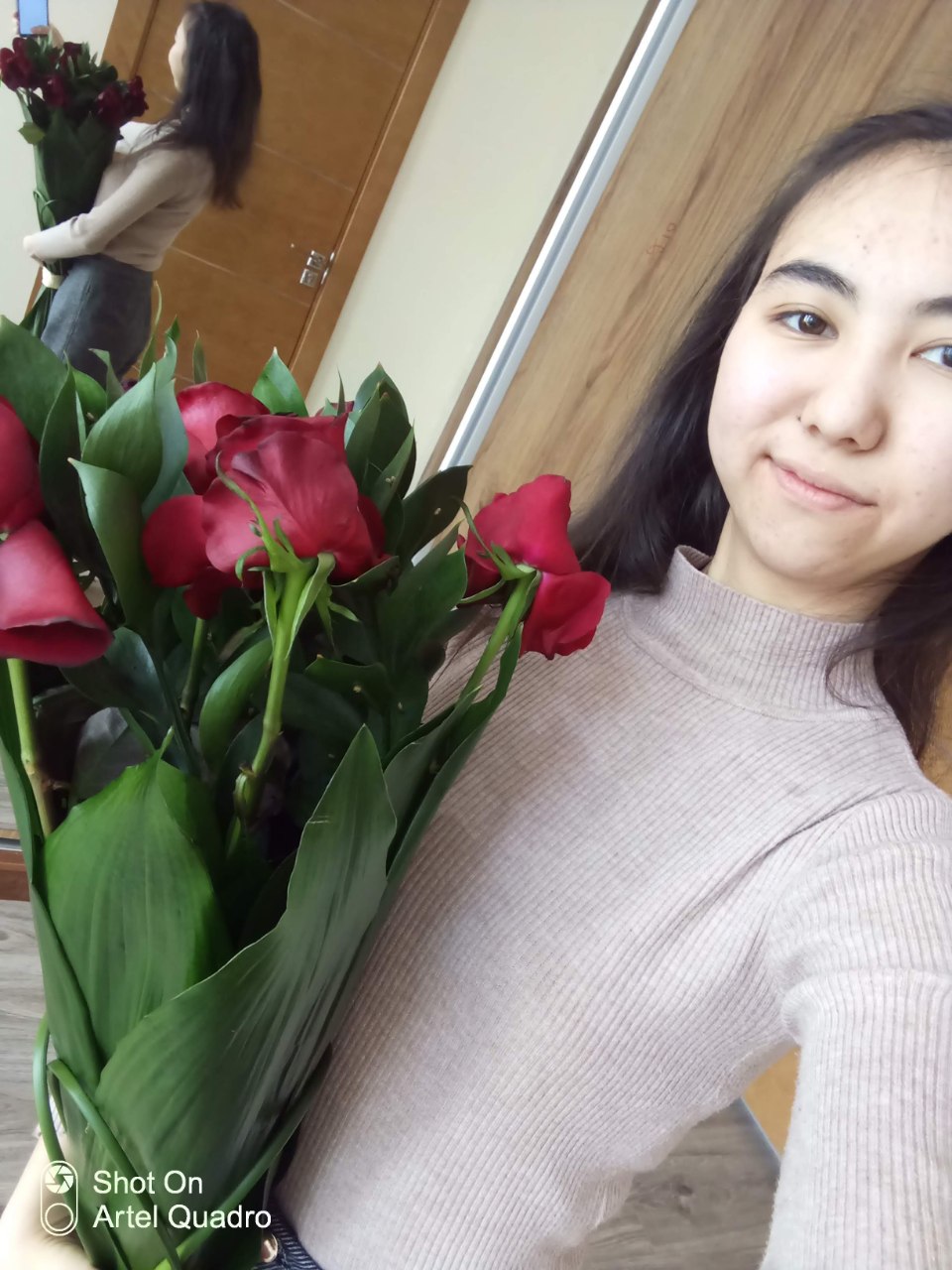
Nosirova Gavhar was born on August 16, 2000 in the city of Shahrisabz, Kashkadarya region of Uzbekistan. Today, she is a third-year student of the Faculty of Philology of the Samarkand State University of Uzbekistan. Being a lover of literature, she is engaged in writing stories and poems. Her creative works have been published in Uzbek and English. In addition, she is a member of «All India Council for Development of Technical Skills», «Juntos por las letras» of Argentina, «2DSA Global Community». Winner of the «Korabl znaniy» and «Talenty Rossii» contests, holder of the international C1 level in the Russian language, Global Education ambassador of Wisdom University and global coordinator of the Iqra Foundation in Uzbekistan. «Magic pen holders» talented young group of Uzbekistan, «Kayva Kishor», «Friendship of people», «Raven Cage», «The Daily Global Nation», Argentina's «Multi Art-6», Kenya&;s «Serenity: A compilation of art and literature by women» contains creative works in the magazine and anthology of poets and writers.
YOU ARE A POX THAT ANGELS LOVE
Childhood! Most people remember their childhood with the most innocent and joyful memories. But not all people! Fate can give a person unexpected tests at any time.
My childhood… The happiest and the saddest period. No matter how hard and how hard it was, even if it was just one day of my childhood, I would trade my entire life for that one day.Because there were my loving parents, my grandparents who always had a smile on their bright faces, my brothers who made us all laugh with their joyful laughter, and a little girl who was still unaware of the storms that the sea called life had thrown for her.
I remember… It was one of the warm spring days. The weather has been bad since morning, my father was nervous for some reason and was in a hurry to go somewhere. And I reluctantly sat next to my brother in the crib, as my mother told me. Because when he wakes up, he cries out of fear, and then it takes me a long time to calm him down. As soon as he woke up, I would rock the crib and try to lull him back to sleep. If I’m not mistaken, I was four or five years old.
My mother and grandmother baked bread, and my grandfather took care of cattle in the barn. Suddenly it started to rain. My mother ran and brought my brother inside, who was lying in a crib on the porch, and ordered me not to leave. Later, my grandfather came in coughing heavily, and my grandmother was heard saying something in a disapproving tone. Soon my brother woke up and started crying. She didn’t stop crying even though I tried to comfort her. Then I hurried to tell my mother. My mother used to bring home bread from the oven. As soon as I told him, my brother quickly put the bread in the kitchen and ran away. I looked at the crimson bread that came out of the oven, I wanted to eat one, but I was afraid that my mother would hit me, so I left slowly.
It started to rain, for some reason my heart was disturbed, some fear gripped me. I ran inside in fear when a loud thunder rumbled. At that moment, someone shouted loudly and called my grandfather. My grandfather quickly put on his shoes and ran out into the street. After him, my grandmother ran out carrying my grandfather’s coat. But my grandfather and the unknown uncle had already left.
An hour later, my grandfather came in with his eyes closed. I have never seen my grandfather look so miserable before. They could barely breathe and gathered all their strength to call my grandmother. My grandmother ran to my grandfather, my grandfather whispered something to my grandmother. My grandmother suddenly burst into tears. I did not understand. My mother said, “Nuria, come to your brother.” I, not knowing anything, went to my brother in excitement and fear. Around noon, a crowd of people gathered in our house. My mother and grandmother were crying incessantly, our relatives – our relatives were running everywhere, my grandfather was staring at one point at the edge of the yard and gently nodding his head to those who came and went.
These are the memories I have from those dark days. I don’t know what happened to him. I can say that it was only when I reached school age that I learned that my father died in a car accident, and at that time my poor mother was left a widow while carrying my second brother in her arms. Until then, my mother always assured me: “Your father has gone on a long journey and will bring you a beautiful doll.” And every day I waited for my father to come sooner, to bring the doll of my dreams in a white satin dress with golden curls. But then I found out that this waiting is far away, it is not even close to me.
My school days, for some reason, when I remember them, a bitter excitement sticks in my throat. I studied well at school, I went out with girls well, I loved all my friends very much until that day, until that day when I found out the truth…
One day, while returning from school, my friend Zuhra told her that her father would bring her a doll tomorrow. At that moment, I accidentally sent: “Dad will soon bring me a doll with golden hair and a white satin dress.” All the girls looked at me and squealed with laughter. Then Zuhra: “Nuria, why didn’t the people in your house tell you that the dead never come back?!” – he said. I shouted bitterly, “My father is alive, he just went on a long journey. He will definitely come back soon.” “Your father died in a car accident, the whole neighborhood knows it, they just didn’t tell you,” Zuhra continued, looking at the girls proudly, may come”.
Zuhra pushed past me and continued on her way, the girls followed her. I stood in the middle of the road, feeling nothing, with two drops of bitter tears in my heart.
It wasn’t me who cried then. The past years
I hate myself when I remember. At that time, I cried to my loving mother, who was raising us with so much grief. As if the sufferings I saw were not enough, I was upset with everyone in our house and suffered even more without talking to anyone. Oh, mother, if only that thin little girl of yours would understand you.
Over time, I got used to everything. My mother was the reason I got used to it, they tried their best not to tell my father. Allah created the mother in such a way that her love can melt the stones and her tears can water the dry desert.
Days passed one after the other. The absence of our family breaks my heart. Even though she has two children who have learned to walk, she does not stay at home.
One day, when I came home from playing with my friends, my mother was gathering things.
Thinking that we were going to my grandmother’s house, I asked my mother and looked at them. But for some reason, my mother did not speak, a serious look on her face and a painful look in her eyes. After putting her things in her bags, she kissed me and my sleeping brothers and went out. Despite her grandmother’s calls, she strongly resisted and walked towards the gate. My grandfather stood quietly in front of the door, not saying a word. At that moment, the sound of a car was heard. My mother said to my grandfather and grandmother, “My children, I will come back as soon as I earn enough money, don’t worry,” and left. My grandmother cried as much as she could, and my grandfather cried without it.
At that moment, I realized that my mother was going away, leaving me and my brothers and going far away. I ran as hard as I could. But the car was going far. I wish I had wings and I could fly. “Mom, don’t go, don’t go, what will we do without you, I’ll never hurt you again, I won’t even ask you to get a new dress, I promise, don’t leave.” That’s all I wanted to say. Unfortunately, the faster I ran, the faster the car disappeared. I sat down breathless. People were looking at the little girl who was staring at a point in the middle of the road in the narrow street of the village. I didn’t cry anymore, I didn’t think about anything. After some time, my grandmother came and tried to take me away, I didn’t get up. But when my grandmother started crying, I didn’t know if I felt sorry for them, but an unnatural force forced me to get up. In front of me I hugged my grandmother who was crying. I fell asleep soon after I got home.
In my dream, I saw that my mother was cutting hot bread for me, and when I reached out to take it, she suddenly disappeared. , they washed. I calmed down and fell asleep again.
For some reason, it rained heavily on the day I left.
Perhaps Mother Nature shed bitter tears, unable to cope with the troubles that await us.
Then it turned out that my mother went to work abroad so that I and my brothers could grow up like no other. After a week, she got a job and started calling us every day. He asked about our studies and the condition of my brothers. He said that he would not stay long and would come back to us soon. We got used to this life. Every two or three months, my grandfather would go to the market and buy new clothes for my brothers and me. We were very happy. Unfortunately, we didn’t know that these clothes were coming from our mother, who works day and night far away from us. Maybe we didn’t understand.
Months after months, years after years, and only a few days left for me to turn twelve years old. The day before my birthday, my mom called me and asked if I should send a birthday present or skip the birthday. I liked both suggestions. I asked them to skip my birthday for some reason. Because for as long as I can remember, I have never celebrated my birthday by inviting my friends to our house.
The next day, around noon, my uncle came in with a lot of things. He gave the things he had brought to my grandmother and started helping to set the table in the yard while carrying my little brother in one hand. I was very happy. Very happy.
My grandmother quickly started cooking. My grandfather went to get meat from the butcher uncle in our neighborhood.By evening, everything was ready. My uncle went to set up his camera. Carrying all kinds of gifts, first our relatives and then my friends started coming in. I was wearing a pink dress that day. This dress was made for my birthday. I was very happy. At that moment my uncle called me. My mother was asking for me on the phone. I picked up the phone. “Happy birthday my daughter, may I see your wedding,” he said with difficulty. “Thanks, honey, okay,” I said. I was in a hurry to play.I wish I could go back to those moments when I knew that I was talking to my mother for the last time, when I felt that I was hearing her beloved, kind voices for the last time… I would never give up the phone, I was ready to talk for hours. Unfortunately, life continued in its judgment.
The birthday was in full swing. My uncle used to record our every situation on the camera without melting. Blowing out the candles, playing with my friends happily and laughing, and the leftovers of food on the faces of my two brothers after eating various sweets were all recorded on one camera. To send to my mother. (Unfortunately, we lost one of these pictures before they reached my friend)
After we had four meals, my uncle was raising a glass to make a wish in the circle of relatives, suddenly the phone rang, he picked up the phone, his face changed into a pitiful look, and the glass in his hand fell to the ground. everyone was shocked and stiffened. My uncle was silent. My aunt, who was as pale as a cloth, picked up the phone and suddenly screamed and cried while talking to an unknown person. At that moment, my uncle, whose face was shining with kindness, passed away. Thus the whole existence has seen the happiest day that has been presented to me at least once.
It took it and ended it with his sad and at the same time sad news.
A year later, we were separated from my grandfather, and then from my grandmother, who was our only support.
Now the real life was pulling us into its grip like a raging sea. In those years, the pages of my childhood were closed and I was slowly walking towards the door of adolescence…

Who am i?

The character of people is different, each one is completely different from the other. It is no exaggeration to say that there are 8 people in the world and 8 billion characters as well. However, psychologists and neurobiologists have generalized some characters according to some aspects. Now we will talk with you about them, introvert, extrovert and ambivert.

An introvert is a person whose energy is directed to the inner world. He is not bored by himself. He is calm and thoughtful, attentive to details and careful in his decisions. Introverts are sometimes seen as gloomy, taciturn and downright antisocial. But actually they are very good people. Just social connections drain their energy. There are only two or three people in the close circle of an introvert. An introvert who does not talk well with strangers is ready to discuss interesting topics with people close to him for hours. For an introvert, loneliness is a lack of involvement in someone's life. He can fell lonely even in a crowd. Reading a favorite book ir taking a meaningful walk is the best way for an introvert to recharge.

Who are extroverts? An extrovert is a person whose energy is directed to the outside world. He is polite, open and active. He approaches everything positively. He is not afraid to take the initiative and be a leader. Extroverts can sometimes seem silly because of their quick temper. But don't confuse emotionality with superficiality. Extroverts get energy from interacting with others. Loneliness for an extrovert is the absence of anyone around, not being able to find someone to talk to. They have many friends and relatives. You won't get bored with extroverts. In order not to get tired of the sameness and light the inner fire, they go to the crowds or invite guests.

Now let's get acquainted with the third type, ambiverts. They naturally engage in a flexible model of negotiation and listening, ambiverts express confidence and motivation enough to persuade and close sales, but are more inclined to listen to their customer's interests and are overly enthusiastic or arrogant is not visible. Therefore, representatives of this third type are neither extroverts nor introverts. We can simply call them neutral persons.

By Ifora Olimjonova
Uzbekistan
16-year-old girl

leaving a tip at the Blue Moon Motel
Richard Vargas.
Casa Urraca Press / ABIQUIU
ISBN: 978-1-956375-17-6
I want to hit on about three things, all of which intersect, in praising Richard Vargas’s collection, “leaving a tip at the Blue Moon Motel.” I want to talk a little bit about what it means to do a ‘political poem,’ in the loosest sense that this means. Meaning: I want to talk about writing from direct experience, as opposed to writing from theory. This brings up Vargas’s unique sense of empathy. And last, I want to talk about style just a little bit, to remind us all that clarity and clean writing is not an abandonment of it. All these things explain why I like Richard Vargas’s poetry.
In an anthology of essays titled “Poetry and Politics,” edited by Richard Jones, I want to say I recall the poet Denise Levertov making a succinct point about some of what we call “political poetry.” She alluded to Bertolt Brecht’s version of the political poem as something akin to “marching orders.” I remembered this and wrote it down and it has stuck with me, but I don’t have the patience to re-read her essay right now. So if she did not characterize some political poetry, like Brecht’s, as something like “marching orders,” then let me do so now, and continue to credit her with the idea, just in case.
Don’t get me wrong. A theoretician or an academic poet who cares about humanity, without having experienced the bad jobs or prison experience he or she writes about, is still on the human and not the dehumanizing side of things. Bertolt Brecht was on the side of humanity. But when poets write about such things from some place other than their own experience, they must invariably do so in the third person, or do so in an abstract or at least imagined way. We, as readers, tend not to relate as much to such work. But Vargas only writes about what he has experienced himself, without assuming to understand worse. He wonders about it, and more on that later, but he never presumes.
In my view, this is a better kind of political poetry: it reads more like reportage than propaganda. It does not begin with theory. It begins with personal experience. And it recounts such experience without apology or excuse. This is exactly what Richard Vargas’s work does. Such poems, even if implicitly political, for having described a horrible class-based economy, for having described the dehumanizing corporate experience of the worker crammed into a room with minions fielding an onslaught of insurance claims over the telephone lines, such poetry still somehow manages to keep the reader from saying – “aha, a Marxist,” or “aha! A liberal, I knew it!” It simply recounts the bad realities, but without the intellectual’s insistence that the way out is this way or that way or another. It is not ideological. It is human. Richard Vargas’s poems are just that, and that is more than enough. When “listening” to his poems, we are sitting next to a friend talking to us from the barstool next to our own, not listening to a party leader or a tenured professor.
Vargas recounts the experience of working at the Goodwill, of working for the giant insurance company, of working for the chain retail bookseller. He recounts the dehumanizing experience of being baited into one job only to be subjected to terms of employment that have already been switched out, in favor of the owners over the workers. He recounts these experiences, without any calls to arms, mind you. He does this by writing from direct experience, and doing so with a rare honesty. Nazim Hikmet did it, and so did Charles Bukowski, and while it is no secret that Bukowski was not a Marxist theoretician, and Hikmet himself was a bit of a Red and as a result an exile in his own country, whose government imprisoned him, what such poets have in common is that they tell us what they know based upon what they have lived.
Richard Vargas belongs to that family tree of poets, whether they strike us as apolitical, as Frank O’Hara was, telling us about his coffee in the morning; or apolitical but more implicitly political, like Bukowski, telling us about the broken down delivery truck that left him at Pico and Western when he needed to get home before hot Miriam left the flat; or whether they can’t hide the politics behind what they are saying, as with Hikmet. What they all have in common is that they are incapable of playing the ‘know-it-all’ games played by more academic writers. They can’t help it, this thing about their work, which is this: it is incapable of bullshit. They write from life, not theory. They are reporters and not propagandists.
In the case of Richard Vargas’s collection, ‘Blue Moon Motel,’ what is most remarkable upon reading it is the extreme, really super-human empathy that constantly emerges. Richard’s empathy for others does more than punctuate the collection; it effectively defines it. Vargas somehow manages to do two things at one and the same time: he manages to write from his own discombobulating economic experience of this culture, and yet manages to write almost exclusively about other people. I italicize it to emphasize it. This is so even in the most autobiographical works in the collection: “time traveler’s advice” comes to mind, in which Vargas is still addressing other people. He is speaking about another person when he speaks about the ten-year old and twenty-year old versions of himself. The reader is reminded of a particularly touching Buddhist lesson: that we all both carry all of these stages of ourselves around with and within us, but that we are obligated to love these “other people” we carry within. But the reader of this particular poem can’t help but also conclude, given the surrounding collection, that it is written in large measure as a gift for those who have shared similar trying experiences.
To go further with proof of this great capacity for empathy: when Richard writes about stocking clothes at the Goodwill store, it’s not ever about his long hours, not ever about his low pay, and even if he mentions it, it’s not about his blushing face. It’s about the donors, their lives, and what they meant, or, better still, what they could have meant. His poems about his own grind turn out, in practically each instance, to be about his humanity, because they are about all of us, his brothers and sisters, and the grind any one of us can live. That ability, whether honed or innate, to both write from one’s own experience yet simultaneously address so many experiences of so many others, is itself a kind of style.
Ezra Pound, in the “ABC of Reading,” wrote about the need to bring subject and form together, to make the poem’s topic and its language match. This is a horrible oversimplification. Then again, so is fascism. But if Pound’s premise is correct, then “leaving a tip at the Blue Moon motel” is a successful book. Leaving bullshit off to the side means writing clearly, cleanly. When I think about poets like Frank O’Hara or Charles Bukowski (who must have a place in Vargas’s own family tree, lineage traceable back through Gerald Locklin as it could be), or even the few poems Hemingway left, I realize that being a reporter before being a propagandist, and being understood, unlike so many experimental poets, language poets, or surrealist poets, does not mean an abandonment of style. It simply makes for a clear, understandable, and, because personal, a unique expression. After all, as Isaac Bashevis Singer once said in an interview, a writer does not attain originality by coming up with a new style, or by writing about a new subject; he or she attains originality by giving everything of themselves. I paraphrase. But you get the idea.
This is a very, very good book, by a very, very good poet. Richard Vargas, in this book, manages to connect, empathically, with more of us in sixty-some pages than other poets merely speak to in the hundreds they produce. He does it with clarity and clean prose. He manages to inform our politics without preaching about them. And he does it with a remarkable and, unfortunately rarely-seen, sense of empathy for his readers and their own lives.
Please buy and read this book. Then place it on your shelf alongside similarly honest works.
– J.T. Whitehead
(may be cut as needed)
About the Reviewer
J.T. Whitehead earned a law degree from Indiana University, Bloomington. He received a Master’s degree in Philosophy from Purdue, where he studied Existentialism, social and political philosophy, and Eastern Philosophy. He spent time between, during, and after schools on a grounds crew, as a pub cook, a writing tutor, a teacher’s assistant, a delivery man, a book shop clerk, and a liquor store clerk, inspiring four years as a labor lawyer on the workers’ side.
Whitehead was Editor in Chief of So It Goes: The Literary Journal of the Kurt Vonnegut Memorial Library, briefly, for issues 1, 2, 3, 4, and 6. He is a Pushcart Prize-nominated short story author, a Pushcart Prize-nominated poet, and was winner of the Margaret Randall Poetry Prize in 2015 (published in Mas Tequila Review). Whitehead has published over 350 poems in over 125 literary journals, including The Lilliput Review, Slipstream, Nuthouse, Left Curve, The Broadkill Review, Home Planet News, The Iconoclast, Poetry Hotel, Book XI, Gargoyle, and The New York Quarterly. His book The Table of the Elements was nominated for the National Book Award in 2015. Whitehead lives in Indianapolis with his two sons, Daniel and Joseph, where he practices law by day and poetry by night.
Forty Days of Sadness

Psalm 16:1-3

1 Keep me safe, my God, for in you I take refuge.
2 I say to the LORD, “You are my Lord; apart from you I have no good thing.”

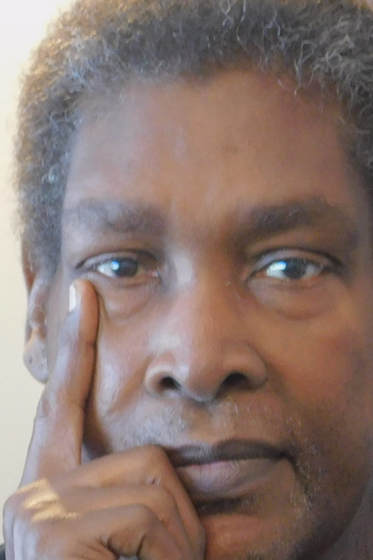
During the past forty days, I experienced the loss of a friend, and not for the first time. I knew of children in my community whom we had lost at an early age. Jesus was my friend, and I talked and prayed, knowing he was there for me. In my early childhood, I had come to know Jesus. We talked, and in my innocent child's spirit, Jesus was alive.

During Lent all was going to change. He was to be taken to the Cross to die. I was an altar boy during that period. I witnessed Christ's suffering and death at the Stations of the Cross. His death was real to me at that time. My friends who had passed didn't come back to me. Serving each Station of the Cross Friday night for forty days brought sadness within me. I knew how this was going to end. Jesus was marched to Calvary to die.

Each Friday during that time was a reliving of his suffering on his way to the Cross leading up to the black Friday when he died. The whole forty days were darkness for me, not just during the Friday evening service but throughout the week.

I spent time in the church praying as the candle flames flickered. There was a realization that my friend Jesus wasn't there to share my life. Easter Sunday was so far away without my true friend Jesus.

I knew Jesus was real because there was always a feeling of comfort when I talked with Him and felt him beside me. My foster Mother talked about how Jesus was alive to her. I, too, felt that Jesus was alive. She was convinced of Jesus' presence. Those good Fridays were indeed challenging because we remembered the end of Jesus' life. I knew that on Easter I would get new clothes to wear to church for the celebration of Jesus' return.

Come Easter Sunday there was a feeling of having my friend come back to me. On Easter, when I talked and prayed, it brought me great comfort and peace.