Poetry from Gustavo M. Galliano

Latino middle aged man with short brown hair and a black tee shirt standing in front of a painting of a red and orange desert scene.
Gustavo M. Galliano
SUSURROS DE LA NOCHE 

El aura de la noche
gime en avalanchas,
serpenteante, candorosa,
transpirando color.
Montada sobre nubes
tus brazos, cual férreas aspas,
emprenden cabalgatas, eternas,
por sobre el éxtasis del amor.
Remolinos de seda,
entrelazados al gozo,
mientras espasmos fragorosos
beben aguardiente del crear.


WHISPERS OF THE NIGHT 


the aura of the night
moans in avalanches,
meandering, candid,
sweating colour.
mounted on clouds
your arms, which iron blades,
they embark on cavalcades, eternal,
above the ecstasy of love.
silk swirls,
intertwined with joy,
while roaring spasms
they drink brandy of creation.

---------------

BREVE BIOGRAFÍA de:

Prof. Gustavo Marcelo GALLIANO.

          Nacido en Gödeken, Santa Fe, República Argentina. Escritor, poeta, Jurado en certámenes literarios Internacionales. Periodismo digital. Docente Universitario de la Facultad de Derecho de la UNR, en la asignatura Historia Constitucional Argentina. Miembro del CICSO (Centro de investigaciones en Ciencias Sociales). Secretario Técnico de REDIM.     

          Se ha desempeñado como Corresponsal Especial en diversas revistas internacionales de Arte y Literatura (Cañ@santa, Sinalefa, ViceVersa, Long Island al Día, RosannaMúsica, etc).

          Integra la Red de Escritores en Español (REMES), Poetas de Mundo, Unión Hispano-Mundial de Escritores (UHE), la Fundación César Égido Serrano, Naciones Unidas de las Letras (Ave Viajera y Proyecto Mundial Semillas de Juventud), entre otras. Actualmente es colaborador especial de Revista Poética AZAHAR (España), Revista Literaria-artístico PLUMA y TINTERO (España), Revista Literaria KENAVÒ (Italia) y Revista OFRANDA LITERARA (Rumania) donde también integra el Colegio Editorial.

          Ha obtenido distinciones y premios en certámenes y concursos internacionales de cuentos, narrativa, micro relato y poesía. Publicó libros (LA CITA, 5 AUTORES) y participe  de antologías y revistas publicadas y traducidas en más de 100 países.

          Ha sido designado como Embajador de la Palabra y la Paz por diversas instituciones: WWPO (USA), Círculo de Embajadores Universales de la Paz (Francia / Suiza), Fundación César Égido Serrano y Museo de la Palabra (España).

          Reside en Rosario, Santa Fe, República Argentina.

BRIEF BIOGRAPHY of:

Prof. Gustavo Marcelo GALLIANO

Born in Gödeken, Santa Fe, Argentine Republic. Writer, poet, jury in international literary contests. Digital journalism. University Professor at the Faculty of Law of the UNR, in the subject Argentine Constitutional History. Member of CICSO (Social Sciences Research Center). REDIM Technical Secretary.

He has worked as a Special Correspondent for various international Art and Literature magazines (Cañ @ santa, Sinalefa, ViceVersa, Long Island al Día, RosannaMúsica, etc).

She is a member of the Red de Escritores en Español (REMES), Poetas de Mundo, Union Hispano-Mundial de Escritores (UHE), the César Égido Serrano Foundation, the United Nations of Letters (Ave Viajera and the World Seeds of Youth Project), among others. Currently he is a special contributor to AZAHAR Poetic Magazine (Spain), PLUMA and TINTERO Literary-artistic Magazine (Spain), KENAVÒ Literary Magazine (Italy) and OFRANDA LITERARA Magazine (Romania) where he is also a member of the Editorial College.

He has obtained distinctions and prizes in international contests and contests for short stories, narrative, short story and poetry. He published books (LA CITA, 5 AUTORES) and participated in anthologies and magazines published and translated in more than 100 countries.

He has been designated as Ambassador of the Word and Peace by various institutions: WWPO (USA), Circle of Universal Ambassadors of Peace (France / Switzerland), César Égido Serrano Foundation and Museum of the Word (Spain).

He resides in Rosario, Santa Fe, Argentine Republic.
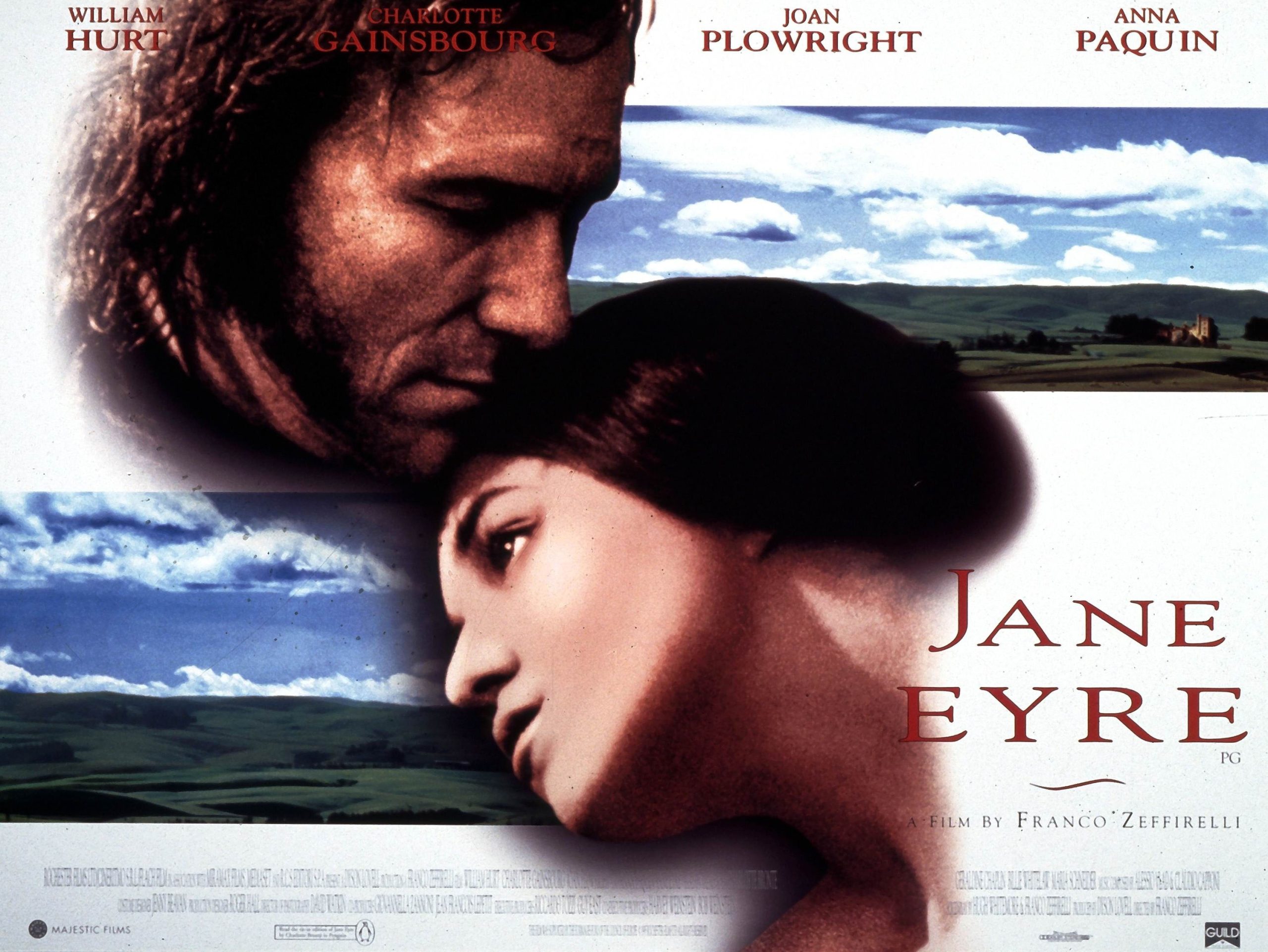
Z.I. Mahmud explores the world of Charlotte Bronte’s Jane Eyre

Jane Eyre movie poster (Franco Zeffirelli version with Joan Plowright and Anna Paquin and William Hurt) Shows a man and a woman embracing and wide open spaces with grass and clouds behind them.
Victorian Literature: Charlotte Bronte’s Novel Jane Eyre

•	Jane Eyre is a bildungsroman which follows the experiences of its eponymous heroine, including her growth to adulthood and her for Mr. Rochester, the brooding master of Thornfield Hall.
•	”I grieve to leave Thornfield Hall….I I love it because I have lived in it full and delightful. I have not been trampled on. I have not been petrified. I have not been buried in inferior minds and excluded from the companion of what is bright, energetic and white. I have talked face to face——-with an original, a vigorous and an expanded mind”/ 

•	The novel revolutionizes prose fiction by focusing the protagonist’s moral and spiritual development through an intimate first person narrative, where actions and events are coloured by a psychological intensity. 
•	Charlotte Bronte has been the first female historian of the private consciousness. She is the literary ancestors of writers like James Joyce and Michael Proust. 

•	Along with Jane Austen’s Pride and Prejudice romance novel depicts social commentary critiquing gender relations, class hierarchy, sexual orientation, religious aspects and feminist discourses.
•	At Gateshead Hall Jane is detested and tormented by her aunt Mrs. Sarah Reeds and cousins Georgiana and Eliza both emotionally and physically.
•	Her education at Lowood School gains her friends and role models but she suffers oppression.

•	Her time as a governess at Thornfield Hill, where she falls in love with the mysterious employer Mr. Edward Fairfax Rochester, her time at the Moor House, during which her earnest but cold clergyman cousin St. John Rivers proposes to her; ultimately leads to her reunion with and marriage to her beloved Mr. Rochester.
•	The Red Room of the Gateshead Hall is symbolic of the ambiguous relationship that exists between the parents and children which plays out in all of Jane’s relationships with male figures throughout the novel.

•	Bessy and the apothecary Mr. Lloyds were Jane’s amicable acquaintances at Gateshead Hall.
•	Mrs. Sarah Reeds beseeches the aid of Mr. Brocklehurst in enrolling Jane Eyre to Lowood Institution, a charity school for girls.
•	Jane blames that Mrs. Sarah Reeds and Eliza as well as Georgiana were the ones who had been deceitful in unacknowledged of the dying wish of late Mr. Reeds.
•	Helen Burns’ poor stance and dirty nails exposes her to harsh lashing at Lowood institution.

•	Miss Temple, the kind hearted woman superintendent facilitates Jane’s self-defense and vindicates her any wrongdoing.
•	The 80 pupils of Lowood were subjected to poor meals, thin clothing and cold rooms.
•	Many students fall ill when a typhus epidemic strikes; Helen Burns dies of consumption in Jane’s arms. 

•	When Mr. Brocklehurst’s maltreatment of the students is discovered, several benefactors erect a new building and formulate a sympathetic management committee.
•	Alice Fairfax provides feedback to Jane’s advertisement in the newspaper offering services as a governess.
•	Jane is recruited to be the mentor and governess of the French beau Adele Varens.

•	Jane was carrying a letter to the post from Thornfield Hall and encounters Edward Fairfax Rochester—-the master of Thornfield Hall dismounted by his galloping horse fallen over a iceberg.
•	Despite Mr. Rochester’s strange behaviour, they revelry in the merriment of the Eden of Thornfield together embellishing evening….
•	Eccentric and peculiar phenomena coincide at Thornfield Hall with the hysteric maniacal laughter and hilarity of the locked chamber’s mystery, a blazing flame in Rochester’s bed-chamber and Mr. Mason’s fallen victim to violence.

•	Mr. Rochester returns with Blanche Ingram, the heartless and snobbish maiden.
•	Mrs. Sarah Reeds’ stroke summons Jane and she receives letter from Mr. John Eyre in which he implores Jane to reside with him and be his heiress.
•	Jane is skeptical of Mr. Rochester’s haughtiness in wooing her to betrothed her and aftermath of both the lover’s confession; the former writes letter to her uncle stating the proposal of wedding.

•	A strange woman intrudes Jane’s bedchamber and rips the wedding veil into two foreshadowing impossibility of marriage by the harrowing grotesquery. Mr. Edward Fairfax Rochester cloaks the clandestine mystery to be the work of Grace Poole.
•	The Lawyer and Mr. Mason dispels the prospects the wedding revealing the fact of Mr. Rochester’s betrothal to Bertha Mason.
•	When Grace Poole gets drunk, Mrs. Bertha descends to congenital madness and causes the strange happenings at Thornfield Hall.

•	Jane is tempted and realizes that she will wreck her integrity if she privileges her desires and passions for the sake of a married man; she must stay a virgin in following Christianity.
•	Jane accidentally leaves possessions on the coach and forced to sleep on the moors. She unsuccessfully attempts to trade her gloves and handkerchief for food.

•	Exhausted and starving Jane eventually makes her way to the home of Diana and Mary but is turned away by the housekeeper. 
•	Clergyman St. John admits Jane to the home of Diana and Mary and encourages her livelihood with a new employment at a local school.
•	St John astounds Jane by telling her of her uncle John Eyre’s death, who left behind a legacy of UK pounds 20000.
•	Professing marriage confession to the pious and conscientious Jane, St. John Rivers implores Jane to be a missionary’s wife and travel to India.

•	Jane Eyre learns of Mrs. Alice Fairfax’s retirement and Adele Varens’ schooling a few months following her departure’s aftermath.
•	Mr. Rochester lost a eyesight and a hand in attempting to rescue the householders from the blazing flame that Mrs. Rochester inflicted by sabotage. 
•	Jane asserts herself financially independent and promises never to forlorn Mr. Rochester. /”Am I hideous, Jane?”…”You, always were, you know.”/

•	/”To be together for us is to be at once as free as in solitude and as gay as in company…we are precisely suited in character—-the perfect concord is the result.” They live blissfully in an old house in the weeds called Ferndean Manor; they are visited by relations such as Diana and Mary with their newly wedded husbands; St. John Rivers archives salvation by sacrificing his life in the ailments of the colonial epidemics; and the couple stay in touch with Adele Varens eventually.    
   
Blinded and crippled Mr. Edward Fairfax Rochester cannot believe that Jane Eyre had returned to the Ferndean Manor. His suspicion and incredulousness is[D1]  symbolic of the abrupt movement and mannerism: quickened gesture, he demanded, distressing attempt, he ordered, imperiously and aloud: “What is it? Who is it? Who speaks?”——These monosyllabic questions further creates tensions and suspense clinging to the mysterious incarnation of Jane Eyre.

Rochester hyperbolizes that his heart will stop and brain burst and this helplessness and the awful circumstances is conveyed by the verbs groping and wandering. The frustration of blindness is enhanced by the exclaimed speech, “Oh! I cannot see.” In this sense, figment of imagination pervades the scene as evidenced by alliterative diction: “Great God!” emphasizes his disbelief, believing that he has gone mad in daring to think that Jane has returned: “what delusion!” “sweet madness”. Finally he touches Jane’s hands and exclaims with delight that ‘This is her shape——this is her size’—–nonetheless the use of dashes and repeated phrases further illustrates her incredulity: “Her very fingers…her small slight fingers”.  

Perhaps a figment of his imagination or the supernatural presence: ‘in the flesh?’ ‘My living Jane?’ ‘is it a dream?’….
 He’s [Edward Rochester] every woman’s fantasy man. He has a threatening past, and seems untameable, but in the end, is tamed by a girl [Jane Eyre] who makes his pain go away. 

Here are the major and minor characters who feel unhappy, miserable, depressed or nihilistic at certain extent in the novel:
Jane Eyre is exploited and manipulated by her ambivalent and roguish cousins including Georgiana and John that she eventually becomes fiery tempered to outwit and overthrow tyrannical Gateshead Hall; by throwing to hit her inimical brother with the book.
Even in Lowood Charity institute for orphaned girls, she dissociates herself from the association of Mr. Brocklehurst for being nefarious brute towards her. Helen Burns’ tragic death from typhus is striking in the poignancy of pathos throughout the educative and reformative years.

Thornfield becomes questioned as the graveyard or burial ground of her fanciful imagination in achieving romantic desires while courting her master Edward Fairfax Rochester. Jane Eyre becomes despondent by the intrusive appearance of Blanche Ingram, who has become the inevitable thorn exposing her to mortification and petrification.
Adele Varens' being sent to boarding school and Mrs. Alice Fairfax’s retirement are furthermore glossed as unfavourable for her sustenance in acquaintanceship. Jane eventually throws herself into extreme poverty and inhumane destitution wandering recluse in the moors with coaches and walks.

Jane’s wedding with Rochester are symbolic auguries in the multiplicity of narrative perspectives as envisioned in the foreshadowing of Bertha Mason’s lunacy to tear away the wedding attire. Mrs. Alice Fairfax’s forewarning reveals mysterious past since she is aware of Edward’s sullen gloominess concealed in the Thornfield Hall: “I do fear there will be something found to be different to which either you or I expect.” Bertha Mason’s brother heralding the solicitor Briggs in proving the witness to testify Edward Rochester’s unfortunate marriage to Bertha Mason.

Saint John River’s melancholic death in the missionary abroad is symbolic testimony to Christ’s crucifixion and Jane Eyre’s rejection of him renders pitifulness ambience.

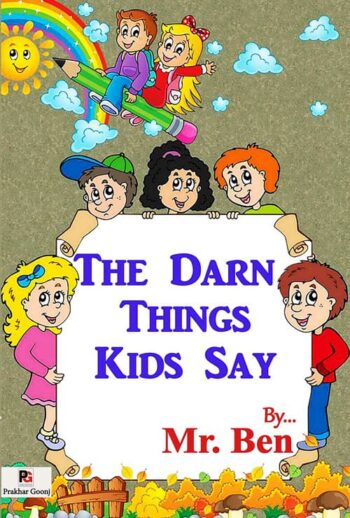
Chimezie Ihekuna (Mr. Ben)’s children’s book The Darn Things Kids Say

Assortment of different children with different expressions and hair colors (clip art) with pencils and rainbows and the sun and leaves. Text says The Darn Things Kids Say by Mr. Ben.

About The Author: Mr. Ben, as he is called, is a published poet, writer, playwright, essayist, lyricist, spoken words and voice over artiste. He has written a body of works that relates with several interests. His works touch on areas of education, inspiration, sexuality, entertainment, lifestyle and other interests, all with the aim of face-lifting mankind towards greatness . Given his multi-genre approach, Mr. Ben’s acrostic, G.A.N.G.S.T.A.R , which stands for Generally Appreciating Notable Genres by Stating Their Applicable Relevance, has now become his trademark. Based in Lagos, Nigeria, he delights in reading, traveling and meeting people. 

About The Book: Miss Alice, 24, always fond of being addressed as Aunty Alice, teaches Moral Instructions in an Elementary School. This time, she seeks to engage her pupils in a discussion regarding what they like and dislike about their parents. It turns out that their statements are darn to the core!

This book is available from Prakhar Goonj Publications in India.

Poetry from Andrea N. Carr

Listen

Food has become my best friend,
and the only thing I can think of to tell younger people
is not to listen to anyone except someone who has done
what you are trying to accomplish. 

Believe there is always a way, even if you don't
know how exactly. 

Uncertainty is your friend through excitement. Do what makes you happy because before you know it, your life
is almost over. 

A hundred years is too long to live because
of your brain's age; it stays younger than the body 
permanently and they never equal each other. 

But 50 isn't enough time to live. You are still young in comparison
to your last half of life. I would do the first part of life over backward
to avoid reaching 85. Now that I am in the last half, the time moves
faster and faster the older one gets. 

Imagine that. No one can explain it to you until it's too late. 

Andrea N. Carr is an accomplished writer and storyteller from Southern California. More about her work here.

Poetry from Ahmad Al-Khatat

Why Am I Sad?

Does that mean I’m lucky? If so,
Then why I don’t remember the dust on my joy?
Has my confidence disappeared with the cigarette ashes?

People age by love poems and happy-ending stories. 
Meanwhile, I age by the number of lonesome years.
My brother tried & failed to teach me how to stop crying. 

The very first moment I turned 18 eighteen years old, 
My grandpa came into my dream and said 
“ I’m no longer in trouble to express my mental illness.”

Thirty-four years and yet I shamefully liquoring up and smoke.
Colourless wounds, foggy nightmares and rusty sorrows in me.
Why am I sad? When everything is great but not remarkable.
Soul & Hope

I am riding in the subway again.
Breathless & sweaty melancholy visage,
as if autumn wear my soul & hope.
Her springy perfume permeate in me.

She whispers to the blooms flowers
while I am in sorrow to her dead roses.
I ask her to touch me gently, to kiss me softly.
Will she recall my heart how to bury the past?

I am wild with love, with a lifetime desire.
I am not an widow chair waiting for her dead soilder.
Stand side by side, I need to dream & not fall apart.
 Hand in hand, I’m thirsty to explore you in darkness.

Poetry from Kristy Raines

White middle aged woman with reading glasses and very blond straight hair resting her head on her hand.
Kristy Raines

I CAN NEVER LOSE YOU

Age never mattered when it came to our love
or what treasures we had stored up in our hearts
Only your heart would understand my whispers
The storm in you rages when we are alone
And there is no doubt of the feelings that I have for you.. so special
In my life, I have suffered losses; people and things I loved
I lived through each one, although it was hard at times
Moments ago I lost myself to you and am lost in you now
But to ever lose you would put me over the edge.
I can't even think of it....


IF ONLY FOR NOW

Walk with me if only for now
Wherever life takes us is home
These moments are precious
and life could end without  notice
Dreams can come true or die
I have always been with your through time
I was the shadow that waited from afar
Did you not notice me on a sunny day or
hear my whisper in your ear through a warm breeze?
You could not see me in the past, but I am your future
Only the time we have been given is guaranteed
I will walk with you until we get to that fork in the road
Whether in reality or dreams... either way you'll be mine.


YOUR SWEETEST DREAM

I pretend to not see you look my way
I sigh because the love you have for me is so deep.
You take my breath away when you come towards me
My love for you only grows and I can't imagine myself
ever being without you...
Always take me with you

I long for you to always drown my life with your love
There is nothing you can give me that is worth more than that
I never fear what is in our future, whether joy or sorrow.
As long as we do it together is all that matters to me...
Never leave

And I pray you will always love me as your Sweetest Dream...
Hold me closer


THE REALIZATION OF LOVE

You might not be looking for it, and at times you even try to run from it.
But sometimes it just happens.
You look at each other, you smile, and you just know ... 
When love happens, you can't stop it.
Suddenly, life feels a lot brighter and happier. 
You become aware of his smile when he looks at the little things about you. 
And those little things become the poetry in his heart that he had been missing. Those little things also taught him how to love.


ON EVERY PAGE

On every page of our life together
I will sign my name
because your heart belongs to me,
just as with every memory we share
You appear in every poem I write,
and in every angelic song that I have sweetly whispered in your ear
True, is every love story we've lived
My smile is intentional
for you are mine
Every heartbeat keeps in time with the music of our rhythmic nights  
You are my Everywhere and my Always.


Bio:

Kristy Ann Raines is an American poet and author born in Oakland California, USA. Kristy has five books which will soon be published. One anthology with a prominent poet from India, Dr. Prasana Kumar Dalai, will launch sometime in October 2023 called, “I Cross my Heart from East to West.” She has also written two fantasy books entitled, “Rings, Things and Butterfly Wings” and “Princess and The Lion”, a collection of poems in English,” Walking Without You”, a collection in French, “Little Rose Poetry”, and one in Arabic called,  “Jasmine and Roses", to be released in the future.  Kristy has received many literary awards for her unique style of writing.

Poetry from Robert Ronnow

Plate Tectonics Versus Gamma Ray Bursters

An old man remembers what he has been
yet the details are unimportant. Then
the outline disappears, and the meaning.

Good, I can die or go to work, be wise
or a jerk. Rich or poor, the wind and rain
wear us away and it’s o.k.

Ask what matters, that
question. Feeling the seasons, wearing a hat,
loving your woman, a good shit.

Children born. Two cells meet, multiply,
spiral into fetus. The mother is amazed:
an intelligence apart from herself.

The violent rainstorm kept me awake
although the lightning was still far away.
I lay in my bed and listened naked.


Cosmo's Moon

The only problem with "Moonstruck"
is Cosmo's moon could never be so large in winter,
stand for luck.

Mid-winter sledding brought joy
snow, speed, although the kids were beautiful
none were boys.

Walking the boundaries, and the old field
boundaries. Aged maples, barbed wire
past the cambium.

Northern hardwood all the way, except
less than an acre scotch pine plantation
and a few primeval spruce.

Pendant spruce cones in tree tops
colonizing the old field too. Conifers
a primitive civilization.

Lyonia has red, scaleless buds.
Shrub or small tree, maximum height 12 feet.
It's a heath, Ericaceae.

Small, white, bell-like flowers become
seamed capsules, similar to but smaller than
laurel, Kalmia.

The buds had me thinking red chokeberry,
Rosaceae, but of course the fruit
was completely wrong for a rose.

A timber stand improvement now
in the scotch pine would encourage tall
even straight trees, a cathedral.

The maples on the upper rocky slopes
where the skidders couldn't or wouldn't go
are impressive as eagles', hawks' nests.

Mid-summer, Spiraea, field of pink flowers
fully encircled by mountain ranges.
Bees working them.

Nancy, the broker, coming at five.
These 160 acres, a dream, are unnecessary.
Offer 500 dollars per acre.

Not an investment, a sanctuary.
Backed against the Taconic ridge,
real moon rising.


What Have I Seen?

1

Sunrise, late winter
skunk smell
turkey flock
playful otter, too.

The white heron
a great blue,
white phase,
in the abandoned beaver pond.

Purple clematis
its long-awned achenes
in globose heads
spidery, fiery, extravagant fruit!

To identify or classify
birds by
the complexity or beauty
of their songs.

And so
what is over that
ridge or hill
a sink-hole, a sand dune, a steep bluff.

2

What must I do. Organize
the heretofore unorganized. The rabble
of unemployed child abusers.
Molesters of their intimates.

Are there dysfunctional bird families?
Simply put, they do not survive.
We have hope
that everyone alive is essential,

consequential. We classify
and specify.
The commonplace and everyday
is sanctified.

What happens everyday?
Morning is quiet, everyone at work.
Home writing, watching birds.
Afternoon, kids come back from school.

Evening, watch tv.
Scotch and Star Trek.
Captain Picard's problems eclipse
ours who stayed behind.

3

Pray to Allah
and maybe he will spare you
when he sets the world
on fire.

Where or with whom
will I be on that day?
And how many people and adventures
will I find in the wind storm and rubble?

I may live, but will it matter
whether or not I help anyone else to live?
This is no Last Judgement.
Those who have learned or who still know how to live

will survive.
Nobody will go to hell, they will just die.
There is no limbo either.
Anyone who didn't find a way to be immortal is just dead.

So, what am I trying to do.
Organize the unemployed, the welfare mothers
and alcoholics
into a flying chevron of purposeful explorers?

4

The doctor's conscious, organized,
naive attempt to do good,
his legacy, versus the randomness
of the road and the war zone.

There his legacy is his rectitude and natural
rough compassion for the damaged people
he encounters. The difference
between planning a legacy
       
as if you knew enough to control events
and letting the legacy arise
from events themselves, controlling,
insofar as you are able, only

your own actions and reactions.
The doctor's leadership role such as it was
grew out of not his material possessions
like the car

but his mission, his personal quest
to find the young doctors he had naively trained
and sent into the war zone
where all died.

5

July-a cold city
not as great or as gritty
as I thought, summer theater left
the shoe shine bereft of customers

eyes cold as a bureaucrat's
except for our soles
and their leather. Sweat-soaked
girls, the beautiful ones left town.

Emotionless as a bus.
Sparrows, no chickadees.
All that's important happens indoors.
Exercise to philosophies.

You get what you see.
The panhandlers ask
just once, won't risk
friendship, justice.

No sale today
in the finite city
where, for the shoe shine,
pedestrians are infinite, times two shoes.

6

Faith = wait + trust.
But don't anticipate.
Popper prohibits prediction.
Niebuhr expects destruction.

I believe in God
doesn't mean there's a sketch
of a man in my head. It must mean
all will be well in the end.

Satisfied with snow
or summer. And now
with dying old or younger.
Gold or paper clips. Gulps or sips.

In the final resting place
in the city of the dead
are there all night card games
and sometimes open swims?

Each inch, square, or cube of Earth
brim with grasses and sedges, dragonflies and spiders,
      sparrows and eagles.
The tiger lily and the water lily and the lily of the valley,
      the calla lily.
When a girl on a bicycle smiles, that is a smile.

Robert Ronnow’s most recent poetry collections are New & Selected Poems: 1975-2005 (Barnwood Press, 2007) and Communicating the Bird (Broken Publications, 2012). Visit his web site at www.ronnowpoetry.com.