Village morning

Morning, the spring's canopy shutter,
The heart is ready for the feeling of purity.
Simple people, simple people,
The bag turns the black heart into colors.

I'm satisfied with sincere tunes today,
The sound of the swallow decorates my heart.
Walking in the city streets, I found out that
The value of such stones is like a stone.

By a rightful mistake of fate,
I'm in love with basil today.
That another place is like this,
Majnuntol, you didn't say, why didn't you say.

My magical world with moving walls,
The rooster crows in the early morning.
After all, you are honest, you are wonderful,
The rustling of trees, the dawn of my village!


Nilufar Anvarova, daughter of Ulugbek: born in 2011 in Chimyon town, Fergana district. He initially studied at 31 schools, and since September 2023 he is a student of the 8th grade of the creative school named after Erkin Vahidov in the city of Marģilon. His creative works "Human rights in the eyes of children", "The swallow that chased my imagination", "Sizdek sultan yòq" were published in the newspaper "Tong styziri" and the poems "Ha, men oshà..." and "Uzbek's dish" were published in the newspaper "Yangiyer Tongi". published. In addition, creative samples were published in the prestigious "Raven cage" of Germany and "Kenya times" magazine of Kenya. Currently, he has many certificates, diplomas and international certificates. Our poet is active and known to the world for her creative works in anthologies that collect the creative works of various artists! One of his future goals is to win the "Zulfiya" award!
Category Archives: CHAOS
Short story from Harinder Lamba
Washed Away!
I stood up from my cubicle and shouted, “Michael! Your report is due today!” A red-faced Michael stood up and piped back, “I thought Gurinder was working on it! To which the sheepish turbaned Sikh Gurinder responded, “Almost done Alana!”.
You see, I’m Alana, a native of Guatemala. My uncle had escaped with me in 2010 during the drug fights with the government, leaving my mother and father behind.
Michael, Gurinder and I, besides being co-workers were good friends. Michael swung by and said, “Come on ninita (little girl), let’s break for lunch!” To which I responded, “OK, big guy!” Our office was on the 14th floor of a high rise building in Manhattan, so the three of us took the elevator down to the ground floor. As we walked out the hallway Gurinder suggested, “Hi guys, I feel like a taco. Can we go to this nice Taqueria around the corner?”
“Gurinder, how come you like tacos?”, I asked. Gurinder leaned sideways, straightened his turban and said waving his arms, “You know it tastes like Indian food a little, plus I love the refried beans!”
Sitting down, together at the restaurant I looked at us and remarked, “You know, we have three nationalities here – Irish, Indian and Guatemalan. This table is like a mini–United Nations!”. To which Michael smiled with his toothy smile and replied, “Yeah, only in America. This place is like a melting pot with people from all over the world.”
We were an engineering company and mid-afternoon, Gurinder got his report finished for the boss, and judging from the smile on the boss’s face through his window office, it seems like he had done a good job. He stopped by at my cubicle and wiped his brow like he was wiping off a lot of sweat and said, “Whew, Alana, I was worried about that one!” To which I responded, “Don’t worry, you’re a good engineer! If only you didn’t dilly dally and wait till the deadline to finish it.” To which he gave his sheepish smile and retorted, “I know, I need a tough gal like you to remind me!”
It was Friday and at the end of the day, Michael swung by and said to Gurinder and I, “Hi guys, my birthday is on Sunday, but I am celebrating it at my apartment with a dance party tonight. Can you guys come?” My eyes were wide, “Michael! Your birthday was coming up and you didn’t tell us?” To which he replied, “It’s not a big deal – just one more joyous revolution around the sun!” Trust Michael to give everything a planetary twist. To which Gurinder and I replied, “We’ll be there!
That was quite an evening! Gurinder did his very energetic Bhangra dance, jumping up and down and round and round, while shaking his shoulders and pointing his fingers. It was a fun dance and a good cardio workout. Then Michael walked over to me and asked me if I would like to try some ballroom dancing. “Who me? I’ve never done it in my life!”, I replied. He said, “Don’t worry, I’ll teach you”. So, he taught me how to do the fox-trot dance – that was not too tough, but I was nervous. He then put on some slower music, and we did some fox-trot – it was easier than I thought. Gosh, he was so gentle and romantic – different from the Michael I had known till then. As he swung me around in his arms, I felt an affection for him that I had not felt before. Anyway, we cut cake for his birthday and all the folks cheered and sang the happy birthday song. I was tired by then and decided to take off. As I went to sleep that night, I thought it great to have such good friends that are fun and considerate!
I had just had coffee that morning and got a call from my mother. I was barely awake and blurted out, “Mama, why are you calling me so early?” But she was not thrown off by that, and said affectionately to me, “Alana dear, we miss you. Things have improved where we are now, and Papa is doing better financially. Can you come back now and be with us? There are job opportunities now that have opened up.” My father spoke up in the background, “The government of Guatemala has begun to take climate change seriously and develop some better commitments as per the Paris Agreement, but they need good, educated people. You’ve always complained about climate change issues – now it’s a good time to come and join their effort!”
As the only child, I told them I would think about it, or better yet, come back for a visit to Guatemala and then decide. I thought and I thought, and I thought – I would miss my friends and work in New York, But maybe I could catch up on that later. Right now, my family was calling, and I always wanted to help with some of the things my dad talked about. Why not give it a try?
On Monday, as I sat in our work lunchroom with Michael, Gurinder, and Alicia (another of our co-workers) I turned to them and said, “Hi guys my family wants me go back to Guatemala and help them and take up some work on environmental issues”. Michael was shaken and the look on his face was one of dismay. Gurinder put his face between his hands.
“OK guys, I know I will miss you big time, but we can stay in touch and keep visiting?”
Michael was the first to speak, “Alana, you will leave a big hole here at work and our friendships. But it if you want to do it, you should do it”. Gurinder said, “That’s how I feel too Alana, but I’ve always admired your guts and so gal, go and do it! We’ll support you from here!”. Later my boss was taken aback, but he said,” Hello Alana, if that’s what you want to do then go for it! If business stays good, we’ll always have a position for you.”
So, I hugged my friends and before I knew it, I was on a flight to Guatemala City. As the plane took off, I had mixed feelings. I would really miss Michael, Gurinder and Alicia. But I was looking forward to seeing my parents and spending some time with them, while helping with stuff I was passionate about. Guatemala City is one of the biggest cities in Central America and it looked great as I looked out of the window as we approached for a landing. “We will be landing at Guatemala City in five minutes.”, bawled out the flight attendant in English and then Spanish. Past immigration, my face lit up as I saw my father, Esteban. “Papa, I’m so happy to see you.” I gave him a big hug! Gosh, how much I had missed him. “My little Alana. Me too. Como estas (How are you)?”“I’m good Papa” I replied. Boy had he aged – there were so many more wrinkles on his face, and he had tanned. We drove up north to the centrally located city of San Cristobal Verapaz, and then up to the village of Queja up in the hills where Papa had moved after retirement. Papa had built this nice villa up next to the village after retirement, as he said he wanted to escape the hustle and bustle of crowded cities. Standing in the doorway was my mother Brisa, all smiles. I ran up the walkway, feeling like a little girl and gave her a big hug. “Mami, I missed you. It’s so good to be back with you”, I said. “So good to have you back my chica (little girl)!” Boy did she get busy cooking my favorite dishes. My favorite was Kak’ik, traditional Mayan turkey soup with spices like coriander, achiote, and chili peppers.
As I looked around, I was lucky to land a job with the Guatemalan Coordinating Agency for Disaster Reduction (CONRED), which was the government agency for dealing with natural disasters and aimed to prepare before, respond better during and do better reconstruction after such disasters. This only made a lot of sense as climate change was making the climate related disasters worse every year, and Guatemala had both a high probability of such disasters and for many reasons was more vulnerable which increased the risks of damage.
It was so different switching from working in English to working in Spanish (Espaniol), but my language skills came back. Also, my English-speaking skills helped our communications with United Nations agencies, especially UNDRR, the global UN disaster risk reduction agency. My boss was a paunchy amiable man named Kaapo (which meant bravest man). He was always dressed well in a suit and tie, but he usually discarded the coat and tie when it was hot and muggy. He looked me in the eye and said, “It is hurricanes that need the most attention, Alana, and so please help improve the plans we have in place”.
It was September and hurricane season was fast approaching and so I got cracking. The local expert warned me, “It’s the coastal areas that suffer from high wind speeds and storm surges, but it’s the hilly areas that get the most rain and suffer from flooding, landslides and mudslides. I started looking around the country and realized that the coastal areas to the east were prone to Atlantic hurricanes and the communities need to be made resilient for high winds (roofs and structures) and high-water surges (get the utilities to upper floors and have upper floors to escape to).
Back at the house, sleeping here was so different from that at my New York apartment.
Windows open and sounds of the forest. I was lying awake tossing and turning, and I was surprised I was thinking so much about Michael. I had felt alive in his arms while dancing and had felt a great affection for him.
So, I wasn’t surprised that I was on the phone calling him next morning. “Michael, how are you? How are things at work?”
“Alana, now that’s a pleasant surprise! We miss you. How are you?”
“I’m good. You know it’s been so different here from New York. I’m enjoying it with Mami and Papa and enjoying my work with CONRED too. I miss you too. I think you should take a vacation and come visit us – it’s so scenic and beautiful here!”
“Let me talk to the boss and see what I can manage. I’ll call you tomorrow and let you know. Bye and miss you my dear”.
I felt exhilarated by that. He had not only agreed to visit but had also called me “my dear”. For me it was Whoopee and I jumped up and down in my room.
Next day, from my room I could see the nice town of San Cristobal Verapaz down below and since I was working from home, I could see the hustle and bustle. Suddenly my cell phone rang, and it was Michael!! “Hi Alana, my boss agreed to let me have a vacation for a couple of weeks. Will let you know my itinerary. I’m looking forward to seeing you!”
“That’s just super Michael. I’ll reserve a hotel for you here and pick you up at Guatemala City airport”. I was surprised that my heart was throbbing so much. What did he mean to me?
It was late October 2020. Michael stepped out of the terminal, and I was so happy to see him. We hugged and he said, “Como estas senora? (How are you madam?)”.
“Wow, Michael, you learned some Spanish!” I was beaming.
“Well, my dear, I knew I will need it, so I learned a little bit” He smiled.
We got quickly into the car as we could not wait too long at the curb, and we headed up north. He checked into the hotel, and I gave him and the hotel staff instructions on food and other things he may need.
“I’m sooo happy you are here Michael. Your US cell phone works here. I have a full day of sight-seeing for you tomorrow. I’ll come and pick you up at 8 in the morning.” We hugged and I took off.
Next morning, I was full of anticipation, and I wore a nice floral dress. When he stepped out of the hotel in a t-shirt and shorts, he looked so handsome! My heart missed a beat.
“I have a full day of sight-seeing for you dear Michael – a beautiful lake Chicoj and then a visit to a nice coffee growing location. Is that OK?”. “Sure, you’re the expert – let’s roll”, he smiled.
I was day to remember. We went to the coffee growing place first and saw how they grow coffee using mainly organic and sustainable practices. It was a good walk together. I then took him to a scenic lake, and we started to walk around. I must have walked ahead and then suddenly turned around and ran into him. I flushed and said, “I’m sorry Michael!”. “No need to be sorry, Alana” and he smiled. That broke the ice between us, and he reached out and held my hand and hugged me – gosh, he was so handsome. He reached out and held my face in one of his hands and kissed me. My whole body shook with pleasure. That was how we spent the rest of the day, holding each other and kissing deeply and romantically the rest of the day as we walked around the lake. Each time he would turn around and give me a deep kiss and I was getting weak with pleasure. This was too good to be true!
We had dinner back at the hotel, enjoying some good wine and some of the local dishes! Then Michael asked me, “Hi girl, I wanted to show you some photos of Gurinder and I. You want to come up to my room?”. I nodded yes and we headed up to his room. I was nervous as hell and wondering if I was doing the right thing.
We sat down together on the sofa, and he opened up his laptop and began to show me his recent photos with Gurinder. That Sikh was looking so great and full of smiles and then with some silly selfies – boy, I missed him as he had been such a good friend – kind beyond words. Michael set the laptop aside and then turned to me and gave me the most romantic deep kiss I had ever experienced. I embraced him and said, “Ooooh Michael, I am so happy you are here and that you like me so much!”. I was full of anticipation when he lifted me up and put me down on the bed and we quickly undressed and embraced and hugged and kissed. I had expected him to be rough, and so I couldn’t believe how gentle and loving he was as he kissed me fondly all over and I was in pure delight. I then kissed him back in turn all over and he groaned and responded.
He then entered me, and we were locked in a tight embrace, kissing and making love like you would not believe. I could not have imagined that it could be so good. My whole body and soul responded, and I then exploded and shook holding him tightly in me. We then lay with each other in each other’s arms for quite some time. He went up on his elbows over me, and smiled and said, “That was the best thing that has happened in my life my dear. I think I’ve fallen in love with you!” I smiled and looked into is eyes and replied,” Yeah, that was too good to be true. I love you too”. And so began our romance.
The next day I took Michael up to visit my parents. My father took one look at him and smiled, and my mother was bubbly. I thanked my stars that they like Micheal. My father said he would introduce Michael to some interesting people in town on San Cristobal Verapaz. So, that is what he did the next day.
That was good as I got really busy with my work. Besides the disaster preparedness activities, I got to see and know about things related to climate change – people and organizations were building solar systems, making electricity greener, building water harvesting structures to store and reuse rainwater, and learning and practicing organic agriculture that increased the carbon in the soil.
Michael was spending time with my parents and enjoying the hills. My boss sent me off to Guatemala City for a meeting that was doing the planning for hurricane season which this year (2020) was one of the most active ones. I was sitting in a meeting room when we got the news that hurricane Eta was approaching in the Caribbean. So the focus shifted from general planning to preparations for Eta. We quickly had local and national meetings to ask all communities to prepare to move and have emergency supplies as needed. We ordered evacuations from some of the coastal areas as they would be hit by storm surges and heavy flooding.
I called and talked to my parents and asked them to be alert and safe. I called Michael and he said he had decided to move and stay with my parents up at their villa as it may be safer than in town that was known for flash flooding.
The warmer than normal waters of the Gulf of Mexico increased the energy of Eta, so that by the time it hit us it was a Category 4 hurricane. Our staff and I hunkered down in a safe hotel a little inland and prepared for the storm. It hit us hard. It was knocking down trees, making roofs fly and the heavy rains were causing flooding. Communication towers were getting knocked out so phone lines were down.
We received word through emergency satellite communications that there was very heavy rain in the area of San Cristobal Verapaz. Worse, it was reported that there were heavy mudslides and landslides in the hills around. Oh no! That was bad news, and I became really worried for my parents and Michael. There was no phone service and there was no way to reach them by phone.
The next day, after the storm had died down, I informed my boss and started driving. There was destruction everywhere and I was lucky that the highways were still clear, and roads were not damaged. When I reached the city near my folks and started to drive up to my parent’s villa, I was blocked by emergency workers as the road was closed due to landslides. So, I parked by the roadside and got out of my car. That’s when my emergency satellite phone gave me the worst news of all. My boss informed me that they had received news that the village of Queja (where my folks lived) was buried in rivers of mud and that emergency workers were trying to dig up bodies from the landslide.
I was absolutely horrified. I sat in my car and put my head between my hands and cried like I had never done before. Dear God, what had I done to deserve such a tragedy to my family and the love of my life dear Michael?
When the road was cleared by bulldozers, I drove up the hill and got close to my parent’s villa. I could see that it was totally buried in the river of mud that had come down. Emergency workers were using shovels and machines to try and dig people up quickly. I sat on a rock nearby and was devastated – I cried and cried and cried. Regular phone services had been knocked out, so their phones were not responding. What was I going to do?
Just then someone tapped me on my shoulder, and I turned around and was totally surprised! “My dear Chica!” my father cried pretty soon I was locked in an emotional embrace of my father, mother and Michael. For me this was the best day of life. “The emergency service had asked us to move to a nearby community center on the nearby hill that they thought would be safer, and luckily the worst part of the landslide avoided us. But there are many buried in the mud in our village. Let’s pray for them!”
I was overjoyed as I embraced Michael, and my body shook with waves of crying and tears of joy! “I was so worried about you my love”, I said. To which he replied, “We were worried about you too as the news was that the coastal areas were devastated”. I sat down on the rock with him with my parents on one side and then smiled and smiled and smiled as tears flowed down my cheeks. God had been so kind to me!!
The next few days were spent living in the emergency shelter in the city down below. Gurinder came few days later to help. That was so great of him! People were so awed by this turbaned Sikh who showed such compassion. They asked him how come he came to help. He said, “First, I had to help my friends Alana and Michael. Then our spiritual leaders have taught us to work for the good of all”. How could I not come and help?” We thanked him for his good heart and his help. Gurinder and Michael went off to shop in the few shops that were still open in the city.
Next day, Michael and I went and romanced around our favorite lake. This time was different and even more intense. We sat on a bench around the lake, and I sat on his lap facing him with my legs astride and we kissed and kissed and kissed. I looked him in the eyes and told him, “Don’t you ever give me a heart attack like that. I thought I had lost you. I realized I love you more than anything in the world!” He kissed me with one of the most romantic kisses ever as he pulled me into a tight embrace. “I will always stay alive and care for you. You are my heart and soul! Te amo mi amor!” (I love you my sweetheart – in Spanish). I was overjoyed and rested my head on his chest.
Soon, he made me get up and sit on the bench by myself. I said, “What happened? Are you mad at me?” He smiled and before I knew it he knelt before me and then opened a little box that had the most beautiful ring in the whole world. I was shocked and could not believe it. He then smiled and said, “My dear Alana, will you marry me?” The soul inside me cried out “Yes!” “I bought it when I went shopping with Gurinder yesterday” and he laughed out loud. I went and sat on his knee as he slipped the ring on my finger.
The wedding was a quick one as Michael had to get back to work. It was a great wedding by Guatemalan standards but austere because of the disaster. Gurinder of course entertained us by his Bhangra dance and taught many of the girls and women how to dance. They taught him some Guatemalan dances and I was getting the feeling there may be some romance developing. Michael and I got a special suite in a hotel and enjoyed our honeymoon night. We had the most romantic night of our lives as we hardly slept and did love making all night long. It was just heavenly!
Gurinder and Michael took off next day as they had to get off to work. My boss called me and together with him I got busy in all the tasks of disaster recovery. We had to help the communities to “Build Better Back” so they would be ready for the next hurricanes and storms and needed to be more resilient. We guided the communities on how they needed to build better and be better prepared. It was tough going as the funds were short, although US and United Nations aid helped the recovery.
Pretty soon I found out that I was pregnant. I called Michael and broke the news to him. He was overjoyed. “I am so happy for us my love. I am so excited for our baby and that we are starting our family”. “You better come and be with me later as I need you mi amor (my love)!’ “For sure, I’ll be there next month to be with you”, he said.
As expected, I was beginning to look more and more pregnant and started slowing down my work activities. Michael called me and sure enough he was there with me. My parents had built another small house near their old villa after the ruins had been cleared away, so that is where we stayed. My pregnancy did not reduce our passionate love making although we had to be careful about the baby.
As usual, we went one evening to our favorite lake and sat on the bench where he had proposed to me. The lake and the hills were looking so beautiful as the sun was setting. I sat in his arms with our cheeks close together. Michael reached over and touched my stomach. Just then the baby kicked. “Did you feel that?” I said. Baby is active like you” he said, smiling.
“I hope the world comes to its senses and starts doing something about solving climate change. It’s so peaceful. Let’s prepare for our baby!” he said.
“Yeah, and for the next storm!” I replied.
Poetry from Ivanov Reyez
Simone Weil
If I had seen her in Marseilles,
smelling of mûre-musc soap,
I would have thought her a poet
as we hid from the rain in greyblue cafés—
till she enriched her coffee with her blood.
At times she was almost a tourist,
a young student curious about living,
passionate about dying. In photographs of her,
she was the fixed moment among eternal blurs.
History, a firefly in her hand,
wrestled in the frames of her mystical glasses.
She hated the Author of her script.
Her scream was prefabricated,
the war to fight before
the ensuing battles of buildings and men,
before adopting Tarzan’s yell
with all the passion of that endless afternoon
in Golgotha.
Tropical Dance
You throw yourself into the dance
As a drunk would against a wall,
Your flowery dress splashing wildly
Like a flower garden in a windstorm,
But no flowers drop to your bare feet.
With what joy, with what marvel,
I watch your hands rise, your hair fly,
Your dress swing like a cape in the wind.
Your mouth opens and you shout fiercely
The voluptuous thrill in your squinting eyes.
Oh how you dance: is it to show your thighs?
The night you suck up under your dress,
A music heavy as papayas and coconuts falling,
A sensual finish like morning glories
Splayed for the night after a rainstorm.
No Rewind
Some flowers droop
down the shoulders of the vase
like exhausted tongues.
They rebelled against themselves,
refused to live.
Others look away, their necks rough,
their color faded
into the same zone
where our love disappeared.
“They don’t last,”
you said, so matter-of-factly,
the morning you choked them
into a tight bouquet in water.
Yesterday you brought me a tape,
and a note in a small cream envelope.
Today I listened to the wrong song,
somehow missed the right one.
When your hands fumbled
with the tape player, when your finger
trembled to my silence—
“You’re a dangerous man,”
your note had read.
“Let’s talk about God”—
and your hand orgasmic
followed in its wake,
I knew that today
a death would separate us.
Whatever music had glued us
during the minutes
we converted into history
was frozen in the violet frenzy
that rounded your eyes
and the tape player
that had no rewind.
Stopgap
It was your face that darkened over me
In the back seat of your father’s car.
It was your name I whispered
To the moon on a hilltop in boot camp.
It was your letters that fired me
Through the snow to the freezing latrine.
But in the Black Forest in rain
I trembled like a wet bird for another.
Saturday Inspection
By the time they arrived
Our polished dress shoes
Were white with frost
We had stamped our feet
Walked around in our morning crate
Our Friday night preparations
Saturday morning deteriorations
But what joy when it was over
When we again were free
In our fatigues and boots
When we without duty
Could delude ourselves
Downtown in our civvies
That no war was raging
In our streets, at our table,
And somebody’s jungle and rice paddies
Would not fit in the box home
Ivanov Reyez was an English professor at Odessa College. His poetry has appeared in Paris Lit Up, The Galway Review, The Blue Mountain Review, The Cafe Review, Pinyon, Sierra Nevada Review, and elsewhere. He won the riverSedge Poetry Prize 2015. He is the author of Poems, Not Poetry (Finishing Line Press, 2013).
Essay from Zafarbek Jakbaraliyev
Turkic-speaking people
Today, Turkic-speaking peoples are spread not only in Central Asia, but also from the Sea of Oxoto to the shores of the Black Sea, from Siberia to northern Afghanistan and Iran, partly in Iraq and Eastern Europe, and the total number of speakers is more than 200 million.
The largest number of Turkic-speaking people are the Turks, that is, the people living in the territory of Turkey, their number is about 100 million, and most of them live in Germany. The second largest group is the Uzbeks, the total number of which is about 50 million. because about 8 million people of Uzbek nationality live in the geographical area called South Turkestan, that is, in northern Afghanistan.
At the same time, I must say that in the Republic of Azerbaijan, more than 9 million people of Uzbek nationality live in the northern Ereon area, which is the unofficial name About 15 million Azars live in southern Azerbaijan. As we mentioned above, Gagauz people of Turkic nationality live in Eastern Europe, that is, in the Republic of Moldova, and they have their own administrative territory and language. Currently, Turkey, Azerbaijan, Uzbekistan, Kyrgyzstan, Kazakhstan, and Turkmenistan are part of the United Nations.
There are a few independent Turkic states, but the Turkish Republic of Northern Cyprus is partially recognized and there are also about 20 autonomous or separate Turkish states. For example, Nakhichevan Autonomous Republic in Azerbaijan, Gagauzia in Moldova, South Turkestan in Afghanistan, Eastern Turkestan in the PRC, i.e. Uyghurs. and many other republics in the territory of Russia: Bashkirstan, Tatarstan, Tuva, Yakutia, Chuvashia, Crimea, Karbadino, Bulgaria, Karachay, Cherkessia, etc., and in the territory of Uzbekistan there is also the sovereign democratic republic of Karakalpakstan, and the population belonging to the Karakalpak nation lives here.
These peoples speak several languages belonging to the Turkic language family. We will divide them into 4 large and 2 small groups. The first group is the Kipchak group, this group includes: Kazakh, Karakalpak, Kyrgyz, Karaim, Bashkir, Karachoy, Nogay, Tatar, Crimean Tatar, the second group, Oghuz, Azerbaijani, Turkmen, Gagauz trills, and the third group, Qarluq.
It includes the Uzbek and Uyghur languages, and then the big group is the Siberian group, which includes the Altai Tuva, Khakas, Shora, Yakut languages. The other two subgroups are the Bulgar group, which is grammatically and lexically slightly different from the Turkic languages, the only language of which is the Chuvash language, and the second subgroup is the Khalaj Gurhi, which includes the Khalaj language and the Khalaj language of Iran. used by the Turkish ethnic population.
By Jakbaraliyev Zafarbek Ziyodbek, 8th general secondary school
Now he is an 11th grade student in school. He has a B2 level in English, besides he knows Turkish and Italian. Until now, I have been the “Laureate” of the “Rainbow Stars Art Festival” republic. At the same time, I am a participant of the republican stage of the “most exemplary school captains” competition. I am a participant of the regional head of the 2023 History Olympiad.
Poetry from Noah Berlatsky
All Together Now
The joy of it, the joy of hate
spewing from every mouth,
like orange-candy spittle waterfalls.
Drowning in the joy of bile
in the close coughing parasite crawling
many-legged, sparkling gasoline rainbow
from the orifices of our faces,
out of the corner of our eyes.
Where would we be without each other
to weep these insect legs upon?
Brittle and squirming
with little hooks on the end
to tear off skin
like laughter curling up in a skull.
Prose and photography from Brian Barbeito
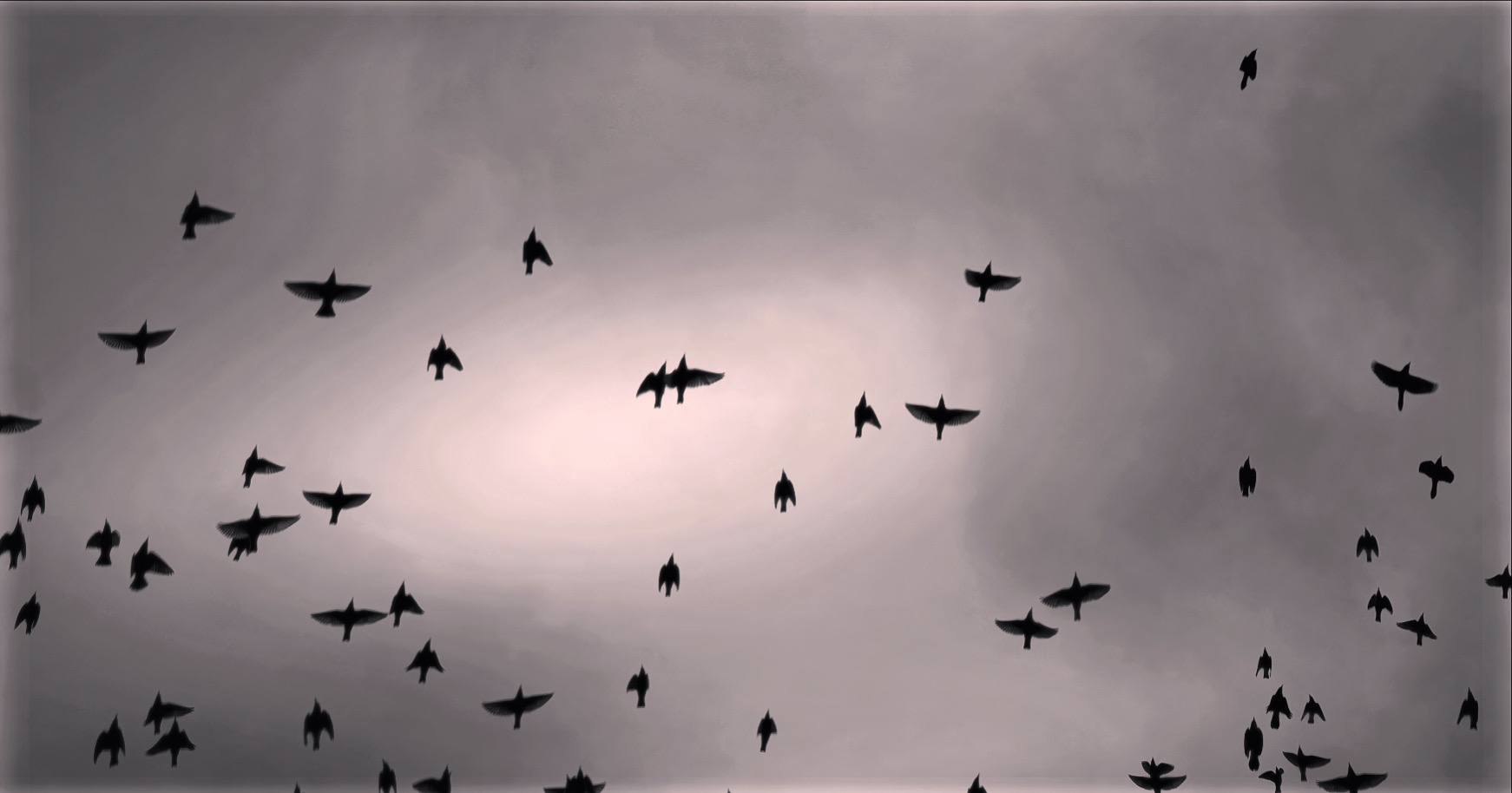
he looked at the map of the stars, a map he had gotten from a National Geographic book. he had affixed it to the wall and tried to remember it. he couldn’t remember the constellations though, not the way other people did. he was terrible at geography of the earth, and apparently could not remember the sky either. but still, he found that he liked the stars, and the whole idea of it. why not? what other posters were there on the wall? it was difficult to remember. Jim Morrison. The Silver Surfer. outside then the rain and the wind, the fall leaves sometimes twirling around as if guided by a spirit. nobody ever home, or hardly anyhow. emptiness. and no trouble there either, no bad people per se, but no good people either. nothing. a certain emptiness. perhaps it was because the past was over but the future had not really begun. open the window. let the night air go through the screen. sometimes angelic light or feeling. feeling. and actually sometimes the bad. what they call the Old Hag Syndrome, where a being sat is on your back and tried to steal your soul. she arrived twice. had to be fended off with will power. the first time she called his name. but was it real? or a medical thing that sometimes happened to people when they slept. music. soft music. plush carpets w/nightlights. the real stars out there, beyond the poster of such. but not as of late in those long nights, because the cloud cover made for an opacity. memory. nostalgia. ghostly. it wasn’t really eating, or sports, dating, or money or music or drawing or travel. what was it? sometimes something in the words read or written. sometimes that if something had to be picked. yes books. and the wind. books and the wind inside the night. the tarot often said the third eye was open. interesting. he wished no harm upon the ones that wished harm upon him. yet, the diviners say much trouble arrived for them. the wind goes through vines, over and around the old graveyard, and atop plum trees. the wind comes into the room and rustles papers, makes a pen and pencil to roll. friendship w/the night. prayer meditation vision mysteries. a group of deer must wander up the path. to appear just then in the dawn, in the very first inkling of the dawn when the light arrives so suddenly and has been borne and born, travelled and birthed. day was okay. night more spacious, wild, its capricious winds and restless clouds, its electric eclectic ephemeral ethereal dreams and the fall rains against the windows in the witching hour.
Poetry from Texas Fontanella