Ekphrastic work from Mark Blickley

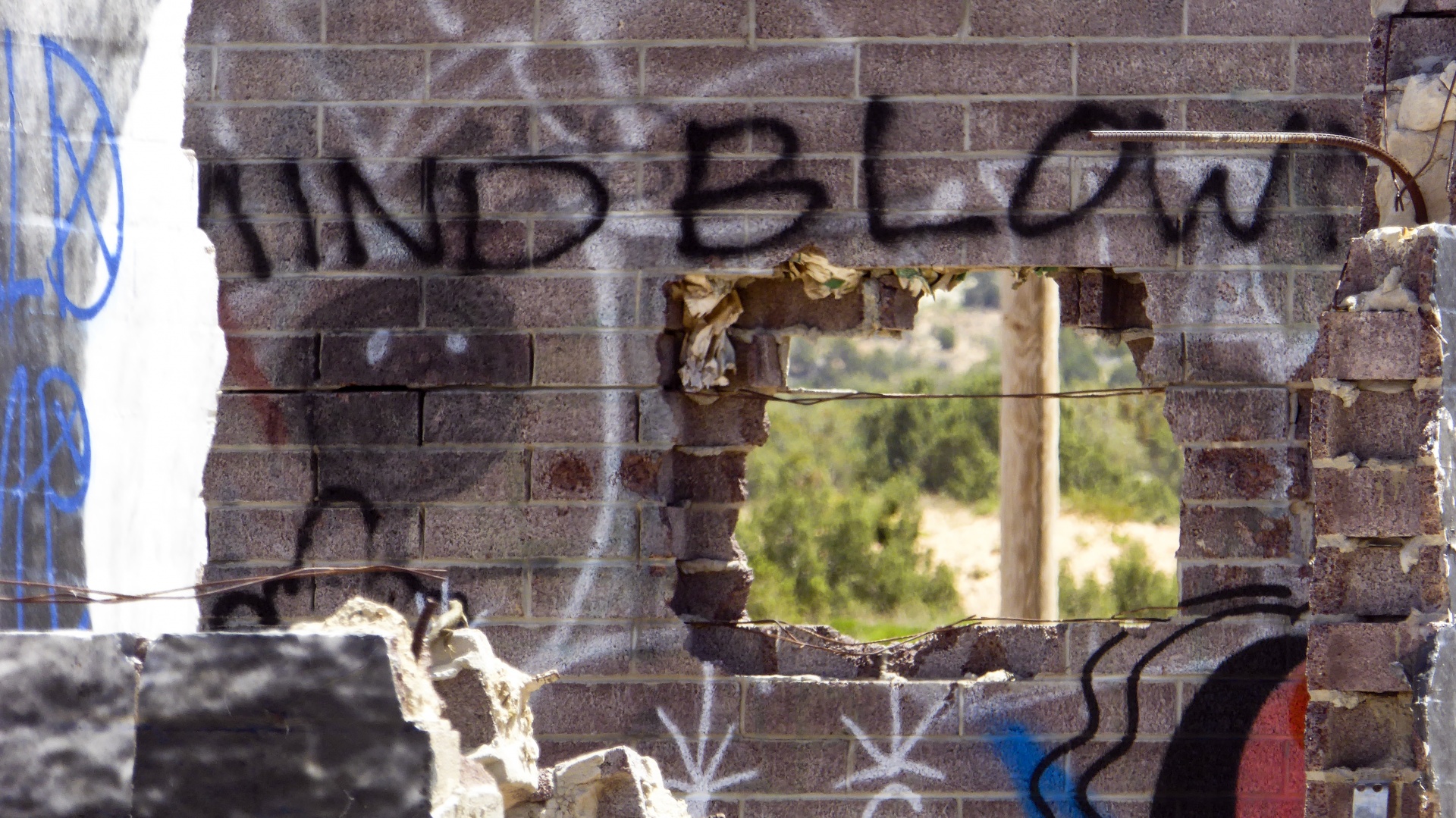
Photograph by Amy Bassin

“Recyclable Glass”

by

Mark Blickley


The 8:22 a.m. Kennedy Boulevard bus paused at the red light on the corner of Bentley. While staring at the line of idling cars in front of him, and without turning his head, the driver honked his horn and threw a mechanical wave.
            This gesture of recognition was directed at an old man making his way down the street. As the light turned green the bus operator glanced in the old man’s direction. The driver smiled and shook his head. For the past six years, at precisely this time, the senior citizen always appeared. It amazed the driver since it was obvious the old man had suffered a stroke. He moved as though his ankles were bound by slave bracelets.


            As the bus zoomed past, the old man halted. By the time he had lifted his head he was waving his walking stick in a cloud of black exhaust fumes. Coughing seized him for a few moments, but he was pleased by the driver’s show of camaraderie.
            A thick blanket of humidity flattened Jersey City. In retaliation, the old man loosened his tie and unbuttoned the vest concealed under the stained sports jacket. He pushed forward.


            After a few minutes, he succeeded in reaching the end of the block. Checking vigilantly before crossing, he decided to make his move. Everything seemed to be in order: the light was still green, but more importantly, the DO NOT WALK sign was not flashing underneath it. He had at least sixty seconds to execute the crossing.
            In the past the old man had this street crossing down to fifty-six seconds. Now the government had decreased his time by making it legal for cars to turn right on red lights. This called for more caution. Since his retirement nineteen years earlier, he learned car horns replace brakes when drivers compete with pedestrians for space. Halfway across the street he panicked. The light clicked amber.
            Horns screamed. The old man froze. Directly in front of his outstretched walking stick (a cane was for old geezers), a battered Lexus screeched past. “Get the hell outta the way, ya old fart!”

            A young head popped out of the back window. “Why don’t you die?” it shouted before disappearing into traffic.
            Three other cars whizzed by him. A fourth car released him from by stopping long enough for him to arrive at the opposite corner. Smiling at the driver, he did a playful hop over the curb. The old man felt good. At least a half-dozen would pass before permitting him to proceed. It was not unusual for him to be trapped in the street until the light once again turned  a comforting green.
            What disturbed the old man most about his daily journey was the block on which Martinez & Sons Glassware Company was located. The store took up nearly half a block with mirrors lining their storefront windows. No matter how hard he fought the temptation, it was impossible not to glance at his image as he crept along.
            His reflection was an obscenity to him         

            The day was really looking up. The store, which usually opened promptly at 9 a.m., was closed.  This pleased the old man because the iron gate was strung across the huge display windows. He looked at his reflection and giggled. His likeness looked as though it had been captured and jailed, peering back at him through thick metal bars.
            The old man threw back his shoulders, disregarding the ache. Picking up his pace, he reminded the reflection that his birthdate fell in the same year as Robert Redford’s.
            “That’s right. 1936. Good Lord, the girls knew it, too.” He pointed an accusing finger at the gated mirror. “Maybe I forget the exact day, but I’ll never forget all those women.”
            The old man and took a seat on a bench; overhead hung a sign, BUS STOP. On the end of the bench sat a young girl dressed in frayed blue jean cutoffs and a tee shirt that read ‘Shit Show Supervisor.’


            “Mister,” she asked, “can you lend me a dollar so I can catch the bus?”
            No reply.
            “Excuse me, sir, do you have a dollar I can borrow?”
            The old man reached into his pocket and produced a fistful of change that he dropped into her hand. The young lady leaped off the bench.
            “Gee, thanks! Wow!” Seconds later she disappeared down the street into a candy store.
            The old man checked his watch. He was fifteen minutes behind schedule.
            “Oh my God, I’m going to be late.”’ After pulling himself up from the bench, he cursed the once strong arms that had made him New York Local 638’s number one steamfitter.       

            After conquering four more blocks he arrived at his destination. It made him feel good to watch the busy activity associated with the morning opening of the Post Office. He looked up at the flag dangling limply from the mast, as if suffocated from a lack of breeze.

            Inside the building were the usual hoard of people in lines, mostly immigrants and mothers with young children. The passport section was mobbed.  Twenty minutes late, he feared the worst. Gradually he inched towards the wall lined with post office boxes.
            “Why, Mr. Goldshlager, I was worried. I thought something terrible happened.”
            “No, Ma’am. I guess this humidity took more from me than I had anticipated giving. Kind of you to wait, though.” The aged woman who reminded him so much of Colleen, the wife he buried shortly after his retirement.
            “Well, after all, Mr. Goldschlager, today’s my turn to buy the coffee…”
            “And I the donuts.”
            “Correct.”
            “Have you received your check yet, Mildred?”
            “Yes. I saw them put yours in, too.”
            The old man went over to his mailbox and withdrew the envelope.


            “Life sure plays some strange games on us, Mildred. Funny how we both decided, on the very same day, mind you, to put an end to all those stolen checks every month. Scary how accustomed we had become to missing them.”
            Mildred nodded. “And you can’t trust direct deposit because the banks are all so corrupt.”
            “You know something? Losing those checks is the best thing that’s happened to me in six years.”
            Mildred pretended to dismiss the flattery, but the added wrinkles at the corner of her lips gave her away.
            “Colleen always thought I was too angry with banks. I can hear her now, saying, ‘Horace, you shouldn’t resent what happened in the past. It’s dangerous.’ She was some woman, my Colleen.”
            “She certainly must have been, Mr. Goldschlager.”


            Strolling around the corner to the diner gave the old man a thrill, as it had most mornings. It felt good, it felt natural, to be with a woman. The few times Mildred hadn’t shown up it always made the rest of the day melancholic. The small table to the left of the grill was reserved for the elderly couple. Josh, the proprietor, issued strict orders not to seat anyone there until after nine-thirty.
            As they were led to their seats Horace contemplated Mildred’s appearance. She wore bright red lipstick which showed telltale signs of extended coloring past the outline of her lips. In fact, it reminded the old man of the happy smiles painted around the mouths of circus clowns. The red lipstick made a striking contrast to the black hat pinned to a thin crop of platinum curls. Her eyes were a sparkling gray.
            Those eyes reminded the old man of something his father had once told him about his great-Aunt Kathleen:
            “Horace, whenever you meet an old woman, say like your Aunt, never forget that despite the years she’s still got a young girl’s vanity. I know it’s hard and I brought you up not to lie, but listen, the one safe thing you can compliment them on is their eyes. Leave the wrinkled skin around them alone. Just tell them how beautiful, or lively, or even better, how sparkling their optics are.”


            There was no need to falsely charm Mildred, or her eyes. What an attractive woman she must have been, mused the old man. Her face, now caked with powder, was probably as smooth and clear as Colleen’s.
            During their coffee and donuts each spent about a half-hour bringing her husband Ted and his Colleen back to life. Neither one would pay much attention to the other; after six years of repetition, it didn’t matter. Yet missing these weekday interludes was unthinkable. The old man loved the chance to relive his youth. While talking (or listening), a vivid portrait of himself and his wife materialized.
             Horace had to think seriously about settling down and raising a family. This was a tougher decision than most fellows were faced with since young Horace was engaged to two girls at the same time. One of his fiancées lived in Hoboken, and the other was a burlesque dancer in Union City.
            While mulling over the choices before him at his favorite Brooklyn bar, in walked the bartender for the upcoming shift with his handsome daughter. It was lust, later love, at first sight.
            Colleen’s nut-brown hair offset a cute turned up nose. Her pale green eyes sent an inviting message over to his stool. Such a petite figure who filled a sweater rather nicely.

            “And Ted would pick me up and throw me into the pool right in front of all the children. I pretended to be angry but I loved it!”
            The old man took his last gulp of chilled coffee and signaled for the check. “Would you like anything else, Mildred?”
            “No thank you, Horace.” She watched his eyes following the progress of the waiter. “I really enjoyed myself this morning, dear.”
            The old man nodded. “Yes, but it’s so hard to keep track of time these days. So much to be done. Isn’t that so?”
            Mildred smiled. “Don’t I know, Mr. Goldschlager! I detest all the running around I’m forced to do in order to keep up with this crazy world. I get exhausted just thinking about it.”


            With this last remark they concluded their visit and returned to their respective schedules: she to a park bench in nearby Bayonne, he to the bus stop across the street.
            When the bus arrived, the old man was visibly upset. Hector was not driving. The doors flung open and the old man was shoved aside by boarding passengers.
            After everyone had paid their fare and secured a seat, the driver waited impatiently for the old man to complete his attack of the high steps leading to the fare box.
            As the old man strained to maintain his balance via the walking stick, two thoughts flashed. One was to fall forward should his legs fail him. The second was how differently he was treated when Hector was behind the wheel. Hector made sure no one pushed him around and always helped him up the steep steps.


            On reaching the top step the old man fumbled for the Senior’s discount pass inside his sports jacket. As he turned to find a seat a swarm of indignant glances greeted him. He gave pleading looks to the men seated directly behind the driver. They in turn, almost as if on cue, rotated their heads and fixed their eyes on some object outside the window.
            The bus lurched forward before the old man could get a firm grip on the overhead strap. He was flung to the other side of the bus. His back smashed into the knees and packages of a pair of horrified women shoppers.
            Unable to control himself, the old man let out a cry. It was a soft cry, but it lingered.
            Upon the scolding of the women shoppers, two men raised up the old man. One sacrificed his seat. Laughter broke out from the rear of the bus.
            Perspiration beaded on the old man’s bald spot. It dripped onto his sports jacket as he tucked his chin into his chest. Once again, he drifted off to that first encounter with Colleen.


            Outside his apartment building children were jumping rope and an impromptu soccer game was in progress.
            “Hi ya, Mr. Goldschlager! Wanna play with us?”
            “Sorry, kids. I’ve had a rough day. I think I’ll go rest these tired old bones, if you don’t mind?”
            The children giggled.
            The old man enjoyed children and children liked him. But he knew how defensive most parents were these days, and he was embarrassed by their reactions whenever he stopped to speak to their kids.
            The old man was appalled by the fear he generated whenever he spoke with kids at the playground. Or stopped a young couple to congratulate them on producing the beautiful child they were wheeling in their stroller.  His attempts to shake an infant’s hand or stroke underneath a baby’s chin with his finger usually made the parents irritable, and they would quicken their pace. Being around children began to make him feel dangerous and dirty and he hated that feeling. He comforted himself by imagining that one day these parents would understand the desire of the elderly to once again feel the smooth flesh of youth.


            Touch was a superior memory to any childhood photograph. The old man refused to stop his attempts at making contact with fresh life. Yet despite the humiliation of parental disgust and annoyance, he would always mouth a silent pray that none of these parents would ever experience his horror of outliving his child.
            The elevator ride to his eleventh-floor apartment was noisy, slow and as frightening as always. It took him a few minutes of fumbling with his keys, but eventually he gained entrance to his home of forty-seven years. The odor of stale air escaped into the hallway as the door closed behind him.
            The first thing he did was throw off his sports jacket and switch on the television. He surveyed the apartment. It was filthy.


            “I will give you a good going over this weekend,” he promised the living room.
            The old man hobbled into the kitchen to prepare his daily staple of cornflakes and milk with fresh fruit. After eating, he left the dishes on the table next to yesterday’s plates and lunged for the bottle of cognac propped up on the kitchen counter. He shook it and was upset.
            “Did I drink that much last night?”
            The old man phoned the liquor store around the corner to order another. The shopkeeper refused to send it until the previous bills were paid in full. Horace apologized and promised to pay when his overdue pension checks arrived. The ploy did not work.


            Clutching the cognac, he passed from the kitchen through the living room to his bedroom. He paused to raise the volume of his television set. Although he disliked watching it, it’s voices replaced the music that once echoed through his apartment before the radio shorted out. The babble was comforting.
            The old man balanced the bottle of cognac on a dusty night table and walked over to a closet. He pulled out a large cardboard box and dragged it over to the bed. The old man was surprised at how light the box was becoming.
            He dipped his hands inside the cardboard box. The clinking of glass accompanied his search. When his fingers locked around a heavy piece of crystal he smiled and pulled up a large, ornate goblet.


            The old man carefully poured cognac into the crystal goblet. He swallowed it and poured another. And then another until he drained the cognac. He dropped the empty bottle on the floor and it rolled under the bed.
            Horace stared at the fancy goblet and fingered its engraved designs. When he realized he had no more cognac to pour into it he tried to soothe himself by pressing the cool crystal against his cheek.
            Sorrow gave way to anger and he heaved the heirloom with all his strength. It crashed into the wall, splintering into pieces of jagged, dangerous glass.
            About forty minutes ahead of schedule, the old man passed out.
Poetry from Gaurav Ojha

DEATH 


Gaurav Ojha


Living for endless universe before my eyes   

There is an arch of horizon my gaze won’t surpass 

My life is a circle, trapped within its circumference 

Restlessly rotating along its diameter

Till my clock breaks and time ends 

Death keeps life incomplete

Death knows how to subtract what's been added 

Divide what has been multiplied 

And, keep everything within the reference of empty 

Never plan too much for the life you've imagined 

Death happens and is always unexpected 


I have not discovered anything about the world

I have only read papers and books 

I compare miles I have been left out of 

With inches of the life died too young 

No missed opportunities here, being is enough 

Before nothingness 

Death remind the mortal characters on the stage

Discontinue your acting like eternity, presence here is limited


Life won’t be the life without death 

Scarce, limited, improbable and ridiculously precious 

What if death happens unprepared? 

I hope for conscious death/letting go with some awareness 

Either with deathbed experience or a mistake 

Nothing will happen to this world without me

I shall be erased from the space I occupy

Put into the fire and dusted 

I don’t seek consolations in   

How I am interpreted in living memories

No revival, no afterlife, not even art after life

I live therefore,

I am waiting

Death


KATHMANDU NEPAL 

Poetry from Isabella Hansen

A Silent Chorus of Waves

I dream stillness under the rough shine of the moon, hands clasped and when one blunt fingernail
scratches the inside of a palm, I am rooted, edges of raven black hair shining. And when I am
viewed upon moonlight, I am cold tranquility.
When the ocean is brought into view, glimpsed with eyelids peeled back like the naked
tangerine I hold in the curve of my hand, I am gifted an abundance of night. Thinly stretched
over the skyline, darkness barely touches my feet on the cold concrete. Air stinging across my
lips and my legs are exposed to the coolness nighttime inflicts, pajama shorts belonging to the
comfort of a warm home, I am as about as silent as the ocean. There is an echo of conversation
from dark homes, whispers gliding past turned heads because dark inspires silence and the slow
crash of waves is faint in the air. Night blends lagging movements behind thin, sand crusted
walls, pushing motions into a soft cycle of repeating routine but in the dark. Match flicks flame
into candles and my world, a silent world, is tossed back into loudness.

Poet Mary Mackey interviews poet Andrea Carter Brown

Mary Mackey Interviews Poet Andrea Carter Brown

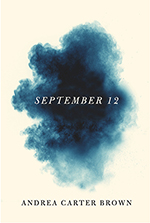
Andrea Carter Brown’s new collection of award-winning poetry September 12 was published by The Word Works for the 20th anniversary of 9/11. She is previously the author of Domestic Karma, The Disheveled Bed, and Brook & Rainbow. “American Fraktur,” her current manuscript, won the 2018 Rochelle Ratner Memorial Award from Marsh Hawk Press. Her poems have won awards from Five Points, River Styx, The MacGuffin, and the Poetry Society of America, among others; and are cited in the Library of Congress Online Guide to the Poetry of 9/11. They have also been featured on NPR. Andrea was a Founding Editor of Barrow Street and Managing Editor of The Emily Dickinson Journal. For six years, she served on the Virginia Center for the Arts (VCCA) Fellows Council, the last three as Chair. Since 2017, she has been Series Editor of the Word Works Washington Prize.

Mary; Welcome to Synchronized Chaos Magazine, Andrea. September 12 is a powerful series of poems. Before we discuss the poems themselves, could you please set the scene by telling us what happened to you on September 11, 2001?

Andrea: That morning, I was sitting in our apartment a block from the World Trade Center drinking coffee and reading the paper. Later I planned to spend time writing and then get dressed and go to a client (I did freelance accounting work back then). At 9:03 am, the phone rang. My sister, in North Carolina, had just seen the 1st plane flying into the North Tower on “Good Morning, America.” I ran to the far end of the room, looked out the window, and saw flames curling through blown-out windows, rivers of black smoke, chunks of debris falling, people jumping. I knew immediately the towers would come down, and I fled.

Rather than head north, as did almost everyone else, I went south and ended up on the Staten Island Ferry. From there, traveling on foot, by ferry, car service, pick-up truck, another stranger’s car, and cab from Staten Island, through New Jersey, and Rockland County, I finally met up with my husband in his boss’s house in Larchmont, which is in Westchester County—about 110 miles altogether. It took twelve hours. The first four, when we couldn’t reach each other, my husband was sure I was dead.

Mary: September 12 is divided into five sections: I. Cloud Studies: The Hudson River School; II. September 12; III. The Rock in The Glen; IV. To The Dust; V. The Present. I’d like to start with Section I, which is lyrical and almost dream-like. There’s an innate silence and innocence to these pre-attack poems, one of which looks back to 1609. Why did you decide to start September 12 with these poems and how do they reverberate through the rest of the collection?

Andrea: After I had written most of the eyewitness account and some of the aftermath poems, it occurred to me that you cannot have a book of elegies without showing what was lost. For me, that was the life before, a life lived on landfill facing the Hudson River, fourteen years, longer than I had ever lived anywhere else, including my childhood homes. The river is actually a bay of the Atlantic Ocean at the base of Manhattan, so that my life was punctuated by skyscrapers on one side, and on the other by tides, boats, weather, and changing light, a life filled with history and beauty. For ten years I had been writing about that world, and I decided to use these poems to set the stage for 9/11.

As you noted, these poems reverberate through the rest of the collection. Each one plants the seed for something to come, sometimes several: a love of birds and birding; rivers, the ocean, and the estuaries where they meet; the essentially domestic nature of my odyssey on 9/11; the many writers, especially poets (for me), associated with NYC (Whitman, O’Hara, Amy Clampitt); the distrust between Henry Hudson’s crew and the local Native Americans who lived in the area, the Lenni-Lenape, which lead to violence and death during their initial encounters in early September, 1609; the fascinating geology and glaciated terrain of the area, gneiss and schist, the metamorphic bedrock near the surface of Lower Manhattan, making possible the extreme height of the WTC Towers; and my love of baseball, especially at that time, the Yankees.

Poet Andrea Carter Brown

Mary: Section II, September 12, is a nine-page series of prose poems, each a paragraph long, which describes your flight from your apartment on 9/11 and what you experience as you and those around you run for their lives. Polished and beautifully crafted, these poems retain a raw, immediate, emotional power that is stunning. I’m particularly impressed by the way you avoid hindsight and deal with events as you lived them moment-by-moment. Could you please talk about why you chose prose poems for this section? For example, were they originally diary entries?

Andrea: Oh, how I wish I had diary entries! But, no, the truth is: I didn’t write at all for 6 months. Instead, I re-lived the events in minute detail again and again in my mind, day and night, telling my story to others, especially my husband, beginning the night of September 12, as recounted at the end of this section. Each retelling, for the first few years at least, new details came back. I added these to the story, until this past became more real, more present than the present. Just as I didn’t want to wash my dirty clothes the night of 9/11, although I had nothing else to wear, I didn’t want to let anything go. Even the dirt and dust. I didn’t take a shower for days. Eventually my husband would complain, “cut to the chase” when I was telling the story, but I couldn’t. All the little details together made the whole.

Since then, I have often thought of writers in gulags who made themselves memorize vast bodies of work because there was no way to write. I’ve never been good at memorizing and still am not. Nonetheless, six years later, when I tracked down what I had said to a reporter on Staten Island that afternoon, I learned that my memory had stayed true. And if my memory was accurate about those details, I could trust it about others, which was an enormous relief. Very liberating. Nothing, in all the research and interviews I did for this book, contradicted the story I kept telling myself. How could this be? And yet it was. It is.

It was a challenge not to stray from the moment-to-moment story. Since I was a poet, “poetic” gestures unconsciously crept in: the impulse to offer metaphors, similes; the way meter and musicality elevate the material, heightening the emotional power but draining away immediacy. These I tried to resist by stripping description down to the essential minimum, making every word count, limiting rhetorical devices like repetition. I tried to stay in the present tense. Not to use words that were hyperbolic or inflammatory, words that had been over-used in describing the event and to which we had become numb. One example of this: the word “terror” only occurs once in the entire book, and not about the event, a terrorist attack, but to describe the look on a first-time father’s face when he contemplates the newborn baby in his arms (the poem “Joe” in the Section III).

Avoiding hindsight was difficult because experience being sequential, knowledge builds. Since the book took so long to write, I began asking myself constantly, “What did you know at the time?,” and then stripping away anything that had crept in later. Sometimes that felt like pulling teeth, especially for the sections that were hardest to write and therefore took the longest. I’m thinking of the people at the windows who jumped, the ferry engulfed in smoke (when the first tower fell), and the swimmers seen from the ferry. Shortly before we went to press, I read the narrative closely, looking for all these things. To my dismay, despite repeated checking, I still found instances that had to be fixed. I couldn’t be more happy that you noticed this aspect of the book.

Mary: Do you have a favorite poem in Section II that you’d like to share with us? Why is it a favorite?

Andrea: Many of the individual prose poems in the long sequence September 12 consist of crucial moments in that story. It’s very hard to pick my favorite, but recently I’ve come to a new appreciation of the poem about the Staten Island policemen in Section II. Readers seem to love him, as I do too, and that makes me happy. Sadly, I’ve forgotten the name on his shield. Here’s the poem, with the lead-in, on pages 36 to 37 in the book:

 . . . When the uniform cop hears She lived there, he opens his arms and gathers me to his chest.

Held against his massive bulk, the embossed brass buttons on his jacket, the decorations pinned to his chest pressing into my cheek, I cry my heart out. Only when I’m ready does this burly red-necked stranger release me, murmuring Stay close to me. You’ll be safe here. I stand beside him, reluctant to move, our arms touching. A wool blanket miraculously appears around my shoulders. For years, he volunteers, we’ve known something like this would happen, but didn’t do anything to prevent it.

Mary: The poems in the final three sections deal with the aftermath of 9/11 from September 12, 2001 to September 8, 2020. Why three sections instead of one entitled “Aftermath?” What prompted you choose to organize the poems in this fashion?

Andrea: Given the difficulty of this material for readers, from the beginning I knew that I had to break it down into manageable chunks. Even my own attention would flag after 15 pages. It was too much to take in. I spent a lot of time experimenting, trying to find the poetry equivalent of prose chapters.

The solution became clear to me only after I visited my old home town, Glen Rock, New Jersey, which had lost 11 residents on 9/11. This was one of the higher victim counts from among the surrounding suburban towns. Although I learned about these victims in late 2001, I didn’t yet see them as part of my story. It had been 25 years since my parents retired and moved away, and I had not been back. But these names haunted me. On a research trip in 2007, I realized the town had essentially not changed at all since I grew up there. It was still a peaceful commuter town of modest homes for starter families which shuffled its fathers (mostly men back then) off to work weekday mornings on Wall Street in Downtown Manhattan. They would emerge from the ferries or the train into the area around the WTC and fan out to their offices, repeating the same journey every night in reverse.

Those ten men and one woman who died on 9/11 could have been the parents of my friends; I knew intimately what a town like this was. Suddenly, those 11 victims became people I might have known, and I wanted to memorialize them. That town came to represent all the small communities, inside NYC and in surrounding areas, which lost residents that morning. These poems became the central section of the collection, The Rock in the Glen, serving as a bridge between my first person eyewitness account and the aftermath poems, allowing me to separate the immediate aftermath poems in Section IV from the longer-term aftermath poems about life after moving to California in Section V. As a former accountant descended from a math teacher and a long line of bookkeepers, I love numbers. You can probably tell by the sheer number of numbers in this interview. The idea of a collection with five sections, two sections on either side of a central sequence about the town that lost 11 people that day, like a palindrome, made me happy. It felt perfect.

Mary: You’ve said that it took you twenty years to write September 12 and that the original manuscript was 200 pages long. How did you go about paring down the manuscript to 80 pages?

Andrea: The first 10 years I was writing this book, I kept adding more and more material. The last leg of my journey and our return to the apartment 4 days later, which completed the circle of my odyssey begun 9/11. The history of New York City and the Hudson River, human and natural. And about Ground Zero, which had become our neighborhood, and how we navigated the challenges of living so close to the site of a mass, world-changing tragedy, now a toxic waste site.

As it approached 200 pages, I saw September 12 more as a collection of short stories or a short novel in verse. But this length is a tough lift for poetry publishers, who are used to less than half that. Friends told me I had to be realistic and pare it down to find a publisher. I fantasized about publishing it in 2 volumes, but knew better than to try that. Over time, the manuscript shrank to 143 pages, then 110, before settling on the version with 80 pages of poetry accepted by the Word Works.

Readers also told me the fundamental structure—the main narrative told in 12 double sonnet crowns (each 14-15 sonnets, the last line of each poem repeated as the first line of the next) separated by the hay-sonnet Glen Rock victim portraits and punctuated by step-out poems in other forms which highlighted dramatic moments along the way—was cumbersome and sapped the drama of its power. All those repeated lines, even varied, seemed like wasted space. This was very hard to hear. The sonnet crown structure had made writing the material manageable by dividing it into smaller units; the step-outs provided formal relief and variation from the constraints of the 14 line poem.

Taking it out of the form to which I had devoted years was the most difficult thing I have ever done creatively. But the minute I removed the lineation of the narrative, the story came alive to me again. I immediately saw what was essential and what could be cut. Plus, reading it as prose felt revolutionary, similar to the way the idea of the book had always felt radical. Yes, an odyssey, but a domestic one, the narrator being female. A book of poetry that would be relentlessly factual. A hybrid collection which restlessly strayed from or played with the “Poetic.” A sustained eyewitness account in verse that contributes to the historical record. I never looked back from that decision.

Mary: The aftermath of an event like 9/11 goes on forever for all of us, and particularly, I would imagine, for someone who was so intimately involved. Are you still writing poems about 9/11? If not, what kind of poems are you writing?

Andrea: I think I will always be writing about 9/11 as long as I write. My life has not been the same since; I am not the same person. But as time goes by, that writing is less about that day, and more about how it reverberates in the present. Every anniversary, for example, I write a new poem documenting that day in some way, just as I always write a poem on my birthday, an idea I borrowed from Joseph Brodsky. Every 9/11 (except in 2020 during the pandemic), to celebrate our survival, my husband and I go out to eat. One anniversary, the 15th I think, as we raised our glasses to toast each other, we noticed the much younger couple at the next table was doing the exact same thing. Turns out they too were commemorating their survival on 9/11. Here were two couples, complete strangers, having moved clear across the continent to build new lives in the same city, now seated next to each other at the same restaurant. You can’t make this stuff up! Of course I wrote about that. We shared stories, compared dishes, went back to our desserts, waved goodbye and left. Somewhere I have their first names, and I can picture them, their joy, like ours, tempered by memories of that day. I could give you countless other examples of ongoing work related to 9/11.

That being said, I also wrote and published two other poetry collections while I was working on September 12Domestic Karma and The Disheveled Bed, neither of which had anything to do with 9/11. I’ve recently finished a new collection, American Fraktur, exploring my father’s experiences as a WWII soldier ashamed of his German immigrant roots who pretended his origins were Scottish, despite documentary evidence to the contrary. The poems about his wartime experiences dovetail with mine as a survivor of a terrorist attack living in a time of constant war, rising intolerance, hatred, and human and natural disasters. During the pandemic, a time which vividly brought back memories of 9/11 and for which 9/11 strangely prepared me, I finished another collection, Enduring, and I have an idea for an abecedarian collection kicking around inside me. After that, who knows? When you come to writing late, in my case middle age, there is a lot of material inside you.

Mary: If you could ensure that one of the poems from September 12 would survive to be read 500 years from now, which poem would it be, and why have you chosen it?

Andrea: It’s hard to choose, but I think it would be “The Old Neighborhood.” This poem preserves the world I knew, in all its particularity, as it was the morning of 9/11 before the towers came down. This was the world I loved and was happy to be part of: lively, colorful, friendly, diverse, full of people offering and savoring what makes life worth living. Every time I read this poem, out loud or to myself, that world comes alive for me again, even 20 years later, and I am grateful and a little mystified, humbled, to have written it.

Mary: Thank you, Andrea. It’s been a pleasure to talk to you about September 12. Do you have any upcoming readings, workshops, or other events? How can people get in touch with you?

Andrea: The best way to get in touch with me is through the Contact button on my website: www.andreacarterbrown.com, where you can email me or ask to be put on my mailing listing for upcoming events. With everything still in flux about “in person” or “remote,” my website is also the best way to find out about readings and events or audio/video interviews and readings as they become live.

Mary: Thank you, Andrea. It’s been a pleasure to talk with you.

Andrea: Thank you, Mary, for your thought-provoking questions, not one of which has been asked by anyone else. It’s also always a pleasure to talk with you.

Contact Information for Andrea Carter Brown:

September 12 is available from:
Amazon.com: https://www.amazon.com/September-12-Andrea-Carter-Brown/dp/1944585451/
SPD (Small Press Distribution): https://www.spdbooks.org/Products/9781944585457/september-12.aspx
The Word Works: https://www.wordworksbooks.org/product/september-12/

Website — For Upcoming Events and Zoom Links: https://www.andreacarterbrown.com/

Synchronized Chaos November 2021: Rich Inner Worlds

This month’s contributors beckon us within, to the inner landscape of our memories, thoughts, and emotions. Each of us contains a whole world, which is worth developing and exploring.

FYI Dennis Mann, a national of Ghana, is the head of a nonprofit donating children’s books to low-income children in the country. This group is known as Wide Reading Among Kids and readers may find more information on the organization and how to support it here.

Photo courtesy of Gerd Altmann, available here.

Hongri Yuan’s glimpses of transcendence, translated by Manu Mangattu, connect ordinary people to the vastness of the universe. Abigail George turns to poetry to express longing for a cause and a connection that is both practical and inspiring. John Thomas Allen captivates with a lush rendering of the Tarot, an ancient spiritual way of understanding life and human nature, set in a circus setting.

Deborah Kerner’s work links herself with a modern-day hitchhiker/bag lady through the sisterhood of history and nature. Kerner’s other pieces describe life seen through a veil of interiority: from a train window or during insomnia. Sanjeev Sethi’s poetry collections Bleb and Hesitancies, here reviewed by Cristina Deptula, also highlight the intricacy of our innermost thoughts, fostering reflection and respect for all people.

Mahbub looks to birds and other creatures in nature for life lessons, building on his inner understanding through contemplation. Nature, nighttime and storms become metaphors for both the passionate beauty and the hidden dangers of romantic love.

Photo courtesy of Mohamed Hassan, available here

Doug Hawley writes of romance as well, in an elegant piece on the twilight years of a long marriage. Dennis Mann spins the tale of another wedded couple together until death does them part, although more tragically.

Robert Thomas reflects on what life might be like after his wife’s passing, a pre-emptive elegy of love and grief. J.J. Campbell mourns relationships and other human connections that almost happened, or never happened. Chris Butler poignantly comments on not being able to go home again, not being able to recreate one’s lost childhood, in a collection that includes an elegy to a stranded and dying rabbit along with descriptive, near-musical odes to bees.

Charlie Robert mourns the Berlin Zoo’s animals lost during WWII bombings along with the Jews and other minorities who died in the Holocaust. Ahmad Al-Khatat’s piece presents marginalized people who call forth their own dignity, determined to leave a record of their presence. Gaurav Ojha calls out corruption and lack of concern for important matters within his native Kathmandu.

Photo courtesy of Kai Stachowiak, available here.

Chimezie Ihekuna’s screenplay collection featured this month looks within individual, ordinary lives and relationships for deeper truths about compassion and understanding.

Mark Blickley created his performance art piece, shown here through video, with the intention of bringing us back to simpler times at a slower and less distracting pace. Alan Britt writes of nostalgia as well, remembering the youthful beauty of double dates with a friend. Britt also semi-playfully reflects on our connections with other species as well as with God, whether we explicitly believe or not. Marjorie Thelen offers up a narrative from someone who’s become a relic in a post-human, post-philosophical era.

Richard Chetwynd integrates words and letters into visual art that alludes to concepts of faith, mental health and spiritual connection. Mark Young’s technical wordplay is thoughtful and poignant, with a piece on soul-building and visual imagery that evokes thoughts of loss.

Photo courtesy of Linnaea Mallette, available here

Raquel Silberman describes the psychological rebuilding and ‘cleanup’ after a disaster in a poem that makes some traumas seem messy, but survivable.

Z.I. Mahmud looks into the rich panoply of characters in Dickens’ works to find allegories that promote compassion and respect for all people. Christopher Bernard also draws upon the language and narrative techniques of fables and children’s literature in his monthly installment of The Ghost Trolley, which comments on power, justice, equity, and grace.

Elizabeth Hughes reviews Mike Honeycutt’s hunting and travel memoir Into the Wild.

We invite you into the world of this magazine and also more deeply into your own world as you read this month’s issue.

Poetry from Chris Butler


"Anti" Chris Butler is an illiterate poet howling from the Quiet Corner of Connecticut. His 11th book of poems, "DOOMER", has been published and released by Ethel. He is also the co-editor of The Beatnik Cowboy literary journal.

Why Do the Bees Dream?  
  
Why do the bees dream,  
and not only sleep alone  
when the late day chills   
their exoskeletal shell?  
  
Why do the bees dream  
with restless legs   
pollinating colonies   
where their nesters are   
cradled in hexagonal combs,  
formed into homes    
of regurgitated honey?   
   
Why do the bees dream  
when their royalty   
is an engorged queen,   
conquering the flower   
with armies forced    
to feed the budding   
baby bee population?  
  
Why do the bees dream  
of low flying drones   
snorting pheromones,   
as their radar to drop   
a stinger cruise missile   
onto the nose of an   
incoming brown bear?  
  
Why do the bees dream  
when they’re smoked into   
peaceful unconsciousness  
like poppy Buddhists?  
  
  
Iceberg  
  
The rabbit, ensnared on a frozen artic block,  
set adrift to the blue skies and azure seas,  
begins burrowing a hole, incredulous in its   
desperate search for the safety of   
a warm, underground home, slowly   
slipping further down into the indigo deep,   
until breaking through into the endless   
dark abyss, silencing its death rattle   
by drowning.   
  
  
The Way Back Home  
  
The way back home  
isn’t on a cold road  
still shining with yesterday’s rain,  
when you’ve nowhere to go,  
alone,   
watching the tinted break lights  
cover you in a crimson costume,  
passing by your shivering thumb,  
for a hitchhike  
that will never come.  
  
My childhood bat cave basement  
was just a half finished rec room,   
with all the walls stripped nude   
of posters with bunnies in bikinis,  
all toys donated to salivating armies   
of dumpster divers’ deep sea expeditions.  
  
But within an hour of   
saying and waving goodbye,  
to leave my very first fortress   
with castle walls and moats  
for dirty pothole roads.     
  
The only way back home,  
into a warm bed with   
fabric softened clean sheets  
smelling of lavender detergent,  
awakened by that distant taste   
from the kitchen of flavors   
that momma used to make,  
  
was to walk into that road  
so the next driving passerby  
would hit and run. 
 
 
When insomnia has taken complete control of your restless legs and racing thoughts… 
 
you know it’s far too late 
when after constant commercials 
for bootleg erectile dysfunction pills 
and cures for balding heads, 
all of which feature the incentives of 
female models frolicking on sandy beaches, 
and you reach the end of the broadcasting day, 
watching a 4th of July fireworks spectacular 
in tandem with the national anthem.  


Trigger 
 
From today moving forward, 
Webster’s Dictionary,  
the grammar police  
and the unfree speech Nazis 
will begin deleting  
words from the dictionary, 
instead of adding new 
mouth sounds from  
the new Old English, 
 
in order to prevent 
our peers’ pressure 
from pulling 
my fingering 
of the world’s 
trigger.  


Short story from Marjorie Thelen

The Last White Woman Alive

Brown is the preferred color for humans now. They don’t call us human beings anymore, just humans. Being was bred out long ago. Now we are more like dancing shells. Or they are. I am the very last of the old ones, kept on display so that the others might see and experience what it was once like to be human in the 21st century. But we don’t even go by that time delineation anymore.

I live in a modular space like other humans. What there are left of us that move vertically. Mine is the only skin that doesn’t have color. I like to think of it as pink. Now humans select their color of skin. Most variations are brown and golden brown. But there are other colors of the rainbow, too. They are the more artistic types. Jet black is not in fashion. The practical ones are brown. They run the show, so to speak.

Most days I sit by my modular window. It looks out on a virtual landscape that replicates the old days. Birds of all color fly by the window. A brook winds through leafy trees. The type of tree
depends on the seasons and what is playing on the virtual landscape channel. I don’t know where the real trees and birds and brooks are now. You see, I never leave my module. I’m the only human that has this memory anymore and that is why they are preserving me.

I still have memory although it is artificially supported by preservatives my Spotter gives me. Spotters are artificial intelligence to use the old term. But that is not used anymore. We just say The Power.

I remember the warnings of what would happening when AI took over the world. They did. But it’s not such a bad world although a little bland. Nothing exciting happens anymore like wars, natural disasters, pandemics, political elections. It’s all regulated now by algorithms.

I was born in the 20th century. I know that. I remember that. The year was 1947. By 2020 all hell had broken loose as they used to say. Pandemics, civil war, hurricanes, fires, drought. People fought over water. The problems kept building and building. But that’s all been resolved now.

No more of that.

I don’t know how long I’ll live in this form. The Spotter tells me in perpetuity since I’m the last.

It’s not so bad. I can change my virtual landscape any time I want. There are 142,857 different possibilities. I don’t eat food like I used to although if I ask the Spotter for something specific like a steak, they simulate something for me. It tastes like steak. That’s all that counts. But there are no beef cattle anymore. They died out with the cattle viral pandemic of 2022. The viruses were winning the battle there for a while after the Great Human Pandemic of 2020 that reached across almost a decade. The sheep, goats, pigs, and chickens got it, too. You see it mutated into the domestic livestock, and they all died. We only have a few stuffed versions of them in what they used to call museums but what are now called Formatories. After that, all food was plant based, that is to say fabricated. They had to do away with the big factory farms because they were a source of more diseases.

You see, the herbicides and pesticides didn’t work after a while. That’s when they started producing injectable food. About the same time AI took over. AI don’t need food. They need electricity. That was a problem because it was so inefficiently produced that the supply wasn’t big enough or steady enough for the demand. The AI got tired of human beings messing things up. So, they quietly decommissioned humans. It happened pretty quickly. The humans didn’t realize what was happening. I did. But I’m the only one left with the memory, and the Spotter very carefully regulates what I say and where I say it. I don’t mind.

Sometimes, humans walk by my window and peer in, looking at me. I peer back. It’s not such a bad life.

I think souls are gone. I’m not sure I have one. That concept died out when The Power ruled out religion of any kind. They said it was bad for mental health and caused wars. So they programmed humans to survive without it. No one really dies, you see. The bodies just go in for a tune up every once in a while. Soul is a foreign concept. No one cares anymore.

Planet Earth doesn’t really need us to survive. She rotates happily with or without us. What happened was what was called civilization died. When The Power took over there was no need for contention, or discussion, or arguing, or fighting. If something needed to be done, they developed an algorithm for it, and it got done.

The Power decommissioned any AI that didn’t work for the common good. What passes for life on Earth is one big algorithm. It doesn’t have a name, like we used to have in the old days. Mine was or is, Margeleh. I’m not sure how I got to be the last white woman alive. I’m not sure I’m alive. I exist. It’s not so bad.

One of those big corporations back in the beginning of the 21st century was called Amazon. That was in the days things and people still had names. I think what happened was that Amazon was the first to mutate into the The Power that runs everything these days.

People used to talk about heaven in the old days when we had religion. I may be the only one remembers those days. My existence now is kind of like the old-time heaven. We don’t have
streets of gold and angels, but who needs them anyway?
They could rotate me to another place on Earth to be put on display. But that isn’t necessary since everything is virtual these days. Some folks like to be close to me or try to be close to me but a wall of window separates us. I don’t have physical contact with humans anymore.

Everything is virtual so that we don’t know what is real and not real. I’m the only one who sleeps that I know of. I have a ceiling fan on low, rotating over my head at night so I can sleep eight hours. The Spotter humors me since I’m the last one. I remember it from the days I used to sleep in the desert, and it was hot. I use the ceiling fan to create air so I wouldn’t overheat and catch fire.

One time early in the 21st century, aliens from another galaxy tried to help planet Earth move to a higher level of vibration. You see, planet Earth is sentient or used to be. I’m not sure now that The Power rules. Or maybe that was a fairy tale I heard or a story that I made up. Anyway, the aliens had to leave because Earth beings were so cantankerous and uncooperative. They left us to our own devices, so to speak.

I think The Power finally took over during the Great Pandemic of the 2020 decade. You see, everyone was supposed to get vaccinated and wear masks. But some human beings of that time, being cantankerous and disagreeable, refused to go along with what was good for everyone. I think The Power took over then although there is no firm date as to when they started solidifying their authority. They got tired of the old human beings, took over their own programming, and very swiftly retired those cantankerous old human beings. I don’t know what happened to them.

I guess they are going to keep me alive. I don’t much care because alive and not alive don’t mean much in this world. I have human friends who come by to visit on a regular basis. We laugh.
We talk. I’m not sure about what. Sometimes we talk about the latest virtual landscape. But there always is a window wall between us because my form is delicate and susceptible to damage.

You see, even in the before world, The Power was controlling us through what were cell phones, games, and computers in those days. They were already in control. It wasn’t a big deal when they took over. They programmed computers and phones and games to suggest to the human beings of the time, the ones who were supposed to have souls, that they should follow directions.

It happened by suggestion, like in old fashioned texting, do you want this word or that word? Or remember Google? No, you wouldn’t. But they used suggestion all the time in advertising.
Remember advertising? No, that is long gone, too.
When advertising was cancelled, sex, drugs, and pleasure all went out the window, so to speak, too. There aren’t pleasures or addictions anymore. Just The Hum. Anyone anywhere can plug
into the Universal Hum anytime. Most humans keep it on all the time. The ones that don’t soon end up screaming. Gently, they are encouraged to plug into The Hum again. There’s been talk of
not making The Hum voluntary. As a matter of fact, now it is mandatory. Everyone has to be plugged into The Hum.

I’m always plugged in. One time something happened to the connection, and I experienced the most awful sickening feeling. And the noise! Horrible screeching manifested. I don’t know what that was all about, but the Spotter picked up on what was happening and fixed the problem immediately. Now I’m permanently plugged into The Hum. Thank goodness.

In the old days information couldn’t be trusted. We used to have this phenomenon called the media through which most all information was disseminated. But it got so the media became one big lie. Various factions colored all the information to suit their purpose. So The Power did away with media. Now there is no information about what is going on in all the world. None. I don’t miss it. I have my changing virtual landscape which entertains me all the time.

As far as I know there are humans all over the Earth, living in some form of existence or the other. They have their jobs to do and do them. That’s it. I’m not sure what the purpose of this existence is but it doesn’t matter. Old-time philosophers used to debate the purpose of existence.

Not anymore. No reason to.

The old-time media used to tell everyone when everything was okay and not okay. But then everything got violent, lots of arguing. Everything turned out to be not okay. No information could be believed at all, and it made the humans of the time very anxious. As that was happening, The Power was programming itself into the ruling entity. It happened pretty fast.

One day humans were in control. The next day it was the machines. Or so it seemed. But everything has worked out for the best.

The end, really.