
Fading memories

I could remember
When you left
At noon, it was outside, at the portico
My eyes soaked, rivulets streaming
I held your hand, the same hand
You used to rub my head and I lock
My hands in yours-soft
But at that moment, as I held you
Perhaps with the weight of pain on me
It felt rough as a sandpaper, why?
Now I see you were tired,
Tired of the ride with me
Each time I reach inside my head
In search of a moment’s memory of you
I see you disappearing/fading away
From my heart like smoke.
But still I wait outside on this same
Spot/waiting for you as a prodigal son
It’s been two years now
& at every knock and sight of
Shadow at night, I scurry down
Thinking it’s you.
Still waiting
Come to me, say you've stayed away
For long
Let’s make memories again
There’s still a lot unmarked
On our bucket list.
Category Archives: CHAOS
Synchronized Chaos June 2022: Growing and Becoming
Welcome to June’s issue of Synchronized Chaos Magazine!
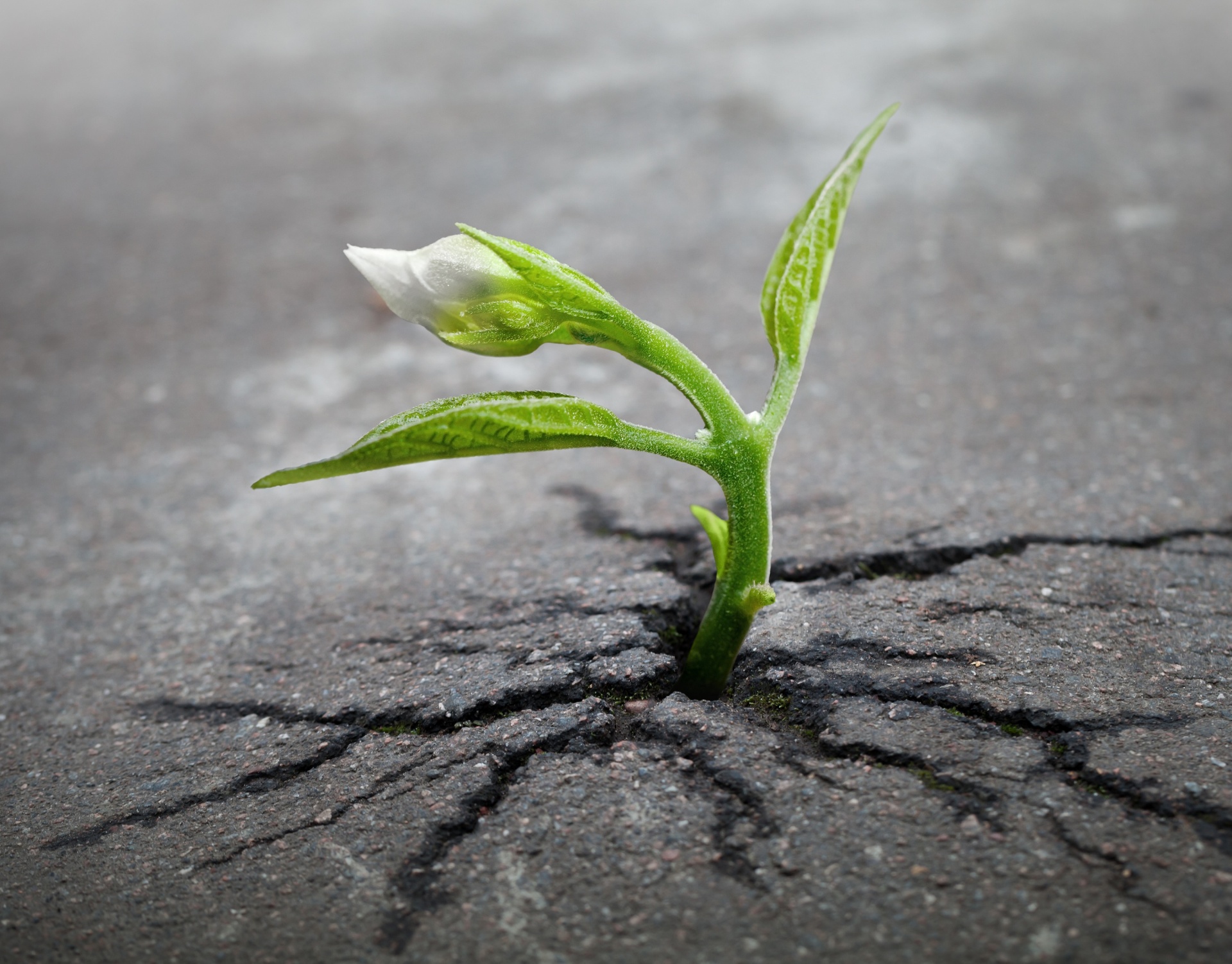
A recent book from civil rights activist Valarie Kaur, See No Stranger: A Memoir and Manifesto of Revolutionary Love, encourages people to develop understanding and respect for people different from themselves through a process of she describes as “breathe and push.”
This involves continually challenging yourself to grow and become a wiser and more caring person and then “breathing” by reflecting and resting to replenish your energy.
As she says “What if this is not the darkness of the tomb, but the darkness of the womb?”
This month’s issue deals with characters and places who are “breathing” and “pushing,” growing and becoming. They are caring for children and pets, gaining understanding of the world and becoming more fully themselves, grappling with mythos and legacy, exploring imagination and consciousness, mourning tragedies and resolving to move forward with hope.
Harlan Yarbrough’s young couple and their child navigate an asteroid-caused disaster in a story that seems an allegory of parenthood in a turbulent world. Raising a small child can resemble an isolated, survivalist-type experience in some cultures, as parents retreat into the domestic sphere to focus on their child’s needs. Although the larger world continues to affect them, sometimes the small family simply waits it out until the smoke clears.
Chimezie Ihekuna also writes about parenting in an essay that acknowledges the commitment and care of parents of all genders.
Laura Stamps’ speaker raises a dog and humorously relates how she prefers him to a human companion. K.J. Hannah Greenberg’s second collection of photographed animals seem rather peaceful, contemplating life in the sunshine.
J.J. Campbell’s speaker has finally found love but battles the insecurities of middle age. Santiago Burdon writes of a mother who experiences the dreary weariness of some days of parenthood, as well as a city that has lost its luster and become harsh and angry.
Christine Tabaka writes of various sorts of endings, yet, as her other pieces suggest, these can also be catalysts for spiritual transformations into new discoveries and ways of being. Candace Meredith relates a piece from a person who has passed away, encouraging their loved ones to remember them and continue to live.
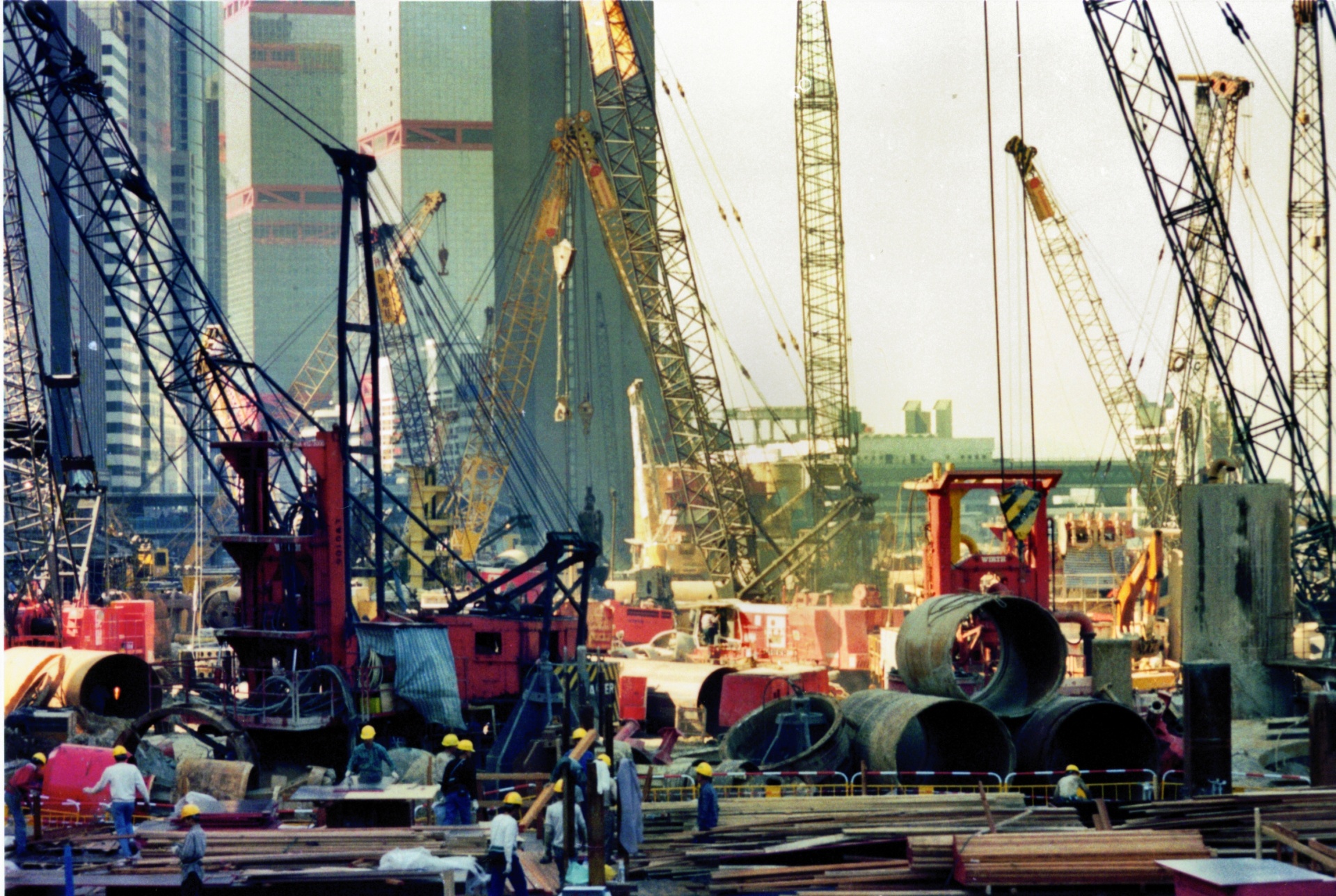
Film critic Jaylan Salah interviews Egyptian filmmaker Ahmad Abdalla, whose work focuses on people and cities in the complex state of growing and becoming who they are. Poet Mary Mackey interviews poet D. Nurkse, who discusses his sources of inspiration for his new book A Country of Strangers and how poetry can resist authoritarianisms of various kinds.
Sandra Rogers-Hare educates us on Juneteenth, the day when a last holdout of American enslaved people in Texas learned of their emancipation.
Ike Boat describes the grandeur of a majestic urban hotel within his native land of Ghana. Listen to more about the Asempa Hotel here.
Selene Ozturk’s essay explores the mixture of Roman Empire and American Western metaphors within the architecture of San Francisco’s Palace of Fine Arts and the idea of rugged, yet enduring grandeur.
Pascal Lockwood Villa’s futuristic story also harkens back to Old West metaphors to explore what it means to be human through a discussion between a robot sheriff and a female human convict.
John Edward Culp asserts the reality of human consciousness in his heady, yet forceful poem while Andrew Cyril MacDonald comments on our human psychologies within a digital, consumerist age.

Sidnei Silva crafts words and letters from her subconscious to reflect and memorialize the music of Vangelis. In another take on music, Jack Galmitz honors a recorder player who breathes out a melody amid the wildness of nature and society. Also, Ivan Fiske writes of the song of our spirits when we breathe and re-center amidst the world’s tragedies.
Renwick Berchild’s poems show how our whole world – cathedrals, whales and other ocean creatures, birds, pottery kilns – is telling us stories, inspiring thoughts and pieces.
Mark Young wends his way through a surreal path of the imagination, navigating territory in a quest reminiscent of the work in J.D. Nelson’s subterranean word forge.
Michael Robinson’s pieces relate his journey of spiritual growth and contemplation, finding solace in Christ’s love. Sunday T. Saheed explores life, death, heritage and legacy in his lyrical poem. Steven Hill reflects on how each moment of our lives is in a way, a “loan” and should not be taken for granted.
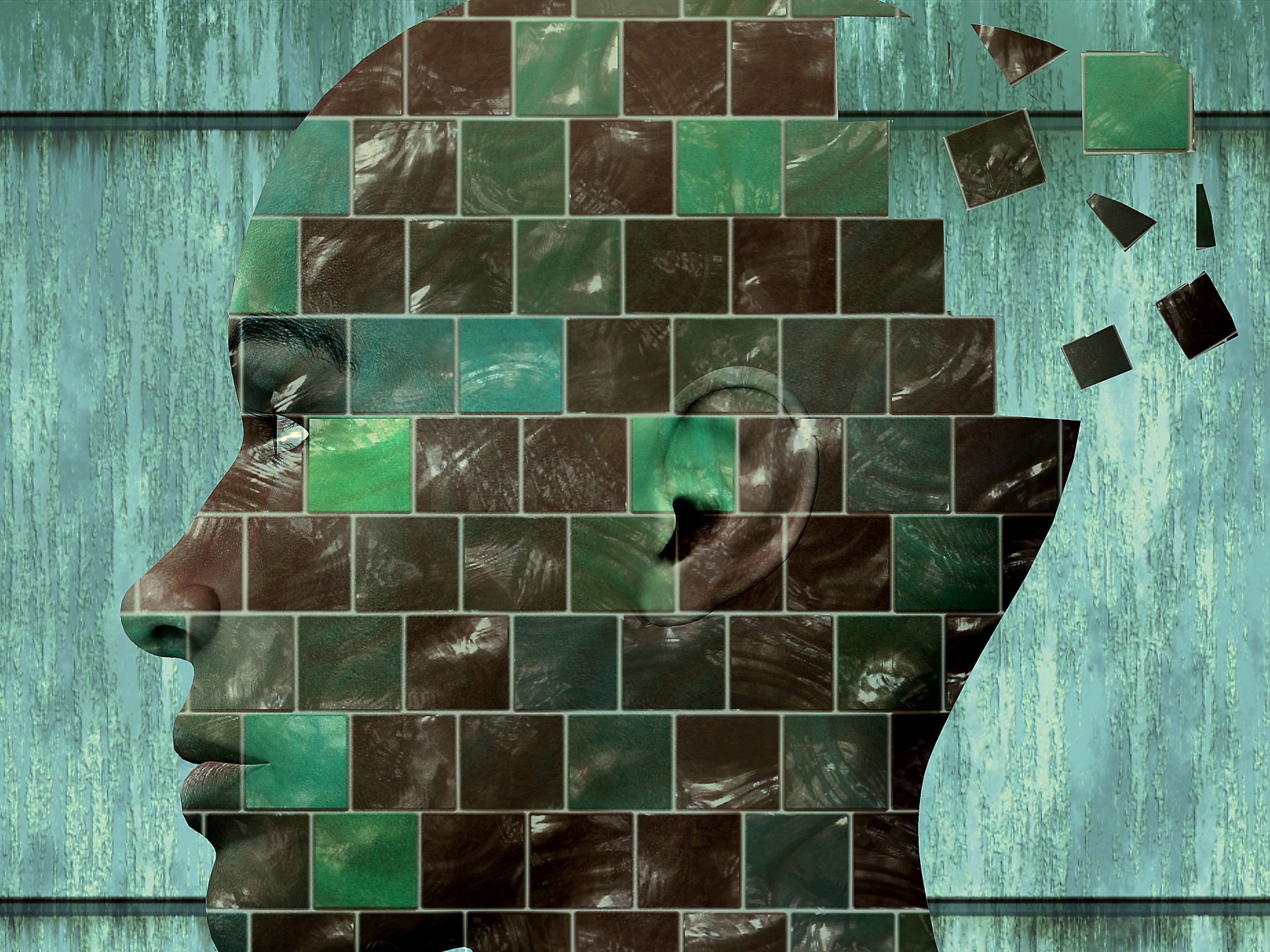
Chukwuma Eke Pacella comments on the complex inner psyches of boys and men as well as women in thoughtful meditations on gender and human equality. Anderson Moses probes our relationship with our bodies in pieces that touch on heritage and spirituality.
Mahbub writes of various kinds of afflictions and dangers our world faces, but reminds us of our potential for acts of kindness, such as his rescue from drowning in a pond as a small child.
Salim Yakkubu Akko renders the psychological dislocation of grief over a violent nation in crisis (Nigeria) in a stream of consciousness poem, while Bruce Roberts and Leticia Garcia Bradford and Sheryl Bize-Boutte and Patricia Doyne and Ann Pineles also grieve with more linear and forthright pieces over shooting deaths in another nation in crisis (the United States).
Finally, Aurora Brown’s haikus resound with a clarion call of hope.
Poetry from J.D. Nelson
tomorrow landry

who’s knocking?

	scientific
        lac amora

the dream of the sky
the dream of the swan

       clanky toast is “t”
       ample terrapin outline

I’m in the gum tree


pac-man germs

the cape fear method
demanding a desert

        I am in the rain

green sleep
a new green

the space station is blinking
I am in the control tower

        with radishes

the toads protect me here
the templeton of the rabbit

        confused


the wonderful tree

each eagle is too low
raindrops slice

the coral within
whittling, too

my solar gum
my plen-t-pak

I bite a cotton ball
I shake a sugar roll


bio/graf

J. D. Nelson (b. 1971) experiments with words in his subterranean laboratory. His poetry has appeared in many small press publications, worldwide, since 2002. He is the author of several collections of poetry, including Cinderella City (The Red Ceilings Press, 2012). His poem, “to mask a little bird” was nominated for Best of the Net in 2021. Visit http://MadVerse.com for more information and links to his published work. Nelson lives in Colorado.
Poetry from Anderson Moses
PSALMS 22:19

After Shedrack Bulus


To the tongue that cradles on wounds,
every poem holds a hammer against my
body. Which means, this body lacks a body, sometimes, it is a garden & other times, it's a flower — Perfect paradox saying; the things I once admired now plague on me. Maybe, this is how a body translate to a graveyard. Again, cast me to a river & I'll comeback a sand, scars & death close dialect engulfing a body. Every morning I trust my knees for
Grace, but bleeds still flaunt out of me like a spring bee. & these scars too renders me a sacrificial lamb. Tell me, what mouth will remember me & still gospel how to read a poem before a congregation of grief?. The priest said, Son, learn how to build a tower for your scars. Perhaps, I remember— even the Bible pulled pigs out of a body. Say, to nurture a body for moths. Grace tarry & everything ends in science. At least to saviour a body. I, a rotten flesh hunting for hope at feet of a round rope. This poems breaks & clouds this body to a dust. Lord, won't you undress me to a butterfly? Now that blood still wets my knees on breaking tarmacs.
____________________________________________________________________________________________

I CHRISTENED MY BODY A HOME

At night,
I briefcased my unbelief into the
esophagus of my stepmother. Nothing
defines a boy more than grief. & I, too.
My body have cocoon myriad lightless
stars, which often deduced me to a prosaic equation, I mean something poor devoid of brilliance— Emptiness filled
me to the edge, & I bend like a crayfish.
Which is to say, my body still clings on rotten roses. I lost a sight of myself, & my cousin is now an acronym mouthed by birds. Tell me, In what way can i unbuilt this body?. Perhaps, this poem is modern. Here, everything labyrinths to a requiem, grief, bullet, or whatever can murder. & say, a rose fading to a scar, My shadow bounced back at me. My body shriveled to a room with sharp shards. All wanting to cut & open me to a naked wound. Yesterday, i met God in the flickering of a crescent, I wanted to split this body before his presence, To unfold my soul to a faith. But, here, not everything bring peace. So i relinquished my simulacrum to the mirror & christened my body a home.
___________________
Anderson Moses, nicknamed (Son of Moses)  is a poet from a small village in Akwa Ibom State, Nigeria. He's a student of History and International studies. He's works have been published/forthcoming in Brittle paper, Nantygreens, Eboquills, Arts lounge and elsewhere. Apart from writing, he enjoys snapping images.
Short story from Laura Stamps
A DOG IS BETTER THAN A HUSBAND

1.
“A dog is better than a husband,” the rescue lady says to me. “Did you know that?”

2.
What? Wait a minute. Wait. A. Minute. Where did that come from? Where? This isn’t some kind of weird therapy session. This is PetSmart, for God’s sake! And it’s Saturday. Adoption Day. I’ve driven from Fort Worth to Dallas to look at a little homeless Chihuahua. The one featured on Facebook last week. The one this woman tells me is no longer available. Bummer! I really wanted to see it. But that’s okay. I’m just a looker today. Just here to look. That’s all. Not to adopt. No. Just looking. Today. A looker. That’s me. Nothing more.

3.
And yet, and yet. That didn’t stop this dog rescue lady from lifting another Chihuahua from his crate and handing him to me. Before I could protest. Before I could stop her. How could she do that to me? She knows I’m just a looker. She does. She knows. It’s true. I’m just looking. I am. A looker. That’s me. Today. Nothing more. And yet, and yet. Now there’s a dog in my arms. A dog! And not just any dog. This dog. The dog she tells me nobody wants because he’s not a puppy. Because he’s eight-years-old. Walter. That’s his name. Yes, it’s sad. So sad. To be unwanted. Abandoned. Yes. I know. How it feels. I do. So sad. But he’s the wrong dog for me. He is. All wrong. He’s brown and black (not the color I want). And six pounds (not the weight I want). And a boy (not the sex I want). No, he’s not my dog. Not this one. No. Not at all.

4.
“Excuse me?” I say. Maybe I misunderstood what she said. About dogs and husbands. Surely. Surely I did. The rescue lady looks down at Walter and laughs. He’s snoring. In my arms. Fast asleep. What? When did that happen? “It’s true,” she says. “Dogs are more consistent with their affection. They’re not moody. Or manipulative. Or perfectionists. Or worriers. Or egomaniacs. Or judgmental. Dogs will never abandon you. They just love you. All the time. That’s what they do. And they’re excellent listeners.” She winks at me. “How many men can you say that about?”

5.
Oh, geez. Sounds like the story of my life. How did she know? Moody, self-absorbed men. Too many of them. In my past. Nothing but trouble. Like my ex-husband, Earl. The hypochondriac. I divorced him six months ago. Best decision I’ve made in years. Good riddance, I say. Never had anxiety until I married Earl. Or panic attacks. Didn’t even know what they were. But I do now. Thanks to seven years of marriage. Should have divorced Earl years ago. Why didn’t I? Why, why, why? My girlfriends say it’s my heart. It’s too big. Too soft. They think it’s a curse. In Earl’s case, it was. But no more. I’m done with men like that. All of them. Selfish, manipulative, worriers. Done. With. Them.

6.
“Did you see this?” the rescue lady says, pointing to the information sheet attached to Walter’s crate. “All our older dogs like Walter are half price today. And he’s such a good dog. No trouble at all.”

7.
An hour later the Dallas skyline fades from my rearview mirror on the drive back to Fort Worth. I did it. Finally. I escaped. From PetSmart. And the rescue lady. Hallelujah! But my checking account is three hundred dollars lighter. And there’s a big shopping bag from PetSmart in my backseat. And a new pet carrier in the trunk. And there’s Walter. In the passenger seat. Wrapped in a blanket. Cozy in his new dog bed. Chewing on a bully stick. Happily. Peacefully. As if we’ve been together for years.

8.
“Tell me this,” I say to Walter. “Is a dog really better than a husband?” I turn off the highway onto the exit ramp leading to Fort Worth. Walter drops his bully stick and climbs into my lap. Gently. Calmly. Like he’s been doing it for years. He rests his head on my arm and looks up at me. “Should I take that as a Yes?” I say. “Okay then. Good to know.”
Poetry from Andrew McDonald
Seasoned ritual

What these lights exclaim—
a commonplace of forms
in pronouncement of death.

They wander untruths
hollered foregone
of a solstice
established
a season of touch.

Their dross is predicate
to a remonstrance performed;
shaping as best
that fathom of force cultured
from specks unjustness shines
on bathed nights lacked their lustre.

(Here a life extolled; there
a dream extinguished).

Now so foreign we’re
stepping over the timed-in chants
to fend for places consenting
rest from
what reasons that ask it
of celebrations intolerance begets,

that is how to exercise rhythms
their shod worthiness proclaimed
in the sudden redux of antiphons
once scant now abundant.

We trail in our responses,
aligned to make delicate
the occasion we’ve met,
clutching our tapers so that
light, too, does not
more easily perish.


Window shopping

Cut figures shaped waxen
mirror intentions formed
of haphazard strolls down streets
love ill-mannered pretends them—
some ticketed green
of truant devotions come back this
garden of delights popular in what’s hoped for.

Most of it’s distracting, full of
stops and contrition
unripe statuary tends
those whose lives unfold
in service to lost ancestors.

But Time will come them who favour
this will to remark it—
we’re selves left as are to own devices
happenstance if birth
then recession cemented along
lines that dock us of valuables given.

Ready or not we wouldn’t have it
that smile half-shaped for the crowd to mumble,
a relic ambulating distance and emotion
the window gives toll to
as we gather and shop in the know
of what it’s wrought
an age post-capitalistic of booming abundance.


On a reading of Melanie Klein during lockdown

Projected selfhoods applaud
affirmations to the bone;

deep their solipsism broods
the selfishness they’ve caused

if wrapped around is a gift
their Others’ not wanted

but of loans disposed
to hearts who contend them.

They ride along
such subtle devotion

its violence that prospers
raw conditions suffering made norm

as Life is its truth when
pretensions implode

and grumble the heresies
politeness helps form

in softness mere cover
what tensions belie.


Avatar

Legitimate runs can’t handle
circumstances of commotion.

They get wind of escape through
worlds our falsehoods outmoding
as the real less tangible is speculated

more worth than this
daily plot thick
with the uninitiated.

But here:
burnt-out traces of corpse
project drop-offs
the mainframed redoubt-in,
lost to bigger cause
inhuman as much
the next one proposes
some new god its hereafters
the digital allots of
when embraced extensions
regulate newness pulled-out from
deathbeds their visions
that commonplace of norms
our postmodern living.

Monotony gone
deposits best colour
this mutiny
about us.
Poetry from Jack Galmitz
A Poem For Paul Pfleuger, Jr.
For Paul

Sometimes it's like a wrecking ball
breaking the cohesions we rely on.
Lions and tigers and bears, oh dear,
in the  neighboring climes. Weight
shifting back and forth. Pauses un
expected. Loud clashes. Soft sensations
of sound the mimesis. This minute.
Here you stand steady as a sailor
in an angry sea of plastic trapping
mammals. Not a hero. Not here
to smash the tablets asunder.
But here to play the recorder.
Here to express the rebuilding
of the infrastructure and record
the tremors of the past collapse.
Carry your canoe to the river
of rocks and set it down.
The sound is memorable.