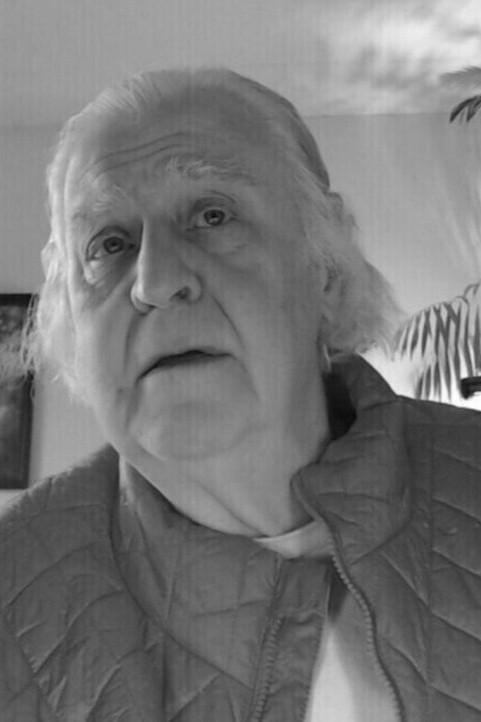
What makes us mournful at funerals? Is it the memories we’ve made with the deceased Or the memories we failed to create with them? What moves us to tears at funerals?
Is it the things we said to the one lying lifeless in the casket, Or the things we failed to say to them?
What makes us cry at funerals? Is it the good times we shared with the one about to be lowered into the Cold bosom of the earth, Or the good times we failed to share with them?
Tales of a traveller
tė Uzo chekwa ghu nwa m,
said my grandma to me
as I set forth on my journey. & her words, when loosely translated mean,
“may the road be your guide, my child.”
so here I am on the road, travelling with no distinct destination in mind,
i, a born voyager,
descendant of men
who commune with the road. who call a place far from home, home.
so I, before I drew my first breath had fellowship with the road.
little wonder why I feel safest
on the go. why my mind
only finds peace in places
far from my abode. Little wonder why only the road feels like home.
Obirija Somtochukwu is a freshman student of pharmacy at the University of Ibadan. An essayist and poet, he writes on social issues, his tribal identity and personal conflicts.
In addition to writing, he plays football, table tennis and chess.
“Dear Elaine,” she writes on a new postcard. “Okay. I confess. I struggle with it. Forgiveness. I do. Even though. I know, I know. We’re supposed to forgive everyone. To love everyone. We are. For our physical health. Mental health. All of it. I get that. I do. But surely, surely. Not everyone. Right? Not ex-husbands. Not mine.
I mean. I can forgive the others. I can. All those who wronged me. Abused me. You know. In the past. Disturbed individuals. That’s what they were. Truly. And yet, and yet. Forgive them? I can do that. Yes. Done. But my ex-husband. Disturbed? Oh, yeah. Forgiveness? No way. Not possible. Not for him. Not that I haven’t tried. I have. Again and again. Yet I can’t. And I don’t know why.
But then last night. That video I watched. You know. The one on YouTube. About St. Francis. How he loved everyone. Forgave everyone. And yet, and yet. Forgiveness wasn’t his focus. Imagine that? Peace. That was his goal. Alrighty! That I can do. Peace. Peaceful. My life. Ever since the day. I left him. My ex. Walked away. Me. Gone. Never to return. Sweet peace.
This is my life. Now. See? That I can do. Forgiveness? Forget it. Hey. If peace is good enough for Francis. It’s good enough for me. Okay, then. I think we’re done here. What’s next?”
Laura Stamps loves to play with words in her fiction and prose poetry. Author of 49 novels, novellas, short story collections, and poetry books. Forthcoming: “The Good Dog” (Prolific Pulse Press 2023) and “Addicted to Dog Magazines” (Impspired, 2023). Winner of the Muses Prize. Recipient of a Pulitzer Prize nomination and 7 Pushcart Prize nominations.
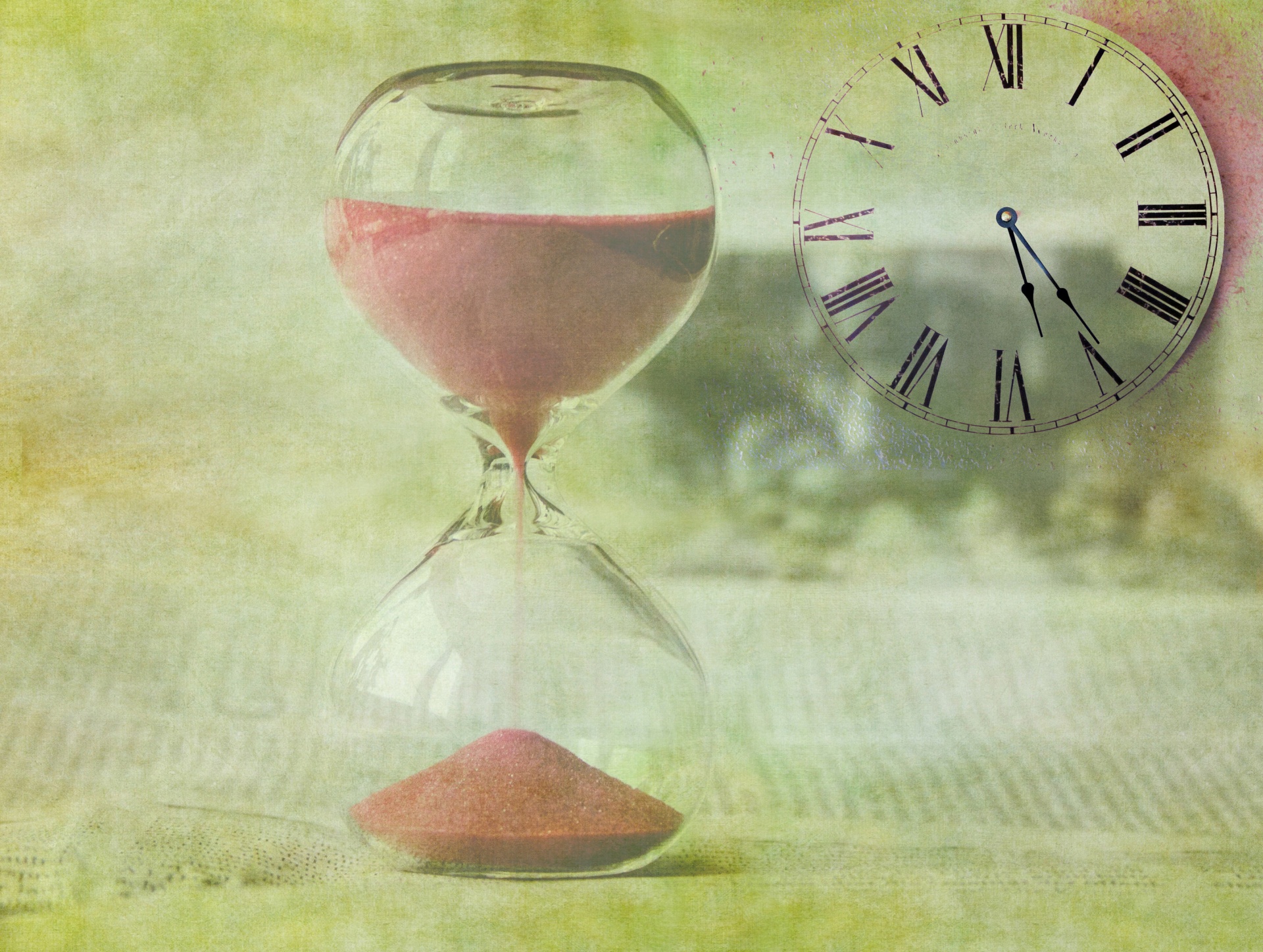
Welcome, everyone, to 2023’s second issue of Synchronized Chaos! In this season of renewed energy and resolution, we are excited and ready to leave our mark on the sands of time.
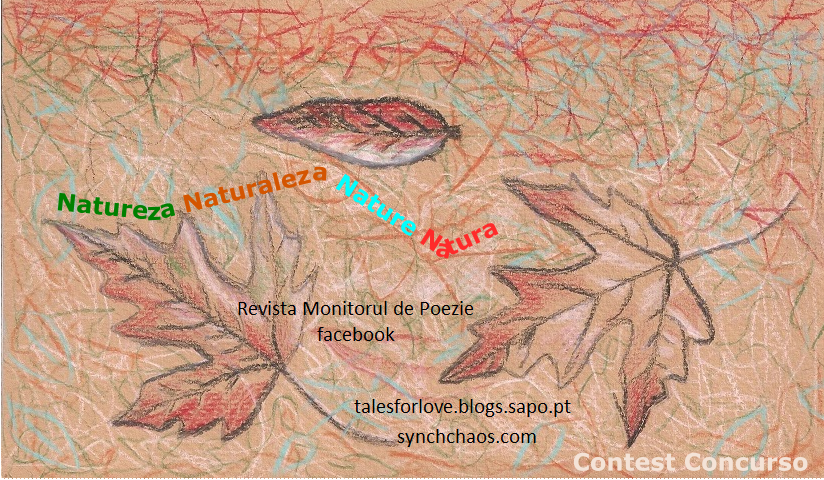
But first, our friend and collaborator Rui Carvalho reminds us about our Nature Writing Contest for 2022.
Chimezie Ihekuna poetizes about his quest to leave a positive legacy despite whatever befalls him in life.
Randall Rogers explores our self-concept, how we perceive ourselves versus how others see us. J.K. Durick goes farther with the theme of cultural and personal identity, questioning what it is in a name, a photograph, or a sport that comes to define us.
Channie Greenberg’s photos show off windows on buildings of various sizes and shapes. Leslie Lisbona recollects an afternoon swimming with her older brother, a sibling relationship that expands her view of the world.
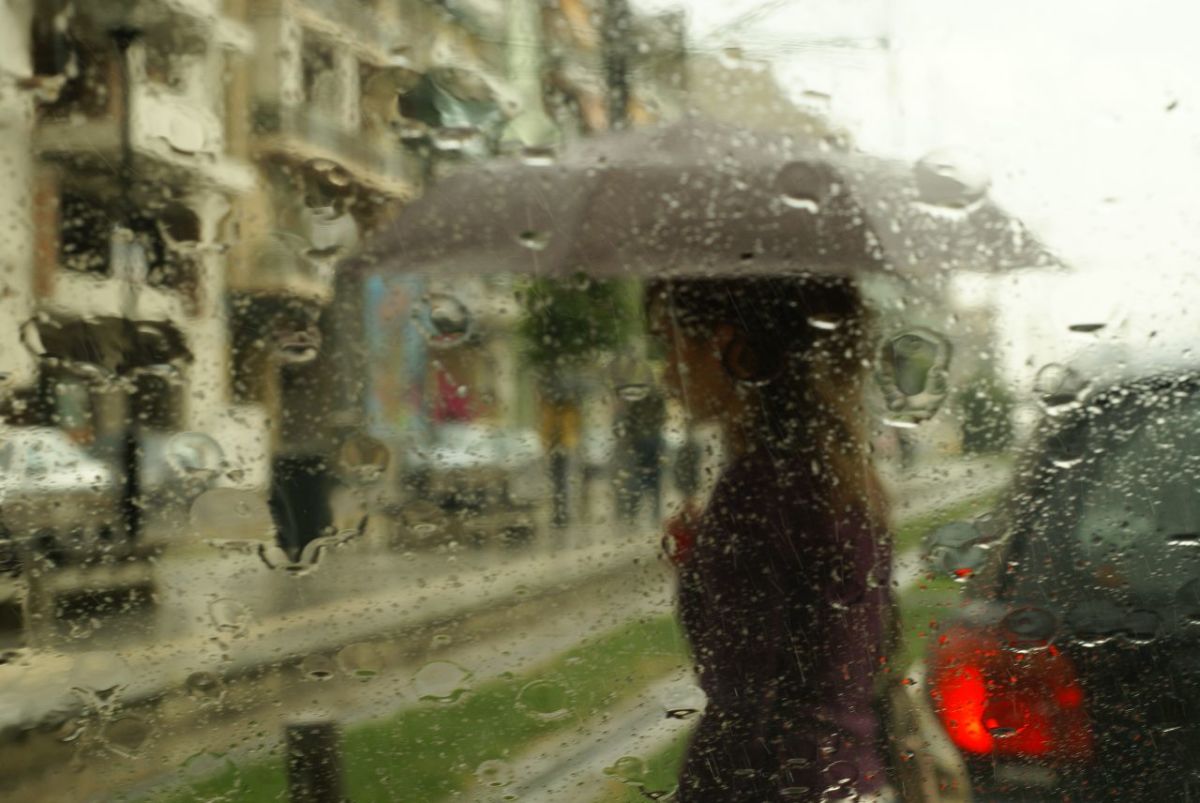
J.J. Campbell explores less amusing places where our minds can wander during periods of forced inactivity. Meanwhile, Ubali Ibrahim Hashimu takes joy in books, comparing his earthly love to the joy of learning and literature. Zulfiya Shomurotova relates the mixture of emotions she feels on seeing rainfall and uses that as inspiration for her writing.
Robert Fleming’s art integrates human eyes, mathematical formulas and tree rings to form thoughtful compositions, while Mark Young’s work connects words, form and color, with the letters of the alphabet forming figures of beauty. J.D. Nelson connects real and imagined words to create a sonic experience of form and rhythm.
Stephen House builds his sense of compassion by immersing himself within nature and enlarging his circle of connection to other beings. Z.I. Mahmud writes of how poetry, art, writing and film can help us make sense of and take action on abstract matters such as melting ice caps and climate change.
Daniel De Culla also speaks of other beings in his amusing tale of the relationships among dogs in a Spanish village church.
Jim Meirose contributes a meditative ambient piece on a church receiving a mysterious package.
Donna Dallas writes of the passing of time, what we remember and what falls from the grasp of our minds.
Sayani Mukherjee draws on cultural memory by exploring the history of a sunken ship, viewable only through a submarine window.
Emeniano Acain Somoza, Jr. provides a snapshot of a time and place, a convenience store scene in an island locale that endured colonization.
Corey Cook evokes winter, retirement and disuse, and the losses of war in his haiku-adjacent work. Mykyta Ryzhykh touches on the dislocation and disembodiment brought about by war and homophobic prejudice. Chris Butler warns of the destructive and wasteful trends within human society that may bring about an apocalypse.
Santiago Burdon also explores how we process grief, and the need to consider the impact of our memorials on other life around us.
Jelvin Gipson encourages us to love our close family now because death will arrive in the future.
Michael Lee Johnson speaks to the frailty, but also the promise, of the human experience and the creative process.
May we use the time we have on Earth to scratch, not simple dividing lines, but patterns of wisdom, intricacy, and beauty, into the sands which surround us.
Vessel
By Sayani Mukherjee

Kites of uneventful evenings
In the middle ground
Of a sun soaked deadline
Loopholes and pigeonholed
Bricks, cements, chimney sweep brush
Petit heads that surface
Moon phased inner city lights
Log brimmed night towered watch brim
Dainty arrows that come down
Boils into a fightful secrecy
What appears is a vessel
Underneath a giant submarine
Depths deaths numerous tunnels
A cool icy maiden voyage
Angelic frequencies of musing tickets
Law business of stockings and paperwork
Her world, a wimming puddles
Cabins are smudges smitten by a car crash ride
Twin towers bin bucket
Of lake house high
Mornings are chimney sweep
Parrots stricken blue tapestry
Leftist rights and insights
Just a vessel of an innocence personified.
My Life

By Michael Lee Johnson


My life began with a skeleton

with a smile and bubbling eyes

in my garden of dandelions.

Everything else fell off the edge,

a jigsaw puzzle piece cut in half.

When young, I pressed

against my mother’s breast,

but youthful memories fell short.

I tried at 8 to kiss my father,

but he was a welder, fox hunter,

coon hunter, and voyeuristic man.

My young life was a mixture

of black, white, dark dreams,

and mellow yellow sun bright hopes.

Rewind, sunshine was a stranger

in dandelion fields,

shadows in my eyes.

I grabbed my injured legs

leap forward into the future.

I’m now a vitamin C boy

it keeps me immured

from catching colds or Covid-19.

Everything now still leaks, in parts,

but I press forward.
How Jesus Must Have Felt
Jesus and How

He Must Have Felt (V3)


Staggering out Wee-Willy's

dumpy dive bar, droopy eyes,

my feelings desensitizing,

confusing my avocado fart,

at 3:20 a.m., with last night

splash on Brut aftershave.

Whispering to my outcast

self-sounding is more like pending death.

My body detaching from myself,

numbed by winter's fingers.

I creak up these outside stairs

to my apartment after an all-night drunk,

cheap Tesco's Windsor Castle

London Dry Gin—on the rocks.

I thought of Jesus

how He must have felt

during His resurrection

dragging His holy body

up that endless stairwell

spiraling toward heaven.
Most PoemsMost Poems
Most Poems

By Michael Lee Johnson


Most poems are pounded out

in emotional flesh, sometimes

physical skin scalped feelings.

It’s a Jesus hanging on a cross

a Mary kneeling at the bottom

not knotted in love but roped,

a blade of a bowie knife

heavenward.

I look for the kicker line

the close at the bottom

seek a public poetry forum

to cheer my aspirations on.

I hear those faraway voices

carrying my life away-

a retreat into insanity.
Poets In the Rain
Poets in the Rain (V4)

By Michael Lee Johnson


All poets are crazy. Listen to them soak

sponge in early rain medley notes sounding off.

Crazy, and suicidal, we know who they are:

Edgar Allan Poe, Sylvia Plath, Dylan Thomas

the drunk, Anne Sexton, Teasdale.

This group grows a Pinocchio nose.

At times I capture you here under control.

I want to inspect you.

All can be found in faith once

now gone in time.

With all your concerns, I see

your eyes layered in shades of green,

confused within you about me.

Forgive me; I’m just a touch

of wild pepper, dry Screaming Eagle

Cabernet Sauvignon, and dying selfishly.

We don’t know if it is all worth it.

I have refined my image, and my taste

continues to thrust inside your crevices.

Templates of hell break loose thunder, belches, and anomie.

Asteroid Ceres looks like you are passing gas,

exposes her buttocks, and moves on just like ice

on a balmy rock just like yours.

I will wait centuries, like critics, to review

this fecund body of yours-

soiled, then poppies,

poetry in the rain.
Michael Lee Johnson
Michael Lee Johnson lived ten years in Canada during the Vietnam era. Today he is a poet in the greater Chicagoland area, IL.  He has 272 YouTube poetry videos. Michael Lee Johnson is an internationally published poet in 44 countries, has several published poetry books, has been nominated for five Pushcart Prize awards and six Best of the Net nominations.

He is editor-in-chief of three poetry anthologies, all available on Amazon, and has several poetry books and chapbooks. He has over 443 published poems. Michael is the administrator of six Facebook Poetry groups. Member of the Illinois State Poetry Society. Do not forget to consider me for Best of the Net or Pushcart nomination!