MINING A FAITH

My language tells me all I know
That for every name, is a contour
To the beginning of it's origin

That God breathe into souls
I pushed in fears, oxygenate prayers
And dioxidize glory in a carbonated poem

That to back my country
Is to lick lips of men with juicy curses
My head stocking valleys of grieving

That heaven is full of lovers
The sun adores moon
Like how lord sweeten kids
For men are riot gods
Men fighting peace to how stars looked peaceful

That for in a second a trumpet plays
We will all melt into sands gone
And  there be a holy poem to recite

That for every angel's letter
Is an acquaintance of either of two postal stamps
YOUR RIGHT HAND?
Everything in right means good to go

YOUR LEFT HAND?
There are more classes after learning red.
Your body deceives you

DANGEROUS ZONE
The address being located at the street in your spine

My language tells me all I know
That everything invisible isn't God
God is always beautiful when you close your eyes looking into his.
Aliyu Umar Muhammad is an 18 years old Nigerian writer, poet, spoken word artist and a member of Hill Top Creative Arts Foundation, TYNSWA and Guided Minds Initiatives. His works are published and forth coming on: Kalahari review, pine cone review, open doors magazine and elsewhere.
I went to the coffee shop and as usual ordered two iced hazelnut coffees with milk. When I went to pay, the cashier who is my buddy lowered her voice and said, “I have a question to ask you.” I thought she was going to ask me to something serious. Then she said, “Does your office give out Metallica tickets? They cost $800!” I said I would check but had no intention of following through because I already knew the answer. The next time I saw her at the register I said, “My company is too small and doesn’t give out tickets. My father used to get baseball tickets but now he is retired.” She light up and said, “Thank you for checking! Tickets cost $900!” I keep going to the coffee shop to order my two iced hazelnut coffees with milk. The cashier is still my buddy even though I can’t help her get Metallica tickets.
Slack Bot
I often get a chuckle out of the Slack bot. When a manager posts on Slack, the bot says “head honcho” or “small business tyrant.” This morning, one of the writers on a different team said he was going on vacation. His manager wished him well and the bot slyly responded, “never heard of her.” Nobody ever acknowledges the bot’s posts, so they hang there like taunts for a belly laugh.
Funny Bone
Growing up, my older brother was the funny one. He didn’t tell jokes so much as making wisecracks that often involved farts. I was the serious one who had no idea how to make people laugh. When I grew up, I wrote serious memoirs about war and trauma. Then I discovered my funny bone through poetry. I read my humorous poems at open mic poetry events. It was delightful to hear people laugh at my lighthearted, little poems.
Karol Nielsen is the author of two memoirs, including Black Elephants, and three poetry chapbooks. Her first memoir was shortlisted for the William Saroyan International Prize for Writing. Her full-length poetry collection was a finalist for the Colorado Prize for Poetry. One of her poems was a finalist for the Ruth Stone Poetry Prize.
First of all, Synchronized Chaos stands with all those affected by the recent earthquakes in Turkiye and Syria. We encourage all who are able to contribute to the relief efforts, which you may do through the Red Crescent or other worthy organizations.
This online fundraiser with contemporary international authors and translators aims to raise funds to aid relief efforts and demonstrate solidarity with the Syrian, Turkish, and Kurdish people affected by the disaster.
Organized by Words Without Borders and hosted by author Merve Emre (writer and scholar, Turkey/USA), the fundraiser will feature Laila Lalami (novelist and essayist, Morocco/USA), Orhan Pamuk (novelist and essayist, Turkey), Maureen Freely (translator from Turkish, USA), Sema Kaygusuz (novelist and playwright, Turkey), Nick Glastonbury (translator from Turkish and Kurdish, USA), Elif Shafak (novelist and essayist, Turkey/UK), Bachtyar Ali (novelist, Iraq), Kareem Abdulrahman (translator from Kurdish, UK), and others to be confirmed.
Please join us online (Zoom) on Thursday, March 9th, at 1 pm/New York, 6 pm/London, 8 pm/Gaziantep & Aleppo.
Also, please come out to Synchronized Chaos Magazine’s in-person event, held during the Association of Writing Programs’ conference, Thursday March 9th at 6pm at Ada’s Technical Books in Seattle.
Ada’s Technical Books and Gifts
During the pandemic many of us came to miss browsing in bookstores and libraries. The experience of scanning and flipping through books that we wouldn’t ordinarily order for ourselves, but which catch our eye and we find ourselves fingering, flipping, reading, and then checking out and buying.
This reading creates an ‘audible browsing’ experience by presenting readers who are published authors in a variety of genres. This includes mystery, romance, poetry, memoir, drama, literary and international fiction.
Also, our friend and collaborator Rui Carvalho reminds us about our Nature Writing Contest for 2022.
In this issue we see pieces where people grapple with their self-concepts. Some people search their souls for deeper understanding, others focus entirely outside themselves, and still others process their thoughts and emotions through interacting with the outside world.
Chimezie Ihekuna kicks us off with song lyrics about claiming one’s selfhood and confidence.
In Brian Michael Barbeito’s lush, detailed poems, narrators lose themselves within elemental wildness. He also contributes immersive photographs that aim to capture the spirit and feel of locales, focusing on the observed and hiding the observer.
Bill Tope’s prose poem also takes readers up and out of themselves and out into a richly imagined nostalgic fishing trip with his grandmother.
Channie Greenberg’s artistic renderings of flowers capture their exuberance, in work that takes a turn towards abstract expression. Claudio Parentela highlights the details of slightly comedic scenes through color and black and white renditions.
Mesfakus Salahin evokes a love that pulls the speaker out of his own life into union with nature and his beloved.
Sandro Piedrahita’s story explores how one might atone for a heinous crime, through shifting one’s focus away from selfishness towards humble service to others for its own sake.
Sayani Mukherjee’s poem describes an intense spiritual quest and how her faith survives her search and questioning.
Z.I. Mahmud’s essay highlights the role of philosophers who were both spiritual mystics and humanists in shaping Indian culture. They were able to both address and transcend the human condition.
Gail Thomas highlights how various iconic songs have helped her to process her grief, explaining how music can be at once personal and universal. J.J. Campbell, a writer and caregiver, speaks to many universal human griefs and emotions: loneliness, lost love, aging, and tradition.
Doug Hawley handles common human experiences – surviving the natural elements, braving the dating world, aging and illness – through humor. Noah Berlatsky spoofs self-help culture through an elaborately constructed re-envisioning of Jordan Peterson’s advice to men.
L. Wayne Russell speaks of pursuing and finding art and inspiration above all else, whatever his human circumstances.
Daniel De Culla sends up a fanciful poem about shapeshifting: a poet with a hat that changes into a whimsical pumpkin.
Mark Young cleverly amuses us with “mail deliveries” that involve linguistic wordplay while Grant Guy breaks poetry down into its essential elements to explore what those elements are.
Vernon Frazer connects a lot of words and ideas together to experiment with meaning and thought. J.D. Nelson invites us to experience words and punctuation in fragments and ponder their possible meanings.
J.K. Durick evokes how life’s experiences can play with our senses of time and space.
John Grey creates humorous character sketches of people and relationships with generosity of spirit.
John Culp conveys the joy of reaching full intellectual and emotional understanding with another person, being fully and mutually seen and heard without either person having to lose themselves in the relationship.
Itzel Perez-Alarcon points out how the childish games that people play with each other can recall memories that undermine our sense of self.
Bilatu Abdullahi renders the loneliness, rage and grief of a spurned lover, who could be a person, a country, or the earth itself. Maurizio Brancaleoni speculates on whether humanity will be able to do enough to ameliorate the destruction of endangered species and disempowered humans.
Mahbub laments the natural and human tragedies of our current world, but then points to our heritage of honoring love between people to suggest that we may yet make it forward.
Christopher Bernard remembers his partner of many years through an elegant meditation on an empty table setting. Emina Delilovic-Kevric speaks to family love that perseveres after wartime, even in the face of losses.
In his thoughtful poem, Faroq Faisal quickly reminds us that we are mortal.
Some contributors take the focus off of themselves by writing about a highly researched topic.
Terry Trowbridge stares intently at a single jalapeno, discovering the mysteries of the universe in a pepper. Corey Cook highlights one intense image, of a tiny bird or a candle flame, and calls us to leave our own psyches and meditate on that.
Russell Streur explores the intimate relationship between poetry and pottery in Japan a few centuries in the past.
Masharipova Bakhor Ixtiyor provides an overview of the bakery products of Uzbekistan, while Kojamuratova Aygul urges Uzbekistan’s criminal justice system to distinguish between one-time and repeat offenders for public safety.
Taylor Dibbert’s poetic speaker steps beyond his own psyche in a simpler way: love and gratitude for his faithful dog.
We hope you enjoy this issue’s depth, joy, grief, thought, and nuance.
Today the post- woman brought me a CD of Do- Nuts T.®ump reciting The Star- Spangled Banner when I’d asked for a sharp-angled spanner to be de- livered. Why this? I asked. Listen to the words, she said. I just wanted to point out to the oft-critical poet that there’s some- one even more inept at using the correct words than I am, & he used to be the fucking President.
*
Today the post- woman brought me a split infin- itive. I ran out to quickly collect it.
*
Today the post- woman brought me an abacus. Does it still work? I asked. I wouldn’t count on it, she replied.
*
Today the post- woman brought me an asteroid belt. Pity I’ve got no suit/able trousers to wear it with.
*
Today the post- woman brought me an elephant. What’s this? I asked. Wondered if you were interested in a pet, she replied. It was thrown out from a house earlier on my round. A big guy lives there, named Hannibal. Apparently he’s downsizing after a trip across the Alps, & there wasn’t room in the room for both him & the elephant.
Corey D. Cook’s sixth chapbook, Junk Drawer,was published by Finishing Line Press in 2022. His poems have recently appeared in *82 Review, Akitsu Quarterly, Black Poppy Review, Duck Head Journal, Muddy River Poetry Review, Naugatuck River Review, Nixes Mate Review, South Florida Poetry Review, and Spare Change News. New work is forthcoming in Freshwater Literary Review. Corey lives in East Thetford, Vermont.
THE IMPORTANCE OF THE CONCEPT OF RECIDIVISM IN THE SCIENCE OF CRIMINAL LAW
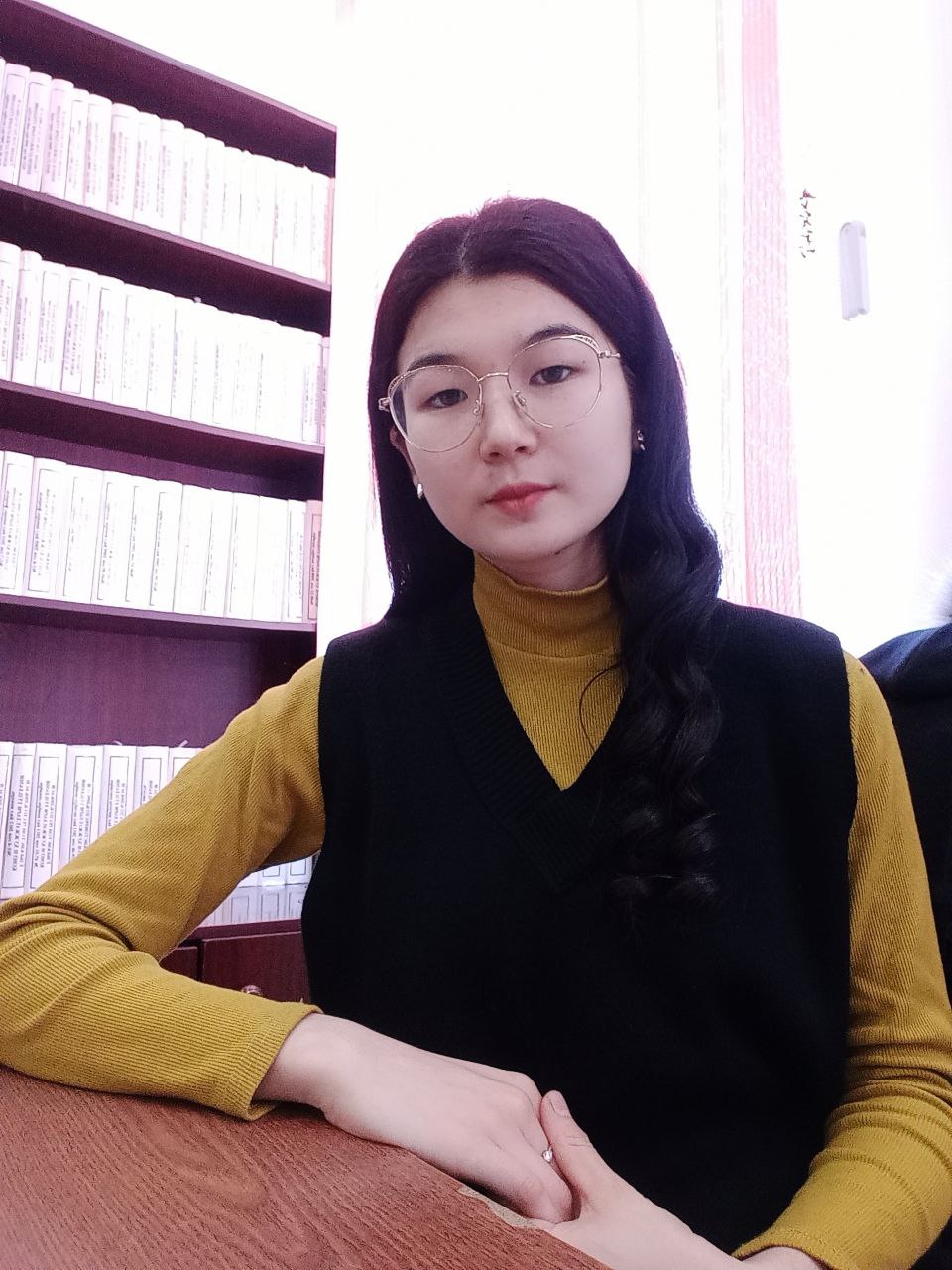
Karakalpak State University
2nd year student of the Faculty of law
Annotation: in this article, we will highlight the impact of crime on the education of a person in the construction of civil society in our country, its maturation as a perfect person, and the consequences of repeated crimes are mentioned. Among other things, one of the nuances that is relevant today is highlighted about recidivism and is highlighted by comparing the type of recidivism in the Criminal Code of foreign countries with the Criminal Code of our country.
It is clear to all of us that the upbringing of a person in the construction of a civil society, its maturation as a perfect person is significant in all respects. Educating a generation that is mature both physically and mentally requires a lot of attention and hard work, above all. In the case of all kinds of crimes that occur in our society, the upbringing of a person has its effect on the fact that he becomes a mature person in every possible way. Among these, one of the crimes that is relevant today is recidivism.
The fact that a person deliberately commits a new crime after being convicted of a previously intentional crime is recognized as a recidivistic crime. In cases where a person who has committed a crime similar to a previously convicted crime, separately specified in the Criminal Code, the intentional Commission of a new crime by a person convicted of other articles of a special part of the Criminal Code is recognized as a dangerous recidivist crime.
To commit a deliberate new crime, in which a sentence of imprisonment can be imposed for a period of not less than five years, namely:
a) the commission of a very serious crime by a person who has previously been sentenced for a very serious crime or for a serious crime twice and sentenced to imprisonment for a period of not less than five years for each of them;
b) the commission of a serious crime by a person who has been sentenced to imprisonment for serious or very serious crimes for a period of not less than five years each, regardless of whether he was previously convicted twice for a serious crime or before-after, is recognized as an extremely dangerous recidivistic crime.
With the judgment of the court, a person can be considered an extremely dangerous recidivist. At the time of the resolution of the issue of finding a person as an extremely dangerous recidivist, his conviction in the judgments of the courts of other states can also be taken into account.
Recidivism crimes are characterized by the fact that as a form of committing several crimes, the guilty person commits a new crime after being convicted of a previously intentional crime. It is a common or common recidivist crime based on the following two characters: intentional Commission of a new crime; the conviction of a person for a previously intentional crime.
In the norms of the special part of the Criminal Code, recidivism is recognized as a sign that the crime is associated with a dangerous and extremely dangerous recidivism and is assessed by the composition of the crime.The question of considering a person as a dangerous recidivist is not decided by the court, but on the grounds established by the law itself, the person is a dangerous recidivist. The person should be found in the process of being charged by the bodies of his investigation as a dangerous recidivist. Because the commission of a crime by a dangerous recidivist is a characteristic sign of a number of crimes and leads to the application of more serious penalties]. For this reason, this situation should be indicated by the preliminary investigation body when it is involved in participation as an accused in a criminal case, and later this should also be reflected in the descriptive part of the court sentence. The rules apply for the removal of grounds for finding a dangerous recidivism in other cases, such as both the removal and deletion of conviction in relation to a dangerous recidivist crime, and the responsibility or exemption from punishment for a crime committed by a person earlier on purpose. Committing a repeated crime or committing a new intentional crime after being convicted of committing a previous intentional crime is not considered a punitive case in the following cases: if the term of criminal prosecution for a crime committed for the first time has passed; if the conviction was removed or extinguished in accordance with the established procedure; or if the liability for criminal acts committed earlier was canceled by law; 65, 66, 66-1 of the Criminal Code. 68, 69, 70, 71, 76-in the event that a person, according to his articles, has been released from criminal liability and punishment for a crime he has committed before. This situation applies not only to ordinary recidivism, but also to all other types of recidivism, among which there is a dangerous and extremely dangerous recidivism crime, since common signs belonging to ordinary recidivism crime are also characteristic of them. “If the guilty person is removed by Amnesty or pardon from the convicted person for the intentional murder committed before him, if yohud is canceled or removed in accordance with the procedure established by law, as well as if by the time of committing the crime of homicide the fans of bringing him to justice for the crimes committed before him have passed, the extremely dangerous recidivism is considered to be one of the most severe forms of committing several crimes. They include the appointment of imprisonment as punishment and imprisonment for a period of not less than five years.
Such a basis arises only in the presence of one of the following options for recidivism:
– the commission of a very serious crime by a person who has previously been sentenced for a very serious crime and sentenced to imprisonment for a period of not less than five years;
– the commission of a very serious crime by a person who was previously sentenced to two serious crimes and sentenced to imprisonment for a period of not less than five years for each of them;
– the commission of a serious crime by a person who was previously sentenced to two sentences for a serious crime and each of them was sentenced to imprisonment for a period of not less than five years;
When we studied the experience of some foreign countries on the issue of committing several crimes and introducing a sentence for them, we witnessed that in countries such as Spain, Japan, Germany this issue was also regulated within the framework of the section on punishment in criminal law, and in countries such as Russia, Kazakhstan, Belarus, together with punishment, within the framework of the section on Below we will consider the specifics of the legislation of these states on the appointment of penalties for several crimes with a comparative-analysis.
In accordance with the federal law of the Russian Federation of December 8, 2003, the commission of a repeated crime as a form of several crimes is excluded from the Criminal Code. Currently, a set of crimes and recidivism are recognized as forms of several crimes. Chapter 10 of the Criminal Code of the Russian Federation is called “the appointment of punishment”, in which the procedure for the appointment of punishment in a separate case for any crime is established independently. That is, in the presence of mitigating circumstances (Article 62), the appointment of a punishment for a crime even lighter than specified in the law (Article 64), the appointment of a punishment for crimes that are not complete (article 66); the appointment of a punishment for a crime committed in participation (Article 67); the appointment of a punishment for a recidic crime (Article 68);
An analysis of the Spanish Criminal Code shows that there are two forms of several crimes: crime totals and recidivism. The chapter on the rules for the appointment of punishment will address the totality of crimes. In accordance with Article 73 of this JK, the total of crimes is understood as the commission by the guilty of two or more crimes or socially dangerous acts. The Spanish Criminal Code does not provide for the rules for the appointment of a single penalty in the event of the commission of two or more crimes by a person. In these cases, according to Article 73 of the Criminal Code, punishments are assigned for joint execution. If one or another punishment cannot be performed together, they are performed independently in turn from heavy to light in sequence.
Article 76 of the Spanish Criminal Code establishes the maximum limit for the imposition of penalties on the aggregate of crimes. The punishment imposed on the aggregate of crimes should not exceed three times the most severe punishment. Maximum limit in the following cases:
if a person is convicted of two or more crimes, and for one of them a penalty of imprisonment of up to 20 years is established, then 25 years;
if a person is convicted of two or more crimes and for one of them is provided for a sentence of imprisonment of more than 20 years, it is 30 years.
Article 77 of the Spanish Criminal Code speaks of the appointment of a penalty for the ideal total of crimes. The rule in this article is about “committing two or more offenses in one act”, that is, the crimes are applied to the ideal totality. In this case, the assigned uzil-kesil punishment arises from the punishment imposed for the severity of the crimes committed, and the punishment in this case should be lighter than the appointment of a separate punishment for crimes.
Proceeding from this, we can say that the punishment imposed by the Spanish criminal law on the ideal total of crimes is light in relation to the punishment imposed on the real set of crimes.
The Japanese Criminal Code lists two types of committing several crimes: a set of crimes and a recidivist crime. Chapter 9 of the criminal code is devoted to the set of crimes. In accordance with Article 45 of the Criminal Code, a set of crimes is the commission of several crimes by a person for whom a court decision has not yet been made. Article 54 of the Japanese Criminal Code gives the concept of the ideal total of crimes, and according to this article “if one act falls into several criminal structures, or the act is a means of committing a crime, or its consequence, and coincides with the composition of another crime, the deviation of the penalties provided for by law is assigned.”
Chapter 9 of the Criminal Code establishes the rules for the appointment of penalties for the totality of crimes. According to him, for the most serious crime, which is part of the totality of crimes, the method of applying a more severe punishment and methods of compensating for punishments are used. Aspects related to the commission of several crimes and the appointment of penalties for them in the Federal Republic of Germany are given in Chapter 3 of the third section of the Criminal Code, which is called “penalties for several violations of laws.” According to paragraph 52 of this chapter, “if one or a similar act violates several criminal laws many times one law, one penalty is applied.” The analysis of the content of this paragraph shows that its content is not about the commission of several crimes under the Criminal Code of the Federal Republic of Germany, but about the violation of several laws or one law several times.
If several criminal laws are violated, a punishment is imposed by the established law. The punishment cannot be lighter in this than in other applicable laws. In this case, we are talking about the ideal set of crimes. In Germany, the ideal set of crimes is considered as a single crime, and one main punishment is assigned to this single crime.
As a conclusion, I can say that, for example, it is necessary to master the positive side, as the Spanish Criminal Code establishes a separate procedure for imposing punishment for recidivism. After all, the ideal totality of crimes and the degree of social danger of the real totality of crimes differ from each other. It would also be appropriate if a separate procedure for imposing punishment was established for a recidivist crime.
References:
Criminal Code of the Republic of Uzbekistan
Sharh to the Criminal Code of the Republic of Uzbekistan