LORD YOU ARE MY SALVATIONExodus 14:14 (AMP)- “The Lord will fight for you while you [only need to] keep silent and remain calm.”
Lord, you have guided me to be still and listen for your words. The words that are within my essence come to life each morning. Upon waking, my thoughts are calm for no matter what the day may bring you will give me comfort. You have been my comforter and my guide in my times of troubles. My haste caused me much pain and discomfort over the years. Now knowing your heart for my salvation there is peace. Lead me to the still waters of your creation so my thirst is filled. Look into my heart and know my longing for your safety. The shadows of my past has been removed by your consistent deliverance of my troubled mind. For the battles I once faced without you caused my spiritual death. Being silent and remaining calm has restored my being. This is my eternal salvation and redemption by your son Jesus Christ who brought me life. Jesus' resurrection brought me into your Kingdom. There is no need for me to battle alone in the weariness of my mind for now the Kingdom of heaven is my eternal home.
Prayer: May I remain silent and calm moment by moment. Knowing that your soft voice will bring me joy and rest from those who seek to harm me. May my words and deeds and actions reflect your heart in my daily walk. Remind me in moments of disharmony you have placed your shield before my heart. In your Holy name I pray.
Amen
BRING ME BACK HOME Psalm 119:25-26 “I am worn out and weary; my heart is exhausted, but I will keep your law. Restore me, Lord, and give me new life, and I will obey your every command.” (NIV)
Oh, Lord I am your Faithful child, for You are my Heavenly Father. You renewed my Heart to Love You Forever. I have been given an experience of death to the world. While I was in the hospital, I nearly died to the world and You restored my Spirit. I have prayed to you since childhood. Now, at 67 years old, you have guided me back to your Salvation and Redemption. I have sought You and I have received Your Grace. Grace because of your Divine and Majestic and Mighty power to give birth to Creation. I’m a part of your Creation and have never been far from You. You never gave up on me.
This restored Heart has given me life. My Heavenly Father whom I Love with all my essence. I have knelt at the altar listening for the whisper of you calling me, my Lord, for I’m dust. My spirit is now full of Glory for a life of joy and prosperity. Your plans for me to know Your precious Son Jesus the Christ. He paved the way for me to have everlasting Life in the Heavenly Kingdom.
Prayer: Divine Father of all of Creation I celebrate my sonship. I adore your Holy Son Jesus Christ, Who died on the Cross for my sins (and separation) from You. You have sought me since my birth. Decades have passed sitting before the altar of lights. Praying on my knees with tears fallen on the altar rail. My heart was lost and my soul was aching. Lost and confused seeking you. You called me while I was severely ill, giving me solace. Now in Your Heart I have returned Home. This life living in the Heavenly Kingdom in the here and now. In that very moment while in the hospital, I was born a new Creation in Your Being.
Amen
Advent Health ICU 2:00AM.
Wednesday July 10th 2024
Fonty The Vegan Vulture


Fonty was a vegan Vulture.


Other Vultures tried to offer their advice


Told him they were created as carnivores and eating

meat


Is an essential part of their diet.


He stayed true to his commitment to be a vegan


Ate fruit and berries but they never satisfied his appetite


He began to steal stale bread from pigeons


Crows kept him away from the cornfields


He was too weak to put up a fight


The Vulture Committee knew he wouldn't last much longer


Sure enough he died from starvation


The Volt joined together as a Wake and all said a prayer


Then they quickly ate him.


Judge Santiago Burdon

Stray Dogs and Deuces Wild, Not Real Poetry, Quicksand Highway, Fingers in the Fan, Tequilas Bad Advice, Lords of the Afterglow, Overdose of Destiny, Architect of Havoc.
The Achilles’ Heel of Liberalism: Rights vs. Responsibilities
By Christopher Bernard
The Tragedy of Rights
We live in a civilization whose power has so outstripped human wisdom, and so strained our moral sense, that it threatens our own existence. Though human extinction is unlikely, a collapse of the human population over the next century is almost certain: the heat waves of recent summers, and Hurricane Beryl, the earliest level 5 hurricane ever recorded, are merely a few of the stark warnings nature is giving us. Everyone knows the tedious clichés of horror we face, though few seem really to believe them – from the climate crisis to nuclear war, from the dangers of artificial intelligence to those of microplastics and forever chemicals, from the destruction of biodiversity to the depletion of nonrenewable resources, from the death of vast swaths of the oceans to the collapse of the Gulf Stream and a potential thousand-year winterization of Europe.
If we truly believed in the coming of these disasters – as unambiguously as we believe it when we see a truck barreling toward us at an intersection – we would, of course, respond, if only in pure reflex. But we obey another cliché: like a deer in the headlights, we freeze in panic. We don’t know what to do, or whether doing anything is even possible: every door seems locked, every path closed. We feel trapped in a society, culture and political system that seem to allow of no fundamental change, even when they threaten the destruction of ourselves and the system itself.
The humiliating irony is that we even know why this is so: a comparatively small number of people are making an enormous amount of money and acquiring a vast amount of power from the current political and economic order, and they either cynically don’t care what the future threatens (“After all, I’ll be dead, so what do I care what will happen to people I’ll never know? After all, I don’t owe anyone anything”), or they naively think they will escape its worse consequences (“The rich can always protect themselves. We’ll build bunkers in New Zealand or colonies on Mars if Earth gets too hot. We’ll just have to get out in time”).
How did this come to be? Is it just a result of forces beyond our control? Are we merely the result of the beanbag of fate tossing us back on forth between powers we have no influence over? And yet one thing above all things is clear: we made it happen. Collectively and individually, we are responsible for it.
And there lies an irony indeed.
At the heart of our world are two closely linked values that are foundational to our culture and enshrined in the Declaration of Independence and Bill of Rights: the rights of the individual and the maximization of personal liberty, the foundational ideas of liberalism, both left (“progressivism”) and right (capitalism, “neoliberalism”). Who can argue with the idea of personal freedom? We all love our liberty and are touchy about anyone who wants to take it away from us. These ideas are fundamental to the politics of a culture driven by the values of the Enlightenment – of science, reason and freedom – that began, four centuries ago, in the France of René Descartes and the England of Francis Bacon, Thomas Hobbes and John Locke; a culture that continues to dominate the modern world – a world that has created a wealth of prosperity, power and knowledge undreamed of in previous human history.
The selfishness of the rich is, of course, no new story: it goes back to the dawn of history and has powered our sense of human evil since biblical times (Radix malorum est cupiditas – “the love of money is the root of all evil”). But never before our time did we deliberately – and to borrow a decidedly appropriate legal phrase, “with malice aforethought” however much we have fooled ourselves, with generations of economists, into believing that this was a private evil that would yield a public good (as if a private monstrosity could yield anything but a public monstrosity however cunningly disguised) – never before now did we make human selfishness the principal driver of social life, never did we put it in the driver’s seat and let it take the rest of us wherever it wanted, in the innocent hope that all would be well, because, after all, either human beings are naturally good (as Rousseau believed) or the “invisible hand” would apportion goods equitably (as Adam Smith believed) or our natural vices would cancel each other out if we just constructed a political system cleverly enough (as our Founding Fathers hoped).
What? you ask, indignantly. What does a culture of liberty and human rights have to do with a culture based on selfishness?
But a culture that values my liberty as its highest good is a culture that makes my selfishness its only good.
One of the reasons we can see no way out of the labyrinth we have made, where every path seems to lead to an almost certain catastrophe, is that we are committed to a set of ideas that hobbles the very way we think. And at the core of those ideas is precisely the priority we have given to the rights of the individual over every other good. And this is what defines “liberalism” that, with its variants of “right” and “left,” is the dominant philosophy of our time.
Liberalism has believed that by prioritizing such rights we would be able to create a just social order and a more or less happy community. When those results did not happen, and they clearly have not, liberalism believed it was because it had not sufficiently secured those rights; it discovered new “areas of oppression” (on the left, groups oppressed by bigotry and prejudice; on the right, actions limited by governmental restraint) and moved heaven and earth to be rid of them through various forms of “liberation” and “empowerment.” And yet these “liberations” and “empowerments” have not succeeded in creating a more just social order; on the contrary, they have simply added to the economic inequalities and social and political insecurities that define our era. We have descended into a war of rights that can have no end because no group is able to gain a definitive victory – and all are headed toward defeat because the civilization we have created on the back of the liberal dispensation is headed for certain collapse – the only question is when.
There is, nevertheless, one possible way out of this moral dead end, and one that has been available to us from the beginning. And that is to place human responsibility – for oneself, for one’s community, for humanity as a whole, for life on earth – at the moral center of society; not our rights, but our obligations; not our freedom to do whatever we feel like, but our freedom to take on the burdens of the world, explore it in its infinite mystery, defend it when attacked, improve it where it can be improved; to love it with a genuine love, a love that is action and not mere feeling – for its own well-being, not just for what it can do for us. And, if and when we fail, to be penalized, immediately and inescapably.
The Myth of the Autonomous Individual
The doctrine of “rights” is based on the idea that the basic social unit is the autonomous individual. But no one is born an “autonomous individual”; we are born weak, dependent babies completely incapable of taking care of ourselves, into families that must take care of us or we will die: each of us is the result of the mating of a male and a female, and at the beginning of our lives we are entirely dependent on the female, our mother, for our very existence, and not just for a few days or weeks, but for years. We are born as part of a community, not as individuals. We have no “rights,” but we do have clamoring needs. If our parents only cared about their rights and did not put their responsibilities to us first, we would have been very dead very quickly. That is a hard fact – the kind that both neoliberals and progressives, indeed that all liberals – run from like the plague. Because fact is authoritarian; it imposes its will and does not care whose rights it scorns or whose feelings it hurts. The truth is a hard task master, but it is also a dependable one.
The family is the heart of the social order, not the individual. We are not autonomous individuals and we never were: we live within an intricate web of interdependencies without which we could not live at all. We easily forget that and equate humanity as such with apparently autonomous adults – but there are no such things as “autonomous adults” except as a legal fiction; adult human beings are as deeply embedded in dependencies as the smallest infants, though it is not always as noisily obvious. Liberalism made the fatal theoretical mistake of harping on the “rights” of the individual. If we held to a truer metaphor – of humanity as dependent on our parent, the natural world, on the universe itself, with responsibilities to the natural order to help keep it healthy and well so that we too may thrive – obligations, in other words, to the “gods” that created us – we would find it easier to make responsibilities primary; indeed, we might even go further and make rights not something we are born with, but something that we earn after fulfilling our responsibilities. Though this might seem too rational, and certainly too radical, to the liberal dispensers of our world!
But the touchy ego of the western male, the driver of much of western culture and civilization, likes to forget its first humiliating dependency; it likes to think it was born, fully formed, from its own brain, a secular Athena from the Zeus of matter. It takes its ego as primary, not as one of nature’s legal fictions that was once a great convenience when creating a conscious, freely choosing, partly self-creating living creature, but that may have become a bit too big for its breeches and may need to be retired soon.
We have not even looked at the deceit wrapped up in the doctrine of “rights.” The idea, enshrined in the Declaration of Independence, that “we are endowed by our Creator with unalienable rights, among which are life, liberty and the pursuit of happiness” must count as one of the most hypocritical statements in the history of political philosophy: if those rights were indeed “unalienable,” we could not possibly allow capital punishment or war (which deprive vast numbers of people of the “unalienable” right of life), or incarceration of any kind (ditto the “unalienable” right of liberty), or the impoverishment of tens of millions of people (ditto of the “unalienable” right of the pursuit of happiness) while a handful of billionaires soak up most of the wealth of an entire society. So much for “unalienable” rights! How typically “liberal”: the words sound so nice, so generous, so wonderful, but nobody actually believes them! Only the terminally naïve think we should actually believe or, heaven forbid! act on words we claim to live by. After all, the Declaration of Independence is only a piece of parchment slowly fading away in the National Archives, something we quote every July 4, then put away like a babbling senile uncle no one has to take seriously so we can get on with the real business of life: beggaring our neighbor . . .
Liberalism, with its privileging of the autonomous individual and his freedom above all other social values, has been, sadly, like communism: “wonderful as an idea” (“unalienable rights” on the one hand, “from each according to his ability to each according to his needs” on the other”) “but it’s hopelessly unrealistic.” Yet, in the case of liberalism, for a time it seemed it might work after all, with a generous tweak here and there. And it almost did, piling up prosperity, knowledge, and power from the late eighteenth century to our own paradoxical time. But all the time it was turning into a monster feeding on the globe’s resources and poisoning it with our waste, making the only planet where life is known to exist, and where a sane human being might genuinely wish to live without being confined to a technological prison on a lethal rock orbiting a murderous sun, potentially uninhabitable by the cunning ape that now dominates it. There is another irony: a “catastrophic success” indeed! Not that we weren’t forewarned, from the early socialists (and at least one French chemist) to the environmentalists (“environment”! but there is no “environment”: there is only the natural order within which we live; human beings are natural through and through – though we have become one of nature’s most destructive elements: a species of fire, lightning, hurricane, earthquake: one of the more savage pruners of evolution).
Responsibilities Versus Rights
Enlightenment thinkers rarely examined the role of responsibility in the social order. Montesquieu was one of the few, and his book L’Esprit des Lois was an important influence on the Founding Fathers. The one limitation on the privileging of rights in the American political system has been the doctrine of the rule of law; but a central weakness of liberalism has been its failure to see that this doctrine flatly contradicts the primacy of personal liberty – and the doctrine of the rule of law, though implied, is not in fact to be found explicitly stated in either the Declaration or the Constitution. It would have been different if Thomas Jefferson had included “and endowed by their Creator with certain unalienable responsibilities, among which is respect for the rights of others,” for example. But alas, the idea seems to have slipped his mind . . . or perhaps these words would have been a little too sensitive for a slaveholder, or indeed for any employer!
It is one thing to examine what one has the right to do, quite another to study what one ought to do. And this is thorny because it imposes the necessity of defining the good, something liberals claim to be reluctant to do. Certain obvious social goods could be defined: social peace, orderliness, predictability, the adjudication of conflict and reduction crime, the fostering of social trust. But Enlightenment philosophers were often reluctant to go into greater detail, even though a substantive definition of the good is implied by any assertion that rights are socially desirable. And soon we see one of the foundations of liberal self-deception, most patently in the one of the greatest of all philosophers of liberalism, John Stuart Mill: the liberal claims not to define the good but claims to be open to all definitions of “the good”; the liberal is “tolerant,” “open-minded” – until he meets a definition of good that refuses to tolerate something the liberal, airily, claims is no evil at all (but who gets to define what is evil? The liberal claims “evil” is only what “harms.” But who gets to define “harm”? Only the liberal . . .) – and the “tolerant” liberal is suddenly no longer so tolerant after all. The liberal’s claim to have no substantive definition of the good is then seen for what it is: hypocrisy when not self-deception.
It did not occur to most philosophers of rights (Nietzsche being the most notable exception) that a regime based exclusively on expanding rights must inevitably lead to massive inequalities of wealth and power, and the oppression of the weak and poor by the rich and powerful, unless there was a means to protect rights when rights clashed, inevitable in such a system. The only way to prevent these oppressions and adjudicate between rights would be to enforce a regime of responsibility, not only to honor one’s own rights, but to honor the rights of others as well – above all, to make that responsibility the primary consideration in every social encounter. Two things would be required: a system of power governing society dedicated to the imposition of responsibility, since free people will do whatever they can to avoid it – and a culture that internalizes a morality of responsibility, often via religion, in its members: both a physical and a spiritual governor for the sometimes wayward animal that is the adult human.
An understanding of rights must be linked to one of responsibilities, obligations, duties, until responsibilities are enshrined, not only in enforceable law, but in a society’s moral code and assumptions. And responsibilities must be prioritized over rights; there needs to be, at all times, an unambiguous priority between them. Responsibilities are innate; rights must be earned.
But this is, as they say, a “hard sell.” In a society drunk on its rights, on its “freedom,” no one will want to hear it. As mentioned above, there has been an attempt, in America in particular, to claim the “rule of law” as the necessary basis for freedom, but laws are no better than the human beings who create them and those who enforce and adjudicate them – and human beings are very weak reeds indeed. At the heart of law is rapacity, selfishness, amoralism, greed, thirst for power, and hunger for revenge – with every so often, a drop of human empathy and wisdom, for human goodness may be weak and easily intimidated, but to deny it exists would be merely to concede victory beforehand to the monster that lurks, side by side with the cowed saint, in every human heart.
We have learned, through numerous studies in the psychology of children, that human beings are reflexively altruistic: our natural impulses are to help others. This is no veneer of virtue; it is our moral bedrock. We instinctively abhor injustice, suffering, and oppression and reflexively seek to end them. I would go further: we hate selfishness of all kinds, including our own. The last thing we want to do, when, in childhood and early adolescence, we are still ruled by our inborn impulses, is to think primarily about “number one.” Further, we instinctively desire to live in a moral order, in a place of justice and truth; we are appalled by injustice, duplicity and moral anarchy. Indeed we hate and despise these things – and above all, those who would impose them on us.
Selfishness, on the other hand, is learned behavior – our experiences teach us to be selfish. We become selfish out of a sense of self-preservation and only as our last option. Our first moral pleasure is helping others; our first moral temptation to evil is when we see a thread between our pain and someone else’s smile – and we see our own instinctive altruism as naïve, even perilous to our survival.
But the fundamental problem of a “rights-based” social and political order is that it privileges precisely those instincts we hate in others and ourselves. It is thus no wonder that such a social order leads to a hysteria of insecurity followed by a pervasive sense of nihilism and despair: when we are forced to think primarily, and sometimes exclusively, about ourselves, and to see others as either real or potential enemies, and always as competitors, we are going to end in rebellion against a social order that enforces mandatory selfishness. Yet the liberal order has placed the “self” of humanity at the center of the universe, the “self” of the nation and community at the center of humanity, and the individual “self” – “me,” in a word – at the center of the community. The liberal order has revealed itself as a kind of moral vacuum parading as the highest good, “progressive,” “vindicated by history.” Yet the liberal order is now well on its way to destroying itself and the world it has made. This, after all, is what evil does, what evil is: self-destruction.
Liberals are chronically unaware of this because they fail to make a distinction between their putative goals and the results their endearingly well-meaning but often damaging policies have actually had. When their policies lead to disaster, rather than critiquing the policies or the assumptions underlying them, they double down on both, insisting they will succeed in contributing to human flourishing if only more such policies are imposed throughout the social order. Liberals of both right and left – neoliberals and capitalists, and leftists and progressives both – have fallen, or rather leapt wholeheartedly, into the same trap. Yet when anarchy is imposed on anarchy, the result is unlikely to be a just social order. Capitalism, the economic avatar of liberalism, is the war of all against all; progressivism is its political counterpart. The notion that either one of these could possibly end well is the kind of irrational hope that could only result from certain forms of secular education, from business schools to the postmodern humanities.
Nevertheless, I refuse to give up hope. We are not nature’s most cunning species for nothing. And if we wake up in time to our responsibilities (especially our first and most important one: to protect life of our home, planet Earth), perhaps we will conquer our own worst impulses and survive; perhaps even thrive in a world where we will have earned the right to be happy.
_____ Christopher Bernard is an award-winning poet and novelist. His collection The Socialist’s Garden of Verses won a PEN Oakland Josephine Miles Award and was named one of the “Top 100 Indie Books of 2021” by Kirkus Reviews. His most recent books are the first in the “Otherwise” series of children’s books – If You Ride A Crooked Trolley . . . and The Judgment Of Biestia.
If the goal of a person walking on the road is to reach the pass, his thoughts will be occupied only with this.
Even during the passage of life, until he reaches a certain age, he strives towards his dreams and goals. After passing the passage, he looks back.
The road some have trodden,
He analyzes his past life in his own way. He gets his own conclusions. But some people aim to increase the number of passes.
Some people lose their time by continuing on the path of hope.
That’s right but
Do not forget the summary
Passes too
Life account too!
About the author
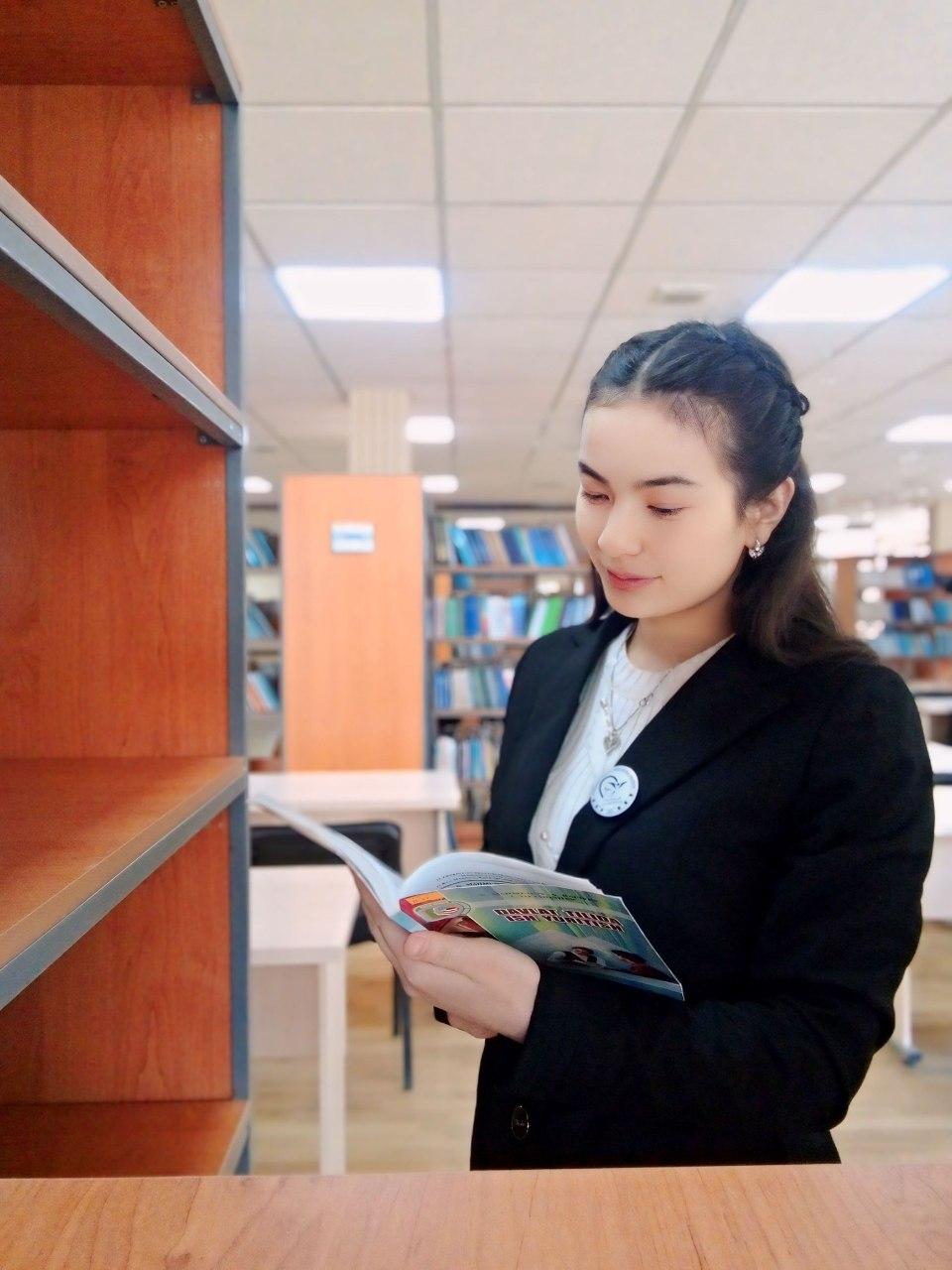
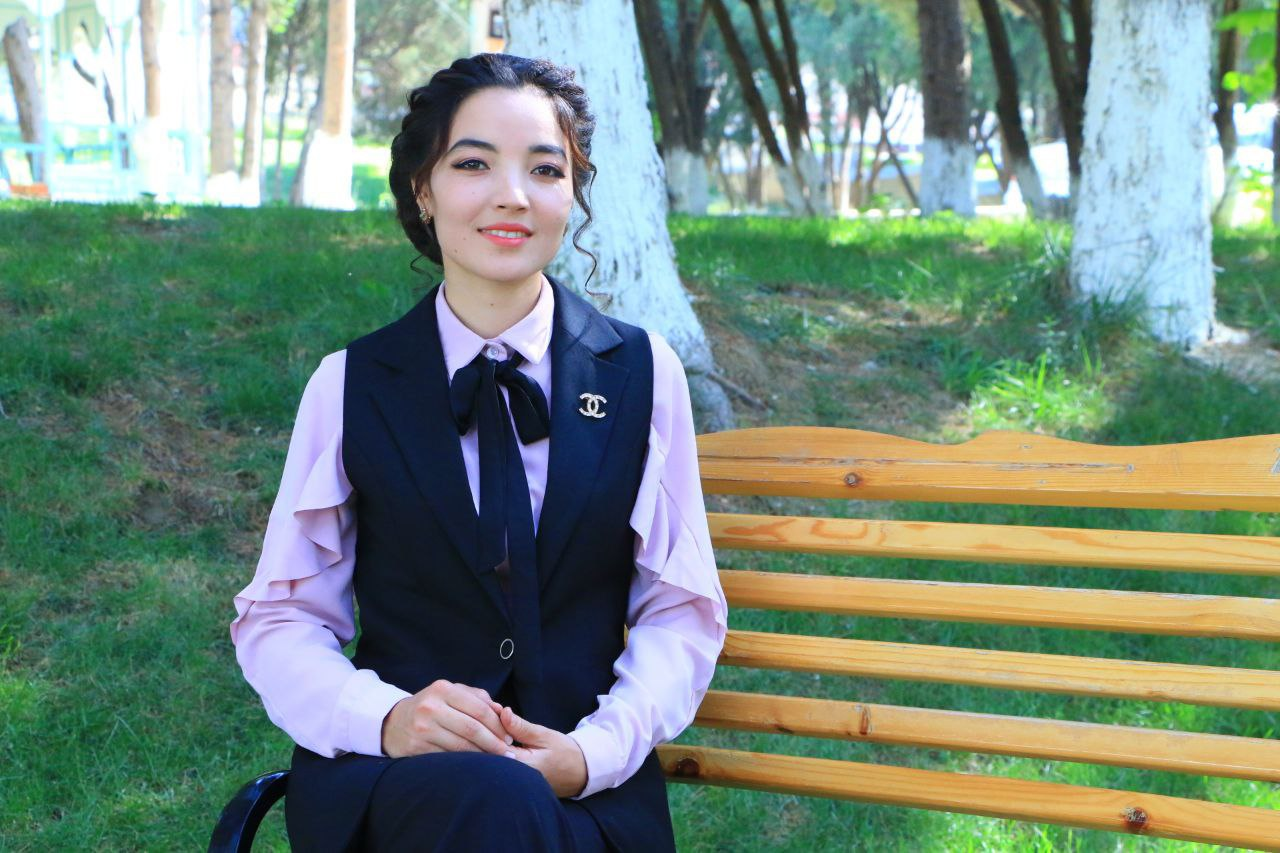
Mashhura Ziyovaddinova, daughter of Botirjon, was born on July 18, 2004 in Chust town, Namangan region.
Currently, she is a student of the MPL-BU group in the department of Special Pedagogy Logopedy at Namangan State Pedagogical Institute.
She is the winner of many literature competitions.
Creator of project “Educated youth”.
Active member of “Leaders’ group”.
Winner of 1st place on “Start up projects” competition.
Alumnus of more than 10 projects and educational courses.
Delegate and member of more than 20 projects.
Mashhura’s journey is marked by passion for literature, reflecting her dedication to personal and academic growth. As she continues her studies, she embodies the spirit of promising individual poised to contribute meaningfully to her community and beyond.
Violin

When I was a child, I only wanted to be a doctor when I grew up and heal people.

Today, I was sitting in front of the window in desperation, I needed a doctor myself. My eyes are weak, I could not see the beauty of nature. I had only one dream in my heart – to heal people. At that moment I remembered that my father had a violin in an old chest. A few years ago, he taught me how to play the violin.

For some reason I never played it. As soon as I opened the window, the outside world was blowing cool. As I played the violin, the birds stopped chirping, the noise of the street was instantly silenced. My heart seemed to be filled with light.

Out of joy, I made it a habit to play the violin every day. The gentle melody that came out of it soothed the wounds of my heart. Every day, my violin lovers would gather in front of my window and listen to music. Then I realized that if we sincerely intend and strive for it, Allah will deliver everything.

Doctors can heal people, but God gave me the happiness of healing their hearts. Music heals and comforts the human soul. My father’s words: «Weakness should be turned into strength» came to mind today. I turned this weakness into strength and achieved my childhood dream. Now, every day, the audience called me the number one violinist.


Nosirova Gavhar was born on August 16, 2000 in the city of Shahrisabz, Kashkadarya region of Uzbekistan. Today, she is a third-year student of the Faculty of Philology of the Samarkand State University of Uzbekistan. Being a lover of literature, she is engaged in writing stories and poems. Her creative works have been published in Uzbek and English. In addition, she is a member of «All India Council for Development of Technical Skills», «Juntosporlasletras» of Argentina, «2DSA Global Community». Winner of the «Korablznaniy» and «TalentyRossii» contests, holder of the international C1 level in the Russian language, Global Education ambassador of Wisdom University and global
coordinator of the Iqra Foundation in Uzbekistan. «Magic pen holders» talented young group of Uzbekistan, «KayvaKishor», «Friendship of people», «Raven Cage», «The Daily Global Nation», Argentina's «Multi Art-6», Kenya’s «Serenity: A compilation of art and literature by women» contains creative works in the magazine and anthology of poets and writers.
Literary Ways to Help The Democratic Republic of Congo
Congo Library – people and organizations have donated books to a shipping center in California to build a library in the Democratic Republic of Congo.
Books for Congo – sets up and contributes to libraries and a bookmobile, takes donations of books and cash and buys books by local and African authors.
Freelancers In Gaza Seeks Mentors To Virtually Coach Freelance Professionals
From Freelancers in Gaza:
We are looking for all forms of support in mentorship, like teaching Arabic to non-Arabic speakers, computer skills, writing and editing, journalistic skills, etc. So all types of support will be helpful. Those who are interested in being mentors will need to send us short bios, their best way of communication (email), and a headshot. This will then be added to our pool of mentors here: https://www.freelancersingaza.com/mentors.
This month’s issue celebrates effusions of life: human art and creativity, human love and compassion, and the flowering of the natural world.
Sayani Mukherjee depicts the elegant fragility of a rose as Brian Barbeito’s photography and prose evokes summertime in a strange, wild, and mysterious natural place in the summer. Wazed Abdullah revels in the vast expanse of the sky, during both daylight and nighttime.
Mark Young explores the power of details: parts of speech, flower petals, and thoughts.
Echezonachi Daniel speculates on nature and deconstructs some of what we as humans project onto other species.
Brian Barbeito, in his prose piece, takes a starling bird as a starting point to reflect on native vs introduced species, philosophy and faith, fair-weather versus dedicated believers, and what it means to be committed to something.
Isabella Mori writes of a trip through Canada when she encountered nature and simple human kindness. Christopher Bernard illustrates the caring, nurture, and steadiness of loving fathers. Azimjon Toshpulatov highlights her love for her mother by apologizing for having hurt her, and Rizwan Islam honors his through an essay on her dedicated service to so many people. Lazizakhan Khalilova shares a story where a young child discovers that noticing and helping others is part of growing up.
Mohichehra Qurbonova shares a story of the perseverance of a disabled girl to achieve her goals and build a life with meaning. David Sapp recollects memories of a friendship he developed with a developmentally disabled person whom he came to regard with respect.
Mesfakus Salahin conveys the experience of losing himself in romantic love. Eva Petropoulou Lianou’s poetry celebrates the joy of love and romance. Sushant Thapa describes getting to know a lover as a form of art and a journey.
Dimitris Passas shares a story of drug addiction and the sufferings of forced withdrawal and the quest for family love. John Grochalski speaks to the awkwardness of negotiating and crossing boundaries within parasocial relationships: people we see in media or with whom we have a business relationship.
Lewis LaCook shares pieces about travel, lost love, and finding and creating the world around us. Jesse Emmanuella writes of the human experience: death, grief, and new love. Tareq Samin depicts nature and romantic love in his piece, drawing on trees and stars for analogies to his feelings.
Elmaya Jabbarova reminisces about time with someone she loved in a beautiful garden she can no longer visit. Maja Milojkovic’s narrator speaks of her dual love for India and for a man she married there. Abdul Razzaq Al-Amiri evokes a romance that is also a deep spiritual quest. Amina Sahi conveys the pure spiritual joy of a lovers’ meeting off of a woman’s outdoor balcony in fragrant, sunny spring as Mahbub presents an exuberant couple scampering through fields and blooming rosebushes.
Dr. Jernail Anand reminds us that caring for others and self-respect is more important than money. Marjona Jorayeva highlights how the national value placed on human compassion is integral to the cultural and natural wealth of Uzbekistan. Sarvinoz Tuliyeva explicates the humane spirit of O’tkir Hashimov’s short story “Yanga.”
Bill Tope’s short story comments on two problems of America’s school system: gun violence and bullying, and the lack of compassion, cruelty, and injustice at the roots of both. Lilian Dipasupil Kunimasa laments the knowledge she has of life’s suffering and how she cannot save her loved ones. Faleeha Hassan conveys the worry and loneliness of a soldier’s mother who cannot share ordinary daily news with her son while Nosirova Gavhar shares a tale of love that waits even after death.
John Martino relates pieces of moments, thoughts, and encounters told with humor and humanity. J.D. Nelson’s haikus capture moments of surprise, when something changes in the world. Duane Vorhees invites us as humans to consider how we’ll act and love each other in the light of a world implacably changing all around us. Easa Hossain urges us to remember the past yet adapt to and welcome the present.
Lidia Popa expresses what she would do if she were in charge of time and destiny. Maid Corbic expresses his loneliness around people who are stuck in the past. Amanbayeva Dinora offers the advice of centuries for career builders and job seekers as Saparbayeva Aziza outlines what she likes, and what she doesn’t, in books from her Uzbek cultural tradition.
Zulkhumor Fosilbekova highlights the value of education for people and society. Gulsevar Xojamova suggests a positive role for technology in elementary and high school education in Uzbekistan. Sushama Kasbekar celebrates the technology of her new fridge, but acknowledges her confusion at its complexity.
Bruce Roberts laments humans and human art’s replacement by robots who feel themselves to be an improvement. Rezauddin Stalin celebrates human knowledge and the joy we find in discovering human wisdom from ages past.
Chris Butler speaks to the limitations of human knowledge and perception in light of the near-eternal nature of some parts of the natural and physical world. Isabel Gomez de Diego’s photography highlights the smallness of humanity in the light of natural and cultural history.
Gregorz Wroblewski pokes at the nature of a poem, at memorializing imperfect humans, and at our reasons for creating high literature. Tuyet Van Do seeks out underlying truths beneath cultural narratives.
Many humans create in this issue, for reasons of their own. Texas Fontanella sends us energetic rap music and Vernon Frazer brings us on a long tour de force of jazzlike symphonic crescendos of words. Grzegorz Wroblewski’s artwork shows poetry as a physical object, focusing on the looks of words on the page rather than what the words say. Diana Magallon’s visual art combines squares and cubes into shapes that seem 3-D on a two-dimensional space.
Alan Catlin contributes an artistically edited tour-de-force of global sociology, Western psychology, infrastructure and logistics, and criminal forensics. Patrick Sweeney explores themes of worry, complexity, and communication in his series of short pieces.
Noah Berlatsky reminds us that all dedicated writers, even hobbyists, can be considered authors and poets. Fadwa Attia highlights how an artist’s identity and background can inspire or inform their work. Z.I. Mahmud illustrates how a graphic novel was an ideal and useful form for Marianne Satrapi to tell her story in Persepolis of surviving Iran’s 1970s Islamic revolution.
Kylian Cubilla Gomez’ photography is at once playful and introspective, examining small portions of nature and human life.
Sadiya Abdulaziz looks to her own body and life for wisdom, examining the scars on her body to relate her history. Zeboxon Akmalova explores the very common and human feeling of loss.
Jason Ryberg’s poetry is a mixture of humor and commentary on human perception. Jim Meirose’s “reformed solemniac” piece offers up a funny take on insomnia. J.J. Campbell shares poetry about lasting beyond one’s prime and anyway, or just realizing that you’re older and still around.
Daniel De Culla contributes an earthy poem of dissatisfaction with the world’s proffered enjoyments. Michael Robinson recollects a lifetime of comfort and peace found through his Christian faith. Hillol Ray points to his sources of poetic inspiration and how he finds meaning in life through creating work in partnership with nature. Maheshwar Das encourages us to get beyond short-sightedness and materialism and focus on love for one another and care for creation.
Jacques Fleury highlights how the allostatic stress of being discriminated against and “othered” even at smaller levels contributes to bad health effects for minority populations.
Adiba Pardabayeva celebrates the lasting power of her basic Uzbek cultural values, including respect, dignity, and modesty.
We hope the many high-minded and intriguing sentiments of this issue will linger in your minds and hearts. Thank you for reading our first July issue!
Sabina is six years old, Her eyes are big and these eyes close when she laughs. She is interested in everything, she wants to know everything. She asks questions with interest to everyone’s conversation as the famly eats around the table, sometimes she asks her father, sometimes her grandmother…
The famly members sometimes get tired of answering this girl’s questions and they often answer that you will understand when you grow up. This makes Sabina angry.
-“When you grow up you understand, when you grow up, you now” . When will I grow up? – Sabina thought. After all, I’m six years old. My pink shirt from last year is too small now, I grew up!
Maybe they don’t notice that I grew up.
Sabina went into her mother’s room with such dreams. She put on the mother’s high heels.
– Yes… my height has grown a lot.
She wore her mother’s red shirt and knocked on her high heels. Walked back and forth in fron of the mirror.
– Now I grew up.,- she thought to herself.
At that moment, her mother’s voice was heard.
– Sabina, Sabina…. Where you are?
She took off her shoes and shirt in a hurry and run outside. Her favorite aunt came. She greeted her aunt with a happy smile.
Her mother immediately sets the table, tea was made. Sabina helped her mother to put various delicacies on the table.
When dinner was over, her aunt praised Sabina When everyone was around the table.
– My niece is a helper for her mother! Well done! You are grown up.
Sabina’s eyes sparkled after hearing these words. Now she knows What it’s like to grow up.
Don’t have to try on her mom’s clothes to grow up!